What’s in a Name?

American League teams include the St. Petersburg (“Tampa Bay”) Rays, the Minneapolis (“Minnesota”) Twins, the Anaheim (“Los Angeles”) Angels, and the Arlington (“Texas”) Rangers. Over in the National League we find the Miami (“Florida”) Marlins, the Phoenix (“Arizona”) Diamondbacks, and the Denver (“Colorado”) Rockies.

The practice of associating a baseball team with a place other than the city in which it plays its home games dates to 1961, when the original Washington Senators became the “Minnesota” Twins. It’s the baseball equivalent of naming a child after a sign of the Zodiac — very “new age,” “countercultural,” and all that. What began as an exception has become the rule: baseball’s four newest franchises (awarded in 1993 and 1998) belong to “Arizona,” “Colorado,” “Florida,” and “Tampa Bay.” (Can you imagine the “Maryland” Orioles, “Illinois” Cubs, “Ohio” Indians, “Michigan” Tigers, etc., etc., etc.?)

Preferring, as I do, real names like Matthew and Mary, I insist on the St. Petersburg Rays, Minneapolis Twins, Anaheim Angels, Arlington Rangers, Miami Marlins, Phoenix Diamondbacks, and Denver Rockies. The residents of those cities should insist likewise.

A Person’s Truth

Intellectual truth is what you “know” because the “knowledge” flows from a logical argument (which may be supported, in part, by “facts”). Real truth is what you know from direct knowledge.

Intellectual truth can be useful; often, it is indispensable. If your father tells you that it is dangerous — probably life-threatening — to drive a car into a stone wall at 60 miles and hour, you are well advised to heed your father. You should do so even though he probably doesn’t know of the danger from experience or observation.

Indeed, the horizon of useful intellectual truth is vast and seemingly infinite. It encompasses much (but not all) of science, not to mention technology (applied science), and even folklore (where it represents insights gained by trial and error).

Intellectual truth intersects with real truth in many ways. A good example of an intersection is found in counting, which is the foundation of mathematics. We often count real objects that we can sense for ourselves in order to determine such things as whether there are enough eggs to make a cake, enough clean shirts to last until the next laundry day, etc. The act of counting came long before the development of mathematics as a discipline, yet mathematics tells us (among many things) why counting “works” and how to employ it in a variety of ways ranging from the simple and obvious to the dauntingly complex ways (e.g., from addition — a form of counting — and multiplication — a form of addition — to such abstruse subjects as number theory.

I use counting as an example because it leads to the moral of this post: Intellectual truth is real truth only where it comports with real truth. Intellectual truth which doesn’t comport with real truth — or which hasn’t yet been found to be consistent with real truth — is mere conjecture.

Forgotten Stars

Richard Barthelmess

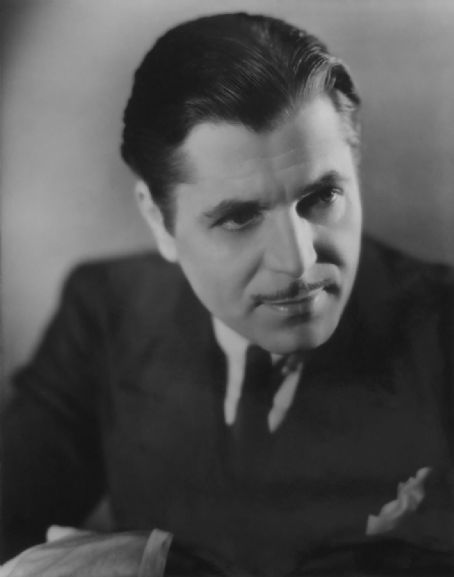
Warner Baxter

Bebe Daniels

Richard Dix

Kay Francis

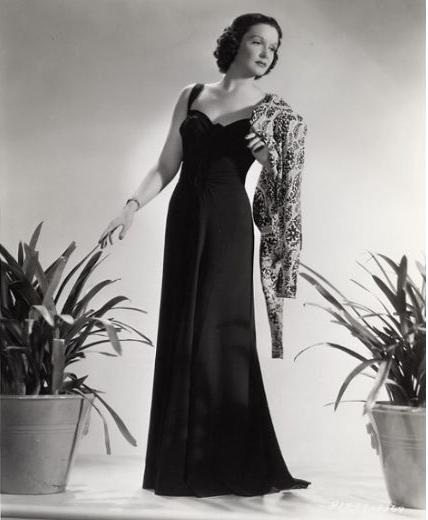
Gail Patrick

Baseball Weather

A good reason to hope that the Tampa Bay Rays beat the Boston Red Sox and win the American League championship: The first game of the World Series is scheduled for October 22. The American League team will host that game. The forecast high for Boston on October 22 is 56 degrees; it will probably be in the mid-40s by game time. The Rays play in a domed stadium.

Over in the National League, where the Philadelphia Phillies and Los Angeles Dodgers are contesting the championship, it is a showdown between World Series games in Philadelphia (where the weather will be only slightly warmer than in Boston) and Los Angeles (where it will be somewhat warmer). I have two problems with Los Angeles, in spite of its better weather. First, it might not be possible to see the game for the smoke from wildfires. Second, Manny Ramirez, that multi-millionaire crybaby and all-around slob, plays for the Dodgers. As long as he is a Dodger, I’ll root against the Bums, even when they are playing a team from Philadelphia — a city whose denizens once booed Santa Claus.

One-Line Movie Reviews

Movies I have seen this year:

Once – Buskers’ holiday.

The Savages, Married Life – Good actors wasting their time and mine.

No Country for Old Men, There Will Be Blood, Before the Devil Knows You’re Dead, The Assassination of Jesse James by the Coward Robert Ford, Straight Time, 3:10 to Yuma, Gone Baby Gone, American Gangster – Good actors wasting their time and mine with gratuitous violence.

Interview, Sunshine, The Nines, Unconscious, Death at a Funeral, I’m Not There, Cassandra’s Dream, The American Friend – Weird and mysterious doings, sometimes funny, mostly just weird and mysterious.

The Bourne Ultimatum – Action for action’s sake.

The Man on the Flying Trapeze – W.C. Fields wings it.

Cave of the Yellow Dog, Into the Wild, The Tunnel, The Kite Runner, The Counterfeiters – Gripping reality.

A Little Princess, The Jane Austen Book Club – Enjoyable froth.

Michael Clayton – New Deal propaganda in the 21st century.

Becoming Jane, La Vie en Rose, The Whole Wide World, My Boy Jack – Well done biopics and period pieces.

Lust, Caution – Spicy Chinese fare.

Shadow of a Doubt – Overrated Hitchcock.

Safety Last, Girl Shy – Hilarious silent stuff.

The Heart Is a Lonely Hunter, Tomorrow – Southern soul.

Atonement, This Is England, The Search for John Gissing, Son of Rambow – Excellent Britflicks.

Resurrecting the Champ, The Bucket List, The Great Debaters – Feel-good American films — barely bearable.

Ballet Shoes, Before the Rains, Miss Pettigrew Lives for a Day — Better-than-bearable Britflicks (two feel-gooders, one soaper with scenery); those accents do make a difference.

Lars and the Real Girl, Charlie Bartlett – Middle-age/teen-age angst.

The Bank Job – The best caper movie since Snatch; Topkapi in London, and more realistic.

Charlie Wilson’s War – Mr. Smith goes to Kabul, with laughs.

Panic in the Street (Wall, That Is)

As measured by the Dow Jones Wilshire 5000 Composite Index, the price of U.S. stocks has declined about 45 percent from the peak of about a year ago. That drop rivals the crash of 1929, when the value of the Dow Jones Industrial Average lost 48 percent of its value from the peak on September 1 to an initial bottom on November 13. (After recovering for a while, the Dow continued to slide, reaching its final bottom on July 8, 1932 — 89 percent below its peak value.)

My objective isn’t to spread panic but, rather, to chastise those who sell in panic. The resources that produce real goods and services haven’t vanished suddenly; the economies of the U.S. and other developed countries can still produce all that they have been producing; and they can continue to grow as they have done for centuries and millenia.

In sum, the current panic has nothing to do with the state of the “real” economy. It is an over-reaction to a credit “crunch” that involves a relatively small portion of the world’s financial markets. Those who sell stocks in the current panic will, in a few months or years, regret having done so as credit markets stabilize and the economy returns to full production and normal growth.

If you are ready to panic, just take a deep breath and consider the big picture:


And just remember this: You haven’t lost money in the stock market until you actually sell stock for less than your purchase price. Up to that point the quoted price of a stock is nothing more than a guess as to its current value. Sure, you can sell at a loss and (maybe) claim the loss as a deduction on your tax return, but the value of a deduction is always less (usually far less) than the loss. And you can sell at a loss and put the money into something else — like a 3-percent savings account (whoopee!) — and then miss the turnaround in stock prices.

Farewell, Chicago

This year marked the first time that both the Chicago Cubs and Chicago White Sox were involved in post-season play. The first time was not a charm, as the Cubs lost their post-season series to the Dodgers, and the White Sox lost their post-season series to the Rays. Dreams of an all-Chicago World Series have vanished like soap bubbles.

Broken Careers

It has been observed many times that some illustrious baseball players would have amassed even more impressive career statistics than they did, had it not been for their service in the armed forces during World War II. Bob Feller, for example, missed the 1942-45 seasons (except for a few games at the end of the ’45 season); Joe Dimaggio, the 1943-45 seasons; Ted Williams, the 1943-45 seasons (and most of the 1952-53 seasons during the Korean War).

Wartime service likewise robbed many lesser-known players of productive years. Here I highlight three Hall of FamersHank Greenberg, Johnny Mize, and Enos Slaughter — and two lesser lights — Buddy Lewis and Cecil Travis.

Greenberg entered the Hall of Fame by the side door. He was chosen by the “normal” route, that is, election by the Baseball Writers Association of America (BBWAA). But under the rules then in effect, Greenberg — who retired after the 1947 season — could have been elected as early as 1949; he wasn’t elected until 1956. Greenberg’s eventual election to the Hall reflects not only his accomplishments as a player but also what he might have done with the four-and-a-half seasons he lost to military service. Greenberg spent most of the 1941 season as a pre-Peal Harbor draftee and the next three-and-a-half seasons as a post-Pearl Harbor volunteer. Those would have been prime seasons for Greeberg, who at the age of 29 had enjoyed a great 1940 season: batting .34o, winning his second MVP award, and leading the league in home runs, slugging percentage, and runs batted in.

Mize and Slaughter entered the Hall via the back door: election by the Veterans Committee. That dubious honor is reserved for players who aren’t elected within 20 years of their retirement. Mize, who retired in 1953, wasn’t inducted into the Hall until 1981. Slaughter, who stretched his career to 1959, had to wait until 1985 for membership in the Hall.

Mize compiled some outstanding numbers in his first seven seasons (1936-42), including two home-run titles (1939-40). But wartime service (1943-45) deprived him of three prime years (ages 30-32). Mize remained a home-run threat after the war (co-leading the NL in 1947 and 1948), which underscores the significance of his lost seasons. Mize ended his career with very good numbers (2,011 hits, 359 homers, .312 batting average), but his record would have been closer to spectacular had he not lost three prime seasons.

Slaughter had outstanding seasons from 1939 through 1942, then went to war at the age of 27 and missed the 1943-45 seasons (ages 27-29). Slaughter, like Mize, posted some outstanding postwar seasons (e.g., finishing high in the NL batting race four times). Slaughter, like Mize, turned in a very good career (2,383 hits, .300 batting average) that would have been closer to spectacular but for his three lost seasons.

It is perhaps indisputable that wartime service deprived Mize and Slaughter of slam-dunk Hall of Fame careers. Given that, their belated selection by the Veterans Committee was just.

The tales of Buddy Lewis and Cecil Travis have sadder endings. Lewis (who, at 92, is still among us) went to war at the age of 25 with .304 batting average to that point in his career. He completed his next full season at the age of 29. His career ended three years later following a hip injury and a one-year hiatus from baseball. Lewis finished with a very respectable lifetime batting average of .297. But he was deprived of a more productive career, probably one with a .300-plus average and stronger hold on fans’ memories, if not a shot at the Hall of Fame.

Cecil Travis was Lewis’s teammate, and his roommate on the road. Travis went to war at the age of 28 with a career average of .327. It is almost certain that his wartime service cost him a slot in the Hall of Fame. According to Wikipedia, Travis

suffered a bad case of frostbite during the Battle of the Bulge, necessitating an operation to prevent amputation of his feet. Travis received a Bronze Star for his military service. Although only 31 years old when he returned to baseball, he was not the same player as he had been before the war, and hit .241 in late 1945 and .252 in 1946. He retired after batting .216 in 74 games in 1947.

Travis was only 33 when his war-shortened career came to an end. In spite of it all, he ran up lifetime batting average of .314. What might have been, indeed.

When we remember the careers that were damaged by military service, we should remember not just the players who enjoyed great and near-great careers in spite of their service. We should remember, also, the likes of Buddy Lewis and Cecil Travis.

Sidekicks, with a Twist

A sidekick, according to Wikipedia,

is a stock character, a close companion who assists a partner in a superior position. Sancho Panza in Don Quixote, Doctor Watson in Sherlock Holmes and Batman‘s companion Robin are some well-known sidekicks….

Sidekicks not only provide comic relief but can occasionally be brave or resourceful at times and rescue the hero from some dire fate: such as … Festus Haggen of Gunsmoke‘s Matt Dillon….

Sidekicks also frequently serve as an emotional connection, especially when the hero is depicted as detached and distant, traits which would normally generate difficulty in making the hero likable. The sidekick is often the confidant who knows the main character better than anyone else and gives a convincing reason to like the hero. Although Sherlock Holmes was admittedly a difficult man to know, the friendship of Dr. Watson convinces the reader that Holmes is a good person….

While it is usually the reverse, it is not unheard of for a sidekick to be physically more conventionally attractive, charismatic, or physically capable than the character who is intended to be the hero. This is most typically encountered when the hero’s appeal is supposed to be intellect instead of sex appeal or physical prowess. Such characters are often middle aged or older and tend towards eccentricity; fictional sleuths and scientists for example. Such sidekicks are rarely encountered in fiction because the hero runs the risk of being upstaged by them. However, examples of successful such pairings include Inspector Morse and his sidekick DS Robbie Lewis, Nero Wolfe and his sidekick Archie Goodwin….

Other famous sidekicks — whose roles vis-a-vis their partners range from comic foil to friendly nemesis to voice of reason to stalwart ally — include (in no particular order):

I’m sure I’ve omitted other notable pairings. I’ll add them as they come to mind.

American League Dynasties and Doormats

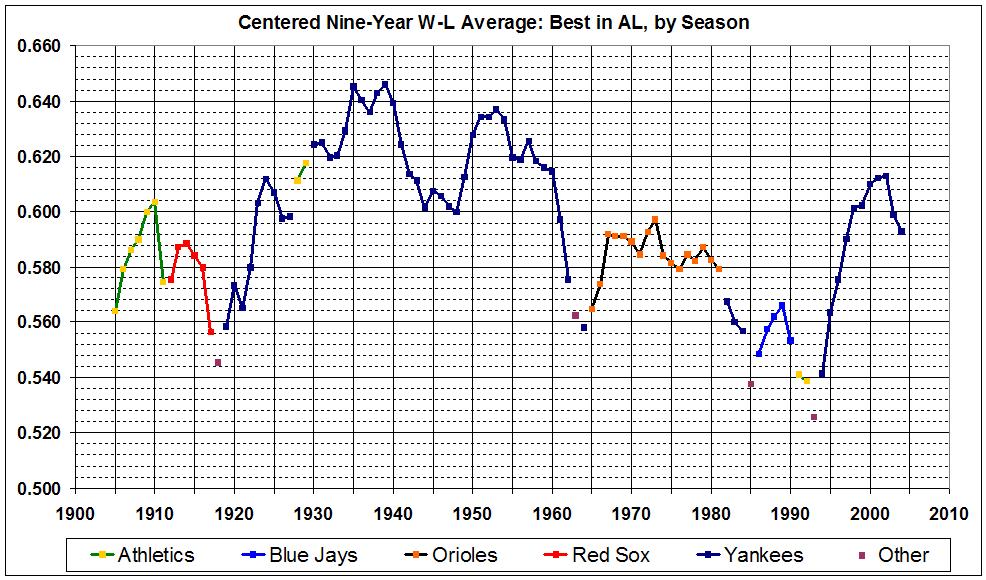
Here are the records of the best American League teams over the years, as measured by centered, nine-year won-lost average (to enlarge, right-click and select “open link in new tab”):

Derived from statistics available at Baseball-Reference.com. The series begins in 1905 (the middle year of the span 1901-1909) and ends with 2004 (the middle year of the span 2000-2008).

Two points: (1) The Yankees have assembled the longest and strongest dynasties, most notably, the one that began in the 1930s and lasted until the 1960s. (2) Only five of the AL’s fifteen franchises* have been strong enough, at one time or another, to have the league’s best record over two or more consecutive nine-year spans.

The “other” teams have mustered leadership for only a single season. Those teams, from left to right on the graph, are the Indians, Tigers, and White Sox (on two occasions, separated by 30 years).

Will a new “dynasty” emerge, or will the Yankees halt their downward slide and reassert their dominance over the American League? Stay tuned.

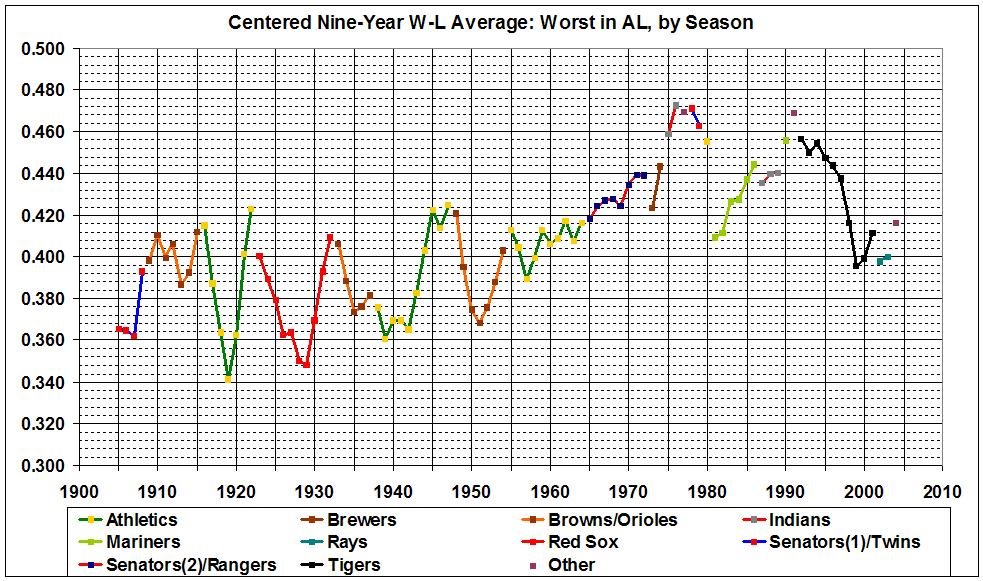
As for the doormats, here are the records of the worst American League teams over the years, as measured by centered, nine-year won-lost average (to enlarge, right-click and select “open link in new tab”):

Derived from statistics available at Baseball-Reference.com. The series begins in 1905 (the middle year of the span 1901-1909) and ends with 2004 (the middle year of the span 2000-2008).

Two points: (1) Three franchises — the Athletics, Browns/Orioles, and Red Sox have endured long stretches of ignominy and enjoyed long stretches of glory. (2) Ignominy has been spread more evenly than glory: Ten of the AL’s fifteen franchises* have been weak enough, at one time or another, to have the league’s worst record over two or more consecutive nine-year spans.

The “other” teams have served as doormats for only a single season. Those teams, from left to right on the graph, are the White Sox, Angels, and Royals.

THE FOLLOWING PORTION WAS REVISED AND EXTENDED ON 10/04/08

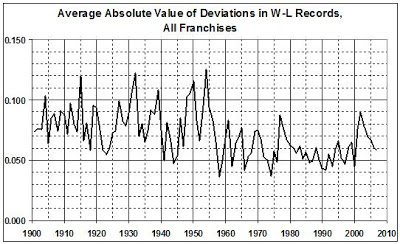
Finally, I have postulated elsewhere (“Has Baseball Become More ‘Competitive’?“) that baseball has become increasingly competitive since the advent of expansion in the 1960s and free agency in the 1970s. I have revised that assessment, in view of the above graphs. In particular, it seems that the gap between best and worst teams had been narrowing (generally, though not monotonically) since the earliest days of the American League until about 1980. That observation caused me to take another look at the third graph in “Has Baseball Become More ‘Competitive’?”:

I now see that the American League had been growing steadily more “competitive” (if not always perceptibly so) from its earliest days until just before the onset of free agency in 1976 and the 1977 expansion round. Since then, there has been (on balance) no perceptible gain, and perhaps a bit of a setback, which may be due to the expansions of the 1990s.
__________
* The fifteen franchises are the original eight — Baltimore Orioles (previously Milwaukee Brewers and St. Louis Browns), Boston Red Sox, Chicago White Sox, Cleveland Indians, Detroit Tigers, Minnesota Twins (previously Washington Senators), New York Yankees (originally Baltimore Orioles), Oakland Athletics (previously in Philadelphia and Kansas City) — and seven expansion franchises –Kansas City Royals, Los Angeles/Anaheim Angels, Milwaukee Brewers (originally Seattle Pilots, now in National League), Seattle Mariners, Tampa Bay Devil Rays, Texas Rangers (previously the expansion Washington Senators), and Toronto Blue Jays. See this post (scroll down) for a detailed recounting of franchise histories.

Post-Season Play: Another Look

UPDATED 09/30/08

The World Series of major-league baseball was initiated in 1903 as a showdown between the best team in each league, the toddling American League (born 1901) and the twenty-something National League (born 1876). So far, so good, but with the advent of two-tiered post-season play in 1969 and three-tiered post-season play in 1995, each league often has not been represented by its best team.

Three-tiered play begins with four teams in each league: the three division leaders and a wild-card team (the team with the best record among the three second-place finishers). As a result, all sorts of distortions are possible. Here’s a list of them, by season (derived from Baseball-Reference.com):

1996, National League: Los Angeles entered post-season play as a wild-card team (thus losing “home field advantage”), even though it had a better record than St. Louis, which had the best record in its division. Moreover, Montreal didn’t gain a playoff berth, even though its record was as good as that of St. Louis.

1997, National League: Houston led its division with the sixth-best record in the league. Florida, with a better record than Houston, was the wild-card team. New York and Los Angeles didn’t make it into the playoffs, even though both had better records than Houston.

1997, American League: Wild-card New York had a better record than division leaders Cleveland and Seattle.

1998, American League: Boston repeated New York’s experience of the prior year, boasting a better record than division leaders Cleveland and Texas. Toronto, with the same record as Texas, missed the playoffs.

2000, American League: New York entered post-season play as a division titlist but with the fifth-best record in the league. Seattle (the wild-card team) had a better record than New York, as did Cleveland, which didn’t get into the playoffs.

2001, National League: Atlanta entered post-season play as a division titlist but with the fifth-best record in the league. St. Louis (the wild-card team) had a better record than that of Atlanta, as did San Francisco, which didn’t get into the playoffs.

2001, American League: Oakland, the wild-card team, had a better record than division titlists New York and Cleveland.

2002, American League: Anaheim, the wild-card team, had a better record than Minnesota, which entered the playoffs as a division leader.

2003, National League: Ditto for Florida vs. Chicago.

2003, American League: Minnesota led its division with the league’s fifth-best record, relegating third-best Boston to wild-card status and denying fourth-best Seattle a playoff spot.

2004, American League: Boston had to settle for the wild-card slot with a better record than Minnesota and Anaheim, division leaders both.

2005, National League: San Diego entered post-season play as a division winner, despite having a worse record than Houston (the wild-card team) and three teams that missed the playoffs (Philadelphia, Florida, New York).

2006, National League: St. Louis entered the playoffs as a division titlist, denying Philadelphia a slot with its fourth-best record and relegating third-place Los Angeles to the wild-card spot.

2006, American League: Wild-card Detroit had a better record than division-leading Oakland.

2007, National League: Chicago led its division with the sixth-best record in the league. Second-best Colorado took the wild-card spot despite having a better record than both Chicago and Philadelphia (another division leader). New York and San Diego, both with better records than Chicago, missed the playoffs.

2008, National League: Los Angeles enters post-season play as a division winner, with the league’s eighth-best record.

2008, American League: Chicago enters post-season play as a division winner, with the league’s fifth-best record.

Here’s my solution to this mess. Realign the leagues so that each has 15 teams, spread evenly among three divisions: 1, 2, and 3. The teams in division 1 would be the 5 teams with the best W-L records in the preceding season; division 2 would comprise the middle 5 teams; division 3, the worst 5 teams. To eliminate the biasing effects on W-L records of unbalanced schedules (which have been the norm for decades), each team would play the same number of games (home and away) against each of the other teams in its league. There would be no interleague play during the regular season.

These arrangements would make for more competitive divisions. The teams in division 1 would vie to finish first in order to advance to the World Series. The World Series would be a best-of-nine affair to mitigate (somewhat) the role of luck and the ability of a team to “recycle” its best pitchers more often than in the regular season.

Division 1 teams also would strive to remain in division 1, and thus in contention for World Series slots. The teams in divisions 2 and 3 would strive for the honor of division leadership and foradvancement to higher divisions — and, through advancement to division 1, a shot at participating in the World Series.

It’s time to make the regular-season meaningful and, therefore, to end the practice of giving mediocre teams a shot at the World Series. It’s time to make the World Series what it was for 64 seasons: a showdown between the best of the AL and the best of the NL. My proposal would accomplish all of that.

Big Losers

The Pittsburgh Pirates of major-league baseball will have a losing season this year, thus extending the team’s string of losing seasons to 16 (1993-2008) and tying the dubious record of the Philadelphia Phillies (1933-1948).

The leading consecutive-season losers in other major sports are, as far as I can determine, the Tampa Bay Buccaneers of pro football (15 seasons, 1982-1996), the Kansas City/Sacramento Kings of pro basketball (16 seasons, 1983-84 through 1998-99), and the Vancouver Canucks of pro hockey (15 seasons, 1976-77 through 1990-91).

The Pirates seem destined to set a new record for consecutive losing seasons among major sports teams.

The all-time major-league record for losing is held by the San Diego Padres. The Padres have compiled an overall W-L record of .462 since the team’s inception in 1969 — the worst record of any franchise formed before 1978. The Padres nevertheless have managed to win five division titles, and have twice gone on to win league championships.

The expansion Washington Senators/Texas Rangers — a 1961-vintage franchise — have an overall W-L record of .468. That is the second-worst record among franchises formed before 1978. The Rangers “boast” but three division titles and not a single league championship.

In spite of the “accomplishments” of the Padres and Rangers, I must grant the Worst Franchise Award to the above-mentioned Philadelphia Phillies. The Phillies, who are now in their 126th season of major-league play, have compiled a W-L record of only .470. During the 31-season span of 1918-1948 the Phillies eked out only one (barely) winning season, going 78-76 in 1932. (The Pirates have an overall record of .505, in spite of a long losing tradition, one that dates back to the second season of their 127-year history.)

Tamed Tigers

The 2006 season began brightly for the Detroit Tigers, a team that had posted a losing record in each of its preceding twelve seasons. The Tigers went 76-36 (.679) in the the first 112 games of the 2006 season, running up a ten-game lead in their division. The Detroiters then went cold and played 29-31 (.483) the rest of the way. As a result, they finished second in their division. Nevertheless, as a wild-card entry in post-season play, the Tigers managed to win the American League championship and advance to the World Series — a feat the underscores the vagaries of short, post-season series, which often see inferior teams come out on top.

But I digress. The tale of the 2006 Tigers (pun intended) has been retold, with embellishments, by the 2007 and 2008 teams. The 2007 team started 60-40 (.600), but finished 28-34 (.452) and wound up eight games behind the division leader (and, mercifully, out of the playoffs). The 2008 Tigers managed briefly to eke out a winning record — peaking at 52-49 (.515) — but have since played 19-31 (.380). If they don’t finish last in their division it will be thanks to the perennially abysmal Kansas City Royals.

So much for the Tigers’ (partial) season of glory, or sic transit gloria mundi.

UPDATE (09/24/08): The Tigers have lost six in a row, are a game behind KC, and face a season-ending four-game series with the Tampa Bay Rays. Even though the Tigers may manage to escape the cellar by a whisker (another pun intended), there can be no doubt that they have reverted to their perennially abysmal ways. Since their last division championship, 21 seasons ago, they have had only five winning seasons. Toothless.

Two Tenors

Compare the legendary John McCormack (1884-1945), an Irish tenor whose career spanned five decades, and Brooklyn-born Franklyn Baur (1904-1950), whose career lasted less than ten years.

Both singers recorded many popular songs of the 1920s (McCormack samples here and here; Baur samples here). McCormack’s influence on Baur (among others) is unmistakable, most notably in Irving Berlin’s “You Forgot to Remember.” Baur masked his native accent more successfully than did McCormack. But that is no criticism of McCormack, whose distinctive, lilting voice was supported by exemplary vocalism.

Baur, the original first tenor of The Revelers, was the engine of that group’s originality and success. (Aural evidence of Baur’s influence can be heard on Breezin’ Along with The Revelers, where the group’s innovative, jazzy sound turns more traditional — even “barbershoppy” — following Baur’s departure.) Had it not been for the influence of The Revelers, as they were in Baur’s time, the Comedian Harmonists — an even better ensemble — might not have been formed. (If you’ve never heard of the Comedian Harmonists, you must see Comedian Harmonists, a 1997 dramatization of the group’s history that is both toe-tapping and touching.) And without McCormack, the world might not have come to embrace Irish tenors.

We are fortunate that so many examples of McCormack’s and Baur’s art survive them.

Perspective on the Stock Market

Yes, we are in a bear market, as I foresaw here and confirmed here. But let’s put the downturn in perspective:

Dow Jones Wilshire 5000 Composite Index
(12,184.44, as of 4:46 p.m. ET today)

(c) BigCharts.com

Even with today’s significant drop (4.55 percent), the market is high by historical standards. (For example, the Wilshire 5000 Full-Cap Index, a broad measure of U.S. stock prices, is still higher than it was at any time before the “bubble” of the late 1990s, even after the index is adjusted for inflation.) Moreover, the decline from March 2000 to October 2002 — which somehow seems to be a distant memory for today’s headline writers — was far steeper and deeper than the slide that began last October. There may be a time to panic, but it hasn’t yet arrived.

Some of My Favorite Cars

The classic era of American automobile design began in the 1920s and lasted through the late 1930s. Here are some of my favorites:

1927 Kissel 8-75 Speedster

1929 Jordan Speedboy G

1929 Duesenberg J 350 Willoughby

1930 Pierce Arrow Roadster

1932 Cadillac 355B Sport Phaeton

1932 Pierce Arrow Model 54 7-Passenger Touring Car

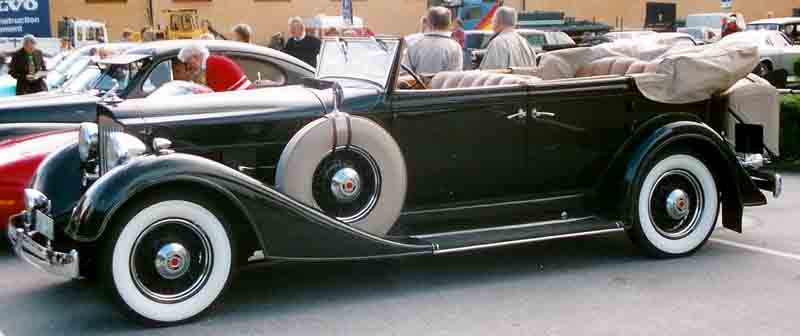
1934 Packard Eleventh Series Eight 1101 Convertible Sedan

1935 Auburn 8-851 Cabriolet

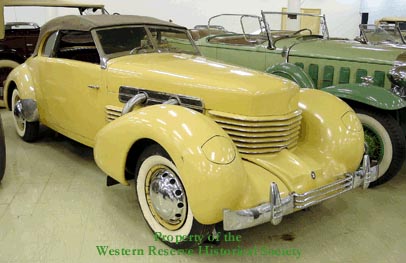
1937 Cord Model 812C Phaeton

1938 Lincoln Zephyr Convertible Coupe

Many collections of classic-car photos and specs are available online. Conceptcarz.com is the best that I have found. The collection there spans the late 1800s to the present. See also the excellent Crawford Collection of the Western Reserve Historical Society.

Unemployment

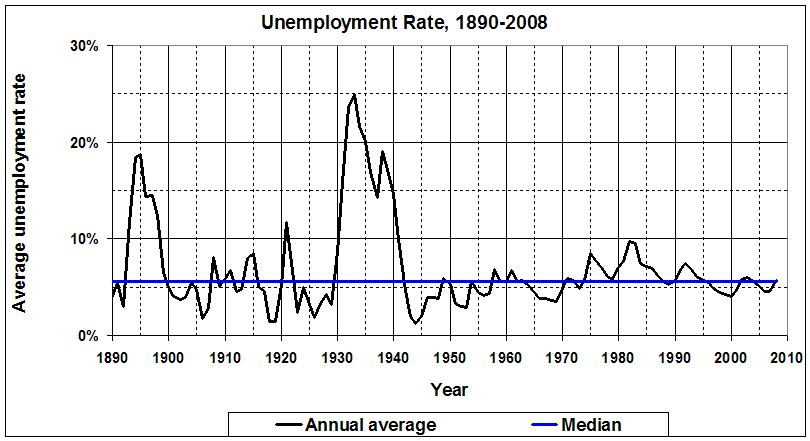
I present, without comment, a petite histoire graphique of the unemployment rate in the United States. The median is 5.5 percent.

Sources: Statistical Abstracts of the United States: Colonial Times to 1970, Series D85-D86 (http://www2.census.gov/prod2/statcomp/documents/CT1970p1-05.pdf) and Bureau of Labor Statistics, Employment Status of the Civilian Noninstitutional Population, 1942 to date (ftp://ftp.bls.gov/pub/special.requests/lf/aat1.txt). Rate for July 2008 used as the average for 2008.

One-Season Wonders?

Norm Cash and Brady Anderson had respectable careers by major-league norms, but each also had a “career year” that stood far above his other accomplishments as a player.

In Cash’s case, the one-season wonder was his league-leading batting average of .361 in 1961. It was Cash’s first and last .300 season in a career that included 14 full seasons of play. His second-best average was .283; his second-best finish was in 1969, when his .279 average garnered seventh place in the AL batting race; and his career average was only .271.

Anderson’s anomalous 1996 season saw him slug 50 home runs, finishing second in the AL to Mark McGwire. Anderson logged nine other full seasons of play, but in none of those seasons did he hit more than 24 home runs. He averaged only 19 home runs per 162 games over the span of his career.

Nevertheless, Cash and Anderson weren’t true one-season wonders. That “accolade” should be reserved for the likes of Gene Bearden and Mark Fidrych. Both were pitchers who had outstanding rookie years — Bearden with a W-L record of 20-7 in 1948; Fidrych with a W-L of 19-9 in 1976 — and then faded quickly, departing from the big leagues after brief, mediocre careers. (Actually, Fidrych faded after July 20 of his rookie season, by which date his record was 11-1; he went 8-8 for the balance of the season.)

Among position players, there’s Joe Charbonneau, AL Rookie of the Year in 1980 with a .289 average in 131 games. After that: .210 in 48 games, .214 in 22 games, and … gone from the majors.

Bearden, Fidrych, and Charbonneau are among the true one-season wonders of baseball.

The Best Announcer in Baseball’s History?

Many baseball fans consider Vin Scully to have been the best announcer in baseball’s long history. Others favor the Southern stylings of Ernie Harwell. I respect Scully and Harwell, but I prefer the late Skip Caray‘s acerbic wit.

Yes, Caray’s partisanship toward the Atlanta Braves was obvious, but he could be tough on the Braves, as well. In any event, he didn’t shirk from the truth about what had happened on the field, good or bad for the Braves. And, unlike most announcers of the past fifty years, Caray said nothing if there was nothing to be said; he didn’t babble just to fill air time. Caray and his long-time partner — the knowledgeable, soft-spoken Pete Van Wieren — made an ideal team: the best I’ve heard, by a long shot.

Mystery Solved

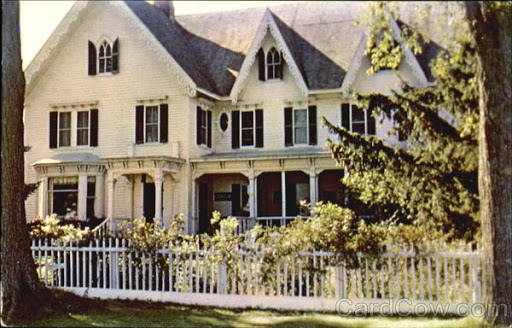
William Lyon (Billy) Phelps was, in his day (1865-1943), a noted professor of English literature (Yale), proponent of Jane Austen, writer of popular prose, public lecturer, and preacher (he was also an ordained minister). I learned of Phelps because he and his wife summered at Huron City, Michigan, not far from the village where my grandmother lived.

The Phelps’s summer home (which Mrs. Phelps inherited from her father) is known as Seven Gables. It is preserved as part of the Huron City Museum, a collection of old buildings and artifacts from the early days of Huron City. Below are successive views of Seven Gables. The first is from the road that runs in front of the house. The second shows the house and its seven gables from above. The third shows the house (toward the bottom of the photo) and an abandoned golf course across the road. The fourth, in which the house is a white speck near the center, shows the proximity of the house and golf course to Lake Huron, which is at the top of the photo.


The mystery (to me) was the golf course. Whenever we stopped at Huron City on the way to grandma’s house, I would walk to the edge of the road bordering the course, gaze down upon the derelict fairways and greens, and wonder about the course’s history. Had a country club been founded there in the boom times of the ’20s, only to fall victim to the Depression? Was the course too isolated to be a going proposition?

The mystery was solved when I learned recently that the course was on the Phelpses’ property — a personal, private course — and that Prof. Phelps played there regularly when he was in residence at Seven Gables. There it sits, abandoned — probably since 1939, the year of Prof. Phelps’s last visit to Huron City.