The Obesity Epidemic

Randall Parker — a.k.a. FuturePundit and social engineer extraordinaire — opines about obesity in “Response To Obesity Epidemic Should Be Urgent Priority.” But obesity isn’t contagious and therefore can’t be an epidemic.

What’s the problem, then? According to Parker,

food is cheap. As biotechnology advances food prices will rise more slowly than inflation. So food will become cheaper still.

That’s a problem? Tell it to the poor.

Here’s my solution: Let natural selection sort it out. If fatties aren’t fit to live, they won’t live as long as non-fatties or procreate at the same rate as non-fatties. So, if fatness is gene-related, there’ll be fewer fatties in succeeding generations. Otherwise, I don’t care how fat other people get, as long as I don’t have to pay for their food addiction.

Yet Another Look at Democracy

James Surowiecki’s The Wisdom of Crowds is a flawed masterpiece. Surowiecki seems to understand how unregulated markets make people better off, but in the end he succumbs to the notion that we can regulate our way to “the common good” through democracy. Surowiecki nevertheless gets it right when he says this:

[A] group of people…is far more likely to come up with a good decision if the people i the group are independent of each other….

Independence is important to intelligent decision making for two reasons. First, it keeps the mistakes that people make from becoming correlated. Errors in individual judgment won’t wreck the group’s collective judgment as long as those errors aren’t pointing systematically in the same direction….Second, independent individuals are more likely to have new information rather than the same old data everyone is already familiar with. The smartest groups, then, are made up of people with diverse perspectives who are able to stay independent of each other. Independence doesn’t imply rationality or impartiality, though. You can be biased and irrational, but as long as you’re independent, you won’t make the group any dumber.

If only Surowiecki had stopped there, on page 41.

Democracy undoes independence. It imposes on everyone the mistakes and mistaken beliefs of a controlling faction. It defeats learning. It defeats the sublime rationality of markets, which enable independent individuals to benefit each other through the pursuit of self-interest.

More about Democracy and Liberty

Fritz Machlup wrote this summary of a 1961 article (in German) by Friedrich Hayek:

[Hayek] asks why it is that personal liberty is in continual jeopardy and why the trend is toward its being increasingly restricted. The cause of liberty, he finds, rests on our awareness that our knowledge is inevitably limited. The purpose of liberty is to afford us an opportunity to obtain something unforeseeable; since it cannot be known what individuals will make of their freedom, it is all the more important to grant freedom to everybody….Liberty can endure only if it is defended not just when it is recognized to be useful in particular instances but rather continuously as a fundamental principle which may not be breached for the sake of any definite advantages obtainable at the cost of its suspension….It is not easy to convince the masses that they should sacrifice foreseeable benefits for unforeseeable ones. [From “Hayek’s Contribution to Economics,” in Essays on Hayek (1976), p. 41.]

That goes a long way toward explaining why unchecked democracy has become the enemy of liberty.

The Case Against Campus Speech Codes

The per curiam opinion of the U.S. Supreme Court in Brandenburg v. Ohio (1969):

The appellant, a leader of a Ku Klux Klan group, was convicted under the Ohio Criminal Syndicalism statute for “advocat[ing] . . . the duty, necessity, or propriety [445] of crime, sabotage, violence, or unlawful methods of terrorism as a means of accomplishing industrial or political reform” and for voluntarily assembl[ing] with any society, group, or assemblage of persons formed to teach or advocate the doctrines of criminal syndicalism. Ohio Rev.Code Ann. § 2923.13. He was fined $1,000 and sentenced to one to 10 years’ imprisonment. The appellant challenged the constitutionality of the criminal syndicalism statute under the First and Fourteenth Amendments to the United States Constitution, but the intermediate appellate court of Ohio affirmed his conviction without opinion. The Supreme Court of Ohio dismissed his appeal sua sponte “for the reason that no substantial constitutional question exists herein.” It did not file an opinion or explain its conclusions. Appeal was taken to this Court, and we noted probable jurisdiction. 393 U.S. 94 (196). We reverse.

The record shows that a man, identified at trial as the appellant, telephoned an announcer-reporter on the staff of a Cincinnati television station and invited him to come to a Ku Klux Klan “rally” to be held at a farm in Hamilton County. With the cooperation of the organizers, the reporter and a cameraman attended the meeting and filmed the events. Portions of the films were later broadcast on the local station and on a national network.

The prosecution’s case rested on the films and on testimony identifying the appellant as the person who communicated with the reporter and who spoke at the rally. The State also introduced into evidence several articles appearing in the film, including a pistol, a rifle, a shotgun, ammunition, a Bible, and a red hood worn by the speaker in the films.

One film showed 12 hooded figures, some of whom carried firearms. They were gathered around a large wooden cross, which they burned. No one was present [446] other than the participants and the newsmen who made the film. Most of the words uttered during the scene were incomprehensible when the film was projected, but scattered phrases could be understood that were derogatory of Negroes and, in one instance, of Jews. [note 1] Another scene on the same film showed the appellant, in Klan regalia, making a speech. The speech, in full, was as follows:

This is an organizers’ meeting. We have had quite a few members here today which are–we have hundreds, hundreds of members throughout the State of Ohio. I can quote from a newspaper clipping from the Columbus, Ohio, Dispatch, five weeks ago Sunday morning. The Klan has more members in the State of Ohio than does any other organization. We’re not a revengent organization, but if our President, our Congress, our Supreme Court, continues to suppress the white, Caucasian race, it’s possible that there might have to be some revengeance taken.

We are marching on Congress July the Fourth, four hundred thousand strong. From there, we are dividing into two groups, one group to march on St. Augustine, Florida, the other group to march into Mississippi. Thank you. [447]

The second film showed six hooded figures one of whom, later identified as the appellant, repeated a speech very similar to that recorded on the first film. The reference to the possibility of “revengeance” was omitted, and one sentence was added: “Personally, I believe the nigger should be returned to Africa, the Jew returned to Israel.” Though some of the figures in the films carried weapons, the speaker did not.

The Ohio Criminal Syndicalism Statute was enacted in 1919. From 1917 to 1920, identical or quite similar laws were adopted by 20 States and two territories. E. Dowell, A History of Criminal Syndicalism Legislation in the United States 21 (1939). In 1927, this Court sustained the constitutionality of California’s Criminal Syndicalism Act, Cal.Penal Code §§ 11400-11402, the text of which is quite similar to that of the laws of Ohio. Whitney v. California, 274 U.S. 357 (1927). The Court upheld the statute on the ground that, without more, “advocating” violent means to effect political and economic change involves such danger to the security of the State that the State may outlaw it. Cf. Fiske v. Kansas, 274 U.S. 380 (1927). But Whitney has been thoroughly discredited by later decisions. See Dennis v. United States, 341 U.S. 494, at 507 (1951). These later decisions have fashioned the principle that the constitutional guarantees of free speech and free press do not permit a State to forbid or proscribe advocacy of the use of force or of law violation except where such advocacy is directed to inciting or producing imminent lawless action and is likely to incite or produce such action. [note 2] As we [448] said in Noto v. United States, 367 U.S. 290, 297-298 (1961), “the mere abstract teaching . . . of the moral propriety or even moral necessity for a resort to force and violence is not the same as preparing a group for violent action and steeling it to such action.” See also Herndon v. Lowry, 301 U.S. 242, 259-261 (1937); Bond v. Floyd, 385 U.S. 116, 134 (1966). A statute which fails to draw this distinction impermissibly intrudes upon the freedoms guaranteed by the First and Fourteenth Amendments. It sweeps within its condemnation speech which our Constitution has immunized from governmental control. Cf. Yates v. United States, 354 U.S. 298 (1957); De Jonge v. Oregon, 299 U.S. 353 (1937); Stromberg v. California, 283 U.S. 359 (1931). See also United States v. Robel, 389 U.S. 258 (1967); Keyishian v. Board of Regents, 385 U.S. 589 (1967); Elfbrandt v. Russell, 384 U.S. 11 (1966); Aptheker v. Secretary of State, 378 U.S. 500 (1964); Baggett v. Bullitt, 377 U.S. 360 (1964).

Measured by this test, Ohio’s Criminal Syndicalism Act cannot be sustained. The Act punishes persons who “advocate or teach the duty, necessity, or propriety” of violence “as a means of accomplishing industrial or political reform”; or who publish or circulate or display any book or paper containing such advocacy; or who “justify” the commission of violent acts “with intent to exemplify, spread or advocate the propriety of the doctrines of criminal syndicalism”; or who “voluntarily assemble” with a group formed “to teach or advocate the doctrines of criminal syndicalism.” Neither the indictment nor the trial judge’s instructions to the jury in any way refined the statute’s bald definition of the crime [449] in terms of mere advocacy not distinguished from incitement to imminent lawless action. [note 3]

Accordingly, we are here confronted with a statute which, by its own words and as applied, purports to punish mere advocacy and to forbid, on pain of criminal punishment, assembly with others merely to advocate the described type of action. [note 4] Such a statute falls within the condemnation of the First and Fourteenth Amendments. The contrary teaching of Whitney v. California, supra, cannot be supported, and that decision is therefore overruled.

Reversed.

With that precedent in mind, I have to ask why it is permissible for a publicly funded university to have a speech code of any kind.

Favorite Posts: Academic Freedom and Freedom of Speech

It Made My Day

From Snopes.com:

Claim: Thief who tries to rob a gun shop is shot dead by those in the store.

Status: True.

On 3 February 1990, David Zaback attempted to hold up H&J Leather & Firearms Ltd., a gun shop located in Renton Highlands near Seattle, Washington. About 4:40 p.m. that day, he entered the crowded shop and announced his intention to rob it by Gun telling everyone to put their hands on the counter and saying if anybody moved, he’d kill them. He then spotted a uniformed policeman having coffee with Wendall Woodall, the shop’s owner. What happened next is less than clear in terms of who shot first, but there was an exchange of gunfire between David Zaback, the would-be robber; Timothy Lally, an 18-year veteran of the King County police force; and Danny Morris, one of the shop’s clerks.

Zaback, who had fired three times, was shot three times in the chest and once in the arm. He died in the hospital about four hours after the shooting. No one else was injured during the incident, and no charges were subsequently laid against Lally or Morris.

Lally and Morris should have been given a cut of the money taxpayers didn’t have to spend on Zaback’s trial, appeals, and imprisonment.

Reversed Causality

Jim VandeHei of The Washington Post — writing in the usual, no-liberal-bias mode of that “august” rag — complains:

Fortune 500 companies that invested millions of dollars in electing Republicans are emerging as the earliest beneficiaries of a government controlled by President Bush and the largest GOP House and Senate majority in a half century.

MBNA Corp., the credit card behemoth and fifth-largest contributor to Bush’s two presidential campaigns, is among those on the verge of prevailing in an eight-year fight to curtail personal bankruptcies. Exxon Mobil Corp. and others are close to winning the right to drill for oil in Alaska’s wildlife refuge, which they have tried to pass for better than a decade. Wal-Mart Stores Inc., another big contributor to Bush and the GOP, and other big companies recently won long-sought protections from class-action lawsuits.

Republicans have pursued such issues for much of the past decade, asserting that free market policies are the smartest way to grow the economy. But now it appears they finally have the legislative muscle to push some of their agenda through Congress and onto the desk of a president eager to sign pro-business measures into law. The chief reason is Bush’s victory in 2004 and GOP gains in Congress, especially in the Senate, where much of corporate America’s agenda has bogged down in recent years, according to Republicans and Democrats.

“These are not real high-profile, sexy issues like the war or Social Security, but these are issues that have huge economic consequences,” said Charles R. Black Jr., a GOP lobbyist and one of the president’s top fundraisers. “And there is more to come on that score.”

The implication, of course, is that Bush’s corporate supporters were buying favors. That’s not how it works. You support the candidate who’s most aligned with your interests, not because you can buy favors from that candidate but because you don’t have to buy favors from that candidate.

As for Bush’s “pro-business” bias, it’s a pro-growth, pro-jobs bias. But liberals wouldn’t understand that. It’s too complex for their allegedly nuanced minds to grasp. They’d rather have welfare and crime.

As Time Goes By

Nearly a year ago I noted the lingering presence of some once-famous persons who were then still alive at 90 (and more). Here’s how that list looks today:

George Kennan 100, Max Schmeling 98, Dale Messick 98, Fay Wray 96, John Mills 96 [97], Eddie Albert 95 [96], Estée Lauder 95, Al Lopez 95, Henri Cartier-Bresson 95, Michael DeBakey 95 [96], John Kenneth Galbraith 95 [96], George Beverly Shea 95 [96], Ernest Gallo 95 [96], Peter Rodino, Jr. 94 [95], Luise Rainer 94 [95], Constance Cummings 93 [94], Artie Shaw 93, Gloria Stuart 93 [94], Kitty Carlisle 93 [94], John Wooden 93 [94], Joseph Barbera 93 [94], Mitch Miller 92 [93], Jane Wyatt 92 [93], Byron Nelson 92 [93], Karl Malden 92 [93], Archibald Cox 91, Art Linkletter 91 [92], Julia Child 91, Lady Bird Johnson 91 [92], Frankie Laine 91, Oleg Cassini 91, Risë Stevens 90 [91], Robert Mondavi 90 [91], Ralph Edwards 90 [91], Geraldine Fitzgerald 90 [91], Tony Martin 90 [91], Jane Wyman 90 [91], Kevin McCarthy 90 [91], Sammy Baugh 90 [91], William Westmoreland 90 [91], Frances Langford 90

Eighty percent survived: 34 of 42. Amazing, to me.

And here are some “newcomers”:

Irwin Corey 90, Jack LaLanne 90, Ruth Hussey 90, Richard Widmark 90, John Profumo 90, Harry Morgan 90

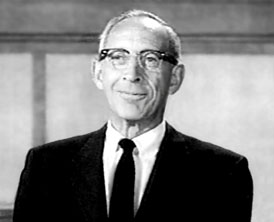
UPDATE: I’m adding actor Charles Lane to my list of oldtimers of interest. Lane, who celebrated his 100th birthday on January 26, made his first movie 1931 and (apparently) his last in 1995. That’s longevity for you. Lane’s career as a character actor in 254 feature films included roles in Mr. Deeds Goes to Town, Mr. Smith Goes to Washington, Arsenic and Old Lace, It’s a Wonderful Life, The Farmer’s Daughter, and The Music Man. Amazing. Here’s Charles Lane:

(Thanks to Dead or Alive? and its “People Alive over 85” feature for the list of oldtimers.)

But It’s Not Music

Tyler Cowen celebrates Pierre Boulez:

Today is his eightieth birthday, here are some appreciations and critiques. I side with George Benjamin:

…a rigorous compositional skill is coupled to an imagination of extraordinary aural refinement. Pli Selon Pli, Eclat/Multiples, the spectacularly inventive orchestral Notations, Explosante-Fixe – these are among the most beautiful works of our time. Boulez’s music has a very distinctive flavour – a love of rare timbres and spicy harmonies, a supreme formal elegance and a passion for virtuosity and vehement energy. The polemics that periodically surround him obscure the intensely poetic source of his musical vision.

But it’s not music. As Alex Ross, the music critic of The New Yorker, says:

Boulez arrived in Paris from the provinces in 1942….As a Schoenbergian atonalist,…he…found himself dissatisfied with twelve-tone music as it was then practiced. He was bothered by the fact that Schoenberg had radicalized harmony but still treated rhythm and form in traditional, even hackneyed ways. So he began working toward the idea of “serialism,” in which durations, dynamics, and instrumental attacks were organized along the same principles that governed the twelve-tone series. He achieved a mode of writing that was, if nothing else, internally consistent….

Even in the fifties and sixties, as Boulez abandoned strict serialism and began to write in a more fluid, impressionist style, he remained a composer of vibration, activity, unrest. He set the profile of “modern music” as it is popularly conceived and as it is still widely practiced—a rapid sequence of jabbing gestures, like the squigglings of a seismograph.

As I wrote a while back:

What happened around 1900 is that classical music became — and still is, for the most part — an “inside game” for composers and music critics. So-called serious composers (barring Gershwin and a few other holdouts) began treating music as a pure exercise in notational innovation, as a technical challenge to performers, and as a way of “daring” audiences to be “open minded” (i.e., to tolerate nonsense). But the result isn’t music, it’s self-indulgent crap (there’s no other word for it).

False Advertising

Prof. Gavin Kennedy of Edinburgh Business School, Heriot-Watt University, Edinburgh, Scotland — who presumes to lecture us about the meaning of Adam Smith’s writings — is in fact a professional bull**** artist:

His books on Negotiating include:

  • Managing Negotiations (co-author) (1980; 3rd edition, 1987 Business Books Ltd)
  • Everything is Negotiable (1983) (2nd edition, 1990 Arrow Books)
  • Negotiate Anywhere (1985 Arrow Books) Superdeal
  • How to Negotiate Anything (1986 Hutchinson)
  • The Economist Pocket Negotiator(1988 Basil Blackwell and the Economist Publications)

He is a co-author of the Negotiating Skills Portfolio (1986 Scotwork) and The Art of Negotiation, a Rank Training film, (1983) which is now available in the interactive format. He is also author of the video package: Everything is Negotiable, from Guild Sound, and Vision, 1987. Currently, he is working on Beyond Selling , a new training video for Rank. Professor Kennedy is a Fellow of the Chartered Institute of Marketing.

And what does Prof. Kennedy have to say about Adam Smith? Among Kennedy’s pearls of wisdom are these:

Smith never wrote a word about “capitalism”, yet he is hailed as the “high priest of capitalism”….He is alleged to be an advocate of “Laissez Faire” though he never used these words….

Yes, and the American Constitution doesn’t include the phrases “checks and balances” or “limited government,” but it demonstrably incorporates checks and balances and aims to limit the power of the central government.

Does the word “Bible” appear in the Bible? I doubt it. But the Bible is the Bible, nevertheless.

Poor Prof. Kennedy. If his name weren’t painted on his forehead he wouldn’t know who he is. Perhaps he doesn’t. Perhaps he thinks he’s Adam Smith.

The McCain-Feingold Insurrection

I have joined it. See the sidebar.

(Thanks to Josh’s Weblog for the tip.)

Why Fight for Life?

Those who resist the culture of death by decree do so for the same reason as those who resist taxation, regulation, and redistribution: to compromise is to surrender yet more of life — perhaps life itself — to the state.

Absolutism

The preservation of life and liberty necessarily requires a willingness to compromise on what — in the comfortable world of abstraction — seem to be inviolable principles. For example:

  • The First Amendment doesn’t grant anyone the right to go on the air to compromise a military operation by American forces.
  • An armed person or group of persons demonstrably bent on committing mayhem must be disarmed before the mayhem occurs, the Second Amendment notwithstanding.
  • Regardless of the Fourth, Fifth, and Sixth Amendments, a person who is caught in the act of transmitting a command to a terrorist cell should be deprived immediately of all the rights normally accorded a criminal suspect and questioned by the most effective means, for as long as it takes.

There can be no absolute liberties where life is at stake. Without life liberty is meaningless.

It’s Not Anti-intellectualism, Stupid

The New York Sun reports:

[A] former provost of [Columbia University], Jonathan Cole, who in a speech on Tuesday night before a restive gathering of professors and students strongly suggested that [President] blinker wasn’t doing enough to defend faculty members from accusations that they have intimidated Jewish students.

Speaking for almost an hour and drawing applause from the audience, which included some of the scholars under investigation, Mr. Cole said in no uncertain terms that Columbia is under attack by what he described as outside political forces.

When the content of a professor’s views is under attack, Mr. Cole said, “leaders of research universities must come to the professor’s defense.”

He said the pressures bearing down on the university reminded him of the climate that existed on American campuses a half-century ago during the McCarthy era.

“We are witnessing a rising tide of anti-intellectualism,” Mr. Cole said, calling the present situation at the university “another era of intolerance and repression.”…

In recent months, Mr. Bollinger has had several meetings in his office with leaders of the Jewish community – some of whom have demanded that Mr. Bollinger seriously investigate the student complaints – to assuage their concerns.

Last night, with the public spotlight on his next moves and with a number of Columbia trustees in the audience, Mr. Bollinger delivered an exegesis on the scope, meaning, and history of academic freedom.

Mr. Bollinger said it was “preposterous to characterize Columbia as anti-Semitic” and said the university would not “punish professors or students for the speech or ideas they express as part of public debate about public issues.”

He also said the university “should not elevate our autonomy as individual faculty above all other values” or accept “transgressions” among faculty members “without consequences.”

Saying the classroom must not be turned into a “political convention,” Mr. Bollinger said, “We should not accept the argument that we as teachers can do what we want because students are of sufficient good sense to know bias and indoctrination when they see it.”

The students who have aired complaints claim that some professors in the department of Middle East and Asian Languages and Culture suppress opinion sympathetic of Israel and inappropriately substitute political activism for teaching.

An assistant professor of modern Arab politics, Joseph Massad, is accused of threatening to expel a student from his classroom because she defended Israel’s military actions. Mr. Massad denies the charge. Mr. Massad is undergoing his fifth-year review. According to a source, a committee within the Middle East studies department evaluating Mr. Massad has recommended that he continue teaching in the department.

Mr. Cole on Tuesday night cast Mr. Massad as an exemplary teacher who is under no obligation to give equal weight to student opinions expressed during class. Just as a Jewish history professor doesn’t have to take seriously a student who denies the Holocaust, Mr. Massad is not required to give equal time to an argument denying the 1982 Shatila refugee camp massacre in Lebanon, he said.

“The American research university is deigned to be unsettling,” Mr. Cole said. “The university must have and always welcome dissenting voices.”…

Mr. Cole’s speech was arranged by Columbia’s Center for Comparative Literature and Society and was followed by a presentation delivered by anthropologist Mahmood Mamdani, who argued that the “classroom is being politicized from the outside.”…

Philosopher Akeel Bilgrami, a member of the audience, raised his hand and said it must be exposed that “a handful of students are responsible for the university’s crisis,” referring to the group of undergraduate students who have come forward with complaints. Mr. Bilgrami is a signer of a 2002 petition urging the university to boycott companies selling arms and military hardware to Israel.

The director of the center and the event’s moderator, Gayatri Spivak, told the audience that an electronic recording of the event was prohibited. Asked by an audience member why no recording devices could be used, she said Mr. Cole requested that his speech not be recorded and that his decision was justified because of the way the press has manipulated her own words.

While the two panelists, Messrs. Cole and Mamdani, railed against intrusion by trustees and donors into academic governance, Ms. Spivak called for outside pressure on Columbia for it to hire more female faculty members. She called gender inequality a “real problem, whereas this is made up,” referring to the complaints against the Middle East scholars.

So, outside pressure is bad if it’s aimed at leftists but good if it supports leftists. Such is leftist logic.

As for “anti-intellectualism,” I call it disgust. Disgust that universities have gone far beyond any pretense of seeking truth. Universities today — by and large — merely seek to advance an anti-capitalist, anti-free speech, anti-American agenda. If that upsets donors and trustees and causes them to bring pressure to bear on universities, I say hurrah! Donors and trustee have speech rights, too. And they should use them.

Those who fund universities — donors and taxpayers — have a legitimate interest in ensuring that universities use their money wisely.

Favorite Posts: Academic Freedom and Freedom of Speech

Can You Throw a Curveball?

Throwing a curveball is easy, just do as it says here. Well, try doing it until you really know how to do it, that is, until your brain and muscles work together in just the right way. Which may never happen, or happen very often, no matter how many articles you read or how much you practice.

The moral of the story is simple: Don’t presume to know how things work until you’ve actually done them yourself.

That’s why I don’t trust a politician who hasn’t put his own money at risk in a business on which his livelihood depends. Such a politician has no real idea of the debilitating effects of taxation and regulation on the entrepreneurial spirit, job creation, and employee compensation.

That’s why I don’t trust a politician who thinks that fallible human beings can magically solve problems when they become government employees.

That’s why I don’t trust a politician to do the right thing when it comes to dealing with a tragedy like the Schiavo case if that politician hasn’t faced the death of a loved one whose life might yet be saved.

Full disclosure:

  • In my days of playing catch, which I did seriously for many years, I seldom broke off a good curveball even though I could throw fast, far, and with good control.
  • I have owned and operated a business into which I poured a substantial portion of my savings and which was the sole source of income for my family and me.
  • I worked in and closely with the federal government for 32 years.
  • I have a child whose life was in mortal danger but was saved by a timely operation, from which he has long since recovered fully.

Social Security, in a Few Words

I’ve argued at length in favor of the privatization of Social Security, and I’ve offered my solution to the looming crisis. (Go here for the solution and links to my posts about privatization.) Now comes Thomas R. Saving to explain the crisis and the need for privatization in two pages.

Tell Us What You Really Think, John

John Lanchester, a British author of excellent novels (e.g., Fragrant Harbour and Mr Phillips), is laden with the usual left-wing baggage of the illiterati:

The Labour Party of semi-fond memory was a broadish church but it had some consistent currents within it. It was left of centre, socially liberal, anti-authoritarian, anti-American, pacifistic, anti-big-business, keen on benefits for the poor, and in favour of nationalisation. In government, New Labour has been right of centre, moralistic, authoritarian; it has been involved in three wars, is slavishly submissive to big business, is keener to promote the distinction between the deserving and undeserving poor than any government in the last hundred years, and is bent on extending into health and education and transport an experimental programme of private-public partnerships which allocates risk to the public sector and profits to the private. As for its attitude to America, that is comparable only to the ‘coital lock’ which makes it impossible to separate dogs during sex.

Unlike Geoffrey R. Stone, however, I wouldn’t call on government to suppress Lanchester’s views even though Manchester, as a best-selling author commands a prominent niche in “the marketplace of ideas,” whence he is able to “warp the public debate.” In fact, I love it when lefty celebrities spew their stupidity. It’s a reminder that the market rewards performance, no matter how “undeserving” are those who reap the rewards.

And I still love to listen to old Joan Baez LPs. But as Laura Ingraham says, Shut Up and Sing.

The Thing about Science

Just when you think you “know” something, you find out that you don’t:

Mendel’s Law May Be Flawed

Associated Press
11:22 AM Mar. 23, 2005 PT

Challenging a scientific law of inheritance that has stood for 150 years, scientists say plants sometimes select better bits of DNA in order to develop normally even when their predecessors carried genetic flaws.

The conclusion by Purdue University molecular biologists contradicts at least some basic rules of plant evolution that were believed to be absolute since the mid-1800s, when Austrian monk Gregor Mendel experimented with peas and saw that traits are passed on from one generation to the next. Mendelian genetics has been the foundation of both crop hybridization and the understanding of basic cell mutations and trait inheritance….

Scientists said the discovery raises questions of whether humans also have the potential for avoiding genetic flaws or even repairing them, although they said the actual proteins responsible for making these fixes probably would be different in plants….

“This means that inheritance can happen more flexibly than we thought,” said Robert Pruitt, the paper’s senior author.

Does this news vindicate the long-scorned Jean-Baptiste Pierre Antoine de Monet, Chevalier de Lamarck (1744-1829)? According to Wikipedia,

Lamarck is remembered today mainly in connection with a discredited theory of heredity, the “inheritance of acquired traits“, but Charles Darwin and others acknowledged him as an early proponent of ideas about evolution. In 1861, for example, Darwin wrote:

“Lamarck was the first man whose conclusions on the subject excited much attention. This justly celebrated naturalist first published his views in 1801. . . he first did the eminent service of arousing attention to the probability of all changes in the organic, as well as in the inorganic world, being the result of law, and not of miraculous interposition.”

Lamarck’s own theory of evolution was in fact based on the idea that individuals adapt during their own lifetimes and transmit traits they acquire to their offspring. Offspring then adapt from where the parents left off, enabling evolution to advance. As a mechanism for adaptation, Lamarck proposed that individuals increased specific capabilities by exercising them, while losing others through disuse. While this conception of evolution did not originate wholly with Lamarck, he has come to personify pre-Darwinian ideas about biological evolution, now called Lamarckism.

And so the wheel of science turns.

Good News, Bad News for Free Speech

Many bloggers will like this rule being considered by the Federal Election Commission (via The Volokh Conspiracy):

No expenditure results where an individual, acting independently or as a volunteer, without receiving compensation, performs Internet activities using computer equipment and services that he or she personally owns for the purpose of influencing any Federal election, whether or not the individual’s activities are known to or coordinated with any candidate, authorized committee or party committee.

That’s the “good” news. The bad news it that such a rule might be required in the first place. Whatever happened to this quaint concept:

Congress shall make no law…abridging the freedom of speech…. [Amendment I, Constitution of the United States of America]

If it was good enough for little Jemmy Madison, it should be good enough for the intellectual pipsqueaks who now prowl the corridors of Congress.

Killing Free Speech in Order to Save It

UPDATED THRICE BELOW

We all know about McCain-Feingold. Now we have the slippery logic of Prof. Geoffrey R. Stone of the University of Chicago Law School. Stone is a colleague of Cass Sunstein, a fellow traveler on the road to thought control.

Stone is debating Eugene Volokh at Legal Affairs Debate Club, on the topic “Forget Free Speech?” Stone slides this immodest proposal into his rather slick “defense” of free speech:

I agree that private employers are different. Even in employment discrimination law, we recognize that it would be inappropriate for the law to intrude too deeply into personal relationships. Thus, small employers are exempt. Similarly, we don’t make it unlawful for a person to refuse to date a person of another race. Thus, the law shouldn’t concern itself with individuals who decide not to buy the Dixie Chicks’s records because they dislike their political views.

But the logic of this doesn’t extend to a decision, for example, by General Motors to refuse to employ people who oppose the war in Iraq. Large corporations have substantial market power, and I see no reason to allow them to leverage that market power in this way any more than we let them discriminate on the basis of religion….

To the point about using antidiscrimination laws to promote tolerance of people of other races, religious, and ethnicities, I would say the same about political differences. Isn’t that the view that Lee Bollinger championed as a primary function of the First Amendment itself? Certainly, a more “tolerant society,” a less polarized society, one in which citizens come to understand, in Jefferson’s words, that not “every difference of opinion is a difference of principle,” is something to which we should aspire. And, as for the Klansman, perhaps tolerating his presence in the workplace would be good both for him and for us. No?

So, let’s just take another big slice out of liberty and prosperity by placing yet another burden on the private sector, the burden of being an equal-viewpoint employer. Why should General Motors, regardless of its size, be required to operate under such constraints? General Motors ought to be able to hire persons whose performance will help the bottom line, and thus help society. If an employee says something that embarrasses General Motors and potentially hurts its bottom line, General Motors ought to be able to fire that person — no ifs, ands, or buts.

But in the world of Sunstein and Stone, we can — and must — legislate and regulate our way to a “tolerant society.” Hah! Notice how well it worked when forced busing was used to integrate schools?

Stone, slippery lawyer that he is, doesn’t give a hoot about Klansmen. What he really wants is to make it illegal for employers to fire anyone for saying anything that seems critical of government policy (Republican policy, in particular). When that’s done, he can take up the cudgels for the Dixie Chicks and go after radio stations that refuse to play their songs.

What Sunstein and Stone mean by “free speech” is “forced listening.” Reminds me of the brainwashing scene in the movie 1984. They’ll like the results as long as they get to play Big Brother.

UPDATE: Yep, Big Brother. Here’s Stone in a later installment of the debate:

Even if I concede arguendo that private discrimination on the basis of viewpoint need not be equated with private discrimination on the basis of race, religion, or gender, we have to be concerned about private discrimination that begins seriously to threaten the marketplace of ideas. The point isn’t that such private discrimination would be unconstitutional, but that the government should step in and prohibit such discrimination through legislation if it begins to warp public debate.

In other words, if I’m in control of government and I decide that “private discrimination on the basis of viewpoint” has threatened “the marketplace of ideas,” I should step in to prohibit such discrimination when, in my infallible judgment, it begins to “warp” public debate. I therefore decree the following:

  • An employer can’t fire anyone who makes a public statement critical of the employer.
  • A right-wing radio talk-show host who has a huge audience must give equal time to left-wing ideas.

What Stone and his ilk don’t seem to understand (or choose to ignore) is that government involvement (choosing sides) warps the public debate. For every employer who fires a critical employee and for every popular right-wing talk-show host there are legions of protestors and political opponents whose messages the mainstream media amplify, with gusto. That’s the marketplace of ideas in action. Or do Stone and his ilk favor the suppression of the mainstream media? I doubt it very much. They’re just looking for a pseudo-legal justification for the suppression of speech they don’t like.

What the marketplace of ideas needs is less government involvement, not more.

UPDATE II: Stone, in his most recent volley, adds this:

My argument does not meet any of the conditions for McCarthyism (unless you think I am being intentionally manipulative in order to score partisan political gain).

He said it.

UPDATE III: And Eugene Volokh nails him:

It does sound, though, like the definition of “McCarthyism” that’s being suggested is mighty convenient for its users….After all, under this definition exactly the same criticisms—with exactly the same level of substantive merit—would be “McCarthyism” when used by one side and quite proper when used by the other.

Cheney says that voting for Kerry would endanger the nation. That’s McCarthyism, because it comes from this bad administration. Nancy Pelosi says that voting for Bush would endanger the nation. That’s just fine, if you think Democrats are open-minded, unself-righteous (except, of course, when they’re harshly deriding the Bush Administration), attentive to separation of powers and the rule of law, interested in debate, and sophisticated and introspective, with complex views of faith and suitable appreciation for gray areas. Oh, and also respectful of international law and filibusters.

Such use of the term “McCarthyism,” which seems to presuppose what it’s trying to show—which is that one’s targets are bad people—isn’t terribly useful for sober analysis. Wouldn’t it have been more profitable to instead discuss, for instance, whether voting for Bush or Kerry would indeed endanger the nation? That was actually a pretty important question a few months ago.

As best I can tell, public debate about the Administration, the war, civil liberties, and the best ways to fight terrorism has been quite vibrant. If there’s a “substantial chilling effect on the willingness of individual citizens to criticize the government,” I haven’t noticed it. The 2004 Democratic election campaign, for instance, didn’t seem to be unduly obsequious to the Bush Administration. Nor do I see much evidence of “an exaggerated sense of fear in the public,” or even attempts to create such a fear. The world is a dangerous place and I have no reason to think that people are any more fearful of terrorism than they ought to be.

So I think free speech in America is pretty healthy. There are some exceptions; I have long, for instance, criticized hostile environment harassment law, a vague, broad, and viewpoint-based set of speech restrictions. Likewise, some media responses to supposedly unpatriotic speech have indeed been misplaced; Bill Maher, for example, got a bum deal. And, sure, many people in many places—government, universities, the media—are smug and closed-minded, and too often try to name-call people into submission. That ought to be fought. Still, things today are pretty good.

And tomorrow? No-one can tell for sure, but fortunately there are plenty of people and organizations who will fight future attempts at repression, whether from the left or from the right. Geof, I know you’ll be one of them, and I’m very glad about that.

In other words, if you really favor free speech, you favor it for everyone,* not just the lefties favored by Stone.
__________
* I make an exception for overtly traitorous speech, which I come to in a future post about legal absolutism.

Crime and Punishment

Crime, like charity, begins at home, and home is therefore the first line of defense against crime.

A second line of defense is necessary and — in these times — essential to the general welfare. That line of defense is justice, administered by the community through the state.

The linch-pin of justice is punishment by law. The operative word is “punishment” — not “correction” or rehabilitation.” Crime is not deterred or prevented by the promise of rehabilitation. (Who commits a crime in the hope or fear of being rehabilitated?)

Even though deterrence seems to work generally, it doesn’t always work. For sociopaths and psychopaths who are undeterred by the concept of punishment, the answer is punishment of a kind that will ensure that they can no longer do harm to others: life in prison or death at the hands of the state.

There are those who equate death at the hands of the state with murder. This is nonsense and sentimental clap-trap on a par with counseling unilateral disarmament or pacifism in the face of an invading horde. By such reasoning, we would not have (finally) risen to the task of removing Herr Hitler from the scene. How many sob-sisters (of whatever gender) would wish that we had stayed on the sidelines while Hitler applied the “final solution”?

Justice serves civilization and social solidarity. First, of course, it deters and prevents wrong-doing. Second, it meets the deep, common need for catharsis through vengeance, while protecting the innocent (and all of us) by replacing mob rule with due process of law.

Justice — to serve its purposes — must be swift, sure, and hard. That is, it must work and be seen to work, by the just and unjust alike.

Related posts:
Does Capital Punishment Deter Homicide?
Libertarian Twaddle about the Death Penalty
Abortion and Crime
Saving the Innocent?
Saving the Innocent?: Part II
More on Abortion and Crime
More Punishment Means Less Crime
More About Crime and Punishment
More Punishment Means Less Crime: A Footnote
Clear Thinking about the Death Penalty
Let the Punishment Fit the Crime
Another Argument for the Death Penalty
Less Punishment Means More Crime
Crime, Explained