To attempt to demonstrate that the world can be the effect of chance by beginning with the presupposition of this very possibility is to become the victim of a patent sophism or a gross illusion. In order to have the right to apply the calculus of probabilities to the case of the formation of the world, it would be necessary first to have established that the world can be the effect of chance. [Approaches to God, Macmillan paperback edition, pp. 60-1.]
To say that the world as we know it is the product of chance — and that it may exist only because it is one of vastly many different (but unobservable) worlds resulting from chance — is merely to state a theoretical possibility. Further, it is a possibility that is beyond empirical proof or disproof; it is on a par with science fiction, not with science.
If the world as we know it — our universe — is not the product of chance, what is it? A reasonable answer is found in another post of mine, “Existence and Creation.” Here is the succinct version:
In the material universe, cause precedes effect.
Accordingly, the material universe cannot be self-made. It must have a “starting point,” but the “starting point” cannot be in or of the material universe.
The existence of the universe therefore implies a separate, uncaused cause.
The idea of a cosmological argument is to move from certain known effects to God as their cause. To construct such an argument, we need a principle of causality: a statement of which sorts of things need causes to explain them. The simplest such principle would be: everything has a cause. But this is too strong a claim, since if everything has a cause, then God will have a cause and so be dependent on something else, which would, therefore, have a better claim to be God. A cosmological argument will work only if we have a causal principle that will not apply to God….
A cosmological argument is an effort to carry the search for an explanation as far as it can go, to see if we can discover not just an explanation of some single thing but an explanation of everything—for, we might say, the world (kosmos in Greek) as a whole. Let’s call this an ultimate explanation. We want, therefore, an argument that will show that God is the ultimate explanation. Perhaps, then, the causal principle we need is that there must be an ultimate explanation (provided by an ultimate cause).
Now, however, we need to think more carefully about what an ultimate explanation would explain. We’ve said it’s an explanation of everything, but just what does this mean? Something that needs explanation is, by definition, not self-explanatory. It needs to be explained by something other than itself. As we’ve seen, if we sought an explanation of literally everything, then there would be nothing available to provide the explanation.
If there is to be an ultimate explanation, then, it must be something that itself requires no explanation but explains everything else. The world that the cosmological argument is trying to explain must not be everything but everything that needs an explanation. But what things require explanation?
One plausible answer is that we must explain those things that do exist but might not exist, things that, to use the traditional technical term, are contingent….
Correspondingly, for the cosmological argument to work, the explanation of everything contingent must be something that is not contingent; namely, something that not only exists but also cannot not exist; it must, that is, be necessary. If it weren’t necessary, it would be contingent and so itself in need of explanation. (Notice that what is necessary is not contingent, and vice versa.) Simply put, the God the cosmological argument wants to prove exists has to be a necessary, not a contingent, being.
Here, then, we move to a still better principle of causality: that every contingent thing requires a cause. But we still need to be careful. Most contingent things can be explained by other contingent things. The world (the totality of contingent things) is a complex explanatory system…. If this makes sense, the cosmological argument can’t get off the ground because, as we’ve seen, its God is a necessary being that’s needed to explain what contingent things can’t….
What does this mean for our effort to construct a cosmological argument? It means that our argument must deny that there is an infinite regress of contingent things that explains everything that needs explaining. Otherwise, there’s no need for a necessary God.
This is a crucial stage in our search for a cosmological argument. We have a plausible principle of causality: any contingent being needs a cause. We now see that we need another premise: that an infinite regress of contingent things cannot explain everything that needs explaining….
We can agree that there might be an infinite series of contingent explainers but still maintain that such an infinite series itself needs an explanation. We might, in effect, grant that there could be an infinite series of tortoises, each supporting the other—and the whole chain supporting the Earth—but still insist that there must be some explanation for why all those tortoises exist. That is, our argument will require that an infinite regress of contingent things must itself have an explanation. This gives us the two key premises of our cosmological argument: a principle of causality and a principle for excluding an infinite regress.
Now we can formulate our argument:
There are contingent beings.
The existence of any contingent being has an explanation.
Such an explanation must be provided by either a necessary being or by an infinite regress of contingent beings.
An explanation by means of an infinite regress of contingent beings is itself in need of an explanation by a necessary being.
Therefore, there is a necessary being that explains the existence of contingent beings.
… Dinesh D’S-ouza continues his counters to “New Atheists” such as Christopher Hitchens. This time we find him saying that “Thanks to the astounding discoveries of modern science, I think the God hypothesis has a lot more going for it today than it did in the eighteenth century.” …
[H]istory is littered with examples of something “supernatural” being arbitrarily asserted as the explanation, only to be retracted later as our knowledge expanded….
In other words, science will explain all and nothing will be left to God. That is the import of Perkins’s post, at any rate. He does precisely what he accuses D’Souza of doing; that is, “not knowing the answer to a puzzle” (the basis of existence) entitles Perkins “to go and make one up”. The gaps in scientific knowledge do not prove the existence of God, but they surely are not proof against God. To assert that there is no God because X, Y, and Z are known about the universe says nothing about the creation of the universe or the source of the “laws” that seem to govern much of its behavior.
If theists of D’Souza’s stripe are guilty of assuming the answer they seek, atheists of Perkins’s stripe are equally guilty of the same thing. Both want to generalize from evidence whose limitations cannot be guessed at. “Unknown unknowns” dominate the mystery of existence.
There is no reasonable basis — and certainly no empirical one — on which to prefer atheism to deism or theism. Strident atheists merely practice a “religion” of their own. They have neither logic nor science nor evidence on their side — and eons of belief against them.
What about various mythologies (e.g., Norse and Greek) and creation legends, which nowadays seem outlandish even to persons who believe in a creator? Professional atheists (e.g., Richard Dawkins, Daniel Dennett, Christopher Hitchens, and Lawrence Krauss) point to the crudeness of those mythologies and legends as a reason to reject the idea of a creator who set the universe and its laws in motion. (See, for example, “Russell’s Teapot,” discussed here.)
Logic is not on the side of the professional atheists. The crudeness of a myth or legend, when viewed through the lens of contemporary knowledge, cannot be taken as evidence against creation. The crudeness of a myth or legend merely reflects the crudeness of the state of knowledge when the myth or legend arose.
Crudeness aside, the essence of a creation mythology is an intuitive grasp of the argument for the logical necessity of a creator; that is:
In the material universe, cause precedes effect.
Accordingly, the material universe cannot be self-made. It must have a “starting point,” but the “starting point” cannot be in or of the material universe.
The existence of the universe therefore implies a separate, uncaused cause.
World War II was America’s last “good” war. It was “good” because the main enemy, Adolf Hitler and his Nazi regime, were widely known to be evil — long before the full story of the Holocaust was revealed.
The war also good because it ended with unconditional surrender by our enemies. It didn’t end in stalemate, defeat, or a hollow victory, as it did in Korea, Vietnam, Iraq (twice), and Afghanistan.
It was a high point of American history, which is why it is the subject of countless films, TV series, novels, and histories. It is why the veterans of World War II have been honored far beyond the relatively feeble recognition given to veterans of other wars.
But, in reality, World War II was a failed war because an enfeebled FDR, guided by the Communists in his administration, gave away Eastern Europe to Stalin. The giveaway was unnecessary. The U.S. had been relatively unscathed by the war; the Soviet Union’s losses in life, property, and industrial capacity had been devastating. The U.S. (with Britain) was in a position to dictate to Stalin.
Think of all that has happened since FDR’s giveaway, not the least of which is the war in Ukraine and the economic devastation it is visiting upon the West.
I once believed that World War II was necessary because, if the United States had failed to join it, Germany and Japan would have been able to encircle us. The mere presence of German and Japanese forces at our doorstep, and their ability to control our international trade, could have meant de facto submission to the authoritarian demands of Germany and Japan.
As it turns out, authoritarianism has overtaken the U.S. from within. So what was the point of fighting a “good” war?
Perhaps America’s fighting spirit and fundamentally robust economy (which would eventually have recovered from the Great Depression) would have been proof against an invasion.
Economic isolationism was then far more viable than it is in the age of globalization. The rest of the world might have gone to hell in a handbasket, but America could well have survived intact, well-armed, well-clothed, well-fed, etc.
Perhaps the constant threat of invasion would have made Americans more united and more committed to the values that preserve liberty.
The title of this post applies, inter alia, to econometric models — especially those that purport to forecast macroeconomic activity — and climate models — especially those that purport to forecast global temperatures. I have elsewhere essayed my assessments of macroeconomic and climate models. (See this and this, for example.) My purpose here is to offer a general warning about models that claim to depict and forecast the behavior of connected sets of phenomena (systems) that are large, complex, and dynamic. I draw, in part, on a paper that I wrote 41 years ago. That paper is about warfare models, but it has general applicability.
HEMIBEL THINKING
Philip M. Morse and George E. Kimball, pioneers in the field of military operations research — the analysis and modeling of military operations — wrote that the
successful application of operations research usually results in improvements by factors of 3 or 10 or more. . . . In our first study of any operation we are looking for these large factors of possible improvement. . . .
One might term this type of thinking “hemibel thinking.” A bel is defined as a unit in a logarithmic scale corresponding to a factor of 10. Consequently a hemibel corresponds to a factor of the square root of 10, or approximately 3. [Methods of Operations Research, 1946, p. 38]
This is science-speak for the following proposition: In large, complex, and dynamic systems (e.g., war, economy, climate) there is much uncertainty about the relevant parameters, about how to characterize their interactions mathematically, and about their numerical values.
Hemibel thinking assumes great importance in light of the imprecision inherent in models of large, complex, and dynamic systems. Consider, for example, a simple model with only 10 parameters. Even if such a model doesn’t omit crucial parameters or mischaracterize their interactions, its results must be taken with large doses of salt. Simple mathematics tells the cautionary tale: An error of about 12 percent in the value of each parameter can produce a result that is off by a factor of 3 (a hemibel); An error of about 25 percent in the value of each parameter can produce a result that is off by a factor of 10. (Remember, this is a model of a relatively small system.)
If you think that models and “data” about such things as macroeconomic activity and climatic conditions cannot be as inaccurate as that, you have no idea how such models are devised or how such data are collected and reported. It would be kind to say that such models are incomplete, inaccurate guesswork. It would be fair to say that all too many of them reflect their developers’ conscious and unconscious biases.
Of course, given a (miraculously) complete model, data errors might (miraculously) be offsetting, but don’t bet on it. It’s not that simple: Some errors will be large and some errors will be small (but which are which?), and the errors may lie in either direction (but in which direction?). In any event, no amount of luck can prevent a modeler from constructing a model whose estimates advance a favored agenda (e.g., massive, indiscriminate government spending; massive, futile, and costly efforts to cool the planet).
Broad variation in the findings from 73 teams testing the same hypothesis with the same data. The distribution of estimated AMEs across all converged models (n = 1,253) includes results that are negative (yellow; in the direction predicted by the given hypothesis the teams were testing), not different from zero (gray), or positive (blue) using a 95% CI. AME are xy standardized. The y axis contains two scaling breaks at ±0.05. Numbers inside circles represent the percentages of the distribution of each outcome inversely weighted by the number of models per team.
NO MODEL IS EVER PROVEN
The construction of a model is only one part of the scientific method. A model means nothing unless it can be tested repeatedly against facts (facts not already employed in the development of the model) and, through such tests, is found to be more accurate than alternative explanations of the same facts.As Morse and Kimball put it,
[t]o be valuable [operations research] must be toughened by the repeated impact of hard operational facts and pressing day-by-day demands, and its scale of values must be repeatedly tested in the acid of use. Otherwise it may be philosophy, but it is hardly science. [Op. cit., p. 10]
Even after rigorous testing, a model is never proven. It is, at best, a plausible working hypothesis about relations between the phenomena that it encompasses.
A model is never proven for two reasons. First, new facts may be discovered that do not comport with the model. Second, the facts upon which a model is based may be open to a different interpretation, that is, they may support a new model that yields better predictions than its predecessor.
The fact that a model cannot be proven can be take as an excuse for action: “We must act on the best information we have.” That excuse — which justifies an entire industry, namely, government-funded analysis — does not fly, as I discuss below.
MODELS LIE WHEN LIARS MODEL
Any model is dangerous in the hands of a skilled, persuasive advocate. A numerical model is especially dangerous because:
There is abroad a naïve belief in the authoritativeness of numbers. A bad guess (even if unverifiable) seems to carry more weight than an honest “I don’t know.”
Relatively few people are both qualified and willing to examine the parameters of a numerical model, the interactions among those parameters, and the data underlying the values of the parameters and magnitudes of their interaction.
It is easy to “torture” or “mine” the data underlying a numerical model so as to produce a model that comports with the modeler’s biases (stated or unstated).
There are many ways to torture or mine data; for example: by omitting certain variables in favor of others; by focusing on data for a selected period of time (and not testing the results against all the data); by adjusting data without fully explaining or justifying the basis for the adjustment; by using proxies for missing data without examining the biases that result from the use of particular proxies.
So, the next time you read about research that purports to “prove” or “predict” such-and-such about a complex phenomenon — be it the future course of economic activity or global temperatures — take a deep breath and ask these questions:
Is the “proof” or “prediction” based on an explicit model, one that is or can be written down? (If the answer is “no,” you can confidently reject the “proof” or “prediction” without further ado.)
Are the data underlying the model available to the public? If there is some basis for confidentiality (e.g., where the data reveal information about individuals or are derived from proprietary processes) are the data available to researchers upon the execution of confidentiality agreements?
Are significant portions of the data reconstructed, adjusted, or represented by proxies? If the answer is “yes,” it is likely that the model was intended to yield “proofs” or “predictions” of a certain type (e.g., global temperatures are rising because of human activity).
Are there well-documented objections to the model? (It takes only one well-founded objection to disprove a model, regardless of how many so-called scientists stand behind it.) If there are such objections, have they been answered fully, with factual evidence, or merely dismissed (perhaps with accompanying scorn)?
Has the model been tested rigorously by researchers who are unaffiliated with the model’s developers? With what results? Are the results highly sensitive to the data underlying the model; for example, does the omission or addition of another year’s worth of data change the model or its statistical robustness? Does the model comport with observations made after the model was developed?
IMPLICATIONS
Government policies can be dangerous and impoverishing because they are one-size-fits-all “solutions” to problems that are difficult (if not impossible) to modify and reverse. Consider, for example, the establishment of public schools more than a century ago, the establishment of Social Security more than 70 years ago, and the establishment of Medicare and Medicaid more than 40 years ago. There is plenty of evidence that all four institutions are monumentally expensive failures. But all four institutions have become so entrenched that to call for their abolition is to be thought of as an eccentric, if not an uncaring anti-government zealot.
The principal lesson to be drawn from the history of massive government programs is that those who were skeptical of those programs were entirely justified in their skepticism. Informed, articulate skepticism of the kind I counsel here is the best weapon — perhaps the only effective one — in the fight to defend what remains of liberty and prosperity against the depredations of massive government programs.
Skepticism often is met with the claim that such-and-such a model is the “best available” on a subject. But the “best available” model — even if it is the best available one — may be terrible indeed. Relying on the “best available” model for the sake of government action is like sending an army into battle — and likely to defeat — on the basis of rumors about the enemy’s position and strength.
With respect to the economy and the climate, there are too many rumor-mongers (“scientists” with an agenda), too many gullible and compliant generals (politicians), and far too many soldiers available as cannon-fodder (the paying public).
CLOSING THOUGHTS
The average person is so mystified and awed by “science” that he has little if any understanding of its limitations and pitfalls, some of which I have addressed here in the context of modeling. The average person’s mystification and awe are unjustified, given that many so-called scientists exploit the public’s mystification and awe in order to justify personal biases, gain the approval of other scientists (whence “consensus”), and garner funding for research that yields results congenial to its sponsors (e.g., global warming is an artifact of human activity).
Isaac Newton, who must be numbered among the greatest scientists in human history, was not a flawless scientist. (Has there ever been one?) But scientists and non-scientists alike should heed Newton on the subject of scientific humility:
I do not know what I may appear to the world, but to myself I seem to have been only like a boy playing on the seashore, and diverting myself in now and then finding a smoother pebble or a prettier shell than ordinary, whilst the great ocean of truth lay all undiscovered before me. [Quoted in Horace Freeland Judson,The Search for Solutions, 1980, p. 5.]
If economics was a science, the multiplier would be called (rightly) science fiction.
There are a few economic concepts that are widely cited (if not understood) by non-economists. Certainly, the “law” of supply and demand is one of them. The Keynesian (fiscal) multiplier is another; it is
the ratio of a change in national income to the change in government spending that causes it. More generally, the exogenous spending multiplier is the ratio of a change in national income to any autonomous change in spending (private investment spending, consumer spending, government spending, or spending by foreigners on the country’s exports) that causes it.
The multiplier is usually invoked by pundits and politicians who are anxious to boost government spending as a “cure” for economic downturns. What’s wrong with that? If government spends an extra $1 to employ previously unemployed resources, why won’t that $1 multiply and become $1.50, $1.60, or even $5 worth of additional output?
What’s wrong is the phony math by which the multiplier is derived, and the phony story that was long ago concocted to explain the operation of the multiplier.
MULTIPLIER MATH
To show why the math is phony, I’ll start with a derivation of the multiplier. The derivation begins with the accounting identity Y = C + I + G, which means that total output (Y) = consumption (C) + investment (I) + government spending (G). I could use a more complex identity that involves taxes, exports, and imports. But no matter; the bottom line remains the same, so I’ll keep it simple and use Y = C + I + G.
Keep in mind that the aggregates that I’m writing about here — Y , C , I , G, and later S — are supposed to represent real quantities of goods and services, not mere money. Keep in mind, also, that Y stands for gross domestic product (GDP); there is no real income unless there is output, that is, product.
Now for the derivation (right-click to enlarge this and later images):
So far, so good. Now, let’s say that b = 0.8. This means that income-earners, on average, will spend 80 percent of their additional income on consumption goods (C), while holding back (saving, S) 20 percent of their additional income. With b = 0.8, k = 1/(1 – 0.8) = 1/0.2 = 5. That is, every $1 of additional spending — let us say additional government spending (∆G) rather than investment spending (∆I) — will yield ∆Y = $5. In short, ∆Y = k(∆G), as a theoretical maximum. (Even if the multiplier were real, there are many things that would cause it to fall short of its theoretical maximum; see this, for example.)
How is it supposed to work? The initial stimulus (∆G) creates income (don’t ask how), a fraction of which (b) goes to C. That spending creates new income, a fraction of which goes to C. And so on. Thus the first round = ∆G, the second round = b(∆G), the third round = b(b)(∆G) , and so on. The sum of the “rounds” asymptotically approaches k(∆G). (What happens to S, the portion of income that isn’t spent? That’s part of the complicated phony story that I’ll examine in a future post.)
Note well, however, that the resulting ∆Y isn’t properly an increase in Y, which is an annual rate of output; rather, it’s the cumulative increase in total output over an indefinite number and duration of ever-smaller “rounds” of consumption spending.
The cumulative effect of a sustained increase in government spending might, after several years, yield a new Y — call it Y’ = Y + ∆Y. But it would do so only if ∆G persisted for several years. To put it another way, ∆Y persists only for as long as the effects of ∆G persist. The multiplier effect disappears after the “rounds” of spending that follow ∆G have played out.
The multiplier effect is therefore (at most) temporary; it vanishes after the withdrawal of the “stimulus” (∆G). The idea is that ∆Y should be temporary because a downturn will be followed by a recovery — weak or strong, later or sooner.
An aside is in order here: Proponents of big government like to trumpet the supposedly stimulating effects of G on the economy when they propose programs that would lead to permanent increases in G, holding other things constant. And other things (other government programs) are constant (at least) because they have powerful patrons and constituents, and are harder to kill than Hydra. If the proponents of big government were aware of the economically debilitating effects of G and the things that accompany it (e.g., regulations), most of them would simply defend their favorite programs all the more fiercely.
WHY MULTIPLIER MATH IS PHONY MATH
Now for my exposé of the phony math. I begin with Steven Landsburg, who borrows from the late Murray Rothbard:
. . . We start with an accounting identity, which nobody can deny:
Y = C + I + G
. . . Since all output ends up somewhere, and since households, firms and government exhaust the possibilities, this equation must be true.
Next, we notice that people tend to spend, oh, say about 80 percent of their incomes. What they spend is equal to the value of what ends up in their households, which we’ve already called C. So we have
C = .8Y
Now we use a little algebra to combine our two equations and quickly derive a new equation:
Y = 5(I+G)
That 5 is the famous Keynesian multiplier. In this case, it tells you that if you increase government spending by one dollar, then economy-wide output (and hence economy-wide income) will increase by a whopping five dollars. What a deal!
. . . [I]t was Murray Rothbard who observed that the really neat thing about this argument is that you can do exactly the same thing with any accounting identity. Let’s start with this one:
Y = L + E
Here Y is economy-wide income, L is Landsburg’s income, and E is everyone else’s income. No disputing that one.
Next we observe that everyone else’s share of the income tends to be about 99.999999% of the total. In symbols, we have:
E = .99999999 Y
Combine these two equations, do your algebra, and voila:
Y = 100,000,000
That 100,000,000 there is the soon-to-be-famous “Landsburg multiplier”. Our equation proves that if you send Landsburg a dollar, you’ll generate $100,000,000 worth of income for everyone else.
Landsburg attributes the nonsensical result to the assumption that
equations describing behavior would remain valid after a policy change. Lucas made the simple but pointed observation that this assumption is almost never justified.
. . . None of this means that you can’t write down [a] sensible Keynesian model with a multiplier; it does mean that the Eco 101 version of the Keynesian cross is not an example of such. This in turn calls into question the wisdom of the occasional pundit [Paul Krugman] who repeatedly admonishes us to be guided in our policy choices by the lessons of Eco 101. [“Multiple Comments”, op. cit,, June 26, 2013]
It’s worse than that, as Landsburg almost acknowledges when he observes (correctly) that Y = C + I + G is an accounting identity. That is to say, it isn’t a functional representation — a model — of the dynamics of the economy. Assigning a value to b (the marginal propensity to consume) — even if it’s an empirical value — doesn’t alter that fact that the derivation is nothing more than the manipulation of a non-functional relationship, that is, an accounting identity.
Consider, for example, the equation for converting temperature Celsius (C) to temperature Fahrenheit (F): F = 32 + 1.8C. It follows that an increase of 10 degrees C implies an increase of 18 degrees F. This could be expressed as ∆F/∆C = k* , where k* represents the “Celsius multiplier”. There is no mathematical difference between the derivation of the investment/government-spending multiplier (k) and the derivation of the Celsius multiplier (k*). And yet we know that the Celsius multiplier is nothing more than a tautology; it tells us nothing about how the temperature rises by 10 degrees C or 18 degrees F. It simply tells us that when the temperature rises by 10 degrees C, the equivalent rise in temperature F is 18 degrees. The rise of 10 degrees C doesn’t cause the rise of 18 degrees F.
Similarly, the Keynesian investment/government-spending multiplier simply tells us that if ∆Y = $5 trillion, and if b = 0.8, then it is a matter of mathematical necessity that ∆C = $4 trillion and ∆I + ∆G = $1 trillion. In other words, a rise in I + G of $1 trillion doesn’t cause a rise in Y of $5 trillion; rather, Y must rise by $5 trillion for C to rise by $4 trillion and I + G to rise by $1 trillion. If there’s a causal relationship between ∆G and ∆Y, the multiplier doesn’t portray it.
PHONY MATH DOESN’T EVEN ADD UP
Recall the story that’s supposed to explain how the multiplier works: The initial stimulus (∆G) creates income, a fraction of which (b) goes to C. That spending creates new income, a fraction of which goes to C. And so on. Thus the first round = ∆G, the second round = b(∆G), the third round = b(b)(∆G) , and so on. The sum of the “rounds” asymptotically approaches k(∆G). So, if b = 0.8, k = 5, and ∆G = $1 trillion, the resulting cumulative ∆Y = $5 trillion (in the limit). And it’s all in addition to the output that would have been generated in the absence of ∆G, as long as many conditions are met. Chief among them is the condition that the additional output in each round is generated by resources that had been unemployed.
In addition to the fact that the math behind the multiplier is phony, as explained above, it also yields contradictory results. If one can derive an investment/government-spending multiplier, one can also derive a “consumption multiplier”:
Taking b = 0.8, as before, the resulting value of kc is 1.25. Suppose the initial round of spending is generated by C instead of G. (I won’t bother with a story to explain it; you can easily imagine one involving underemployed factories and unemployed persons.) If ∆C = $1 trillion, shouldn’t cumulative ∆Y = $5 trillion? After all, there’s no essential difference between spending $1 trillion on a government project and $1 trillion on factory output, as long as both bursts of spending result in the employment of underemployed and unemployed resources (among other things).
But with kc = 1.25, the initial $1 trillion burst of spending (in theory) results in additional output of only $1.25 trillion. Where’s the other $3.75 trillion? Nowhere. The $5 trillion is phony. What about the $1.25 trillion? It’s phony, too. The “consumption multiplier” of 1.25 is simply the inverse of b, where b = 0.8. In other words, Y must rise by $1.25 trillion if C is to rise by $1 trillion. More phony math.
CAN AN INCREASE IN G HELP IN THE SHORT RUN?
Can an exogenous increase in G spending really yield a short-term, temporary increase in GDP? Perhaps, but there’s many a slip between cup and lip. The following example goes beyond the bare theory of the Keynesian multiplier to address several practical and theoretical shortcomings (some which are discussed “here” and “here“):
Annualized real GDP (Y) drops from $16.5 trillion a year to $14 trillion a year because of the unemployment of resources. (How that happens is a different subject.)
Government spending (G) is temporarily and quickly increased by an annual rate of $500 billion; that is, ∆G = $0.5 trillion. The idea is to restore Y to $16 trillion, given a multiplier of 5 (In standard multiplier math: ∆Y = (k)(∆G), where k = 1/(1 – MPC); k = 5, where MPC = 0.8.)
The ∆G is financed in a way that doesn’t reduce private-sector spending. (This is almost impossible, given Ricardian equivalence — the tendency of private actors to take into account the long-term, crowding-out effects of government spending as they make their own spending decisions. The closest approximation to neutrality can be attained by financing additional G through money creation, rather than additional taxes or borrowing that crowds out the financing of private-sector consumption and investment spending.)
To have the greatest leverage, ∆G must be directed so that it employs only those resources that are idle, which then acquire purchasing power that they didn’t have before. (This, too, is almost impossible, given the clumsiness of government.)
A fraction of the new purchasing power flows, through consumption spending (C), to the employment of other idle resources. That fraction is called the marginal propensity to consume (MPC), which is the rate at which the owners of idle resources spend additional income on so-called consumption goods. (As many economists have pointed out, the effect could also occur as a result of investment spending. A dollar spent is a dollar spent, and investment spending has the advantage of directly enabling economic growth, unlike consumption spending.)
A remainder goes to saving (S) and is therefore available for investment (I) in future production capacity. But S and I are ignored in the multiplier equation: One story goes like this: S doesn’t elicit I because savers hoard cash and investment is discouraged by the bleak economic outlook. Here is a more likely story: The multiplier would be infinite (and therefore embarrassingly inexplicable) if S generated an equivalent amount of I, because the marginal propensity to spend (MPS) would be equal to 1, and the multiplier equation would look like this: k = 1/(1 – MPS) = ∞, where MPS = 1.
In any event, the initial increment of C (∆C) brings forth a new “round” of production, which yields another increment of C, and so on, ad infinitum. If MPC = 0.8, then assuming away “leakage” to taxes and imports, the multiplier = k = 1/(1 – MPC), or k = 5 in this example. (The multiplier rises with MPC and reaches infinity if MPC = 1. This suggests that a very high MPC is economically beneficial, even though a very high MPC implies a very low rate of saving and therefore a very low rate of growth-producing investment.)
Given k = 5, ∆G = $0.5T would cause an eventual increase in real output of $2.5 trillion (assuming no “leakage” or offsetting reductions in private consumption and investment); that is, ∆Y = [k][∆G]= $2.5 trillion. However, because G and Y usually refer to annual rates, this result is mathematically incoherent; ∆G = $0.5 trillion does not restore Y to $16.5 trillion.
In any event, the increase in Y isn’t permanent; the multiplier effect disappears after the “rounds” resulting from ∆G have played out. If the theoretical multiplier is 5, and if transactional velocity is 4 (i.e., 4 “rounds” of spending in a year), more than half of the multiplier effect would be felt within a year from each injection of spending, and about two-thirds would be felt within two years of each injection. It seems unlikely, however, that the multiplier effect would be felt for much longer, because of changing conditions (e.g., an exogenous boost in private investment, private reemployment of resources, discouraged workers leaving the labor force, shifts in expectations about inflation and returns on investment).
All of this ignores that fact that the likely cause of the drop in Y is not insufficient “aggregate demand”, but a “credit crunch” (Michael D. Bordo and Joseph G. Haubrich in “Credit Crises, Money, and Contractions: A Historical View”, Federal Reserve Bank of Cleveland, Working Paper 09-08, September 2009). “Aggregate demand” doesn’t exist, except as an after-the-fact measurement of the money value of goods and services comprised in Y. “Aggregate demand”, in other words, is merely the sum of millions of individual transactions, the rate and total money value of which decline for specific reasons, “credit crunch” being chief among them. Given that, an exogenous increase in G is likely to yield a real increase in Y only if the increase in G leads to an increase in the money supply (as it is bound to do when the Fed, in effect, prints money to finance it). But because of cash hoarding and a bleak investment outlook, the increase in the money supply is unlikely to generate much additional economic activity.
So much for that.
THE THEORETICAL MAXIMUM
A somewhat more realistic version of multiplier math — as opposed to the version addressed earlier — yields a maximum value of k = 1:
How did I do that? In step 3, I made C a function of P (private-sector GDP) instead of Y (usually taken as the independent variable). Why? C is more closely linked to P than to Y, as an analysis of GDP statistics will prove. (Go here, download the statistics for the post-World War II era from tables 1.1.5 and 3.1, and see for yourself.)
THE TRUE MULTIPLIER
Robert J. Barro of Harvard University opens an article in The Wall Street Journal with the statement that “economists have not come up with explanations … for multipliers above one”. Barro continues:
A much more plausible starting point is a multiplier of zero. In this case, the GDP is given, and a rise in government purchases requires an equal fall in the total of other parts of GDP — consumption, investment and net exports….
What do the data show about multipliers? Because it is not easy to separate movements in government purchases from overall business fluctuations, the best evidence comes from large changes in military purchases that are driven by shifts in war and peace. A particularly good experiment is the massive expansion of U.S. defense expenditures during World War II. The usual Keynesian view is that the World War II fiscal expansion provided the stimulus that finally got us out of the Great Depression. Thus, I think that most macroeconomists would regard this case as a fair one for seeing whether a large multiplier ever exists.
I have estimated that World War II raised U.S. defense expenditures by $540 billion (1996 dollars) per year at the peak in 1943-44, amounting to 44% of real GDP. I also estimated that the war raised real GDP by $430 billion per year in 1943-44…. The other way to put this is that the war lowered components of GDP aside from military purchases. The main declines were in private investment, nonmilitary parts of government purchases, and net exports — personal consumer expenditure changed little. Wartime production siphoned off resources from other economic uses — there was a dampener, rather than a multiplier….
There are reasons to believe that the war-based multiplier of 0.8 substantially overstates the multiplier that applies to peacetime government purchases. For one thing, people would expect the added wartime outlays to be partly temporary (so that consumer demand would not fall a lot). Second, the use of the military draft in wartime has a direct, coercive effect on total employment. Finally, the U.S. economy was already growing rapidly after 1933 (aside from the 1938 recession), and it is probably unfair to ascribe all of the rapid GDP growth from 1941 to 1945 to the added military outlays. [“Government Spending Is No Free Lunch”, The Wall Street Journal, January 22, 2009]
[I]t appears that a rise in government spending does not stimulate private spending; most estimates suggest that it significantly lowers private spending. [“Government Spending and Private Activity”, National Bureau of Economic Research, January 2012]
There is a key component of government spending which usually isn’t captured in estimates of the multiplier: transfer payments, which are mainly “social benefits” (e.g., Social Security, Medicare, and Medicaid). In fact, actual government spending in the U.S., including transfer payments, is about double the nominal amount that is represented in G, the standard measure of government spending (the actual cost of government operations, buildings, equipment, etc.). But transfer payments — like other government spending — are subsidized by directing resources from persons who are directly productive (active worker) and whose investments are directly productive (innovators, entrepreneurs, stockholders, etc.) to persons who (for the most part) are economically unproductive and counterproductive. It follows that real economic output must be affected by transfer payments.
Other factors are also important to economic growth, namely, private investment in business assets, the rate at which regulations are being issued, and inflation. The combined effects of these factors and aggregate government spending have been estimated. I borrow from that estimate, with a slight, immaterial change in nomenclature:
gr = 0.0248 – 0.340F + 0.0773A -0.000336R -0.131P
Where,
gr = real rate of GDP growth in a 10-year span (annualized)
F = fraction of GDP spent by governments at all levels during the preceding 10 years [including transfer payments]
A = the constant-dollar value of private nonresidential assets (business assets) as a fraction of GDP, averaged over the preceding 10 years
R = average number of Federal Register pages, in thousands, for the preceding 10-year period
P = growth in the CPI-U during the preceding 10 years (annualized).
The r-squared of the equation is 0.74 and the F-value is 1.60E-13. The p-values of the intercept and coefficients are 0.093, 3.98E-08, 4.83E-09, 6.05E-07, and 0.0071. The standard error of the estimate is 0.0049, that is, about half a percentage point.
Given that rg = -0.340F, other things being the same, then
Y1 = Y0(c – 0.340F)
Where,
Y1 = real GDP in the period after a change in F, other things being the same
Y0 = real GDP in the period during which F changes
c = a constant, representing the sum of 1 + 0.025 + the coefficients obtained from fixed values of A, R, and P
The true F multiplier, kT, is therefore negative:
kT = ∆Y/∆F = -0.340Y0
For example, with Y0 = 1000 , F = 0 , and other things being the same,
∆Y = [1000 – (0)(1000)] = 1000, when F = 0
∆Y = [1000 – (-0.347)(1000)] = 660, when F = 1
Keeping in mind that the equation is based on an analysis of successive 10-year periods, the true F multiplier should be thought of as representing the effect of a change in the average value of F in a 10-year period on the average value of Y in a subsequent 10-year period.
This is not to minimize the deleterious effect of F (and other government-related factors) on Y. If the 1947-1957 rate of growth (4 percent) had been sustained through 2017, Y would have risen from $1.9 trillion in 1957 to $20 trillion in 2017. But because F, R, and P rose markedly over the years, the real rate of growth dropped sharply and Y reached only $17.1 trillion in 2017. That’s a difference of almost $3 trillion in a single year.
Such losses, summed over several decades, represent millions of jobs that weren’t created, significantly lower standards of living, greater burdens on the workers who support retirees and subsidize their medical care, and the loss of liberty that inevitably results when citizens are subjugated to tax collectors and regulators.
ADDENDUM: A REAL ECONOMIC EXPLANATION FOR THE INEFFECTIVENESS OF “STIMULUS” SPENDING
Consider a static, full-employment economy, in which the same goods and services are produced year after year, yielding the same incomes to the same owners of the same factors of production, which do not change in character (capital goods are maintained and replaced in kind). The owners of the factors of production spend and save their incomes in the same way year after year, so that the same goods and services are produced year after year, and those goods and services encompass the maintenance and in-kind replacement of capital goods. Further, the production cycle is such that all goods and services become available to buyers on the last day of the year, for use by the buyers during the coming year. (If that seems far-fetched, just change all instances of “year” in this post to “month”, “week”, “day”, “hour”, “minute”, or “second.” The analysis applies in every case.)
What would happen if there were a sudden alteration in this circular flow of production (supply), on the one hand, and consumption and investment (demand), on the other hand? Specifically, suppose that a component of the circular flow is a bilateral exchange between a gunsmith and a dairyman who produces butter: one rifle for ten pounds of butter. If the gunsmith decides that he no longer wants ten pounds of butter, and therefore doesn’t produce a rifle to trade for butter, the dairyman would reduce his output of butter by ten pounds.
A Keynesian would describe the situation as a drop in aggregate demand. There is no such thing as “aggregate demand”, of course; it’s just an abstraction for the level of economic activity, which really consists of a host of disparate transactions, the dollar value of which can be summed. Further, those disparate transactions represent not just demand, but demand and supply, which are two sides of the same coin.
In the case of the gunsmith and the dairyman, aggregate output drops by one rifle and ten pounds of butter. The reduction of output by one rifle is voluntary and can’t be changed by government action. The reduction of output by ten pounds of butter would be considered involuntary and subject to remediation by government – in the Keynesian view.
What can government do about the dairyman’s involuntary underemployment? Keynesians would claim that the federal government could print some money and buy the dairyman’s butter. This would not, however, result in the production of a rifle; that is, it would not restore the status quo ante. If the gunsmith has decided not to produce a rifle for reasons having nothing to do with the availability of ten pounds of butter, the government can’t change that by buying ten pounds of butter.
But, a Keynesian would say, if the government buys the ten pounds of butter, the dairyman will have money with which to buy other things, and that will stimulate the economy to produce additional goods and services worth at least as much as the rifle that’s no longer being produced. The Keynesian would have to explain how it’s possible to produce additional goods and services of any kind if only the gunsmith and dairyman are underemployed (one voluntarily, the other involuntarily). The gunsmith has declined to produce a rifle for reasons of his own, and it would be pure Keynesian presumption to assert that he could be lured into producing a rifle for newly printed money when he wouldn’t produce it for something real, namely, ten pounds of butter.
Well, what about the dairyman, who now has some newly printed money in his pocket? Surely, he can entice other economic actors to produce additional goods and services with the money, and trade those goods and services for his ten pounds of butter. The offer of newly printed money might entice some of them to divert some of their production to the dairyman, so that he would have buyers for his ten pounds of butter. Thus the dairyman might become fully employed, but the diversion of output in his direction would cause some other economic actors to be less than fully employed.
Would the newly printed money entice the entry of new producers, some combination of whom might buy the dairyman’s ten pounds of butter and restore him to full employment? It might, but so would private credit expansion in the normal course of events. The Keynesian money-printing solution would lead to additional output only where (a) private credit markets wouldn’t finance new production and (b) new production would be forthcoming despite the adverse conditions implied by (a). And the fact would remain that economic output has declined by one rifle, which fact can’t be changed by deficit spending or monetary expansion.
This gets us to the heart of the problem. Deficit spending (or expansionary monetary policy) can entice additional output only if there is involuntary underemployment, as in the case of the dairyman who would prefer to continue making and selling the ten pounds of butter that he had been selling to the gunsmith. And how do resources become involuntarily underemployed? Here are the causes, which aren’t mutually exclusive:
changes in perceived wants, tastes, and preferences, as in the case of the gunsmith’s decision to make one less rifle and forgo ten pounds of butter
reductions in output that are occasioned by forecasts of lower demand for particular goods and services
changes in perceptions of or attitudes toward risk, which reduce producers’ demand for resources, buyers’ demand for goods and services, or financiers’ willingness to extend credit to producers and buyers.
I am unaware of claims that deficit spending or monetary expansion can affect the first cause of underemployment, though there is plenty of government activity aimed at changing wants, tastes, and preferences for paternalistic reasons.
What about the second and third causes? Can government alleviate them by buying things or making more money available with which to buy things? The answer is no. What signal is sent by deficit spending or monetary expansion? This: Times are tough, demand is falling, credit is tight, In those circumstances, why would newly printed money in the pockets of buyers (e.g., the dairyman) or in the hands of banks entice additional production, purchases, lending, or borrowing?
The evidence of the Great Recession suggests strongly that printing money and spending it or placing it with banks does little if any good. The passing of the Great Recession — and of the Great Depression seventy years earlier — was owed to the eventual restoration of the confidence of buyers and sellers in the future course of the economy. In the case of the Great Depression, confidence was restored when the entry of the United States into World War II put an end to the New Deal, which actually prolonged the depression
In the case of the Great Recession, confidence was restored (though not as fully) by the end of “stimulus” spending. The lingering effort on the part of the Fed to stimulate the economy through quantitative easing probably undermined confidence rather than restoring it. In fact, the Fed announced that it would begin to raise interest rates in an effort to convince the business community that the Great Recession is really coming to an end.
ADDENDUM II: THE MULTIPLIER ACCORDING TO THE GENERAL THEORY
The essential falsity of the multiplier can be found by consulting the equation of exchange:
Q is an index of real expenditures (on newly produced goods and services).
Thus PQ is the level of nominal expenditures. This equation is a rearrangement of the definition of velocity: V = PQ/M. As such, without the introduction of any assumptions, it is a tautology. The quantity theory of money adds assumptions about the money supply, the price level, and the effect of interest rates on velocity to create a theory about the causes of inflation and the effects of monetary policy.
In earlier analysis before the wide availability of the national income and product accounts, the equation of exchange was more frequently expressed in transactions form:
MVT = PT
where,
VT is the transactions velocity of money, that is the average frequency across all transactions with which a unit of money is spent (including not just expenditures on newly produced goods and services, but also purchases of used goods, financial transactions involving money, etc.).
T is an index of the real value of aggregate transactions.
(Note the careful — but easily overlooked — qualification that quantities are for “a given period”, as I have pointed out. One cannot simply add imaginary increases in real output over an unspecified span of time to an annual rate of output and obtain a new, annual rate of output.)
If the values for M, V, P, and Q are annual rates or averages, then MV = PQ = Y, the last of which I am using here to represent real GDP.
If the central government “prints” money and spends it on things (i.e., engages in deficit spending financed by the Federal Reserve’s open-market operations), then ∆G (the addition to the rate of G) = ∆M (the average annual increase in the money supply). What happens as a result of ∆M depends on the actual relationships between M and V, P, and Q. They are complex relationships, and they vary constantly with the state of economic activity and consumers’ and producers’ expectations. Even a die-hard Keynesian would admit as much.
If new economic activity (Y) is relatively insensitive to ∆G, as it is for the many reasons detailed here, it is equally insensitive to ∆M. For one thing — one very important thing — ∆M may be absorbed almost entirely by an increase in VT without a concomitant increase in Q. That is to say, ∆G necessarily implies (in the short run) an increase in transactions velocity (VT) and it is most likely to be spent on resources that are already employed (i.e, either on things that were already being produced or by displacing private purchases of things that were already being produced).
The state of the economy, according to Keynes, is determined by four parameters: the money supply, the demand functions for consumption (or equivalently for saving) and for liquidity, and the schedule of the marginal efficiency of capital determined by ‘the existing quantity of equipment’ and ‘the state of long-term expectation’ (p 246).
Adjusting the money supply is the domain of monetary policy. The effect of a change in the quantity of money is considered at p. 298. The change is effected in the first place in money units. According to Keynes’s account on p. 295, wages will not change if there is any unemployment, with the result that the money supply will change to the same extent in wage units.
We can then analyse its effect from the diagram [reproduced below], in which we see that an increase in M̂ shifts r̂ to the left, pushing Î upwards and leading to an increase in total income (and employment) whose size depends on the gradients of all 3 demand functions. If we look at the change in income as a function of the upwards shift of the schedule of the marginal efficiency of capital (blue curve), we see that as the level of investment is increased by one unit, the income must adjust so that the level of saving (red curve) is one unit greater, and hence the increase in income must be 1/S'(Y) units, i.e. k units. This is the explanation of Keynes’s multiplier.
Here’s the diagram:
If that is the explanation of Keynes’s multiplier, it is even more backward than the usual explanation that I shredded earlier in this post. All the explanation says is that if the real money supply (M̂) is increased (i.e., not translated into higher prices) due to an exogenous increase in government spending, the real interest rate (r̂) decreases. And if the decrease in the real interest rate leads to an increase in investment, Y must rise by enough to preserve the theoretical relationship between Y and saving (S) and investment (I).
In this case, Keynes depicts the multiplier as the effect of an increase in I resulting from an increase in M, which is really an increase in G (∆G) under the condition of less than full employment (whatever that is). The increase in I is made possible by the decrease in the real rate of interest.
That’s odd, because the popular view of the multiplier is that it is the rise in real GDP that is directly attributable to a rise in government spending. Will the real multiplier please stand up?
Regardless, the relationship between the increase in I and the increase in Y is no less tautologous than it is in the usual explanation of the multiplier.Simply put, the increase in I is the increase that must result if Y increases, given an ex-post relationship between I and Y. There is no causality, except in the imagination of the proponent of increased government spending.
We are back to where we started, with a mythical multiplier that explains nothing.
It is has long been glaringly evident that a large and vocal fraction of U.S. citizens rejects the Constitution’s blueprint for liberty. The blueprint delineates an edifice with these essential features: the horizontal and vertical separation of powers: a central government of limited and enumerated powers; coequal branches of that government, each possessing the ability to restrain the others; and the reservation to the States and the people of the powers not expressly granted to the central government.
More important than the edifice, perhaps, is the foundation upon which it was built: the Judeo-Christian tradition, generally, and the predominantly British roots of the signatories, in particular. As one blogger puts it, “underlying cultural assumptions are just as a important to the success of a republic as its political structures.”
Then, there are the Constitution’s underlying — and largely forgotten — purposes. Two of the main ones were keep the tenuous union of 1776 from flying apart because of sectional differences, and to defend the union militarily without depending on the whims of the various State legislatures.
The Framers’ brilliant scheme worked well for about 140 years, despite the depredations of the Progressive Era, which encompassed the imperial presidencies of Theodore Roosevelt and Woodrow Wilson. Then came the New Deal and it has since been all downhill for the Constitution.
The cultural underpinnings of the Constitution didn’t begin to rot until the onset of America’s societal and cultural degeneration in the 1960s. It was then that political polarization began, and it has accelerated with the passage of time (despite the faux unity that followed 9/11).
Lamentable as it may be, the demise of the Constitution is just a symptom of the demise of America as something like a social and cultural entity. Conservatives must recognize this reality and act accordingly. Flogging a dead horse will not revive it. America as it was before the 1960s is dead and cannot be revived.
Conservatives must face the facts and learn from the left.
1. The Constitution was a contract, but not a contract between “the people”. It was a contract drawn by a small fraction of the populace of twelve States, and put into effect by a small fraction of the populace of nine States. Its purpose, in good part, was to promote the interests of many of the Framers, who cloaked those interests in the glowing rhetoric of the Preamble (“We the People”, etc.). The other four of the original thirteen States could have remained beyond the reach of the Constitution, and would have done so but for the ratifying acts of small fractions of their populations. (With the exception of Texas, formerly a sovereign republic, States later admitted weren’t independent entities, but were carved out of territory controlled by the government of the United States. Figuratively, they were admitted to the union at the point of a gun.)
2. Despite their status as “representatives of the people”, the various fractions of the populace that drafted and ratified the Constitution had no moral authority to bind all of their peers, and certainly no moral authority to bind future generations. (Representative government is simply an alternative to other types of top-down governance, such as an absolute monarchy or a police state, not a substitute for spontaneous order. At most, a minimal night-watchman state is required for the emergence and preservation of a beneficial spontaneous order, wherein social norms enforce the tenets of the Golden Rule and the last six of the Ten Commandments.)
3. The Constitution was and is binding only in the way that a debt to a gangster who demands “protection money” is binding. It was and is binding because state actors have the power to enforce it, as they see fit to interpret it. (One need look no further than the very early dispute between Hamilton and Madison about the meaning of the General Welfare Clause for a relevant and crucial example of interpretative differences.)
4. The Constitution contains provisions that can be and sometimes have been applied to advance liberty. But such applications have depended on the aims and whims of those then in positions of power.
5. It is convenient to appeal to the Constitution in the cause of liberty — and I have often done just that — but this does not change the fact that the Constitution was not and never will be a law enacted by “the people” of the United States or any State thereof.
6. Any person and any government in the United States may therefore, in principle, reject the statutes, executive orders, and judicial holdings of the United States government (or any government) as non-binding.
7. Secession is one legitimate form of rejection (though the preceding discussion clearly implies that secession by a State government is morally binding only on those who assent to the act of secession).
8. The ultimate and truly legitimate form of rejection is civil disobedience — the refusal of individual persons, or voluntary groupings of them (e.g., family, church, club, and other institutions of civil society), to abide by positive law when it infringes on natural law and liberty.
States and municipalities governed by leftists are engaging in institutional civil disobedience (e.g., encouragement of illegal immigration, spiteful adoption of aggressive policies to combat “climate change” and to circumvent the Second Amendment; an organized effort to undermine the Electoral College; a conspiracy by state actors to thwart the election of Trump and then to oust him from the presidency). There are also some conservative counterparts (e.g., Second Amendment “sanctuaries” and seemingly successful State efforts to undermine Roe v. Wade).
The lesson for conservatives is to do more of what the left is doing, and to do it aggressively. When the left regains control of the White House and Congress — as it will given the mindlessness of most American voters — conservatives must be prepared to resist the edicts emanating from Washington (unless a national divorce can be arranged). The best way to prepare is to emulate and expand on the examples mentioned above. The best defense is a good offense: Dare Washington to deploy its weaponry in the service of slavery.
Slavish obedience to the edicts of the central government is neither required by the dead Constitution nor in keeping with conservative principles. Those principles put traditional morality and voluntarily evolved norms above the paper promises of the Constitution. In fact, those promises are valid only insofar as they foster the survival of traditional morality and voluntarily evolved norms.
I am loathe to leave loose ends, so I am republishing the best of P&P at Substack: https://loquitur.substack.com/. Republishing gives me a chance to edit posts lightly and update them a bit. I’ve just started with a reprise of my first post at P&P: “On Liberty“.
There’ll be more to follow as I scour my archives and find time to polish what seems worth republishing. So, bookmark the Substack site or add it to your feeds, and be watching for more old posts in new clothing.
Reflections on the 246th anniversary of the founding of the United States of America.
WHAT LIBERTY IS NOT
Who can doubt that many people have forgotten, for very obvious reasons, Mill’s qualifications of personal sovereignty, namely that it applies to conduct that “merely concerns himself”? — Theodore Dalrymple, In Praise of Prejudice: The Necessity of Preconceived Ideas
Liberty is not license, as the saying goes, for what should be an obvious reason: Unrestrained behavior is bound, at some point, to intrude on those who are harmed by it or its consequences. The intrusion may be direct, as in the case of a wild party that devolves into a brawl and thence to the injuries and the destruction of property. Or the intrusion may be indirect, as in the gradual weakening of social norms that had contained (if not stifled) licentious behavior and, therefore, its consequences.
Nor is liberty found in anarchy, which is an open invitation to thuggery. This is true even in free-market anarchism, a Utopian scheme in which the state is replaced by private institutions offering defense services. There is nothing in free-market anarchism to prevent contractual bargains of the vilest sort: murder by the low bidder, for example. Who could stand in the way of such a contract and its execution if the parties to it could summon more force than any objector?
John Stuart Mill, in On Liberty (1869), preaches neither license nor anarchy, or so it seems. He offers a deceptively benign description of liberty:
It comprises, first, the inward domain of consciousness; demanding liberty of conscience, in the most comprehensive sense; liberty of thought and feeling; absolute freedom of opinion and sentiment on all subjects, practical or speculative, scientific, moral, or theological. The liberty of expressing and publishing opinions may seem to fall under a different principle, since it belongs to that part of the conduct of an individual which concerns other people; but, being almost of as much importance as the liberty of thought itself, and resting in great part on the same reasons, is practically inseparable from it. Secondly, the principle requires liberty of tastes and pursuits; of framing the plan of our life to suit our own character; of doing as we like, subject to such consequences as may follow: without impediment from our fellow-creatures, so long as what we do does not harm them, even though they should think our conduct foolish, perverse, or wrong. Thirdly, from this liberty of each individual, follows the liberty, within the same limits, of combination among individuals; freedom to unite, for any purpose not involving harm to others: the persons combining being supposed to be of full age, and not forced or deceived. [1]
That description, strangely, follows Mill’s prescription for the realization for liberty, which is his “harm principle” beloved of both libertarians and modern liberals, now leftists. It is as if Mill began with the harm principle in mind, then concocted a description of liberty to justify it. The “devil,” in this case, lies not in the details but in the harm principle:
That principle is, that the sole end for which mankind are warranted, individually or collectively in interfering with the liberty of action of any of their number, is self-protection. That the only purpose for which power can be rightfully exercised over any member of a civilized community, against his will, is to prevent harm to others. [2]
Given the individualistic thrust of this passage and the surrounding text, the only plausible interpretation of the harm principle is as follows: An individual may do as he pleases, as long as he does not believe (or claimes not to believe) that he is causing harm to others. [3] That is Mill’s prescription for liberty. It is, in fact, an invitation to license and anarchy.
Libertarians and leftists, even those who claim to reject license and anarchy, embrace the harm principle, for all of its simple-mindedness. Dalrymple writes:
It has long been an objection to Mill that, except for the anchorite in the Syrian desert who subsists on honey and locusts, no man is an island (and even an anchorite may have a mother who is disappointed by her son’s choice of career); and therefore that the smallest of his acts may have some impact or consequences for others. If one amends the [harm] principle to take that part of a man’s conduct that concerns principally himself, rather than only himself, one will be left with endless and insoluble disputes as to which part of his conduct that is….
But, as the great historian Lord Acton said, “Ideas have a radiation and development, an ancestry and posterity of their own, in which men play the part of godfathers and godmothers more than that of legitimate parents.” Who can doubt that many people have forgotten, for very obvious reasons, Mill’s qualifications of personal sovereignty, namely that it applies to conduct that “merely concerns himself”? [4]
The main appeal of On Liberty to libertarians and leftists is Mill’s defense of conduct that (in his view) only offends social norms:
Society can and does execute its own mandates: and if it issues wrong mandates instead of right, or any mandates at all in things with which it ought not to meddle, it practises a social tyranny more formidable than many kinds of political oppression, since, though not usually upheld by such extreme penalties, it leaves fewer means of escape, penetrating much more deeply into the details of life, and enslaving the soul itself. Protection, therefore, against the tyranny of the magistrate is not enough: there needs protection also against the tyranny of the prevailing opinion and feeling; against the tendency of society to impose, by other means than civil penalties, its own ideas and practices as rules of conduct on those who dissent from them; to fetter the development, and, if possible, prevent the formation, of any individuality not in harmony with its ways, and compel all characters to fashion themselves upon the model of its own. There is a limit to the legitimate interference of collective opinion with individual independence: and to find that limit, and maintain it against encroachment, is as indispensable to a good condition of human affairs, as protection against political despotism.[5]
Thus Mill rejects the enforcement of social norms, “except [in] a few of the most obvious cases,” [6] by either the state or “society.” Lest anyone mistake Mill’s position, he expands on it a few paragraphs later:
These are good reasons for remonstrating with [a person who acts contrary to social custom], or reasoning with him, or persuading him, or entreating him, but not for compelling him, or visiting him with any evil [including social censure] in case he do otherwise. To justify that, the conduct from which it is desired to deter him, must be calculated to produce evil to some one else. The only part of the conduct of any one, for which he is amenable to society, is that which concerns others. In the part which merely concerns himself, his independence is, of right, absolute. Over himself, over his own body and mind, the individual is sovereign.[7]
In Mill’s usage, “calculated” means “intended”. [8] By that logic, which is implicit throughout On Liberty, an individual is, except in “a few of the most obvious cases”, a law unto himself, and may do as he pleases as long as he believes or claims to believe that his conduct is not harmful to others.
Mill’s bias against the enforcement of social norms, in all but a few “obvious cases” (murder? theft? rape?), ignores the civilizing influence of those norms. That influence is of no account to Mill, as Dalrymple explains:
For Mill, custom is an evil that is the principle obstruction to progress and moral improvement, and its group on society is so strong that originality, unconventionality, and rebellion against it are goods in themselves, irrespective of their actual content. The man who flouts a convention ipso facto raises society from its torpor and lets everyone know that there are different, and better, ways of doing things. The more such people there are, the greater the likelihood of progress….
Of radical evil, in which the [twentieth] century was to abound, [Mill] has nothing to say, and therefore he had no idea that a mania for progress could result in its very antithesis, or that some defense against such radical evil, of which the commission was not possible without the co-operation and participation of many men, was necessary. The abandonment of customary restraint and inverted moral prejudice was not necessarily followed by improvement. [9]
There is a high price to be paid for the blind rejection of long-standing social norms, whether by individuals, organized groups, legislatures, or courts wishing to “do their own thing”, exact “social justice”, make life “fair”, or just “shake things up” for the sake of doing so. The price is liberty.
WHAT LIBERTY IS
A man at liberty is a person neither in chains, under confinement, nor intimidated like a slave by the fear of punishment…. [T]o consider inability of soaring to the clouds like the eagle, of living under the water like the whale, of making ourselves king or pope, as a want of liberty, would be ridiculous. — Claude Adrien Helvétius, Essays on the Mind and Its Several Faculties
License and anarchy, even in John Stuart Mill’s deceptive packaging of them, are antithetical to liberty. For it is the general observance of social norms that enables a people to enjoy a kind of liberty that is attainable: peaceful, willing coexistence and its concomitant: beneficially cooperative behavior.
True liberty must therefore be “ordered liberty”, in that it cannot arise from license or anarchy, as prescribed by Mill or his more radical progeny (e.g. Murray Rothbard). Anarchists and libertarians seize on Mill’s prescription because they are preoccupied with individualism, as opposed to willing coexistence and beneficially cooperative behavior.
Nor can liberty arise from modern liberalism, now leftism, which has been diagnosed, quite rightly, as a superficially benign kind of fascism. [10] Leftists pay lip service to Mill’s prescription because it seems to justify unfettered pursuit of “happiness”, without regard for the consequences. But leftists demonstrate their lack of principle by contradictorily and unabashedly using the state to impose their preferences on others, often for the adolescent thrill of subverting social norms that help to bind people in willing coexistence and beneficially cooperative behavior.
Liberty, as I define it, requires four things:
the general observance of social norms and, accordingly, their enforcement through social censure;
an accountable, minimal state, dedicated to the protection of its citizens;
voice, the opportunity for dissent from social norms and laws (though not the right to have one’s dissent honored); and
exit, the right to leave one’s neighborhood, city, State, or country without prejudice.
I will say a bit more about the role of the state, which is important to the effectiveness of my prescription for liberty. The state’s proper role is negative. A state that is meant to preserve liberty state may not:
tax citizens more than is necessary to protect them from enemies, foreign and domestic [11];
allow or enable predatory or parasitic behavior among the populace [12];
compel anyone to observe social norms, except those that the state enforces for the protection of all citizens (e.g., the maxims found in the last six of the Ten Commandments);
interfere in the voluntary evolution or operation of social norms;
consistently overstep its rightful authority.
As was the case in 1776, repeated violations of rightful authority expose the state to overthrow by political action or rebellion, as necessary.
It is true that the state must sometimes act against the preferences of some citizens, for not everyone can agree at all times about the proper and necessary scope of state action in matters of justice and defense.
Reflexive opposition to the idea of the state is not libertarian; it is Utopian. The issue is not whether to have a state, but how to harness it in the service of liberty.
The challenge of harnessing the state is the greatest challenge now facing America because the failure to harness it is reaping economic disaster and deep social divisions.
1. On Liberty (1869), Chapter I, paragraph 12. (All citations of On Liberty refer to the version at Bartleby.com: http://www.bartelby.com/130/index.html.)
2. On Liberty, Chapter I, paragraph 9.
3. As I show below, I am not misreading the quoted passage.
4. In Praise of Prejudice: The Necessity of Preconceived Ideas (2007), pp. 44-5.
5. On Liberty, Chapter I, paragraph 5. See also Chapter IV: On the Limits to the Authority of Society over the Individual, paragraph 3.
6. On Liberty. Chapter I, paragraph 6.
7. On Liberty, Chapter I, paragraph 9.
8. See, for example, Mill’s use of “calculated” in Chapter IV, paragraph 19.
9. In Praise of Prejudice, pp. 57-8.
10. See, for example, Jonah Goldberg’s Liberal Fascism (2007).
11. This allows a few (and only a few) positive acts on the part of the state: the maintenance and use of national-defense forces, the administration of justice through police and courts.
12. There are predators other than murderers, thieves, etc. There are, for example, those who would use the coercive power of the state (e.g., legal bans on smoking in private establishments, licensing laws) to deny liberty to others, sometimes on behalf of parasites. Parasites benefit from coercive power state power, and depend on it instead of depending on their own efforts. Parasites, who can be classes of individuals or corporations, benefit from such things as affirmative action, income redistribution and regulatory protection from competitors.
A recent exchange with a family member led me to pen this afterthought, which is really a consolidation of much that I have published here.
The movement toward centralized control of American’s social and economic lives began in the so-called Progressive Era of the late 1800s and early 1900s. It got a boost from the presidency of Woodrow Wilson, who moved the country in the direction of governance by non-elected bureaucrats. FDR moved the country further in that direction.
And all of that happened before the emergence of a coalition that I will call the academic-bureaucratic-media-technology complex (hereinafter ABMT), which has coalesced around a long list ideological desiderata. Some of them are hangovers from the Progressive Era and FDR’s New Deal. Most have arisen in the past six decades, with the most bizarre among them having been hatched in the past decade. Here are as many of them as I can list without retching:
income redistribution
universal health care
abortion, for any reason, up to and even beyond the birth of a child
reverse anti-racism, anti-sexism, etc., aimed mainly at the imagined enemy of “equity”: the straight, white male of European descent
anti-whiteness, just because whites do happen to be smarter and less violent than blacks (on average)
sexual libertinism and “reproductive liberty”
“prison reform” (i.e., lighter and shorter sentences, or none)
de-funding police departments because of an occasional wrongful death (and many more debunked charges of racism and brutality)
reducing defense expenditures because peace is just a matter of diplomacy
cultivating convenient scapegoats (e.g., “Big Business” before much of it joined AMBT, Trump, and Russia)
saving the planet from an imaginary incendiary death, which is somehow to be accompanied by ever-rising seas
replacing reliable sources of energy with unreliable ones because they are “sustainable” (a mockery of the word)
debasing the language and erasing the nation’s cultural heritage on the pretext that some parts of it are “offensive” (mainly to effete whites who cringe at a sketch of a gun)
the practical debarment of religion from political discourse (Christianity and Judaism, to be precise)
and anything else that bestirs the combination of utter naivete and adolescent rebelliousness which characterizes AMBT.
The list is always growing because the quest for cosmic justice never ends. It cannot end because it is impossible to attain: Reality — the stubbornness of human nature, the limitations of nature, the prohibitive costs of attaining cosmic justice — always intervenes.
But that doesn’t deter ABMT, which has a cult-like devotion to the attainment of its desiderata. Cult-like because it is the goals that matter, not the possibility of their attainment or the social and economic costs of striving to attain them. It is a cult ruled by feelings, not facts.
Any failure to advance the cult’s agenda is called an attack on democracy, as if the cult had anything to do with democracy. If it did, it wouldn’t be in the business of trying to suppress dissent from cult’s tenets; it would react peacefully (in rhetoric and deed) to judicial decrees that thwart the accomplishment of its desiderata (contra the reaction to Supreme Court rulings on guns, abortion, and EPA’s overreach); and it would accept the outcomes of election results that rebuff its candidates. If it did, its members would understand that they, not their political opponents, are the real fascists to be loathed and feared.
Nor are the members of the cult devotees of science. They use the word cynically to justify their dictatorial impulses.
Actual (representative) democracy and actual, fact-based, refutable science are to the cult as sunlight is to a vampire.
AMBT is abetted by a large segment of the populace. Having captured the Democrat Party, AMBT has captured some of its habitual. (Though there are signs that some of those adherents have had enough of AMBT’s “woke” agenda.) Then there are the over-educated and affluent professional classes, whose members believe in the idealistic, pseudo-scientific malarkey that propels AMBT, and who cannot see (or do not care) about its effects on the nation’s social and economic fabric. There is also the “education” industry, which has for decades faithfully regurgitated AMBT’s agenda and indoctrinated tens of million of young Americans. It deserves special mention and a place in the Ninth Circle of Hell. As for the many others unmentioned here, theirs is a combination of venality, envy, ignorance, and the aforementioned adolescent rebelliousness at work. Not every member of the cult ascribes to every item on AMBT’s agenda, but all support it because they believe — falsely and foolishly — that its attainment will be to their benefit.
AMBT would not be where it is today without the aid and comfort of professional politicians — Democrats, of course. Many of them may not be true believers, but they evidently believe that their profession of faith in AMBT’s agenda helps them to attain power, which is what they mean when they say that they are public servants.
The cult and its enablers are so committed (in practice if not in conscience) to the cult’s desiderata that the attainment of those desiderata justifies the use of any means to advance them. Limits placed by the Constitution and constitutional laws are sundered; ideological opponents are slandered, libeled, and shamed; lying (including the fabrication and use of the so-called Steele dossier) and cheating (as in rigging elections) are taken for granted; violence is condoned or encouraged — and excused because it is done by the “oppressed” (or something along those lines).
In a phrase: Their ends justify their means.
The long list of ends comes down to three things:
The first thing is to make people dependent on government (a dependency that began in earnest under FDR).
The second, and related, thing is to relieve people of taking personal responsibility for their life outcomes. (FDR, again, takes “credit” for having initiated this practice.)
The third thing is to accomplish the first two things not just by making people dependent on government and relieving them of personal responsibility, but also to dragoon the population at large into supporting the first two things (whether or not they support them). This used to be done by regulation and taxation. It is now being done (in partnership with AMBT) by controlling speech under the rubric of combating “disinformation”.
It is the preservation and advancement of the cult’s agenda that drives the myth of the “insurrection” on January 6, 2021.
Which brings me to Donald Trump. It was he who crystallized opposition to the agenda of AMBT. For that sin he was the subject and victim of the hoax that begin during his candidacy and endures to this day. For that sin he was the victim of the greatest electoral fraud in this country’s history.
If the acts perpetrated against Trump because of his opposition to AMBT’s agenda do not convince you that AMBT must — must — be defeated, nothing will. The coming mid-term elections may put the country back on the right road. But it will take victory — a resounding GOP victory — in the presidential election of 2024 to stride further down that road and away from the Sovietization of America.
My hope for 2024 is that a politician who is more articulate, personally credible, and bureaucratically adept than Donald Trump will be the GOP’s candidate for president. If the election of 2016 was the Flight 93 election — as Michael Anton dubbed it — the election of 2024 will be the Armageddon election. God save us all if Satan’s disciples win.
Elon Musk’s takeover of Twitter dismays the left and elates the right. Why? Because of the expectation that Twitter will henceforth stop censoring “misinformation”, that is, facts and arguments that subvert the tenets of wokeism. Chief among those tenets are:
Gender fluidity (e.g., the beliefs that “men” can bear children and that sex is “assigned” at birth)
Climate change as mainly a human-caused “problem”
The dictatorship of “science” (when certain “scientists” proclaim “truths” favored by the woke, such as the aforementioned commitment to human-caused warming as a “scientific fact”, which it isn’t)
Conservatism and constitutionalism as fascistic (a classic case of psychological projection)
Blacks as oppressed victims of whites, who are all racists (despite strong evidence that blacks earn less than whites, have less wealth than whites, and commit crimes more often than whites because of innate differences in intelligence and cultural reinforcement of dysfunctional behavior).
There’s much more (see this, for example), but you get the idea.
Imagine what the worlds of politics, journalism, entertainment, advertising, and employment would be like if conservatives had been as successful at suppressing the ideas of wokeism as wokeists have been successful at suppressing their ideological opponents’ views. If you liked the 1950s, you’d love the absence of wokeism.
Wokeism has succeeded largely because of the mistaken idea, held by many on the right. that absolute freedom of speech is guaranteed by the First Amendment to the Constitution. Absolute freedom of speech is the devil’s playground. It fosters the operation of an intellectual version of Gresham’s law: Bad ideas drive out good ones. This perversion of the “marketplace of ideas” is reinforced by the government’s (i.e., the left’s) command of public education indoctrination; the legalistic trick (known as section 230 of the Communications Decency Act) that allows leftist information brokers to suppress conservative views; and the removal of all constraints on what the left-dominated media may present as “entertainment” and “news”. The latter two instruments of left-wing subversion were and are enabled by free-speech absolutists on the right.
I have elsewhere and at length (e.g., here and here) explained and explored the wrongness and consequences of free-speech absolutism. Here, I will focus on the question posed by the title of this post: Why freedom of speech, that is, what is the good of it?
Has it ever occurred to you that there is no such thing as “free speech”? Think of the many times you that have held back or softened your views out of consideration for the feelings of others, out of fear that you couldn’t adequately defend your views, or because you feared the repercussions of candidly stating your views (e.g., derision, outrage, ostracism, and violence)?
Free speech — speaking one’s mind without restraint at all times and in all places — is the province of innocents and madmen. For most human beings, speech approaches (and sometimes attains) openness and candor only among intimates. Even then — when marriages, romances, and friendships fail — the limitations of openness and candor (“free speech”) become apparent.
Even among academics who work in fields that are supposedly objective (e.g., the “hard sciences” and mathematics) there are rivalries, jealousies, and political differences that stand in the way of openness and candor. It’s not that academics don’t say what they really think; they are notorious for doing so. It’s that the purported objective of free speech — the pursuit of truth through the competition of ideas — is unlikely to be attained when hypotheses and facts are skewed by academicians’ biases. A leading example of this phenomenon is the scientific consensus group-think about “climate change“, which is a shining example of a hypothesis that has been disproved by evidence but survives and thrives on ignorance and emotionalism. (As do many other ruinous manifestations of “free speech”, such as recycling, “green” energy, anti-COVID masking, the innocence of Trayvon Martin, and the saintliness of George Floyd.)
Freedom of speech, at bottom, is really the freedom to express an opinion (or emotion), however wrong-headed and socially acceptable that opinion may be. And, to reiterate, there is no guarantee that the mythical “marketplace of ideas” will favor opinions that foster social comity or scientific truth. To the contrary, given the left’s dominance of the “marketplace of ideas”, favored opinions will be (and are) those that foster social discord and hysterical attachments to pseudo-scientific fraudulence.
Freedom of speech therefore favors irrationality and emotionalism. It does not — as evidenced by the current state of America — favor truth, justice, or the general well-being of the citizenry.
What is the alternative? It is certainly not Biden’s disinformation czardom ministry of truth, or any of its stealth successors, which will only make things worse.
Freedom of speech, which is really freedom of political speech, is beneficial only if a vast majority of the populace shares certain fundamental values:
Free markets produce the best outcomes, especially when people take personal responsibility for their economic situation.
Social comity rests on taking personal responsibility for one’s actions, not making excuses or blaming “the system”.
The last six of the Ten Commandments are the best guides to proper behavior.
Duly enacted laws are to be upheld until they are duly revised or rescinded.
Social and economic freedom come down to mutual trust, mutual respect, and mutual forbearance, which describes the state of liberty. Without those things, there is no liberty.
Those who do not hew to the foregoing tenets are the enemies of society and liberty and should not be heard or read. The Framers of the Constitution could not envision a free society in which the foregoing tenets were routinely and gleefully violated. That is because there can be no free society where the foregoing tenets are routinely and gleefully violated.
Would you expose your children to the allurements of socialists, pedophiles, drug dealers, etc., etc.? If not, then why on earth would you give socialists, etc., free rein to teach in public schools, dominate the airwaves, and run for political office?
Liberty is not license, despite the serpent-like pleadings of the licentious.
To put a point on it, freedom is culturally determined. Those who do not subscribe to the fundamental norms of a culture of freedom should be ostracized and, if that doesn’t work, sent packing.
What is Putin’s strategic objective for Russia? I believe it is a “greater Russia” which is strong enough economically and militarily to (a) leverage its natural resources to its economic advantage and (b) play hardball successfully when NATO or its key members try to thwart Putin’s economic aims. “Greater Russia” must therefore include key regions of Ukraine — or perhaps Ukraine entirely — because of Ukraine’s access to the Black Sea and its natural resources (e.g., the Donbas). One way to think of the invasion of Ukraine is as a complement to Russia’s de facto control of Crimea, which is consistent with the “greater Russia” objective.
In view of that, an invasion of Ukraine was almost inevitable. The NATO-Ukraine flirtation made it a certainty. Putin judged — correctly (thus far) — that neither NATO as a whole or the US (perhaps in concert with some other members of NATO) would intervene directly with combat forces. His nuke-rattling is probably an unnecessary bit of breast-beating because US/NATO wouldn’t risk direct combat that might lead to the use of nukes. Putin will resort to tactical nukes (though probably in a limited way) only if (a) he is in danger of failing to secure at least key portions of Ukraine and (b) that failure is clearly (to him) the result of US/NATO assistance to Ukraine (which includes but isn’t limited to intelligence sharing).
If Putin fails, it may well be because Russia’s armed forces aren’t up to the task. But would Putin come to that assessment, or would he blame the US/NATO? I suspect that he would do the latter, which means that intelligence sharing (among other things) is probably a bad thing.
The smart move for US/NATO is twofold. First, continue to lambaste Putin publicly so that his role as the “bad guy” is (mostly) unquestioned in the West. Second, continue to help Ukraine (to do otherwise would be bad p.r. and a overt sign of weakness). But US/NATO would take care to avoid actions that might cause Putin to conclude that he failed because of US/NATO interference. (I don’t suggest that course of action lightly, but a temporary loss is better than a permanent one. I am reminded here of Churchill’s decision not to warn the citizens of Coventry about a massive air raid because doing so probably would have compromised the Ultra program and resulted in a far greater loss of Allied lives in the course of World War II, if not defeat for the Allies.)
By the same token, it is imperative that the US/NATO grow some backbone and let Putin know that what he has in mind for “greater Russia” is matched by NATO’s commitment to the security of its member nations. Letting Putin know means (a) policy declarations to that effect, (b) firm commitments to building up NATO’s military strength (Europe still needs to pull more weight), and the “natural” expansion of NATO to include Finland and Sweden. (Does Putin really want to go to war over the inclusion in NATO of Sweden and Finland? I doubt it. Their admission to NATO would be a clear signal to Putin that he might have a free hand in “greater Russia”, but that’s it.)
In sum, though it pains me to admit it, I’m suggesting something like a new Iron Curtain, where the curtain is (mainly) designed and built by the West. The new status quo would resemble that of the 1950s and 1960s, when the US/NATO declined to interfere in matters behind the original Iron Curtain (e.g., the suppression of the 1956 uprising in Hungary and the “Prague Spring” of 1968). But the new Iron Curtain would be a semipermeable membrane, allowing trade with Russia where it is mutually beneficial. And, with a sufficient show of strength by US/NATO, the new status quo wouldn’t engender constant dread about what Russia might do with its nuclear arsenal.
Among the proofs that we [humans] were not made for happiness but on the contrary often seek out its opposite is the fact that so many of us follow the news closely, though we know it will make us wretched to do so. We pretend that we have a need to be informed and are shocked when we meet someone who hasn’t the faintest idea of what is going on in the world. How can he bear to be so ignorant, how can he be so indifferent? It is our duty as citizens of a democracy to be informed, or to inform ourselves, even at the cost of our own misery; because, of course, news rarely gives us reasons to rejoice.
Economic news is almost always bad. The currency is too strong or too weak, never just right. The interest rate is too high or too low. Inflation is worryingly slow or fast. Natural resources are running out or no longer needed, and all the equipment to obtain them is redundant. Too much is imported and not enough exported, or vice versa. The minimum wage is too generous or too mean or should not exist at all. Shares are overvalued or undervalued, but however they are valued, the next crash is round the corner—though, of course, no exact date can be put upon it, which somehow makes the anxiety all the greater.
Political news, especially in relation to foreign affairs, is yet worse. The leaders of even the best countries are scoundrels, otherwise they wouldn’t be leaders. They are incompetent in everything except self-advancement and self-preservation. They don’t care a fig for the man in the street (of whom one is one). Whoever replaces them, however, will be even worse. Not for nothing did Gibbon tell us that “History is indeed little more than the register of the crimes, follies and misfortunes of mankind.”
The main point:
For the vast majority of those who follow the news, there is nothing they can do about it. They follow the news not because, by doing so, they might make it better, or because they will base any personal decisions on it, but because they are addicted. Somerset Maugham pointed out that great readers often read because they have the equivalent of withdrawal symptoms (in this case, boredom) if their eyes do not fall on print for any length of time, and they would rather read a railway timetable or the label of the ingredients of a prepared food that they have never eaten than nothing at all. “Of that lamentable company am I,” said Maugham—and so am I.
People are addicted to news that has a deleterious psychological effect on them but that they are impotent to affect [emphasis added].
I scan several dozen blogs a day and occasionally dip below a headline on Fox News if the subject interests me. But I am in search only of tidbits of interest (e.g., more examples of governmental malfeasance, more studies that debunk “climate change”, more proof that official reactions to the coronavirus were wrong-headed, more evidence that the election of 2020 was rigged to unseat Trump). In general, I eschew “news” (usually propaganda) about current events for the reason a vampire eschews sunlight: It shrivels my soul.
Regarding the pandemic, I wrote this last year about U.S. politicians (mostly Democrats):
It has been assumed that the citizenry would be best served through governmental edicts such as mask-wearing, social distancing, lockdowns, and, ultimately, involuntary vaccinations.
But there is an alternative hypothesis: Such measures have merely delayed the inevitable and made it worse by creating the conditions for the evolution of more contagious and perhaps deadlier strains of the coronavirus. Under that hypothesis, if the first stage of the coronavirus had been allowed to run rampant, herd immunity would have been achieved. The most vulnerable among us would have died or suffered at length before recovering (and then, perhaps, only partially). But that would have happened in any case.
Widespread exposure to the disease would have meant the natural immunization of most of the populace through exposure to the coronavirus and the development of antibodies through that exposure — which, for most of the populace, isn’t lethal or debilitating.
Natural immunization (and thus herd immunity) didn’t happen because of mask-wearing, social distancing, lockdowns, and forced vaccinations (governmentally encouraged, even if nominally private). And so, the coronavirus is becoming deadlier instead of dying out on its own.
In the end, millions of people will have suffered and died needlessly because politicians and bureaucrats couldn’t (and can’t) resist the urge to do something — and because they have the power to make something happen.
You have probably read recent reports about how the draconian approach taken by U.S. officials was extremely counterproductive. Here are some relevant excerpts from a Washington Monthlyarticle:
While most countries imposed draconian restrictions, there was an exception: Sweden. Early in the pandemic, Swedish schools and offices closed briefly but then reopened. Restaurants never closed. Businesses stayed open. Kids under 16 went to school.
That stood in contrast to the U.S. By April 2020, the CDC and the National Institutes of Health recommended far-reaching lockdowns that threw millions of Americans out of work. A kind of groupthink set in. In print and on social media, colleagues attacked experts who advocated a less draconian approach. Some received obscene emails and death threats. Within the scientific community, opposition to the dominant narrative was castigated and censored, cutting off what should have been vigorous debate and analysis.
In this intolerant atmosphere, Sweden’s “light touch,” as it is often referred to by scientists and policy makers, was deemed a disaster. “Sweden Has Become the World’s Cautionary Tale,” carpedThe New York Times. Reuters reported, “Sweden’s COVID Infections Among Highest in Europe, With ‘No Sign Of Decrease.’” Medical journals published equally damning reports of Sweden’s folly.
But Sweden seems to have been right. Countries that took the severe route to stem the virus might want to look at the evidence found in a little-known 2021 report by the Kaiser Family Foundation. The researchers found that among 11 wealthy peer nations, Sweden was the only one with no excess mortality among individuals under 75. None, zero, zip.
That’s not to say that Sweden had no deaths from COVID. It did. But it appears to have avoided the collateral damage that lockdowns wreaked in other countries. The Kaiser study wisely looked at excess mortality, rather than the more commonly used metric of COVID deaths. This means that researchers examined mortality rates from all causes of death in the 11 countries before the pandemic and compared those rates to mortality from all causes during the pandemic. If a country averaged 1 million deaths per year before the pandemic but had 1.3 million deaths in 2020, excess mortality would be 30 percent….
The Kaiser results might seem surprising, but other data have confirmed them. As of February, Our World in Data, a database maintained by the University of Oxford, shows that Sweden continues to have low excess mortality, now slightly lower than Germany, which had strict lockdowns. Another study found no increased mortality in Sweden in those under 70. Most recently, a Swedish commission evaluating the country’s pandemic response determined that although it was slow to protect the elderly and others at heightened risk from COVID in the initial stages, its laissez-faire approach was broadly correct….
One of the most pernicious effects of lockdowns was the loss of social support, which contributed to a dramatic rise in deaths related to alcohol and drug abuse. According to a recent report in the medical journal JAMA, even before the pandemic such “deaths of despair” were already high and rising rapidly in the U.S., but not in other industrialized countries. Lockdowns sent those numbers soaring.
The U.S. response to COVID was the worst of both worlds. Shutting down businesses and closing everything from gyms to nightclubs shielded younger Americans at low risk of COVID but did little to protect the vulnerable. School closures meant chaos for kids and stymied their learning and social development. These effects are widely considered so devastating that they will linger for years to come. While the U.S. was shutting down schools to protect kids, Swedish children were safe even with school doors wide open. According to a 2021 research letter, there wasn’t a single COVID death among Swedish children, despite schools remaining open for children under 16….
Of the potential years of life lost in the U.S., 30 percent were among Blacks and another 31 percent were among Hispanics; both rates are far higher than the demographics’ share of the population. Lockdowns were especially hard on young workers and their families. According to the Kaiser report, among those who died in 2020, people lost an average of 14 years of life in the U.S. versus eight years lost in peer countries. In other words, the young were more likely to die in the U.S. than in other countries, and many of those deaths were likely due to lockdowns rather than COVID.
And that ain’t all. There’s also this working paper from the National Bureau of Economic Research, which concludes:
The first estimates of the effects of COVID-19 on the number of business owners from nationally representative April 2020 CPS data indicate dramatic early-stage reductions in small business activity. The number of active business owners in the United States plunged from 15.0 million to 11.7 million over the crucial two-month window from February to April 2020. No other one-, two- or even 12-month window of time has ever shown such a large change in business activity. For comparison, from the start to end of the Great Recession the number of business owners decreased by 730,000 representing only a 5 percent reduction. In general, business ownership is relatively steady over the business cycle (Fairlie 2013; Parker 2018). The loss of 3.3 million business owners (or 22 percent) was comprised of large drops in important subgroups such as owners working roughly two days per week (28 percent), owners working four days a week (31 percent), and incorporated businesses (20 percent).
And that was two years ago, before the political panic had spawned a destructive tsunami of draconian measures.
The fixation on containing the coronavirus to the exclusion of other — more important — objectives reminds me of Frédéric Bastiat‘s parable of the broken window: “That Which We See and That Which We Do Not See“. It is a lesson about opportunity costs. The opportunity costs of tilting against the windmill of COVID-19 were and are vast and largely irreparable social and economic losses.
The Leviathan – The rise of the modern nation-state and judiciary “with a monopoly on the legitimate use of force,” which “can defuse the [individual] temptation of exploitative attack, inhibit the impulse for revenge, and circumvent…self-serving biases.”
Commerce – The rise of “technological progress [allowing] the exchange of goods and services over longer distances and larger groups of trading partners,” so that “other people become more valuable alive than dead” and “are less likely to become targets of demonization and dehumanization”;
Feminization – Increasing respect for “the interests and values of women.”
Cosmopolitanism – the rise of forces such as literacy, mobility, and mass media, which “can prompt people to take the perspectives of people unlike themselves and to expand their circle of sympathy to embrace them”;
The Escalator of Reason – an “intensifying application of knowledge and rationality to human affairs,” which “can force people to recognize the futility of cycles of violence, to ramp down the privileging of their own interests over others’, and to reframe violence as a problem to be solved rather than a contest to be won.”
Why is all of that wrong? Go to my post and read for yourself.
Or watch the horrendous events in Ukraine, if you have the stomach for it.
A correspondent took me to task for suggesting that NATO’s leaders bear some responsibility for Putin’s invasion of Ukraine:
This is all on [Putin]. He and Russia could have turned to the West, become part of Europe, even joined the EU. Instead he has leaned on [Peter the Great’s] 300-year-old idea of a great Russian empire and imagined the rest of the world is preventing him from realizing it. I think even Peter would have joined Europe. (See Peter Massie’s terrific biography—reads like a novel—of Peter the Great and note Peter’s deep interest in things European and bringing Russia into Europe.) NATO is a threat to Putin because he wants that empire back.
My response:
“NATO is a threat to Putin because he wants that empire back.” Exactly. Was that a secret? I don’t think so. It’s not news to me, so it should not have been news to all the “great thinkers” who advise NATO’s leaders. Given that, it’s reasonable to ask whether NATO’s leaders considered the possible consequences of the pas-de-deux between Ukraine and NATO, which had been gaining momentum in the years and months before Russia attacked Ukraine.
So, yes, Putin is directly responsible for the attack on Ukraine and for harboring the feelings that caused him to launch it. But NATO’s leaders are responsible for not having foreseen the consequences of their courtship of Ukraine. Or, if having foreseen them, for not having made plans to do more than bluster and sanction while Ukrainians suffer the consequences of the war that the NATO-Ukraine courtship provoked.
And if the whole thing blows up into a war that costs the lives of NATO troops and (perhaps) eventually the lives of civilians in Western Europe and the U.S. (if it comes to nukes), NATO’s leaders should be drawn and quartered for not having been prepared to avert those consequences. They should have asked themselves, for example, what practical difference would it make if Ukraine were an official member of NATO, given the long-standing enmity between Ukraine and Russia.
All of this is preaching from the sidelines with the benefit of hindsight. But NATO’s leaders seek the responsibility to defend and protect us. Putin is one of the bad guys from whom we need protection. If we (citizens of NATO countries) are protected in the end, it will be at a very high cost (in Ukranian lives and economic consequences) — a cost that can’t possibly justify the psychic benefits of baiting Putin.
I share your assessment of Putin. But he’s not the only player in the “game” that has played out into the slaughter of Ukranians and possibly much worse.
I observed, in November 2020, that there is no connection between CO2 emissions and the amount of CO2 in the atmosphere. This suggests that emissions have little or no effect on the concentration of CO2. A recent post at WUWT notes that emissions hit a record high in 2021. What the post doesn’t address is the relationship between emissions and the concentration of CO2 in the atmosphere.
See for yourself. Here’s the WUWT graph of emissions from energy combustion and industrial processes:
Here’s the record of atmospheric CO2:
It’s obvious that CO2 has been rising monotonically, with regular seasonal variations, while emissions have been rising irregularly — even declining and holding steady at times. This relationship (or lack thereof) supports the thesis that the rise in atmospheric CO2 is the result of warming, not its cause.
ADDENDUM (04/09/22):
Dr. Roy Spencer, in a post at his eponymous blog, writes:
[T]he greatest correlations are found with global (or tropical) surface temperature changes and estimated yearly anthropogenic emissions. Curiously, reversing the direction of causation between surface temperature and CO2 (yearly changes in SST [dSST/dt] being caused by increasing CO2) yields a very low correlation.
That is to say, temperature changes seem to drive CO2 levels, not the other way around (which is the conventional view).
For those few readers who might wonder where I was from November 22, 2021, until March 2, 2022:
My wife and I made the mistake of moving into an all-inclusive 55+ residential community. All-inclusive, in this case, comprehended three meals a day of steadily declining quality. (The decline halted only when quality hit rock-bottom.) All-inclusive also encompassed prolonged, daily pounding on our ceilings by the woman who lived above us and couldn’t travel 10 feet without bounding like a kangaroo. There were other things, too, such as the football-field trek to the nearest elevator, which gave my wife’s aching knees more punishment than she could stand, and the Dickensian gloom produced by a combination of low ceilings, too few windows and a northern exposure.
We remedied those defects by buying a light, bright, much quieter condo in a vastly better location, and by relying mainly on prepared meals and restaurant fare, both of which are vastly superior to the slop doled out by the “chef” at our former abode. The real-estate purchase is not only a good investment (for our heirs) but also has vastly reduced our living expenses (also to the benefit of our heirs).
Anyway, as we settle into our new quarters and recover from a second move in four months, I may find the time to do more than dash off a brief post like today’s “Thoughts for the Day”. Or I may just satisfy my blogging urge by dashing off a brief post more often than quarterly.
Racists of old believed that their superiority licensed them to suppress and kill persons of other races.
Today’s “anti-racists” believe that the inferiority of blacks in intelligence — and thus in income and wealth — licenses them to penalize and suppress persons of other races. (Some “anti-racists” would even resort to genocide.)
There is a parallel in the treatment of men, especially (but not exclusively) in the effort to advance women in fields where they are inherently inferior.
It has now been 58 years since the shocking day on which John F. Kennedy was assassinated in Dallas, Texas, by Lee Harvey Oswald. I will not recount my memory of the events of that day and the several which followed it, but I will refer you to some relevant posts that touch on my memory of the fateful day, and of JFK’s legacy and place in history:
Blacks, on average, lag whites in income and wealth, and are disproportionately targeted by law-enforcement. All of this is due to white racism.
White culture — including the tenet of racial equality under the law and the importance of dispassionate, scientific inquire — must be rejected because it is all tainted with racism. Rejection means the suppression of whites and white culture so that blacks may reach their true potential.
In fact, the true potential of blacks is determined by their intelligence and their culture.
Blacks, on average, are less intelligent than whites, and black culture (in America) fosters violence, disdain for education, and family dysfunction to a greater degree than is true for whites, on average. (But that, somehow, is whitey’s fault.)
Where will this lead? Right where Dov Fischer predicts it will lead:
[T]he same disadvantaged groups who today rely on blaming instead of self-help will then be at the same exact rung on the social order that they are today, just as 50 years of racism-free society and Great Society “entitlements” have not accomplished equality of results today, even as newcomers from Asia entered this country these past 50 and 60 years and leap-frogged those already here.
Blacks, on the whole, are not where they are because of whitey, but because of their genes and culture.


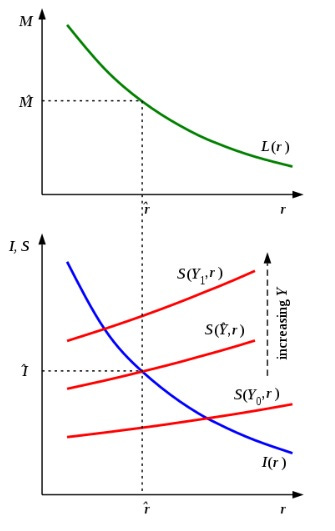
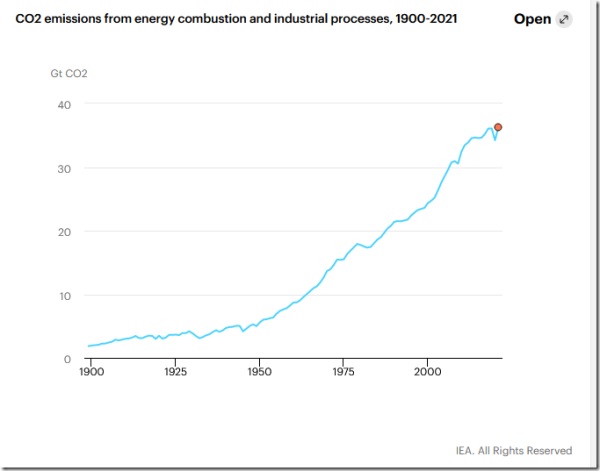

 Politics and Prosperity
