You Say Slacks, I Say…

…trousers. Virginia Postrel writes about slacks:

Ed Haggar, who coined the term “slacks,” has died. From the Dallas Morning News obit:

Mr. Haggar teamed with legendary Dallas advertising pioneer Morris Hite to coin the term “slacks,” his son said. Pants were largely known as trousers until then.

“During the war years, people tried to get more casual during the weekends, during slack time or down time,” [his son] Eddie Haggar said. “Dad and Morris Hite…came up with the name slacks.”

….

Yeah, but, women wear slacks; men wear trousers. See:

Katharine Hepburn, Cary Grant, and James Stewart, on the set of The Philadelphia Story, 1940. Hepburn is wearing slacks. Grant and Stewart are wearing trousers. (And Grant is wearing white socks — with a pin-striped suit. Who’d ever believe it could happen?)

A Profile of the Past

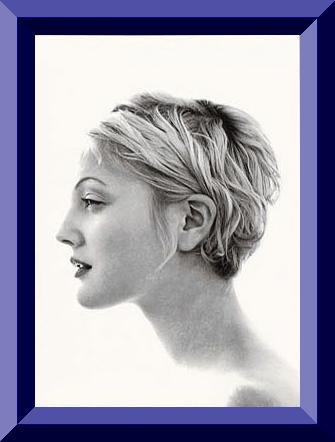
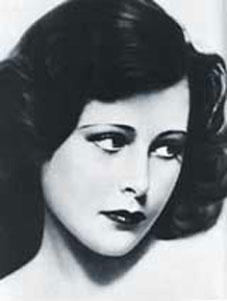
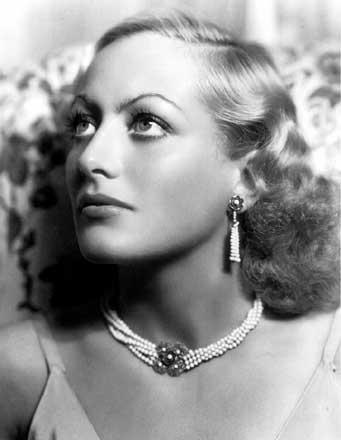
Drew Barrymore, in the first photo below, is a granddaughter of screen legend John Barrymore (1882-1942), shown in the second photo. She’s also a great-niece of another screen legend, Ethel Barrymore (1879-1959), shown in the third and fourth photos. Look at Drew’s profile, then at John’s and Ethel’s. Genetic inheritance at work.

Dribble from Drabble

Margaret Drabble remains a favorite author, in spite of dribble like this:

My anti-Americanism has become almost uncontrollable. It has possessed me, like a disease. It rises up in my throat like acid reflux, that fashionable American sickness.

Unlike John the Square, Drabble has kept her anti-Americanism out of her fiction — except in mild, typically Brit-snob doses. My tolerance has limits, however. She goes off my list of favorite authors when her novels become hysterically anti-American, like John the Square’s Absolute Friends. So presposterous I couldn’t finish it. Nor will I link to it.

Junk-Food Addict

Bruce Springsteen: “I am a dedicated Times reader, and I’ve found enormous sustenance from Paul Krugman and Maureen Dowd on the op-ed page.”

I’ve always found his music boring. Now I know why. His idea of intellectual fulfillment is the equivalent of a quarter-pounder with greasy fries.

A Cool Find

Thanks to a post by Joe Gandelman, guest-blogging at Dean’s World, I found Viral Videos Channel (no, it doesn’t transmit computer viruses), a compendium of film and video clips on subjects ranging from politics to beauty queens. My favorite, thus far, is a 3:52 film clip of the Hot Club of France, featuring Django Reinhardt and Stephane Grappelli. Great listening.

Here’s a link to the Hot Club’s discography, replete with about three dozen RealAudio tracks. More great listening.

A Precious Musical Mystery

From arts.telegraph.co.uk:

The finest of all fiddlemakers

(Filed: 05/09/2004)

Martin Gayford reviews Stradivarius: Five Violins, One Cello and a Genius by Toby Faber

According to the great violinist Nicolo Paganini, Antonio Stradivari (better known as Stradivarius), to make his celebrated violins used only “the wood of trees on which nightingales sang”. Others have made more prosaic suggestions – that the timber Stradivari employed was soaked in brine, or that it was of unusual density owing to the freezing conditions of the 17th-century “Little Ice Age” in which it grew. Some argue that his wood was endowed with special properties while it was being floated down river from the Alps in the form of logs. But there is still no agreement.

Nor is that the only mystery of these antique musical instruments. Their varnish, measurements and internal construction have been minutely examined since the 19th century. And still – 360 years after the birth of their maker – nobody really knows what makes the tone of these old fiddles so marvellous….

Some great things can’t be duplicated. If they could, we’d enjoy them less because they would become trite.

Now for something that’s not trite, here’s Bela Bartok’s “Tanz des holzgeschnitzten Prinzen – Nachspiel” (RealAudio), played on a Stradivarius violin (with orchestral accompaniment).

Time Out for Music

Vivaldi Revivified

This evening I heard a breathtaking performance of Vivaldi’s Il cimento dell’armonia e dell’inventione, played by Fabio Biondi and his group, Europa Galante. It’s on the Virgin Classics label. Here’s how Virgin Classics describes the recording:

Fabio Biondi and Europa Galante offer a new recording of the 12 concertos published as Vivaldi’s now-famous opus 8, Il cimento dell’armonia e dell’inventione – the collection which contains the much-loved Four Seasons. For this unusual reading Fabio Biondi has worked not from the familiar, published score but from manuscripts held in Manchester, Turin and Dresden. There are marked differences between Vivaldi’s published works and manuscript sources: in the music not intended for publication Vivaldi was able to display a freedom that marks out his typically exuberant and Venetian style. This spirit of freedom is, for Biondi, the key to the works’ interpretation. Fabio Biondi, as violin soloist, and Europa Galante react with the passion and flair for this repertoire that explains why they now stand pre-eminent among the world’s Baroque ensembles.

That’s not hype. It’s the most scintillating performance of Vivaldi’s works that I’ve ever heard — by a long shot — and I’ve heard a lot of them. For a sample of Concerto RV 253 (No.5) La tempesta di mare, click here.

A Past Master at Work

Earlier in the evening I had heard the overture to Rossini’s The Barber of Seville, which reminded me of a great recording of the aria Largo al Factotum, made by baritone Riccardo Stracciari in 1917. Yes, recorded 87 years ago — and as bright and shiny as if

Stracciari were today’s hit baritone. Just listen and enjoy.

Time Out for Beauty

FuturePundit informs us that “Babies Prefer To Stare At Beautiful Faces.” So do I:


Vivien Leigh in Waterloo Bridge (1940)

>
Hedy Lamarr (date and venue not given, probably early 1930s)


Ingrid Bergman (date and venue not given, probably 1930s)


Joan Crawford (date and venue not given, but definitely the beautiful pre-war Crawford)


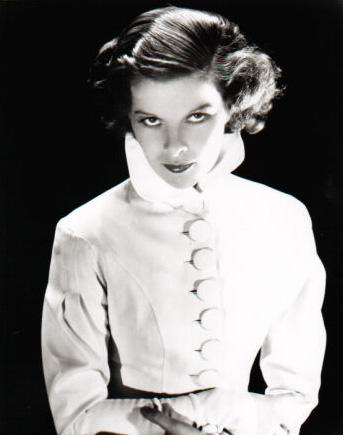
Katharine Hepburn (date and venue not given, probably mid-1930s)

The Golden Era of Hollywood was rich in beautiful women.

Cold Mountain, the Movie

I finally saw the movie based on Charles Frazier’s best-selling novel, Cold Mountain. The movie is good, but disappointing. The novel draws its power from Inman’s long, perilous journey home to Cold Mountain, North Carolina, in the aftermath of the bloody battle of Petersburg (Virginia), where he almost perished. In the novel, Inman’s journey is intercut with the tribulations of Ada, with whom Inman had fallen in love before going to war, and Ruby, a mountain woman who “learns” Ada how to run her farm without a man. The story of Ada and Ruby, though suspenseful and fascinating in its own right, serves mainly to make Inman’s journey seem longer and more suspenseful. Inman’s tragic end, the emotional climax of the novel, follows his return and blissful reunion with Ada.

The movie spends too much time on Ada and Ruby, shortchanging the epic nature of Inman’s journey. The interaction of Jude Law (Inman) and Nicole Kidman (Ada) fails to match the attraction that leaps from the pages of Frazier’s novel. Perhaps it’s the script, perhaps it’s the direction, and perhaps it’s the actors. I think it’s the actors: Frazier’s Inman could have been played perfectly by a young Gary Cooper — strong and silent, in contrast to Law’s rather short and loquacious version. Frazier’s Ada could have been played perfectly by a young Vivien Leigh — who, in fact, played Ada’s prototype in Gone with the Wind.

Having said that, I must defend Renée Zellweger’s Ruby. Zellweger did not overplay the role, regardless of what some critics say. Those critics must never have met an up-country native of the Appalachians. Zellweger’s Ruby is a perfect characterization, in accent, attitude, and manner — rude, crude, suspicious of outsiders, and aggressively defensive. Zellweger deserves her Oscar.

The movie version of Cold Mountain deserves a viewing, but don’t expect more than 152 minutes of entertainment. You won’t remember it as one of the greatest movies ever made — not by a long shot.

An Addendum about Classical Music

My litany of off-putting things about most “classical” music written after 1900 should have included dissonance, atonality, and downright dreariness. Music can be serious, but it needn’t be boring or depressing or just plain unlistenable. But a trip through the list of 20th century composers turns up relatively few who wrote much music that’s endurable. Among the many 20th century specialists in sheer boredom or cacophony are John Adams, Béla Bartók, Alban Berg, Pierre Boulez, John Cage, George Crumb, György Ligeti, Olivier Messiaen, Arnold Schoenberg, Igor Stravinsky, and Anton Webern.

If you want to hear how a true master delivers somberness and dissonance, all the while keeping the listener engaged, listen to Ludwig van Beethoven’s Grosse Fugue, op. 133. Click here and scroll down to track 7 to hear the first minute of Beethoven’s 16-minute masterpiece. Beethoven composed the piece in 1825-26. One hundred seventy-eight years have passed and no one has come close to matching its effervescent blend of inventiveness, sobriety, and esprit.

Making Sense about Classical Music

ArtsJournal.com recently ran a 10-day blog, “Critical Conversation: Classical Music Critics on the Future of Music”. It “tackled the question what/where/are the Big Ideas in classical music?” The blog “involved 13 prominent American music critics.”

One of the critics, Greg Sandow of the Wall Street Journal, is also a composer. Sandow’s home page is here. It includes a link to a page about his “Quartet for Anne” (his wife). You can hear it performed by the Fine Arts Quartet by clicking here. (It’s only about five and a half minutes long.) If this is the new direction of classical music, I’m all for it. It’s a hauntingly lovely piece reminiscent of Antonín Dvořák’s work.

As I’ve written before and will write again, Dvořák was one of the last great composers of the golden era of classical music, which began around 1700 and came to an end around 1900. What happened after that? Another participant in the blog, Kyle Gann of the Village Voice, had a few useful insights:

Throughout the 20th century, each new movement represented an advance in complexity and abstraction over the last. Serialism brought that process to a dead end….

[O]ne thing that composers of my generation have almost universally lost patience with is the presumption of historical inevitability. The idea that 12-tone music was the inevitable music of the future and that anyone who didn’t learn to write it was “useless” (Pierre Boulez’s word) left a bitter taste in our mouths. [Just as Boulez’s so-called music left a bitter taste in audiences’ mouths: ED]

But Gann and most of the other bloggers are hung up on compositional techniques; fusions with pop, rock, and jazz; experimentation with electronic music; the role of gender; the role of political ideas; the influence of Chinese composers; and on and on. All of which misses the point.

What happened around 1900 is that classical music became — and still is, for the most part — an “inside game” for composers and music critics. So-called serious composers (barring Gershwin and a few other holdouts) began treating music as a pure exercise in notational innovation, as a technical challenge to performers, and as a way of “daring” audiences to be “open minded” (i.e., to tolerate nonsense). But the result isn’t music, it’s self-indulgent crap (there’s no other word for it).

Thus I return to Greg Sandow, who is on the trail of the “next big idea” in a post headed “Truly big classical ideas”:

A new Big Idea would be very welcome, at least to me — a reintroduction of performer freedom, but to what now would be considered a drastic degree. You can find examples of this in old recordings, especially by singers. Look at Ivan Kozlovsky, one of the two star tenors at the Bolshoi Opera during Stalin’s rule. To judge from films and recordings, he’s clearly one of the greatest tenors who ever lived, measured simply by technique, breath control, range (all the way up to an F above high C, with Cs and C sharps thrown out like thrilling candy), phrasing, and expression….

But what makes him most unusual — and, to many people, quite improper — is that he sang at least some of the time like a pop singer, using lots of falsetto, almost crooning at times, and above all taking any liberty he pleased, slowing down and speeding up as the mood suited him. To my ears, he’s mesmerizing when he does that. You can’t (to bastardize an old cliche) take your ears off him. And when he does it in the Duke’s opening solo in the duet with Gilda from Rigoletto, he nails the Duke’s character as no other singer I’ve ever heard could do. You don’t just theorize that the Duke is attractive to women; you feel it, and want to surrender to him yourself. Or, perhaps, run away, which is exactly the kind of dual reaction a man like that would really get….

[Kozlovsky is] in part just a sentimental entertainer. But what sentiment, and what entertainment! And what perfect singing. When he croons “O Mimi tu piu non torni”…, some people might roll their eyes at the way he slows down at the peak of the phrase, but you can’t ignore his genuine feeling, or his perfect control as he slowly dreams his voice into the lightest of pianissimos.

Singing like that would be absolutely forbidden in opera today. No teacher, no coach, and no conductor would let any singer try it. And yet, if someone stepped out on the stage of the Met singing that way, the audience would go insane. The applause wouldn’t end. And opera would come back to life.

When I follow Sandow’s point to its logical conclusion, here’s where I arrive: Classical music, on the whole, would come back to life if more composers were to reject self-indulgence and write music for the enjoyment of peformers and audiences.

Boring Things

Just a quick list of boring things, starting with — but not limited to — sports on TV.

The Olympics — Winter, summer, spring, or fall, it doesn’t matter at all.

The Tour de France — Why not watch your neighbor mow his lawn?

Professional basketball — Ten tall guys running up and down a bowling alley elbowing each other.

Professional football, American style — A European once said it best: “They all stand up, they all fall down.”

Professional football, European style (a.k.a. soccer) — An exciting game ends in a 0-0 tie.

Major league baseball — Two-hundred ten minutes of non-stop boredom on TV. Two-hundred ten minutes of non-stop canned music at the ballpark.

Announcers, commentators, and analysts for all of the above — Never have so many people had to say so little of substance for so much money.

“Classical” music and visual art created after 1900 — Indecipherable nonsense into which pseudo-intellectuals and the nouveaux riches try, and fail, to pour meaning.

Ditto jazz created after 1940.

Most French movies, except for the actresses.

Any musical written after 1950, especially if it was written by Stephen Sondheim or Andrew Lloyd Weber.

Broadway-style singing, most of which derives from the “can belto” school of vocalism.

Andrea Bocelli, Charlotte Church, and all other over-amplified vocalists who mangle great arias.

Any novel written before 1900 and any “experimental” novel written anytime, anywhere, by anyone, starting with James Joyce. (For goodness sake, please provide a beginning, a middle, and an end. If I want to solve a puzzle I’ll buy a Rubik’s cube.)

The front section of the daily paper — It’s already been on cable news and the internet, so why kill a lot of trees to repeat stale news and views?

Ditto the sports section.

“Comic” strips that try to be realistic about families and personal relationships — Hey, we get enough of that at home.

Chris Matthews, Bill O’Reilly and their ilk — It pays (handsomely) to be rude, but I don’t have to watch it.

Daytime TV, “reality” shows, and situation comedies — Take up reading before your brain rots — really. Those things must cause Alzheimer’s disease.

Any “news story” that’s more than a day old — TV still isn’t safe for Laci Peterson’s parents. And, yes, I got the gist of the Abu Ghraib business the first time, thank you.

To quote Porky Pig — who was truly boring in contrast to such contemporaries as Daffy Duck, Sylvester, Bugs Bunny, and Tom & Jerry — B-b-b-b-b…that’s all, folks!

Time Out for Tenors

Enough of politics, economics, and philosophy. It’s time to talk about music. Specifically, it’s time to talk about great tenors of the past. Why? Because I was reminded of great tenors in this roundabout way:

Yesterday I was listening to the Classical Voices channel on Sirius satellite radio. (If you’re not a subscriber, try it free for three days by registering here.) Cecilia Bartoli was singing Scarlatti’s “The sun is sparkling more clearly from the Ganges” — which I recognized as an aria that Luciano Pavarotti recorded some years ago. Then, up pops Pavarotti, singing Handel’s “Wher’ere you walk” — which, for my money, was sung best by John McCormack, who recorded it decades ago. And being reminded of John McCormack reminded me, in turn, of all the other great tenors of the past whose voices had character.

I’ll come to some of those great tenors in a bit, but I must say something about character in a voice. A voice with character charms the listener, it conveys warmth, it seems personal rather than mechanical, it has overtones and undertones that can’t be written on a sheet of music. Pavarotti’s voice has character. The voice of Placido Domingo, Pavarotti’s great contemporary, though technically better in many respects — range, power, perhaps even accuracy — has almost no character. I have sometimes heard a bit of something by Domingo and asked “Who was that?” With Pavarotti, you never need to ask.

Now, let us visit some of the great tenor voices of the past. We begin our journey at the website of Nimbus Records, home of the Prima Voce line, which features great vocal recordings made between 1900 and 1940. There’s a page that lists all the Prima Voce tracks that can be heard on Real Audio, just by clicking a Real Audio icon. There are also links to each of the albums from which the tracks are drawn. For example, the first link is to The Prima Voce Treasury of Opera, Volume 2, which leads to a track listing for that album, where you can see everything that’s on the album. That’s my plug for Nimbus and Prima Voce. Now, in the order in which they appear on the complete Prima Voce listing of Real Audio tracks and complete with Real Audio links, here’s a selection of tracks by great tenors of the past — tenors with voices of character:

Giacomo Lauri-Volpi, LO SCHIAVO, Gomes, Quando nascesti tu

Beniamino Gigli, LA BOHÈME, Puccini, Che gelida manina

David Devriès, LA DAME BLANCHE, Boieldieu, Rêverie de Georges Brown

Beniamino Gigli, L’ELISIR D’AMORE, Donizetti, Quanto è bella, quanto è cara

Tito Schipa, MIGNON, Thomas, Ah! Non credevi tu

Tito Schipa, A GRANADA, C. Palacios, Cancion Andaluza

Tito Schipa, Traditional, ?arr. Vergine, Vieni sul mar!

Beniamino Gigli, MEFISTOFELE, Boïto, Dai campi, dai prati

Beniamino Gigli, Rossini, La Danza

Jussi Björling, PRINCE IGOR, Borodin, Vladimir’s Cavatina [Sung in Swedish]

Jussi Björling, MESSA DA REQUIEM, Verdi, Ingemisco

Jussi Björling, Tosti, Ideale

Jussi Björling, CARMEN, Bizet, La fleur que tu m’avais jetée

Jussi Björling, Widestedt, Sjung din hela làngtan ut

Jussi Björling, di Capua, O sole mio [sung in Italian]

John McCormack, LUCIA DI LAMMERMOOR, Donizetti, Fra poco a me ricovero

John McCormack, Edmund O’Rourke, writing as Edmund Falconer/Michael William Balfe, Killarney

John McCormack, LA TRAVIATA, Verdi, De’ miei bollenti spiriti

Enrico Caruso, MANON, Massenet, Il Sogno, (En fermant les yeux)

Enrico Caruso, E. di Capua, O Sole Mio

Enrico Caruso, Antonio Scotti, MADAMA BUTTERFLY, Puccini, Amore o grillo

Edmond Clément, MANON, Massenet, En fermant les yeux (Dream)

Richard Tauber, DIE ZAUBERFLÖTE, Mozart, Dies Bildnis ist bezaubernd schön

Joseph Schmidt, Strauss, Wiener Bonbons

Beniamino Gigli, PAGLIACCI, Leoncavallo, Recitar! … Vesti la giubba (Canio)

Antonio Cortis, RIGOLETTO, Verdi, Questa o quella

Giacomo Lauri-Volpi, LUISA MILLER, Quando le sere al placido

Leo Slezak, DIE KÖNIGIN VON SABA, Goldmark, Magische Töne

Georges Thill, MANON, Massenet, Ah! fuyez douce image

Enrico Caruso, Adam, Cantique de Noël

Paul Planel, Berlioz, L’Enfance du Christ – Le repos de la Sainte Famille

Karl Erb, Loewe, Des fremden Kindes heil’ger Christ

David Yuzhin, LA GIOCONDA, Ponchielli, Cielo e mar

Dmitri Smirnov, MEFISTOFELE,, Boito, Giunto sul passo estremo

Enrico Caruso, MARTHA, Flotow, M’apparì tutt’ amor

Enrico Caruso, LA BOHÈME, Puccini, Che gelida manina

John McCormack, Tosti, Goodbye

Lev Klement’yev, NERO, Rubinstein, Oh grief and care

Boris Slovtsov, THE SNOW MAIDEN, Rimsky Korsakov, Full of wonders

Vasily Damayev, SADKO, Rimsky Korsakov, Ho! my faithful company

Vilhelm Herold, RIGOLETTO, Verdi, Questa o quella

Enrico Caruso, Tosti, Addio

Enrico Caruso, Tosti, L’alba separa dalla luce l’ombra

Richard Crooks, Anon, Have you seen but a whyte lillie grow

Miguel Fleta, LA FAVORITA, Donizetti, Una vergine, un angel di Dio

Miguel Fleta, I PURITANI, Bellini, A te o cara

Tito Schipa, L’ELISIR D’AMORE, Donizetti, Una furtiva lagrima

Helge Roswaenge, LE POSTILLON DE LONJUMEAU, Adam, Mes amis, écoutez

(Listen for the D-flat above high C!)

Helge Roswaenge, EUGENE ONEGIN, Tchaikovsky, Echo lointain de ma jeunesse (Lenski’s aria)

Enrico Caruso, LES PÊCHEURS DE PERLES, Bizet, Je crois entendre encore

Enrico Caruso, RIGOLETTO, Verdi, La donna è mobile

Oops, Here’s the Last Word

UPDATED BELOW

It all began with Michelle Malkin’s post about her new book, In Defense of Internment: The Case for “Racial Profiling” in World War II and the War on Terror. It escalated into exchanges between Malkin and Eric Muller, guest-blogging at The Volokh Conspiracy. I’ve been commenting from the sidelines, and I thought I was through when I said

The ultimate word goes to Instapundit, because he agrees with what I’ve said about the Muller-Malkin exchange, namely, “most of the discussion has to do with things that happened 60 years ago, as opposed to what we ought to do now.”

But Malkin gets the last word because she has summarized her recommendations for the present emergency:

…I am advocating narrowly-tailored and eminently reasonable profiling measures such as:

…The post-September 11 monitoring of Arab and Muslim foreign students on temporary visas.

…Airport and travel screening measures that subject individuals of certain nationalities to heightened scrutiny; preventive detention of known illegal aliens, suspected terrorists, or enemy combatants; immediate deportation of illegal aliens from terror-sponsoring and terror-supporting nations; a moratorium on temporary visas to countries with large al Qaeda presences.

…Heightened scrutiny of Muslim chaplains and soldiers…serving in the military and in prisons.

In addition,…I discuss the need for “structural reforms that allow our country to better meet the potential threat posed by future Kenji Itos (he was a suspected intelligence agent for Japan who was acquitted of federal charges because prosecutors couldn’t introduce MAGIC into a civilian court), Jose Padillas, and Zacarias Moussaouis but that also allow enemy combatant designations to be reviewed by an independent board or court.” I also draw lessons from the need to protect MAGIC during WWII and apply them to the current need for more secrecy in some vital national security matters today….

UPDATE:
Eric Muller and Greg Robinson are still trying to rebut Malkin. Click on this link to their most recent post, then scroll down to see more. I think they’re just nit-picking and being smarmy because they’ve been kicked in the teeth (figuratively) by an intellectually tough opponent who (rightly) isn’t cowed by their Ph.D. degrees. Judge for yourself.

Speaking of Modern Art

It’s this kind of balderdash that makes me grit my teeth:

Mathematicians, philosophers and physicists at the beginning of the 20th century were recognising that many absolute truths were convenient caricatures of a universe that might be far stranger, far further from common sense than anyone thought. Western painting had its own scientific assumptions, established in the Renaissance. Picasso and Braque unmasked these as conventions. The concepts of absolute gravity and time that gave way to relative ones in the early 20th century had been established by Newton in the 1600s. The doctrine of single-point perspective, whose inadequacies Braque and Picasso exposed, had been asserted by Leon Battista Alberti and Filippo Brunelleschi two centuries before.

The perspective system invented in Florence in the 15th century was a shorthand for the way things looked, a brilliantly usable fiction of the appearance of the world. Our sense impressions are complicated, chaotic data that the brain has to make sense of. Seeing in pictures appears to be necessary in our lives. Alberti and Brunelleschi showed how those pictures can be made consistent and logical by fixing a distant point towards which objects recede – what’s further away looks smaller than what’s near. [Picasso and Braque] did not make their intellectual revolution against this centuries-old system in a cool, considered mood, but with turbulence and fury. There was a violence in their assault on perspective.

Picasso’s first essay in the new painting, Les Demoiselles d’Avignon (1907), associates the death of the picture with sexual aggression and “primitive” release. It is an overturning of civilised lies, one of which is the neat illusion of perspective. Braque put his anger into words. “The whole Renaissance tradition is antipathetic to me,” he said. “The hard-and-fast rules of perspective, which it succeeded in imposing on art, were a ghastly mistake…”

Pretentious twaddle! Art draws on perfectible techniques; science limitlessly accrues knowledge.

The truth is that in art — as in “serious” music — the best work that could be done had been done by about 1900. That left Picasso, Braque, and their ilk — like Schoenberg, Berg, and their ilk — with two options: Create new works using the tools that had been perfected by the masters who came before them, or disown the tools in a fit of adolescent rebellion. The artists and “serious” composers of the 20th century, in the main, took the second option.

Recommended Reading

Recently I mentioned Juno & Juliet, by Julian Gough. It’s a novel about identical twin sisters who have arrived in Galway to attend university. Juliet tells the tale, which is at first hilariously comic and gradually becomes serious and almost tragic. Gough manages the transition gracefully, without the intervention of a sudden accident or disease. The characters remain true to their original characterizations. The narration and dialog remain fresh and witty, even as the mood darkens somewhat. A minor masterpiece of plotting, dialog, and storytelling.

Books

A few weeks ago I mentioned A Student of Weather, a novel by Elizabeth Hay. I was then 79 pages into the book, which I’ve since finished. It lived up to its early promise. It’s a beautifully written, affecting novel.

Since finishing A Student of Weather, I’ve finished one entertaining-but-not great novel and abandoned a dreary psychological novel. Now I’m into Juno and Juliet, by Irish author Julian Gough. It’s a comic novel about identical twin sisters who have arrived in Galway to attend university. The narrator, Juliet of the title, is “disappointed by the university, and vice versa.” Juliet has many things to say about her disappointment. This observation rings especially true to me:

I’d so looked forward to leaving the cultural wasteland in which I’d half-grown up, and in my last year at school I’d fever-visioned a dreamy, sunlit university-state peopled by the brightest and the best. I’d half-lived there for the final school months, it had seemed more real to me than the town outside. To get to the university and find it had fallen into barbarian hands, that its halls were full of the very peasants and savages I thought I’d left behind, still talking about how their new shoes had split on the second day, and of the TV shows they’d missed, and the terrible price of twenty cigarettes…it was a bitter blow.

Thus far, everywhere I’ve turned in this book I’ve found gems like that.

The Word Is "Flipocrisy"

UPDATED

Orin Kerr at The Volokh Conspiracy asks for a word

for when advocates on both sides of an ongoing debate switch rhetorical positions, and yet they insist on decrying the inconsistency of their opponents while overlooking their own inconsistency.

Kerr doesn’t mention the case of Saddam Hussein and the Iraq war, but it’s hard not to notice that many Democrats who have opposed the war — and by extension the overthrow of Saddam — sang in a different key when Clinton was president. There’s also the case of deficit spending, on which members of the two major parties have, in the main, reversed positions since Reagan’s ascendancy.

I think “flipocrisy” captures the phenomenon nicely. “Flip” for reversal; “ocrisy” because we’re seeing a form of “hypocrisy” in action.

John Holbo at Crooked Timber suggests “poetic justice as fairness” (for those who are in the Rawls joke-getting set). It’s not a ringing phrase, but its logic is impeccable; to quote Holbo:

“Poetic justice as fairness” denotes a vendetta-based, rather than abstract reason-based approach to argument. Dialectic as feud; Hatfields and the McCoys do thesis and antithesis, with stupidity as synthesis. The rule is: if you think your opponent commited a fallacy in the recent past, you are allowed to commit a fallacy. And no one can remember when it started, but the other side started it. It is difficult to break the tragic cycle of intellectual violence once it starts.

Spot on!

PG at de novo gets Rawls jokes but prefers “rubber glue-ism” — as in “I’m rubber and you’re glue, and whatever you say bounces off me and sticks to you.”

  • Comments? Click here.
  • Current Reading

    I’m 79 pages into A Student of Weather, a novel by Elizabeth Hay. Brilliant — that overused adjective — is in order here. Hay is one of those rare, observant writers who can capture character, feeling, mood, and setting in a few words, phrases, or sentences.

    The book begins in a small farming community on the Saskatchewan prairie, in the dust-bowl year of 1938. A leading character is Maurice, a 23-year old botanist from Ottawa who comes to the farming community several times a year to study prairie grasses. A middle-aged woman who develops a crush on Maurice discovers that he doesn’t remember her from his previous visit:

    [H]e trailed disappointment behind him and was unaware of it. She was only a vague face in his mind, a farmwife from Belgium, or was it Holland?

    And then she realized the value of Prairie reserve. It was reliable, it did not set you up for disappointment, it let you alone and it was balanced by steady courtesy. People never failed to recognize you, and they never pried.

    Hay has been doing this for 79 pages. I have no doubt that she will continue doing it for the next 285 pages.

    All That Jazz

    An otherwise sensible blogger (whom I’ll not name) adores Miles Davis. He (the blogger) says, “If you listen to nothing else by Miles Davis, buy and listen to Relaxin’. I absolutely guarantee you will not hate it, and you are very likely to love it.”

    Well, I just refreshed my memory by listening to a few cuts, courtesy of Amazon.com. I hate it; it’s pablum for the ears. It reminds me of the background music for “Peanuts” films. Maybe it is the background music for “Peanuts” films.

    Wherever jazz went after the late 1930s, it wasn’t a good place. Davis’s stuff is good compared with the meandering, discordant offerings of “artists” whose names my memory has suppressed. But that’s like saying a bowlful of sugar is better for you than a bowlful of arsenic. It is, but why eat it when the pantry is stocked with the pre-war offerings of Sidney Bechet, Bix Beiderbecke, Benny Goodman, Fletcher Henderson, Jelly Roll Morton, King Oliver, Jimmie Lunceford, and Fats Waller, among many others of their era.

    I just love it when I get a chance to expound on the degradation of classic musical forms. Someday I’ll write about the hideousness of “serious” music after 1900.