The Names, They Are A Changing

The popularity of the first names of my grandparents, in the years of their birth (all in the last three decades of the nineteenth century):

Joseph – 7th (all ranks from the Social Security index of popular baby names)
Delia – 126th
Ernest – 24th
Hazel – 26th

As of 2007:

Joseph – 13th
Delia – 989th
Ernest – not in the top 1000
Hazel – 361st

Whereas, in 2007,

Anthony was 7th among male names (103rd when Joseph was born);
Serenity was 126th among female names (not in top 1000 when Delia was born);
Nathan was 24th among male names (136th when Ernest was born); and
Kayla was 26th among female names (not in top 1000 when Hazel was born, probably not a name then).

In 1908, the five most popular female names were Mary, Helen, Margaret, Ruth, and Anna. In 2007, the five most popular female names were Emily, Isabella, Emma, Ava, and Madison. The top five male names in 1908 were John, William, James, George, and Robert; in 2007 the top five male names were Jacob, Michael, Ethan, Joshua, and Daniel — an ironic turn toward the Old Testament in this secular age.

My own name — which is associated mainly with an Apostle — stood at or near 10th place from 1880 through the mid-1960s. It has slipped to 51st place.

What’s in a Name?

American League teams include the St. Petersburg (“Tampa Bay”) Rays, the Minneapolis (“Minnesota”) Twins, the Anaheim (“Los Angeles”) Angels, and the Arlington (“Texas”) Rangers. Over in the National League we find the Miami (“Florida”) Marlins, the Phoenix (“Arizona”) Diamondbacks, and the Denver (“Colorado”) Rockies.

The practice of associating a baseball team with a place other than the city in which it plays its home games dates to 1961, when the original Washington Senators became the “Minnesota” Twins. It’s the baseball equivalent of naming a child after a sign of the Zodiac — very “new age,” “countercultural,” and all that. What began as an exception has become the rule: baseball’s four newest franchises (awarded in 1993 and 1998) belong to “Arizona,” “Colorado,” “Florida,” and “Tampa Bay.” (Can you imagine the “Maryland” Orioles, “Illinois” Cubs, “Ohio” Indians, “Michigan” Tigers, etc., etc., etc.?)

Preferring, as I do, real names like Matthew and Mary, I insist on the St. Petersburg Rays, Minneapolis Twins, Anaheim Angels, Arlington Rangers, Miami Marlins, Phoenix Diamondbacks, and Denver Rockies. The residents of those cities should insist likewise.

Sidekicks, with a Twist

A sidekick, according to Wikipedia,

is a stock character, a close companion who assists a partner in a superior position. Sancho Panza in Don Quixote, Doctor Watson in Sherlock Holmes and Batman‘s companion Robin are some well-known sidekicks….

Sidekicks not only provide comic relief but can occasionally be brave or resourceful at times and rescue the hero from some dire fate: such as … Festus Haggen of Gunsmoke‘s Matt Dillon….

Sidekicks also frequently serve as an emotional connection, especially when the hero is depicted as detached and distant, traits which would normally generate difficulty in making the hero likable. The sidekick is often the confidant who knows the main character better than anyone else and gives a convincing reason to like the hero. Although Sherlock Holmes was admittedly a difficult man to know, the friendship of Dr. Watson convinces the reader that Holmes is a good person….

While it is usually the reverse, it is not unheard of for a sidekick to be physically more conventionally attractive, charismatic, or physically capable than the character who is intended to be the hero. This is most typically encountered when the hero’s appeal is supposed to be intellect instead of sex appeal or physical prowess. Such characters are often middle aged or older and tend towards eccentricity; fictional sleuths and scientists for example. Such sidekicks are rarely encountered in fiction because the hero runs the risk of being upstaged by them. However, examples of successful such pairings include Inspector Morse and his sidekick DS Robbie Lewis, Nero Wolfe and his sidekick Archie Goodwin….

Other famous sidekicks — whose roles vis-a-vis their partners range from comic foil to friendly nemesis to voice of reason to stalwart ally — include (in no particular order):

I’m sure I’ve omitted other notable pairings. I’ll add them as they come to mind.

Some of My Favorite Cars

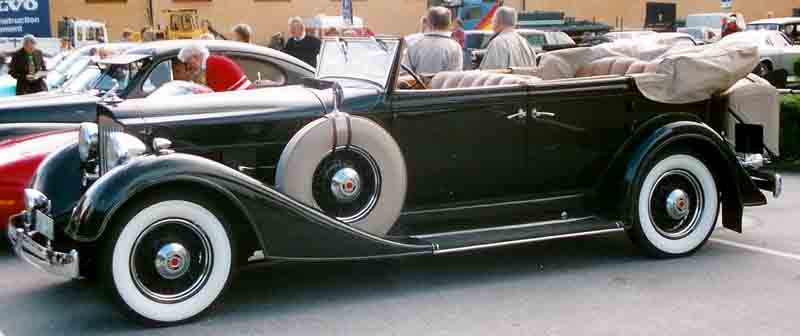
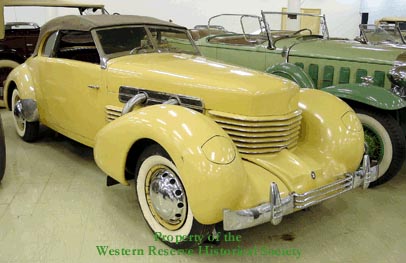
The classic era of American automobile design began in the 1920s and lasted through the late 1930s. Here are some of my favorites:

1927 Kissel 8-75 Speedster

1929 Jordan Speedboy G

1929 Duesenberg J 350 Willoughby

1930 Pierce Arrow Roadster

1932 Cadillac 355B Sport Phaeton

1932 Pierce Arrow Model 54 7-Passenger Touring Car

1934 Packard Eleventh Series Eight 1101 Convertible Sedan

1935 Auburn 8-851 Cabriolet

1937 Cord Model 812C Phaeton

1938 Lincoln Zephyr Convertible Coupe

Many collections of classic-car photos and specs are available online. Conceptcarz.com is the best that I have found. The collection there spans the late 1800s to the present. See also the excellent Crawford Collection of the Western Reserve Historical Society.

Mystery Solved

William Lyon (Billy) Phelps was, in his day (1865-1943), a noted professor of English literature (Yale), proponent of Jane Austen, writer of popular prose, public lecturer, and preacher (he was also an ordained minister). I learned of Phelps because he and his wife summered at Huron City, Michigan, not far from the village where my grandmother lived.

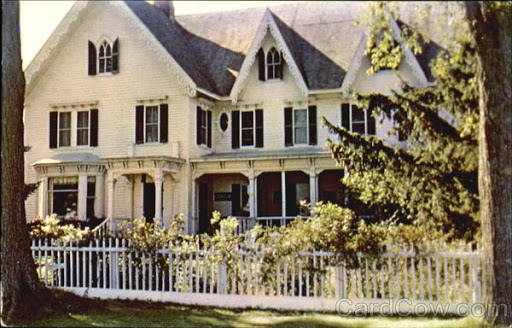
The Phelps’s summer home (which Mrs. Phelps inherited from her father) is known as Seven Gables. It is preserved as part of the Huron City Museum, a collection of old buildings and artifacts from the early days of Huron City. Below are successive views of Seven Gables. The first is from the road that runs in front of the house. The second shows the house and its seven gables from above. The third shows the house (toward the bottom of the photo) and an abandoned golf course across the road. The fourth, in which the house is a white speck near the center, shows the proximity of the house and golf course to Lake Huron, which is at the top of the photo.


The mystery (to me) was the golf course. Whenever we stopped at Huron City on the way to grandma’s house, I would walk to the edge of the road bordering the course, gaze down upon the derelict fairways and greens, and wonder about the course’s history. Had a country club been founded there in the boom times of the ’20s, only to fall victim to the Depression? Was the course too isolated to be a going proposition?

The mystery was solved when I learned recently that the course was on the Phelpses’ property — a personal, private course — and that Prof. Phelps played there regularly when he was in residence at Seven Gables. There it sits, abandoned — probably since 1939, the year of Prof. Phelps’s last visit to Huron City.

An Eon Ago…

…when I owned a small business in a rural village…

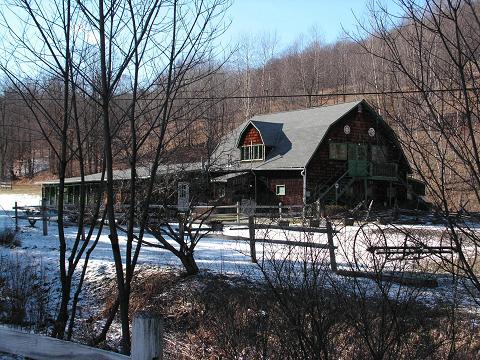
…one of my customers was the owner of a country inn. He and I traded services instead of paying each other in cash. (I did declare the value of services received as income on my tax returns.) As a result, my family and I enjoyed many a meal in this bucolic setting:

Our favorite seats were on the glassed-in porch (lower photo, left). There we had a splendid view of the nearby stream.

The inn has long since closed; the building is now a venue for music festivals and other “artsy” gatherings; and we now live 1,500 miles from the place. But my mind’s eye still recalls the evenings — sometimes snowy and sometimes showy with fall color — when we traversed country roads to the inn, where food, drink, and hospitality awaited us.

Election 2008: Signs and Portents

This isn’t a “political” post. Read on.

Forty-two different men have served as president of the United States, although the official number of presidents is 43 because Grover Cleveland was elected to two non-consecutive terms, each of which is counted as a separate presidency. Herein, I present some important facts about those 42 men and their 43 presidencies, and about the implications of those facts for the outcome of election 2008.

No person whose last name begins with “O” has served as president. The last names of three presidents begin with “M” (Madison, Monroe, McKinley); the last name of one president begins with “Mc” (McKinley). Advantage: McCain

Only three presidents’ last names end in vowel sounds (Monroe, McKinley, Kennedy); all the rest end in consonant sounds. Advantage: McCain

No president’s last name ends with “a”; 15 presidents’ last names end with “n.” Advantage: McCain

The mean number of letters in the presidents’ last names is 6.67; the median number is 7. McCain (6) is closer to the norm than Obama (5). Advantage: McCain

Of the 43 presidencies, 38 have occurred by election. (The five presidents who didn’t serve elected terms of office were Tyler, Fillmore, A. Johnson, Arthur, and Ford.) There have been 37 elected successions (Washington didn’t succeed anyone). In two of those successions, the newly elected president was the same age as his predecessor was when the predecessor was elected; in 15 cases, the successor was younger than his predecessor was; in 20 cases, the successor was older than his predecessor was. It is, therefore, more usual than otherwise for a newly elected president to be older than his predecessor was upon election. Such would be the case if McCain (72 by the time of this year’s election) succeeds G.W. Bush (54 at the time of his election in 2000). Alternatively, Obama (47 by the time of this year’s election) would be younger than G.W. Bush was in 2000. Advantage: McCain

Mr. Cranky has the edge over Mr. Change.

The "Sixties Campus": Good Riddance at Last?

Guest commentary by Postmodern Conservative.

Here’s an interesting commentary from The New York Times (July 3, 2008):

Baby boomers, hired in large numbers during a huge expansion in higher education that continued into the ’70s, are being replaced by younger professors who many of the nearly 50 academics interviewed by The New York Times believe are different from their predecessors — less ideologically polarized and more politically moderate.

Whether this will reveal itself to be a positive trend remains to be seen. I never trust liberal analysis of what’s “good” or “moderate,” etc. But it is true that philosophical attitudes follow definite cycles. For example, after the French Revolution and Napoleon there was a conservative reaction in Europe. This happened again in the wake of the First World War and the Bolshevik Revolution, though it was cut short by the “success” of F.D.R.’s New Deal (in fact, it was the progressives riding on the coattails of American victory in World War II). In that sense, the leftist dominance of American campuses pre-dates the hippies.

Certainly a conservative resurgance—which we see elsewhere, in politics and religion—is welcome, though it’s no cause for complacency. So much damage has been done it will take a lot of work just to clear up the debris left by the old regime.

Richard Scarry Gets Scary?

Guest commentary by Postmodern Conservative.

Actually, Richard Scarry books have be dumbed-down for years, but I only noticed it recently because of my young children. I regret now that some of their older Scarry books have bit the dust from over-use. As it turns out, they were irreplaceable.

What about new editions and reprints? Don’t count on it. For example, I own a copy of Richard Scarry’s Best Storybook Ever, an original from the 1960s. It’s in rather poor shape so I was thrilled to see that it has been re-issued. It’s the most visually appealing of all his books with some great stories. But it turns out that the story of the Quebec bruin, “Pierre Bear,” is gone. I imagine it’s because he is shown hunting seals and turning their pelts into fur coats.

For a sad comparison of Scarry’s popular Best Word Book Ever between 1963 and 1991 editions, see this. Not only is the artwork altered in the name of political correctness, in many cases it just plain remedial compared to Scarry’s originals. Another point made by critics is that the language has been made stupider compared to what kids a generation or two ago were reading. Unlike Scarry, these publishers don’t know how to write for children, only overindulged leftist adults.

Library Daycare

Guest commentary by Postmodern Conservative.

On my way to work I stopped by my local library to drop some items in the book return slot and found both doors and a couple of windows boarded up. According to some people nearby, kids had knocked them out with rocks.

In recent years I’ve seen the place became a daycare center for kids waiting for their parents after school. I’ve often encountered gangs of loud and ill-mannered adolescents hanging around the entrance, who like to occasionally hassle and intimidate other (well-behaved) children. I had to up put with plenty of that in my youth, but never around the library. But things have changed, and public institutions seem bent on feeding the problems that plague them.

Perhaps what annoys me most is the fact that there are multiple computer banks most of which are used by young people to surf the internet or play online games. It’s tax-supported entertainment. And considering just how ubiquitous PCs and the internet is today, I can’t imagine the justification for it. Pay phones, for instance, have been taken out of most public places because cell phones are so common. And you can be sure all the loud kids at the library have cell phones—it’s the only way their parents get in touch with them. Of course, libraries have long provided useless media for young people, like trashy books and magazines and the so-called “graphic novels.” When I was growing up in the 1970s and early ’80s I liked comic books (when they were still largely aimed at kids) but I didn’t expect my library to stock them anymore that I expected to go there to watch television.

This is another example of the hazards of “public” institutions. If it were a private library, with even a token membership fee, I doubt it would keep out any of the deserving residents—those who are serious about reading and studying—while it might give the rock-throwing juveniles a reason to congregate somewhere else. It’s an old lesson of civilization that as soon as you make anything “free” you provide an open invitation to freeloaders and riff-raff. The people who really could make the best use of these things are gradually driven off.

"Great" Britain No Longer

Guest commentary by Postmodern Conservative.

Tom Bethell addresses this topic in a recent article for The American Specator. As a British expatriate, he tells us

I go to England fairly often as I have family there — a brother, two sisters, and my 95-year-old mother. Otherwise I doubt if I would go back.

In particular, he points to socialist-driven economic decline and the related social rot:

The same culture war that is being waged in the United States is already much further advanced in Britain. Over there, the forces of resistance are negligible, so the cultural revolution has almost completely triumphed…. The ruling-class embrace of semi-capitalism has brought about the rise in prosperity, but this has been accompanied by mounting social chaos. One of the main indicators is the rise of family breakdown (or non-formation) and out-of-wedlock childbearing. The key enabler of this change has been the transfer of tens of billions of pounds to fatherless households. Only a society wealthy enough to collect and redistribute revenue on this scale can sustain widespread illegitimacy.

I can contribute some further thoughts: I was told that in the UK people now speak of “Britain,” not “Great Britain.” I guess it’s considered too imperial and anachronistic. But even this small change in usage is revealing. Quite simply, in all the years that I’ve been to Britain, beginning in the 1980s, I became slowly aware it is no longer the “blessed plot” of Shakespeare. Like most Americans, my vision of a quaint, gentile civilization was derived from old film depictions. For that reason I was an Anglophile, and even now I can’t quite shake my love of England (or least the England that once was). I like hot tea with milk, Youngs and Sam Smith stout, and most of my favorite authors are English.

Of course every culture has it downside. When I speak of Britain I am thinking specifically of the English, since they have been its rulers and imparted to it many of its virtues, as well some of its vices. England always had a checkered past: the persecution of Catholics under the Tudors, the ill-treatment of the Irish, the massacres at Culloden, the depredations of the American Revolution, the Boer War concentration camps, to name a few instances. But in general the English have held up pretty well…. at least until the last two or three decades.

I was reading some comments in Orwell about how, in the 1940s, the English even then regarded Americans as purveyors of decadence. But, to take the example of rock music, the American variety wasn’t politically subversive. British rock was. But then it came out of a totally different political and economic climate. (One thing I learned in my travels in the UK was that a permanent welfare class need not be relatively new or relatively non-white. In England it goes back to the 1950s, if not earlier, and is traditionally white.)

Elvis was no saint, but his vices were normal and he was as patriotic as the next American. By contrast the music of “British Invasion” was more explicit in its promotion of sexual decadence, drugs and political radicalism. But if hippie scene was bad, the punk rockers of the following decade were overtly nihilistic. It’s this punk/skinhead subculture that gradually spread through the UK and into the US. In those years I’ve seen fringe behavior become mainstream, like body piercing and extensive tattooing, not only of men but women as well. And we got all of this from the UK.

Colin Firth, star of the 1990s version of Pride and Prejudice, said that: “The English people, a lot of them, would not be able to understand a word of spoken Shakespeare. There are people who do and I’m not denying they exist. But it’s a far more philistine country than people think.” Say what you like, the last great figure in English history was Margaret Thatcher, who embodied all the best qualities of “Britishness.” At least she was no philistine.

Yankee Sensibility

I have lived among Northerners all of my life. I grew up and went to college in Michigan. I spent the worse part of four decades in the Virginia suburbs of Washington, D.C., a bastion of Northern “charm.” A village in a rural, western part of New York State claimed another three years of my life. I have now lived in Austin — another bastion of Northern “charm” (i.e., rudeness, crudeness, and lewdness) — for almost five years.

I am here to tell you that Michael Hirsh is wringing wet when he writes in Newsweek that

a substantial portion of the new nation [the South and much of the West and Southern Midwest] developed, over many generations, a rather savage, unsophisticated set of mores. Traditionally, it has been balanced by a more diplomatic, communitarian Yankee sensibility from the Northeast and upper Midwest. But that latter sensibility has been losing ground in population numbers — and cultural weight. The coarsened sensibility that this now-dominant Southernism and frontierism has brought to our national dialogue is unmistakable. (Quotation via Eugene Volokh)

The manners and mores of Northerners, as a “race,” are inferior to those of true Southerners. (True Southerners are persons who can claim the South as the home of their ancestors, going back to at least the early 1800s. True Southerners are not to be confused with the merely geographic Southerners — carpetbaggers — who dominate the D.C. and Austin areas, among other so-called Southern locales.) The denizens of the village in New York (some of them) came close to exhibiting the manners and mores of true Southerners. As for the other Northerners in my life’s experience: “fuggedaboutit.”

I know whereof I speak, having been blessed in the course of my years with the love, friendship, and collegiality of many true Southerners. Their charm, hospitality, and kindness shine as a beacon in the darkness of Northern crudity, which (on the evidence of popular “entertainment”) has engulfed most of the land. Whereas a Southerner says “please” and “thank you” and keeps his word, a typical Yankee’s approach to social and business transactions can be summed up in “gimme that, shut up, and get outta my way, you creep.” (There are glaring exceptions, of course. My father was one of them. He was an Anglo-Canadian-American with the soul of a true Southerner, even though he never ventured south of northern Ohio.)

“Sophisticated … Yankee sensibility,” indeed. “Communitarian”? Only in the sense that the coarsened sensibility of (most) Northerners finds expression through the coercive power of the state (i.e., socialism).

P.S. Whereas I am a Northerner who sees Northerners for what they (mostly) are, Hirsh (Tufts, Columbia) seems to be a Northerner who is blind to the foibles of his ilk. To change the metaphor, he is a fish in water.

Moi Aussi

I agree with everything Tom Smith says about his Weber Grill — I have one just like it. (Though mine isn’t hooked to a 1,000 gallon propane tank.) It does run hot, but when you become accustomed to that, you can reliably produce a steakhouse-quality steak, succulent grilled chicken, and crusty-juicy pork tenderloin. I’ve never had a grill — gas or charcoal — that came close to matching the Weber Spirit for consistently flavorful results.

Stuff White (Liberal Yuppie) People Like

Here. Funny, if self-administered in small doses.

Of course, I may be the last person to have found it. But, unlike white-liberal-yuppie persons, being au courant isn’t “where I’m at” (to use an expression that’s probably no longer au courant).

P.S. Suggested additions to the list:

  • Foreign films (Especially if incomprehensible and/or about angst, suffering, etc.)
  • Dressing casually (Especially at fine restaurants. It’s a fetish — like wearing shorts regardless of the temperature.)
  • Public schools (For other people’s children.)
  • Public universities (Très gauche, even if you attended one.)
  • Cheese (As in, “I found this wonderful little cheese store.”)
  • Handymen (As in, “I found this wonderful little handyman.” Who’s probably not white. But “little” isn’t racist, is it?)
  • Charity auctions (For buying ugly stuff and feeling good about it.)
  • Celebrities (Okay, if they’re adopting half of China. But Angelina Jolie’s counsel to “stay the course” in Iraq makes one wonder.)
  • Europe (Such a civilized place — if you overlook economic stagnation, unemployment, rioting Muslims, and the tendency to turn to the U.S. when in danger.)
  • Britain (Ditto, with smashing accents.)
  • Social Security (Good for “little” people.)
  • Medicare (Ditto, but avoid doctors who accept Medicare patients.)
  • Drug companies (Hate ’em. Where are my tranqs, anyway?)
  • Brand-name products of a superior kind (Très important, as long as they signify good taste — in an understated way, of course, and not in a way which suggests that one is uncaring about the “little” people who made them.)
  • Urban compression (The opposite of “urban sprawl.” Also known as cities: dirty, smelly, crowded, crime-ridden, architecturally chaotic places that, for some reason, “deserve to be saved.” But why, and at whose expense?)

More to come, p’haps.

A Fighting Frenchman

Yesterday I watched La Môme (a.k.a. La Vie en Rose), a sad film about the sad life of Édith Piaf. Watching the film, I was reminded that Piaf had an affair with boxer Marcel Cerdan, a French pied-noir.

Cerdan won several boxing titles as a welterweight and middleweight, including the world middleweight championship. Cerdan’s career came to a tragic end in October 1949, when he was killed in a plane crash while enroute to meet Piaf in New York, where she was then performing.

Having been reminded of Cerdan, it occurred to me that he may have been the last Frenchman who (a) fought and (b) won.

A Genealogy of Driving

My maternal grandfather was a first-generation driver; he was well into his 20s when automobiles went into mass production. (I’m not sure when he first drove a car, but he could have driven in the last decade of the nineteenth century or first decade of the twentieth century.) That makes my mother a second-generation driver; me, a third-generation driver; and my children, fourth-generation drivers.

Coincidentally, my grandfather was a member of the first generation of his family to have been born here. (His ancestors were born in French Canada and France.) That makes my mother a second-generation American,* etc.
__________
* By the second definition here.

Valentine’s Day

I am old enough to remember that Valentine’s Day used to be called St. Valentine‘s Day — even in public schools.

On This Date

Wikipedia has several lists of events associated with January 21.

If You Like Old Comic Strips…

…read this and this, and go here.

Naming the Presidents

To see how quickly you can type the last names of all U.S. presidents, go here. The time limit is 10 minutes. I finished with 7:53 remaining; that is, I did it in 2:07.

SPOILERS AHEAD

Entering each of the names Adams (John and John Quincy), Harrison (William Henry and Benjamin), Johnson (Andrew and Lyndon), Roosevelt (Theodore and Franklin Delano), and Bush (George H.W. and George W.) accounts for two presidents. Cleveland, who served two non-consecutive terms, is covered by entering his name once.

The most “neglected” presidents — those who have been named only 49 or 50 percent of the time by more than 88,000 “guessers” (as I post this) — are (chronologically) Fillmore, Pierce, Buchanan, Hayes, Arthur, and Harding. Andrew Johnson probably would be in that group were it not for Lyndon Johnson.

The presidents most often named have been Bush (94 percent), Washington (93 percent), Clinton (90 percent), Lincoln (89 percent), Kennedy (86 percent), and Nixon (85 percent).

It rankles that Clinton is named more often than Lincoln (if only slightly). It is consoling that the Roosevelts (at 84 percent) do not outrank Washington or Lincoln.

That only 93 percent of the entries have named Washington is a testament to the low estate of American education and/or the vast geographical reach of the web.