The Movies: (Not) Better Than Ever

UPDATED BELOW, 06/23/07

According to the lists of movies that I keep at the Internet Movie Database (IMDb), I have thus far seen 2,034 theatrically released feature films in my lifetime. That number does not include such forgettable fare as the grade-B westerns, war movies, and Bowery Boys comedies that I saw on Saturdays, at two-for-a-nickel, during my pre-teen years.

I have given 570 (28 percent) of those 2,034 films a rating of 8, 9, or 10 (out of 10). The proportion of high ratings does not indicate low standards on my part; rather, it indicates the care with which I have (usually) selected films for viewing.

I call the 570 highly rated films my favorites. I won’t list all them here, but I will mention some of them — and their stars — as I analyze the up-and-down history of film-making.

I must, at the outset, admit two biases that have shaped my selection of favorite movies. First, because I’m a more or less typical American movie-goer (or movie-viewer, since the advent of cable, VCR, and DVD), my list of favorites is dominated by American films starring American actors.

A second bias is my general aversion to silent features and early talkies. Most of the directors and actors of the silent era relied on “stagy” acting to compensate for the lack of sound — a style that persisted into the early 1930s. There are exceptions, of course. Consider Charlie Chaplin, whose genius as a director and comic actor made a virtue of silence; my list of favorites includes two of Chaplin’s silent features (The Gold Rush, 1925) and (City Lights, 1931). Perhaps a greater comic actor (and certainly a more physical one) than Chaplin was Buster Keaton, whose Our Hospitality (1923), The Navigator (1924), Sherlock Jr. (1924), The General (1927), and Steamboat Bill Jr. (1928) outnumber Chaplin’s contributions to my favorites. My list of favorites includes only ten other films from the years before 1933, among them F.W. Murnau’s Nosferatu the Vampire (1922) and Fritz Lang’s Metropolis (1927) — the themes of which (supernatural and futuristic, respectively) enabled them to transcend the limitations of silence — and such early talkies as Whoopee! (1930), Dracula (1931), and Grand Hotel (1932).

On the whole, I can recall having seen only 42 feature films that were released before 1933, 17 of which (40 percent) rank among my favorites. (I plan, however, to increase that number as I sample other highly rated silent films, including several of Harold Lloyd’s.) So, I will say no more here about films released before 1933. I will focus, instead, on movies released from 1933 to the present — which I consider the “modern” era of film-making.

My inventory of modern films comprises 1,992 titles, of which I have rated 553 at 8, 9, or 10 on the IMDb scale. But the overall proportion of favorites (28 percent) masks vast differences in the quality of modern films, which were produced in three markedly different eras:

  • the Golden Age (1933-1942) — 179 films seen, 96 favorites (54 percent)
  • the Abysmal Years (1943-1965) — 317 films seen, 98 favorites (31 percent)
  • the Vile Years (1966-present) — 1,496 films seen, 359 favorites (24 percent)

What made the Golden Age golden, and why did films go from golden to abysmal to vile? Read on.

To understand what made the Golden Age golden, let’s consider what makes a great movie: a novel or engaging plot, dialogue that is fresh if not witty, and strong performances (acting, singing, and/or dancing). (A great animated feature may be somewhat weaker on plot and dialogue if the animations and sound track are first rate.) The Golden Age was golden largely because the advent of sound fostered creativity — plots could be advanced through dialogue, actors could deliver real dialogue, and singers and dancers could sing and dance with abandon. It took a few years to fully realize the potential of sound, but movies hit their stride just as the country was seeking respite from worldly cares: first, a lingering and deepening Depression, then the growing certainty of war.

Studios vied with each other to entice movie-goers with new plots (or plots that seemed new when embellished with sound), fresh and often wickedly witty dialogue, and — perhaps most important of all — captivating performers. The generation of super-stars that came of age in the 1930s consisted mainly of handsome men and beautiful women, blessed with distinctive personalities, and equipped by their experience on the stage to deliver their lines vibrantly and with impeccable diction.

What were the great movies of the Golden Age, and who starred in them? Here’s a sample of the titles: 1933 — Dinner at Eight, Flying Down to Rio, Morning Glory; 1934 — It Happened One Night, The Thin Man, Twentieth Century; 1935 — Mutiny on the Bounty, A Night at the Opera, David Copperfield; 1936 — Libeled Lady, Mr. Deeds Goes to Town, Show Boat; 1937 — The Awful Truth, Captains Courageous, Lost Horizon; 1938 — The Adventures of Robin Hood, Bringing up Baby, Pygmalion; 1939 — Destry Rides Again, Gunga Din, The Hunchback of Notre Dame, The Wizard of Oz, The Women; 1940 — The Grapes of Wrath, His Girl Friday, The Philadelphia Story; 1941 — Ball of Fire, The Maltese Falcon, Suspicion; 1942 — Casablanca, The Man Who Came to Dinner, Woman of the Year.

And who starred in the greatest movies of the Golden Age? Here’s a goodly sample of the era’s superstars, a few of whom came on the scene toward the end: Jean Arthur, Fred Astaire, John Barrymore, Lionel Barrymore, Ingrid Bergman, Humphrey Bogart, James Cagney, Claudette Colbert, Ronald Colman, Gary Cooper, Joan Crawford, Bette Davis, Irene Dunne, Nelson Eddy, Errol Flynn, Joan Fontaine, Henry Fonda, Clark Gable, Cary Grant, Jean Harlow, Olivia de Havilland, Katharine Hepburn, William Holden, Leslie Howard, Allan Jones, Charles Laughton, Carole Lombard, Myrna Loy, Jeanette MacDonald, Joel McCrea, Merle Oberon, Laurence Olivier, William Powell, Ginger Rogers, Rosalind Russell, Norma Shearer, Barbara Stanwyck, James Stewart, and Spencer Tracy. There were other major stars, and many popular supporting players, but it seems that a rather small constellation of superstars commanded most of the leading roles in the best movies of the Golden Age — most of the great movies and many others of merit.

Why did movies go into decline after 1942’s releases? World War II certainly provided an impetus for the end of the Golden Age. The war diverted resources from the production of major theatrical films; grade-A features gave way to low-budget fare. And some of the superstars of the Golden Age went off to war. (Two who remained civilians — Leslie Howard and Carole Lombard — were killed during the war.) With the resumption of full production in 1946, the surviving superstars who hadn’t retired were fading fast, though their presence still propelled many a movie. In fact, superstars of the Golden Age starred in 44 of my 98 favorites from the Abysmal Years but only two of my 359 favorites from the Vile Years.

Stars come and go, however, as they have done since Shakespeare’s day. The Abysmal and Vile Years have deeper causes than the dimming of old stars:

  • The Golden Age had deployed all of the themes that could be used without explicit sex, graphic violence, and crude profanity — none of which become an option for American movie-makers until the mid-1960s.
  • Prejudice got significantly more play after World War II, but it’s a theme that can’t be used very often without boring audiences.
  • Other attempts at realism (including film noir) resulted mainly in a lot of turgid trash laden with unrealistic dialogue and shrill emoting — keynotes of the Abysmal Years.
  • Hollywood productions sank to the level of TV, apparently in a misguided effort to compete with that medium. The garish technicolor productions of the 1950s often highlighted the unnatural neatness and cleanliness of settings that should have been rustic if not squalid.
  • The transition from abysmal to vile coincided with the cultural “liberation” of the mid-1960s, which saw the advent of the “f” word in mainstream films. Yes, the Vile Years have brought us more more realistic plots and better acting (thanks mainly to the Brits). But none of that compensates for the anti-social rot that set in around 1966: drug-taking, drinking and smoking are glamorous; profanity proliferates to the point of annoyance; sex is all about lust and little about love; violence is gratuitous and beyond the point of nausea; corporations and white, male Americans with money are evil; the U.S. government (when Republican-controlled) is in thrall to that evil; etc., etc. etc.

There have been, of course, outbreaks of greatness since the Golden Age. During the Abysmal Years, for example, aging superstars appeared in such greats as Life With Father (Dunne and Powell, 1947), Key Largo (Bogart and Lionel Barrymore, 1948), Edward, My Son (Tracy, 1949), The African Queen (Bogart and Hepburn, 1951), High Noon (Cooper, 1952), Mr. Roberts (Cagney, Fonda, Powell, 1955), The Old Man and the Sea (Tracy, 1958), Anatomy of a Murder (Stewart, 1959), North by Northwest (Grant, 1959), Inherit the Wind (Tracy, 1960), Long Day’s Journey into Night (Hepburn, 1962), Advise and Consent (Fonda and Laughton, 1962), The Best Man (Fonda, 1964), and Othello (Olivier, 1965). A new generation of stars appeared in such greats as The Lavender Hill Mob (Alec Guinness, 1951), Singin’ in the Rain (Gene Kelly, 1952), The Bridge on the River Kwai (Guiness, 1957), The Hustler (Paul Newman, 1961), Lawrence of Arabia (Peter O’Toole, 1962), and Dr. Zhivago (Julie Christie, 1965). Even Lancaster (Elmer Gantry, 1960) , Kerr (The Innocents, 1962), and Peck (To Kill a Mockingbird, 1962) had their moments. Nevertheless, selecting a movie at random from the output of the Abysmal Years — in the hope of finding something great or even worth watching — is like playing Russian Roulette with a loaded revolver.

The same can be said for the Vile Years, which in spite of their seaminess have yielded many excellent films and new stars. Some of the best films (and their stars) are A Man for All Seasons (Paul Scofield, 1966), Midnight Cowboy (Dustin Hoffman, 1969), MASH (Alan Alda, 1970), The Godfather (Robert DeNiro, 1972), Papillon (Hoffman, Steve McQueen, 1973), One Flew over the Cuckoo’s Nest (Jack Nicholson, 1975), Star Wars and its sequels (Harrison Ford, 1977, 1980, 1983), The Great Santini (Robert Duvall, 1979), The Postman Always Rings Twice (Nicholson, Jessica Lange, 1981), The Year of Living Dangerously (Sigourney Weaver, Mel Gibson, 1982), Tender Mercies (Duvall, 1983), A Room with a View (Helena Bonham Carter, Daniel Day Lewis 1985), Mona Lisa (Bob Hoskins, 1986), Fatal Attraction (Glenn Close, 1987), 84 Charing Cross Road (Anne Bancroft, Anthony Hopkins, Judi Dench, 1987), Dangerous Liaisons (John Malkovich, Michelle Pfeiffer, 1988), Henry V (Kenneth Branagh, 1989), Reversal of Fortune (Close and Jeremy Irons, 1990), Dead Again (Branagh, Emma Thompson, 1991), The Crying Game (1992), Much Ado about Nothing (Branagh, Thompson, Keanu Reeves, Denzel Washington, 1993), Trois Couleurs: Bleu (Juliette Binoche, 1993), Richard III (Ian McKellen, Annette Bening, 1995), Beautiful Girls (Natalie Portman, 1996), Comedian Harmonists (1997), Tango (1998), Girl Interrupted (Winona Ryder, 1999), Iris (Dench, 2000), High Fidelity (John Cusack, 2000), Chicago (Renee Zellweger, Catherine Zeta-Jones, Richard Gere, 2002), Master and Commander: The Far Side of the World (Russell Crowe, 2003), Finding Neverland (Johnny Depp, Kate Winslet, 2004), Capote (Philip Seymour Hoffman, 2005), The Chronicles of Narnia: The Lion, the Witch, and the Wardrobe (2005), The Painted Veil (Edward Norton, Naomi Watts, 2006), and Breach (Chris Cooper, 2007).

But every excellent film produced during the Abysmal and Vile Years has been surrounded by outpourings of dreck, schlock, and bile. The generally tepid effusions of the Abysmal Years were succeeded by the excesses of the Vile Years: films that feature noise, violence, sex, and drugs for the sake of noise, violence, sex, and drugs; movies whose only “virtue” is their appeal to such undiscerning groups as teeny-boppers, wannabe hoodlums, resentful minorities, and reflexive leftists; movies filled with “bathroom” and other varieties of “humor” so low as to make the Keystone Cops seem paragons of sophisticated wit.

In sum, movies have become progressively worse than ever since the end of the Golden Age — and I have the numbers to prove it. The numbers are based on my IMDb ratings, and my conclusion about the low estate of film-making flows from those ratings. That is to say, I came to the conclusion that the quality of films has been in decline since 1942 only after having rated some 2,000 films. Before I looked at the numbers I believed that there had been a renaissance in film-making, inasmuch as the number of highly rated films (favorites), has been rising since the latter part of the Abysmal Years:


But the rising number of favorites is due to the rising number of films (mainly recent releases) that I have seen since the advent of VHS and DVD (and especially since my retirement about 10 years ago). In the chart below, all of the points to the right of 30 on the x-axis represent films released in 1982 or later; all of the points to the right of 60 represent films released in 1994 or later. (I have omitted the releases of 2007 from this analysis because I have seen only one of them: Breach.)


Those observations led to me to run a regression films released from 1933 through 2006. The result:

Number of favorite films (for a given year of release) = 147.94 – (o.075 x year) + (0.24 x number of films seen)

Regression statistics: adjusted r-square — 0.66; standard error of estimate — 2.61; F — 72.52; t values of intercept and independent variables — 3.46, 3.40, 10.06

By applying the regression equation to the number of films seen in each year I could compare the actual and predicted number of favorites as a percentage of films seen:


The downward trend is unmistakable, both in the data and in the predictions:

  • Actual percentages for seven of the 10 years of the Golden Age exceed predictions for those years.
  • Actual percentages fall short of predicted percentages in 18 of the 23 Abysmal Years — evidence of the general dreariness of the films of that era.
  • The Vile Years have had their high points and low points — both mainly in the 1960s and ’70s — but, nevertheless, the downward trend since the Golden Age continues unabated.

Imagine how much steeper the downward trend would be if my observations were to include absolute trash of the sort that dominates the trailers which one encounters on TV and DVDs. My selectivity in movie-watching has led me to overstate the quality of recent and current movie offerings.

Movies are worse than ever, but there are gems yet to be found among the dross.

UPDATE: The lowest IMDb rating for a movie is a “1” — a rating that I have given to 37 films. Those 37 are the movies that I found too moronic or vile to watch to the end. The following table lists the films, shows my ratings, and shows the average ratings assigned by users of IMDb. It is telling that (with three exceptions) the average ratings range from 6.6 to 8.2 — relatively high scores in the world of IMDb.
Bad Santa (2003) 1 7.2
Better Off Dead… (1985) 1 7.1
Big Night (1996) 1 7.1
Bottle Rocket (1996) 1 7.2
The Butterfly Effect (2004) 1 7.7
Diva (1981) 1 7.1
Exotica (1994) 1 7.0
Garden State (2004) 1 8.0
The General’s Daughter (1999) 1 6.0
Hannah and Her Sisters (1986) 1 7.8
Happiness (1998) 1 7.6
Harold & Kumar Go to White Castle (2004) 1 7.1
The Holiday (2006) 1 6.9
I’m the One That I Want (2000) 1 7.3
The Joy Luck Club (1993) 1 7.2
King of the Corner (2004) 1 6.0
Lord of War (2005) 1 7.7
The Lost City (2005) 1 6.9
Lucía y el sexo (2001) 1 7.5
Lucky Number Slevin (2006) 1 7.8
Metropolitan (1990) 1 7.2
My Dinner with Andre (1981) 1 7.4
One Last Thing… (2005) 1 7.1
Quills (2000) 1 7.3
Reine Margot, La (1994) 1 7.5
Roger Dodger (2002) 1 7.2
Sideways (2004) 1 7.8
Sleepy Hollow (1999) 1 7.4
The Spook Who Sat by the Door (1973) 1 6.9
Tape (2001) 1 7.3
The Thing About My Folks (2005) 1 6.6
Under the Volcano (1984) 1 6.6
The Upside of Anger (2005) 1 7.1
Waking Life (2001) 1 7.5
Z (1969) 1 8.2
Zelig (1983) 1 7.5
Zoolander (2001) 1 6.2

More Names

The Social Security Administration publishes a list of the names most commonly given to newborns. Here are last year’s top ten:


Rank Male name Female name
1 Jacob Emily
2 Michael Emma
3 Joshua Madison
4 Matthew Abigail
5 Ethan Olivia
6 Andrew Isabella
7 Daniel Hannah
8 Anthony Samantha
9 Christopher Ava
10 Joseph Ashley
Note: Rank 1 is the most popular, rank 2 is the next most popular, and so forth.

You can follow the above link and see, for example, the top 1000, which includes Tyler (#16 as a boy’s name, #764 as a girl’s name) and Madison (#3 as a girl’s name). Which leads me to think of president’s last names that have been given to some famous, infamous, and semi-famous persons as first names (though often without reference to the President being honored or dishonored):

  • Washington (Irving, author of “The Legend of Sleepy Hollow,” which engendered the terrible movie starring Johnny Depp and Christina Ricci)
  • Jefferson (Davis, leader of “The Lost Cause”)
  • Madison (Kuhn, obscure historian — but not a girl)
  • Jackson (Pollock, artist dribbler painter)
  • Harrison (Ford, still life car dealer film actor)
  • Tyler (Mathieson, of CNBC)
  • Taylor (Booth, computer scientist and namesake of an education award)
  • Pierce (Brosnan, ex-007)
  • Lincoln (Chafee, Republican in Name Only)
  • Grant (Hull, founder of Enabled Solutions — never heard of him or it, but I found his name here)
  • Hayes (Milam, a security guard at the think-tank at which I worked, for about as long I worked there, which was 30 years)
  • Arthur (Godfrey, entertainer/radio-TV host remembered mainly for playing the ukulele, buzzing the control tower at Leesburg, Virginia, airport, and firing singer Julius La Rosa on the air)
  • Cleveland (Amory, cat lover and writer)
  • Roosevelt (Grier, immovable object defensive lineman)
  • Wilson (Pickett, recently departed R&B and soul singer)
  • Truman (Capote, American poof writer)
  • Ford (Madox Ford, English aesthete writer)
  • Carter (Stanley, Ralph’s very late brother)
  • Reagan (Dunn, member of the King County, Wash., council and son of former U.S. Representative Jennifer Dunn)
  • Clinton (Eastwood, still life film actor — bet you didn’t think of him as a “Clinton”)

By my reckoning that leaves

  • Adams (not to be confused with Adam; John wasn’t the first “man”)
  • Monroe (cooler than Madison)
  • Van Buren (way cool)
  • Polk (might be mistaken for an invitation)
  • Fillmore (for fatties)
  • Buchanan (pronounce it properly: “buck-an-un”)
  • Johnson (don’t go there)
  • McKinley (very preppie)
  • Taft (ditto)
  • Harding (double ditto)
  • Coolidge (triple ditto)
  • Eisenhower (no parent should do this)
  • Kennedy (déclassé, an instant Tiffany or Brittany)
  • Nixon (the American Adolf)
  • Bush (absolutely don’t go there)

Any takers?

Trans-Gendered Names

Long before girls began to acquire trendy, unisex names like McKenna, Morgan, Payton, and Taylor — an improvement on Brandi, Brittany, and Tiffany — they had already claimed ownership of many formerly masculine names; for example:

  • (George) Beverly (Shea), composer and singer of religious songs, long associated with Billy Graham
  • (Arthur) Evelyn (St. John Waugh), English writer
  • Merle (“Punk” O’Rourke), my father’s uncle by marriage, and an outstanding semi-pro pitcher
  • Shirley (Povich) American sports writer and father of Maury
  • Vivian (Cook), an English linguist (who has more to say, here, about “Vivian”)

To read more about unisex names, start with this article at Wikipedia. See also this list of popular baby names.

A Small Circle of Stars

Evelyn Waugh was born in 1903; Katharine Houghton Hepburn, four years later. Of Waugh’s novels that were adapted to film, Hepburn appeared in but one: Love Among the Ruins.

Hepburn’s co-star in Love Among the Ruins, Laurence Olivier, starred also in a mini-series based on Waugh’s Brideshead Revisited

…which co-starred, among others, Jeremy Irons of The Merchant of Venice (2004).

Merchant
featured Allan Corduner, a.k.a. Sir Arthur Sullivan of Topsy-Turvy, the co-star of which (Jim Broadbent as W.S. Gilbert) was in Widow’s Peak with Natasha Richardson…

…whose mother (and co-star in The White Countess), Vanessa Redgrave, appeared in the play A Madhouse in Goa with Rupert Graves.

And Graves starred in the film adaptation of Waugh’s A Handful of Dust.

Roofs I Have Worked Under

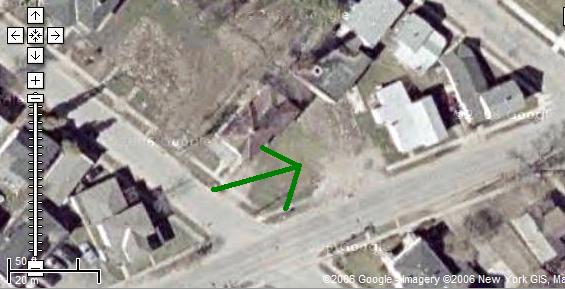
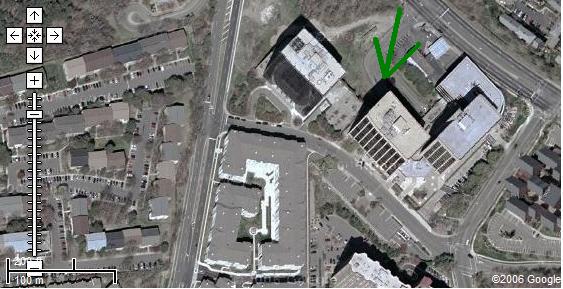
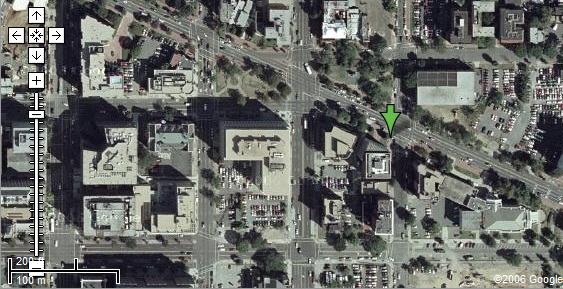
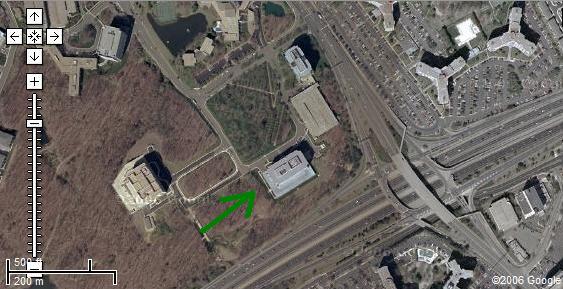
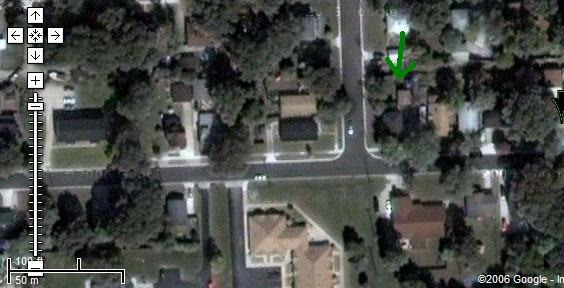
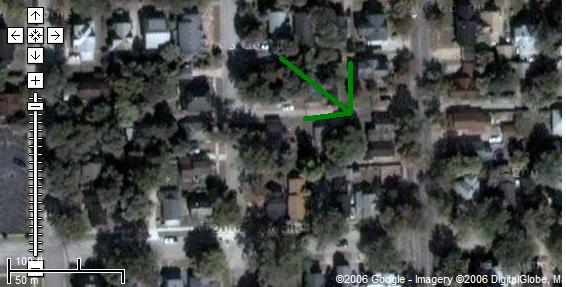
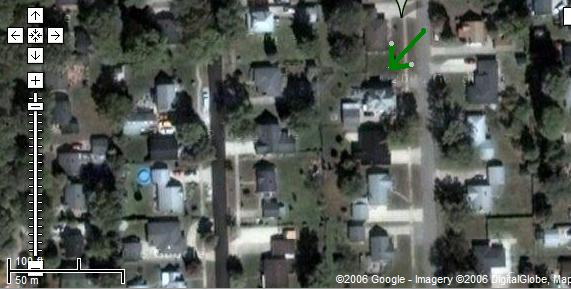
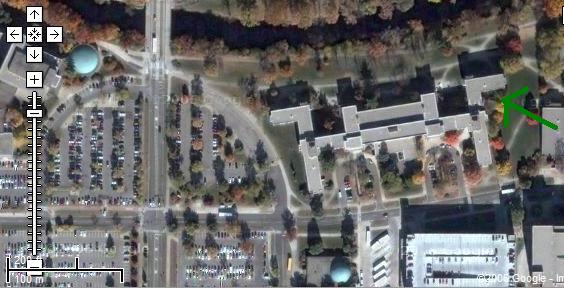
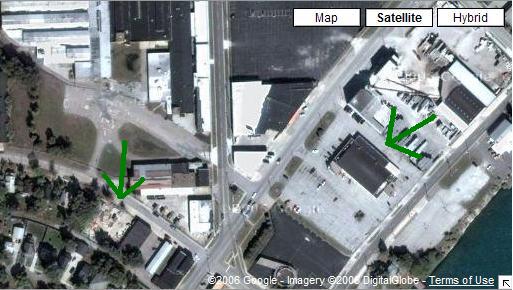
This is a sequel to “Roofs I Have Lived Under.” The satellite photos, once again, come from Google Maps and are of varying scales.

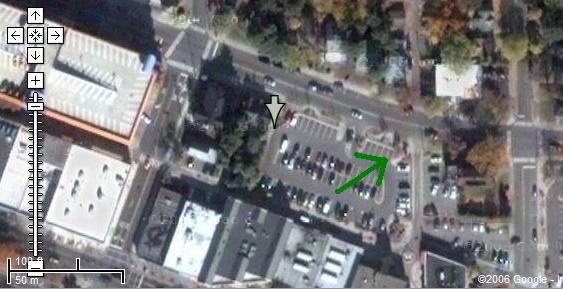
1. The two grocery stores in my home town where I worked when I was a senior in high school and during the summer following my freshman year in college.

2. The headquarters of a division of GM, where I worked in the accounting department during the summer following my sophomore year in college.

3. The home of the economics department at my undergraduate school, where I was a research assistant as a senior.

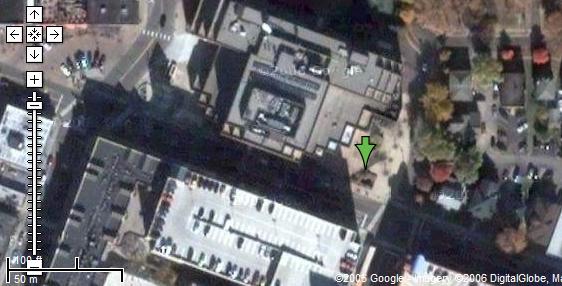
4. The sites of the first two office buildings where I worked for the defense think-tank by which I was employed for a total of 30 years. The site on the right is occupied by a newer, larger building than the one I worked in. The site on the left is occupied by the original building.

5. The Pentagon, where I endured almost two years as a “whiz kid,” between stints at the think tank. After leaving the Pentagon I returned to the building on the left in photo #4.

6. The site of the building in New York State where we had a small business for almost three years.

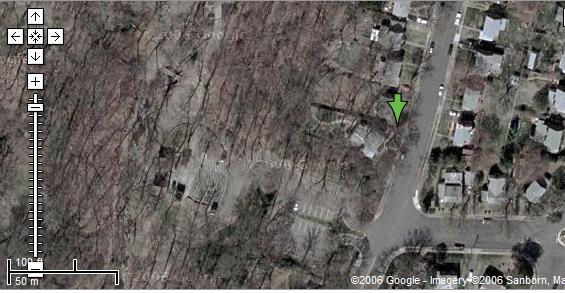
7. The building occupied by the defense think-tank upon my return to it following the New York sojourn. The building is on the northern edge of a park-like office campus, most of which lies across the street that cuts across the picture.

8. The next building occupied by the defense think-tank — an inferior building in an inferior location — into which we were forced by a political deal. I spent a lot of my time making arrangements to move us back to the office park. (See #10.)

9. Cato Institute’s building in Washington, D.C., where I worked part-time — for fun, not money — after my retirement from the defense think-tank.

10. The current home of the defense think-tank. It is in the same office park as the building shown in photo #7, but #10 gives a better view of the grounds, most of which are dedicated to a nature preserve. I planned the building and negotiated the lease before I retired from the think-tank, where I had been director of finance and administration. The think-tank moved to its current home after I retired.

Roofs I Have Lived Under

Below are satellite views of every place in which I have lived — or of whatever now sits there — plus one of my grandmother’s house, where I spent much time as a boy (see this, this, and this). The photos, courtesy of Google Maps, are arranged chronologically, with the exception of the final photo, which is of my grandmother’s house. It isn’t possible to judge the relative sizes of the houses, apartment buildings, and dormitories featured in these photos, because of variations in scale.

1. The house in which my parents lived when I was born was to the left of the green arrow. It has been swallowed by a community college.

2. The house to which my parents moved when I was about 18 months old.

3. My parents then moved to this house for a year.

4. They then bought this house (the first they owned), and lived there four years.

5. Then there’s this bigger house that my parents owned and lived in for 37 years. I went off to college while they lived there.

6. I lived in this dormitory during my freshman and sophomore years at Big-Ten U.

7. I shared an apartment during my junior year. The house, which was only a block from campus, seems to have been replaced by a parking lot.

8. As a senior, I had a room in a decrepit house several blocks from campus. It seems to have been replaced by a commercial building of some kind.

9. During my brief tenure at an eastern grad school — from which I withdrew because I could not stand it — I shared an apartment in this building.

10. On my return to Big-Ten U for the balance of the academic year, I had a room in a house just a few blocks from campus. The site seems to have been taken over by an office building and parking lot.

11. This building housed my first apartment in Virginia, where I went to work after leaving grad school. I had the aparttment for a year.

12. My wife and I lived in this apartment building for the first year of our marriage.

13. We then lived in this building for two years.

14. We rented this house for two years.

15. And then we had this house built, and lived there for seven years. I have cropped the photo to encompass, roughly, the 4+ acre lot on which the house sits. A later owner enclosed the deck and screened porch that I single-handedly added to the house. (The enclosed addition can be seen the lower-right corner of the house.) The pond at the lower left corner of photo was added by a later owner; we kept a garden in that location.

16. During our sojourn in New York State we rented this house for about two years.

17. We then bought and lived in this house for about a year before returning to Virginia. (For more about this house, see “My Old Sears Home.”)

18. We lived in this parkside house for 24 years — long enough to enlarge it by about 50 percent and thoroughly renovate the original portion, inside and out. Our real-estate agent listed it as “the jewel on the park.”

19. Three years ago we opted for the warmth and sunshine of central Texas, where we were lucky enough to find this house on a wooded hillside lot.

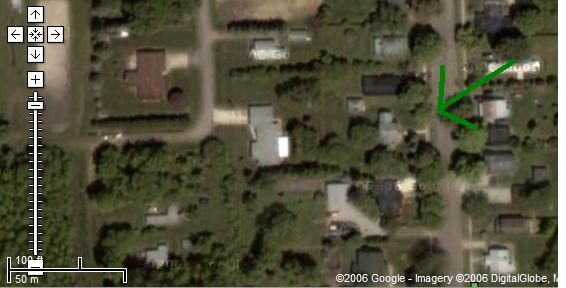
Finally, there’s Grandma’s house. Luckily the satellite shot of her village was taken before the house was torn down to make way for a much larger house.

Generations

Here is a good summary of Generations: The History of American’s Future, 1589 to 2069, which I read 10-15 years ago. The authors’ historiographic technique consists of after-the-fact generalizations that lead them to conclude that there are four basic generational personalities, which occur in repetitive cycles. It is those cycles that dictate the course of American history — according to the authors.

The generational analysis is of dubious value, because of its reductionism. Human nature and history just aren’t that simple. But the analysis does provide a hook on which to hang a neat summary of American history. The book is worth reading for its unique perspective on that history, not for its pseudo-scientific explanation of it.

A Haunting Lyric

I think I first heard A.A. MIlne‘s “Disobedience” as a rope-skipping chant. It’s a hanting lyric, the first three lines of which you may never be able to banish from your mind. Here is the first stanza:

James James
Morrison Morrison
Weatherby George Dupree
Took great
Care of his Mother,
Though he was only three.
James James Said to his Mother,
“Mother,” he said, said he;
“You must never go down
to the end of the town,
if you don’t go down with me.”

Remembrance of Teachers Past

With the aid of the Social Security Death Index (searched via this tool), I “found” several teachers and school adminstrators from my K-12 days who have passed on. At the end of this post I draw meaning from this trivial exercise. First, the list of “found” educators:

First grade:
Margaret S. Lester, 02/24/1921 – 04/03/1989

Third grade:
Ethel Parsons, 05/27/1895 – 05/xx/1974

Fourth grade:
Lila Nurenberg, 02/07/1905 – 07/xx/1972

Sixth grade:
Esther L. Minnie, 08/05/1909 – 03/xx/1980

Seventh grade (homeroom):
Maurice B. Greene, 10/22/1910 – 06/22/1995

Junior high principal:
Stanley R. Hardman, 09/13/1901 – 03/05/1992

Junior high math:
William L. Laidlaw, 11/12/1904 – 03/xx/1972

Senior high principal:
Omer P. Bartow, 09/15/1902 – 08/22/1992

Senior high math:
Frank B. Yon, 01/04/1920 – 08/11/2001

Senior high Latin:
Thelma Sharritt, 04/07/1900 – 01/xx/1982

Senior high English:
Aharas Kresin, 10/06/1908 – 01/23/2001

Senior high social studies:
Dwight Lange, 08/02/1918 – 01/05/1994

Senior high guidance counselor:
Burman J. Misenar, 07/25/1915 – 08/06/1994

Superintendent of schools:
Howard Crull, 04/09/1898 – 06/xx/1968

Superintendent of schools:
Norris Hanks, 05/06/1900 – 10/xx/1981

Missing are: female teachers who were unmarried when they taught me but went on to marry and use their husbands’ names, teachers with combinations of first names and last names that are common, and teachers whom I knew only by last name. Also missing, of course, are those teachers with uncommon first name-last name combinations who are still among the quick.

I am convinced that the principal of the first school I attended (a Mrs. Forbes) was born soon after (if not during) the Civil War. I exaggerate (a bit), but it is evident that my worldview was influenced strongly by many persons who came of age in the early part of the 20th century, persons who remembered vividly the Great Depression and World War II. Then there was the influence of my maternal grandmother, who came of age in the late 1800s. (See here.)

Think about the persons who were influential in your life when you were a child and adolescent. When were they born? What great events did they live through as adults? Do you, in some ways, see their attitudes reflected in yours?

Excellence

When it comes to athletic events, I do not root for an underdog just for the sake of doing so. An underdog is an underdog for a good reason — he, she, or it has compiled a record that is not as good as that of the athletes or teams he, she, or it is up against. I may root for an underdog because the underdog is (for some other reason) an athlete or a team that I favor. But that’s the end of it.

I prefer enduring excellence. That is why, for example, I enjoy watching Tiger Woods play golf. It will be a sad day for me when his skills diminsh to the point where he is no longer the golfer that he has been for most of the past ten years. I just hope that he is succeeded by another electrifying talent, not by a “committee” of also-rans.

A Sentimental Journey

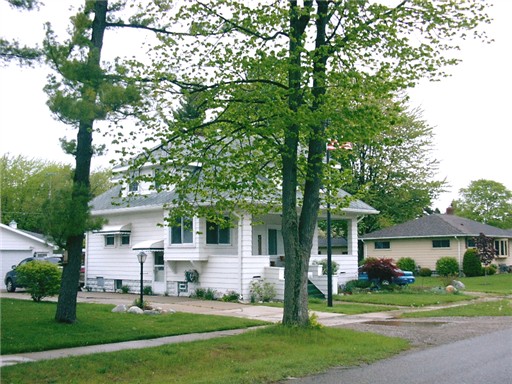
I visited Michigan in May to see my 90-year-old mother and to revisit some of the scenes of my childhood. This is the first house I can remember. My warm memories of a sunny childhood are centered around it:

The house had an old-fashioned front porch when my family lived there, not those concrete steps and that odd bit of brickwork. We lived there almost seven years. Then the landlord (Mr. Mertz, really) decided to sell it, but my parents couldn’t afford to buy it. And so they rented this bungalow for a year:
My parents were then able to buy this modest house . . .
. . . and then, after four years, this much nicer one:
I also drove to the sites of my old elementary schools, about which I wrote here. What was Polk School . . .
. . . is now a playground:
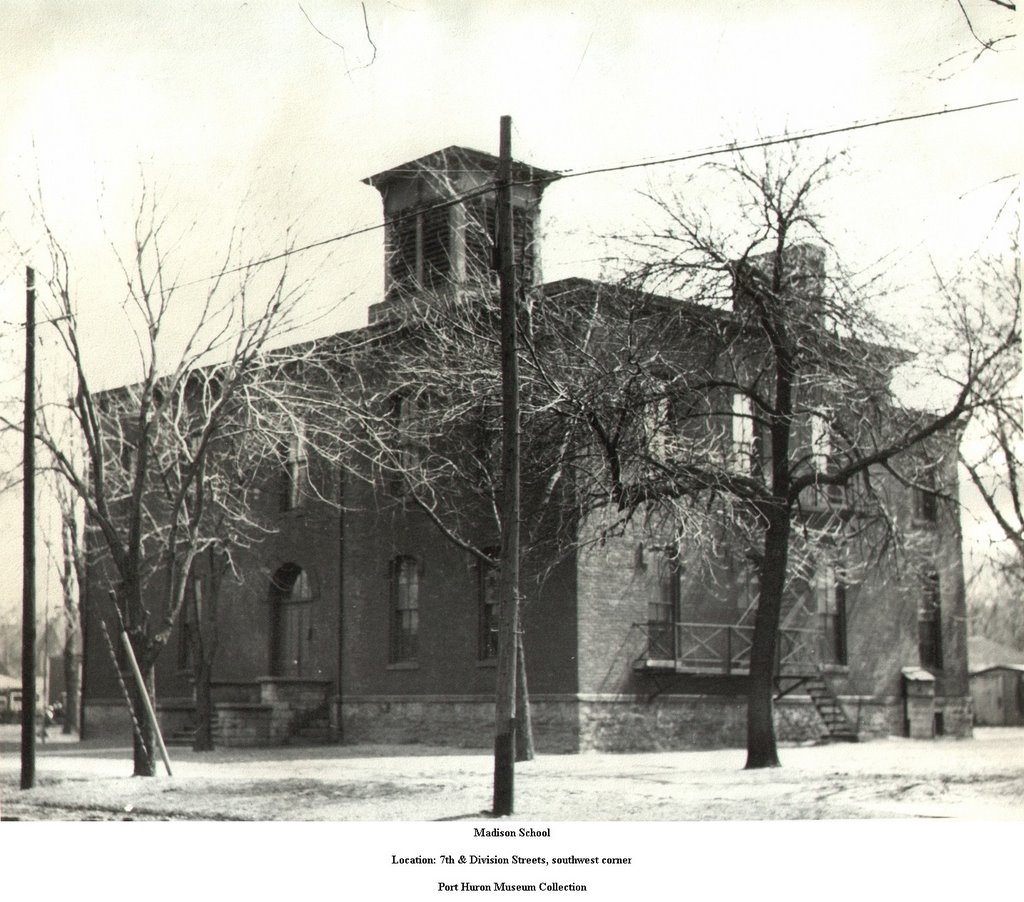
What was Madison School . . .
. . . has been replaced by a small tract of what looks like subsidized housing:
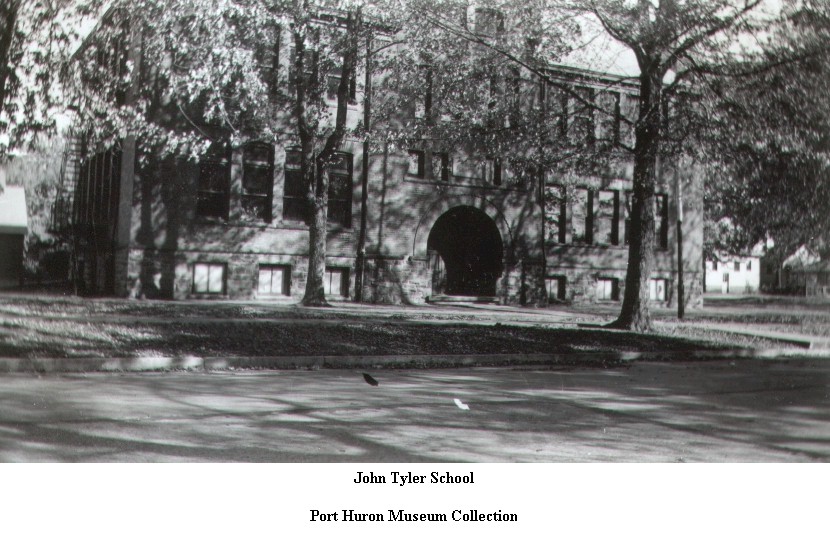
Tyler School remains intact, on the outside, but it is now a homeless shelter:
Then there is the “supermarket” where I worked part-time when I was a senior in high school:
It was then part of the National Food Stores chain, which seems to be defunct.

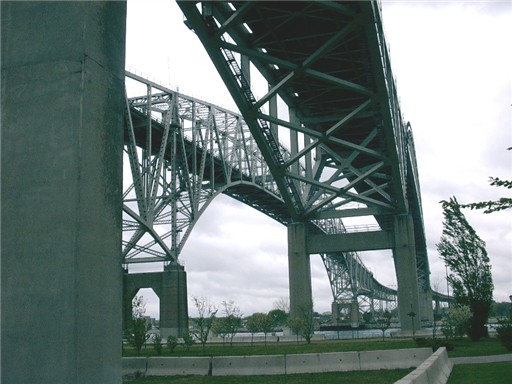
Finally, I tip my hat to my home town’s most famous landmark, the Blue Water Bridge, which traverses the St. Clair River between Port Huron, Michigan, and Point Edward/Sarnia, Ontario:
(Go here for a great aerial view of the entire bridge, and much more.) The original span (left) was completed in 1938; the second span was completed in 1999.

That’s about it. The prevailing gloom that’s evident in the photos reminded me so much of my post-childhood days in Michigan that I couldn’t wait to fly back to sunny Texas.

Living in the Past

I spent much time at my maternal grandmother’s house in the 1940s. Grandma lived in a small village about 90 miles from my home town, so my visits to her lasted for whole weekends and sometimes for a week or two. I got to know Grandma, her house, and her village quite well — so well that my memories of her and her surroundings are still vivid. When I reflect on those memories I realize that her house, and much of her village, was a throwback to the early 1900s. This was life at Grandma’s house in the 1940s:

There was no indoor plumbing (that came later). Water was drawn at a pump in the backyard. Hands and faces were washed at a basin; baths were taken in a large galvanized tub in the shed attached to the house. The “toilet” was an outhouse tucked behind the garage (which held no automobile).

Where did we heat bath water? On the large, wood-burning range that sat in Grandma’s kitchen. She arose early every morning to fire up the range, on which she cooked all meals.

Central heat? There was none. The wood-burning range and an kerosene stove supplied all the heat Grandma needed. The upstairs bedrooms relied — in vain — on the principle of rising heat.

Air conditioning? Absurd. The only relief on hot summer nights was to stay outside for as long as possible and then to sleep with a window open at each end of the house, in the hope of catching a breeze.

Grandma kept a kitchen garden, where she grew many of the vegetables that we ate with our meals: string beans, green peas, corn, radishes, and cabbages. (Nothing beats the taste of a pea fresh from the pod.) Grandma bought other foodstuffs at local markets, to which she walked three blocks.

She kept perishable items in an icebox. An icebox — for the youngsters out there — consisted of metal compartments encased in wood. The top compartment held a block of ice, which kept the contents of the other compartments cool, but which had to be replenished every few days.

The floors of Grandma’s house were covered in linoleum and the walls were covered in wallpaper — all in a style that dated back to the early 1900s. Most of the furnishings, too, dated from the early 1900s, when she wed my grandfather — who died before I was born.

There was no TV, of course, and no telephone (that, too, came later). When Grandma needed to make a long-distance call to any of the eight of her (ten) children who didn’t live in the village she walked four blocks to the office of the local phone company.

Grandma, herself, was a throwback to the late 1800s. Her vocabulary and attitudes reflected the era of her upbringing. She indulged her grandchildren with sweets and movies. But she expected good behavior and told us, in unmistakable terms, to straighten up when we misbehaved. We obeyed her — and we loved her.

Many (perhaps most) of the other residents of the village lived just as Grandma lived, simply and quietly. The predominant evening sounds were those of crickets and tree toads, not cars and clubs and TVs at high volume. We could see the stars and, on occasion, the Northern Lights. Children could roam, day and night, without fear.

World War II had ended. The Depression had not returned. Life seemed good — even to adults, who enjoyed what they had. Peace reigned, for a short while.

Sixty years on I sometimes retreat to my memories of Grandma, her house, and her village. Those memories take me back beyond my childhood in the 1940s to the even simpler and more peaceful times of a century ago.

Related posts:
The Good Old Days
Reveries
Thinking Back
Ghosts of Thanksgiving Past

Mortality

I graduated from a Michigan high school almost 50 years ago. My graduating class numbered 117 persons, 64 males and 53 females. The male-female ratio (1.2:1) strikes me as unusually high for a non-technical, public high school. The national ratio for the relevant age-race cohort was then about 1.03:1 (Table 17, here).

In any event, if we 64 males had been typical white, male, Americans of our time, only 60 percent of us would be alive today (derived from Table 10, here). How many of us are still alive? Based on certain knowledge and a search of the Social Security Death Index, I estimate that 70 to 80 percent of us remain among the quick (adjective, definition 6a, here).

Have we survivors lived longer than the “average” white, male, American born around 1940 because (a) we grew up in a cold climate or (b) there were relatively few females in our environment.

In Memoriam

I dedicate today’s blogging to the eight of my mother’s siblings (all seven of her brothers and one of her two sisters) who served in the armed forces of the United States. Seven of them served during World War II. To Joe, Louis, Lawrence, Helen, Charles, Chet, George, and Fred: Born 1905-1922, Died 1947-2004.

“All, all, are sleeping on the hill.”

A New National Anthem?

I have always been rather attached to “La Marseillaise.” Wikipedia‘s article about it includes this:

The song was banned in Vichy France and German occupied areas during World War II and singing it was an act of resistance (see also Chant des Partisans). . . .

In France itself, the anthem (and particularly the lyrics) has become a somewhat controversial issue since the 1970s. Some consider it militaristic and xenophobic, and many propositions have been made to change the anthem or the lyrics.

What do the objectors find objectionable? This:

Verse I
Arise children of our fatherland,
The day of glory has arrived!
Against us, tyranny,
Has raised its bloodied banner,
Do you hear in the fields
The howling of these fearsome soldiers?
They are coming into your midst
To slit the throats of your sons and consorts!
Chorus
To arms, citizens!
Form your battalions!
Let us march, let us march!
Let impure blood (of our enemies)
Soak the furrows (of our fields)
Verse II
What does this horde of slaves,
Traitors, and plotting kings want?
For whom these vile chains
These long-prepared irons?
Frenchmen, for us, ah! What outrage,
What fury must it arouse?
It is us they dare plan
To return to the old slavery!
Chorus
Verse III
What! These foreign cohorts!
They would make laws in our courts!
What! These mercenary phalanxes
Would cut down our warrior sons
Good Lord! By chained hands
Our brow would yield under the yoke
The vile despots would have themselves be
The masters of destiny
Chorus
Verse IV
Tremble, tyrants and traitors
The shame of all good men
Tremble! Your parricidal schemes
Will receive their just reward
Against you we are all soldiers
If they fall, our young heroes
France will bear new ones
Ready to join the fight against you
Chorus
Verse V
Frenchmen, as magnanimous warriors
Bear or hold back your blows
Spare these sad victims
That they regret taking up arms against us
But not these bloody despots
These accomplices of Bouillé
All these tigers who mercilessly
Ripped out their mothers’ wombs
Chorus
Verse VI
Sacred patriotic love
Lead [and] support our avenging arms
Liberty, cherished liberty
Fight back with your defenders
Under our flags, let victory
Hurry to your manly tone
So that your enemies, in their last breath [before death]
See your triumph and our glory!
Chorus
Verse VII
We shall enter the career
When our elders will no longer be there
There we shall find their ashes
And the mark of their virtues
[We are] Much less jealous of surviving them
Than of sharing their coffins
[For] We shall have the sublime pride
Of avenging or joining them
Chorus

If the French (unsurprisingly) find it too ferocious, let’s make it our own by replacing “Frenchmen” and “France” with “Americans” and “America.” Given the present state of the world, “La Marseillaise” is much more fitting (and rousing) than the rather airy (and almost un-sing-able) “Star Spangled Banner.”

How Time Flies

About two years ago I drew on the archives of Dead or Alive? to list a number of erstwhile celebrities who were then alive at the age of 90 or older. I updated that list about a year ago. Here’s how the list looks today:

Charles Lane 101, George Kennan 101, Max Schmeling 99, Eddie Albert 99, Dale Messick 98, Michael DeBakey 97, John Kenneth Galbraith 97, George Beverly Shea 97, Ernest Gallo 97, John Mills 97, Estée Lauder 97, Al Lopez 97, Fay Wray 96, Luise Rainer 96, Henri Cartier-Bresson 95, Peter Rodino, Jr. 95, Gloria Stuart 95, Kitty Carlisle 95, John Wooden 95, Joseph Barbera 95, Mitch Miller 94, Jane Wyatt 94, Byron Nelson 94, Karl Malden 94, Constance Cummings 94, Artie Shaw 93, Art Linkletter 93, Lady Bird Johnson 93, Frankie Laine 93, Ruth Hussey 93, Oleg Cassini 92, Risë Stevens 92, Robert Mondavi 92, Ralph Edwards 92, Tony Martin 92, Jane Wyman 92, Kevin McCarthy 92, Sammy Baugh 92, William Westmoreland 91, Frances Langford 91, Irwin Corey 91, Jack LaLanne 91, Richard Widmark 91, John Profumo 91, Harry Morgan 91, Geraldine Fitzgerald 91, Archibald Cox 91, Julia Child 91

Here are some newcomers: Herman Wouk 90, Les Paul 90, Sargent Shriver 90, Eli Wallach 90

For many, many more names, go to “People Alive Over 85” at Dead or Alive?

Bare Ruined Choirs

Yesterday’s post about “Red-Brick Buildings” reminds me of “Memories of a Catholic Boyhood,” Chapter One of Garry Wills’s Bare Ruined Choirs.* There, Wills could be writing about my boyhood. I hasten to add that I don’t agree with Wills’s politics or his juvenile attitude toward the Church, the many traces of which I have excised from the following excerpts of his “Memories.”

We grew up different. There were some places we went; and others did not — into the confessional box, for instance. . . .

We “born Catholics,” even when we leave or lose our own church rarely feel at home in any other. The habits of childhood are tenacious, and Catholicism was first experienced by us as a vast set of intermeshed childhood habits — prayers offered, heads ducked in unison, crossings, chants, christenings, grace at meals, beads, altar, incense, candles . . . churches lit and darkened, clothed and stripped, to the rhythm of liturgical recurrences . . . .

One lived, then, in contact with something outside time — grace, sin, confession, communion, one’s own little moral wheel kept turning in the large wheel of seasons that moved endlessly, sameness in change and change in sameness, so was it ever, so would it always be . . . .

We came in winter, out of the dark into vestibule semidark, where peeled-off galoshes spread a slush across the floor. We took off gloves and scarves, hands still too cold to dip them in the holy water font. Already the children’s lunches, left to steam on the bare radiator, emanated smells of painted metal, of heated bananas, of bolgna and mayonnaise. . . .

Or midnight Mass — the first time one has been out so late . . . . The crib is dimmed-blue, suggesting Christmas night, and banked evergreen trees give off a rare outdoors odor inside the church . . . .

The bigger churches, with windows of a richly muddied color — fine gloom up behind the altar . . . .

Bells at the consecration . . . .

Certain things are not communicable. One cannot explain to others, or even to oneself, how burnt stuff rubbed on on the forehead could be balm for the mind. . . .

All these things were shared, part of community life, not a rare isolated joy, like reading poems. These moments belonged to a people, not to oneself. It was a ghetto, undeniably. But not a bad ghetto to grow up in.

Amen.
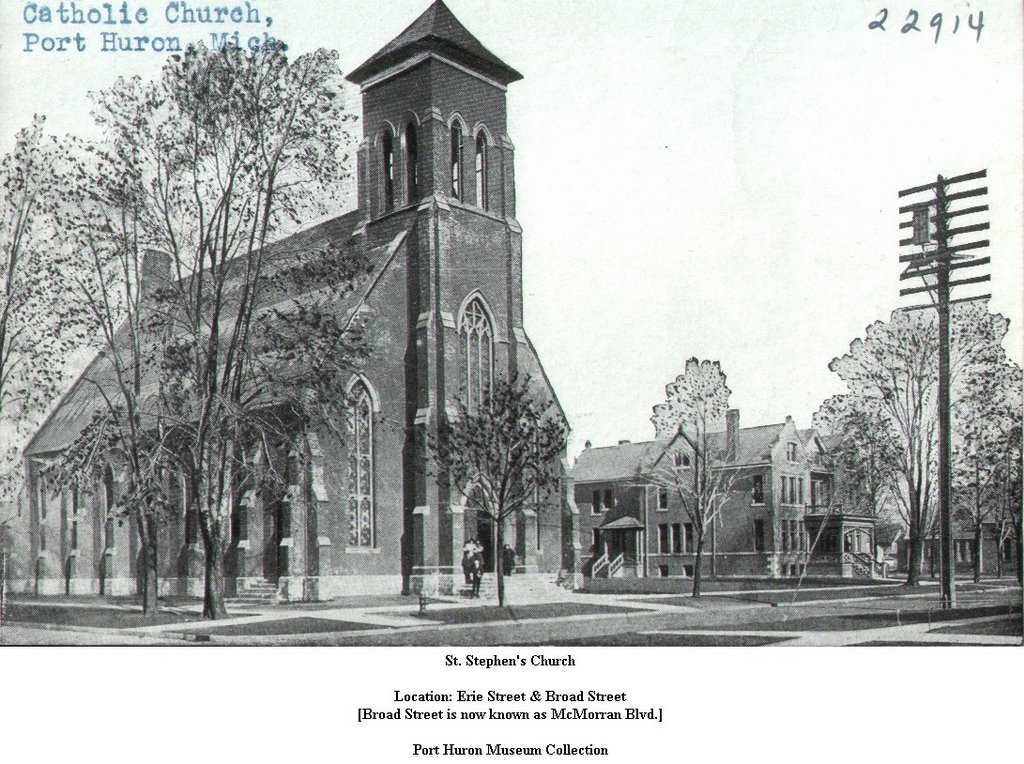
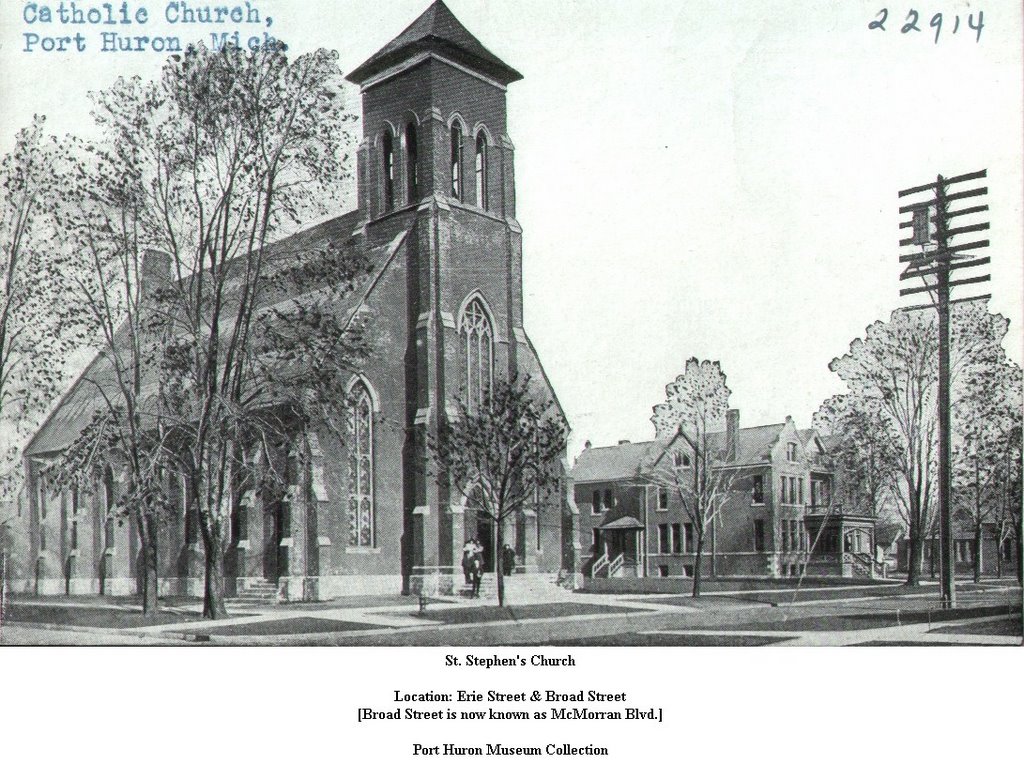
St. Stephen Church, where I was a parishoner in the late 1940s and early 1950s, occupied an entire block in my home town. Behind the church and rectory (left and right) was the school where I took catechism lessons on Saturday mornings.
__________
* Wills takes his title from a phrase in Shakespeare’s Sonnet 73:

That time of year thou mayst in me behold
When yellow leaves, or none, or few, do hang
Upon those boughs which shake against the cold,
Bare ruined choirs, where late the sweet birds sang.
In me thou see’st the twilight of such day
As after sunset fadeth in the west;
Which by and by black night doth take away,
Death’s second self, that seals up all in rest.
In me thou see’st the glowing of such fire,
That on the ashes of his youth doth lie,
As the death-bed, whereon it must expire,
Consumed with that which it was nourish’d by.
This thou perceiv’st, which makes thy love more strong,
To love that well, which thou must leave ere long.

Red-Brick Buildings

I went to these (barely) post-Civil War schools for grades K-5:
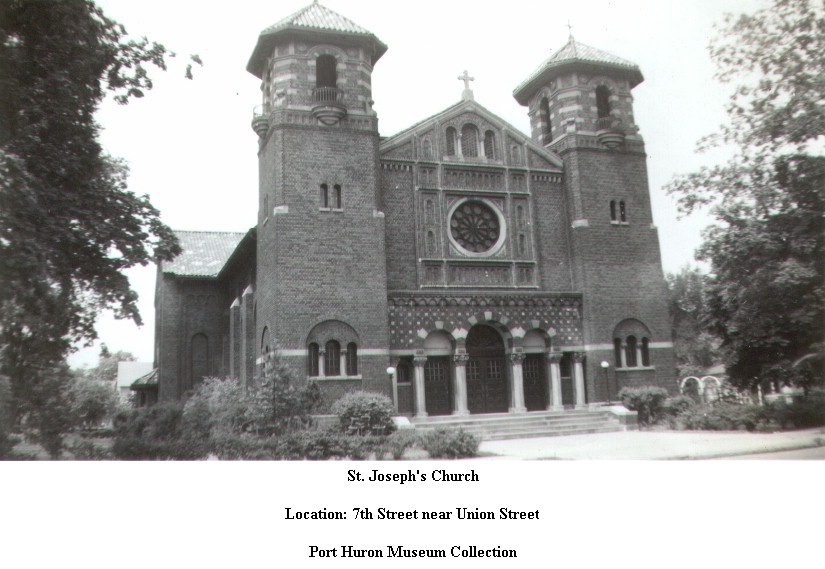
And I was a parishoner of these churches in the 1940s and early 1950s:

The first two of the schools were razed more than 50 years ago; the third was converted to an apartment building about 50 years ago. The second of the two churches was razed more than 40 years ago. They just don’t make them like they used to.

(All photos courtesy of Port Huron in Pictures, from the Port Huron Museum Collection.)

Celebrating My Heritage

In keeping with the spirit of the day, I celebrate my heritage and take pride in these, my biological (though not actual) kinsmen, who are pictured from top to bottom, as follows:

Marquis de Condorcet (French)
Johann Sebastian Bach (Saxon)
Edmund Burke (British)
Chief Stone Child, a.k.a. “Rocky Boy” (Chippewa)


(All images courtesy of Wikipedia.)

Brunettes

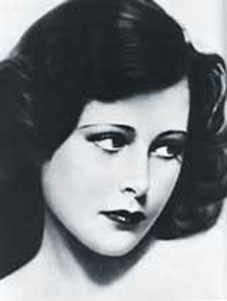
Hedy Lamarr


Catherine Zeta-Jones