Out of the Past

My mother recently celebrated her 90th birthday. I was unable to be with her for that special occasion, so I tried to find a gift that would especially memorable. I found it in an old photo album that had once been her mother’s:

My mother (right) with her sister, Helen, circa 1926-1928.

I chose this photo because Mom was especially close to Helen, who died 12 years ago. Happy Birthday, Mom.

Christmas Movies

Last night my wife and I saw, for the first time, A Child’s Christmas in Wales (1987), a 55-minute, made-for-TV adaptation of Dylan Thomas‘s eponymous short story. A Child’s Christmas now tops my very short list of great Christmas movies.

Thomas’s poetic language is spoken beautifully by Denholm Elliott. Elliott plays a grandfather who, on a Christmas eve in the present, is telling his grandson about Christmases past. The filmmakers set the past in the first decade of the 1900s — a bit before Thomas’s time (he was born in 1914), but more appropriate to the film’s sense of innocence and joyousness than would have been a post-World War I setting.

A Child’s Christmas is richer in humor than other great Christmas movies, but there is no doubt about its ability to tug at the heartstrings. The soft, sweet ending leaves a lump in the throat. In spite of the Welsh accents, which are toned down, the movie would be a treat for children of, say, ages eight to twelve because so many scenes are played for laughs. But it would be enjoyed only by those children (and adults) who read to learn, who appreciate gifted writing, and who disdain the raucousness, vulgarity, viciousness, and anomie that seems to pervade today’s music, movies, TV, and video games.

Other great Christmas movies, in descending order of preference:
A Christmas Carol (1938, the warmest and brightest of the many versions — and not, praise be, a musical version)
Miracle on 34th Street (1947)
It’s a Wonderful Life (1946, the darkness becomes bright)

Ghosts of Thanksgivings Past

From my “Reveries“:

I remember my grandmother’s house in a small, lakeside village about 90 miles north of where I grew up. Her modest, two-story bungalow sat on a deep lot that backed up to open fields where doves cooed as I awoke on sunny, summer mornings to the smell of bacon frying. My favorite room was the kitchen, with its massive woodstove and huge, round, oak table, around which my grandmother, parents, and various aunts and uncles would sit after a meal, retelling and embellishing tales from the past.

I remember them all as if it were yesterday, even though most of them are long gone. There was my beloved Grandma, of course, the matriarch and mother of ten, seven sons and three daughters. Grandpa died four days before I was born and was buried on the day I was born. Grandma outlived him by 36 years.

A few others were absent from our holiday gatherings by choice — or not: Aunt Isabelle was always at her home with Uncle Lucien and their own brood of ten. Aunt Helen avoided boisterous family gatherings, though she was close to my mother and visited my home often. Uncle Charles seems to have fled for the sunny South with Aunt Lucille, only to be heard from in Christmas cards. Uncle Louis was the first of Grandma’s children to die, and the only one who predeceased her: At the age of 40 he was killed in a road accident while on active duty in the Coast Guard, leaving Aunt Marguerite and several children.

But the present more than made up for the absent. Of the men there was Uncle Joe, the eldest son and another career Coast Guardsman, who among family would unbend from his Chief Petty Officer’s demeanor; Uncle Lawrence, the joker and story-teller; Uncle Chet, another raconteur and — truth be told — a fair tippler; Uncle George, quieter than Lawrence and Chet, but good with the quip; and the “baby” (born when Grandma was 42) — Uncle Fred, taciturn to a fault and a bachelor until he passed the age of 40. My father (Pop) rounded out the adult male contingent, and he was closer to his brothers-in-law than he was to his many half-siblings.

The women: my mother (Mom) the eighth child and youngest of the three girls; Uncle Joe’s Mary, a flapper in her day; Uncle Lawrence’s Christine, the scold; Uncle Chet’s Mary, the jolly one; and Uncle George’s Peg, a schoolteacher who knew how to let her hair down — just enough.

The cousins: Too many to name, but my favorites were Lawrences’s Sharon and Karoleen and Chet’s Geraldine. Cousin Chuck (Charles’s son) showed up for Christmas one year and added to the fun; he should have joined us more often.

Only Mom is left. Pop is gone, as are all of Mom’s siblings and their spouses. For the departed:

Where are Elmer, Herman, Bert, Tom and Charley,
The weak of will, the strong of arm, the clown, the boozer, the fighter?
All, all, are sleeping on the hill.

One passed in a fever,
One was burned in a mine,
One was killed in a brawl,
One died in a jail,
One fell from a bridge toiling for children and wife —
All, all are sleeping, sleeping, sleeping on the hill.

From The Hill, by Edgar Lee Masters (1869-1930)

Time, you old gipsy man,
Will you not stay,
Put up your caravan
Just for one day?….

Last week in Babylon,
Last night in Rome,
Morning and in the crush
Under Paul’s dome;
Under Paul’s dial
You tighten your rein —
Only a moment, and off once again;
Off to some city
Now blind in the womb,
Off to another
Ere that’s in the tomb.

From Time, You Old Gipsy Man, by Ralph Hodgson (1871-1962)

Then and Now

Give me liberty or give me death. — Patrick Henry, 1775

Give the enemy a timetable for our surrender. — U.S. Senate, 2005

Rich October Skies

I used the phrase “bright, blue, mid-October skies” in the preceding post. That reminds me of one of my favorite Carter Family songs,* A.P. Carter’s “School House on the Hill,” the third verse of which ends in the evocative phrase “rich October skies”:

Fond memory paints its scenes of other years
Bring me their memory still
And bright amid those joyous scenes of years
The schoolhouse on the hill

Oh, the schoolhouse that stands upon the hill
I never, never can forget
Dear happy days are gathered ’round me still
I never, no never can forget

There hangs the swing upon the maple tree
Where you and I once swung
There flows the spring, forever flowing free
As when we both were young

Oh, the schoolhouse that stands upon the hill
I never, never can forget
Dear happy days are gathered ’round me still
I never, no never can forget

There climbs the vines and there the berries grow
Which once would rise so high
And there the ripe nuts glistened in the grove
Of rich October skies

Oh, the schoolhouse that stands upon the hill
I never, never can forget
Dear happy days are gathered ’round me still
I never, no never can forget

The song was first recorded on June 17, 1933, in Camden, New Jersey, by A.P., Sara, and Maybelle Carter. And here they are:


Standing, A.P. and Sara; seated, Maybelle.

Here’s a snippet of the Carters’ original recording. And here’s a longer but, unfortunately, incomplete excerpt of a recording made by Jim Watson, Mike Craver, and the late Tommy Thompson of the original Red Clay Ramblers. The excerpt is from a 1980 album, Meeting in the Air, in which Watson, Craver, and Thompson performed 14 original Carter Family pieces. If the Ramblers’ rendition of “School House. . .” doesn’t bring a lump to your throat, you’re too young, too citified, or both.
__________
Lyrics of original Carter Family songs are available here and here.

Dream On!


This is the car for me. It’s a Bugatti Veyron 16.4, with a 16-cylinder engine capable of producing 1,001 horsepower. Estimated price tag? $1.24 million. I think I’ll order one today.

The only glitch: Bugatti is now a VW marque. And VW has become synonymous with unreliability. So, I’ll have to order two: one for the shop and one for the highway.

On a Lighter Note . . .

On learning of the impending 75th anniversary of Blondie, I checked Wikipedia to refresh my memory about comic strips that I read in my youth. Listed below are some of the other strips that began before 1950 and which, once upon a time, I read daily or weekly (links courtesy Don Markstein’s Toonpedia):

Abbie and Slats (1937-71) — A soaper on newsprint.
Alley Oop (1932-) — A caveman out of his time.
Archie (1947-) — High-school hijinx.
Brenda Starr (1940-) — About a reporter who never seemed to report anything.
Bringing Up Father (1913-2000) — Drank more than the father in Father Knows Best.
Buz Sawyer (1943-89) — Forgettable adventure stuff.
Dick Tracy (1931-) — B.O. Plenty was a fitting character for this strip.
Donald Duck (1937-?, as the main character in a comic strip) — Quacking good fun.
Felix the Cat (1923-66) — Had a lot more energy than Garfield.
Gasoline Alley (1918-) — A family saga that just won’t stop.
Flash Gordon (1934-) — Loved Dale Arden’s outfits.
The Gumps (1917-59) — Small town doin’s.
Henry (1932-) — The silent kid.
Joe Palooka (1930-84) — The great white hope, even before Joe Louis came along.
The Katzenjammer Kids (1897-) — Shtoopid kid stuff.
Li’l Abner (1934-77) — Worth it to see Daisy Mae.
Little Annie Rooney (1927-66) — Gloriosky!
The Little King (1931-75) — Did he inspire the short king in The Wizard of Id?
Little Iodine (1943-86) — Dennis the Menace could have taken lessons.
Little Lulu (1935-48, as a comic strip) — Wanna buy some Kleenex?
Little Orphan Annie (1925-74, by that name) — Daddy Warbucks to the rescue.
Mandrake the Magician (1934-) — Who knows what evil . . . no, that was The Shadow.
Mark Trail (1946-) — No jokes about his girlfriend Cherry.
Mary Worth (1938-) — The comic-strip soap of all time.
Mickey Mouse (1930-?, as a comic strip) — Squeaky clean.
Moon Mullins (1923-91) — Low-life with humor.
Mutt and Jeff (1907-82) — Clean, corny yuks from a bygone age.
Nancy (1933-) — Sluggo’s girlfriend. I read it for yummy Aunt Fritzi Ritz.
Out Our Way (1922-77) — Americana, from when America was a “real” place.
Our Boarding House (1921-81) — Starring the original Hoople (Maj. Amos, that is).
The Phantom (1936-) — The man in tights . . . oops, The Ghost Who Walks.
Pogo (1949-71) — High irony for campus radicals.
Popeye (1929-) — World’s greatest spinach salesman.
Prince Valiant (1937-) — Great haircut Val, still looks good after 68 years.
Rex Morgan, M.D. (1948-) — Finally married his nurse when they were about 80 years old.
Sad Sack (1946-5?) — Beetle Bailey‘s older brother.
Smilin’ Jack (1933-73) — ADDED 11/22/07, after suddenly recalling the character Fatstuff,

Jack’s Hawaiian friend who was always popping his shirt buttons (usually into the mouths of hungry chickens, so under-nourished from eating buttons instead of bugs that they were unable to grow feathers)….

Smokey Stover (1935-73) — Notary Sojac and Gravy Ain’t Wavy. (You had to be there.)
Snuffy Smith (1934-) — Got rid of his host Barney Google. Who’s next, his nephew Jughead?
Steve Canyon (1947-88) — How can a guy go wrong with Happy Easter for a sidekick?
Terry and the Pirates (1934-73) — Dig the Dragon Lady.
They’ll Do It Every Time (1929-) — Wisdom in one panel.
Winnie Winkle (1920-98) — Early and long-running soaper, with a seriously pre-PC character: Denny Dimwit.

See, I was paying attention. But I must admit that I no longer read any of the strips that are still running.

Where are Superman, Batman, and their ilk? They were only in comic books. That’s another post.

A Hollywood Circle

Note: The images shown below aren’t from the films mentioned in the text.


William Powell (1892-1984) played Moriarty in his film debut, the 1922 version of Sherlock Holmes, which starred


John Barrymore (1882-1942) as the legendary sleuth. Barrymore appeared as Mercutio in the 1936 version of Romeo and Juliet, in which


Norma Shearer (1902-83) played Juliet. Shearer starred as Mary Haines in 1939’s The Women, as did


Joan Crawford (1904-77), in the role of Crystal Allen. Crawford and


Bette Davis (1908-89) co-starred in Whatever Happened to Baby Jane? (1962), playing Blanche Hudson and Baby Jane Hudson, respectively. Davis played Libby Strong to the Sarah Webber of


Lillian Gish (1893-1993) in 1987’s The Whales of August. To complete the circle: Gish had the title role in Romala (1924), playing opposite William Powell as Tito.

From William Powell to William Powell, in six steps.

Thoughts of Winter

As I welcome summer to central Texas — after a rainy fall, a drizzly winter, and an unusually cool spring — I reflect on the seasons and their associations. Winter, much as I dislike it — even in the relative warmth of central Texas — has its compensations:

The soft glow of twilight through the trees

A rumbling fire in the hearth

A chamber work on the sound system

A fine single-malt at my side

The Viking Book of Poetry of the English-Speaking World in my hand:

I have had enough of wisdom, and enough of mirth,
For the way’s one and the end’s one, and it’s soon to the ends of the earth;
And it’s then good-night and to bed, and if heels or heart ache,
Well, it’s sound sleep and long sleep, and sleep too deep to wake.

From Wanderer’s Song, by Arthur Symons (1865-1945)

The Lord knows what we may find, dear lass,
And the Deuce knows what we may do —
But we’re back once more on the old trail, our own trail, the out trail,
We’re down, hull-down, on the Long Trail — the trail that is always new!

From The Long Trail, by Rudyard Kipling (1869-1936)

They are not long, the weeping and the laughter,
Love and desire and hate:
I think they have no portion in us after
We pass the gate.

They are not long, the days of wine and roses;
Out of a misty dream
Our path emerges for a while, then closes
Within a dream.

Vitae Summa Brevis Spem Nos Vetat Inchohare Longam, by Ernest Dowson (1867-1900)

I have forgot much, Cynara! gone with the wind,
Flung roses, roses riotously with the throng,
Dancing, to put thy pale, lost lilies out of mind;
But I was desolate and sick of an old passion,
Yea, all the time, because the dance was long:
I have been faithful to thee, Cynara! in my fashion.

I cried for madder music and for stronger wine,
But when the feast is finish’d and the lamps expire,
Then falls thy shadow, Cynara! the night is thine;
And I am desolate and sick of an old passion,
Yes, hungry for the lips of my desire;
I have been faithful to thee Cynara! in my fashion.

From Non Sum Qualis Eram Bonae sub Regno Cynarae, by Dowson

Where are Elmer, Herman, Bert, Tom and Charley,
The weak of will, the strong of arm, the clown, the boozer, the fighter?
All, all, are sleeping on the hill.

One passed in a fever,
One was burned in a mine,
One was killed in a brawl,
One died in a jail,
One fell from a bridge toiling for children and wife —
All, all are sleeping, sleeping, sleeping on the hill.

From The Hill, by Edgar Lee Masters (1869-1930)

The beauty, shattered by the laws
That have creation in their keeping,
No longer trembles at applause,
Or over children that are sleeping;
And we who delve in beauty’s lore
Know all the we have known before
Of what inexorable cause
Makes Time so vicious in his reaping.

From For a Dead Lady, by Edwin Arlington Robinson (1869-1935)

“For Auld Lang Syne.” The weary throat gave out,
The last word wavered, and the song was done.
He raised again the jug regretfully
And shook his head, and was again alone.
There was not much that was ahead of him,
And there was nothing in the town below —
Where strangers would have shut the many doors
That many friends had opened long ago.

From Mr. Flood’s Party, by Robinson

Do not weep, maiden, for war is kind.
Because your lover threw wild hands toward the sky
And the affrighted steed ran on alone,
Do not weep.
War is kind.

From War Is Kind, by Stephen Crane (1871-1900)

Time, you old gipsy man,
Will you not stay,
Put up your caravan
Just for one day?….

Last week in Babylon,
Last night in Rome,
Morning and in the crush
Under Paul’s dome;
Under Paul’s dial
You tighten your rein —
Only a moment, and off once again;
Off to some city
Now blind in the womb,
Off to another
Ere that’s in the tomb.

From Time, You Old Gipsy Man, by Ralph Hodgson (1871-1962)

Take up our quarrel with the foe;
To you from falling hands we throw
The torch; be yours to hold it high.
If ye break faith with us who die
We shall not sleep, though poppies grow
In Flanders fields.

From In Flanders Fields, by John McCrae (1872-1918)

And they that rule in England,
In stately conclave met,
Alas, alas for England,
The have no graves as yet.

From Elegy in a Country Churchyard, by Gilbert Keith Chesterton (1874-1956)

Some say the world will end in fire,
Some say in ice.
From what I’ve tasted of desire
I hold with those who favor fire.
But if it had to perish twice,
I think I know enough of hate
To say that for destruction ice
Is also great
And would suffice.

Fire and Ice, by Robert Frost (1874-1963)

Pocahontas’ body, lovely as a poplar, sweet as a red haw
in November or a paw-paw in May, did she wonder, does
she remember? . . . in the dust, in the cool tombs?

From Cool Tombs, by Carl Sandburg (1878-1967)

“We are earth’s best, that learnt her lesson her.
Life is our cry. We have kept the faith!” we said;
“We shall go down with unreluctant tread
Rose-crowned into the darkness!” . . . Proud we were,
And laughed, that had such brave true things to say,
— And then you suddenly cried and turned away.

From The Hill, by Rupert Brooke (1887-1915)

Heart, you were never hot,
Nor large, nor full like hearts made great with shot;
And though your hand be pale,
Paler are all which trail
Your cross through flame and hail:
Weep, you may weep, for you may touch them not.

From Greater Love, by Wilfred Own (1893-1918)

Stick your patent name on a signboard
brother — all over — going west — young man
Tintex — Japalac — Certain-teed Overalls ads
and land sakes! under the new playbill ripped
in the guaranteed corner — see Bert Williams what!
Minstrels when you steal a chicken just
save me the wing for if it isn’t
Erie it ain’t for miles around a
Mazda — and the telegraphic night coming on Thomas
a Ediford — and whistling down the tracks a headlight rushing with the sound….

From The Bridge (“The River”), by Hart Crane (1899-1932)

Leave now
The shut gate and the decomposing wall:
The gentle serpent, green in the mulberry bush,
Riots with his tongue through the bush —
Sentinel of the grave who counts us all!

From Ode to the Confederate Dead, by Allen Tate (1899-1979)

It’s no go the merry-go-round, it’s no go the rickshaw,
All we want is a limousine and a ticket for the peepshow.
Their knickers are made of crepe-de-chine, their shoes are made of python,
Their halls are lined with tiger rugs and their walls with heads of bison….

It’s no go my honey love, it’s no go my poppet;
Work your hands from day to day, the winds will blow the profit.
The glass is falling hour by hour, the glass will fall for ever,
But if you break the bloody glass you won’t hold up the weather.

From Bagpipe Music, by Louis MacNeice (1907-1963)

And you, my father, there on the sad height,
Curse, bless, me now with your fierce tears, I pray.
Do not go gentle into that good night.
Rage, rage against the dying of the light.

From Do Not Go Gentle into That Good Night, by Dylan Thomas (1914-1953)

But those thoughts are for the melancholy and nostalgic reveries of winter. I now rejoice in glorious summer:

Into the rooms flow meadow airs,
The warm farm baking smell’s blown round.
Inside and out, and sky and ground
Are much the same; the wishing star,
Hesperus, kind and early born,
Is risen only finger-far;
All stars stand close in summer air,
And tremble, and look mild as amber;
When wicks are lighted in the chamber,
They are like stars which settled there.

From Country Summer, by Leonie Adams (1899-1988)

The Longevity of the Old and Famous

A few weeks ago, I noted the passing of several famous (or once-famous) persons aged 90 and older, as recorded at Dead or Alive? (one of my favorite reads). I noted also the survival of 80 percent of the oldsters whom I had mentioned almost a year earlier. Kent, the proprietor of Dead or Alive?, graciously sent me the following statistics about survival rates for the older persons in his database:

Number of persons

Period

Age bracket

Beginning

End

Survival rate

1/1/2004 – 12/31/2004

80-89

392

362

92%

90-99

84

71

85%

100+

3

3

100%

The most recent mortality statistics for the United States (from the National Center for Health Statistics of the Centers for Disease Control and Prevention) indicate annual survival rates of 94 percent for persons aged 75-84 and 85 percent for persons aged 85 and older. By inspection, it seems that the old and famous have higher survival rates than the general population, which is what you’d expect: Fame generally yields greater wealth, and greater wealth generally yields better health.

As Time Goes By

Nearly a year ago I noted the lingering presence of some once-famous persons who were then still alive at 90 (and more). Here’s how that list looks today:

George Kennan 100, Max Schmeling 98, Dale Messick 98, Fay Wray 96, John Mills 96 [97], Eddie Albert 95 [96], Estée Lauder 95, Al Lopez 95, Henri Cartier-Bresson 95, Michael DeBakey 95 [96], John Kenneth Galbraith 95 [96], George Beverly Shea 95 [96], Ernest Gallo 95 [96], Peter Rodino, Jr. 94 [95], Luise Rainer 94 [95], Constance Cummings 93 [94], Artie Shaw 93, Gloria Stuart 93 [94], Kitty Carlisle 93 [94], John Wooden 93 [94], Joseph Barbera 93 [94], Mitch Miller 92 [93], Jane Wyatt 92 [93], Byron Nelson 92 [93], Karl Malden 92 [93], Archibald Cox 91, Art Linkletter 91 [92], Julia Child 91, Lady Bird Johnson 91 [92], Frankie Laine 91, Oleg Cassini 91, Risë Stevens 90 [91], Robert Mondavi 90 [91], Ralph Edwards 90 [91], Geraldine Fitzgerald 90 [91], Tony Martin 90 [91], Jane Wyman 90 [91], Kevin McCarthy 90 [91], Sammy Baugh 90 [91], William Westmoreland 90 [91], Frances Langford 90

Eighty percent survived: 34 of 42. Amazing, to me.

And here are some “newcomers”:

Irwin Corey 90, Jack LaLanne 90, Ruth Hussey 90, Richard Widmark 90, John Profumo 90, Harry Morgan 90

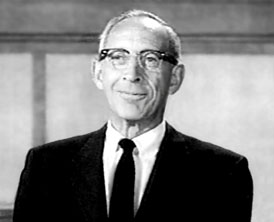
UPDATE: I’m adding actor Charles Lane to my list of oldtimers of interest. Lane, who celebrated his 100th birthday on January 26, made his first movie 1931 and (apparently) his last in 1995. That’s longevity for you. Lane’s career as a character actor in 254 feature films included roles in Mr. Deeds Goes to Town, Mr. Smith Goes to Washington, Arsenic and Old Lace, It’s a Wonderful Life, The Farmer’s Daughter, and The Music Man. Amazing. Here’s Charles Lane:

(Thanks to Dead or Alive? and its “People Alive over 85” feature for the list of oldtimers.)

Bah, Humbug!

Since I attained adolescence I have dreaded the obligatory gatherings that occasion American’s two “family” holidays: Thanksgiving and Christmas. Political conventions, protest marches, and Thanksgiving Day parades excepted, never have so many gone to such great trouble and expense to bore or irritate so many others as at the great, temporary migrations that mark Thanksgiving and Christmas.

Families are inherently dysfunctional because, unlike friendships and employment relationships, they aren’t voluntary associations. I do not understand why a group of individuals who happen to share some genes should feel compelled to foregather once or twice a year. Those who want to give thanks should give thanks; those who want to observe the birth of Christ should observe it. But what does any of that have to do with frogmarching me to the groaning board because, by blood or marriage, I happen to belong to some familial constellation of incompatible personalities?

Many of us go away to college to escape the banality of family life. Why do so many of those same escapees seek to resurrect that banality once or twice a year? Is it an attempt to assuage the guilt of not liking one’s family as much as one’s friends? Or is it just a “female thing”?

My mother, who lives alone at the age of 89, is bereft when she spends a holiday without a visit from a child or grandchild. When I am 89, I will be bereft if I am besieged by children or grandchildren who feel duty-bound to join me in observing a “family” holiday. I love them all, but I want to see them only if they want to see me, and then only when it’s warm and sunny and we can go to parks and take long walks and enjoy cool drinks on a shady porch.

No lengthy, distracting preparations; no football games on TV; no dancing politely around taboo subjects; no retelling of tales that were stale two decades ago; no laborious cleanup; no company — that’s my idea of Thanksgiving and Christmas.

Today’s Entertainment Trivia

You may have heard of Efrem Zimbalist Jr. (1917 – ), who starred in two successful TV series: 77 Sunset Strip (1958-64) and The FBI (1965-74). Did you know that he is the son of concert violinist Efrem Zimbalist Sr. (1889-1985) and opera singer Alma Gluck (1884-1938). Here’s Gluck:

And here are links to RealAudio tracks of two of Gluck’s recordings:

Charpentier, Louise, “Depuis le jour” (Rec: 23 January 1913)

Rimsky-Korsakov, The Tsar’s Bride, “Liuba’s Air ” (Rec: 31 December 1913)

More Blasts from the Past

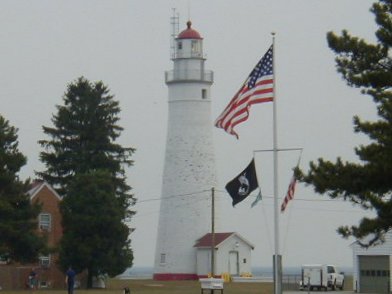
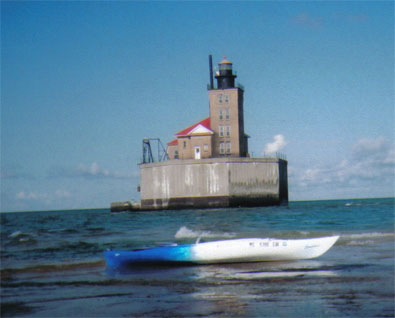
About 50 years ago, my Uncle Joe was the commanding officer at this Coast Guard station:

Lighthouse at the Fort Gratiot (Port Huron, Michigan) Coast Guard station

I think he lived in the brick house to the left of the lighthouse.

Here’s the main street of my home town, as it looks today (better than it looked when I was growing up):
Downtown, Port Huron, Michigan

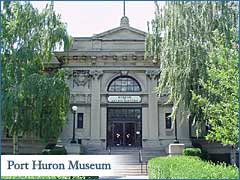
And here’s the city’s museum, formerly its public library (one of the many endowed by Andrew Carnegie):

Port Huron Museum – Carnegie Center

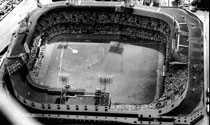
It’s time to watch a ball game — baseball, that is, the real ball game. Speaking of baseball, it’s too bad the Tigers don’t play here anymore:
Briggs Stadium, Detroit, 1951

Bennett Park, Navin Field, Briggs Stadium, and Tiger Stadium occupied the same piece of real estate at the corner of Michigan and Trumbull from 1901 through 1999. The “modern” ballpark known originally as Navin Field opened for business in 1912. It grew through the years and became Briggs Stadium in 1938. Only the name changed when Briggs Stadium became Tiger Stadium in 1961. The stadium’s upper deck rose directly above the lower deck, unlike the arrangement in newer stadiums, where the upper deck is set back from the playing field. Thus a seat in the upper deck between first and third afforded the best view of a baseball game to be had anywhere — a bird’s eye view of a beautifully maintained playing field, upon which strode the shades of Cobb, Cochrane, Crawford, Gehringer, Greenberg, Heilmann, Kaline, Kell, and Newhouser.

For earlier entries in this nostalgia series, click here, here, and here.

Happy Belated Anniversary…

…to me. Yesterday, October 3, marked the Xth anniversary of my retirement from the defense think-tank where I had worked for 30 years. I won’t dwell on the reasons for my joy at retiring — but it was a joyous event. So, happy belated anniversary to me.

P.S. You will note that I wrote “Xth anniversary,” not “X-year anniversary” in the contemporary way. “Anniversary,” according to The Living Webster Encyclopedic Dictionary of the English Language (1975 edition), means a “stated day on which some event is annually celebrated.” The Latin roots of the word are annus, a year, and verto, versum, to turn. Thus, the literal meaning of “anniversary” is “returning with the year at a stated time.”

The construction “X-year anniversary” has arisen because it has become common to denote the passage of less than a year since an event as an “X-month anniversary.” Only a person who is completely ignorant of the meaning of “anniversary” — or a person who is unwilling to stand up to the forces of lexical barbarity — could say “X-month anniversary.” As for “X-year” anniversary, it’s wrong because it’s redundant; “anniversary” itself denotes the passage of years.

There’s only one way to say it correctly, and that’s my way: “Xth anniversary.”

Reveries

Sleep rarely eludes me, but when it does I take a mental trip to the past…to the golden past of boyhood, where all the days are sunny and summery, or Christmas-y.

I stand on the sidewalk in front of the first house I lived in. There it is, a cream-colored, clapboard, two-story house with a small detached garage to the right. It sits on a corner lot of some size on a tree-lined street. An alley runs behind it. The street at the front and to the left side of the house are unpaved, as were many streets in that small city where I was a boy in the 1940s.

The porch runs the width of the house. I walk up the steps to the porch and enter the front door, which opens into the living room. With sunlight streaming through the windows, I wander through the living room to the dining room and kitchen. I go out the back door to the enclosed back porch, from which I can see the garage and the back yard.

I return to the house and venture to the basement, with its huge, coal-fired furnace, coal bin, and my father’s work shop. I go back up — and then up again, climbing the stairs to the second story — the stairs with a wrought-iron railing. I reach the upper hallway and visit, in turn, the three sunny bedrooms and the black-and-white tiled bathroom.

Yes, it was a modest house. But it was the first place I thought of as home, and it’s a place that still seems golden in my memories. By the time my mental tour is complete, I am ready for sleep.

At other times I remember my grandmother’s house in a small, lakeside village about 90 miles north of where I grew up. Her modest, two-story bungalow sat on a deep lot that backed up to open fields where doves cooed as I awoke on sunny, summer mornings to the smell of bacon frying. My favorite room was the kitchen, with its massive woodstove and huge, round, oak table, around which my grandmother, parents, and various aunts and uncles would sit after a meal, retelling and embellishing tales from the past.

We often visited my grandmother at Christmas, and I like to relive the Christmas eve when we made the 90-mile trip as feathery snow slowly piled deeper on the deserted, lakeside highway we traversed through quiet villages: Lexington, Port Sanilac, Forester, Richmondville, Forestville, White Rock, Harbor Beach, Port Hope, Huron City, and — at last — Port Austin. Many of the those villages were tiny: a scattering of houses, perhaps a church and a gas station, but not even a traffic light. The more substantial villages — those that had 1,000 or even 2,000 residents and a traffic light — boasted rows of well-kept and sometimes stately homes on shady streets, along with prosperous brick and white-frame churches, a few blocks of tidy stores and restaurants, and perhaps a lighthouse:

Light house, Port Sanilac

The lakeside highway (before it was “improved”) rode atop high bluffs overlooking the vastness of Lake Huron:

Looking down at the beach and the lake, Forestville

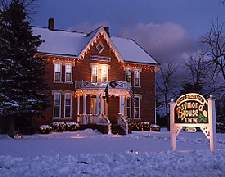
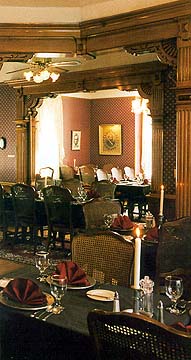
Many of the stately homes along the way have become inns:

Raymond House Inn, Port Sanilac

The State Street Inn, Harbor Beach

A short detour through the old part of Huron City would yield a view of the summer home of William Lyon Phelps (1865-1943; a professor of English literature at Yale and a popular lecturer and writer in the early decades of the 20th century):

Seven Gables, Huron City

The village of Port Austin didn’t have a quaint main street (seen here probably in the 1970s), but it was a place where a young boy could wander safely:

The rest of the village had more to offer. An elegant old inn . . .

The Garfield Inn, Port Austin

. . . these sights along the shoreline . . .


. . . and this view of the harbor at sunset:

Golden days, golden nights. Gone forever — but still alive in my reveries.

Reveries

Sleep rarely eludes me, but when it does I take a mental trip to the past…to the golden past of boyhood, where all the days are sunny and summery, or Christmas-y.

I stand on the sidewalk in front of the first house I lived in. There it is, a cream-colored, clapboard, two-story house with a small detached garage to the right. It sits on a corner lot of some size on a tree-lined street. An alley runs behind it. The street at the front and to the left side of the house are unpaved, as were many streets in that small city where I was a boy in the 1940s.

The porch runs the width of the house. I walk up the steps to the porch and enter the front door, which opens into the living room. With sunlight streaming through the windows, I wander through the living room to the dining room and kitchen. I go out the back door to the enclosed back porch, from which I can see the garage and the back yard.

I return to the house and venture to the basement, with its huge, coal-fired furnace, coal bin, and my father’s work shop. I go back up — and then up again, climbing the stairs to the second story — the stairs with a wrought-iron railing. I reach the upper hallway and visit, in turn, the three sunny bedrooms and the black-and-white tiled bathroom.

Yes, it was a modest house. But it was the first place I thought of as home, and it’s a place that still seems golden in my memories. By the time my mental tour is complete, I am ready for sleep.

At other times I remember my grandmother’s house in a small, lakeside village about 90 miles north of where I grew up. Her modest, two-story bungalow sat on a deep lot that backed up to open fields where doves cooed as I awoke on sunny, summer mornings to the smell of bacon frying. My favorite room was the kitchen, with its massive woodstove and huge, round, oak table, around which my grandmother, parents, and various aunts and uncles would sit after a meal, retelling and embellishing tales from the past.

Click here to read the full post.

What’s a "Doozy"?

Yesterday I used “doozy” in a post. If you’re too young to know what a “doozy” is, here goes:

It was John Ciardi, I think, who suggested that doozy (as some dictionaries prefer to spell it) had something to do with the famous Duesenberg automobile, a car named after the brothers who developed it. Certainly the vehicles were known as Duesies in the 1920s and 1930s. But…the noun doozy was already well established.

[R]eference books, especially the Random House Historical Dictionary of American Slang, suggest it first appeared about 1903.

You might think etymologists are slipping their mental gears if I tell you that they’re fairly sure that it comes from the flower named daisy. But that was once English slang, from the eighteenth century on, for something that was particularly appealing or excellent. It moved into North American English in the early nineteenth century….

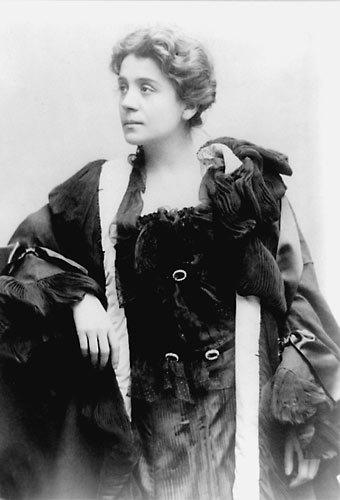
Experts think that that sense -— which was still around at the end of the nineteenth century -— might have been influenced by the name of the famous Italian actress Eleonora Duse [pronounced “doo-zay”: ED], who first appeared in New York in 1893. Something Dusey was clearly excellent of its kind, and it is very likely that it and daisy became amalgamated in people’s minds to create a new term.

(Source: Questions & Answers.)

So here’s Duse and a Duesie:

Speaking of V-8s…

…as I was yesterday, here’s the first car I remember: a 1938 Ford V-8.


My father bought one in 1940 and ran it until 1951.

I Shoulda Had a V-8, Too

My father owned several cars with V-8 engines, but I’ve never owned one. (A straight-8 and some V-6s, yes, but never a V-8.) Now I’m reminded of what I’ve missed:

I Shoulda Had a V-8

By Ralph Kinney Bennett

Published 09/23/2004

In September 1914, just 90 years ago, the makers of a very good American car made a dramatic leap from good to great.

That was when Cadillac, which had already established a reputation in the luxury field with its high-quality four cylinder cars, introduced the all new “Type 51” with a V-8 engine….

Advances in internal combustion engine technology give today’s motorists a wide variety of smooth powerful engines — fours, sixes and eights — and the perfection of the V-6 over the past couple of decades has given them power and acceleration rivaling V-8s.

But there’s still something about those extra two cylinders. Drive a Chrysler 300 with its fine V-6, for instance. Then get behind the wheel of a 300 with the new Hemi V-8. Whooee! Automotive engineers can give you technical reasons for the difference but it’s better just to experience it, to feel it….”