More Old Presidents

REVISED (ADDITIONAL PHOTOS)

Several days ago I posted some photographs of Abraham Lincoln, including an early daguerreotype (taken when he was 31 or 32 years old) that looks entirely unlike the image of Lincoln we carry in our minds. That led me to remember the collection of presidents’ images at the Smithsonian Institution’s National Portrait Gallery in Washington, D.C. (The Portrait Gallery is closed for major renovations but much of the collection is available for viewing online.) Here are two priceless photographs from the Portrait Gallery’s Hall of Presidents:

Daguerreotype of John Quincy Adams (1767-1848, president 1825-29), made in 1843 when Adams was 76 years old.

Daguerreotype of Martin Van Buren (1782-1862, president 1837-41), made ca. 1856 when Van Buren was about 74 years old.

Daguerreotype of Zachary Taylor (1784-1850, president 1849-50), with his aide and future son-in-law William S. Bliss, made ca. 1847 when Taylor was about 63 years old.

There’s a lot more from Presidential Hall here.

Cars I Have Owned

Owning a car. A boy’s dream. Well, owning a car often turned into a nightmare — rust (a problem from Northern Virginia northward, where I lived most of my life), breakdowns, flat tires, accidents, maintenance, repairs, insurance, and on and on. I remember some of my cars fondly and others with loathing. Here’s an inventory of every car I have owned, save my present auto, which shall remain anonymous.


My first car was a 9-year old 1948 Buick Special, for which I paid $125. It was gray and rusty when I bought it. My father “helped” me Bond-o it and repaint it a shiny black. (My father did most of the work.)


The Buick only lasted a few years. I went through most of my college years without a car. After getting my first “real” job, I bought a red 1963 VW Beetle (used but almost-new). I later owned a green 1963 Beetle as a second car.


This 1965 Rambler American looks a lot like the white four-door sedan I owned for several years. What a piece of trash. It finally succumbed to a fatal disease of the transmission. I nursed it 25 miles to the nearest Rambler dealership, where I asked how much they would give me for the car. The offer was $65. I took the money on the spot.


Before the Rambler died, I bought a green version of this 1969 VW Squareback. It was a peppy little car, one of the first with fuel injection. It survived a round trip from the D.C. area to Austin, Texas, at an average speed of 80 m.p.h.


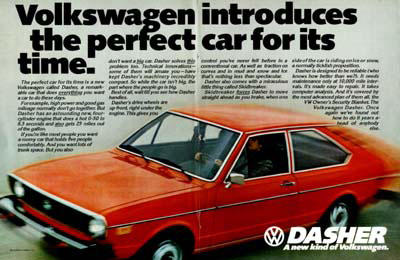
Next up was the 1975 model of this VW Dasher. (Mine was gold, not red, and a four-door.) It was another piece of trash. In fact, the owner of the local VW repair shop referred to Dashers as Trashers. It died of terminal suspension failure.


Sometime before the Dasher died I bought a Chevette like this as a second car. (Why does such a small car rate such a large photo?)


I enjoyed driving this 1982 Cadillac Cimarron. It got bad reviews, but it worked for me — perhaps because I owned a stick shift model and knew how to get the most from its 4-cylinder engine. (I’ve always owned a stick, and I don’t plan to switch to slush-o-matic.)


I wrecked the ’82 Cimarron and bought an ’84 to replace it. The ’82s were assembled in Cadillac plants. By ’84 — when GM knew the Cimarron wasn’t going to make it — they were assembled in Chevy plants. The difference showed.


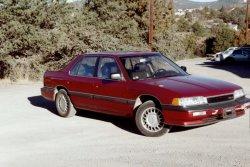
My all-time favorite was a red 1988 Acura Legend. I ran it for 13 enjoyable years, beating all comers away from stoplights.


A gold version of this 1989 Mazda 323 served well as a second car for eight years. It survived another seven years in the hands of my son.


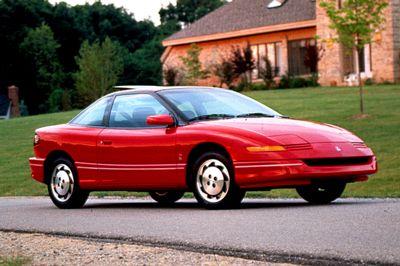
As a replacement for the Mazda, I bought a black version of this 1995 Saturn coupe from my daughter when she went off to B-school. It was probably the last American-brand car I’ll ever own (I’m a firm convert to Japanese brands), but it was a reliable car with surprisingly good pickup.

That covers the first 44 years of my history as an auto owner. The remaining years, I trust, will see a far higher peach-to-lemon ratio. They don’t make them like they used to — thank goodness.

I Blame TV

Q&A at The Corner:

Reader: …When did the voices of American young women get to be so universally, gratingly, nasally flat, all across the country? And why? Who stole away the huskier voices, the rounded deep-southern tones…the ability to use any vocal range and inflection at all?”

John Derbyshire: …There is, in fact, a very distinctive American-female voice developing. It’s the “Valley girl” voice basically — even though the Valley in question is 3,000 miles from where my daughter grew up….

It’s true, and it’s because kids watch too much TV, which has homogenized America’s once-rich variety of regional accents. Turn off the damn TV and read to your kids in the accent you grew up with. Well, just turn off the TV. Your kids will be the better for it.

In the "Useless but Fascinating Information" Department

Courtesy Futurepundit, “Structures in United States Cover Area Equal to Ohio”:

If all the highways, streets, buildings, parking lots and other solid structures in the 48 contiguous United States were pieced together like a giant jigsaw puzzle, they would almost cover the state of Ohio. That is the result of a study by Christopher Elvidge of the National Oceanic and Atmospheric Administration’s National Geophysical Data Center in Boulder, Colorado, who along with colleagues from several universities and agencies produced the first national map and inventory of impervious surface areas (ISA) in the United States.

The Word Is "Flipocrisy"

UPDATED

Orin Kerr at The Volokh Conspiracy asks for a word

for when advocates on both sides of an ongoing debate switch rhetorical positions, and yet they insist on decrying the inconsistency of their opponents while overlooking their own inconsistency.

Kerr doesn’t mention the case of Saddam Hussein and the Iraq war, but it’s hard not to notice that many Democrats who have opposed the war — and by extension the overthrow of Saddam — sang in a different key when Clinton was president. There’s also the case of deficit spending, on which members of the two major parties have, in the main, reversed positions since Reagan’s ascendancy.

I think “flipocrisy” captures the phenomenon nicely. “Flip” for reversal; “ocrisy” because we’re seeing a form of “hypocrisy” in action.

John Holbo at Crooked Timber suggests “poetic justice as fairness” (for those who are in the Rawls joke-getting set). It’s not a ringing phrase, but its logic is impeccable; to quote Holbo:

“Poetic justice as fairness” denotes a vendetta-based, rather than abstract reason-based approach to argument. Dialectic as feud; Hatfields and the McCoys do thesis and antithesis, with stupidity as synthesis. The rule is: if you think your opponent commited a fallacy in the recent past, you are allowed to commit a fallacy. And no one can remember when it started, but the other side started it. It is difficult to break the tragic cycle of intellectual violence once it starts.

Spot on!

PG at de novo gets Rawls jokes but prefers “rubber glue-ism” — as in “I’m rubber and you’re glue, and whatever you say bounces off me and sticks to you.”

  • Comments? Click here.
  • The Party of Ideas?

    Remember when the GOP was called the party of ideas? That was when it was flirting with libertarianism — limited government, free markets, and other such notions now mostly abandoned in the quest for votes. Power still corrupts.

    Not that Democrats are any better. Democrat “ideas” — to dignify the donkey party’s dogmas — amount to a handful or two of sound bites. Here’s my translation of what passes for conventional wisdom among Democrats nowadays:

  • We hate terror — it’s so inconvenient — but we don’t know what to do about it, so we’re just going to criticize Bush’s method of dealing with it.
  • It’s all about oil, anyway. (And it’s a good thing; otherwise, we might have to start driving small, ugly, sluggish, dual-fuel cars.)
  • A lot of us Democrats became rich thanks to the market economy, but we don’t like to talk about it. We’d rather raise your taxes than support our favorite causes out of our own pockets.
  • We think that people who support capital punishment, believe in the right of individuals to bear arms, oppose abortion, and oppose gay marriage are just plain stupid, but we can’t say that so we imply that they’re bigots and religious psychotics. It keeps our “base” happy.
  • Health care and energy are among the many “problems” that are too important to be resolved by the market. A few liberal economists and smart (Democrat) politicians can solve any problem.
  • It’s more important to save (replaceable) trees than it is to make housing more affordable for low-income people.
  • And just look at the income gap between the poorest 20 percent, where I used to be, and the richest 20 percent, where I am now. I guess it’s a permanent state of affairs for everyone but me.
  • Illegal aliens are okay because most of them vote Democrat and do our yard work for a few bucks an hour.
  • We’ll always have the poor and people of color with us — that is, with us Democrats. We know how to condescend to them better than Republicans.
  • Some of us practice religion because it’s the “right thing” to do, but most of us believe that religious people are psychologically unbalanced. We’re not, of course. We just hate a lot of things about America these days because it isn’t the way we want it to be. Wa-a-a-a-h!
  • Finally, underlying everything, are these two axioms:

  • It’s the government’s money, not yours, and we know how to use it better than you do.
  • The government is sovereign, not you, and we know just how much freedom to give to you to keep you in line.
  • And, in conclusion, the Democrat party’s unofficial motto: “When we feel guilt everyone does penance.”

  • Comments? Click here.
  • What Goes Around Comes Around

    Perhaps it’s obvious to everyone else, but…

    The virulence of the anti-Bush crowd (horde, really) reminds me of the virulence of the anti-Clintonistas:

    1. The trouble began with Clinton when he beat Bush 41 because of Perot’s presence in the 1992 race. The trouble began with Bush when he beat Gore because of the controversial outcome in Florida.

    2. Clinton initially tried to push a left-wing agenda, especially with his proposal for “reform” of the health-care system. Bush initially tried to push a right-wing agenda, especially with his “faith-based initiative” and nomination of pro-life jurists to judgeships.

    3. Conservatives saw Clinton’s tax increases not as valid economic policy but as a way of punishing achievement. Liberals see Bush’s tax cuts not as valid economic policy but as a way of rewarding “fat cats”.

    4. Clinton made a major rightward move by embracing welfare reform, but that didn’t placate Clinton-haters. Bush has made a major leftward move in his domestic agenda, but that hasn’t placated Bush-haters.

    5. Far-left Democrats viewed Clinton as a traitor to his party because of welfare reform. Far-right Republicans view Bush as a traitor to his party because of his “profligate” domestic budget.

    6. Given everything else, conservatives weren’t willing to cut any slack for Clinton in the Jones-Lewinsky affair. Given everything else, liberals haven’t been willing to cut any slack for Bush when it comes to the war in Iraq.

    I know just how the Bush-haters feel. I was a Clinton-hater.

    Your Vote May Count

    The Volokh Conspiracy’s Tyler Cowen, writing about votes for third-party candidates, asserts this: “Your vote will not count, no matter what. If the election is close, the courts will decide it. ‘They’ won’t let me…decide an election.”

    Balderdash! The outcome of the 2000 presidential election, supposedly “decided” in the courts, was really decided by the voters of Florida. Here’s why:

    Bush won in 2000 because of Florida’s electoral votes. Bush won Florida’s electoral votes because he had 537 more votes than Gore when the U.S. Supreme Court stopped the recount in Florida. It’s safe to say that not a single Florida voter anticipated the events following the closing of the polls in Florida. It’s also safe to say that voters who cast valid ballots for Bush, valid ballots for Nader, and invalid ballots for Gore decided the election in Bush’s favor.

    Suppose Floridians had cast 538 fewer valid votes for Bush. The U.S. Supreme Court might have stepped in with Gore ahead by one vote. Would the U.S. Supreme Court have stopped the recount there? We’ll never know.

    Suppose Floridians had cast 536 fewer valid votes for Bush, giving him a lead of only one vote when then U.S. Supreme Court stepped in. Would the U.S. Supreme Court have let that result stand? We’ll never know.

    Suppose 538 of the 97,488 Floridians who voted for Nader had voted for Gore, instead….

    In a State where there’s a close race (as there will be in several States this year), individual voters have no way of knowing how close the race might be. Nor do they have any way of knowing how many votes might be invalidated for one reason or another. Nor do they have any way of knowing how a recount might proceed, or knowing at what point the courts might step in (if at all), or knowing what the courts might do if and when they step in.

    In other words, the outcome of a close election is unpredictable. Tyler Cowen’s dictum, therefore, strikes me as pure hindsight. The outcome of an election, even one that is “decided” in the courts, does depend on voters.

    The only sensible thing to do when you anticipate a close election in your State, and you favor a particular major-party candidate, is to vote for that candidate. If you don’t vote, or if you vote for a third-party candidate, you are effectively voting against your favored major-party candidate.

    Will your vote make a difference? It might. You can’t know in advance. Therefore, you should vote as if your vote will make a difference.

  • Comments? Click here.
  • "Je ne regrette rien"

    From today’s online edition of the New York Times:

    Cheney Owns Up to Profanity Incident and Says He ‘Felt Better Afterwards’

    By RICHARD W. STEVENSON

    SIOUX CITY, Iowa, June 25 – Vice President Dick Cheney, long portrayed by his aides as unperturbed by partisan attacks, admitted Friday that he “probably” cursed at a senior Democratic senator this week, said he did not regret it and added that he “felt better afterwards.”

    The “probably” is a bit weak, but other than that, I like it. None of that ooze about “I’m sorry if I said anything to offend anyone.” He said what he meant and he meant what he said. Good for him.

    The True Cost of Government

    Americans are far less prosperous than they could be, for three reasons:

    • Government uses resources that would otherwise be used productively in the private sector (19 percent of GDP in 2003).

    • Government discourages work and innovation by taxing income at progressive rates and by transferring income from the productive to the non-productive (12 percent of GDP for recipients of Social Security, Medicare, Medicaid, etc., in 2003).

    • Government regulation stifles innovation and raises the cost of producing goods and services (a net loss of 16 percent of GDP in 2003).

    Because of the cumulative, corrosive effects of government spending, progressive tax rates, redistributive welfare schemes, and regulation, GDP is now as much as 45 percent below where it could be.

    Here’s what happened: Real GDP began to rise sharply in the late 1870s, thanks mainly to the Second Industrial Revolution. Despite the occasional slump — which the economy worked its way out of, thank you — things continued to go well until 1906. Then the trajectory of GDP growth fell suddenly, sharply, and (it seems) permanently.

    Why? First, the regulatory state began to encroach on American industry with the passage of the Food and Drug Act and the vindictive application of the Sherman Antitrust Act, beginning with Standard Oil (the Microsoft of its day). There followed the ratification of Amendment XVI (enabling the federal government to tax incomes); World War I (a high-taxing, big-spending operation); a respite (the boom of the 1920s, which was owed to the Harding-Coolidge laissez-faire policy toward the economy); and the Great Depression and World War II (truly tragic events that imbued in the nation a false belief in the efficacy of the big-spending, high-taxing, regulating, welfare state).

    The Great Depression also spawned the myth that good times (namely the Roaring ’20s) must be followed by bad times, as if good times are an indulgence for which penance must be paid. Thus the Depression often is styled as a “hangover” that resulted from the “partying” of the ’20s, as if laissez-faire — and not wrong-headed government policies — had caused and deepened the Depression.

    You know the rest of the story: Spend, tax, redistribute, regulate, elect, spend, tax, redistribute, regulate, elect, ad infinitum. The payoff: GDP per capita was almost $38,000 in 2003; without government meddling it might have been as much as $68,000.

    The moral: By entrusting our economic security to government, we have lost untold trillions in wealth and income.

    Do You Remember?

    I often drop by <a href="

    http://www.deadoraliveinfo.com/dead.nsf/pages-nf/main”>Dead or Alive? just for fun. A favorite feature of mine is “People Alive over 85” — famous and once-famous names from the not-so-distant past. A surprising number of erstwhile celebrities are still with us at 90+. Here are some of them. How many of them do you remember?

    George Kennan 100, Max Schmeling 98, Dale Messick 98, Fay Wray 96, John Mills 96, Eddie Albert 95, Estée Lauder 95, Al Lopez 95, Henri Cartier-Bresson 95, Michael DeBakey 95, John Kenneth Galbraith 95, George Beverly Shea 95, Ernest Gallo 95, Peter Rodino, Jr. 94, Luise Rainer 94, Constance Cummings 93, Artie Shaw 93, Gloria Stuart 93, Kitty Carlisle 93, John Wooden 93, Joseph Barbera 93, Mitch Miller 92, Jane Wyatt 92, Byron Nelson 92, Karl Malden 92, Archibald Cox 91, Art Linkletter 91, Julia Child 91, Lady Bird Johnson 91, Frankie Laine 91, Oleg Cassini 91, Risë Stevens 90, Robert Mondavi 90, Ralph Edwards 90, Geraldine Fitzgerald 90, Tony Martin 90, Jane Wyman 90, Kevin McCarthy 90, Sammy Baugh 90, William Westmoreland 90, Frances Langford 90

    Today’s Notable Birthday, and Related Thoughts

    Today’s honors go to Charles Spencer (Charlie) Chaplin, born on this date in 1889, died Christmas Day, 1977, at the age of 88. I cannot reject his accomplishments on film however much I detest his pretensions to socialism. The man was a comic genius.

    Similarly, I still enjoy the old recordings of Joan Baez, Pete Seeger, and Peter, Paul, and Mary despite their screwy political beliefs, just as I admire the acting skills of such dedicated lefties as Sean Penn, Susan Sarandon, and Tim Robbins.

    Art transcends politics, as long as the artists only sing and act — and stay off their soapboxes.

    The Good Old Days

    I remember the good old days.

    The United States had just won a popular war when I entered Kindergarten. The war was concluded when a Democrat president decided to use weapons of mass destruction that killed about 200,000 enemy civilians. (Historical revisionists take note: The alternative was an invasion that would have cost at least as many American lives and resulted in many more civilian casualties.)

    My father bought a 1938 Ford V8 in 1940. He kept it until 1951. He didn’t buy his first new car until 1956. He and my mother never owned two cars.

    My father sometimes brought home live chickens, which he dispatched at the chopping block. I was allowed to watch this spectacle because it was a part of daily life called “putting food on the table.” I wasn’t scarred for life by the experience.

    Nor were my values twisted by daily exposure to sex and violence on TV. I listened to Jack Benny, the Great Gildersleeve, Our Miss Brooks, the Lone Ranger, and Superman on the radio.

    I went to three different red-brick schoolhouses as I progressed from Kindergarten through the fifth grade. Each schoolhouse was by then at least 60 years old. I was nevertheless well educated in the three Rs because my teachers didn’t have to put up with rude, unruly, and inattentive students.

    Every schoolroom had framed pictures of George Washington and Abraham Lincoln high on the wall. (The ceilings were high in those red-brick schoolhouses so that their triple-hung windows could be opened in hot weather. The only air conditioned buildings in our small city were the movie theaters.)

    Washington’s Birthday was a legal holiday. So was Lincoln’s.

    There was one black student in my school when I was in the fourth grade. He was my best friend. It was no big deal.

    When I was six or seven years old I traveled by bus to the village where my grandmother lived, a trip of 90 miles. I traveled alone. My mother put me on the bus and my grandmother met me at the other end.

    My grandmother raised ten children without the benefit of welfare, social workers, au pairs, nannies, and cleaning services. She didn’t have indoor plumbing or a telephone until she was 70. That was when she also got an electric stove to replace her wood stove. Her children built the bathroom and installed the stove for her.

    My grandmother lived to the age of 96. In her later years I persuaded her to give me the photographs of her and my grandfather that had hung high on her living room wall for so many years. That was all she could afford to give me. It was more than enough. It was priceless.

    So were the good old days.