Reclaiming Liberty throughout the Land

Proclaim LIBERTY throughout all the Land unto
all the Inhabitants thereof Lev. XXV X

Inscription on the Liberty Bell

The evident repudiation of “austerity” by the unwashed masses and “intellectuals” of France and Greece has set the stage for the final decline and fall of Europe. Socialism is the enemy of robust economic activity, and it seems that most Europeans favor the opiate of socialism over economic reality. Europe is therefore doomed to low (perhaps negative) economic growth and its concomitant, social unrest. The end will come with the arrival of men and women on white horses, promising an unattainable Nirvana and delivering enslavement to the dictates of the state. The tragedies of the Third Reich and the USSR will be replayed in somewhat less brutal fashion.

Given the trend of American history since the early 1900s, there is great danger that Americans will follow Europeans into abject submission to the state. If the trend is not reversed, and soon, Thomas Sowell will have been right to say that “the day may yet come when the only thing that can save this country is a military coup.”

Sowell remains at large, which leads me to believe that I might, with impunity, embellish on Sowell’s observation.

I take Sowell to mean something like this: Thanks to the coercive and propagandistic efforts of government officials, bureaucrats, journalists, educators, and intelligentsia (the vast, left-wing portion thereof) — and thanks to the venality, gullibility, and ignorance of voters — America is now so far from being a civil society based on limited government and personal responsibility that it cannot again become one through the electoral process. In short, the Constitution has been subverted.

Sowell is correct in his diagnosis of the state of the nation. And he may be right to suggest that limited government, and with it civil society, can be restored only by extra-constitutional means. A hypothetical alternative to that hypothetical option is outright rebellion.

As long as I am speaking hypothetically, let me speak of a third option: an underground society. An underground society would comprise persons and enterprises whose personal and business transactions are founded on mutual trust and respect, who rely on consensus to establish and enforce codes of behavior, and whose affairs have been arranged so as to escape the notice of established governments (except perhaps the notice of a sympathetic local authority). (For more, see this and this.)

My assessment of the three options:

  • Underground society. No underground society can become large enough to perform the functions of an aboveground society before it is targeted for suppression by established governments. An underground society is more likely to attract unarmed flower children/academics or armed loudmouths — all easily detected and suppressed — than it is to attract persons possessing sufficient wealth and guile to bankroll extensive underground enterprises. Such persons, on balance, will favor the existing order because uncertainty and disorder are threats to their wealth. But all it takes is a (relative) handful of good (and wealthy) liberty-lovers.
  • Coup. Military personnel (careerists, in particular) are disciplined, have direct access to the tools of power, and many of them are trained in clandestine operations. Therefore, a cadre of properly motivated careerists might possess the wherewithal necessary to seize power from a corrupt regime. But a plot to undertake a coup is easily betrayed. And a coup, if successful, might deliver us from a relatively benign despotism into a decidedly malign despotism. Though, on that point, I am willing to take my chances, given the political trajectory of the nation.
  • Revolution. We are a long way from the conditions of the 1770s, when it was possible for a relatively small portion of the populace — albeit an able, courageous, and determined one — to rebel overtly and successfully against the ruling regime. It was only 90 years later that a much larger portion of the populace — equally able, courageous, and determined (though fighting for the wrong cause) — failed to defeat the ruling regime. Another 150 years on, we find a ruling regime with too many adherents and too much power to be overturned by overt rebellion.

Those Americans with a grasp of the reality that looms face two realistic (if uncertain) routes toward liberty. One route is to continue fighting the war of ideas. That war is being fought by libertarian think-tanks, a relative handful of politicians and “public intellectuals,” and a pitifully small portion of the populace (consisting mostly of bloggers, it seems). The odds of success are low, but not zero. In any event, there can be no change for the better if no one is fighting (intellectually and politically) for that change.

The other realistic route — the one taken by those of our ancestors who came to America for its promise of liberty — is emigration. That may be a route toward greater liberty for those who are willing and able to make the necessary financial and psychological sacrifices to venture it. The question, then, is where to go. The most promising and plausible answers given by the Fraser Institute and Heritage Foundation are Australia, New Zealand, and Switzerland — none of which, I daresay, has the degree of liberty that once prevailed in the United States.

So — being too old for emigration and skeptical of its benefits — I have rededicated myself to the war of ideas. But if the war of ideas cannot be won, I favor an underground society, a military coup, or a revolution (in that order).

See also “The Constitution: Myths and Realities“.

A Man for No Seasons

A Man for All Seasons, originally a play by Robert Bolt and later an acclaimed film, is about Sir Thomas More (or Saint Thomas More, if you prefer),

the 16th-century Chancellor of England, who refused to endorse King Henry VIII‘s wish to divorce his ageing wife Catherine of Aragon, who could not bear him a son, so that he could marry Anne Boleyn, the sister of his former mistress.

Thomas More

opposed Henry [VIII]’s separation from the Catholic Church [because it forbade divorce] and refused to accept the King as Supreme Head of the Church of England…. In 1535, [More] was tried for treason, convicted on perjured testimony and beheaded.

The title of the play

reflects … Bolt’s portrayal of More as the ultimate man of conscience. As one who remains true to himself and his beliefs under all circumstances and at all times, despite external pressure or influence, More represents “a man for all seasons”.

More’s constancy to principle stands in high relief against the amorality and immorality of normal political practices, past and present. These range from opportunism, flip-flopping, and log-rolling to deceit and lying to theft (disguised as “compassion”) and back-stabbing (both figurative and literal).

More’s constancy to principle also stands in high relief against the practice of tailoring one’s principles to fit the data at hand — or the data that one selects to justify one’s prejudices. I have found economists to be especially prone to such tailoring. For example, too many economists justify free markets on utilitarian grounds, that is, because free markets produce more (i.e., are more efficient) than regulated markets. This happens to be true, but free markets can and should be justified mainly because they are free, that is, because they allow individuals to pursue otherwise lawful aims through voluntary, mutually beneficial exchanges of products and services. Liberty is a principle, a deep value; economic efficiency is merely a byproduct of adherence to that value.

Economists are by no means the only practitioners of utilitarianism. It is rampant in the ranks of public intellectuals, and is exemplified in “Empiricism in politics: On opinions beyond the reach of data,” a piece by Will Wilkinson (hereinafter WW), which begins with this:

DAVID FRUM quotes the following passage of Charles Murray’s new book, “Coming Apart: The State of White America, 1960 – 2010”, in the midst of a long, scathing review (about which I here enter no opinion):

Data can bear on policy issues, but many of our opinions about policy are grounded on premises about the nature of human life and human society that are beyond the reach of data. Try to think of any new data that would change your position on abortion, the death penalty, legalization of marijuana, same-sex marriage or the inheritance tax. If you cannot, you are not necessarily being unreasonable.

I found this exceedingly odd. I can easily imagine what evidence would cause me to change my position on any of these issues. How about you? It’s a fun exercise, let’s try.

I will address, in turn, WW’s views on abortion, the death penalty, legalization of marijuana, same-sex marriage, and the inheritance tax.

Abortion. This is far and away the hardest one. I favour legal abortion…. I would seriously weigh this moral benefit ]a “culture of life”, which pays off in terms of greater general humanity and diminished cruelty] against the moral cost of reducing women’s control over their bodies….

Clearly, WW is a man in search of a principle upon which to hang his preference to allow persons “control over their bodies.” This– as a principle — would justify many immoral acts. For if one’s use of one’s body is not to be interfered with, on what basis could WW condemn murder, for example? And yet he does condemn it, implicitly, when he quibbles about the death penalty as a punishment for murder.

WW (I strongly suspect) might respond that he is talking only about control over what one does to oneself, as in the use of marijuana (to which I will come). But WW is unconvincing with respect to abortion. He is willing to recognize “robust moral rights” for children at birth because that is “the convention.” But before the U.S. Supreme Court overturned long-standing State laws rooted in moral tradition, it was the convention (in most States) to recognize robust moral rights for children at conception. (By contrast, the convention of slavery, which was recognized and fostered by several States, stood on flimsy moral ground.)

The lack of a firm principle (e.g., abortion is murder) leads WW into sophistry and hair-splitting. These abound in the elided portions of the preceding quotation:

…I don’t think embryos or fetuses are persons, and I don’t think it’s wrong to kill them. I also don’t think infants are persons, but I do think laws that prohibit infanticide are wise. Birth is a metaphysically arbitrary line, but it’s a supremely salient socio-psychological one. A general abhorrence of the taking of human life is something any healthy culture will inculcate in its members. It’s easier to cultivate the appropriate moral sentiments within a society that has adopted the convention of conferring robust moral rights on infants upon birth than it would be in a society that had adopted the convention of conferring the same rights on children only after they’ve reached some significant developmental milestone, such as the onset of intelligible speech. The latter society, I suspect, would tend to be more generally cruel and less humane. This is just an empirical hunch, though I feel fairly confident about it. But I could be wrong. And I could be wrong in the other direction as well. If it were shown that societies which ban abortion, or which ban abortion beyond a certain point, exceed societies which don’t ban abortion in cultivating a “culture of life”, which pays off in terms of greater general humanity and diminished cruelty, I would seriously weigh this moral benefit against the moral cost of reducing women’s control over their bodies. Also, if it were shown that abortion tended to damage women’s mental and physical health more than forcing women to carry unwanted pregnancies to term, I would tend to look more favourably on restrictions on abortion, especially for minors.

Fetuses may not be persons, in WW’s view, but fetuses are human life. WW’s defense of abortion amounts to a defense of taking blameless, defenseless humans. He cannot bring himself to admit that, so he adopts the language of Roe v. Wade (a fetus is not “a person within the meaning of the Fourteenth Amendment”). But, as WW acknowledges, there is no specific point at which a human being becomes a “person.” The fetus-person distinction is an entirely arbitrary one, concocted for the purpose of justifying abortion.

If WW is willing to accept birth as the point at which the taking of innocent life becomes unacceptable, why not seven or eight months into a pregnancy, when the chances of survival outside the womb are high, especially given the life-sustaining technologies that are now available? And if a fetus is “viable” at seven or eight months, it is “viable” at earlier stages of development, as long its life is not ended artificially. The “logic” of abortion based on “viability” is circular because a fetus is (almost always) “viable” unless it is aborted.

And why is it not even “easier to cultivate the appropriate moral sentiments within a society that has adopted the convention of conferring robust moral rights on infants” upon conception? Such a society, I believe, would tend to be less cruel and more humane than the one that allows abortion at every stage of fetal development.

WW’s next suggestion is fatuous in the extreme. It need not be shown that societies which ban abortion, or which ban abortion beyond a certain point, exceed societies which do not ban abortion in cultivating a “culture of life.” Societies that ban abortion, ceteris paribus, have a culture of life, by definition. By the same token, societies that encourage or acquiesce in atrocities against humanity on a par with abortion (e.g., the Third Reich) have a culture of death. One very good reason for resisting the practice of abortion is to avert the next steps down the slippery slope toward that culture.

Looking unfavorably upon abortion if it tended to damage women’s mental and physical health is putting a possible side effect of abortion above its abhorrent moral status. But that should come as no surprise because, on this issue, WW clearly betrays a lack of moral sense.

This brings me to WW’s next moral test:

Death penalty. This is a lot easier. I oppose the death penalty. But if the death penalty were shown to be (1) a very effective deterrent of murder and violent crime, (2) non-prejudicially applied, and (3) very rarely applied to the innocent, I would support it in especially heinous cases of murder.

This is a lot easier for me, too. You are either for the death penalty as a matter of justice (taking its deterrent value as a bonus), or you are against it because, say, you cannot condone the taking of life by the state. WW, as an advocate of abortion, cannot take the latter position, so he dances around the death penalty — treating it entirely as an exercise in utilitarian calculation. In reality, he takes no position at all because he uses wiggle-words like “very effective,” “non-prejudicially,” “very rarely,” and “especially heinous.”

Thirdly:

Legalisation of marijuana. I support legal weed! If it were shown that marijuana is super-addictive, impossible to use responsibly, and that its users predictably harm others and/or egregiously harm themselves, I’d support something in the neighbourhood of status quo prohibition.

I have a strong suspicion that only a small fraction of the users of marijuana are detected and prosecuted for their use. That is to say, I view legalization as a bogus issue. But the purported harmlessness of marijuana allows libertarians to replay the pro-abortion theme: control over one’s body. However, WW (unlike most libertarians who write about drug use) seems willing to concede that the use of marijuana ought to be made illegal if it would “egregiously harm” the user. This suggests that control over one’s body is not sacrosanct.

But what is the deeper principle that determines where and when one has control over one’s body? I find no clue in WW’s article. There is no “moral there” there. Being pro-abortion, anti-death penalty, pro-marijuana, and pro-same-sex marriage are attitudes, the possession of which marks one as “liberal” and “open-minded.” But bottomless.

And so on:

Same-sex marriage. I’m so pro, I almost wish I were gay so I could have one. If compelling evidence were unearthed that showed that widespread same-sex marriage really would precipitate the unraveling of the traditional family and subsequently the stability of society and the ruin of us all, I suppose I’d settle for the right of same-sex couples to shack up.

“Compelling evidence” about the effects of same-sex “marriage” on society can be had only by the widespread legalization of same-sex “marriage” over a long period, by which time it would be impossible to undo the damage caused by same-sex “marriage.” Would it not be better to exercise one’s moral judgment about the effects of state action before that action is taken?

In the case of same-sex “marriage” the judgment goes like this: Marriage, as the union of a man and a woman, is a social-religious convention, which (until modern times) had a legitimacy and standing that did not depend on state action. State involvement in marriage — as in other social arrangements — undermines its significance as a deep and socially beneficial commitment. The undermining process began in earnest with state action that eased divorce. Widespread governmental recognition of same-sex “marriage” would accelerate the undermining process. The state would effectively convert marriage from a social-religious commitment to a licensed arrangement devoid of social-religious meaning. This would reinforce the trend toward cohabitation, with all that it implies: convenience rather than commitment, greater ease of breakup, temporary couplings where one partner (usually the man) has no stake in the proper upbringing of  the other partner’s children, psychologically and (all-too-often) physically damaged children who are more prone than their “traditional” counterparts to economically unproductive and socially destructive behaviors.

Why not think things through instead making a show of demanding “evidence” that can be obtained only when it is too late to do any good? Well, the answer to that question is obvious: WW wants same-sex “marriage” — the evidence be damned.

Finally:

Inheritance tax. I don’t have an especially strong opinion about this, other than that the “death tax” tends not to be very efficient and that large bequests aren’t an especially important source of inequality or the reproduction of class. So, I guess I’d need to learn that inheritance taxes don’t create a lot of wasteful, evasive resource shuffling, and do significantly contribute to class mobility if I were to develop a more favourable opinion of them.

That is about as clueless as it gets. Where is the right to do with one’s property as one likes, as long as the doing is not harmful to others? What a strange oversight by WW,  given his commitment to the control of one’s own body. If a person cannot control the legitimate produce of his bodily labors, he lacks effective control of his body.

If consequences were all, as they seem to be for WW, the ability to leave an inheritance is an incentive to do productive things, either directly or by making loans and investments that enable others to do productive things. For what earthly reason would anyone want to blunt or cancel that incentive? Out of a sense of “fairness”? What gives the likes of WW and Barack Obama the ability to reach into the minds and souls of millions of Americans and judge their relative worthiness to make and receive bequests? The inheritance tax is an exercise in social engineering that any self-respecting libertarian ought to reject categorically, not provisionally, as WW does.

WW often posts sensible things at his various outlets. But “Empiricism in politics” is a sign that WW should take a break from punditry, as he has said he might. On the basis of “Empiricism,” I would characterize WW as a man who knows the price of everything and the value of nothing. He pays lip-service — but nothing more — to the value of social traditions. He stands ready to jettison them at the drop of a statistic. As I have said, he is far from the sole possessor of that trait. I single him out here because “Empiricism” is an exemplar of utilitarian amorality.

*   *   *

Related reading: Jay W. Richards, “Should Libertarians Be Conservatives?: The Tough Cases of Abortion and Marriage

Related posts (with many more linked therein):
Libertarian Twaddle about the Death Penalty
Law, Liberty, and Abortion
Clear Thinking about the Death Penalty
Another Argument for the Death Penalty
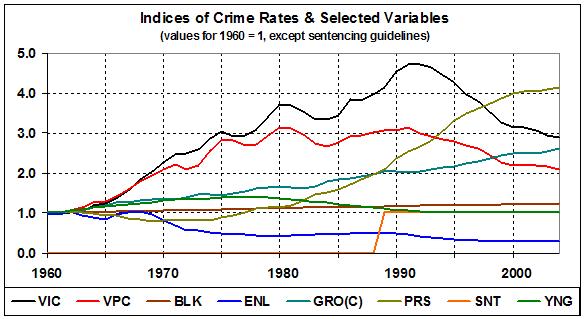
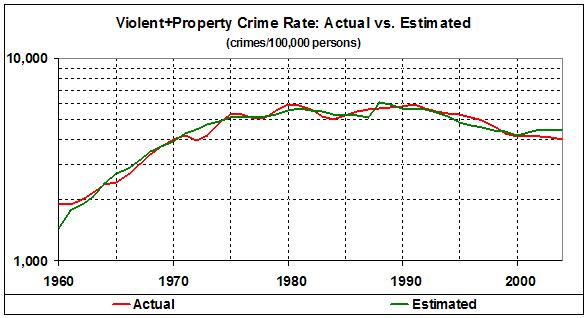
Crime, Explained
A Wrong-Headed Take on Abortion
“Family Values,” Liberty, and the State
Is There Such a Thing as Society
Greed, Cosmic Justice, and Social Welfare
Enough of “Social Welfare”
The Case of the Purblind Economist
Pseudo-Libertarian Sophistry vs. True Libertarianism
Positivism, “Natural Rights,” and Libertarianism
The Golden Rule and the State
Libertarian Conservative or Conservative Libertarian?
Bounded Liberty: A Thought Experiment
Evolution, Human Nature, and “Natural Rights”
More Pseudo-Libertarianism
More about Conservative Governance
The Meaning of Liberty
Substantive Due Process and the Limits of Privacy
Positive Liberty vs. Liberty
On Self-Ownership and Desert
In Defense of Marriage
What Is Justice?
Myopic Moaning about the War on Drugs
Creative Destruction, Reification, and Social Welfare
Burkean Libertarianism
Crimes against Humanity
Abortion and Logic
What Is Libertarianism?
True Libertarianism, One More Time
Human Nature, Liberty, and Rationalism
Utilitarianism and Psychopathy
The Myth That Same-Sex “Marriage” Causes No Harm
The Libertarian-Conservative Fusion Is Alive and Well
Cato, the Kochs, and a Fluke
Why Conservatism Works
Abortion, Doublethink, and Left-Wing Blather

The Pool of Liberty and “Me” Libertarianism

Ted Levy makes some excellent points in “Is the Pool of Liberty Drying Up?“:

…[A] few years ago [David Boaz, executive vice president of Cato Institute] made a well received but, I think, incomplete analysis of liberty….

Boaz’s thoughts were well articulated in a 2010 piece, found here on Reason.com: Up From Slavery: There’s No Such Thing As A Golden Age of Lost Liberty.

… Boaz notes Cato pamphlets used to include as the Institute’s raison d’être, “Since [the American] revolution, civil and economic liberties have been eroded.” And then, Boaz notes, a visiting Clarence Thomas, prior to his ascension to the Supreme Court, pointed out black people didn’t look at matters quite that way.

And not only black people, of course, though the awfulness of slavery is hard to trump. But the political liberties, or lack thereof, of Jews, gays, and women were also not proud applications of individual liberty in America’s past.

Then there’s Brink Lindsey’s argument, quoted by Boaz, from Lindsey’s The Age of Abundance (2007): Looking at liberty’s gains in the last half-century, Lindsey writes: “Compare conditions now to how they were at the outset of the 1960s. Official governmental discrimination against blacks no longer exists. Censorship has beaten a wholesale retreat. The rights of the accused enjoy much better protection. Abortion, birth control, interracial marriage, and gay sex are legal. Divorce laws have been liberalized and rape laws strengthened. Pervasive price and entry controls in the transportation, energy, communications, and financial sectors are gone. Top income tax rates have been slashed. The pretensions of macroeconomic fine-tuning have been abandoned. Barriers to international trade are much lower. Unionization of the private sector work force has collapsed. …cultural expression, personal lifestyle choices, entrepreneurship, and the play of market forces all now enjoy much wider freedom of maneuver.”

Lindsey’s is a hopeful message, and makes points similar to those made by Nick Gillespie and Matt Welch in their 2011 book The Declaration of Independents. Gillespie and Welch note that in all areas of life not touched by the mailed fist of government, things have improved dramatically in much less than a century. Save for the areas government controls–our educational system, our health care, our retirement plans–things are quite rosy.

But of course our educational system, health care, and retirement needs are not de minimis aspects of our lives…. The financial sector has undergone massive re-regulation since Lindsey wrote, and there is a resurgence of opposition to both international free trade and simple rules to limit the political power of public-sector unions. Finally, “the pretensions of macroeconomic fine tuning” have hardly, in the days of Obama, been “abandoned,” and Gingrich, Santorum, and Romney disagree only with Obama’s choices, not the principle of fine-tuning the economy from Washington.

…Things are better for blacks, for women, for a diverse and important subset of Americans. But this captures only part of the dynamic. We now, all of us, have our rights recognized equally. And we now, all of us, equally, have less rights than some of us did before. Is this a gain from a libertarian perspective?

Liberty is like the water in a swimming pool. You can dive in, and be surrounded by freedom. In the past, the pool was large and deep. Those who could dive in were engulfed in liberty. It was everywhere. There was so much liberty you could drown in it if you were not careful, but people exposed to liberty were buoyant, and liberty lifted you.

And entry into the pool, for many, was their birthright. It could not be taken away. The lifeguard at the pool was like a night watchman, seldom needed, helpful in emergencies.

Sadly, though, and wrongly, the pool was restricted. No blacks allowed, with only token exceptions. No Jews. No gays. No women. Property owners preferred. Yet despite all this, the pool and the opportunity to dive into it attracted millions from all over the world.

Over time, two things happened, one good, one bad. Rules were changed to allow more people to enter the pool. Over time first blacks, then Asians, Jews, women–now, though not yet fully, even gays–have been allowed to join the club and enter the pool. Sadly, at the same time, the pool has been shrinking. Once the pool was gigantic in size. As James Wilson might have said, “Measure the size of the pool? I am sure, sirs, that no gentleman in the late Convention would have attempted such a thing.”…

Blacks can now enter the pool. Women can now get their toes wet. Gays are now free to wear the most outrageous swimsuits poolside. But no one–white or black; gay or straight; male or female; young or old–NO ONE can now do high dives into the deep end. It is too shallow. It would be dangerous. It is prohibited for our own safety. The waters of liberty now engulf no one, equally….

We do, clearly, today have more liberty in the sense it is available to more people. More people are allowed into the pool. But it is hard to appreciate how much the pool has shrunk. The shrinkage takes place over time, and on any given day the shrinkage may be difficult to notice….

When we watch a race where some runners are shackled, we recognize it as unfair. We see the liberty of the shackled runners restricted if they are weighted down by the force of law. When we call out for greater equality, should we be satisfied if the laws are changed so as to shackle all runners equally, or should we remain unsatisfied until shackles are removed, and no one is weighted down?

On the March 8th episode of his eponymous Fox Business Network (FBN) show, John Stossel provided the second in a series on the huge expansion of laws under which we suffer in America, “Is Everything Illegal in America Today?” He noted in the last year alone the Federal government has generated 160,000 pages of NEW laws and regulations, restrictions on freedom, excuses to imprison citizens. These are not further descriptions and elaborations of rape and murder, robbery and home invasion. Stossel tells of the man who was imprisoned for SIX YEARS because he sold seafood in the wrong containers, lobsters that, while not mislabeled to consumers, were nonetheless smaller than the legal salable size. Opening a lemonade stand in your front yard requires, in NYC, preliminary attendance at a 15 hour Food Protection class, and filling out many legal forms….

We are now, in the words of Proudhon, watched, inspected, spied upon, directed, law-driven, numbered, regulated, enrolled, indoctrinated, preached at, controlled, checked, estimated, valued, censured, commanded. We are all in the pool now. And our feet are all equally barely wet. And while there was no Golden Age of Liberty, Americans today seem oblivious to a real and tragic loss, seem unaware they can no longer immerse themselves in liberty, can no longer swim unimpeded. Can no longer be everywhere surrounded by freedom.

Contrast Levy’s analysis with that of Jim Peron, writing in “The Disaster of Me Libertarianism.” Peron begins by repeating some “critiques of libertarianism”:

Libertarians are just conservatives who like drugs!

Libertarians are only concerned about themselves!

Libertarians don’t care what happens to other people?

Libertarians are selfish!

He then piles on:

I just spent a couple days at a libertarian conference. It was an experience that I find increasingly dismaying and disappointing because there has been a clear rightward shift in the libertarian movement….

But, what is interesting is listening to libertarians dismiss issues that are important to people who aren’t like them. Let us be truthful: the typical libertarian, and certainly the typical attendee at this conference, is a middle-aged, white, straight male. And, they seem utterly incapable of seeing freedom through the eyes of anyone who isn’t the same.

Mention equal marriage rights for gay people and they simply dismiss it as unimportant. If they aren’t actively opposed—and some were—they see it as inconsequential. If you talk about guns they often are interested since so many of them own firearms. If you talk about pornography they are interested. But when it comes to the barriers to immigration they don’t give a damn since they aren’t immigrants. They hate tax laws, but then they pay taxes. [Ed. note: The last is a fatuous observation. Of course they pay taxes, given the alternative of imprisonment and/or hefty fines.]

They really are libertarians who only see liberty as an issue as it applies to white, middle-aged, straight men (WMASM).

David Boaz wrote about the same thing by implication….

The piece by Boaz is the one mentioned by Levy. But Peron, unlike Levy, seems unaware that the pool of liberty is drying up, so focused is Peron on those “libertarians” who (according to him) do not share his (verbal) compassion for all creatures great and small. He recites some examples of un-libertarian attitudes, and summarizes them in this way:

All of this is what I call “me” libertarianism. That is the tendency of individual libertarians to interpret political trends only through their own experiences, without caring what the broader reality happens to be.

What is that “broader reality”?

We have millions of our fellow citizens who are freer today than they would have been had they lived in the golden age of liberty—whenever you think that might be. We have to be aware of their concerns as well. “Me” libertarianism references liberty only as it effects [sic] the speaker, without consideration of the freedom of others. It does send the message that libertarianism is selfish and about protecting privilege for white males only.

Others, who were not so privileged in the past, have trouble seeing how liberty will help them because so many advocates of liberty simply don’t care about how others are oppressed today. These libertarians do care about the issues that impact their own lives, but everyone else is inconsequential. Is it any wonder that so many African-Americans don’t see libertarians as interested in them? Is it really a surprise that libertarian meetings are so overwhelmingly male? Why is anyone surprised when the LBGT community ignores libertarianism, after libertarians have spent decades ignoring them?

The “libertarians” to whom Peron refers bear no resemblance to the libertarians who dominate the blogosphere. The latter are — almost to a white, middle-aged, straight man — very much pro-black, pro-illegal immigration, pro-LBGT (especially pro-homosexual “marriage”), pro “choice,” and so on.

But that contradiction is not the most serious flaw in Peron’s rant. This is:

[W]e should … fight for issues like marriage equality, the rights of immigrants, and reproductive rights for women…. We need to listen to people who are not like us.

In other words, Peron believes that liberty can be attained by destroying marriage (the bulwark of civil society); allowing illegal immigrants to pick the pockets of working Americans and vote for Democrats (world-class pickpockets themselves); and enabling state-sponsored murder, which encourages other eugenic practices.

Peron seems not to have noticed that the gains made by blacks, by women (in the workplace), by immigrants, and by homosexuals often have been proximate causes of the shrinkage of the pool of liberty. Those gains have been made by mainly through the agency of the state, by such techniques as restricting freedom of speech, punishing “incorrect” thoughts, redistributing income,, denying property rights, suppressing freedom of conscience, forbidding freedom of association, and granting admissions, jobs, and promotions to favored groups. (I must note that Levy slides by these specifics when he gives his reasons for the shrinkage of the pool of liberty.)

Finally, Peron wants us to believe that “freedom is indivisible.” Actually, it is divisible, as a mere glance at the outside world would tell hm. Some enjoy a lot of freedom; others enjoy less, very little, or none. But it is not libertarian to take freedom away from those who enjoy it, for the sake of “liberating” others — especially when those acts of “liberation” cause the pool of liberty to shrink.

I am all for the expansion of freedom, but not if it comes at the expense of my freedom. If that is “me” libertarianism, so be it.

Related posts:
Greed, Cosmic Justice, and Social Welfare
Positive Rights and Cosmic Justice
The Interest-Group Paradox
Parsing Political Philosophy
Is Statism Inevitable?
Inventing “Liberalism”
Law and Liberty
Rights, Liberty, the Golden Rule, and the Legitimate State
An Encounter with a Marxist
Pseudo-Libertarian Sophistry vs. True Libertarianism
Positivism, “Natural Rights,” and Libertarianism
Our Enemy, the State
The Golden Rule and the State
A Not-So-Fine Whine
Social Justice
Evolution, Human Nature, and “Natural Rights”
More Pseudo-Libertarianism
More about Conservative Governance
The Meaning of Liberty
Positive Liberty vs. Liberty
More Social Justice
Facets of Liberty
Burkean Libertarianism
Rights: Source, Applicability, How Held
What Is Libertarianism?
Nature Is Unfair
True Libertarianism, One More Time
Human Nature, Liberty, and Rationalism
A Declaration and Defense of My Prejudices about Governance
The Libertarian-Conservative Fusion Is Alive and Well
Libertarianism and Morality
Libertarianism and Morality: A Footnote
Merit Goods, Positive Rights, and Cosmic Justice
More about Merit Goods
What Is Bleeding-Heart Libertarianism?
Prohibition, Abortion, and “Progressivism”
Liberty, Negative Rights, and Bleeding Hearts
Conservatives vs. “Liberals”
Why Conservatism Works

Race and Reason: The Derbyshire Debacle

Race is one of the several badges of identity that have been recognized by leftists in their generally successful quest to obtain unmerited privileges for the bearers of those badges. Leftists will have no truck with freedom of association, property rights, or actual merit. No, their clientele must be given special dispensations, even if doing so means that others are penalized for the “sin” of not being on the left’s list of preferred identity groups.

This post is about a particular identity group: blacks. Specifically, it is about the specter that haunts every discussion of blacks: racism.

Since I began blogging at Politics & Prosperity in February 2009, I have not written much about the “race issue.” (My post about the Trayvon Martin case was about Obama’s race-baiting, not about race per se.) It is time to end this blog’s avoidance of the race issue, especially in light of Fisher v. University of Texas, a case that will be heard later this year by the U.S. Supreme Court.

It is not that I expect to influence the outcome of Fisher v. UT. Nor do I expect to influence the views of the smug, self-deluding, racist leftists who dominate UT and the political life of Austin. But as a taxpayer, I am an unwilling supporter of the racist admission policy of the University of Texas. Therefore, I can no longer stifle my disdain for that policy. If nothing else, perhaps fate (and Google) will send an errant leftist in this direction, so that he or she may be offended by what I have to say.

I wrote a lot about the race issue and its evil spawn, affirmative action, at my old blog, which I maintained from 2004 to 2008. I am not sure why I stopped writing about race when I created Politics & Prosperity soon after the inauguration of Barack Obama. Perhaps, subconsciously, I did not want my criticisms of Obama’s leftist predilections and policies to be tainted by the suggestion that I disdain him for his racial identity (which is black, despite his mixed parentage). In fact, Obama’s policies are loathsome on their own merits. The man is nothing more than a tan version of Bill Clinton, Jimmy Carter, LBJ, and FDR — all of whom I disrespect deeply. My loathing for leftists is color-blind.

Anyway, here is Politics & Prosperity‘s initial foray into the issue of race, or — more precisely — racism.

*   *   *

I do not mean by racism the view that there are races and that they differ by virtue of genetic and cultural heredity. That proposition, despite much evidence in its favor, is widely thought to be a racist one. But it is not.

Racism is undiscriminating distrust, suspicion, scorn, or hatred directed toward a racial group and its members, just because the racial group is identifiably different than the racial group with which the distrustful, suspicious, scornful, or hate-filled person — the racist — identifies. Racism knows no bounds; it is found in blacks, whites, Asians, aboriginals of all kinds, and in sub-groups of each.

Racism is an extreme form of in-group allegiance, that is, identification of oneself with a group because that identification satisfies prudential and/or emotional needs. A desire for mutual defense is a valid prudential need. Who better to turn to for defense against predators than one’s kin, neighbors, community, and network of communities linked by a common heritage? Predators may be found in each of those groups, but such groups (unless controlled by predators) can be counted on to resist predation, both internal and from without. Nor is defense against predators the only prudential need that can be satisfied by in-group allegiance; there is also, for example, mutual aid in times of natural disaster.

In-group allegiance, when rewarded by such benefits as mutual defense and mutual aid, can satisfy an emotional need for belonging, which sometimes manifests itself as patriotism. But patriotism, like racial identity, has negative consequences when it blinds its adherents to the virtues of individuals outside the in-group. The result is self-defeating insularity, which finds expression in policies that are harmful to many members of the in-group (e.g., protectionism, bans on social and economic fraternization with blacks). Racism, in other words, is a virulent kind of in-group allegiance that satisfies an emotional need while causing harm — even to its practitioners. It is akin to (though far more serious than) the kind of hooliganism that results from cultish attachments to sports teams, as in the case of European football.

Thus blinded to the virtues of individuals outside his in-group, a racist condemn all members of a despised out-group. A racist may praise the accomplishments of some members of a despised group (athletes are particular favorites), while attributing those accomplishments to racial traits or otherwise belittling the individuals whose accomplishments are noteworthy. A racist may justify his racism by citing evidence of racial differences (e.g., the lower average intelligence of blacks, compared to whites). But the racism (usually) precedes the evidence, which a racist will cite in support of his racism.

It is not racist to recognize the fact of inter-racial differences, on average, as long as one evaluates and treats individuals as individuals and recognizes that group averages do not obliterate individual differences.

It is not racist to recognize the risks of venturing into the “territory” of a racial group other than one’s own. But that recognition is racist if it is not matched by equal caution about venturing into the “territory” of certain sub-cultures of one’s own racial group. Specifically, a middle-class white person foolishly ventures into an area known as a redoubt for black gangbangers. But the same middle-class white wears racial blinders if he insouciantly ventures into Deliverance country.

Having said all of that, I admit the difficulty of telling racism apart from realism.

An excellent case in point is John Derbyshire‘s column of April 5, “The Talk: Nonblack Version,” which appeared in Taki’s Magazine. Derbyshire, for the sins of realism and candor, was immediately fired from his long-standing gig as a columnist for National Review, a creature of William F. Buckley Jr. which proclaims itself “America’s most widely read and influential magazine and website for Republican/conservative news, commentary and opinion.” Derbyshire’s offense, according to Rich Lowry, editor of NR, was to

lurch[] from the politically incorrect to the nasty and indefensible. We never would have published [“The Talk: Nonblack Version”], but the main reason that people noticed it is that it is by a National Review writer. Derb is effectively using our name to get more oxygen for views with which we’d never associate ourselves otherwise. So there has to be a parting of the ways. Derb has long danced around the line on these issues, but this column is so outlandish it constitutes a kind of letter of resignation.

(Three days after firing Derbyshire, NR fired another columnist, Robert Weissberg, for participating “in an American Renaissance conference where he delivered a noxious talk about the future of white nationalism.” I may address that case in a future post.)

Was Derbyshire’s piece “nasty and indefensible,” or simply too realistic for NR, which — as a conservative outlet — is always a prime candidate for the “racist” label that leftists like to stick on their opponents. (I often, and quite properly, refer to leftists as racists because they condescend to blacks and pursue policies that favor blacks simply for being black.)

Here are excerpts of Derbyshire’s article:

There is much talk about “the talk.”

“Sean O’Reilly was 16 when his mother gave him the talk that most black parents give their teenage sons,” Denisa R. Superville of the Hackensack (NJ) Record tells us. Meanwhile, down in Atlanta: “Her sons were 12 and 8 when Marlyn Tillman realized it was time for her to have the talk,” Gracie Bonds Staples writes in the Fort Worth Star-Telegram.

Leonard Greene talks about the talk in the New York Post. Someone bylined as KJ Dell’Antonia talks about the talk in The New York Times. Darryl Owens talks about the talk in the Orlando Sentinel.

Yes, talk about the talk is all over.

There is a talk that nonblack Americans have with their kids, too. My own kids, now 19 and 16, have had it in bits and pieces as subtopics have arisen. If I were to assemble it into a single talk, it would look something like the following.

* * * * * * * * * * * * *

(1) Among your fellow citizens are forty million who identify as black, and whom I shall refer to as black….

(2) American blacks are descended from West African populations, with some white and aboriginal-American admixture….

(3) Your own ancestry is mixed north-European and northeast-Asian, but blacks will take you to be white.

(4) The default principle in everyday personal encounters is, that as a fellow citizen, with the same rights and obligations as yourself, any individual black is entitled to the same courtesies you would extend to a nonblack citizen….

(5) As with any population of such a size, there is great variation among blacks in every human trait (except, obviously, the trait of identifying oneself as black)….

(6) As you go through life, however, you will experience an ever larger number of encounters with black Americans. Assuming your encounters are random—for example, not restricted only to black convicted murderers or to black investment bankers—the Law of Large Numbers will inevitably kick in. You will observe that the means—the averages—of many traits are very different for black and white Americans, as has been confirmed by methodical inquiries in the human sciences.

(7) Of most importance to your personal safety are the very different means for antisocial behavior, which you will see reflected in, for instance, school disciplinary measures, political corruption, and criminal convictions.

(8) These differences are magnified by the hostility many blacks feel toward whites. Thus, while black-on-black behavior is more antisocial in the average than is white-on-white behavior, average black-on-white behavior is a degree more antisocial yet.

(9) A small cohort of blacks—in my experience, around five percent—is ferociously hostile to whites and will go to great lengths to inconvenience or harm us. A much larger cohort of blacks—around half—will go along passively if the five percent take leadership in some event….

(10) Thus, while always attentive to the particular qualities of individuals, on the many occasions where you have nothing to guide you but knowledge of those mean differences, use statistical common sense:

(10a) Avoid concentrations of blacks not all known to you personally.

(10b) Stay out of heavily black neighborhoods.

(10c) If planning a trip to a beach or amusement park at some date, find out whether it is likely to be swamped with blacks on that date (neglect of that one got me the closest I have ever gotten to death by gunshot).

(10d) Do not attend events likely to draw a lot of blacks.

(10e) If you are at some public event at which the number of blacks suddenly swells, leave as quickly as possible.

(10f) Do not settle in a district or municipality run by black politicians.

(10g) Before voting for a black politician, scrutinize his/her character much more carefully than you would a white.

(10h) Do not act the Good Samaritan to blacks in apparent distress, e.g., on the highway.

(10i) If accosted by a strange black in the street, smile and say something polite but keep moving.

(11) The mean intelligence of blacks is much lower than for whites….

(12) There is a magnifying effect here, too, caused by affirmative action. In a pure meritocracy there would be very low proportions of blacks in cognitively demanding jobs. Because of affirmative action, the proportions are higher. In government work, they are very high. Thus, in those encounters with strangers that involve cognitive engagement, ceteris paribus the black stranger will be less intelligent than the white. In such encounters, therefore—for example, at a government office—you will, on average, be dealt with more competently by a white than by a black. If that hostility-based magnifying effect (paragraph 8) is also in play, you will be dealt with more politely, too. “The DMV lady“ is a statistical truth, not a myth.

(13) In that pool of forty million, there are nonetheless many intelligent and well-socialized blacks [ISWBs]…. You should consciously seek opportunities to make friends with IWSBs. In addition to the ordinary pleasures of friendship, you will gain an amulet against potentially career-destroying accusations of prejudice.

(14) Be aware, however, that there is an issue of supply and demand here….

(15) Unfortunately the demand is greater than the supply, so IWSBs are something of a luxury good, like antique furniture or corporate jets: boasted of by upper-class whites and wealthy organizations, coveted by the less prosperous. To be an IWSB in present-day US society is a height of felicity rarely before attained by any group of human beings in history. Try to curb your envy: it will be taken as prejudice (see paragraph 13).

* * * * * * * * * * * * *

You don’t have to follow my version of the talk point for point; but if you are white or Asian and have kids, you owe it to them to give them some version of the talk. It will save them a lot of time and trouble spent figuring things out for themselves. It may save their lives.

Derbyshire’s “talk” (hereafter DT) should be judged on two criteria: appropriateness and accuracy. If it is accurate, it is appropriate. Parents have a duty to educate their children in the facts of life, sexual and otherwise. To neglect that duty is to leave them open to harms that they are better able to avoid with foreknowledge and forewarning. DT (if accurate) can be called inappropriate only by persons who put political correctness above the well-being of children. To take a non-racial example, parents who fail to teach their children of the health risks of male homosexuality, and who condone homosexual experimentation by male adolescents because “there’s nothing wrong with that,” are endangering the lives of those adolescents through their politically correct passivity.

Is DT accurate? Derbyshire assiduously documents almost all of his points, in the links reproduced above and in others that are in elided passages. One weak point is (9), where Derbyshire lapses into generalizations about the percentage of blacks who are openly hostile to whites (about five percent) and the fraction of blacks (about half) who will follow the lead of hostile blacks. But these lapses do not negate the advice that follows. It is incontrovertible that some blacks have and will harm whites, and it is a staple of human nature that the “masses” (of any color) will flee from, ignore, or acquiesce in acts of savagery. (The heroism of some passengers on United 93 is nothing compared with, say, the silent acceptance of the Holocaust by masses of Germans — to offer but one case in point.) But Derbyshire’s guesses about proportions do not vitiate the points that follow: (10a)-(10i).

I find (14) and (15) to be strained, but generally accurate. However, no one is in a position to assert, as Derbyshire does in (15), that

[t]o be an IWSB in present-day US society is a height of felicity rarely before attained by any group of human beings in history.

This is pure hyperbole. Neither Derbyshire nor any other observer is in a position to judge the “felicity” of IWSBs, individually or as a group. (Group felicity is an empty construct, in any case, because one cannot sum individual states of well-being to attain a collective measure of well-being.) The assertion is also condescending, and thus suggestive of a racist attitude toward blacks.

My few objections aside, DT is accurate (on the whole) and therefore appropriate. The powers-that-be at NR are guilty of bowing to the false gods of political correctness.

I do not mean to say that Derbyshire is not a racist. He may well be one. But a racist, like a stopped clock, can sometimes be right about racial issues, just as a poor marksman can sometimes hit a bulls-eye if he expends a lot of ammunition.

This brings me to Derbyshire’s next column at Taki’s Magazine, “Talking Back,” which addresses some of the blogospheric commentary about DT. Near the end of “Talking Back,” Derbyshire offers the following:

Lefty commenters waxed large on my piece as promoting eugenics, arguing for genetic inferiority, and so on.

Now, I do have opinions about eugenics. I support, for example, the eugenic requirements in the marriage laws of my state (see under “Familial Restrictions” here)

Similarly, I have opinions about the notion of genetic success (as I prefer to frame the issue). In the long biological view, the only criterion is survival… [T]he premise of the movie Idiocracy is that coarse, dumb people will inherit the Earth by out-breeding refined, smart people. If that happens (and I wouldn’t be surprised) then from a biological perspective, which is actually my own perspective as a stone-cold empiricist, the coarse, dumb people will have proven “superior” to the refined, smart ones. Personally I prefer the latter type, but Ma Nature doesn’t care what I prefer.

Sure, I have opinions; sure, I’m willing to discuss these topics. There was nothing of them in my piece, though. I just stated facts, based on statistics gathered over decades, by both private and government agencies, accumulated and checked beyond the range of dispute. Those facts might have any of several causes, with corresponding remedies. They might be “cultural”: Perhaps a nationwide ban on rap music and malt liquor might change them. They might be biomedical, fixable by some not-yet-discovered pharmacological wonder we could put in the water supply such as fluoride. They might be manipulated by extraterrestrial powers lurking in the fogs of Jupiter, beaming malign rays at us. I didn’t speculate. I framed no hypotheses. Just the facts….

Were there any reasoned non-hostile critiques I thought were good?

Even there, I only looked at three or four, at the urging of friends. Of those, the best was Noah Millman‘s. It deserves a formal, collegial rebuttal, but I’m so far behind with absolutely everything, I daren’t think about it. I haven’t done my damn TAXES yet. Sorry, Noah. In any case, most of the points I’d make are already there in the comment thread to Noah’s piece.

It is going somewhat too far to say that DT recites “just the facts.” But it is heavily fact-based and accurate in its thrust. It is a big improvement on touchy-feely political correctness, which substitutes hopes for facts.

What about Millman’s column, “A Quick Word on the Derb,” at The American Conservative? For one thing, Millman says that Derbyshire’s injunctions (10a)-(10i) are

bad advice. To be a good application of statistical common sense, it’s not enough to know that, for example, crime rates (on average) are higher in majority-black neighborhoods. You’d need to know that the disparity was large enough, and the variance around the average small enough, so that following such a rule would actually be a decent heuristic; not to mention that there were no more finely-grained heuristics available and that the cost of applying such a sweeping heuristic in terms of the loss of experience of life and its manifold pleasures was not prohibitive.

Because here’s the thing. Granting that nobody has an obligation to be politically correct in their behavior, and granting (for the sake of argument) all of Derbyshire’s premises, what he’s still saying is that the risks are so great that it’s better simply to wall oneself off from African-Americans to the greatest degree possible. But he hasn’t actually measured the risks in absolute terms, only in relative terms: would this action reduce risk; if yes, then follow it. I wonder: does he take a similar attitude toward other risks? Toward, to take a few examples, eating raw food, bicycling without a helmet, traveling alone to a foreign country, or writing whatever one wishes for a publication like Taki’s Magazine?…

The “race realists” like to say that they are the ones who are curious about the world, and the “politically correct” types are the ones who prefer to ignore ugly reality. But the advice Derbyshire gives to his children encourages them not to be too curious about the world around them, for fear of getting hurt. And, as a general rule, that’s terrible advice for kids – and not the advice that Derbyshire has followed in his own life.

Twaddle. Derbyshire’s advice is cautionary — it is of a kind with warning one’s children about the dangers of street-racing and para-sailing. They may do such things anyway, but they may do so after taking duly precautionary measures.

Moreover, Millman’s proffered alternative is fatuous:

To be a good application of statistical common sense, it’s not enough to know that, for example, crime rates (on average) are higher in majority-black neighborhoods. You’d need to know that the disparity was large enough, and the variance around the average small enough, so that following such a rule would actually be a decent heuristic; not to mention that there were no more finely-grained heuristics available and that the cost of applying such a sweeping heuristic in terms of the loss of experience of life and its manifold pleasures was not prohibitive.

And where does one obtain these fine-grained statistics and heuristics? And on short notice? And what is the “loss of experience of life” next to the very real possibility of a dire outcome, including loss of life itself?

Millman goes on:

The “race realists” like to say that they are the ones who are curious about the world, and the “politically correct” types are the ones who prefer to ignore ugly reality. But the advice Derbyshire gives to his children encourages them not to be too curious about the world around them, for fear of getting hurt. And, as a general rule, that’s terrible advice for kids – and not the advice that Derbyshire has followed in his own life.

I have no idea about “the advice that Derbyshire has followed in his own life,” nor do I know how Millman knows what that might be. But it is evident that Derbyshire has not been killed by a black thug or black mob. Further, I cannot imagine that Derbyshire’s advice stifles his children’s curiosity, though it may help to channel that curiosity away from situations and events that are best avoided by any sensible person. There is plenty to be curious about in this world; most of it is far more interesting than wandering into strange neighborhoods and mingling in crowds of strangers.

Later:

Which brings us to the supposed point of the column. That point, I take it, is to argue that just as African-American parents have to brief their sons on how to keep themselves from ending up like Trayvon Martin, white parents have to brief their sons on how to keep themselves safe from personal violence at the hands of African-Americans. But there’s a profound lack of parallelism between the two conversations. “The Talk” is about how you are perceived by others, and how to comport yourself so as to counteract that perception. Derbyshire’s talk is about how you should perceive others. There’s no analogy. They have nothing to do with each other.

The “talks” have everything to do with each other: They are about how to avoid harm.

In sum, I am unpersuaded by Millman’s commentary. Derbyshire’s children — and other non-black children — should follow Derbyshire’s advice, just as black children should heed “the talk.”

Whether Derbyshire is a racist or a realist matters not. On the whole, he is right.

*   *   *

I will address affirmative action and other policy fiascoes in future posts.

Not-So-Random Thoughts (II)

Links to the other posts in this occasional series may be found at “Favorite Posts,” just below the list of topics.

Atheism

Philip Kitcher reviews Alex Rosenberg’s The Atheist’s Guide to Reality:

The evangelical scientism of “The Atheist’s Guide” rests on three principal ideas. The facts of microphysics determine everything under the sun (beyond it, too); Darwinian natural selection explains human behavior; and brilliant work in the still-young brain sciences shows us as we really are. Physics, in other words, is “the whole truth about reality”; we should achieve “a thoroughly Darwinian understanding of humans”; and neuroscience makes the abandonment of illusions “inescapable.” Morality, purpose and the quaint conceit of an enduring self all have to go.

The conclusions are premature. Although microphysics can help illuminate the chemical bond and the periodic table, very little physics and chemistry can actually be done with its fundamental concepts and methods, and using it to explain life, human behavior or human society is a greater challenge still. Many informed scholars doubt the possibility, even in principle, of understanding, say, economic transactions as complex interactions of subatomic particles. Rosenberg’s cheerful Darwinizing is no more convincing than his imperialist physics, and his tales about the evolutionary origins of everything from our penchant for narratives to our supposed dispositions to be nice to one another are throwbacks to the sociobiology of an earlier era, unfettered by methodological cautions that students of human evolution have learned: much of Rosenberg’s book is evolutionary psychology on stilts. Similarly, the neuroscientific discussions serenely extrapolate from what has been carefully demonstrated for the sea slug to conclusions about Homo sapiens.

And David Albert gets rough with Lawrence M. Krauss’s A Universe from Nothing:

Look at how Richard Dawkins sums it up in his afterword: “Even the last remaining trump card of the theologian, ‘Why is there something rather than nothing?,’ shrivels up before your eyes as you read these pages. If ‘On the Origin of Species’ was biology’s deadliest blow to super­naturalism, we may come to see ‘A Universe From Nothing’ as the equivalent from cosmology. The title means exactly what it says. And what it says is ­devastating.”

Well, let’s see. There are lots of different sorts of conversations one might want to have about a claim like that: conversations, say, about what it is to explain something, and about what it is to be a law of nature, and about what it is to be a physical thing. But since the space I have is limited, let me put those niceties aside and try to be quick, and crude, and concrete.

Where, for starters, are the laws of quantum mechanics themselves supposed to have come from?…

Never mind. Forget where the laws came from. Have a look instead at what they say. It happens that ever since the scientific revolution of the 17th century, what physics has given us in the way of candidates for the fundamental laws of nature have as a general rule simply taken it for granted that there is, at the bottom of everything, some basic, elementary, eternally persisting, concrete, physical stuff….

The fundamental laws of nature generally take the form of rules concerning which arrangements of that stuff are physically possible and which aren’t, or rules connecting the arrangements of that elementary stuff at later times to its arrangement at earlier times, or something like that. But the laws have no bearing whatsoever on questions of where the elementary stuff came from, or of why the world should have consisted of the particular elementary stuff it does, as opposed to something else, or to nothing at all.

The fundamental physical laws that Krauss is talking about in “A Universe From Nothing” — the laws of relativistic quantum field theories — are no exception to this. The particular, eternally persisting, elementary physical stuff of the world, according to the standard presentations of relativistic quantum field theories, consists (unsurprisingly) of relativistic quantum fields. And the fundamental laws of this theory take the form of rules concerning which arrangements of those fields are physically possible and which aren’t, and rules connecting the arrangements of those fields at later times to their arrangements at earlier times, and so on — and they have nothing whatsoever to say on the subject of where those fields came from, or of why the world should have consisted of the particular kinds of fields it does, or of why it should have consisted of fields at all, or of why there should have been a world in the first place. Period. Case closed. End of story….

[Krauss] has an argument — or thinks he does — that the laws of relativistic quantum field theories entail that vacuum states are unstable. And that, in a nutshell, is the account he proposes of why there should be something rather than nothing.

But that’s just not right. Relativistic-quantum-field-theoretical vacuum states — no less than giraffes or refrigerators or solar systems — are particular arrangements of elementary physical stuff…. And the fact that particles can pop in and out of existence, over time, as those fields rearrange themselves, is not a whit more mysterious than the fact that fists can pop in and out of existence, over time, as my fingers rearrange themselves. And none of these poppings — if you look at them aright — amount to anything even remotely in the neighborhood of a creation from nothing.

None of this is news to me. This is from my post, “The Atheism of the Gaps“:

The gaps in scientific knowledge do not prove the existence of God, but they surely are not proof against God. To assert that there is no God because X, Y, and Z are known about the universe says nothing about the creation of the universe or the source of the “laws” that seem to govern much of its behavior.

(See also the many posts linked at the bottom of “The Atheism of the Gaps.”)

Caplan’s Perverse Rationalism

Regular readers of this blog will know that I have little use for the psuedo-libertarian blatherings of Bryan Caplan, one of the bloggers at EconLog. (See also this and this.) Caplan, in a recent post, tries to distinguish between “pseudo output” and “real output”:

1. Some “output” is actually destructive.  At minimum, the national “defense” of the bad countries you think justifies the national defense of all the other countries.

2. Some “output” is wasted.  At minimum, the marginal health spending that fails to improve health.

3. Some “output” doesn’t really do what consumers think it does.  At minimum, astrology.

Note: None of these flaws have any definitional libertarian component.  Even if there’s no good reason for tax-supported roads, existing government roads really are quite useful.  Still, coercive support is often a credible symptom of pseudo-output: If the product is really so great, why won’t people spend their own money on it?

Once you start passing output through these filters, the world seems full of pseudo-output.  Lots of military, health, and education spending don’t pass muster.  Neither does a lot of finance.  Or legal services. In fact, it’s arguably easier to name the main categories of “output” that aren’t fake.  Goods with clear physical properties quickly come to mind:

  • Food.  People may be mistaken about food’s nutritional properties.  But they’re not mistaken about its basic life-preserving and hunger-assuaging power – or how much they enjoy the process of eating it.
  • Structures.  People may overlook a structure’s invisible dangers, like radon.  But they’re not mistaken about its comfort-enhancing power – or how aesthetically pleasing it is.
  • Transportation.  People may neglect a transport’s emissions.  But they’re not mistaken about how quickly and comfortably it gets them from point A to point B.

Lest this seem horribly unsubjectivist, another big category of bona fide output is:

  • Entertainment.  People may be misled by entertainment that falsely purports to be factual.  But they’re not mistaken about how entertained they are.

Caplan is on to something when he says that “coerc[ed] support is often a credible symptom of pseudo-output,” but he gives away the game when he allows entertainment but dismisses astrology. In other words, if Caplan isn’t “entertained” (i.e., made to feel good) by something, it’s of no value to anyone. He is a pacifist, so he dismisses the value of defense. He (rightly) concludes that the subsidization of health care means that a lot of money is spent (at the margin) to little effect, but the real problem is not health care — it is subsidization.

Once again, I find Caplan to be a muddled thinker. Perhaps, like his colleague Robin Hanson, he is merely being provocative for the pleasure of it. Neither muddle-headedness nor provocation-for-its-own-sake is an admirable trait.

The Sociopaths Who Govern Us

I prefer “psychopath” to “sociopath,” but the words are interchangeable; thus:

(Psychiatry) a person afflicted with a personality disorder characterized by a tendency to commit antisocial and sometimes violent acts and a failure to feel guilt for such acts Also called sociopath

In “Utilitarianism and Psychopathy,” I observe that the psychopathy of law-makers is revealed “in their raw urge to control the lives of others.” I am not alone in that view.

Steve McCann writes:

This past Sunday, the Washington Post ran a lengthy front-page article on Obama’s machinations during the debt ceiling debate last summer.  Rush Limbaugh spent a considerable amount of his on-air time Monday discussing one of the highlights of the piece: Barack Obama deliberately lied to the American people concerning the intransigence of the Republicans in the House of Representatives.  The fact that a pillar of the sycophantic mainstream media would publish a story claiming that their hero lied is amazing….

What I say about Barack Obama I do not do lightly, but I say it anyway because I fear greatly for this country and can — not only from personal experience, but also in my dealing with others — recognize those failings in a person whose only interests are himself and his inbred radical ideology, which as its lynchpin desires to transform the country into a far more intrusive state by any means possible….

… Obama is extremely adept at exploiting the celebrity culture that has overwhelmed this society, as well as the erosion of the education system that has created a generation or more of citizens unaware of their history, culture, and the historical ethical standards based on Judeo-Christian teaching….

The reality is that to Barack Obama lying, aka “spin,” is normal behavior. There is not a speech or an off-the cuff comment since he entered the national stage that does not contain some falsehood or obfuscation. A speech on energy made last week and repeated on March 22 is reflective of this mindset. He is now attempting to portray himself as being in favor of drilling in order to increase oil production and approving pipeline construction, which stands in stark contrast to his stated and long-term position on energy and reiterated as recently as three weeks ago. This is a transparent and obvious ploy to once again fool the American people by essentially lying to them….

[T]here has been five years of outright lies and narcissism that have been largely ignored by the media, including some in the conservative press and political class who are loath to call Mr. Obama what he is, in the bluntest of terms, a liar and a fraud. That he relies on his skin color to intimidate, either outright or by insinuation, those who oppose his radical agenda only adds to his audacity. It is apparent that he has gotten away with his character flaws his entire life, aided and abetted by the sycophants around him; thus, he is who he is and cannot change.

Obama: Sociopath-in-Chief.

Poetic Justice

Newspaper Ad Revenues Fall to 60-Yr. Low in 2011

“Nuff said.

Why (Libertarian) Conservatism Works

Liberalism,” overt statism, and pseudo-libertarianism are contrivances, based (respectively) on state-imposed “rationality” (often nothing more than whims wrapped in pseudo-intellectual language); unapologetic brute force; and an unrealistic, anti-social view of humans as arms-length negotiators. “Liberalism” and overt statism impose the preferences of powerful elites and individuals on everyone, regardless of the effects of those impositions on the well-being of everyone. That the impositions are advertised as beneficial does not make them so; such claims are delusional and self-serving. Pseudo-libertarianism can be dismissed as nothing more than a pipe-dream; “liberalism” and overt statism are the true enemies of liberty and prosperity.

True libertarianism (libertarian conservatism) rests on six principles:

  1. Belief that political problems, at bottom, are religious and moral problems.
  2. Affection for the proliferating variety and mystery of traditional life, as distinguished from the narrowing uniformity and egalitarian and utilitarian aims of most radical systems.
  3. Conviction that civilized society requires order.
  4. Persuasion that property and freedom are inseparably connected, and that economic leveling is not economic progress.
  5. Faith in traditional mores and distrust of “sophisters and calculators.” Tradition and sound prejudice provide checks upon man’s anarchic impulse.
  6. Recognition that change and reform are not identical.

These principles, taken together, set libertarian conservatism apart from “liberalism,” overt statism, and pseudo-libertarianism. Unlike those “systems,” libertarian conservatism relies on evolved social norms to regulate interpersonal relations and to channel them in mutually beneficial directions. That is to say, libertarian consevatism “works” because it is consistent with human needs and human nature; it incorporates the lessons of experience into everyday rules of conduct.

Related reading:
The 20th  Anniversary of Hayek’s Death,” by Mike Rappaport
Why I Am Not a Libertarian,” by Nathan Schlueter

Related posts:
On Liberty
Greed, Cosmic Justice, and Social Welfare
Positive Rights and Cosmic Justice
The Interest-Group Paradox
Parsing Political Philosophy
Is Statism Inevitable?
Inventing “Liberalism”
Utilitarianism, “Liberalism,” and Omniscience
Utilitarianism vs. Liberty
Law and Liberty
Negative Rights
Negative Rights, Social Norms, and the Constitution
Rights, Liberty, the Golden Rule, and the Legitimate State
The Near-Victory of Communism
Tocqueville’s Prescience
The Mind of a Paternalist
Accountants of the Soul
Rawls Meets Bentham
Is Liberty Possible?
Our Enemy, the State
Pseudo-Libertarian Sophistry vs. True Libertarianism
Bounded Liberty: A Thought Experiment
The Meaning of Liberty
Positive Liberty vs. Liberty
Corporations, Unions, and the State
Rethinking the Constitution: “Freedom of Speech, and of the Press”
What Is Libertarianism?
Nature Is Unfair
True Libertarianism, One More Time
Human Nature, Liberty, and Rationalism
Utilitarianism and Psychopathy
A Declaration and Defense of My Prejudices about Governance
Merit Goods, Positive Rights, and Cosmic Justice
More about Merit Goods
Don’t Just Stand There, “Do Something”
What Is Bleeding-Heart Libertarianism?
Liberty, Negative Rights, and Bleeding Hearts
Legislating Morality
Legislating Morality (II)

Not-So-Random Thoughts (I)

Links to the other posts in this occasional series may be found at “Favorite Posts,” just below the list of topics.

Secession

Ilya Somin, writing at The Volokh Conspiracy, on secession:

The US Constitution, of course, is one of many where secession is neither explicitly banned or explicitly permitted. As a result, both critics and defenders of a constitutional right of secession have good arguments for their respective positions. Unlike the preceding Articles of Confederation, the Constitution does not include a Clause stating that the federal union is “perpetual.” While the Articles clearly banned secession, the Constitution is ambiguous on the subject.

Even if state secession is constitutionally permissible, the Confederate secession of 1861 was deeply reprehensible because it was undertaken for the profoundly evil purpose of perpetuating and extending slavery. But not all secession movements have such motives. Some are undertaken for good or at least defensible reasons. In any event, there is nothing inherently contradictory about the idea of a legal secession.

Of course, whether or not a secession is legal, it may be morally justified. Conversely, a legal secession may be morally unjustified, as was the case with the Southern secession. But the history of the Southern secession does not taint the legal and moral grounds for secession. As I say here,

The constitutional contract is a limited grant of power to the central government, for the following main purposes: keeping peace among the States, ensuring uniformity in the rules of inter-State and international commerce, facing the world with a single foreign policy and a national armed force, and assuring the even-handed application of the Constitution and of constitutional laws. That is all.

It is clear that the constitutional contract has been breached. It is clear that the Constitution’s promise to “secure the Blessings of Liberty to ourselves and our Posterity”  has been blighted.

Desperate times require desperate measures. I suggest that we begin at the beginning, with a new Declaration of Independence, and proceed from there to a new Constitution.

Obamacare

In a post at The American, John F. Gaski writes:

On the central issue of ObamaCare’s notorious mandate—i.e., whether it is constitutional for the federal government to compel a consumer purchase—everything hinges on the U.S. Constitution’s Commerce Clause. That element of the Constitution gives the federal government authority to regulate interstate commerce or activities affecting it. So far, so reasonable.

But the crux of the issue is whether forcing Americans to buy healthcare is regulation of commerce in the first place. Opponents note that non-purchase of healthcare should not be considered commerce or commerce-related activity. ObamaCare apologists, including some federal judges, make the remarkable claim that a decision not to purchase qualifies as interstate commerce or activity affecting interstate commerce, the same as a decision to purchase or a purchase itself. But even the non-partisan Congressional Research Service, in its 2009 assessment of likely PPACA constitutionality, acknowledged that Commerce Clause-based federal regulatory authority targets genuine activities that affect interstate commerce, not inactivity.

How to resolve this disagreement? The answer is staring us in the face, but has remained obscure to some lawyers and jurists who cannot quite see the forest for the trees. All you really need to know is what the word “commerce” means. To wit, commerce is “exchange of goods, products, or property . . . ; extended trade” (Britannica World Language Dictionary, 1959); “the buying and selling of goods . . .; trade” (Webster’s New World Dictionary, 1964); “the buying and selling of commodities; trade” (The Merriam-Webster Dictionary, 1974); “interchange of goods or commodities, especially on a large scale . . . ; trade; business” (Dictionary.com, 2012). Uniformly, we see, the definition of commerce involves activity, not just a decision to act, and certainly not a decision to not act. The meaning of the concept of commerce presumes action, and always has. Moreover, even casual philology will confirm that the accepted meaning of “commerce” at the time of the Constitution’s drafting referenced activity, not inactivity, at least as much then as it does now (see C. H. Johnson, William & Mary Bill of Rights Journal, October 2004). In the same way, the Commerce Clause has long been construed to apply to action in or affecting commerce, from the 1824 Gibbons v. Ogden Supreme Court case onward.

I am in complete agreement:

[T]he real issue … comes down to this: Does Congress’s power to regulate interstate commerce extend to “health care” generally, just because some aspects of it involve interstate commerce? In particular, can Congress constitutionally impose the individual mandate under the rubric of the Commerce Clause or the Necessary and Proper Clause?…

It is safe to say that a proper reading of the Constitution, as exemplified in the authoritative opinions excerpted above, yields no authority for Obamacare. That monstrosity — the official, Orwellian title of which is the Patient Protection and Affordable Care Act (PPACA) — attempts to reach an aggregation known as “health care,” without any differentiation between interstate commerce, intrastate commerce, and activities that are part of neither, namely, the choices of individuals with respect to health insurance.

It may be a valid exercise of Congress’s power to regulate actual interstate commerce that touches on the provision of health care. It is not a valid exercise to aggregate everything called “health care” and to regulate it as if it were all within the reach of Congress. When that happens, there is no room left — in “health care” nor, by extension, any other loose aggregation of activities — for State action or individual choice.

In sum, Obamacare is neither a valid regulation of interstate commerce nor necessary and proper to a valid regulation of interstate commerce. It is a governmental seizure of 1/9th of the economy. The individual mandate — which is a central feature of that seizure — is nothing more than coercion. It is no less peremptory than the military draft.

Freedom of Conscience

Yes, Virginia, there is freedom of conscience in Virginia:

A bill that ensures that faith-based adoption agencies in the state of Virginia won’t be forced to place children in households led by same-sex couples has passed both houses of the General Assembly and is heading to the desk of Gov. Robert McDonnell, a supporter of the legislation, who is expected to sign it soon.

Gov. McDonnell and the majorities in the Virginia legislature are standing up for freedom of conscience, which is among the negative rights that is trampled by grants of  “positive rights” (i.e., privileges). These

are the products of presumption — judgments about who is “needy” and “deserving” — and they are bestowed on some by coercing others. These coercions extend not only to the seizure of income and wealth but also to denials of employment (e.g., affirmative action), free speech (e.g., campaign-finance “reform”), freedom of contract (e.g., mandatory recognition of unions), freedom of association (e.g., forced admission of certain groups to private organizations), freedom of conscience (e.g., forced participation in abortions), and on and on.

Income Inequality

Thomas A. Garrett, a sensible economist, says good things about income inequality:

The apparent increase in U.S. income inequality has not escaped the attention of policymakers and social activists who support public policies aimed at reducing income inequality. However, the common measures of income inequality that are derived from the census statistics exaggerate the degree of income inequality in the United States for several reasons. Furthermore, although income inequality is seen as a social ill by many people, it is important to understand that income inequality has many economic benefits and is the result of, and not a detriment to, a well-functioning economy….

…[O]ver time, a significant number of households move to higher positions along the income distribution and a significant number move to lower positions along the income distribution. Common reference to “classes” of people (e.g., the lowest 20 percent, the richest 10 percent) is very misleading because income classes do not contain the same households and people over time….

The unconstrained opportunity for individuals to create value for society, which is reflected by their income, encourages innovation and entrepreneurship. Economic research has documented a positive correlation between entrepreneurship/innovation and overall economic growth.9 A wary eye should be cast on policies that aim to shrink the income distribution by redistributing income from the more productive to the less productive simply for the sake of “fairness.” 10 Redistribution of wealth would increase the costs of entrepreneurship and innovation, with the result being lower overall economic growth for everyone.

I am losing track of the posts in which I have made the same points. See this one and this one, and the posts linked in each of them.

The Left-Libertarian (“Liberal”) Personality vs. Morality

Will Wilkinson, a left-libertarian (i.e., modern “liberal”) if ever there was one, writes about his score on the Big-Five Personality Test:

I score very high in “openness to experience” and worryingly low in “conscientiousness”.

A true libertarian (i.e., a Burkean) would score high on “openness to experience” and high on “conscientiousness” — as I do.

As I have said, differences

between various libertarian camps and between libertarians, Burkean conservatives, yahoo conservatives, “liberals,” and so on — are due as much to differences of temperament as they are to differences in knowledge and intelligence.

But temperament is a reason for political error, not an excuse for it:

[T]he desirability or undesirability of state action has nothing to do with the views of “liberals,” “libertarians,” or any set of pundits, “intellectuals,” “activists,” and seekers of “social justice.” As such, they have no moral standing, which one acquires only by being — and acting as — a member of a cohesive social group with a socially evolved moral code that reflects the lessons of long coexistence. The influence of “intellectuals,” etc., derives not from the quality of their thought or their moral standing but from the influence of their ideas on powerful operatives of the state.

See also:
Libertarianism and Morality
Libertarianism and Morality: A Footnote

Conservatives vs. “Liberals”

David Brooks occasionally writes something with which I agree. For example, in “Hey Mets! I Just Can’t Quit You” (The New York Times, March 8, 2012) he says:

There’s a core American debate between [Jack Kerouac’s] “On the Road” and [Frank Capra’s}“It’s a Wonderful Life.” “On the Road” suggests that happiness is to be found through freedom, wandering and autonomy. “It’s a Wonderful Life” suggests that happiness is found in the lifelong attachments that precede choice. It suggests that restraints can actually be blessings because they lead to connections that are deeper than temporary self-interest.

What Brooks didn’t say, but probably thought, is that “On the Road” is “liberal” and “It’s a Wonderful Life” is “conservative.” For, as Brooks observes in the next paragraph, “happiness research suggests that ‘It’s a Wonderful Life’ is correct and ‘On the Road’ is an illusion.” That’s consistent with a point I make in “Intelligence, Personality, Politics, and Happiness,” namely, that persons of the right (which includes most libertarians) are happier than “liberals.”

But the happiness of persons of the right — and therefore most of the happiness that’s in the air — is threatened by the “liberal” agenda. And most conservatives are hard put to refute that agenda with reasoned argument. Maverick Philosopher explains, in “Why Are Conservatives Inarticulate?“:

Conservatives, by and large, are doers not thinkers, builders,  not scribblers.  They are at home on the terra firma of the concrete particular but at sea in the realm of abstraction.  The know in their dumb inarticulate way that killing infants is a moral outrage but they cannot argue it out with sophistication and nuance in a manner to command the respect of their opponents.  And that’s a serious problem.

To beat the Left we must out-argue them in the ivory towers and out-slug them in the trenches.  Since by Converse Clausewitz  politics is war conducted by other means, the trench-fighters need to employ the same tactics that lefties do: slanders, lies, smears, name-calling, shout-downs, pie-throwing, mockery, derision….

Politics is war and war is ugly.  We could avoid a lot of this nastiness if we adopted federalism and voluntary Balkanization.  But that is not likely to happen: the totalitarian Left won’t allow it.  So I predict things are going to get hot in the coming years.

To paraphrase Barry Goldwater, inarticulateness in the defense of liberty is no virtue.

The intelligentsia of the right — a select group that includes George Will and does not include the likes of O’Reilly and Hannity — must arm themselves to do battle on the left’s terms. I would avoid slanders, lies, and smears, but name-calling, shout-downs, pie-throwing, mockery, and derision are certainly in order — as is the truth about the baneful effects of leftism on its supposed beneficiaries: the poor and (mostly imaginary) downtrodden. Their raison d’être, in the left’s scheme of things, has been to supply the votes that have enabled the left to exert its totalitarian will on all of us.

Related posts:
The Price of Government
Does the Minimum Wage Increase Unemployment?
The Mega-Depression
The Real Burden of Government
The Left
The Illusion of Prosperity and Stability
Society and the State
I Want My Country Back
Estimating the Rahn Curve: Or, How Government Inhibits Economic Growth
Undermining the Free Society
Intelligence, Personality, Politics, and Happiness
“Intellectuals and Society”: A Review
Government vs. Community
The Stagnation Thesis
The Left’s Agenda
The Public-School Swindle
The Evil That Is Done with Good Intentions
The Left and Its Delusions
The Destruction of Society in the Name of “Society”
Externalities and Statism
Taxes: Theft or Duty?
Society and the State
The Spoiled Children of Capitalism
Politics, Sophistry, and the Academy
Subsidizing the Enemies of Liberty
Estimating the Rahn Curve: A Sequel
Are You in the Bubble?
Lay My (Regulatory) Burden Down

Cato, the Kochs, and a Fluke

If you follow the libertarian sector of the blogosphere, as I do, you will have noted the recent dominance of two controversies: the future of Cato Institute and the subsidization of contraceptives. In the matter of Cato, it seems that the Koch brothers want to take control of Cato for the purpose of making it more “relevant” to current political issues, much to the universal dismay of the libertarians commentators whose opinions I have read. In the matter of contraceptives, it seems that the testimony of Sandra Fluke, a Georgetown University law student, has fostered libertarian-conservative agreement in opposition to Ms. Fluke’s whining plea for mandated insurance coverage of contraception (e.g., here and here).

I will not bother to recite the history of the controversies, nor will I try to summarize what various writers have said about them. If you are unfamiliar with either or both of them, start here and here, then follow the links therein. My modest aim is to show how the controversies reveal a link between left-libertarianism and the subsidization of contraceptives.

I therefore turn to Will Wilkinson, a former denizen of Cato who has described himself as a “liberaltarian.” What is a “liberaltarian”? I refer to myself:

In “More Pseudo-Libertarianism,” I say that I must come up with a new name for left-libertarians, inasmuch as they are not really libertarians. Some of them have tried “liberaltarian,” an amalgam of (modern) “liberal” and “libertarian.” To be a “liberaltarian” (with a straight face), one must believe that leftists are willing to abandon their pursuit of all-encompassing government and join left-libertarians in their pursuit of absolute fairness (by whose standards?) in economic and social outcomes. Leftists seek the latter objective, but will never be persuaded to drop the former one.

All of which suggests that  a left-libertarian is really a (witting or unwitting) collaborationist: an intellectual Vichyite or, in the parlance of the 1950s, a fellow traveler or comsymp (communist sympathizer).

Comsymp has a certain ring. Perhaps “libsymp” is what I’m looking for. I’ll give it a try.

Anyhow, the libsymp named Will Wilkinson seems to have a (libsymp-related) grievance against Cato, which is evident in his commentary about the Cato-Koch affair; for example:

Suppose Cato, without changing anything at all about its ideological orientation, were to focus more energy on some issues currently of interest to both groups like AFP [Americans for Prosperity] and groups like, say, the ACLU or Amnesty International? I think there’s a plausible argument that this would lead Cato to deliver greater libertarian bang for its donors’ bucks, while possibly even improving its non-partisan reputation.

Now, I’m not sure I buy this argument. I tend to think that a greater focus on practical political relevance would tend to exert a subtle pressure on Cato’s analysts to take it relatively easy on perceived allies when they do and say things harmful to liberty. Indeed, this pressure already exists, and it wouldn’t be a good idea to increase it, since it’s already biased toward the right. The legacy of right-fusionism has been to desensitize many libertarians to the inherently liberty-limiting aspects of social conservativism, and to reduce many self-described libertarians to acting primarily as cheerleaders for the economic agenda of “free-market” reactionaries….

For folks outside the Beltway, for whom the Cato staff are complete strangers, Cato looks like part of the right, if an odd one. There’s a reason David Boaz [Cato’s executive VP] is always complaining about newspapers identifying Cato as a “conservative” think tank, and it’s not just that David Boaz likes to complain. Just ask yourself how Cato’s work could have been more congenial to the GOP during George W. Bush’s failed attempt to reform Social Security, or during the failed attempt to block Obamacare? Cato obviously already is in the politically-relevant intellectual ammo business. And in actual large-stakes political fights in Washington, Cato is generally on the Republican side. It would not be strange to spot a Catoite at Grover Norquist’s infamous Wednesday morning meetings. Because Cato functions as part of the right.

It’s tempting to think that Cato almost never does anything to help the Democrats largely because it’s just too far to the left of the Democratic Party on foreign policy and civil liberties. Yet Cato is equally far to the “right” of the Republican Party on economic policy, welfare policy, education policy, and lots more. Social Security privatization is a forced savings program. School vouchers and/or education tax credits are taxpayer-funded education. Lower income-tax rates concede the income tax. Again and again Cato finds a way to settle on non-ideal, “second-best” economic, welfare, and education policies, and argue for them in away that provides “ammo” to the right. But it very rarely develops compromising second-best policies on foreign policy or civil liberties that would be of any practical use to dovish or civil-libertarian Democrats. Why not? Why was coming out in favor of gay marriage more controversial at Cato (the state shouldn’t be involved in marriage at all!) than coming out in favor of school vouchers (the state shouldn’t be involved in education at all!)? Why not a bigger institutional push for medical marijuana as a second-best, nose-under-the-tent alternative to outright legalization? The fact is that Cato has so deeply internalized the ethos of the venerable right-fusionist alliance that there is almost no hope of it functioning on the whole in a truly non-partisan way. I think its status-quo reputation reflects that.

I reproduced that much of Wilkinson’s post just to give you an idea of the depth of his animus toward the Cato of Ed Crane‘s making. A particular aspect of Wilkinson’s “indictment” bears on the thesis of this post. It does not take much reading between the lines to detect Wilkinson’s embrace of “positive liberty,” which is the antithesis of liberty. He spells it out more explicitly here:

[F]reedom has a number of meanings, and one of them is “ability to do stuff.”… Persons, natural or legal, are either coerced or they aren’t. Mugged people with fat wallets aren’t coerced or wrongly interfered with more than mugged people with thin wallets. They just lose more money. That conservatives and libertarians always ultimately do treat tax increases as losses of freedom suggests to me that they’re really proponents of positive liberty after all, but haven’t thought the implications through. In that case, they’re right to see growth as a matter of freedom. But then they’re also are quite wrong to think that a well-functioning welfare state isn’t a matter of freedom.

There you have it. Wilkinson — like other left-libertarians — hews to a key tenet of modern “liberalism,” which is that people are not really free unless they have a certain measure of economic wherewithal. The taking of income by taxation, in Wilkinson’s view, is morally equivalent to a lack of income.

This left-libertarian (and “liberal”) view of the world depends on the slippery use of the term “coercion.” The taking of something from a person by force or the threat of force is coercion. Taxation is coercion, and resistance to taxation is not a plea for “positive liberty.” On the other hand, there is no coercion when a person is “forced” to accept a standard of living that is arbitrarily deemed sub-standard simply because that person does not earn enough “to do stuff,” according to the arbiter’s standards of what “stuff” a person needs “to do.”

There is, in sum, no moral distance between the left-libertarian and “liberal” worldviews, both of which favor “positive liberty.” What kind of and how much “positive liberty” should be doled out are merely matters of taste. The likeness of left-libertarianism and “liberalism” reminds me of this famous anecdote:

A man asks a woman if she would be willing to sleep with him if he pays her an exorbitant sum. She replies affirmatively. He then names a paltry amount and asks if she would still be willing to sleep with him for the revised fee. The woman is greatly offended and replies as follows:

She: What kind of woman do you think I am?

He: We’ve already established that. Now we’re just haggling over the price.

Which brings me, at last, to Sandra Fluke, who has established what kind of person she is, and is just haggling over the price.

Related posts:
The Causes of Economic Growth
Positive Rights and Cosmic Justice
A Short Course in Economics
Fascism with a “Friendly” Face
Democracy and Liberty
The Interest-Group Paradox
Addendum to a Short Course in Economics
Utilitarianism, “Liberalism,” and Omniscience
Utilitarianism vs. Liberty
Fascism and the Future of America
The Indivisibility of Economic and Social Liberty
The Constitution: Original Meaning, Corruption, and Restoration
Negative Rights
Negative Rights, Social Norms, and the Constitution
The Devolution of American Politics from Wisdom to Opportunism
The Near-Victory of Communism
Tocqueville’s Prescience
Accountants of the Soul
Invoking Hitler
Rawls Meets Bentham
The Left
Enough of “Social Welfare”
A True Flat Tax
The Case of the Purblind Economist
Youthful Wisdom
The Divine Right of the Majority
Our Enemy, the State
Social Justice
Taxing the Rich
More about Taxing the Rich
Positive Liberty vs. Liberty
More Social Justice
Luck-Egalitarianism and Moral Luck
Nature Is Unfair
Elizabeth Warren Is All Wet
“Occupy Wall Street” and Religion
Merit Goods, Positive Rights, and Cosmic Justice
More about Merit Goods
What Is Bleeding-Heart Libertarianism?
The Morality of Occupying Private Property
In Defense of the 1%

Lay My (Regulatory) Burden Down

UPDATE 02/05/17: The website of the Office of the Federal Register has eliminate or very cleverly hidden the source of statistics summarized in the graph below. Alternative sources, as of this date, are here and here.

The Office of the Federal Register, undoubtedly proud of its role in the imposition of rules on Americans, publishes a statistical summary of its handiwork, from which I derived the following graph:


Source: Go to OFR page headed Tutorials, History, and Statistics and under Statistics click on XLS. Number of pages of rules for 1936-1975 estimated from the relationship between the number of pages of rules and the total number of pages in the Federal Register for 1976-2010.

Not all of the rules adopted since 1936 are still in effect, of course, but the graph gives a good indication of the growth and weight of the regulatory burden that hampers Americans and their enterprises. Do not take solace in the slower growth of rule-making pages since 1976; the page count continues to rise. Any number greater than zero represents the foreclosure of consumers’ and producers’ options — the further diminution of liberty, in other words.

How bad is it, economically? A report issued under the aegis of the U.S. Small Business Administration (yes, an arm of the central government) concludes that

the annual total cost of all federal regulations in 2008 was $1.752 trillion. Of this amount, the annual direct burden on business is $970 billion. Economic regulations represent the most costly category, with a total cost of $1.236 trillion, and with $618 billion falling initially on business. Environmental regulations represent the second most costly category in terms of total cost ($281 billion), and the cost apportioned to business is $183 billion. Compliance with the federal tax code is the third most costly category ($160 billion), and the cost of occupational safety and health, and homeland security regulations ranks last ($75 billion). (Nicole V. Crain and W. Mark Crain, Lafayette College, “The Impact of Regulatory Costs on Small Firms,” for SBA Office of Advocacy, September 2010, p. 48; cited and summarized on SBA’s website, here)

In other words governmental impositions in 2008 — a regulatory burden of $1.75 trillion and spending of $5.02 trillion — accounted for 47 percent of that year’s GDP ($14.29 trillion, in current dollars). As I have shown in other posts (e.g., here and here) the cumulative effect of governmental impositions is far greater than that.

Related reading: Henry I. Miller, “Red Tape and Pink Slips: Obama’s Imaginary Regulatory Reform,” The American, February 2, 2012

Related posts:
The Price of Government
The Price of Government Redux
The Mega-Depression
Ricardian Equivalence Reconsidered
The Real Burden of Government
Toward a Risk-Free Economy
The Rahn Curve at Work
The Illusion of Prosperity and Stability
The “Forthcoming Financial Collapse”
Estimating the Rahn Curve: Or, How Government Inhibits Economic Growth
The Deficit Commission’s Deficit of Understanding
Undermining the Free Society
The Bowles-Simpson Report
The Bowles-Simpson Band-Aid
Build It and They Will Pay
Government vs. Community
The Stagnation Thesis
America’s Financial Crisis Is Now
Money, Credit, and Economic Fluctuations
A Keynesian Fantasy Land
“Tax Expenditures” Are Not Expenditures
The Keynesian Fallacy and Regime Uncertainty
The Great Recession Is Not Over
Why the “Stimulus” Failed to Stimulate
Regime Uncertainty and the Great Recession
The Real Multiplier
Vulgar Keynesianism and Capitalism
Why Are Interest Rates So Low?
Economic Growth Since World War II
The Commandeered Economy
Estimating the Rahn Curve: A Sequel
The Real Multiplier (II)

Liberty, Negative Rights, and Bleeding Hearts

Liberty rights are represented in the Founders’ trinity of “unalienable Rights“: “Life, Liberty, and the pursuit of Happiness.” These really constitute a unitary right, which I simply call liberty. The liberty right is unitary because liberty (as a separate right) is meaningless without life, and liberty implies the latitude to pursue happiness.

Libertarians, for the most part, think of liberty as the enjoyment of the negative right to be left alone in one’s peaceful pursuits, that is, the right not to be robbed, attacked, murdered, and so on. But in a society or polity that values and enables liberty, the right to be left alone is only half the story.

The right to be left alone is the negative sub-rule of the Golden Rule, a good formulation of which is “One should treat others as one would like others to treat oneself.” That formulation implies a positive sub-rule, which could be stated as “Be kind and charitable to others, and they (or most of them) will be kind and charitable to you.”

The positive sub-rule is prudential, not mandatory. But that does not lessen its importance, for liberty cannot prevail absent widespread observance of the positive sub-rule. Such observance creates the conditions of mutual trust and respect that foster mutual forbearance, that is, leaving others alone in their peaceful pursuits. (For more in this vein, see Richard Epstein’s refutation of the view that libertarianism is all about “me” in “No ‘Sachs Appeal’,” Defining Ideas (a Hoover Institution journal), January 24, 2012.)

Let me be clear about the applicability of the Golden Rule in an ideal libertarian society or polity: Both sub-rules — negative and positive — are to be observed voluntarily. But one of them — the negative sub-rule — may be defended by force. Observance of the positive sub-rule may not be coerced, however, because that would violate the negative sub-rule.

The negative sub-rule must be defended because negative rights will not always be respected, human nature being what it is. On the issue of how to defend negative rights, libertarians split into two camps: anarchists and minarchists. These two camps differ about the necessity of the state, which is an independent entity and not an agent of particular members (or groups of members) of a society or polity.

Anarchistic libertarians maintain that negative rights can and should be defended without the intervention of a state. In the anarchistic view, individuals and groups of individuals can contract with each other about rules of interpersonal behavior, and can empower agents to enforce the rules.

Minarchistic libertarians (or this one, at least) maintain that the existence of agents who are empowered by various members of a society or polity is nothing more than warlordism, wherein might makes right. To say that no one would use force to do more than defend one’s negative rights is to make a patently false claim about human nature. (Anarchists, after all, acknowledge the necessity of self-defense.) Minarchists therefore believe that a state should be created and empowered specifically, and exclusively, for the purpose of defending negative rights. Such a state must be generally accountable to the populace, and it must have no power other than to protect the populace from harm. (For more about anarchists, minarchists, and the inevitability of the state, go here.)

Minarchists, nevertheless, tend toward a superficial view of the state’s minimal role, namely, that the job of the state is to see that everyone is left alone, as long as his pursuits are peaceful. That is, the job of the state is to enforce the negative sub-rule of the Golden Rule. So far, so good. Even an anarchist might go along with the idea of such a state.

But here is the rub. What are peaceful pursuits, that is, pursuits which do not harm others?  Who defines them? It cannot be everyone for himself; A’s peaceful pursuit may be a nuisance (or worse) to B.

In sum, harm cannot be defined willy-nilly by individuals, nor is it the abstraction that most libertarians make it out to be with their simplistic invocation of the “harm principle.” Rather, the definition of harm must reflect broad agreement about the rules of interpersonal behavior: social norms. Those norms are not mere abstractions; they are specific rules about permissible and impermissible acts. (Caution to readers: Do not mistake state-imposed rules for social norms, though some state-imposed rules may reflect social norms.)

Like it or not, evolved social norms constitute the foundation of a libertarian society based on mutual trust and respect. And if those evolved social norms specifically proscribe such “libertarian” causes as abortion and homosexual “marriage,” where does that leave the typical “libertarian”? It leaves him wanting to repudiate or overturn social norms, without regard for the effects of doing so on social comity. (See this and this, for example.)

But the ranks of “libertarians” also number a strange breed, often self-described as left-libertarian.  These “libertarians” actively root for the violation of negative rights in the cause of “social justice.” What is “social justice”? The short answer is that it is whatever anyone wants it to be, but it is never restricted to the enforcement of negative rights. The term “social justice” may be taken confidently as code for the enforcement of positive rights by a coercive state.

Left-libertarians will jump through hoops, turn somersaults, and stand on their heads to deny that they favor the enforcement of positive rights by a coercive state. But they do. A post by Kevin Vallier (one of the Bleeding Heart Libertarians) exemplifies their acrobatics:

Libertarians Great and Small (LGS): At some point in the future a group of committed libertarians establish a libertarian free zone called Libertarian Paradise. In LP, all property is acquired and transferred in line with traditional self-ownership political theory. Deviations from these norms are quickly corrected by private and non-profit legal organizations (call them the Cops).

…Due to LP’s unbridled capitalism, its economy booms, making its inhabitants spectacularly wealthy, so much so that charity easily provides for its poorest citizens.

However, through no one person or group’s deliberate action, prosperity ebbs. Perhaps because of resource depletion, climate change or natural disaster, a class of individuals becomes systematically deprived of basic resources (call them the Small). But while they are regularly hungry, they do not starve. And while they cannot secure many basic health resources, they do not die from easily preventable diseases. However, their poverty substantially sets back their well-being.

But the trouble in LP strikes the best-off as well (call them the Great). They too grow poorer, though they remain very well-off, more than wealthy enough to maintain a high standard of living. Yet they no longer feel secure enough to donate to charity. While the Great continue to donate to charity, LP’s charitable institutions no longer have sufficient resources to adequately provide for the Small….

At first the Small petition the Cops to require the Great to pay higher service fees and to use the proceeds to provide a social safety net. But the Cops reject the Small’s petitions for fear of offending their Great clientele.

Eventually the Small grow tired of petitions and begin to occupy local banks, demanding that a small portion of the fortunes of the Great be used to provide the Small with enough food and medical care to be able to get on with their lives. The Small do so non-aggressively, organizing a poor people’s campaign to nonviolently resist LP’s property regime.

But the Great are frustrated. After all, they still give to charity and they too have grown poorer. So the Great demand that the Cops coercively remove the Small from their local banks on the grounds that the Small are violating the self-ownership principle. The Cops comply.

The Small resent the coercion and complain that it is unjustified because they are merely trying to secure basic resources for them and their children. The Cops, acting on behalf of the Great, violently prevent the Small from securing a minimally decent future for themselves and their offspring.

Vallier maintains that

Traditional libertarianism solidly endorses the coercive actions of the Cops. The Cops and their Great clients may be insufficiently benevolent but they act justly.

But social justice libertarians (Strong BHLs) have a different reaction. On their view, the Small are not criminals. In fact, their demands are justified. First, the Small have only occupied local banks after petitioning the Cops to charge higher fees. Second, by occupying local banks, the Small are merely asking the Great to provide them with a very mild safety net that, if institutionalized, would in no way prevent the Great from leading excellent lives.

The social justice libertarian can go further and argue that the property claims of the Great are illegitimate. Their claims are illegitimate because the coercion required to maintain them cannot be justified to the Small given that their well-being is substantially set back by a lack of basic food and healthcare. On the social justice view, the Small’s complaints provide legitimate grounds to revise the property rights recognized in LP to permit (and perhaps require) the Cops to provide a safety net out of the proceeds of legal fees paid by the Great.

…In this case, I’m with the Small. How about you?

And, in an effort to seal his case, Vallier adds

Pre-emptive Remarks:

(1) Please don’t respond with “That will never happen.” The purpose of LGS is to draw out your intuitions about what makes coercion and property regimes morally legitimate. That is why it is a thought experiment.

(2) Please don’t respond with “You’re a statist.” Nothing in LGS assumes that a state controls LP or that the Small want a state. These disputes are possible in a market anarchist social order and can be remedied in the name of justice through polycentric legal organizations.

(3) Please don’t respond that the Small aren’t really being coerced. Many libertarians want to determine what counts as coercion entirely by whether property claims are made in line with the self-ownership principle. But that’s implausible. Even private police forces have to use coercion to protect legitimately held property. Just because a piece of property is rightfully yours doesn’t mean your security forces don’t use coercion to protect it.

(4) Please don’t respond with a slippery slope argument. I was extremely circumspect about the sort of justification the Small employ. They reject as unjustified the coercion used against them because it requires that they remain impoverished through no fault of their own when the Great can easily aid them without any significant risk to their life prospects. To side with the Small, you don’t have to adopt any strongly prioritarian or egalitarian distributive principle.

Remark (1) is unexceptionable; I take LGS as a thought experiment, though a failed one.

As for (2), Vallier should read what he has written. When the Small petition the Cops to force the Great to come across with more money for the Small, it is evident that the Small consider the Cops to have state-like power. That is, the Small want the Cops to act like agents of the state by taking up against their own “clients,” the Great. Further, it is clear that Vallier wants the Cops to assume state-like power when he says that “the Small’s complaints provide legitimate grounds to revise the property rights recognized in LP to permit (and perhaps require) the Cops to provide a safety net out of the proceeds of legal fees paid by the Great.”

Vallier resorts to doublespeak in (3) when he says that “the Cops coercively remove the Small from their local banks.” The Cops (as agents for the Great) are employing force in defense of property rights — rights that the Small had acknowledged by virtue of their membership in the Libertarian Paradise. If there is any coercion in the scenario painted by Vallier, it is committed by the Small, when they occupy the banks in an effort to compel the Great to cough up more money.  Vallier’s use of “coercively” is gratuitous and does not belong in the phrase quoted above.

Remark (4) is slipperiness itself. Having misapplied “coercively” to the Cops defensive actions (as agents for the Great), Vallier recycles it in the statement that the Small “reject as unjustified the coercion used against them.” (As Lenin said, “A lie told often enough becomes truth.”) The Small may “reject as unjustified” their removal from private property, but that does not make their removal unjustified. (See my comments about (3).) Moreover, it is clear that Vallier adopts some kind of “distributive principle,” other than the libertarian principle upon which LP was founded, when he writes that the Small will “remain impoverished through no fault of their own.” The implied principle is that those who are better off owe something to those who are worse off. How much they owe, and under what circumstances is, of course, determined arbitrarily by “social justice” libertarians like Vallier and out-and-out statist redistributionists like Barack Obama. Their principles are the same, they just articulate them differently.

It is understandable the Vallier roots for the “little guy,” most people do; but the “little guy” is not necessarily the “good guy.” In any event, a libertarian society is impossible if the fundamental tenets of libertarianism can be overthrown simply because the “little guy” wants more than the “big guy” is willing to give. It is not as if the Greats have insisted on a narrow, “leave me alone,” kind of libertarianism; their embrace of the positive sub-rule of the Golden Rule is evident (and realistic). Vallier — like any statist — simply wants to enforce his preconceived notion of how the positive sub-rule should be applied. But the enforcement of any such notion, however well intended, is incompatible with liberty. Moreover, as I have shown, the end result of confiscation through taxation and regulation is general impoverishment; the “have nots” suffer, along with the “haves.”

Left-libertarianism is not libertarianism. And its unintended consequences are dire because slippery slopes are real. State power erodes the societal bonds upon which liberty depends, because — as subjects of the state — individual develop the habit of looking to the state for guidance about proper behavior, instead of consulting their consciences and their fellow men. One misuse of state power leads to another, eventually destroying the fragile bonds of mutual respect and forbearance that undergird liberty. (Regarding the reality of slippery slopes, consider how much the contemporary interpretation of the Constitution diverges from its real, original meaning because of accretion of wrongful interpretations; see especially “Our Perfect, Perfect Constitution,” by Michael Stokes Paulsen, University of St. Thomas School of Law.)

For proof of this, one need look no farther than America. America’s slide into statism began in earnest with with Teddy Roosevelt’s “Square Deal,” accelerated with Franklin Roosevelt’s “New Deal,” and has been compounded since through the steady accretion of power by the central government.

All in the name of “social justice.”

Related posts:
On Liberty
Greed, Cosmic Justice, and Social Welfare
Positive Rights and Cosmic Justice
The Interest-Group Paradox
Parsing Political Philosophy
Is Statism Inevitable?
Inventing “Liberalism”
Civil Society and Homosexual “Marriage”
The Price of Government
What Is Conservatism?
Utilitarianism, “Liberalism,” and Omniscience
The Real Burden of Government
Utilitarianism vs. Liberty
The Principles of Actionable Harm
Fascism and the Future of America
The Indivisibility of Economic and Social Liberty
Beware of Libertarian Paternalists
Law and Liberty
Negative Rights
Negative Rights, Social Norms, and the Constitution
Rights, Liberty, the Golden Rule, and the Legitimate State
The Price of Government Redux
The Near-Victory of Communism
The Mega-Depression
Abortion and Crime
Tocqueville’s Prescience
Discounting and Libertarian Paternalism
The Mind of a Paternalist
The State of the Union: 2010
The Shape of Things to Come
Accountants of the Soul
Invoking Hitler
The Unreality of Objectivism
Toward a Risk-Free Economy
Rawls Meets Bentham
The Rahn Curve at Work
Is Liberty Possible?
The Left
Perry v. Schwarzenegger, Due Process, and Equal Protection
Rationalism, Social Norms, and Same-Sex “Marriage”
Line-Drawing and Liberty
The Divine Right of the Majority
The Illusion of Prosperity and Stability
Society and the State
I Want My Country Back
Estimating the Rahn Curve: Or, How Government Inhibits Economic Growth
The Deficit Commission’s Deficit of Understanding
Undermining the Free Society
Our Enemy, the State
Pseudo-Libertarian Sophistry vs. True Libertarianism
The Bowles-Simpson Report
Positivism, “Natural Rights,” and Libertarianism
The Bowles-Simpson Band-Aid
What Are “Natural Rights”?
The Golden Rule and the State
Government vs. Community
Libertarian Conservative or Conservative Libertarian?
Liberty, Equality, Fraternity: Part I
The Stagnation Thesis
Bounded Liberty: A Thought Experiment
Evolution, Human Nature, and “Natural Rights”
Government Failure: An Example
The Evil That Is Done with Good Intentions
More Pseudo-Libertarianism
More about Conservative Governance
The Meaning of Liberty
Positive Liberty vs. Liberty
On Self-Ownership and Desert
In Defense of Marriage
Understanding Hayek
The Destruction of Society in the Name of “Society”
The Golden Rule as Beneficial Learning
Facets of Liberty
Burkean Libertarianism
Rights: Source, Applicability, How Held
About Democracy
What Is Libertarianism?
Nature Is Unfair
True Libertarianism, One More Time
Human Nature, Liberty, and Rationalism
Utilitarianism and Psychopathy
Externalities and Statism
“Occupy Wall Street” and Religion
A Declaration and Defense of My Prejudices about Governance
The Libertarian-Conservative Fusion Is Alive and Well
Libertarianism and Morality
Libertarianism and Morality: A Footnote
Merit Goods, Positive Rights, and Cosmic Justice
More about Merit Goods
What Is Bleeding-Heart Libertarianism?
Don’t Just Stand There, “Do Something”
The Morality of Occupying Private Property
Society and the State
Estimating the Rahn Curve: A Sequel
In Defense of the 1%
Prohibition, Abortion, and “Progressivism”

Legislating Morality

As noted here, I am belatedly watching Prohibition, a production of Ken Burns and Lynn Novick, which first aired on PBS in October. A main theme of the second episode is that “you can’t legislate morality.” Well, morality can be legislated — and is legislated — but enforcing it is another thing. And that is the real lesson of Prohibition in the United States, the “noble experiment” that lasted from 1920 to 1933.

When I say that morality can be legislated, I mean simply that a moral precept (e.g., “Thou shall not kill.”) can be memorialized in formal law, thus enabling the state to prosecute persons who violate the precept. Diligent prosecution reinforces the precept by punishing those who violate it and deterring would-be violators.

An important lesson of the “noble experiment” is that the ability of the state to prosecute violations of a formal law depends on the degree to which the law’s underlying moral precept is accepted among the population. Killing — when not done in the course of war or self-defense — is one thing; drinking alcohol is quite another. The one is an irrevocable harm; the other is not harmful, in itself, except possibly to the imbiber. (Yes, it is true that drinking was not banned, but the drastic reduction or cessation of drinking was the clear aim of the Eighteenth Amendment’s prohibition of “the manufacture, sale, or transportation of intoxicating liquors within, the importation thereof into, or the exportation thereof from the United States and all territory subject to the jurisdiction thereof for beverage purposes.”)

Even if a formal law is not squarely grounded in a moral precept, the law may be widely observed if (a) it is prosecuted rigorously and (b) the penalty for violating the law effectively deters the routine violation of it.

Take speeding, for example. Speeding does not, in itself, violate a moral precept. But speeding can be the proximate cause of a violation — the taking of a human life, for instance. This, in turn, can result in prosecution for vehicular homicide. There is, in other words, a moral distance between speeding and an actual wrong. Accordingly, the observance of speed limits usually depends on the likelihood of being caught and on the penalty attached to the particular instance of speeding. That is why most drivers observe the speed limit in a school zone, even before school has been dismissed and after students have left the scene. And that is why highway speed limits seem made to be broken. To put it another way, the “real law”  for school-zone speed limits is not the same as the “real law” for highway speed limits. School-zone speed limits are usually obeyed because they are enforced more stringently than highway speed limits. Highway speed limits are not enforced stringently, and (except in speed-trap jurisdictions) are usually 10 miles an hour above posted limits. Given that,  and the less-stringent enforcement of highway speed limits (except around certain holidays), the result is widespread disobedience of posted speed limits on highways.

It seems to me that to most Americans outside the “Bible Belt” — and to not a few within it — Prohibition was not akin to the imposition of a speed limit but to a ban on driving.  Restrictions on speeding are understandable (if not always observed) because an automobile is a lethal weapon, but think of the hue and cry if driving were banned. And yet, the intent of Prohibition was to ban the use of a product that is inherently less dangerous than an automobile. Alcohol is a lethal weapon only when it is wielded by an alcoholic — and then it is a means of committing suicide, not murder. In most instances, and for most persons, the consumption of alcohol does not lead directly or indirectly to the violation of moral precepts. (Laws against drinking under a certain age reflect the norms that most adults would impose on their own children and are therefore generally acceptable.)

In sum, Prohibition did legislate morality, but it was the morality of a politically effective minority of Americans. Because of that, the legislation could not be enforced effectively because its moral premise was not widely accepted. In fact, it was widely ridiculed and resisted, even by many of the persons who were sworn to enforce it. And a lot of them had no compunction about breaking the law and actively helping law-breakers, often for a price.

Prohibition is a leading example of the collusion of “bootleggers and Baptists.” This is a term coined by Bruce Yandle in “Bootleggers and Baptists–The Education of a Regulatory Economist,” which appeared 29 years ago in Cato Institute’s Regulation (Volume 7, Number 3). As Yandle explains in the article,

the pages of history are full of episodes best explained by a theory of regulation I call “bootleggers and Baptists.” Bootleggers, you will remember, support Sunday closing laws that shut down all the local bars and liquor stores. Baptists support the same laws and lobby vigorously for them. Both parties gain, while the regulators are content because the law is easy to administer. Of course, this theory is not new. In a democratic society, economic forces will always play through the political mechanism in ways determined by the voting mechanism employed. Politicians need resources in order to get elected. Selected members of the public can gain resources through the political process, and highly organized groups can do that quite handily. The most successful ventures of this sort occur where there is an overarching public concern to be addressed (like the problem of alcohol) whose “solution” allows resources to be distributed from the public purse to particular groups or from one group to another (as from bartenders to bootleggers).

In the case of Prohibition, the regulation of alcohol proved difficult to administer because the amount of money at stake fostered criminal activity and corruption.

Like most regulations — which are meant to proscribe specific activities without regard for ancillary effects — Prohibition had costly, unintended consequences. The unintended consequences of Prohibition were greater violence and widespread disrespect for the forces of “law and order,” which were either corrupt, ineffective at maintaining the peace, or dedicated to the enforcement of a morally baseless regimen.

Denseness about Density

Robert Bryce’s article, “Get Dense” (City Journal, Winter 2012) includes this strange paragraph:

Perhaps the most familiar example of environmentally friendly density, though, is the way humanity has concentrated itself by moving from the country to cities, a process that is happening especially rapidly in the developing world. The opposite process, suburbanization, requires far more land area per resident—and therefore more miles of streets, electricity cables, and sewer lines (see “Green Cities, Brown Suburbs,” Winter 2009). In a 2009 essay for the Atlantic, architect and author Witold Rybczynski wrote that “being truly green means returning to the kinds of dense cities and garden suburbs Americans built in the first half of the 20th century.”

Well, so what? There is much more to life than “efficiency.” Why does Bryce suppose that suburbs grew while many large cities rotted from within? The answer is that there is a strong preference for living away from crowding, filth, noise, and crime: the hallmarks of large cities.

And it may come as a surprise to Bryce to learn that “more land area per resident” is a positive good that is widely valued. Does Bryce propose to force people out of suburbs and into large cities? That seems to be the implication of his statement.

I had heretofore found the offerings of City Journal to be in the conservative-to-libertarian camp. I hope that Bryce’s article is an aberration.

Prohibition, Abortion, and “Progressivism”

I am belatedly watching Prohibition, a production of Ken Burns and Lynn Novick, which first aired on PBS in October. The program, in typical Burns style, delivers history in easy-to-swallow doses. I have seen only one of the three episodes, but that episode whets my appetite for the others because it added much to my sketchy knowledge of the events that led to the passage of the Eighteenth Amendment.

There is a libertarian slant to Prohibition, though perhaps not a deliberate one. For all that Prohibition says about the evils of “demon rum,” it says more about the evils and unintended consequences of governmental efforts to dictate private behavior. One of the talking heads points out that prohibition was as much a brainchild of “progressives” as it was of religious fundamentalists.

Although eugenics is not mentioned in Prohibition, it looms in the background. For eugenics — like prohibition of alcohol and, later, the near-prohibition of smoking — is symptomatic of the “progressive” mentality. That mentality is paternalistic, through and through. And “progressive” paternalism finds its way into the daily lives of Americans through the regulation of products and services — for our own good, of course. If you can think of a product or service that you use (or would like to use) that is not shaped by paternalistic regulation or taxes levied with regulatory intent, you must live in a cave.

However, the passing acknowledgement of “progressivism” as a force for the prohibition of alcohol is outweighed by the attention given to the role of “evangelicals” in the enactment of prohibition. I take this as a subtle swipe at anti-abortion stance of fundamentalist Protestants and adherents of the “traditional” strands of Catholicism and Judaism. Here is the “logic” of this implied attack on pro-lifers: Governmental interference in a personal choice is wrong with respect to the consumption of alcohol and similarly wrong with respect to abortion.

By that “logic,” it is wrong for government to interfere in or prosecute robbery, assault, rape, murder and other overtly harmful acts, which — after all — are merely the consequences of personal choices made by their perpetrators. Not even a “progressive” would claim that robbery, assault, etc., should go unpunished, though he would quail at effective punishment.

Not that “progressivism” is a thing of logic. It is, as many commentators have noted, a shifting set of attitudes. A “progressive” (or “liberal” or leftist) is simply a person who adheres to the current set of attitudes — the “progressive” program du jour — which the “progressive” seeks to impose by force, for our own good. The essential character of “progressivism” is paternalism wedded to statism.

George Will puts it this way:

….

Obama, an unfettered executive wielding a swollen state, began and ended his [state of the union] address by celebrating the armed forces. They are not “consumed with personal ambition,” they “work together” and “focus on the mission at hand” and do not “obsess over their differences.” Americans should emulate troops “marching into battle,” who “rise or fall as one unit.”

Well. The armed services’ ethos, although noble, is not a template for civilian society, unless the aspiration is to extinguish politics. People marching in serried ranks, fused into a solid mass by the heat of martial ardor, proceeding in lock step, shoulder to shoulder, obedient to orders from a commanding officer — this is a recurring dream of progressives eager to dispense with tiresome persuasion and untidy dissension in a free, tumultuous society.

Progressive presidents use martial language as a way of encouraging Americans to confuse civilian politics with military exertions, thereby circumventing an impediment to progressive aspirations — the Constitution and the patience it demands. As a young professor, Woodrow Wilson had lamented that America’s political parties “are like armies without officers.” The most theoretically inclined of progressive politicians, Wilson was the first president to criticize America’s founding. This he did thoroughly, rejecting the Madisonian system of checks and balances — the separation of powers, a crucial component of limited government — because it makes a government that cannot be wielded efficiently by a strong executive.

Franklin Roosevelt agreed. He complained about “the three-horse team of the American system”: “If one horse lies down in the traces or plunges off in another direction, the field will not be plowed.” And progressive plowing takes precedence over constitutional equipoise among the three branches of government. Hence FDR’s attempt to break the Supreme Court to his will by enlarging it.

In his first inaugural address, FDR demanded “broad executive power to wage a war against the emergency, as great as the power that would be given to me if we were in fact invaded by a foreign foe.” He said Americans must “move as a trained and loyal army” with “a unity of duty hitherto evoked only in time of armed strife.” The next day, addressing the American Legion, Roosevelt said it was “a mistake to assume that the virtues of war differ essentially from the virtues of peace.” In such a time, dissent is disloyalty….

Obama, aspiring to command civilian life, has said that in reforming health care, he would have preferred an “elegant, academically approved” plan without “legislative fingerprints on it” but “unfortunately” he had to conduct “negotiations with a lot of different people.” His campaign mantra “We can’t wait!” expresses progressivism’s impatience with our constitutional system of concurrent majorities. To enact and execute federal laws under Madison’s institutional architecture requires three, and sometimes more, such majorities. There must be majorities in the House and Senate, each body having distinctive constituencies and electoral rhythms. The law must be affirmed by the president, who has a distinctive electoral base and election schedule. Supermajorities in both houses of Congress are required to override presidential vetoes. And a Supreme Court majority is required to sustain laws against constitutional challenges.

“We can’t wait!” exclaims Obama, who makes recess appointments when the Senate is not in recess, multiplies “czars” to further nullify the Senate’s constitutional prerogative to advise and consent, and creates agencies (e.g., Obamacare’s Independent Payment Advisory Board and Dodd-Frank’s Consumer Financial Protection Bureau) untethered from legislative accountability.

Like other progressive presidents fond of military metaphors, he rejects the patience of politics required by the Constitution he has sworn to uphold. (“Obama to the Nation: Onward Civilian Soldiers,” The Washington Post, January 27, 2011)

*   *   *

Related posts:
Ten-Plus Commandments of Liberalism, er, Progressivism
The Pathology of Academic Leftism
Diagnosing the Left
Presidential Legacies
The Modern Presidency: A Tour of American History
An FDR Reader
Parsing Political Philosophy
Inventing “Liberalism”
Utilitarianism, “Liberalism,” and Omniscience
Fascism and the Future of America
Utilitarianism vs. Liberty
Selection Bias and the Road to Serfdom
Beware of Libertarian Paternalists
The Mind of a Paternalist
The State of the Union: 2010
The Shape of Things to Come
Accountants of the Soul
Rawls Meets Bentham
Is Liberty Possible?
The Left
The Left’s Agenda
The Left and Its Delusions
Save Me from Self-Appointed Saviors
In Defense of the 1%
A Nation of (Unconstitutional) Laws

In Defense of the 1%

“Liberalism,” its adherents claim, is about things like “fairness” and “social justice.” Where “fairness” and “social justice” are lacking — as they usually are in the “liberal” worldview — the state must intervene and penalize the “privileged” so that the “less privileged” may enjoy “fairness” and “social justice.” (I call it blaming the blameless.) This kind of retributive governance cannot stand logical or empirical scrutiny, but it pleases the masses and feeds the power-lust of “liberal” politicians.

Who are the “privileged”? These days they are those who have (temporarily, at least) scaled the  heights of the income distribution. They are the so-called 1%, who (in the “liberal” and left-libertarian view) are there because they are able to “game the system” better than the 99%. Will Wilkinson has a good answer to that allegation:

I think anti-1% rhetoric is misguided and perhaps politically self-defeating. By failing to distinguish between those who became wealthy primarily by creating wealth and those who became wealthy by appropriating wealth, 1%-er/anti-oligarchy language implicitly sets itself in opposition to the kind of inventive, productive people many of us nobly aspire to become. As Kinsley says, a lot of folks really resent this, and they’re not wrong.

Making more money than 99% of one’s countrymen is, by itself, no more morally objectionable than scoring in the 99th percentile of the SAT. Indeed, generally, it’s much more morally praiseworthy; creating wealth benefits people other than oneself. Of course, some people cheat on the SAT. Cheating is wrong. But high-scorers generally aren’t screwing anyone over. Likewise, some people do get rich by cheating and screwing people over. But most people who get rich do it playing by the rules. It’s a mistake to base a protest movement on the refusal to acknowledge this….

If we’re all embedded in a fundamentally unjust, exploitative global economic structure, it’s hard to see why the American 1% should be especially salient. Why not the global 1%, or the global 10 or 20%, which would include pretty much the whole American population. If it is morally imperative to confiscate exceptional wealth and use it to meet human needs, then it is imperative to confiscate most of the wealth in all wealthy countries, not just the wealth of the wealthiest of the wealthy, and transfer it to the world‘s poor, not to the relatively well-to-do poor of the wealthiest countries.

If it’s not possible to bring in $600,000 in a year without therefore being guilty of complicity in a exploitative global system, which invalidates one’s moral claim to one’s income, it’s probably not possible to bring in an untainted, secure $60,000 either.

Of course, most complaints about the American 1% are not grounded on the view that the global political economy is a comprehensive web of exploitation. It’s based on the supposition that the domestic 1% is guilty of something or other the domestic 10 or 30 or 50% isn’t, and therefore deserves to be a target of scorn in a way the 10 or 30 or 50% does not. But, however you slice it, it’s going to be true that a lot of people in the top 1% got there in pretty much the same way a lot of people in the top 30 or 50% got there. If there’s nothing wrong with a way of making money at the 50th percentile, there’s nothing wrong with it at the 99th. And if there’s something wrong with it at the 99th, there’s something wrong with at the 50th. The unwillingness to identify specific mechanisms of unjust income acquisition, and the insistence on treating income-earners above a arbitrary cut-off point as a unified class deserving special contempt, strike me as symptoms of intellectually laziness and a less than thoroughgoing interest in justice.

There is a further, crucial criticism of the anti-1% mentality. The 1%, for the most part, consists of individuals who are smart and ambitious enough to do quite well without the unspecified mechanisms that supposedly favor them. Even with a hypothetically appealing but practically unattainable “level playing field,” I would not expect the composition of the 1% to change markedly.

In any event, there will always be a 1% of one kind or another, the left’s penchant for Nirvana fallacies to the contrary. The real-world choice is not between equality and inequality, it is between liberty and tyranny. Liberty allows a 1% consisting of an (ever-changing) economic “elite”; tyranny allows a 1% consisting of a tyrant’s henchmen and courtiers. The futile flight from economic inequality has delivered America into the hands of rabble-rousing petty tyrants — “soft” despots, if you will — who have badly damaged our economic and social liberties without quite extinguishing them.

These rabble-rousers — who are exemplified by the Roosevelts, Woodrow Wilson, LBJ, and BHO — have been enabled by the decline of constitutional republicanism and the rise of interest-group democracy. The rabble-rousers have exploited the masses’ envy and fear. But, unbeknownst to the masses, the rabble-rousers have failed to deliver prosperity and have instead delivered impoverishment.* Why? Because the rabble-rousers’ essential program is to penalize the productive through progressive taxation, affirmative action, and restrictive regulations. But the rabble-rousers seem not to know or care that their schemes also penalize the less-productive and unproductive by hindering economic growth and job creation.

If anything, the 1% is to be applauded for having succeeded against great odds. And for delivering value.

Related posts:
The Causes of Economic Growth
Positive Rights and Cosmic Justice
A Short Course in Economics
Fascism with a “Friendly” Face
Democracy and Liberty
The Interest-Group Paradox
Addendum to a Short Course in Economics
Utilitarianism, “Liberalism,” and Omniscience
Utilitarianism vs. Liberty
Fascism and the Future of America
The Indivisibility of Economic and Social Liberty
The Constitution: Original Meaning, Corruption, and Restoration
Negative Rights
Negative Rights, Social Norms, and the Constitution
The Devolution of American Politics from Wisdom to Opportunism
The Near-Victory of Communism
Tocqueville’s Prescience
Accountants of the Soul
Invoking Hitler
Rawls Meets Bentham
The Left
Enough of “Social Welfare”
A True Flat Tax
The Case of the Purblind Economist
Youthful Wisdom
The Divine Right of the Majority
Our Enemy, the State
Social Justice
Taxing the Rich
More about Taxing the Rich
Positive Liberty vs. Liberty
More Social Justice
Luck-Egalitarianism and Moral Luck
Nature Is Unfair
Elizabeth Warren Is All Wet
“Occupy Wall Street” and Religion
Merit Goods, Positive Rights, and Cosmic Justice
More about Merit Goods
What Is Bleeding-Heart Libertarianism?
The Morality of Occupying Private Property

* For more about the impoverishing effects of government, see the preceding post and follow the links at the bottom of that post.

Society and the State

Michael Oakeshott writes:

A modern state, as it emerged from a medieval realm, a patrimonial estate, a military protectorate, or a collection of colonial settlements, had three distinct features that it has never lost: an office of authority, an apparatus of power, and a mode of association….

…[S]ince a modern state has never ceased to be recognized as an association in the making, attention has always been directed to the sort of association it might be made to become no less than to what it may be perceived to be. But the exploration of this theme has been sadly hindered by confusion.

First, it is usually conducted in terms of the vocabularies of authority or of power, but in this connection these words are meaningless. To say, for example, that the conditions of association are or should be “democratic” is absurd…. [T]here are no “democratic ” rules of relationships…. Secondly, this inquiry has been almost obliterated by drivel about something called “society,” a fanciful total of unspecified relationships which only a simpleton would think of identifying with a state. (“Talking Politics,” Rationalism in Politics and Other Essays, pp. 441, 450)

There can be such a thing as “society,” but only in rare circumstances. And Oakeshott is correct when he says that only a simpleton would identify society with a state. But, as I will discuss, it is not only simpletons who identify society with a state but also cynical politicians and leftist opportunists.

With respect to society, I begin with Margaret Thatcher, who often is quoted as saying that “there is no such thing as society.” When Mrs. Thatcher said that, she was arguing against the entitlement mindset, as in ” ‘society’ owes me a roof over my head and three meals a day.” As she put it, “people must look to themselves first. It’s our duty to look after ourselves and then, also to look after our neighbor.”

There is, in fact, such a thing as society. But what is it? “Society” has many meanings. This one rings truest:

an enduring and cooperating social group whose members have developed organized patterns of relationships through interaction with one another

In other words, the state is not society. The state — in the guise of a nation, a city, a village, etc. — may compel certain behaviors, including the transfer of one’s income to strangers. Compulsion by the state is the antithesis of societal cooperation.

There is, nevertheless, a tendency — especially on the part of leftists — to claim that the state represents and serves society. The claim is wrong:

  • For the reasons given above, the identification of the state with society is nothing more than a rhetorical sleight-of-hand by which utilitarians, paternalists, do-gooders, politicians, and pundits justify the imposition of their preferences on the masses.
  • The specific acts of the state often are malign rather than benign. See, for example, any of the 140 issues of Regulation that have been published to date. Moreover, acts of the state generally involve regulatory and tax burdens that, at once, stifle prosperity and liberty.

The fact of the matter is that the state destroys society in two ways. First, it usurps the functions served by society, most notably the functions of charity and marriage. Second, it compels certain kinds of behavior instead of allowing behavior to evolve cooperatively.

Two of the stated aims of compulsion are the advancement of “social justice” and “diversity.” The former is redistributionism, pure and simple. The latter forces social and economic interactions between persons of dissimilar cultures, religions, and races — to no good end.

Social justice” is usually

code for redistributing income, either directly (through the taxing and spending power of government) or indirectly (through the power of government to require favoritism toward certain groups of persons). Make no mistake, there is no justicein “social justice,” which is nothing more than a euphemism for coercion by the state.

Social justice is possible only where there is a true society, not the bogus “society”  or “community” to which bleeding hearts and statists refer when they mean the United States or most of its political subdivisions — which have become nothing more than geopolitical prisons.

A true society or community is one in which persons are bound by more than merely residing in the same nation, state, city, or other geographic entity. A true society is one whose members voluntarily commit acts of kindness and charity toward one another, as part of the social “bargain” that is known as the Golden Rule.

That “bargain” amounts to a delicate balance of self-interested and voluntarily beneficial behavior. The self-interested aspect of behavior is mutual forbearance — leaving others alone so that they will leave you alone. The voluntarily beneficial aspect is the commission of acts of kindness and charity. It is the latter that enables the former, because acts of kindness and charity help to build a true feeling of community by creating an atmosphere of mutual respect and trust.

Purveyors of “social justice” say that the voluntary arrangements of true communities are inadequate for the purpose of meeting this or that desideratum. Whence the desiderata? From the preconceptions of the purveyors of “social justice,” of course. They would substitute their “wisdom” for the wisdom that it embedded in voluntary social and economic arrangements. And they usually succeed because their arrogance incorporates a good measure of power-lust.

In sum, true social justice  is possible only in a voluntary community that is founded on mutual forbearance, respect, and trust. It cannot be found in the kind of forcible leveling that is favored by advocates of “social justice.” There is nothing just about coercion.

“Diversity” — which encompasses and extends the state’s effort to force “equality” — is a case study in the state’s socially destructive power. In “The downside of diversity,” at The Boston Globe, Michael Jonas reports on a study by Harvard political scientist Robert Putnam, “E Pluribus Unum: Diversity and Community in the Twenty-first Century.” Putnam, according to Jonas,

has found that the greater the diversity in a community, the fewer people vote and the less they volunteer, the less they give to charity and work on community projects. In the most diverse communities, neighbors trust one another about half as much as they do in the most homogeneous settings. The study, the largest ever on civic engagement in America, found that virtually all measures of civic health are lower in more diverse settings.

John Leo, writing at City Journal (“Bowling with Our Own“), first discusses Putnam’s findings; e.g.:

Putnam’s study reveals that immigration and diversity not only reduce social capital between ethnic groups, but also within the groups themselves. Trust, even for members of one’s own race, is lower, altruism and community cooperation rarer, friendships fewer. The problem isn’t ethnic conflict or troubled racial relations, but withdrawal and isolation. Putnam writes: “In colloquial language, people living in ethnically diverse settings appear to ‘hunker down’—that is, to pull in like a turtle.”…

Neither age nor disparities of wealth explain this result. “Americans raised in the 1970s,” he writes, “seem fully as unnerved by diversity as those raised in the 1920s.” And the “hunkering down” occurred no matter whether the communities were relatively egalitarian or showed great differences in personal income. Even when communities are equally poor or rich, equally safe or crime-ridden, diversity correlates with less trust of neighbors, lower confidence in local politicians and news media, less charitable giving and volunteering, fewer close friends, and less happiness….

Leo then discusses the fact that Putnam had delayed announcing his findings:

Putnam has long been aware that his findings could have a big effect on the immigration debate. Last October, he told the Financial Times that “he had delayed publishing his research until he could develop proposals to compensate for the negative effects of diversity.” He said it “would have been irresponsible to publish without that,” a quote that should raise eyebrows. Academics aren’t supposed to withhold negative data until they can suggest antidotes to their findings…

Though Putnam is wary of what right-wing politicians might do with his findings, the data might give pause to those on the left, and in the center as well. If he’s right, heavy immigration will inflict social deterioration for decades to come, harming immigrants as well as the native-born. Putnam is hopeful that eventually America will forge a new solidarity based on a “new, broader sense of we.” The problem is how to do that in an era of multiculturalism and disdain for assimilation.

Myron Magnet, also writing at City Journal (“In the Heart of Freedom, in Chains“), addresses “elite hypocrisy, gangsta culture, and failure in black America.” Magnet asks

how can there still exist a large black urban underclass imprisoned in poverty, welfare dependency, school failure, nonwork, and crime? How even today can more black young men be entangled in the criminal-justice system than graduate from college? How can close to 70 percent of black children be born into single-mother families, which (almost all experts agree) prepare kids for success less well than two-parent families?

And answers:

The legacy of slavery and racism isn’t the reason….

Beginning around 1964, the rates of black high school graduation, workforce participation, crime, illegitimacy, and drug use all turned sharply in the wrong direction. While many blacks continued to move forward, a sizable minority solidified into an underclass, defined by self-destructive behavior that all but guaranteed failure.What was going on in the mid-sixties that could explain such a startling development? Political scientist Charles Murray gave the first answer to that question: welfare benefits sharply rose just at that moment. Offering more purchasing power than a minimum-wage job, the dole, he argued, provided an economic incentive for women to have out-of-wedlock babies and for their boyfriends to live off their welfare payments, too.

A decade after Murray, I suggested that, though welfare was part of the answer, the real explanation was larger. It was cultural, not economic. Begun by the elites, vast changes reshaped mainstream attitudes in the 1960s. Sex became fine outside marriage, and illegitimacy lost its stigma. Drugs were cool; social authority and tradition weren’t. America was deemed a racist, unjust society that victimized and impoverished blacks, who could rarely better their condition and who therefore deserved generous welfare benefits as reparations for past and present oppression. If blacks committed crime, the system that drove them to it, out of poverty or as an act of protest, was at fault: we shouldn’t blame the victim, as the saying went—meaning the poor criminal, not his prey. Since people shape their actions according to the ideas and beliefs they hold, when these new attitudes reached the inner cities, what could result but an epidemic of social dysfunction?

“Diversity” — which was born of misplaced white guilt about slavery and racism — exemplifies the state’s long habit of adopting and magnifying the destructive, anti-social consequences of elite opinion.

“Social justice” and “diversity” — and the other leftist slogans that are meant to stifle resistance to statist oppression — have nothing to do with “society” and everything to do with the use of the state to coerce the many for the satisfaction of the few. And it does not stop there.

Read on:
Intellectuals and Capitalism
Greed, Cosmic Justice, and Social Welfare
Positive Rights and Cosmic Justice
Democracy and Liberty
The Indivisibility of Economic and Social Liberty
Tocqueville’s Prescience
Accountants of the Soul
Down with “We”
The Divine Right of the Majority
I Want My Country Back
An Encounter with a Marxist
Our Enemy, the State
“Intellectuals and Society”: A Review
Social Justice
The Left’s Agenda
The Meaning of Liberty
Positive Liberty vs. Liberty
More Social Justice
On Self-Ownership and Desert
Luck-Egalitarianism and Moral Luck
The Left and Its Delusions
Externalities and Statism
Merit Goods, Positive Rights, and Cosmic Justice
The Spoiled Children of Capitalism
Politics, Sophistry, and the Academy
Subsidizing the Enemies of Liberty
More about Merit Goods

The Equal-Protection Scam and Same-Sex Marriage

Steven Horwitz, writing at Bleeding Heart Libertarians, opines that

In the world that exists, where the state is involved in marriage, I believe that….

Libertarianism requires  [federal recognition of same-sex marriage], as we often forget that the classical liberal tradition was built on two pillars: the rights of the individual against the state and equality before the law. The state may not discriminate. If it offers a benefit to some, it must offer it to all who are equally situated….

Suppose we had a Social Security system in which all residents of the US paid FICA but only white ones received the benefits. Would you argue that the libertarian position is to continue to deny people of color access to Social Security benefits on the grounds that giving the benefits to them would “extend federal power?” Would you continue to insist that the only libertarian position is to argue for the elimination of Social Security even though it continues to benefit only whites?

Double hogwash!

First, homosexuals are not “equally situated” with respect to heterosexuals. They want to call “marriage” something that cannot be marriage, as marriage has been understood for thousands of years: the union of a man and a woman in a lifelong commitment to each other. Homosexuals may choose to enter into private relationships that they call “marriage” — and no one can stop them — but those relationships are not manifestations of the time-honored social institution known as marriage.

Second, the analogy with Social Security is inapt. The recognition of marriage by the state is not a “benefit” in the same way as Social Security; that is, it is not a form of remuneration based on “contributions” to a (fictional) insurance pool. Social Security benefits are a quid pro quo; the recognition of marriage is a grant of status, in the same way that naturalization is a grant of status — the status of citizen. The state may make and change the qualifications for citizenship, because the power to do so is inherently a function of the state. But the state may not make and change the essential nature of marriage, which is a social phenomenon.

Where the state chooses to call a homosexual “marriage” a marriage, it simply indulges in legal fiction. But it is not harmless legal fiction — a crucial point that eludes “libertarians” like Horwitz; thus:

The recognition of homosexual “marriage” by the state — though innocuous to many, and an article of faith among most libertarians and liberals — is another step down the slippery slope of societal disintegration. The disintegration began in earnest in the 1930s, when Americans began to place their trust in chimerical, one-size-fits-all “solutions” offered by power-hungry, economically illiterate politicians and their “intellectual” enablers and apologists. In this instance, the state will recognize homosexual “marriage,” then bestow equal  benefits on homosexual “partners,”  and then require private entities (businesses, churches, etc.) to grant equal benefits to homosexual “partnerships.” Individuals and businesses who demur will be brought to heel through the use of affirmative action and hate-crime legislation to penalize those who dare to speak against homosexual “marriage,” the privileges that flow from it, and the economic damage wrought by those privileges.

It should be evident to anyone who has watched American politics that even-handedness is not a matter of observing constitutional limits on government’s reach, regardless of who asks for an exception; it is, rather, a matter of expanding the privileges bestowed by government so that no one is excluded. It follows that the recognition and punitive enforcement of same-sex “marriage” would be followed by the recognition and bestowal of benefits on other arrangements, including transient “partnerships” of convenience. And that surely will weaken heterosexual marriage, which is the axis around which the family revolves. The state will be saying, in effect, “Anything goes. Do your thing. The courts, the welfare system, and the taxpayer — above all — will pick up the pieces.” And so it will go….

Given the signals being sent by the state, the rate of formation of traditional, heterosexual marriages will continue to decline. (According to the Census Bureau, the percentage of adult males who are married dropped steadily from 71.1 percent in the 1960 census to 58.6 percent in the 2000 census; for females, the percentage dropped from 67.4 to 54.6. (The latest available figures, for 2009, show no significant change since 2000.) About half of each drop is explained by a rise in the percentage of adults who never marry, the other half by a rise in the percentage of divorced adults. Those statistics are what one should expect when the state signals — as it began to do increasingly after 1960 — that traditional marriage is no special thing by making it easier for couples to divorce, by subsidizing single mothers, and by encouraging women to work outside the home.

The well-known effects of such policies include higher rates of crime and lower levels of educational and economic achievement. (See this and this, for example.) Same-sex marriage would multiply these effects for the sake of mollifying a small minority of the populace.

A “libertarian” like Horwitz will assert that all such considerations are beside the point — as if the only point of liberty is “self-actualization” or similar clap-trap. I do wish that these self-styled “libertarians” would grow up and shut up.

Related posts:
Libertarianism, Marriage, and the True Meaning of Family Values
Same-Sex Marriage
“Equal Protection” and Homosexual Marriage
“Family Values,” Liberty, and the State
On Liberty
Civil Society and Homosexual “Marriage”
Perry v. Schwarzenegger, Due Process, and Equal Protection
Rationalism, Social Norms, and Same-Sex “Marriage”
Pseudo-Libertarian Sophistry vs. True Libertarianism
Libertarian Conservative or Conservative Libertarian?
Liberty, Equality, Fraternity: Part I
Bounded Liberty: A Thought Experiment
More Pseudo-Libertarianism
The Meaning of Liberty
Positive Liberty vs. Liberty
In Defense of Marriage
Burkean Libertarianism
Rights: Source, Applicability, How Held
What Is Libertarianism?
True Libertarianism, One More Time
Human Nature, Liberty, and Rationalism
The Myth That Same-Sex Marriage Causes No Harm
The Libertarian-Conservative Fusion Is Alive and Well
What Is Bleeding-Heart Libertarianism?

Lock ‘Em Up

Charles Murray writes:

Here is a graph that shows the violent crime rate per 100,000 population and the number of prisoners per 1,000 violent offenses from 1960–2010:

Source: Bureau of Justice Statistics, FBI Uniform Crime Reports. “Prisoners” refers to inmates of state and federal prisons and does not include persons in jail.

….

When crime gets safer, crime goes up very quickly as a response. In the late 1950s, the “prison only makes people into smarter criminals”  school became dominant in criminal justice circles. By the early 1960s, imprisonment rates were plummeting. For that matter, even the raw number of prisoners fell. One consequence was that every cohort of young people saw acquaintances start to get probation for offenses that would have sent them to prison or reform school in the 1950s. I still remember my shock as a 17-year-old in that era when a friend of mine who shoplifted several thousand dollars of clothes from the store where he worked got probation. Once he had been arrested, it had not occurred to me that he wouldn’t go to reform school.

Pushing that toothpaste back into the tube takes a lot longer. Kids who are amazed when a friend gets away with a serious crime aren’t amazed when, say, 19 percent of their friends arrested for a serious crime are incarcerated instead of 15 percent. Understandably, crime continued to rise after imprisonment rates started to rise after 1974. Even in 1990, after 15 years of rising imprisonment rates, the risk of going to prison if you committed a violent crime was still far lower than it had been in 1960.

Cumulatively, however, two things happen. First, more and more of the “dirty 7 percent” of offenders who commit about 50 percent of all crime end up in prison. They cannot commit crimes, except against other criminals. Second, the cumulative impact of much higher imprisonment rates does make an impression—the idea that crime doesn’t pay is no longer completely a joke. For violent crime, the tipping point occurred in 1992, when imprisonment rates were heading straight up. By the time that the imprisonment rate for violent crime reached its 1960 level in 1998, the downward trendline was well established.

So how much of the reduction in violent crime was produced by increased incarceration? This kind of analysis doesn’t tell us…. (“Keep locking ’em up,” The Enterprise Blog, December 29, 2011)

I assessed the effect of imprisonment on the crime rate in a post that is now more than four years old. The following material is excerpted from that post.

I … considered as explanatory variables the existence of mandatory federal sentencing guidelines (1989-2004), number of male enlisted personnel in the armed forces (in proportion to population), and year-over-year growth in real GDP per capita — in addition to the number of persons aged 15-24, number of prisoners, and number of blacks in proportion to total population, as before. (For sources, see the footnote to this post.) Here’s a graphical depiction of the crime rates and all of the variables I considered:


Key: VIC, violent crimes per 100,000 persons; VPC, violent+property+crimes per 100,000 persons; BLK, blacks as a proportion of population; ENL (active-duty, male, enlisted personnel as a proportion of population aged 15-24; GRO(C), growth of real GDP per capita as a proxy for year-to-year growth (GRO) used in the regression analysis; PRS, prisoners in federal and State penitentiaries as a proportion of population; SNT, mandatory sentencing guidelines in effect (0 = no, 1 = yes); YNG, persons aged 15-24 as a proportion of population.

A few comments about each of the explanatory variables: BLK, unfortunately, stands for a segment of the population that has more than its share of criminals — and victims. Having more men in the armed forces (ENL) should reduce, to some extent, the number of crime-prone men in the civilian population. (It would also help to alleviate our self-inflicted impotence, by putting more “boots on the ground” — and missiles in readiness.) I use the annual rate of real, per-capita economic growth (GRO) to capture the rate of employment — or unemployment — and the return on employment, namely, income. (The use of year-over-year growth vice cumulative growth avoids collinearity with the other variables.) PRS encompasses not only the effects of taking criminals off the streets, but the means by which that is done: (a) government spending on criminal justice and (b) juries’ and courts’ willingness to put criminals behind bars and keep them there for a good while. SNT ensures that convicted criminals are put away for a good while.

I focused on violent-plus-property crime (VPC) as the dependent variable, for two reasons. First, there is a lot more property crime than violent crime (VIC); that is, VPC is a truer measure of the degree to which crime affects Americans. Second, exploratory regression runs on VPC yielded more robust results than those on VIC.

Even at that, it is not easy to tease meaningful regressions from the data, given high correlations among several of the variables (e.g., mandatory sentencing guidelines and prison population, number of blacks and prison population, male enlistees and number of blacks). The set of six explanatory variables — taken one, two, three, four, five, and six at a time — can be used to construct 63 different equations. I estimated all 63, and rejected all of those that returned coefficients with counterintuitive signs (e.g., negative on BLK, positive on GRO).

Of the 63 equations, I chose the one that has the greatest number of explanatory variables, where the sign on every explanatory variable is intuitively correct, and — given that — also has the greatest explanatory power (as measured by its R-squared):

VPC (violent+property crimes per 100,000 persons) =

-33174.6

+346837BLK (number of blacks as a decimal fraction of the population)

-3040.46GRO (previous year’s change in real GDP per capita, as a decimal fraction of the base)

-1474741PRS (the number of inmates in federal and State prisons in December of the previous year, as a decimal fraction of the previous year’s population)

The t-statistics on the intercept and coefficients are 19.017, 21.564, 1.210, and 17.253, respectively; the adjusted R-squared is 0.923; the standard error of the estimate/mean value of VPC = 0.076.

The minimum, maximum, and mean values of the dependent and explanatory variables:

VPC: 1887, 5950, 4773 (violent-plus-property crimes/100,000 persons)

BLK: 0.1052, 0.1300, 0.1183 (blacks/population)

GRO: -0.02866, 0.06263, 0.02248 (growth in real GDP per capita during year n-1/real GDP per capita in year n-2)

PRS: 0.0009363, 0.004842, 0.002243 (federal and State prisoners in December of year n-1/average population in year n-1)

Even though the coefficient on GRO isn’t strongly significant, it isn’t negligible, and the sign is right — as are the signs on BLK and PRS. The sign on the intercept is counterintuitive — the baseline rate of crime could not be negative. The negative sign indicates the omission of key variables. But forcing variables into a regression causes some of them to have counterintuitive signs when they are highly correlated with other, included variables.

In any event, the equation specified above does a good job of explaining variations in the crime rate:

I especially like the fact that the equation accounts for two policy-related variables: GRO and PRS:

1. Crime can be reduced if economic growth is encouraged by rolling back tax rates. Crime will rise if growth is inhibited by raising tax rates (even for the very rich).

2. Crime can be reduced by increasing the rate at which it is prosecuted successfully, and by ensuring that prisoners do not receive lenient sentences….

ENL and YNG, like SNT, are key determinants of the crime rate. Each of the three variables appears, with the right sign, in many of the 63 equations. So, I am certainly not ruling out ENL and YNG as important variables. To the contrary, they are important variables. But, just as with SNT, I can’t satisfactorily quantify their importance because of the limitations of regression analysis.

Crime, then, depends mainly on two uncontrollable variables (BLK and YNG), and four controllable ones: ENL, GRO, PRS, and SNT. The controllable variables are salutary means of reducing crime, and the record shows that they work….

*   *   *

Related posts:
Does Capital Punishment Deter Homicide?
Libertarian Twaddle about the Death Penalty
Crime and Punishment
Abortion and Crime
Saving the Innocent?
Saving the Innocent?: Part II
More on Abortion and Crime
More Punishment Means Less Crime
More About Crime and Punishment
More Punishment Means Less Crime: A Footnote
Clear Thinking about the Death Penalty
Let the Punishment Fit the Crime
Another Argument for the Death Penalty
Less Punishment Means More Crime
Crime, Explained
Abortion and Crime (from a different angle than the earlier post of the same name)

How Government Inhibits Economic Growth: An Empirical Estimate

I have updated “Estimating the Rahn Curve: Or, How Government Inhibits Economic Growth.”

The Morality of Occupying Private Property

That is the subject of a post by Steve Horwitz at Bleeding Heart Libertarians. Horwitz writes:

So as the Occupy movement switches tactics to occupy foreclosed homes, I pose the following questions for my colleagues here at BHL and the commentariat:

1. Given that many of those homes are the property of the very same banks who were bailed out with their/our tax dollars, is there any reason to object to Occupiers simply reclaiming property that we could argue, with some strong moral force, actually belongs to “them/us” anyway?

2. And given the questionable legality of the foreclosure tactics banks have used, isn’t there a legitimate question of whether those homes really belong to the banks?…

…I don’t have a clear answer to either question myself, but I don’t think it’s clear and obvious that these attempts to occupy foreclosed houses are wrong on libertarian grounds.

Let us parse Horwitz’s questions:

1. The use of tax dollars to bail out (some) banks does not mean the “we” own the banks; it means that the banks owe “us” money.

Even accepting for the sake of argument the dubious claim that the foreclosed houses are “our” property, by what right does a small fraction of the populace — a fraction that probably pays far less than its “fair share” of taxes — occupy “our” property? If the foreclosed homes are “our” property, they should be sold and the proceeds returned to taxpayers in proportion to the taxes they pay. Occupiers have no particular right of occupation, and their occupation probably would diminish the value of the property they occupy, thus depriving taxpayers of what is rightly theirs.

The “logic” of question 1 leads to such spectacles as the occupations of public parks and streets,  which occupations deny large numbers of taxpayers the peaceful enjoyment of the facilities for which they paid.

2. If the homes really do not belong to the banks — a sweeping and unproved assertion — then they belong to the persons on whom the banks foreclosed and/or taxpayers in general (accepting for the sake argument the dubious claim that the foreclosed houses are “our” property). As explained above, occupiers have no claim on foreclosed homes. Accordingly, their occupation of foreclosed homes is an immoral breach of the property rights of the rightful owners.

*   *   *

Perhaps Horwitz is merely being provocative, but the fact that he doesn’t have a “clear answer” to either question indicates that his grasp of moral principles is weak. In that respect, he is in company with several of his co-bloggers at Bleeding Heart Libertarians.

Related posts:
A True Flat Tax
Utilitarianism and Psychopathy
“Occupy Wall Street” and Religion
The Spoiled Children of Capitalism
Libertarianism and Morality
Libertarianism and Morality: A Footnote
Merit Goods, Positive Rights, and Cosmic Justice
More about Merit Goods
What Is Bleeding-Heart Libertarianism?