Don’t Just Stand There, “Do Something”

“Activists” try my patience, and exhaust it. Their message — no matter the particulars of content or phrasing — boils down to this: Government should “do something” about “something.” This is a formula that has been invoked since the beginning of the Republic, though increasingly more often since the onset of the Progressive Era in the late 1800s. The exhortation betrays three beliefs, unconscious as they may be on the part of those who do the exhorting.

The first belief is that a particular phenomenon is so important — in the view of the exhorting person or group — that government should contrive to impose a particular outcome with respect to that phenomenon — regardless of the costs of that imposition, in treasure or liberty.

The second belief is a kind of prediction that proponents of government action usually cannot be bothered to test. This kind of prediction is known as the Nirvana fallacy: the logical error of comparing actual things with unrealistic, idealized alternatives. The actual things are the “somethings” about which government is supposed to “do something.” The unrealistic, idealized alternatives are the outcomes sought by the proponents of a particular course of government action. Thus legislation and regulation by mere mortals is taken as the functional equivalent of fiat lux.

This points to the third belief, which is that government — a mere creation of fallible, squabbling, power-lusting humans — is a kind of omniscient, single-minded, benevolent being that can overcome the forces of nature and human nature which gave rise, in the first place, to the “something” about which “something must be done.”

The evidence against these beliefs is so overwhelming that their persistence must be attributed to the psychological phenomenon summarized by Samuel Johnson as “the triumph of hope over experience.”

Proponents of government action will counter with the excuse that “something must be done” because of  “market failure,” which is the failure of markets to produce outcomes preferred by the proponents. And yet they overlook government failure, and often seek to rectify it by exhorting more government action, which leads to more government failure, and so on.

Here are some salient examples of government failure — and its correlate, misfeasance — that ought to (but will not) give pause to the “do something” crowd:

“Entitlements” (Social Security, Medicare, Medicaid, and their expansion through Obamacare) — These programs grew from an understandable (but ill-advised) urge to provide for the elderly who were seen as unable to provide for themselves. Through the predictable processes of constituency-mongering, the “social safety net” has acquired almost-inviolable status as a subsidy for millions of persons who could well provide for themselves. This dependency has discouraged thrift and, in the process, stripped away a key source of funds for investments in economic growth. The looming burden of taxation promises to cripple an already hobbled economy.

Welfare, the Minimum Wage, and Affirmative Action — Altogether, these programs have succeeded in breaking up black families, denying to many young blacks an opportunity to join the ranks of the economically productive (and to advance on their own merit), fomented crime, caused racial resentment, and positioned aspiring black students and professionals for failure.

The Great Depression and the Great Recession — These two devastating economic downturns, one of which became an excuse for the enactment of Social Security and the other of which still lingers, are quintessential examples of government failure. In the case of the Great Depression, the Federal Reserve’s monetary policies (first too loose, then too tight) caused a recession to deepen into a depression. That depression lingered for almost a decade (and ended largely because of a catastrophic war) because of interventionist, anti-business policies that began under Hoover and continued, with a vengeance, under Roosevelt. We owe the Great Recession to a combination of too-loose credit (the Fed again) and too-loose mortgage lending: a policy insisted upon by the Federal Reserve and influential members of Congress, and reinforced by their minions at Fannie and Freddie. “Wall Street” — as a willing maker of credit — deserves blame for the resulting financial meltdown and recession only in the way that a prostitute deserves blame for serving her clients.

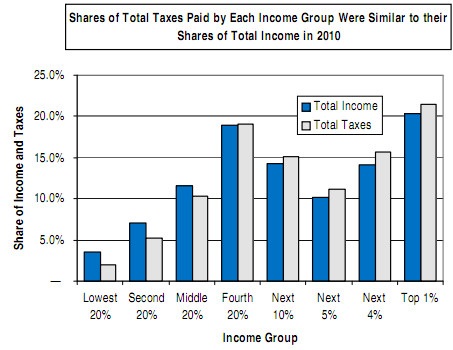
Defense and Police Services  — These are public goods, but not for the reason advanced by believers in public goods, namely, that they would not be provided voluntarily because too many of their beneficiaries would try to take a “free ride” on paying customers, which would drive the prices of defense and police services too high to attract enough customers to pay for them. That is an unproved assertion, which runs counter to everyday experience (e.g., charitable giving and voluntarism) and ignores the very high stakes that could drive major corporations and very-high income earners to combine in a joint defense of their considerable interests in the U.S. and abroad — a defense that would unavoidably benefit free-riders. In this regard, it is noteworthy that in 2007 the combined pre-tax income of households in the top quintile was $2.5 trillion and pre-tax corporate profits came to $1.7 trillion. It is arguable that a consortium of taxpayers and corporations could underwrite the cost of defense and police forces (including courts, prosecutors, etc.), which in 2007 came to about $900 billion ($662 billion for defense and $230 billion for justice). In 2007, for example, taxpayers in the top 10 percent of adjusted gross incomes paid more than 70 percent of federal income taxes collected from filers of individual and joint returns. Who do you think pays the lion’s share of the costs of defense and police forces? The answer, of course, is high-income taxpayers, directly and through taxes on corporate income.

Defense and police services are tax-funded not because they must be, but because there is something menacing about the thought of privately owned defense and police forces that could be employed in coups and oppressions. A main consequence of the “publicization” of America’s defense and police forces is that they afford a lucrative opportunity for various kinds of pork-barrel legislation (e.g., the location of military bases, the awarding of defense contracts, and patronage for political supporters), as well as the usual (and unavoidable) instances of waste, fraud, and abuse. Even worse are the fluctuations in political attitudes toward defense and policing, which in the ebb invite aggression and crime, and in the flow invite vast over-spending — though over-spending can be defended on the ground that it deters aggression and crime and thus the human and monetary costs that accompany them.

In any event, not even defense is a sacrosanct function of government, and its provision by government is far from an unmitigated blessing. If you think that I overstate the case against government-owned defense forces, consider that

  • They fought only one “popular” war in the past 100 years — a war that became “popular” only after the surprise attack on Pearl Harbor.
  • The thesis that Reagan’s defense build-up won the Cold War remains controversial.
  • The size of the defense budget rides on political whims more than on hard-to-come-by cold facts. Would it be worse if those with the most to lose took a direct hand in the provision of defense forces and in decisions about when to employ them? I doubt it.

*   *   *

Perhaps there are examples of “government success,” but these are hard to identify because the intervention of government usually forecloses the alternatives to which the “do something” crowd is blind:

  • voluntary, cooperative solutions through the actions of markets, private charities, and other private institutions (family, church, club, close-knit neighborhood, etc.)
  • benign neglect, where persons with a “problem” choose not to act on it because the cost of action is greater than its likely benefits.

Anyone who says that government can be “managed” by limiting it to certain kinds of activities (e.g., defense or welfare) while eschewing others (e.g., welfare or defense), merely deludes himself; “democratic” governments cannot and will not function without throwing money in all directions, in an effort to placate all constituencies. As a minarchist, I must admit to sharing this delusion, but I am beginning to think that anarcho-capitalism has merit, if only the right kind of anarcho-capitalists could be in charge of police and defense forces.

Anyone who says that such-and-such a government program will succeed in accomplishing a certain goal at a certain cost — and that the cost will justify the accomplishment — proves himself a presumptuous fool. I cannot truthfully say that government-provided police and defense forces are worth their cost in money and liberty, and I scorn anyone who believes that any other type of governmental endeavor is remotely worth its cost in money and liberty.
__________
For more posts related generally and specifically to this one, go to “Favorite Posts” and browse at will.

The Least Evil Option

Wilson D. Miscamble, writing at Public Discourse in “The Least Evil Option,” defends Harry Truman’s decision to drop the A-bomb on Japan:

[T]he United States eventually could have defeated Japan without the atomic bomb, but all the viable alternate scenarios to secure victory—continued obliteration bombing of Japanese cities and infrastructure, a choking blockade, the likely terrible invasions involving massive firepower—would have meant significantly greater Allied casualties and higher Japanese civilian and military casualties. These casualties would likely have included thousands of Allied prisoners of war whom the Japanese planned to execute. Notably, all of these options also would have indirectly involved some “intentional killing of innocents,” including the naval blockade, which sought to starve the Japanese into submission. Hard as it may be to accept when one sees the visual evidence of the terrible destruction of Hiroshima and Nagasaki, Japanese losses probably would have been substantially greater without the A-bombs….

Bluntly put, the atomic bombs shortened the war, averted the need for a land invasion, saved countless more lives on both sides of the ghastly conflict than they cost, and brought to an end the Japanese brutalization of the conquered peoples of Asia.

(I, too, have defended Truman’s decision. See this post, for example.)

Miscamble’s article is aimed at Christopher O. Tollefson’s critique of  Miscamble’s book, The Most Controversial Decision. Tollefson, according to Miscamble,

largely repeats the fundamental criticism mounted against President Harry Truman by Elizabeth Anscombe over a half-century ago: Violating the moral absolute against the intentional killing of the innocent is always wrong. The atomic bombs involved such killing and so should not have been used––end of story. It is all neat, and clear, and logically consistent.

Is the intentional killing of the innocent always wrong? Consider these situations:

1. A homicidal maniac rushes into a restaurant, grabs a diner and holds her in front of himself as a shield, then begins to shoot other diners. You are seated in the restaurant, in the maniac’s line of vision, and he will soon shoot you if you do nothing. You are carrying a high-powered handgun, and have time to take a shot at the maniac before he aims at you, but your only sure way of stopping the him is to shoot through the innocent diner whom he is using as a shield. It is your life or the innocent person’s. Would you shoot before being shot or wait to see what happens; the maniac might not shoot at you, he might not hit you, he might not hurt you seriously, or you might be able to duck. But you do not know which of these things will happen. Therefore, if you do nothing, you are inviting the worst of them to happen, namely, that the maniac will shoot you and kill you or seriously wound you.

2. Then, there is this classic: You are at a train track and see five people tied to the track ahead. A switch is in front of you which will divert the train, but as you look down you see a man is strapped to that track and will be killed. Is it permissible to flip the switch and save the five people at the expense of one?

3. And this variation: Now imagine in order to save the five people, you have to push a stranger in front of the train to stop it. You know for certain it would stop the train in time to save the five people tied to the tracks. Is it permissible to push the man and save the five people at the expense of one?

There are three ways to view each situation:

  • through the lens of utilitarianism, which considers one (innocent) life to be the equivalent of another
  • through the lens of in-group solidarity, which places a premium on one’s own life and the lives of those with whom one has a special relationship (kinsfolk, neighbors, countrymen) for reasons of affection and/or mutual dependence
  • through the lens of the Golden Rule, which (in my view) is a social convention that arises from self-interest tempered by empathy.

The utilitarian answers to three problems are as follows:

1. Shoot. Your life is equal to the life of the human shield, and if you are able to kill or seriously wound the thug, you may save the lives of other innocent persons in the restaurant.

2. Flip the switch and save five lives at the cost of one.

3. Overcome your squeamishness about being so directly involved in the death of the stranger; push him in front of the train and save five lives at the cost of one.

These are the “right” answers from the perspective of in-group solidarity:

1. Shoot. The life you save may be your own, and you are the center of your in-group. Moreover, you probably have more in common with the other diners (most of whom are probably productive citizens) than with the thug (who is in the process of killing productive citizens).

2. If the potential victims of the train are strangers to you, you have to flip a coin to decide whether to throw the switch or leave it alone. Otherwise, your action depends on your relationship(s) with any of the potential victims of the oncoming train.

3. If the potential victims are strangers, you have to flip a coin to decide whether to push the man in front of the train or do nothing. Otherwise, your action depends on your relationship(s) with any of the potential victims of the oncoming train.

These are the “right” answers for a person whose adherence to the Golden Rule arises from a combination of self-interest and empathy:

1. Shoot. Unless you are a psychopath like the homicidal maniac, you identify with the other diners and you cringe when he shoots one of them because their pain and death affects you emotionally. And if you do not shoot him, he probably will shoot you.

2 and 3.The answers can be the same as they were from the perspective of in-group solidarity. But, if all of the potential victims are strangers to you, it is not utilitarian to suggest that you can have more empathy for five strangers than for one stranger, especially if you take into account the (probable) larger number of persons who would be hurt by the death of five than the death of one. Moreover, if all of the potential victims are strangers, the saving of five of them is more likely to yield positive “returns” in the form of friendship and gratitude. The latter might, in turn, lead to a better job, a monetary reward, or something else along those lines.

What does all of this have to do with Truman’s decision to drop the A-bomb? If you are a utilitarian, you might be persuaded that Truman’s decision was the correct one because it resulted in fewer deaths than there would have been in the case of an invasion or blockade. (I dismiss the possibility that the Japanese military would have quit fighting if the U.S. had simply stopped fighting after driving Japanese forces back to their homeland.) If you place great stock in in-group solidarity, Truman’s move was the correct one because it saved American lives — possibly the lives of friends and family members.

If you are an adherent of the Golden Rule, you come to the same place for two reasons. The first reason is the empathic one just mentioned: the saving of lives of persons for whom you have a natural affinity.

The second reason arises from self-interest and has at least two branches:

  • You are glad that Truman put an end to a war that would have proved more costly to you (directly or through your ancestors) had he not decided to drop the bomb.
  • You are glad that Truman, in effect, warned off prospective enemies of the United States who are therefore enemies of your interests. That Truman’s warning was later undermined by his own actions in Korea, America’s withdrawal from Vietnam, and similar actions has not entirely vitiated the strong signal sent by the dropping of the A-bomb. Truman told the world that aggression against the United States invites the United States to smite the aggressor. (Do unto others what they do unto you.)

If you still object to Truman’s decision because you believe that it is always wrong to take an innocent life, you are putting yourself in the shoes of an armed diner who decides against shooting a homicidal maniac because that would require the shooting of an innocent person. But do not forget that  the diner’s refusal to shoot the maniac probably will allow the deaths of many innocent persons (the diner included). The refusal to kill an innocent person, under any circumstances, can be the moral equivalent of murder and/or suicide.

To put it baldly, the refusal to kill an innocent person, under any circumstances, is shallow posturing. It is not a considered moral stance.

*   *   *

Related posts:
Why Sovereignty?
Liberalism and Sovereignty
The Decision to Drop the Bomb
The Folly of Pacifism
Transnationalism and National Defense
The Folly of Pacifism, Again
______

Rights, Liberty, the Golden Rule, and the Legitimate State
Evolution and the Golden Rule
The Golden Rule as Beneficial Learning
Rights: Source, Applicability, How Held
Libertarianism and Morality
Libertarianism and Morality: A Footnote

More about Merit Goods

This is a follow-up to “Merit Goods, Positive Rights, and Cosmic Justice.” That post was inspired by a post at Austin Frakt’s blog, The Incidental Economist, about which John Goodman had this to say:

Austin, on first reading, I thought you were saying that I (as a taxpayer) should help pay for your daughter’s asthma medication — even though you agree that you can afford to pay for it yourself. Disbelief overcame me, so I read your post a second time. Then I read it a third. Each time, the message was as incomprehensible as on the previous reading.

Is there a persuasive reason why I owe the Frakt household something? If so, it’s not in this post.

Frakt’s response to Goodman:

You owe me nothing. Follow the link to value-based insurance design or find the V-BID center at U Mich. I think you’re looking for trouble where none should exist.

Well, I followed the link, and came away unconvinced that Frakt wants nothing from Goodman or anyone else. Accordingly, I posted this comment (paragraph breaks and emphasis added):

Your post about value-based insurance — to which you refer John Goodman — suggests that by reducing the co-pay on asthma drugs, trips to the ER would be averted, thus reducing the insurance company’s total costs and (possibly) the premiums it must charge its policy holders. If I have that right, it explains your reply to Goodman that “You owe me nothing.” I suspect that what he reacted to — and I would have reacted to similarly — is your assertion that “breathing [is] a merit good, something we all have a right to enjoy.” That assertion is unnecessary to the discussion of value-based insurance. And your use of the term “merit good” strongly suggests that your statement “Asthma medication is exactly the type of health product that should be free, or nearly so, especially for low-income families” is not just a statement about the presumed efficacy of value-based insurance, but advocacy for income redistribution.

In that case, a modified version of Goodman’s reaction is entirely in order, and I subscribe to it: “Is there a persuasive reason why I owe other households something, and what qualifies you (or anyone else) to make that judgment?” The excuse that I might otherwise end up paying for ER services through my taxes or insurance premiums relies on the assumption that ER services are a merit good that ought to be covered by tax subsidies and/or mandated insurance coverage. There is no end to the number of things that can be called merit goods, but calling them merit goods does not disguise the fact that doing so is an excuse for imposing one person’s or group’s preferences and burdens on others.

Those impositions have led to the present state of affairs, in which myriad interest groups pick each others’ pockets — and the pockets of the unfortunate who are not well-represented by an interest group. One truly unfortunate result of that state of affairs — aside from the gross diminution of liberty — is the diversion of resources from uses that would foster greater economic growth and alleviate much of the poverty that provides an excuse, in the first place, for special pleading about merit goods.

Merit Goods, Positive Rights, and Cosmic Justice

A merit good is said to be something that

an individual or society should have on the basis of some concept of need, rather than ability and willingness to pay…. [T]he concept … lies behind many economic actions by governments…. Examples include the provision of food stamps to support nutrition, the delivery of health services to improve quality of life and reduce morbidity, subsidized housing and arguably education….

Sometimes, merit … goods are simply seen as an extension of the idea of externalities. A merit good may be described as a good that has positive externalities associated with it. Thus, an inoculation against a contagious disease may be seen as a merit good. This is because others who may not now catch the disease from the inoculated person also benefit.

[M]erit … goods can be defined in a different way…. The essence of merit … goods is [has] do with … information failure…. This arises because consumer[s] do not perceive quite how good or bad the good is for them: either they do not have the right information or lack relevant information…. [A]merit good is [a] good that is better for a person than the person … realizes.

Other possible rationales for treating some commodities as merit … goods include public-goods aspects of a commodity…

A merit good, in short, is something that someone believes that the state should cause to be given to certain individuals, as a “positive right,” for various reasons: perceived need, externalities, and market failure among them.

But the “right” to something that is not earned or freely given is not a right, as the term is properly understood. It is an extortion by force or the threat of force, either directly (as in the case of outright theft) or though the coercive power of the state. Only a fool or a dishonest person can say that something obtained through extortion is obtained by right, unless that person believes that the victims of extortion are less deserving — less human — than the intended beneficiaries of extortion.

If a right is anything, it is something that all members of a polity can enjoy equally. If some members of a polity are placed above others through force or the threat of force, then the polity has no system of rights; it has a system of arbitrary privileges, dispensed by the state according to the whims of the faction then in power.

Given that a right must be something that all can enjoy equally, a right can only be negative:

  • the right not to have one’s life taken if one is peaceful toward others
  • the right not to be deprived of liberty if one is peaceful toward others
  • the right to the peaceful enjoyment and use of one’s property in the pursuit of one’s life and livelihood.

These negative rights come down to this: the right to be left alone as one leaves others alone.

If “obligations” accompany the right to be left alone, they do so only in the context of voluntary social (and economic) relationships, wherein acts of kindness and charity flow readily among persons who trust and care for each other and do so, in good part, because they observe the right of others to be left alone. These “obligations” are incurred and honored voluntarily, not because a person or group invested with the power of the state decrees them.

Merit goods (“positive rights”), by contrast, are the products of presumption — judgments about who is “needy” and “deserving” — and they are bestowed on some by coercing others. These coercions extend not only to the seizure of income and wealth but also to denials of employment (e.g., affirmative action), free speech (e.g., campaign-finance “reform”), freedom of contract (e.g., mandatory recognition of unions), freedom of association (e.g., forced admission of certain groups to private organizations), freedom of conscience (e.g., forced participation in abortions), and on and on.

The list of “merit goods” that forms the basis for the many and various forms of state-sponsored coercion may not be infinite, but it is exceedingly long. And its length is limited only by the perverse ingenuity of the seekers of “cosmic justice.” What is cosmic justice? I like this example from Thomas Sowell’s speech, “The Quest for Cosmic Justice“:

A fight in which both boxers observe the Marquis of Queensberry rules would be a fair fight, according to traditional standards of fairness, irrespective of whether the contestants were of equal skill, strength, experience or other factors likely to affect the outcome– and irrespective of whether that outcome was a hard-fought draw or a completely one-sided beating.

This would not, however, be a fair fight within the framework of those seeking “social justice,” if the competing fighters came into the ring with very different prospects of success — especially if these differences were due to factors beyond their control….

In a sense, proponents of “social justice” are unduly modest. What they are seeking to correct are not merely the deficiencies of society, but of the cosmos. What they call social justice encompasses far more than any given society is causally responsible for. Crusaders for social justice seek to correct not merely the sins of man but the oversights of God or the accidents of history. What they are really seeking is a universe tailor-made to their vision of equality. They are seeking cosmic justice.

To be a practitioner of cosmic justice, a person must set himself up as a judge of the merit of other persons, without really possessing more than superficial information about those other persons (e.g., that they are “rich” or “poor” by some standard). As I once said of two founders of modern “liberalism,” T.H. Green and L.T. Hobhouse, they are

accountants of the soul….

…(presumably) intelligent persons who believe that their intelligence enables them to peer into the souls of others, and to raise them up [or put them down] through the blunt instrument that is the state.

This is done on in the service of concepts that do not bear close examination, such as externalities, public goods, market failure, and social justice, social welfare, and positive rights. I will not repeat my asseessments of those concepts, but refer you to some of them instead:

Greed, Cosmic Justice, and Social Welfare
Positive Rights and Cosmic Justice
A Short Course in Economics
Social Justice
The Meaning of Liberty
Positive Liberty vs. Liberty
More Social Justice
On Self-Ownership and Desert
Luck-Egalitarianism and Moral Luck
Externalities and Statism

Libertarianism and Morality: A Footnote

There is a key passage in Jan Narveson’s The Libertarian Idea that I did not quote in “Libertarianism and Morality.” In the version of Narveson’s book that is available online, the passage goes like this:

[I]f morality is an artificial construct, a rational convention, [which is a main point of Naveson’s book and my post] then those who have refused to make any deals acceptable to others are in the condition of rulelessness — in the Hobbesian “state of nature”. Hobbes himself characterizes this condition in an unfortunate way: that everyone has a “right of nature” to do whatever he or she thinks best, no matter what it is…. [T]hat is a useless, nonsensical employment of the term ‘right’ and should be dropped. Much less misleading to say that in the Hobbesian state of nature, nobody has any rights, period. And therefore nobody has the protections inherent in a moral system, where people accept rules which limit what they may do to others. These are rules which those others have reason to accept only if they likewise extend benefits to them. And whoever has not made the deal is someone with respect to whom no bets are on, no limitations authorized; and therefore people may do whatever they wish with them. Note that the ‘may’ here is normative. The person who signs no agreements is a person such that anyone else, willing to sign an agreement of mutual advantage, does have a moral right to deal with that person as he may. No one may blame him for doing so.

Whether one would deal harshly with a person who stands outside the agreed rules is another matter. For, as I note in “Libertarianism and Morality,” we humans are ruled not only by self-interest but also by empathy.

Be that as it may, the passage quoted above boils down to this:

Most people do have the desire he imputes to them of willingness to cooperate with others as a means to best advance one’s own interests. Those who do not can be overpowered. There are very few of them; and, as they will not agree with the rest of society, on what moral basis can they complain over the way others treat them? (from David Gordon’s review of The Libertarian Idea in Reason Papers, Spring 1989, pp. 169-177)

Whether there are “very few” of “them” is a questionable proposition in this day (or even 22 years ago, when Gordon’s review was published). An inordinately large share of the populace seems to have opted out of or simply rejected the “deal” that is represented in the Golden Rule. A key element of that “deal” is the mutual observance and enforcement of negative rights:

Such rights, as opposed to positive rights, do not involve claims against others; instead, they involve the right to be left alone by others. Negative rights include the right to conduct one’s affairs without being killed, maimed, or forced or tricked into doing something against one’s will; the right to own property, as against the right of others to abscond with property or claim it as their own; the right to work for a wage and not as a slave to an “owner” who claims the product of one’s labor; and the right to move and transact business freely within government’s sphere of sovereignty (which can include overseas movements and transactions, given a government strong enough to protect them).

[Negative] rights are limited to those that can be exercised without requiring something of others (e.g., transfers of income and property). The one necessary exception is the cost of providing a government to ensure the exercise of [negative] rights. (from “The Protection of Negative Rights,” in the section on “Minarchism” in “Parsing Political Philosophy“)

Now, as in 1989, the “deal” for too many Americans is to grab what one can at the expense of others. (The futility of this “new deal” is a tale that I have told in “The Interest-Group Paradox.”)

In any event, Narveson’s attitude toward those who stand outside the rules is parallel to mine. This is from an early post, about “The Origin and Essence of Rights“:

…Fundamentalist libertarianism [Narveson’s “intuitionism”] reduces liberty to a matter of faith. If libertarianism cannot stand on more than faith, what makes it any better than, say, socialism or the divine right of kings?

The virtue of libertarianism … is not that it must be taken on faith but that, in practice, it yields superior consequences. Superior consequences for whom, you may ask. And I will answer: for all but those who don’t wish to play by the rules of libertarianism; that is, for all but predators and parasites. (emphasis added)

Later, in “‘Natural Rights’ and Consquentialism,” I put it this way:

What if A and B agree, honorably, not to kill each other, whereas C “leaves his options open”? It then behooves A and B to reach a further agreement, which is that they will defend each other against C…. A and B therefore agree to live in liberty (the liberty of self-restraint and mutual defense), whereas C stands outside that agreement. He has forfeited the liberty of self-restraint and mutual self-defense. How so? A and B, knowing that C has “left his options open,” might honorably kill or imprison C when they have good reason to believe that C is planning to kill them or acquire the means to kill them. [a quotation from  “Anarchistic Balderdash“]

In sum, there can be no system makes everyone happy (unless you believe, foolishly, that everyone is of good will). Try to imagine, for example, a metric by which C’s happiness (if he succeeds in his predatory scheme) would offset A and B’s unhappiness (were C successful).

The problem now is that there are more than a “very few” Cs standing against the As and Bs. And it is the Cs who have seized the power of the state.

Libertarianism and Morality

I have come late to Jan Narveson‘s The Libertarian Idea, which is the subject of a series of posts at Libertarianism.org; thus far:

The Libertarian Idea: Setting the Scene (11/04/11)
The Libertarian Idea: Part One, part one (11/14/11)
Morality and Its Discontents (11/21/11)
Is Contractarianism Serious (Or Just Clever)? 11/21/11

So much libertarian theorizing, it seems to me, amounts to the search for an intellectual hook on which to hang an instinctive yearning to be left alone. The intellectualization of the yearning proceeds in stages. The first stage is an appeal to morality. But this cannot be the kind of morality that arises from social constructs (e.g. the Golden Rule); it must be a “higher morality.” This leads libertarian theorists — or most of them, in my reading — toward “natural rights” and “natural law.” But, as atheists (which most libertarian theorists seem to be), they cannot attribute “natural rights” or “natural law” to God, so they conjure super-human sources that lie somewhere between God and social convention. Narveson call this conjuring “intuitionism.”

One such source, which is no less supernatural than God, is Platonic in character: “natural rights” just are (and known, by some mysterious process, to the proponents of this view). The chief alternative to Platonism is evolution: “natural rights” as evolutionary adaptation (though how one knows which rights are “natural” remains a puzzle). I have said much about these intellectual misfires in several posts; for example:

“Natural Rights” and Consequentialism
More about Consequentialism
Positivism, “Natural Rights,” and Libertarianism
What Are “Natural Rights”?
The Golden Rule and the State
Evolution, Human Nature, and “Natural Rights”
More Thoughts about Evolutionary Teleology

Narveson, by contrast with other libertarian philosophers, is refreshingly clear-minded about the roots of libertarianism. The following is taken from a version of The Libertarian Idea that is available online (here).


Libertarians in general support their views by appeals to intuitions, especially intuitions about our “natural rights”. This is a method that has very wide currency in contemporary philosophy; it is by no means confined to libertarians. Libertarians who base their convictions on intuition are thus in good company. This, as we shall see, is ironic, for the other members of that company have widely varying views about these matters. The burning issue thus becomes, whose intuitions are the right ones? But adoption of the intuitional method virtually precludes rational decision of that burning issue; it simply continues to burn. (from “The Options,” in Chapter 9)

*   *   *

By “Metaphysical” intuitionism I mean the view that there exist some sort of “ethical entities” which are denoted by such words as ‘good’ or ‘right’ or ‘just’ (as the case may be); and that ethical knowledge is acquired by the mind’s “apprehending” or, as we may say, “spotting” one or more of those at the appropriate points. On this view, when we say that an act is Right, we mean that it has one of these properties — namely “That one!”…

The shortcomings of this “metaphysical” type of intuitionism are legion, and it is not surprising that as an option it is virtually extinct among current philosophers. (I say ‘virtually’, because no theory I can think of is totally extinct among current philosophers….) (from “Metaphysical Intuitionism” in Chapter 10)

*   *   *

Especially in this scientifically-oriented era, the appeal to what seem mysterious entities and faculties is likely to elicit impatience, and perhaps a certain amount of irritation. To those of us who don’t seem to have one of the special faculties required for detecting these strange items, this explanation isn’t going to be much help… (from “Mysteriousness” in Chapter 10)

*   *   *

In the past few decades, long after Metaphysical intuitionism was relegated to the philosophical dust-bins, a presumably quite different use of “intuitions” in moral philosophy was elevated to the status of theoretical respectability — not a new one, to be sure, since philosophers have been doing it, to a greater or lesser extent, since Plato. In this version, we supposedly make no assumptions about the fundamental meanings of moral terms or the sort of things they may refer to. Rather, we employ intuitions as a sort of data, and construct a theory to “explain” them. The fact is that people have tendencies to affirm of certain things that they are right, others that they are wrong, and so on; and the moral philosopher’s job is to find the principles which will account for these tendencies. Of course, this is moral philosophy, and so the output of our theorizing will be moral statements and not just statements about morality….

Now, consider what philosophers wish to do with their appeals to intuitions. They are discussing some controversial topic, ordinarily — nobody writes articles advocating the view that murder is wrong! But in a controversial area, we are going to have some people sincerely maintaining that something or other is right, and others that that very same thing is wrong. Abortion, for example, or capital punishment of repeat-murderers. Of what use is it to point out to people holding some view on these matters that a great many people think otherwise than they — or the same as they? Suppose some small minority thinks that a certain popular practice is quite wrong. Are they going to be impressed to hear that many people don’t think so?

It is here that this new sort of appeals to intuition gets into some of the very same problems that its less-respectable Metaphysical version has. When people have contrary intuitions, appeals to intuition are not likely to do much — except maybe irritate the people we’re trying to persuade.

In fact, appeals to intuition can hardly constitute reasons for the very attitudes that those intuitions express. The best they might do is provide a rather weak sort of evidence. We might say, “well, surely 90% of the people are unlikely to be wrong, are they?” Perhaps that is true. But the trouble is, it is also true that 90% of the people plainly can be wrong, about all sorts of things: why not about this, then? Especially when the effect of their opinion is to cram something down the craws of the remaining 10%. (from “Methodological Intuitionism” in Chapter 10)

*   *   *

My objection to appeal to intuitions in moral theory is, in brief, that when (not merely ‘if’!) intuitions conflict, we are bereft of conceptual tools for reaching reasoned agreement. Indeed, one must say that under those conditions, “reasoned” agreement is impossible. Surely it would be better, at any rate, if we could have a theory that was persuasive without presupposing anything like moral intuitions.  (from “The Need for Clarity about Morality” in Chapter 11)

*   *   *

We have a habit of talking as though moral principles were simply “truths”, like those of science: as though they were just “out there”, to be discovered, found out. But it’s not quite like that. Either you act in certain ways or you don’t. No mere external truth could make you do that. There are, certainly, “external truths” to which we must conform, willy-nilly: the Law of Gravity, for example. But the “must” here is so literal that “conform” is out of place. The gunman makes me conform, by threatening to shoot me if I do not. In some sense I can refuse to go along; if so, and he shoots me, I shall then literally have no choice but to die, if he’s a competent shot. We “conform” to the Law of Gravity in the same sense that we die if shot; it simply isn’t a matter of choice at all.

Moral principles and rules are just that: principles and rules for behavior, to which we can voluntarily conform or no….(from “Personal vs. Social Morality” in Chapter 11)

*   *   *

One apparent aim of the Libertarian is to provide a schedule of rights that is “hard”, so that in any given case we will always be able to identify the area of permissible action, precisely bounded by the relevant set of rights. Moreover, these are to be wholly “nonteleological” in one sense of that rather obscure term. That is, they are not to be founded upon considerations of the general good or general interest…. (from “The Compleat Deontologist” in Chapter 11)

*   *   *

[W]e tend to identify morality with what is taught us in our childhoods, say, or with what the people around us will react to in certain ways. Any given society will have a number of rules which are enforced in the various ways mentioned above. The fact that they are thus enforced provides, and of course is intended to provide, some motivation for doing what the enforcers are trying to get us to do. But is that the end of the story? Are we to say, simply, that what is right is what people will praise and reward you for doing, or blame and punish you for not doing? It is not, and we are not. For we are capable of reflecting on these demands, and of questioning them….

…The de facto rules of morality may be accounted conventional — by definition, indeed. And this in particular means that they are, at least to a degree, changeable. They are certainly changeable in some way, since they do change. Whether they are changeable by intention, like the law, which is made and unmade by certain intentional acts of certain people, the legislators, is quite another matter. And one would certainly have to be naïve to think that writing a tract or two is enough to do the job! It wouldn’t even if everyone would read the tract; which, in a society of millions, they certainly won’t.

There is thus a question of what to do, as it were, with any “philosophical” or “critical” morality we might come up with…. But there is also an answer: one can act on it oneself. One can start criticizing people in the light of these possibly novel principles you have found to be more reasonable than the ones actually reinforced in your current society….

One of the historic projects of philosophy is to try to find some or other rational foundations for morality, or at any rate for some morality, some set of overriding general guides to behavior which, even if it is not entirely reflected in current practice, has the solidest reasons for being so…. I shall shortly describe, again very briefly, what seems to be the best answer currently available. Like all answers judged to be so by philosophers, the judgment is guided by a certain sense that no other view could be right. This is philosophical hübris at work, no doubt: history has a way of suggesting that we have overlooked something when we make such claims. That’s a risk one simply has to take. (from “Conventional vs. Critical Morality” in Chapter 11)

*   *   *

That theory, I think, is Contractarianism. The general idea of this theory is that the principles of morality are (or should be) those principles for directing everyone’s conduct which are reasonable for everyone to accept. They are the rules which everyone has good reason for wanting everyone to act on, and thus to internalize in himself or herself, and thus to reinforce in the case of everyone.

In so saying, I am presenting a slanted view, so to say. As with every important philosophical theory, this one has many different versions with their own specific shades and twists, and the shades and twists are not trivial. Contractarianism can be made to seem arbitrary and silly: consider, for instance, the suggestion that long, long ago, our remote ancestors made this deal, see, and from that day to this everyone has had to go along with it! Plainly such a theory is not going to give us the rational motivation we need.

On the other hand, any ordinary contract, made in the full light of day between consenting adults, supplies motivation in just the required sense. The “required sense”, as will shortly be seen, is not so simple. But few will dispute that any theory that could attain the same degree of rational “bite” as actual contracts would be doing very well indeed.

The problem is that morality is obviously not the result of a literal contract; and indeed, it cannot be, among other things for the very good reason pointed out by David Hume, namely that “the observance of promises is itself one of the most considerable parts of justice; and we are not surely bound to keep our word because we have given our word to keep it.” To account for the obligation to keep promises on the basis of a general promise to do so seems, shall we say, unpromising Clearly the sense in which morality is founded upon or due to or represents an “agreement” is going to have to be less straightforward than that. (from the introductory section of Chapter 12)

*   *   *

What the philosopher would really like is a universal “contract” in the sense of an agreement which literally everyone would find it reasonable to accept. It is not clear that this can be done. Perhaps people are too different, or have interests that are fundamentally, irresolvably antagonistic. If so, it’s put paid for our project. It is so because our interests are indeed what we have to appeal to as the basis of the “social contract”.

But it should not be thought that this possibility puts paid to the theory in question. There are at least two reasons why not. In the first place, the truth about morality could be that it cannot be quite as universal as all that. The insistence that it must be may be just a philosopher’s prejudice, comparable to the Aristotelian idea that of course the earth must be the centre of the physical Universe.
But secondly, and more hearteningly, the possible nonuniversality we are worrying about may be nothing to worry about….

Let us suppose that morality is a kind of club — the “morality club”. Anyone can join — no problem. Those who join have certain responsibilities and certain rights, and we, the people who run this club, offer a package that we think no remotely reasonable person could really refuse; but nevertheless, some might. All we are saying is that our package is such that it must appeal to the widest set of people any set of principles could appeal to. Anyone who doesn’t buy our package wouldn’t buy any package compatible with living among his fellows on terms that they could possibly accept. (from “Universality?” in Chapter 12)

*   *   *

All this has been quite abstract. Let us now see how it works in more nearly real-world terms. One of the contractarians’ favorite real-world types is the philosopher Thomas Hobbes5 In the Hobbesian picture, at least as understood by me, the place to begin is a wild and unruly sort of place known as the “state of nature”. In this state — a highly artificial one, in truth, but we’ll worry about that a little later — there is no morality at all. Nobody acknowledges any restrictions whatever on his or her behavior vis-a-vis others, nobody blames or praises anyone else’s conduct, and it is quite literally everyone for him-or-herself. And what happens there? All sorts of horrible things, in brief. Since there are no rules at all, there are of course no rules against violence, which is freely employed whenever the person employing it thinks it will get him what he wants….

What is important to the argument here is that the cause of this condition is the absence of rules, rules having precisely the character we have attributed to Morality: namely, rules that can override the individual inclinations of any person to the contrary, and rules that are the same for all….

It is important to appreciate just what Hobbes’ argument does and what it does not presuppose about people. It does not, to begin with, presuppose that people are nasty or evil by nature….

Nor does it actually require that their interests are selfish or even strongly self-directed, though Hobbes evidently believed that they would normally be. But what matters is that they have conflicting ends, however the conflict may be engendered….

We now need to bring out a further feature about the sort of conflicts Hobbes is concerned about. From the point of view of each party to the conflict, the “warlike” solution may seem preferable to the “peaceful” one…. [T]here is a problem with mutual arrangements of all sorts, since in such cases, each party gives up something in return for something he wants more; yet given the opportunity, he’d presumably prefer to have both the gains from the deal and also not to have to pay the costs he has undertaken by his promise to pay.
This situation is known as Prisoner’s Dilemma….

Hobbes’ own view is in line with modern theorists: the rational individual will rat in such situations. And Hobbes’ “solution”, as we know, is the Policeman, otherwise known as the “Sovereign”. Gauthier’s solution is to take what many theorists regard as the heroic course of identifying rationality with the disposition to take the cooperative option. The one recommended here may perhaps be classified as intermediate between the two…. (from “Hobbes” in Chapter 12)

*   *   *

The Hobbesian solution may seem all well and good, perhaps. But there are two crucial shortcomings. The first is: how do we get a suitable Enforcer appointed? In our hypothetical state of nature, nobody already has the kind of power needed; that power must be “handed over” by those concerned. But you don’t just “hand over” power: instead, you make an agreement which gives someone the power. Terrific — but that agreement would have to be, genuinely, an agreement – the very sort of thing which can’t be done in the state of nature on Hobbes’ own reasoning. The second is that enforcers are costly. For one thing, they cost money, or the equivalent (in his State of Nature there was, of course, no money), viz., whatever sacrifices A and B have to make in order to make it worth C’s while to be Guardian. (Once C somehow got the power in question, of course, there is the further point that C will surely be inclined to use it to feather his own nest — a small incidental concern, in one sense, but in another, of course, one that has been a or even the main problem with Government, historically as well as theoretically.) (from “The Sovereign” in Chapter 12)

*   *   *

Here enters David Gauthier with his intriguing new solution.7 Gauthier insists that the rational agent, when acquainting himself with the facts of life in the form of Prisoner’s Dilemma (and related problems), will see that he must modify, or perhaps reinterpret, his theory of rationality. The rational man will not Defect in the Prisoner’s Dilemma game. Instead, he will adopt a disposition to cooperate, though not an unconditional disposition to take the cooperative option: he takes that option, provided those with whom he interacts are similarly inclined. This he calls “constrained maximization”, as opposed to the disposition to take the money and run, which he calls “straight” maximization….

Constrained maximizers will do better than defectors, for they will do as well as defectors when interacting with defectors, since their rule is to cooperate only with fellow constrained maximizers, and they will do better than defectors when interacting with constrained maximizers, since the defector’s policy is to defect when interacting with anybody. Gauthier’s argument is that it is therefore rational to adopt the constrained maximization disposition….

Now in the classic, one-shot Prisoner’s Dilemma, it is not true that our move is a response to the other person’s move. We and the other player are moving simultaneously, for instance, or at any rate moving in such a way that neither can know what the other player’s move is until after we have made our own. Real-life models of Prisoner’s Dilemma may be characterized in just that way. To create any real-life Prisoner’s Dilemma, we must take steps, if necessary intentionally rigging the situation so as to ensure that this condition holds. This ensures that our move will not be literally a “response” to the other player’s move. If it is a “response” at all in this literal sense of the term, then what could it be a response to?

It is when we contemplate this question that the force of Gauthier’s position asserts itself. For it seems that the only thing there is to respond to here is the disposition of the other player…. Each can know something about the other, and what they know will be largely information about character, derived of course more or less inductively from observation of past performance in particular cases. (from “Gauthier’s View” in Chapter 12)

*   *   *

Now let’s go back to the State of Nature and ask what to do. There are as yet no rules, and without them, life is miserable for everyone….

What we will do, in fact, is whatever we can to set Morality in motion: a social institution of reinforcing behavior. And which behavior? Plainly, cooperative behavior: that is, behavior which it is advantageous from the point of view of each one of us to have everyone, including ourselves, engaging in. This is the rational thing to do in social situations for a simple reason: it doesn’t cost very much by comparison with having a Sovereign (and anyway, we don’t have one yet — remember? And we can’t until we have enough morality to enable the Agreement to establish the sovereign to be viable), and the advantages of general performance much outweigh the disadvantages imposed by the necessity of having to comply oneself.

Generally speaking, then, the foundation of morality is the interests of those party to it, given the facts of social life. Morality is a set of requirements which will make us all better off if they are met by everyone — and which, accordingly, are liable to the problem of defection by some who will try to take the money and run. For examples, the murderer and the thief, who have been cheerfully collecting the benefits of social cooperation all along, and yet at the judicious moment will take advantage of the good dispositions of those they interact with by depriving them of their lives or property without a by-your-leave. (from “Morality, the Real World, and Prisoner’s Dilemma” in Chapter 12)

*   *   *

Why accept the contractarian view of morals? Because there is no other view that can serve the requirements: namely, of providing reasons to everyone for accepting it, no matter what their personal values or philosophy of life may be, and thus motivating this informal, yet society-wide “institution”. Without resort to any obfuscating intuitions, e.g., of “self-evident rights” and the like, the contractarian view offers an intelligible account both of why it is rational to want a morality and of what, broadly speaking, the essentials of that morality will consist in: namely, those general rules which are universally advantageous to rational agents. We each need morality, first because we are vulnerable to the depredations of others, and second because we can all benefit from cooperation with others. So we need protection, in the form of the ability to rely on our fellows not to engage in activities harmful to us; and we need to be able to rely on those with whom we deal. We each need this regardless of what else we need or want or value. (the introductory paragraph of Chapter 13)

*   *   *

Many philosophers, such as Aquinas and John Locke, have held that there is a “Natural Law”. This idea was not clarified by these philosophers, although that they had fairly explicit ideas about its content. Aquinas, for example, held that natural law (like all law) had to be for the “common good”. And Locke in particular held that the natural law forbids all men to refrain from injuring others in their “life, health, liberty, and possessions”. Their lack of articulation of the concept of natural law, however, has left them short of adherents among contemporary philosophers trained in the analytic tradition. Insofar as they simply appeal to natural law without further explication or defense, they are liable to all of the charges I have laid above to the door of intuitionism in all its forms.

But perhaps further reflection on the Prisoner’s Dilemma and other decision-theoretic problems can assist understanding here. To say that a law is “natural”, to begin with, obviously cannot mean that it is like the law of gravity, governing us independently of our wills. Were the content of Locke’s natural law operative on us in that manner, there would be no need of ethics as we know it. However, this doesn’t preclude a different way in which a “law” could be “natural”. It could, namely, be natural in being acknowledged, recognized, or employed implicitly as a canon of interpersonal criticism of behavior, without articulation, in the normal dealings of people with each other.

Even as so characterized, it is not clear that there is a “natural law”. But we can inject one further element. Locke and Aquinas both insisted that the natural law was “rational”, “apprehended by reason”, or words to that effect. What we can forthrightly say is that there are reasons, reasons that are natural rather than being in their turn artificial constructs, favoring informal reinforcement of certain rules for interpersonal situations. Prisoner’s Dilemma, concentrated on above, gives a beautiful example. Wherever the structure of preferences of the different parties is clear to both parties (and it is not always), we have a basis for a rule of precisely that kind: a natural basis for a moral rule, in fact. The claim that natural morality calls upon us to refrain from the things Locke lists, and more generally that it bids us cooperate in what would otherwise be prisoner’s dilemmas, may be accepted if understood along the lines just explicated. We should expect any groups of persons who were clear about the options which would otherwise render the situation a prisoner’s dilemma situation, and who were capable of communicating effectively with each other, to recognize as an interpersonally authoritative rule that people refrain from the “Defect” strategy, and to recognize this by verbal and other sorts of reinforcement. So understood, we may accept the idea of Natural Law nearly enough. What its relation to political structures may be is, of course, another question, and the main question dealt with in this book.

But it is apropos to note here that the moral factor is potentially substantial. James Buchanan observes that “.. it is essential to incorporate some treatment of the role that ethical precepts play in maintaining social stability. First … if there is no conflict … there is no need for law, as such. By the same token, however, there is no need for ethics … When conflict does emerge, however, .. the value of order suggests either some social contract, some system of formal law, or some generally accepted set of ethical-moral precepts. It is important to recognize that these are alternative means of securing order. To the extent that ethical precepts are widely shared, and influence individual behavior, there is less need for the more formal restrictiveness of legally imposed standards.” (from “The Natural Law” in Chapter 13)


Narveson echoes much what I have said in the posts linked above. So, I find myself in close agreement with Narveson because I find him in close agreement with me. The kind of “contract” that Narveson describes is found in the Golden Rule. This is from “Evolution, Human Nature, and ‘Natural Rights’“:

The Golden Rule represents a social compromise that reconciles the various natural imperatives of human behavior (envy, combativeness, meddlesomeness, etc.). To the extent that negative rights prevail, it is as part and parcel of the “bargain” that is embedded in the Golden Rule; that is, they are honored not because of their innateness in humans but because of their beneficial consequences.

But is that all there is to it? Not at all. This is from “The Golden Rule and the State“:

I call the Golden Rule a natural law because it’s neither a logical construct … nor a state-imposed one. Its long history and widespread observance (if only vestigial) suggest that it embodies an understanding that arises from the similar experiences of human beings across time and place. The resulting behavioral convention, the ethic of reciprocity, arises from observations about the effects of one’s behavior on that of others and mutual agreement (tacit or otherwise) to reciprocate preferred behavior, in the service of self-interest and empathy. That is to say, the convention is a consequence of the observed and anticipated benefits of adhering to it.

The empathic source of the Golden Rule, which is just as important as the self-interested source, is (for me) the key point of Julian Sanchez’s critique of Narveson in “Morality and Its Discontents“:

In effect, [Narveson] wants to reduce morality to prudence, showing that people would have strictly self-interested reasons to constrain their own behavior even if they are not “reasonable” or concerned with the welfare and dignity of others except insofar as those others are able to aid or hinder their self interested pursuits….

…[A]ttempts to reduce morality to prudence generally assume that there’s something metaphysically unproblematic about the idea, not just that people do care about their long-term self-interest (as opposed to just their immediate short-term desires), but that they have reason to, whereas the claim that they have similar reasons to care about or respect the interests of others is some kind of “queer” claim standing in need of special explanation…. Theoretical, moral, and practical reasoning all ultimately depend on foundational axioms that can’t be established without circularity. In logic, it’s the familiar list of axioms and inference rules; in ethics, it’s the basic idea that other people are real, and that their happiness and suffering fundamentally matters in some way, just as much as your own. That all these forms of reasoning “hit bottom” at some point is, admittedly, intellectually unsatisfying. But it’s also a fact we’re stuck with, and trying to dismiss those foundational domain-specific axioms as mere intuition seems less like a road to progress than an attempt to change the subject.

Sanchez’s point — a good one — is that it matters not where empathy comes from. It may be a genetic quirk, or it may be a socialized habit of thought, or it may be both. But it is a fact of life, just as much as self-interest. And it takes both of them — in my view — to account for the morality of the Golden Rule.

That morality, however, leads to a different kind of libertarianism than the one to which most self-styled libertarians seem to subscribe. Returning to “The Golden Rule and the State“:

The Golden Rule can be expanded into two, complementary sub-rules:

  • Do no harm to others, lest they do harm to you.
  • Be kind and charitable to others, and they will be kind and charitable to you.

The first sub-rule — the negative one — is compatible with the idea of negative rights, but it doesn’t demand them. The second sub-rule — the positive one — doesn’t yield positive rights because it’s a counsel to kindness and charity, not a command….

An ardent individualist — particularly an anarcho-capitalist — might insist that social comity can be based on the negative sub-rule, which is represented by the first five items in the “core” list. I doubt it. There’s but a short psychological distance from mean-spiritedness — failing to be kind and charitable — to sociopathy, a preference for harmful acts. Ardent individualists will disagree with me because they view kindness and charity as their business, and no one else’s. They’re right about that, as far as I’m concerned, but I’m talking about proclivities, not rights. But kindness and charity are indispensable to the development of mutual trust among people who live in close proximity, without the protective cover of an external agency (e.g., the state). Without mutual trust, mutual restraint becomes problematic and co-existence becomes a matter of “getting the other guy before he gets you” — a convention that I hereby dub the Radioactive Rule.

Nevertheless, the positive sub-rule, which is represented by the final two items in the “core” list, can be optional for the occasional maverick. An extreme individualist (or introvert or grouch) could be a member in good standing of a society that lives by the Golden Rule. He would be a punctilious practitioner of the negative rule, and would not care that his unwillingness to offer kindness and charity resulted in coldness toward him. Coldness is all he would receive (and want) because, as a punctilious practitioner of the negative rule; his actions wouldn’t necessarily invite harm.

But too many extreme individualists would threaten the delicate balance of self-interested and voluntarily beneficial behavior that’s implied in the Golden Rule. Even if lives and livelihoods did not depend on acts of kindness and charity — and they probably would — mistrust would set it in. And from there, it would be a short distance to the Radioactive Rule.

This, of course, will not do for most libertarians, who want to manufacture a rigid list of negative rights from one of their mysterious sources. It even smacks of moral relativism. But I have answered both objections in “The Golden Rule and the State“:

I call the Golden Rule a natural law because it’s neither a logical construct … nor a state-imposed one. Its long history and widespread observance (if only vestigial) suggest that it embodies an understanding that arises from the similar experiences of human beings across time and place. The resulting behavioral convention, the ethic of reciprocity, arises from observations about the effects of one’s behavior on that of others and mutual agreement (tacit or otherwise) to reciprocate preferred behavior, in the service of self-interest and empathy. That is to say, the convention is a consequence of the observed and anticipated benefits of adhering to it….

Is the Golden Rule susceptible of varying interpretations across groups, and is it therefore a vehicle for moral relativism? I say “yes,” with qualifications. It’s true that groups vary in their conceptions of permissible behavior….

[But] [t]here is … a “core” Golden Rule that comes down to this:

  • Murder is wrong, except in self-defense. (Capital punishment is just that: punishment. It’s also a deterrent to murder. It isn’t “murder,” muddle-headed defenders of baby-murder to the contrary notwithstanding.)
  • Various kinds of unauthorized “taking” are wrong, including theft (outright and through deception). (This explains popular resistance to government “taking,” especially when it’s done on behalf of private parties. The view that it’s all right to borrow money from a bank and not repay it arises from the mistaken beliefs that (a) it’s not tantamount to theft and (b) it harms no one because banks can “afford it.”)
  • Libel and slander are wrong because they are “takings” by word instead of deed.
  • It is wrong to turn spouse against spouse, child against parent, or friend against friend. (And yet, such things are commonly portrayed in books, films, and plays as if they are normal occurrences, often desirable ones. And it seems to me that reality increasingly mimics “art.”)
  • It is right to be pleasant and kind to others, even under provocation, because “a mild answer breaks wrath: but a harsh word stirs up fury” (Proverbs 15:1).
  • Charity is a virtue, but it should begin at home, where the need is most certain and the good deed is most likely to have its intended effect.

But what I am talking about is true libertarianism, not the kind of “leave me alone” libertarianism that one usually encounters on the internet. As I say in “here,” true libertarianism

is really a kind of conservatism, which is why I call it Burkean libertarianism…. [T]he kind of “libertarianism” much in evidence on the internet … rests on the Nirvana fallacy and posits dangerously false ideals.

A “true” libertarian respects socially evolved norms because those norms evidence and sustain the mutual trust, respect, forbearance, and voluntary aid that — taken together — foster willing, peaceful coexistence and beneficially cooperative behavior. And what is liberty but willing peaceful coexistence and beneficially cooperative behavior?

Such are the fruits of morality — on the mortal plane, at least.

Subsidizing the Enemies of Liberty

If there is a professional class that is almost solidly aligned against liberty it is the teachers and administrators who control the ideas that are pumped into the minds of students from kindergarten through graduate school. How are they aligned against liberty? Most of them are leftists, which means that they are statists who are dedicated to the suppression of liberty in favor of current left-wing orthodoxies. These almost always include the coddling of criminals, unrequited love for America’s enemies, redistribution of income and jobs toward less-productive (and non-productive) persons, restrictions on speech, and the destruction of civil society’s bulwarks: religion, marriage, and family.

In any event, spending on education in the United States amounted to $1.1 trillion in 2010,* about 8 percent of GDP.  Most of that $1.1 trillion — $900 billion, in fact — was spent on public elementary and secondary schools and public colleges and universities.* In other words, your tax dollars support the leftists who teach your children and grandchildren to bow at the altar of the state, to placate the enemies of liberty at home and abroad, and to tear down the traditions that have bound people in mutual trust and respect.

So gulled are Americans by the education lobby that voters routinely approve bond issues and elect legislators who promise to spend more on brick-and-mortar, high-tech monuments to educators’ egos. As a result, per-student spending** by public-school systems (K-12) — in constant dollars — was 2.5 times higher in 2010 than in 1970; in public colleges and universities, it was 1.6 times higher. Has education improved that much in 40 years? To ask the question is to answer it.

Key beneficiaries of the rise in per-student spending are education majors. In addition to commanding salaries above what they could earn if the private sector, given their less-than scintillating mental acuity (e.g., table 4 here), they have a lot of time off, good health insurance plans, and generous retirement packages. For all of that, they are sheltered from accountability by union contracts and the education groupies who serve on boards of education — for the prestige, for the connections, and often as a stepping stone to higher office.

But the education majors who populate teaching and administrative jobs in K-12 schools have not been the only beneficiaries of the “demand” for greater per-student spending. Given the ability of most educators and administrators to move between public and private institutions — especially at the university level — the rising “demand” for public education has fueled a kind of educational arms race that has pushed a large segment of the professoriate into the upper reaches of the nation’s income distribution.

And what do tax-paying Americans get for their money? A strong left-wing bias, which is inculcated at universities and spreads throughout public schools (and a lot of private schools). This has been going on, in earnest, since the end of World War II. And, yet, the populace is roughly divided between hard-headed conservatives and squishy-minded “liberals.” The persistence of the divide speaks well for the dominance of nature over nurture. But it does not change the fact that American taxpayers have been subsidizing the enemies of liberty who dominate the so-called education system in this country.
__________
* Estimates from Census Bureau, Statistical Abstract 2012, Table 220. School Expenditures, by Type of Control and Level of Instruction in Constant (2009 to 2010) Dollars.

** Derived from spending estimates given in Table 220 and estimates of number of students given in Table 219. School Enrollment, With Projections.

*   *   *

Related reading: Matthew Vadum, “You Subsidize Leftist Anarchy,” American Thinker, February 19, 2014

Related posts:
Affirmative Action: Two Views from the Academy
What Is the Point of Academic Freedom?
How to Deal with Left-Wing Academic Blather
It’s Not Anti-Intellectualism, Stupid
The Case Against Campus Speech Codes
Lefty Profs
Apropos Academic Freedom and Western Values
Diagnosing the Left
Why So Few Free-Market Economists?
Affirmative Action: Two Views from the Academy, Revisited
Academic Bias
The Higher Education Bubble
Undermining the Free Society
Intellectuals and Capitalism
The Left
“Intellectuals and Society”: A Review
Affirmative Action for Conservatives and Libertarians?
The Public-School Swindle
Is College for Everyone?
Where’s the (Intellectual) Beef?
Politics, Sophistry, and the Academy

True Collectivism

State action cannot be collective action because it compels individuals to do things that they would not do collectively, that is, in voluntary cooperation with each other. Matt Ridley says:

Human achievement is entirely a networking phenomenon. It is by putting brains together through the division of labor — through trade and specialisation — that human society stumbled upon a way to raise the living standards, carrying capacity, technological virtuosity and knowledge base of the species.

Ridley gives too little credit to individual action. But even individuals who do great things could not do them without food, shelter, medicine, and the many other things that sustain life. The “great man” may pay for those other things from his own earnings, but he relies on others to produce them. If he were to produce them for himself, his great accomplishments would suffer.

It may be romantic fancy to say that “no man is an island,” but when it comes to secular accomplishment, it is a true saying.

A Declaration and Defense of My Prejudices about Governance

I am a pro-defense, conservative libertarian.

By conservative libertarian, I mean that I am a libertarian who understands that liberty depends on the preservation of the traditional institutions of civil society (e.g., marriage, religion, voluntary charity) because it is those institutions that make possible mutual trust, respect, and forbearance. And it is those things that enable a people to coexist peacefully and cooperatively, to their mutual benefit. It is those things — not the statutes, ordinances, codes, and regulations that may be overlaid on them — which constitute the rule of law. Without the rule of law, liberty and the enjoyment of its fruits is impossible.

The alternatives to a robust civil society are chaos, from which warlordism springs, and the police state. Police and courts are a necessary evil, because bad things happen, even where civil society is strong. But, as civil society is weakened by the intrusions of government, police and courts become more necessary because dependence on police and courts to maintain the rule of law further weakens civil society, which leads to the need for even more intrusion by police and courts, and so on, toward the dark night of oppression.

In any event, I part company with those libertarians who believe that private agencies can and should perform the functions of police forces and courts. Private agencies, each acting on behalf of their clients, will sooner or later clash, warlord-style. Or the vacuum of statelessness will be filled by those who seek power for its own sake and for the riches it can bring them. Better an accountable state than an unaccountable warlord.

The same is true when it comes to defense against foreign powers — whether they are states or terrorist groups. Yes, some very wealthy Americans might pool their resources and provide defense, from which everyone might benefit. But the might of a defense force can easily be turned inward and aimed at particular individuals and groups who are out of favor with the proprietors of the defense force.

An accountable, state-run defense force, on the other hand, should be used to defend Americans and their legitimate overseas interests, and to do that decisively. Either get in and win, or stay out. But always remember that staying out — or delaying action — enables an actual or potential enemy to gather strength.

Enough of that. How did I become a libertarian, of the kind that I am?

My disillusionment with the predictably “liberal” worldview that I acquired as an undergraduate came in stages, beginning in the late 1960s. The urban riots that had begun earlier in the decade and reached a zenith in 1968 were evidence of the futility of solving the “black problem” by throwing tax dollars at it. What was needed instead of welfare was robust economic growth and jobs — especially for black males. The intellectual clincher came for me in the mid-1970s, when — as a defense analyst — I grasped the limitations of warfare models.

What is the connection between the limitations of warfare models and the proper role of government? A mathematical model of a fairly well-defined phenomenon — combat involving certain types of weapons — is unlikely to yield an accurate prediction of the outcome of combat. Therefore, it is even more unlikely that emotionally justified government programs — designed mainly to benefit this and that interest group — will perform as predicted. Or, even if they deliver something like the expected benefits, they will also have unanticipated, negative side effects.

The evidence against social and economic engineering is staggering. See, for example, the 144 issues of Regulation that have been published since the magazine’s inception in 1977. Or consider just four salient examples of the social and economic engineering that have had untoward results:

1. Social Security. On the surface, this seems to have helped millions of old persons live more comfortably. It has in fact led people to save less for their retirement, causing them to be more dependent on Social Security and reducing the nation’s rate of saving, with adverse consequences for growth-inducing capital investment. Add to that the inevitable political consequences of a popular program that brings in revenue — the expansion of benefits as a vote-getting measure and the expenditure of “contributions” on other government programs — and you have an explanation for a large chunk of the burgeoning federal deficit.

2. Health care. The creation and expansion of Medicare and Medicaid, coupled with employer-supported health insurance (a result of tax policy), have led to the over-consumption of health-care services with little effect on health. (There is an authoritative, scientific RAND study to support that contention.) It is therefore largely because of government actions that drugs and medical services have become so expensive in the U.S. Another contributor to the apparently high cost of health-care in the U.S. has been the invention and improvement of life- and health-saving drugs, procedures, and equipment. Such things do not come cheaply. But put them all together and you have what the proponents of government intervention like to call a “broken” system. That it is “broken” largely because of government intervention does not faze the proponents of still more intervention.

3. Welfare. Daniel Patrick Moynihan explained well the contributions of government welfare programs to what he called “he cycle of poverty and disadvantage” among urban blacks. For his pains, he was labeled a “racist” and accused of “blaming the victim.” The evidence of subsequent history is on Moynihan’s side.

4. Deficit spending. This canon of Keynesian orthodoxy has led to bouts of wasteful spending and a larger federal debt, both of which cause the displacement of private outlays on consumption goods (including health care) and job-producing, growth-enhancing capital investments. Deficit spending is stoutly defended by believers in big government, even though (a) it did not cure the Great Depression (conventional wisdom to the contrary), (b) its sudden withdrawal at the end of World War II did not cause a new depression (despite “authoritative” predictions to the contrary), and its recurrence in the form of “stimulus” did not alleviate the Great Recession. There are many reasons that deficit spending does not work as advertised, but its defenders will hear none of them because they are persons of faith in big government, not facts and reason.

Were it not for these and other government interventions, Americans — even the poorest ones — would be much better off than than they are, because they would strive to do better for themselves and because they would earn much more from their striving. In addition, there would be significantly more voluntary charity for those many fewer persons who really need it. That is a real “social safety net.”

Despite the foregoing, social and economic engineering by government persists for five reasons:

  • Ignorance — which includes the kind of blind faith in the power of government to do “the right thing,” as discussed above.
  • Smugness — the self-satisfaction that comes from having supported or voted for a certain cause as a token of one’s “enlightenment,” “open-mindedness,” or “compassion.”
  • Power-seeking — as politicians cater to and shape the preferences of certain voting blocs, for the sake of gaining and holding office and the power that goes with it.
  • Rent-seeking — the effort to gain an economic or social advantage at the expense of others, an advantage that is mainly illusory because one group’s gains must be paid for, politically, by supporting the efforts of other groups to acquire gains.

Appeals to “fairness,” “social justice,” “equality,” and other such high-flown concepts are good indicators of ignorance, smugness, power-seeking, and rent-seeking.

Am I right about the essential bankruptcy of social and economic engineering by government? All I can say is that I came to my views as a result of observation and reflection. I did not inherit them from my parents (who were inarticulate in such matters), nor did I absorb them from my professors (who, if anything led me in the opposite direction). I believe in the rightness of my views — of course. But whether I am right or wrong is not for me to say. What I could say has been said well by an economist named Russell Roberts that I will quote him:

I am willing to admit that I have trouble thinking of a natural experiment that would get me to change my worldview. It would take a lot of natural experiments in lots of different settings before I became convinced, for example, that government can spend our way out of a recession or that bailouts are a good way to deal with systemic risk. I have a worldview. I’m an ideologue. I have a philosophy of what makes the world a better place. I stand by that philosophy because I think its principles if implemented more widely would actually make the world a better place. It would take a lot of evidence to dissuade me from my views on economic freedom and the proper role of government. Those principles color the way I see the world. I think that’s true for almost all of us. What distinguishes is honesty about what we believe and why.

Now you have a good idea — if you didn’t already — of what I believe and why I believe it.

*   *   *

Related and supporting posts: Too many to list. Go here and browse.

Politics, Sophistry, and the Academy

By “politics” I mean the business of acquiring and applying governmental power, which involves — among other things — persuading the electorate, either directly or through advertising and the utterances of political allies and friendly “opinion elites” among journalists and academicians.

“Sophistry” is more complex. Its meaning has evolved, as described at Wikipedia:

The Greek word sophos, or sophia, has had the meaning “wise” or “wisdom” since the time of the poet Homer and originally was used to describe anyone with expertise in a specific domain of knowledge or craft. For example, a charioteer, a sculptor or a warrior could be described as sophoi in their occupations. Gradually, however, the word also came to denote general wisdom and especially wisdom about human affairs (in, for example, politics, ethics, or household management)….

In the second half of the 5th century BC, particularly at Athens, “sophist” came to denote a class of mostly itinerant intellectuals who taught courses in various subjects, speculated about the nature of language and culture and employed rhetoric to achieve their purposes, generally to persuade or convince others: “Sophists did, however, have one important thing in common: whatever else they did or did not claim to know, they characteristically had a great understanding of what words would entertain or impress or persuade an audience.”…

Plato is largely responsible for the modern view of the “sophist” as a greedy instructor who uses rhetorical sleight-of-hand and ambiguities of language in order to deceive, or to support fallacious reasoning. In this view, the sophist is not concerned with truth and justice, but instead seeks power.

Here, I am concerned with sophistry in its modern, political sense: the cynical use of language in the pursuit and application of power. In a word, propaganda. Josef Pieper (1903-97), a German Catholic philosopher, has much to say about this in Abuse of Language, Abuse of Power (for which I thank my son). There, Pieper notes that propaganda

can be found wherever a powerful organization, and ideological clique, a special interest, or a pressure group uses the word as their “weapon”…. (p. 32)

A bit later, Pieper says that “the abuse of political power is fundamentally connected with the sophistic abuse of the word” (p. 32). But this is nothing new under sun, and should come as no surprise to anyone who has even a superficial knowledge of modern history and understanding of politics.

Less evident, I believe, is the tragically corrosive confluence of politics and sophistry in the academy. To push the metaphor, what was a trickle in the middle of the twentieth century has grown to a wide, roaring river of academic dishonesty in the service of political ends.

About the corruption of the academy, Pieper writes:

[T]he term academic expresses something that remained unchanged throughout the centuries, something that can be identified quite accurately. It seems that in the midst of society there is expressly reserved an area of truth, a sheltered space for the autonomous study of reality, where it is possible, without restrictions,to examine, investigate, discuss, and express what is true about any thing — a space, then, explicitly protected against all potential special interests and invading influences, where hidden agendas have no place, be they collective or private, political, economic, or ideological. At this time in history we  have been made aware amply, and forcefully as well, what consequences ensue when a society does or does not provide such a “refuge”. Clearly, this is indeed a matter of freedom — not the whole of freedom, to be sure, yet an essential and indispensable dimension of freedom. Limitations and restrictions imposed from the outside are intolerable enough; it is even more depressing for the human spirit when it is made impossible to express and share, that is, to declare publicly, what according to one’s best knowledge and clear conscience is the truth about things….

Such a space of freedom needs not only a guarantee from the outside, from the political power that thus imposes limits on itself. Such a space of freedom also depends on the requirement that freedom be constituted — and defended — within its own domain. By “defended” we mean here not against any threat from the outside but against dangers arising — disturbingly! — within the scholarly domain itself…. (pp. 37-8)

Pieper’s depiction of the academy may seem, at first glance, to be unrealistically romantic. But Pieper is merely setting forth an ideal toward which the academy should strive. If the academy would renew its dedication to the ideal, it would banish and bar the sophists who lurk within and seek to infiltrate it.

Where are the sophists most likely to be found in the academy? In such pseudo-disciplines as “women’s studies,” “black studies,” and the like, of course. But also throughout the liberal arts, humanities, and social sciences, where artistic forms, economics, history, literature, and sociology serve (to name a few) serve as vehicles for those who would destroy the foundations of Western civilization in the name of “liberation,” “equality,” and “social justice.” Even the sciences are not immune, as evidenced by almost-obligatory belief in anthropogenic global warming, and the need to subscribe to that belief or be ostracized. More generally, there is the selection bias that works against the hiring and promotion of those who come from schools that have a reputation for dissenting from left-wing academic orthodoxy, or who have themselves overtly dissented from the orthodoxy. Especially damning is the fact of dissent based on hard evidence and impeccable logic — especially damning because it is especially threatening to the orthodoxy.

The last word goes to Pieper:

“Academic” must mean “antisophistic” if it is to mean anything at all. This implies also opposition to anything that could destroy or distort the nature of the word as communication and its unbiased openness to reality. In this respect we are well able to pronounce the general principle and at the same time to to be very specific: opposition is required, for instance, against every partisan simplification, every ideological agitation, eery blind emotionality; against seduction through well-turned yet empty slogans, against autocratic terminology with no room for dialogue, against personal insult as an element of style … , against the language of evasive appeasement and false assurance …, and not least against the jargon of the revolution, against categorical conformism, and categorical nonconformism…. (pp. 38-9)

Related posts:
I Missed This One
Affirmative Action: Two Views from the Academy
Feminist Balderdash
What Is the Point of Academic Freedom?
How to Deal with Left-Wing Academic Blather
It’s Not Anti-Intellectualism, Stupid
The Case Against Campus Speech Codes
The Left, Abortion, and Adolescence
Lefty Profs
Apropos Academic Freedom and Western Values
Why So Few Free-Market Economists?
Affirmative Action: Two Views from the Academy, Revisited
Affirmative Action for Conservatives and Libertarians?
Academic Bias
Intellectuals and Capitalism
The Left
Enough of Krugman
“Intellectuals and Society”: A Review
Social Justice
The Left’s Agenda
More Social Justice
The Left and Its Delusions
The Ideal as a False and Dangerous Standard
Utilitarianism and Psychopathy
Demystifying Science

Religion on the Left

Maverick Philosopher makes an astute point:

[T]he present question is not whether God exists or not, but whether belief in Man makes any sense and can substitute for belief in God. I say it doesn’t and can’t, that it is a sorry substitute if not outright delusional. We need help that we cannot provide for ourselves, either individually or collectively. The failure to grasp this is of the essence of the delusional Left, which, refusing the tutelage of tradition and experience, and having thrown overboard every moral standard,  is ever ready to spill oceans of blood in pursuit of their utopian fantasies.

There may be no source of the help we need. Then the conclusion to draw is that we should get by as best we can until Night falls, rather than making things worse by drinking the Left’s utopian Kool-Aid.

The main ingredient of utopian Kool-Aid (its water, if you will) is a belief in the perfectibility of man and the ability of man to achieve perfection on this earth. It is that belief which enables leftists to inveigh against every inevitable imperfection of human striving as a failure that must be — and can be — corrected through state action.  The state is the left’s religion-substitute, and a most dangerous one because obeisance to the state leads to the suppression of individuals in the name of the common good — as seen from the left — and the destruction of the human spirit that enable earthly progress, imperfect as it may be.

Where one finds ostensibly religious persons on the left, one does not find a belief in voluntary acts of goodness toward others. What one finds is exemplified in A Circle of Protection, which proclaims:

As Christians, we believe the moral measure of the debate is how the most poor and vulnerable people fare. We look at every budget proposal from the bottom up—how it treats those Jesus called “the least of these” (Matthew 25:45). They do not have powerful lobbies, but they have the most compelling claim on our consciences and common resources. The Christian community has an obligation to help them be heard, to join with others to insist that programs that serve the most vulnerable in our nation and around the world are protected. We know from our experience serving hungry and homeless people that these programs meet basic human needs and protect the lives and dignity of the most vulnerable. We believe that God is calling us to pray, fast, give alms, and to speak out for justice.

As Christian leaders, we are committed to fiscal responsibility and shared sacrifice. We are also committed to resist budget cuts that undermine the lives, dignity, and rights of poor and vulnerable people. Therefore, we join with others to form a Circle of Protection around programs that meet the essential needs of hungry and poor people at home and abroad.

Hiding one’s leftism behind the robe of Jesus is a cynical act:

[T]he “Circle of Protection” … tried to browbeat conservative lawmakers into pumping taxpayer dollars at full force into welfare and wealth redistribution programs.

They claimed to be doing this for the “poor.”  The coalition’s slogan, “What would Jesus cut?”, equates federal spending levels with degree of morality….

Such political activism is its own reward—there’s unlikely to be much of a reward in Heaven for being “compassionate” with other people’s money.  Jesus noted that the Pharisees, who excelled at imposing layers of human standards to the Lord’s, practiced their “righteousness . . . [merely] in order to be seen” by other people.  The “circle” follows the same practice….

The bottom line for America is how to put our public sector on fiscally sustainable ground—for the good of all Americans.  The welfare state, the disproportionate expropriation of private income and wealth transfer schemes embodied in public programs all make for unsustainable spending patterns.

Moreover, the government is robbing middle- and upper-income Peter to pay Paul—despite the fact Paul has what would amounts to middle-class or upper-income existence in most of the world.

The so-called “Circle of Protection” and the unfair, immoral policies it stands for represent one circle that should be broken.

“Charity” at the point of the state’s gun is not charity, it is theft. There is a Commandment about that, as I recall.

Leftists-cum-religionists commit at least one other sin — or most of them do, I am sure. That is the sin of hypocrisy:

Essentially its malice is identical with that of lying; in both cases there is discordance between what a man has in his mind and the simultaneous manifestation of himself…. St. Thomas Aquinas teaches that we must carefully differentiate its two elements: the want of goodness, and the pretence of having it. If a person be so minded as definitely to intend both things, it is of course obvious that he is guilty of grievous sin, for that is only another way of saying that a man lacks the indispensable righteousness which makes him pleasing in the sight of God.

The portrait of hypocrisy is drawn with appalling vividness by Christ in His denunciation of the Pharisees in Matthew 23:23-24: “Woe to you scribes and Pharisees, hypocrites; because you tithe mint, and anise, and cummin, and have left the weightier things of the law; judgment, and mercy, and faith. These things you ought to have done, and not to leave those undone. Blind guides, who strain out a gnat, and swallow a camel.”

There are those Pharisees again. Their modern brethren are well-fed, well-clothed, well-housed leftists who proclaim their “compassion” for the “less fortunate” and use the state’s power to enforce that “compassion,” but do not share their homes with the less-fortunate or even give as generously to charity as the conservatives whose supposed lack of “compassion” they deride.

What does left-religionists’ penchant for coercion and hypocrisy have to do with atheism? A lot.

The invocation of religion as a justification for state action, for the sake of the “poor and vulnerable,” is a mockery of charity:

a divinely infused habit, inclining the human will to cherish God for his own sake above all things, and man for the sake of God.

I submit that one cannot be a Christian, in more than name, while favoring coercive “charity.” The person who does that is putting himself in the position of judging the relative worthiness of individuals, which is a kind of blasphemy. Further, the belief that one is doing good by counseling coercion is a manifestation of the vice of presumption.

I will go further and say that the leftists of my acquaintance who profess to be religious are no less mean-spirited than the leftists of my acquaintance who reject religion. Mean-spiritedness is not excused simply because it is aimed at the well-to-do. Yes, Jesus said this to the rich man: “If you will be perfect, go sell what you have, and give to the poor, and you shall have treasure in heaven: and come, follow me.” But Jesus was counseling the rich man, not directing anyone to take the rich man’s possessions and give them to the poor.

My conclusion — to which many readers will no doubt object — is that leftist-religionists are religiously shallow at best and insincerely religious at worst. Remove their veneer of religiosity and you have a utopian leftist, committed to perfection on this earth. In other words, you have an lefitist-atheist in all but name — a person who worships at the altar of the state.

Related posts:
Religion and Liberty” (at Facets of Liberty)
“Occupy Wall Street” and Religion

Taxes: Theft or Duty?

As goofy as Ron Paul is about defense and foreign policy, he is mostly right about domestic policy, namely that there should be little of it — especially at the national level. This is from his exchange with David Gregory on Meet the Press (October 23, 2011):

MR. GREGORY:  Let me, let me ask you about the role of government.  You’ve said about taxation, in a way that doesn’t minces words, the following: “Taxation is immoral,” you told the Libertarian Party News.  Would you scrap the tax code altogether?

REP. PAUL:  That would be a pretty good idea, a pretty good start.  I, I can qualify it if I’m allowed.  Taxation is theft when you take money from one group to give it to, to another, when you, when you transfer the wealth.  Now, taxation could be accomplished with user fees and, you know, highway fees and gasoline taxes and import taxes.  But the income tax is based on the assumption that the government owns you, owns all of your income and provides the conditions on which they allow you to keep a certain percentage.  That, to me, is immoral, and the founders didn’t like it.  That’s why the Constitution had to be amended in 1913.

Not eloquent, but fairly near the mark.

Government has essentially one legitimate function, which is to protect citizens from predators, foreign and domestic. That covers national defense and domestic justice (including the enforcement of contracts and prosecution of fraud). Those functions could be provided by private agencies, but — because of the danger of warlordism — they are best provided by government and funded from a true flat tax.

A proper division of labor would place defense in the hands of the national government and justice in the hands of State and local governments. This would eliminate the ability of the national government to criminalize conduct for the sake of imposing its will on everyone. For the same reason, the provision of justice should be devolved to the lowest possible level within each State.

I see no need for State and local governments to do more than provide justice, though the government of a very small community — say, not more than 150 persons — might legitimately do more if authorized by the community, following rules explicitly and regularly adopted by consensus. Expanding the scale of government action beyond the jurisdiction of a small community courts runaway statism and precludes the provision of services (utilities, highways, etc.) by private actors, which are subject to discipline by market forces.

With that background, I turn to the October 20, 2011, issue of The New Republic and “Don’t Mess with Taxes: A moral defense.” Excerpts of the editorial (in italics) are accompanied by my comments (in brackets and boldface):

Elizabeth Warren, the Harvard law professor now running for U.S. Senate, is getting a lot of attention for the video of a speech she made recently. It wasn’t just because she was taking on Republican talking points more forcefully than most Democrats do these days. It was also because she was defending an idea almost nobody in American politics dares to champion anymore, at least explicitly: She was defending the idea of taxes. [Elizabeth Warren is all wet.]

In recent decades, Republican politicians and key allies, most notably anti-tax crusader Grover Norquist, have succeeded in demonizing taxes, as if the very concept of a tax itself were immoral. [Not quite. See above.]

But there is nothing wrong with asking [asking?] people to pay taxes. On the contrary, there is something very right about it. Nobody [nobody?] questions whether society [the state] can require people to serve on a jury or, in times of war, to enlist in the military. [So soon is Vietnam forgotten, along with its main legal legacy: all-volunteer armed forces.] So why do we question whether society [the state] can require people to pay for the government whose services, and protection, they enjoy? [Most of us do not “enjoy” government services, other than defense and justice, and even those that we do “enjoy” would be provided more efficiently by private firms.]

The moral case for taxation rests on two separate, but related, principles. The first is distributional. History teaches us that capitalism is an excellent economic system for generating wealth. But history also teaches us that capitalism will create losers as well as winners, often because of forces beyond any individual’s control. Whether it’s accident or illness, mismatched skills or misallocated resources, large numbers of people will inevitably find themselves in financial difficulty—without a job, without savings, and without enough money to pay for the basic necessities of life. It can be crippling for them and crippling for their children, so that poverty, like affluence, becomes its own sort of inheritance. [And that’s another thing better left to the private sector: charity. Charity-by-government is an inefficient way of taking from the few to give to the many — but it yields votes, as in “tax and tax, and spend and spend, and elect and elect.”]

A civilized society recognizes this problem and vows to mitigate it. [A state, driven by power-lust, is not a society, and cannot claim to be civilized.] If capitalism does not offer everybody at least some realistic hope of upward mobility, it cannot survive.  [But it does offer that hope, and it will survive unless the minions of the state have their way.] Here in the United States, a part of our solution has been to enact government programs that offer the needy minimal allotments of sustenance (food stamps) and shelter (housing choice vouchers), that provide the less affluent with cash (Temporary Assistance for Needy Families) and college tuition (Pell Grants), and that guarantee all citizens pensions (Social Security) and health insurance (Medicare, Medicaid, and the Affordable Care Act). These programs cost money. And the money has to come from somewhere. [These programs are self-defeating because they (1) create dependency, (2) reduce the incentive to better oneself, (3) reduce the incentive to save for one’s future needs, and (4) drain resources from growth-producing investments that create jobs and higher incomes, and allow people to save for future needs.]

The second reason we need taxes isn’t about the least fortunate; it’s about public goods. You’ll frequently hear conservatives argue that taking money from people, particularly successful people, is unfair because they, not the government, earned that money. But that’s not quite right, for reasons Warren explained very well in her monologue. Behind every successful individual is a set of public investments that past generations made. Could Bill Gates have made his fortune without government-financed education and technology? Could Sam Walton’s stores have spread across the country without government-sponsored roads on which goods and customers travel? “You built a factory and it turned into something terrific, or a great idea?” Warren said. “God bless. Keep a big hunk of it. But part of the underlying social contract is you take a hunk of that and pay forward for the next kid who comes along.” [“Public goods” are a crock. Elizabeth Warren is all wet.]

[O]n the morality of asking [asking?] people to pay taxes, there should be no debate at all. Taxes are an act of citizenship [coercion]. We should all be proud to pay them. [Speak for yourself, kemosabe.]

Other than that, I found the punctuation and spelling to be impeccable.

As for the question posed in the title of this post: theft, all theft, because even essential protective services are not funded equitably.

Related posts:
The Social Welfare Function
Risk and Regulation
A Short Course in Economics
The Interest-Group Paradox
Addendum to a Short Course in Economics
Monopoly: Private Is Better than Public
Utilitarianism vs. Liberty
Utilitarianism, “Liberalism,” and Omniscience
Accountants of the Soul
The Real Burden of Government
Zones of Liberty
Toward a Risk-Free Economy
Rawls Meets Bentham
The Rahn Curve at Work
A True Flat Tax
The Case of the Purblind Economist
The Illusion of Prosperity and Stability
Estimating the Rahn Curve: Or, How Government Inhibits Economic Growth
Asymmetrical (Ideological) Warfare
Giving Back, Again
Taxing the Rich
More about Taxing the Rich
Luck-Egalitarianism and Moral Luck
The Destruction of Society in the Name of “Society”
What Free-Rider Problem?
Utilitarianism and Psychopathy
Elizabeth Warren Is All Wet

“Occupy Wall Street” and Religion

Religion and Occupy Wall Street make strange pew-mates. This is from an AP story, “Religion claims its place in Occupy Wall Street“:

Clergy emphasize they are participants in the aggressively leaderless movement, not people trying to co-opt it. Plus, in a movement that purports to represent the “99 percent” in society, the prominent religious groups are overwhelmingly liberal….

Religious imagery and events have been common since the protests began. In New York, clergy carried an Old Testament-style golden calf in the shape of the Wall Street bull to decry the false idol of greed….

A Chicago group, Interfaith Worker Justice, has published an interfaith prayer service guide for occupation protests nationwide.

Clergy who support the protests say they are a natural fit with many faiths, because they share traditional concerns about economic injustice….

Let’s stop there and talk about “economic injustice.” What does that mean?

A true economic injustice occurs when a party to an economic contract (written or implied) reneges. An employer who doesn’t pay a worker the agreed wage or for the full number of hours worked commits an economic injustice. A supplier who delivers less than a full lot of goods, but bills the full lot, commits an economic injustice. Well, you get the idea: Economic injustice is theft, pure and simple.

But it is not theft to refuse to pay a person what he has not earned. To the contrary, it is theft to demand unearned payment. It is armed robbery when the state — with its monopoly of force — takes from those who earn and gives to those who do not.

Armed robbery is exactly what passes for “economic justice” among the OWS crowd, though they prefer to call it “fairness” and “caring.” Accordingly, there is no legitimate religious basis for OWS-style “economic justice,” despite the attempt of some religious (and irreligious) leftists to claim that Christianity requires redistribution.

At this point, I defer to Father Robert A. Sirico, a Roman Catholic priest and president of the Acton Institute for the Study of Religion and Liberty. This is taken from from a speech that he delivered at Hillsdale College on October 27, 2006:

In chapter 21 of St. Matthew’s Gospel, Jesus proposes a moral dilemma in the form of a parable: A man asks his two sons to go to work for him in his vineyard. The first son declines, but later ends up going. The second son tells his father he will go, but never does. “Who,” Jesus asks, “did the will of his father?” Although I am loath to argue that Jesus’s point in this parable was an economic one, we may nonetheless derive from it a moral lesson with which to evaluate economic systems in terms of achieving the common good.

Modern history presents us with two divergent models of economic arrangement: socialism and capitalism. One of these appears preoccupied with the common good and social betterment, the other with profits and production. But let us keep the parable in mind as we take a brief tour of economic history….

In our own time, we think of socialists as opposing capitalist excess, disparaging the mass availability of goods and services, and seeking to restrict the freedom to produce and enjoy wealth. Consider, for instance, the wrath that modern socialists feel towards fast food, large discount stores, and specialty financial services for the poor. They accuse the mass consumer market of institutionalizing false needs, commodifying the commons, glorifying the banal, homogenizing culture—all at the expense of the environment and of equality of condition, the highest socialist goal. Improving the standard of living in society is far down the list of modern socialist priorities.

But to repeat, it was not always so. Early socialists believed that socialism would bring about an advance of civilization and an increase in wealth. Babeuf, for example, predicted that socialism would “[have] us eat four good meals a day, [dress] us most elegantly, and also [provide] those of us who are fathers of families with charming houses worth a thousand louis each.” In short, socialism would distribute prosperity across the entire population….

The core of the old socialist hope was a mass prosperity that would free all people from the burden of laboring for others and place them in a position to pursue higher ends, such as art and philosophy, in a conflict-free society. But there was a practical problem: The Marxist prediction of a revolution that would bring about this good society rested on the assumption that the condition of the working classes would grow ever worse under capitalism. But by the early twentieth century it was clear that this assumption was completely wrong. Indeed, the reverse was occurring: As wealth grew through capitalist means, the standard of living of all was improving.

Historians now realize that even in the early years of the Industrial Revolution, workers were becoming better off. Prices were falling, incomes rising, health and sanitation improving, diets becoming more varied, and working conditions constantly improving. The new wealth generated by capitalism dramatically lengthened life spans and decreased child mortality rates. The new jobs being created in industry paid more than most people could make in agriculture. Housing conditions improved. The new heroes of society came from the middle class as business owners and industrialists displaced the nobility and gentry in the cultural hierarchy….

In the midst of all this change, many people seemed only to observe an increase in the number of the poor. In a paradoxical way, this too was a sign of social progress, since so many of these unfortunate people might have been dead in past ages. But the deaths of the past were unseen and forgotten, whereas current poverty was omnipresent. Meanwhile, as economic development expanded in the nineteenth century, there was a dramatic growth of a middle class that now had access to consumer goods once available only to kings—not to mention plenty of new goods being created by the engine of capitalism.

These economic advances continued throughout the period of the rise of socialist ideology. The poor didn’t get poorer because the rich were getting richer (a familiar socialist refrain even today) as the socialists had predicted. Instead, the underlying reality was that capitalism had created the first societies in history in which living standards were rising in all sectors of society. In a sense, free market capitalism was coming closest to realizing what Marx himself had imagined: “the all round development of individuals” in which “the productive forces will also have increased” and “the springs of social wealth will flow more freely.”

There was one Marxist in England who seemed to understand what was happening. Eduard Bernstein, who lived from 1850 to 1932, is hardly known today. His writings are not studied, except by specialists. But he was the leading Marxist after Marx and Engels. Engels considered him their successor, and even asked him to finish editing Marx’s fourth volume of Capital.

In the 1890s, Bernstein began to observe the positive effects of capitalism on living standards. “What characterizes the modern mode of production above all,” he wrote, “is the great increase in the productive power of labour. The result is a no less increase of production—the production of masses of commodities.” This empirical fact struck at the very heart of the Marxist case. Bernstein also observed that the numbers of businesses and of people who were well-off were rising along with incomes. As he put it, “The increase of social wealth is not accompanied by a diminishing number of capitalist magnates, but by an increasing number of capitalists of all degrees.” In fact, in the 50 years after the publication of the Communist Manifesto, incomes in England and Germany doubled—precisely the opposite of what Marx had predicted….

The basis of Marxist doctrine had been the idea that society under capitalism consisted of two classes—one small and rich, the other vast and increasingly impoverished. The reality, however, was that the numbers of the rich were growing more rapidly than those of the poor, while the vast majority was falling into a category that socialism didn’t anticipate: the middle class. Doctrinaire Marxists were of course furious with Bernstein for noticing these developments….

If one becomes aware that the older moral argument for socialism is wrong—that capitalism is actually benefiting people and serving the common good—why would one hold on to the ideology rather than abandon it? Clearly, it is difficult to abandon a lifelong ideology, especially if one considers the only available alternative to be tainted with evil. Thus socialism was, for Bernstein’s generation of socialists and for many that followed, simply an entrenched dogma. It was possible for them to argue the finer points, but not to abandon it.

However understandable this might be, it is not praiseworthy. To hold on to a doctrine that is demonstrably false is to abandon all pretense of objectivity….

There have long been cases where grotesque examples of the failure of socialism exist alongside glowing examples of capitalist success, and yet many people will use every excuse to avoid attributing the differences to their economic systems. Even a superficial comparison of North and South Korea, East and West Germany before the Berlin Wall fell, Hong Kong and mainland China before reforms, or Cuba and other countries of Latin America, demonstrates that free economies are superior at promoting the common good. And yet the truth has not sunk in….

Although the free enterprise system obviously does not incorporate the old socialists’ idea of a commonality of goods, it does seem to achieve the common good as they conceived it. What then can we say of those who today remain attached to socialism as a political goal? We can say that they do not know or have not understood the economic history of the last 300 years. Or perhaps we can say that they are more attached to socialism as an ideology than they are to the professed goals of its founders. I’m particularly struck by the neo-socialist concern for the well-being of plants, animals, lakes and rivers, rain forests and deserts—particularly when the concern for the environment appears far more intense than the concern for the human family.

When we speak of the common good, we need also to be clear-minded about the political and juridical institutions that are most likely to bring it about. These happen to be the very institutions that socialists have worked so hard to discredit. Let me list them: private property in the means of production; stable money to serve as a means of exchange; the freedom of enterprise that allows people to start businesses; the free association of workers that permits people to choose where they would like to work and under what conditions; the enforcement of contracts that provides institutional support for the idea that people should keep their promises; and a vibrant trade within and among nations to permit the fullest possible flowering of the division of labor. These institutions must be supported by a cultural infrastructure that respects private property, regards the human person as possessing an inherent dignity, and confers its first loyalty to transcendent authority over civil authority. This is the basis of freedom, without which the common good is unreachable….

To summarize: We are all entitled to call ourselves socialist, if by the term we mean that we are devoted to the early socialist goal of the well-being of all members of society. Reason and experience make clear that the means to achieve this is not through central planning by the state, but through political and economic freedom. Thomas Aquinas had an axiom: bonum est diffusivum sui. “The good pours itself out.” The good of freedom has indeed poured itself out to the benefit of humanity.

In conclusion, I ask you, “Who did the will of the Father?”

Who indeed? It was not (and is not) the spoiled children of capitalism who now “occupy” various venues or sympathize with those who do. These aspiring lotus-eaters claim to be for “economic justice,” but their true agenda is armed robbery.

Hank Williams Jr. and Hitler

Better late than never. This is the about equating Obama with Hitler, as Hank Williams Jr. did earlier this month.

Aaron Goldstein of The American Spectator doesn’t like Hitler analogies:

[C]omparing anyone to Hitler who hasn’t committed genocide (or aspires to do so) only serves to trivialize the evil committed in his name and ideology.

I must disagree with Mr. Goldstein. Specifically, Hitler was not only a genocidal maniac but also a despot who commandeered Germany’s economy and society and molded them to suit his ends.

My money says that Obama — like FDR, his presidential role model — is greatly inclined in the same direction. Consider, for example, the evident willingness of a senior administration official to curb speech critical of Islam as a form of racial discrimination, the administration’s overt attack on freedom of religion, and Obama’s attack on bullying as another way of curbing speech. Obama’s attempt to seize the health-care industry — along with the auto and financial industries — may generate more headlines, but his insidious efforts to stifle Americans’ basic freedoms says volumes about his fascistic mindset.

Related posts:
Calling a Nazi a Nazi
FDR and Fascism
The People’s Romance
Fascism
Fascism with a “Friendly” Face
Fascism and the Future of America
Tocqueville’s Prescience
Invoking Hitler
The State of the Union: 2010
The Shape of Things to Come
I Want My Country Back

Externalities and Statism

In “Regulation as Wishful Thinking,” I say negative things about the main excuse for regulation, which is the existence of so-called negative externalities. This post focuses on the concept of externality and the absurdities to which it leads.

An externality — in case the term is new to you —

is a cost or benefit … incurred by a party who did not agree to the action causing the cost or benefit. A benefit in this case is called a positive externality or external benefit, while a cost is called a negative externality or external cost.

Economists seem to believe that externalities are “bad,” even positive ones. Why? According to the Wikipedia article quoted above, ”

[w]elfare economics has shown that the existence of externalities results in outcomes that are not socially optimal. Those who suffer from external costs do so involuntarily, while those who enjoy external benefits do so at no cost.

The absurdity of this economistic view of the world is demonstrated easily:

1. If an attractive woman catches my eye, should I compensate her for the enjoyment that I derive from looking at her? If not, why not? Her attractiveness undoubtedly generates a lot of positive externalities.

2. If the same physically attractive woman catches the eye of a crude man, he will leer, wink, and perhaps make suggestive motions or remarks. His actions, which are a reaction to a positive externality (the effect of the woman’s attractiveness) have the effect of offending the woman and causing her psychological discomfort. His actions, in other words, cause a negative externality that can be traced to the same source as the positive externality in 1.

In short, life is full of externalities — positive and negative. They often emanate from the same event, and cannot be separated. State action that attempts to undo negative externalities usually results in the negation or curtailment of positive ones. In terms of the preceding example, state action often is aimed at forcing the attractive woman to be less attractive, thus depriving quietly appreciative men of a positive externality, rather than penalizing the crude man if his actions cross the line from mere rudeness to assault.

The main argument against externalities is that they somehow result in something other than a “social optimum.” This argument is pure, economistic hokum. It rests on the unsupportable belief in a social-welfare function, which requires the balancing (by an omniscient being, I suppose) of the happiness and unhappiness that results from every action that affects another person, either directly or indirectly. To return to the example, forcing the woman to be less attractive may make the woman more or less happy (depending on how she weighs her allure against the unwelcome attention that it draws), but it definitely makes me less happy. And even if the woman is happier, her gain in happiness does not cancel my decrease in happiness.

A believer in externalities might respond by saying that they are of “economic” importance only as they are imposed on bystanders as a spillover from economic transactions, as in the case of emissions from a power plant that can cause lung damage in susceptible persons. Such a reply is of a kind that only an omniscient being could make with impunity. What privileges an economistic thinker to say that the line of demarcation between relevant and irrelevant acts should be drawn in a certain place? The authors of campus speech codes evidently prefer to draw the line in such a way as to penalize the behavior of the crude man in the above example. Who is the economistic thinker to say that the authors of campus speech codes have it wrong? And who is the legalistic thinker to say that speech should be regulated by deferring to the “feelings” that it arouses in persons who may hear or read it?

Despite the intricacies that I have sketched, negative externalities are singled out for attention and rectification, to the detriment of social and economic intercourse. Remove the negative externalities of electric-power generation and you make more costly (and even inaccessible) a (perhaps the) key factor in America’s economic growth in the past century. Try to limit the supposed negative externality of human activity known as “greenhouse gases” and you limit the ability of humans to cope with that externality (if it exists) through invention, innovation, and entrepreneurship. Limit the supposed negative externality of “offensive” speech and you quickly limit the range of ideas that may be expressed in political discourse. Limit the supposed externalities of suburban sprawl and you, in effect, sentence people to suffer the crime, filth, crowding, contentiousness, heat-island effects, and other externalities of urban living.

The real problem is not externalities but economistic and legalistic reactions to them. These reactions are manifestations of rationalism. As Michael Oakeshott explains, a rationalist

never doubts the power of his ‘reason … to determine the worth of a thing, the truth of an opinion or the propriety of an action. Moreover, he is fortified by a belief in a ‘reason’ common to all mankind, a common power of rational consideration….

… And having cut himself off from the traditional knowledge of his society, and denied the value of any education more extensive than a training in a technique of analysis, he is apt to attribute to mankind a necessary inexperience in all the critical moments of life, and if he were more self-critical he might begin to wonder how the race had ever succeeded in surviving. (“Rationalism in Politics,” pp. 5-7, as republished in Rationalism in Politics and Other Essays)

The main result of rationalistic thinking — because it yields vote-worthy slogans and empty promises to fix this and that “problem” — is the aggrandizement of the state, to the detriment of civil society.

The fundamental error of rationalists is to believe that “problems” call for collective action, and to identify collective action with state action. They lack the insight and imagination to understand that the social beings whose voluntary, cooperative efforts are responsible for mankind’s vast material progress are perfectly capable of adapting to and solving “problems,” and that the intrusions of the state simply complicate matters, when not making them worse. True collective action is found in voluntary social and economic intercourse, the complex, information-rich content of which rationalists cannot fathom. They are as useless as a blind man who is shouting directions to an Indy 500 driver.

Here is a good example of that kind of backseat driving:

For the left, political objectives relate to policy ends. We want to expand access to quality health care. We want to lower carbon emissions to combat global warming. We want to reform the lending process for student loans so more young people can afford to go to college. We want to make public investments to create jobs. (Steve Benen, “They’re not parallel ideologies,” Washington Monthly, October 18, 2011)

The list could go on and on, almost without end, of course. Because there is no end of “problems” that cry out for political “solutions.” Political, in this case, refers not to the voluntary processes and organizations of civil society — which are truly political — but to state action on behalf of this and that group and “cause.” It reminds me of the management style of a former boss, whose every whim became a top priority.

In the end, if anyone is better off it is politicians and bureaucrats who rake in above-market wages and outrageously cushy pensions. It is certainly not the members of competing interest groups, each of which vies to make its “cause” the number-one priority, and all of which end up paying for every other group’s favorite “cause.”

Then, too, there is the law of unintended consequences, which ensures that every state-imposed “solution” creates a new problem (a real one) that — you guessed it — cries out for state action. For example:

Night operation of the windmills in the North Allegheny Windpower Project has been halted following discovery of a dead Indiana bat under one of the turbines, an official with the U.S. Fish and Wildlife Service said Monday.

A more serious example:

On the Republican campaign trail, the health care debate has focused on the mandatory coverage that Mitt Romney signed into law as governor in 2006. But back in Massachusetts the conversation has moved on, and lawmakers are now confronting the problem that Mr. Romney left unaddressed: the state’s spiraling health care costs.

After three years of study, the state’s legislative leaders appear close to producing bills that would make Massachusetts the first state — again — to radically revamp the way doctors, hospitals and other health providers are paid.

Although important details remain to be negotiated, the legislative leaders and Gov. Deval Patrick, all Democrats, are working toward a plan that would encourage flat “global payments” to networks of providers for keeping patients well, replacing the fee-for-service system that creates incentives for excessive care by paying for each visit and procedure….

And when that brainstorm fails to solve the very real problems created by Romneycare, the idiots politicians and do-gooders who dictate to the people of the Commonwealth of Massachusetts will try to conscript doctors, hospitals, and other providers of medical care into an overtly socialized system, which will come to be known (appropriately) as Commie-care. Then, predictably, the Commonwealth will try to remedy the flight of providers by some cockamamie scheme or other, which will accomplish the two-fold feat of making Massachusetts a medical wasteland while drying up the funding for Commie-care by driving out wealth-creators.

The fundamental problem with rationalistic “solutions” to “problems” — other than the fact that they do not work — is that they have externalities that make pollution and other undesirable by-products of economic activity seem almost benign. (For an estimate of the magnitude of the externalities of statism, see this post.) It is just that statist politicians are skilled at disguising the destructiveness of statist “solutions” and turning every real problem caused by state action into an excuse for more state action. They are abetted, of course, by the economic illiterates whose votes make democracy an enemy of liberty.

Civil society, left unfettered by statist decrees but protected by a minimal state, would cope very well with negative externalities, were it allowed to function. I have made that case in “Regulation and Wishful Thinking,” and will not repeat it here. (See especially the section of the post that is headed “The Alternatives to Regulation: Markets and Common Law.”) The general point is made by Oakeshott:

To some people, ‘government’ appears as a vast reservoir of power which inspires them to dream of what use might be made of it. They have favourite projects, of various dimensions, which they sincerely believe are for the benefit of mankind, and to capture this source of power, if necessary to increase it, and to use it for imposing their favourite projects upon their fellows is what they understand as the adventure of governing men. They are, thus, disposed to recognize government as an instrument of passion; the art of politics is to inflame and direct desire. In short, governing is understood to be just like any other activity — making and selling a brand of soap, exploiting the resources of a locality, or developing a housing estate — only the power here is (for the most part) already mobilized, and the enterprise is remarkable only because it aims at monopoly and because of its promise of success once the source of power has been captured….

Political conservatism is … not at all unintelligible in a people disposed to be adventurous and enterprising, a people in love with change and apt to rationalise their affections in terms of ‘progress’. And one does not need to think that the belief in ‘progress’ is the most cruel and unprofitable of all beliefs, arousing cupidity without satisfying it, in order to think it inappropriate for a government to be conspicuously ‘progressive’. Indeed, a disposition to be conservative in respect of government would seem to be pre-eminently appropriate to men who have something to do and something to think about on their own account, who have a skill to practise or an intellectual fortune to make, to people whose passions do not need to be inflamed, whose desires do not need to be provoked and whose dreams of a better world need no prompting. Such people know the value of a rule which imposes orderliness without irecting enterprise, a rule which concentrates duty so that room is left for delight…. (“On Being Conservative,” pp. 431-5, Rationalism in Politics and Other Essays)

Related posts:
Fear of the Free Market — Part I
Fear of the Free Market — Part II
Fear of the Free Market — Part III
The Social Welfare Function
Risk and Regulation
A Short Course in Economics
The Interest-Group Paradox
Addendum to a Short Course in Economics
Utilitarianism, “Liberalism,” and Omniscience
Accountants of the Soul
Ricardian Equivalence Reconsidered
The Real Burden of Government
Utilitarianism vs. Liberty
Toward a Risk-Free Economy
Rawls Meets Bentham
The Rahn Curve at Work
The Case of the Purblind Economist
The Illusion of Prosperity and Stability
Estimating the Rahn Curve: Or, How Government Inhibits Economic Growth
More about Conservative Governance
Luck-Egalitariansim and Moral Luck
Understanding Hayek
The Destruction of Society in the Name of “Society”
What Free-Rider Problem?
Human Nature, Liberty, and Rationalism
Utilitarianism and Psychopathy
Regulation as Wishful Thinking

The Myth That Same-Sex “Marriage” Causes No Harm

Stephen J. Heaney writes at Public Discourse, in “Abortion, Divorce and “Same-Sex Marriage”: No Blood, No Foul?“:

Human beings are both rational and social creatures. We live not in herds but in ordered societies. We do this because it is good for us: the order of society that is necessary for us to live well is preserved by government and laws. If our government and laws do not help us to flourish (or if they actually assault our well-being), it is impossible to justify living under that government or those laws.

If government exists to support us in our flourishing, then it is obligated, in the deepest sense, to function in accordance with the truth of what is fitting for us. It is obligated to try to protect us from harm, and to support us in what is good for us….

The cause du jour, the primary contest over human flourishing, is the debate over the meaning of marriage.

The truth of marriage is that it can only exist between one man and one woman, for the sake of the children who may come as a result of their sexual union. Thus government is obligated to recognize the truth of marriage; to protect and support that project of bringing children into the world and caring for them; to recognize all and only actual marriages; and to discourage sexual acts in other contexts.

Proponents of same-sex marriage might well note here that my argument about the harm I undergo makes sense only if one agrees with my understanding of sex and marriage. This is, of course, true. With a different understanding of marriage, one might argue that same-sex couples are harmed by the lack of marital status because they believe it is owed to them.

The simple fact that no one in the entire history of humanity has ever thought it even possible for two people of the same sex to marry should give us pause. If it does not, then arguments about the nature of marriage should. I have argued previously in Public Discourse that marriage exists only as the union of one man and one woman, declared before the community, because the community has a stake in the outcome of their sexual union, i.e., children. If it were not the case that sex leads naturally (though not in every case) to children, the community would have no interest in the relationship, any more than in any other relationship of friendship or amusement. Indeed, it is impossible to imagine how anyone would have thought up the idea in the first place.

On the other hand, those who support same-sex “marriage” do so with an argument that looks something like this: “Nobody talks that way anymore. Nobody acts that way anymore. Therefore marriage has changed.” They look around at a society that, at least in practice, behaves as if sex and marriage mean nothing more than whatever the people who enter into a relationship want it to mean.

We may note that the conclusion of the above argument does not follow from the premises. The fact that many people think and act differently these days about marriage does not change the nature of marriage, any more than the nature of a cat would change if we decided to treat it like a rosebush.

If marriage is what they say it is, however, then marriage is nothing more than a contract. And if it is merely a contract, then the proper response of government and law is not to legalize same-sex marriage; it is to get out of the marriage business entirely. Law’s function, then, would be merely to help settle disputes between people who claim contracts have been violated. Any harm involved would be entirely a function of the terms of the contract, not the nature or circumstances of the people involved.

If, however, the nature of marriage is what I have argued for here, then two people who are literally incapable of marrying one another are not suffering a harm, or even a loss, when the society refuses to call their relationships a marriage. There is a difference between suffering a loss and simply not getting what one wants.

My wife, my children, and I are harmed when the government turns its back on the truth of marriage, and thus turns its back on its citizens’ flourishing. The government may force me to send my children to schools that mandate the celebration of same-sex relationships, thus violating my rights as a parent. It may prosecute me for hate crimes for the very expression of my views, thus violating my freedom of conscience and speech. I hope not. These harms are not a logically necessary outcome of the recognition of same-sex marriage, so perhaps that threat will dissipate. But the other harms that I have spelled out above are indeed necessary and harmful consequences of the adoption of same-sex marriage. The proper response of society to the widespread abuse of sex and marriage is not to multiply the harm by abandoning the truth. Rather, it is to get back on the right track.

My own view of same-sex “marriage” is remarkably similar to Heaney’s, even though my view has a different provenance than Heaney’s religious-philosophical one; for example:

The recognition of homosexual “marriage” by the state — though innocuous to many, and an article of faith among most libertarians and liberals — is another step down the slippery slope of societal disintegration. The disintegration began in earnest in the 1930s, when Americans began to place their trust in chimerical, one-size-fits-all “solutions” offered by power-hungry, economically illiterate politicians and their “intellectual” enablers and apologists. In this instance, the state will recognize homosexual “marriage,” then bestow equal  benefits on homosexual “partners,”  and then require private entities (businesses, churches, etc.) to grant equal benefits to homosexual “partnerships.” Individuals and businesses who demur will be brought to heel through the use of affirmative action and hate-crime legislation to penalize those who dare to speak against homosexual “marriage,” the privileges that flow from it, and the economic damage wrought by those privileges.

It should be evident to anyone who has watched American politics that even-handedness is not a matter of observing constitutional limits on government’s reach, regardless of who asks for an exception; it is, rather, a matter of expanding the privileges bestowed by government so that no one is excluded. It follows that the recognition and punitive enforcement of same-sex “marriage” would be followed by the recognition and bestowal of benefits on other arrangements, including transient “partnerships” of convenience. And that surely will weaken heterosexual marriage, which is the axis around which the family revolves. The state will be saying, in effect, “Anything goes. Do your thing. The courts, the welfare system, and the taxpayer — above all — will pick up the pieces.” And so it will go….

Given the signals being sent by the state, the rate of formation of traditional, heterosexual marriages will continue to decline. (According to the Census Bureau, the percentage of adult males who are married dropped steadily from 71.1 percent in the 1960 census to 58.6 percent in the 2000 census; for females, the percentage dropped from 67.4 to 54.6. (The latest available figures, for 2009, show no significant change since 2000.) About half of each drop is explained by a rise in the percentage of adults who never marry, the other half by a rise in the percentage of divorced adults. Those statistics are what one should expect when the state signals — as it began to do increasingly after 1960 — that traditional marriage is no special thing by making it easier for couples to divorce, by subsidizing single mothers, and by encouraging women to work outside the home.

The well-known effects of such policies include higher rates of crime and lower levels of educational and economic achievement. (See this and this, for example.) Same-sex marriage would multiply these effects for the sake of mollifying a small minority of the populace.

There is plenty of harm to be done by the state’s recognition of same-sex “marriage.” Heaney is right to warn against that harm. (See also: Michael Cook, “The ‘No Difference’ Theory Is Dead,” Mercatornet, February 9, 2015. The article summarizes a study which finds that opposite-sex parents are better than same-sex parents.)

For a deeper examination of the effects of state action on morality, see Francis J. Beckwith’s “Government Forms (or Deforms) Souls.”

Related posts:
I Missed This One
A Century of Progress?
The Marriage Contract
Feminist Balderdash
Libertarianism, Marriage, and the True Meaning of Family Values
Consider the Children
Marriage and Children
Same-Sex Marriage
“Equal Protection” and Homosexual Marriage
Parenting, Religion, Culture, and Liberty
“Family Values,” Liberty, and the State
On Liberty
Civil Society and Homosexual “Marriage”
Perry v. Schwarzenegger, Due Process, and Equal Protection
Rationalism, Social Norms, and Same-Sex “Marriage”
Pseudo-Libertarian Sophistry vs. True Libertarianism
Libertarian Conservative or Conservative Libertarian?
Liberty, Equality, Fraternity: Part I
Bounded Liberty: A Thought Experiment
More Pseudo-Libertarianism
The Meaning of Liberty
Positive Liberty vs. Liberty
In Defense of Marriage

Regulation as Wishful Thinking

Paul Krugman is arguably a better advocate of regulation than a philosopher (unless the philosopher also has a Ph.D. in economics). But Krugman has met his match in Steven Landsburg, who slices and dices Krugman’s latest justification of the nanny state. Landsburg’s effort might render this post superfluous, but I began to write it before learning of the latest Krugman-Landsburg confrontation (the dénouement of an earlier one is here). There is more to be said and, unlike Landsburg, I am not a sucker for the concept that underpins regulation: the social welfare function (about which, see below).

IMPETUS

This post is inspired by Jason Brennan’s offering at the Bleeding Heart Libertarians blog, “A Simple Libertarian Argument for Environmental Regulation.” Brennan writes:

Libertarians are often very hostile to environmental regulation. Why? Reflecting on the argument below should help us understand their grounds and whether the grounds are any good.

1. Pollution and other kinds of environmental externalities impose costs upon others. A polluter forces others to bear the costs of his activities. Pollution tends to violate people’s property rights, as well as certain rights they have over themselves (such as the rights against having their health compromised against their will).

2. Government regulation of environmental issues is USUALLY/OFTEN/SOMETIMES effective, and is USUALLY/OFTEN/SOMETIMES more effective than using courts to defend the rights mentioned in premise 1. Courts are SOMETIMES/OFTEN/USUALLY ineffective in protecting these rights.

3. Therefore, government should have the right to issue environmental regulations in order to protect property rights, rights to life, and rights to health.

I don’t see how a libertarian could deny premise 1. So premise 2 does all the work. Premise 2 is an empirical premise. We can debate which word (“usually”, “often”, or “sometimes”) belongs in each sentence to make premise 2 true. However, unless the libertarian believes we should instead have “never” in the first sentence of premise 2, then it seems the libertarian has a strong case for favoring some government regulation of environmental issues….

Brennan is wrong to say that “premise 2 does all the work.” Premise 1 does just as much “work,” in a negative way, because it ignores positive externalities. Further, Brennan’s premise 2 omits to mention that regulation — however effectively it may address particular problems — is, on the whole, counterproductive. Brennan’s conclusion (#3) would be flawed, even if premises 1 and 2 were complete and correct, because it rests on the utilitarian presumption of a social welfare function.

In a follow-up post, “Objections to the Simple Libertarian Argument for Environmental Regulation,” Brennan writes:

[H]ere are some objections [to the earlier argument]:

A. The Mission Creep/Abuse Objection: Though 3 is true, if we give government the power to enforce the rights mentioned in 2 through environmental regulation, government will abuse and misuse this power. It will misuse/abuse it so much that it won’t be worth it. It’s better just to leave things to courts, and if that doesn’t work, just let people pollute.

B. The Cost-Benefit Objection: While government is sometimes effective at enforcing rights, cost-benefit analysis shows that the EPA and other such agencies, even when acting without abuse and in good faith, spend/cost far too much for every year of life saved. Against, it’s better just to leave things to courts or even just let people pollute.

C. Other Unintended Consequences Objection: Allowing government to try to solve the problem causes various other negative consequences, and isn’t worth the cost.

D. The Market Can Fix It Objection: There are some market-based (e.g., Coasean) means to solve these problems.

Having been thoroughly schooled in public choice and all the usual stuff, I see the point behind A-D. There’s significant truth behind each of these objections. However, if you’re one of those libertarians who believes the government should issue no environmental regulations (and many libertarians do believe this), you seem to me to be far too pessimistic about A-C and/or optimistic about D. Do the facts really turn out to imply that the optimal amount of government environmental regulation is none?

In the following sections, I expand on my statements about the premises (#1, #2) and conclusion (#3) of Brennan’s original post. Along the way, I address points A, B, C, and D of Brennan’s second post. I also address Brennan’s implicit assumption that regulators can arrive at an “optimal amount” of regulation. This is simply nonsense on stilts because, among other things, it contravenes “public choice,” in which Brennan claims to have been “thoroughly schooled.”

NOT ALL EXTERNALITIES ARE NEGATIVE

A polluter may be producing something that is of value not only to the purchasers of that product but also to others who derive benefits from the purchasers’ use of the product, benefits for which those others do not pay. In other words, negative externalities may be accompanied by positive externalities.

Consider electricity, which in the United States is generated mostly by fossil-fuel and nuclear-power plants. Coal-fired plants still generate about half of America’s electric power; nuclear plants account for another 20 percent. Both types of plants are perennial targets of environmental activists, who cavil at the emissions of coal-burning, the possibility of nuclear accidents, and the problem of containing or disposing of coal ash and radioactive waste. The stance of environmentalists — which is essentially the stance of the Environmental Protection Agency — is to reduce pollution and eliminate risk without regard for the positive externalities of power generation.

And those positive externalities are vast. The availability of electricity has made possible countless inventions and innovations, to the benefit of producers and consumers who did not pay a penny more to power companies for the benefits thus derived. Those inventions and innovations would not have been possible — and will not be possible — if not for the availability of electricity. To the extent that coal generation makes electricity cheaper and more widely available, it encourages beneficial inventions and innovations. One can say that a positive externality of coal-generated electricity has been a higher rate of economic growth — more jobs and greater prosperity — than would otherwise have been possible.

I have made a rough estimate of the value of the positive externalities of electrical power, as follows:

1. The tables for value added by industry at the Bureau of Economic Analysis (BEA) website do not subdivide the utilities industry into categories (electric power, water, etc.). I therefore used the values given for the entire utilities industry as an upper bound of the value added by private electric-power companies. That value was 1.8 percent of GDP in 2008. Many governments (including the federal government) are in the power-generation business, but the value-added by government power utilities is not available, so I took as an upper bound the value added by government enterprises (federal, State, and local), which was 1.1 percent of GDP in 2008. Power-generating entities in the United States therefore add — at the very most — about 3 percent to the nation’s total economic output.

2. But the value added by power generation — something less than 3 percent of GDP, according to the BEA — fails to account for the fundamental importance of electric-power generation to America’s economy. It would not be a great exaggeration to say that the overnight loss of power-generating capacity would set the economy back to its status circa 1900. That was after factories had begun to use electricity but before it came into wide use in large cities. Real GDP per capita in 1900 was about 1/8 of the value it reached in 2008.

3. Try to think of an economic activity that does not depend on electricity. Given the pervasive dependence of all parts of the American economy on electricity, it would be difficult to deny that the power industry’s positive externality (its social return, if you will) is upwards of 7/8 of GDP, whereas the nominal value-added of electric power is less than 3 percent of GDP. That, my friends, is a positive externality to end all positive externalities.

REGULATION IS COUNTERPRODUCTIVE

Regulation is counterproductive for several reasons. First, it curtails positive externalities. Nothing more need be said on that score. The other reasons, on which I expand below, are that regulation cannot be contained to “good causes,” nor can it be tailored to do good without doing harm. These objections might be dismissed as trivial if regulatory overkill were rare and relatively costless, but it is pervasive, extremely costly its own right, and a major contributor to the economic devastation that has been wrought by the regulatory-welfare state.

Who Regulates the Regulators?

Regulators do not stop regulating when they (might) have done some good. Regulatory overreach is endemic to regulatory activity and cannot be separated from it. A lot of bad inevitably accompanies a bit of good. This happens because the regulatory agenda is driven by a combination of

  • activists” whose specific (and mostly aesthetic) objectives (kill the pipeline, don’t drill in ANWR, save the spotted owl, etc.) are intended to to limit economic activity and consumer choice;
  • scientists who are eager to join the consensus about the latest environmental craze, just to be part of the action and also to grab their share of government-funded research — which, not coincidentally, tends to lend credence to the scare-of-the-month that justifies regulation;
  • regulatory “capture,” through which incumbent firms “help” regulators in ways that favor incumbent firms and limit competition; and
  • politicians and bureaucrats who play to “activists,” incumbent firms with deep pockets, and the general public (by claiming to be pro-environment), while extending their reach and power — because that is what politicians and bureaucrats like to do.

Regulation as a Blunt Instrument

Regulation substitutes one-size-fits all “solutions” for the tailored outcomes of free markets (including Coesean bargaining) and civil litigation. The result is a consistent pattern of government failure, which is amply documented. (See, for example, the 144 issues of Regulation that have been published to date.) Regulation might be defensible (though not by me) if it were a matter of occasional failure, but it is not. Resorting to regulation to “solve a problem” is like playing Russian roulette with five bullets in a six-shooter.

At its best, regulation mimics the results that would have obtained anyway, as seems to have been the case with automobile safety regulations. These did no more than allow the continuation of a long-running trend toward safer autos and highways, but at the cost of making autos less affordable for low-income persons.

At its worst, regulation prevents consumers from obtaining life-saving products. This can happen indirectly, through the generally stultifying effect of regulation on economic activity (estimated below). And it can happen directly, as with the Food and Drug Administration’s notorious record of delaying the availability of health- and life-saving medicines. (For more on the high cost of regulation, see W. Kip Viscusi and Ted Gayer’s “Safety at Any Price?” in Regulation, Fall 2002. For a good example of government imposing a dangerous one-size-fits-all burden on the populace, see Kenneth Anderson’s post, “The Science Is Settled: You’re Just Too Stupid to Live,” at The Volokh Conspiracy.)

A pervasive form of regulation, which usually is not labelled as such, is the Fed’s manipulation of interest rates and the supply of money. How has that worked out? Business cycles have become more volatile since the creation of the Fed in 1913. The worst downturn in American history — the Great Depression — can be chalked up, in large part, to the Fed’s loosening of credit in the late 1920s, followed by its contraction of the money supply in the early 1930s. We owe the Great Recession, which lingers, to the “perfect storm” of low interest rates (thanks to the Fed) and the regulation of housing markets (to encourage home-ownership by low-income persons) via Fannie Mae and Freddie Mac.

Environmental regulation is no different than any other kind, resting as it does on aesthetic preferences, half-baked “scientific” theories (AGW being the latest and perhaps the most egregious of the lot), and the unholy alliance of “bootleggers and Baptists.” The “bootleggers” are incumbent firms; producers of “green” products and such-like; and politicians and bureaucrats, who stand to gain power and prestige from their “unselfish” efforts. The “Baptists” are smug do-gooders who just will not leave the rest of us alone to figure things out for ourselves.

The Interest-Group Paradox

Environmental regulation and regulation in general are integral to the vast and vastly destructive regulatory-welfare state that has rise up in America since the early 1900s. That growth is the result of a phenomenon which I call the interest-group paradox.

Pork-barrel legislation exemplifies the interest-group paradox in action, though the paradox involves more than pork-barrel legislation. There are myriad government programs that — like pork-barrel projects — are intended to favor particular classes of individuals. In the case of environmental regulation, the favored classes are “activists,” bureaucrats, incumbent firms, “green” enterprises, and the politicians who benefit from their symbiotic relationships with the aforementioned. The support for each program is “bought” at the expense of supporting other programs. Because there are thousands of government programs (federal, State, and local) — each intended to help a particular class of citizens (at the expense of others) — the net result is that almost no one in this fair land enjoys a “free lunch,” despite almost everyone’s efforts to do just that. This is the interest-group paradox.

The interest-group paradox is like the paradox of thrift, in that large numbers of individuals are trying to do something that makes certain classes of persons better off, but which in the final analysis makes those classes of persons worse off. It is also like the paradox of panic, in that there is a  crowd of interest groups rushing toward a goal — a “pot of gold” — and (figuratively) crushing each other in the attempt to snatch the pot of gold before another group is able to grasp it. The gold that any group happens to snatch is a kind of fool’s gold: It passes from one fool to another in a game of beggar-thy-neighbor.

If you want regulation, you must pay the political price by backing other programs, for which you will seek payment in the form of additional regulation, and so on, ad perpetuum.

The Final Tally

The direct cost of regulation is about 10 percent of GDP: $1.5 trillion in today’s dollars. The indirect cost of regulation cannot be separated from the cumulative burden of the regulatory-welfare state. But that burden would not be as large as it is were it not for the integral role of environmental regulation in the working of the interest-group paradox. I have estimated that the establishment and expansion of the regulatory-welfare state over the past century has reduced real GDP by about 70 percent from the level it would have attained if the state had not been expanded beyond a “night watchman” role.

The price tag is so large that everyone (“activists,” regulators, etc.) pays in one way or another, through fewer choices, fewer jobs, and lower real incomes. And it cannot be otherwise because, as noted above, the bad inevitably comes with the good. To believe or claim otherwise is to indulge in the Nirvana fallacy and wishful thinking.

FUNDAMENTAL FLAW: THE MYTH OF THE SOCIAL-WELFARE FUNCTION

Costs aside, regulation is based on an epistemological error. The urge to regulate presumes a social welfare function that can be maximized — or improved, at least — by limiting the negative externalities that flow from certain economic activities.

For example, an environmental regulation might cause the owner of a polluting factory to buy and operate some kind of equipment that reduces the factory’s emissions. When the owner complies, those who live near the factory are presumed to be better off. And perhaps the benefits extend farther afield. But, in any case, the factory owner’s higher costs are likely to have untoward effects, for example, fewer jobs for factory workers and higher prices for the purchasers of the factory’s products.

When a proponent of regulation is confronted with this reality, he is likely to shrug and say that the costs (fewer jobs, higher prices) are worth the benefits (less pollution). Whence the moral authority to make that kind of judgment? It implies the existence of a social-welfare function, to which the proponent of regulation is privy.

This is nothing less than utilitarianism in the modern garb of cost-benefit analysis. The theory of cost-benefit analysis is simple: If the expected benefits from a government project or regulation are greater than its expected costs, the project or regulation is economically justified.

But cost-benefit analysis has a fundamental flaw, which it shares with utilitarianism: One person’s benefit cannot be compared with another person’s cost. (This objection vanishes when parties are free to engage in Coasean bargaining, but regulation preempts that option.) Suppose, for example, that the City of Los Angeles were to conduct a cost-benefit analysis which “proved” that the cost of  constructing yet another freeway through the city would be more than offset (i.e., would yield a “net benefit”) because it would reduce the imputed cost of time spent in traffic by workers who drive into the city from the suburbs.

Yes, that is how cost-benefit analysis works. It assumes that the costs borne by one set of persons (taxpayers, consumers, unemployed factory workers, etc.) can be offset by the benefits that accrue to other persons (commuters, persons who live near factories, environmental “activists,”, etc.).  It is the creed of “the greatest amount of happiness altogether.”

A moment’s reflection will tell you that there is no such thing as “the greatest amount of happiness altogether.” If A steals from B, A is happier for having obtained money with little effort, while B is less happy because he has less money. Does A’s gain in happiness cancel B’s loss of happiness. If you say “yes,” welcome to the world of psychopathy.

And you do say “yes,” implicitly, if you believe in environmental regulation — or any kind of regulation that effectively redistributes income or wealth.

THE ALTERNATIVES TO REGULATION: MARKETS AND COMMON LAW

Given all that I have said in the preceding sections, it seems clear that the burden of proof is (or should be) on those who wish to substitute regulation for markets and common law. It is also clear that, despite Brennan’s wishful thinking, government is incapable of delivering an “optimal amount” of regulation — whatever that might be. Markets may be imperfect (from the standpoint of the non-existent omniscient arbiter), but they are less imperfect than government.

General Arguments for Markets and Common Law Instead of Regulation

Is it wishful thinking to suppose that markets and civil litigation can deal with pollution and other kinds of negative externalities? Not at all:

Free-market environmentalism can also be expected to grow. It is the proven private alternative to costly and ineffective command-and-control schemes for protecting endangered species and habitats. To avoid the tragedy of the commons, one can look to the creation of more private, voluntary arrangements for “property rights” over animals, fish, and ecologically sensitive lands—via auctions of cleverly designed contracts to limit kills and catches and via binding covenants to preserve natural lands in perpetuity. Conservation banks, first created in 1995, now number 70 and represent another approach to environmental protection for endangered birds and animals. (Reason Foundation, “Transforming Government through Privatization,” Annual Privatization Report, 2006)

Terry L. Anderson, executive director of the Property & Environment Research Center (PERC) gives many examples of free-market environmentalism at work in “Markets and the Environment: Friends of Foes?” For much more, see PERC’s large catalog of publications. And PERC is but one of the many organizations doing serious scholarly work in the field of free-market environmentalism.

If you are old enough to remember the Love Canal disaster, you will assume (as I did) that it was the fault of the chemical company that had been dumping waste in the abandoned canal. Not so, according to Richard L. Stroup:

[L]iability for pollution is a powerful motivator when a factory or other potentially polluting asset is privately owned. The case of the Love Canal, a notorious waste dump, illustrates this point. As long as Hooker Chemical Company owned the Love Canal waste site, it was designed, maintained, and operated (in the late 1940s and 1950s) in a way that met even the Environmental Protection Agency standards of 1980. The corporation wanted to avoid any damaging leaks, for which it would have to pay.

Only when the waste site was taken over by local government—under threat of eminent domain, for the cost of one dollar, and in spite of warnings by Hooker about the chemicals—was the site mistreated in ways that led to chemical leakage. The government decision makers lacked personal or corporate liability for their decisions. They built a school on part of the site, removed part of the protective clay cap to use as fill dirt for another school site, and sold off the remaining part of the Love Canal site to a developer without warning him of the dangers as Hooker had warned them. The local government also punched holes in the impermeable clay walls to build water lines and a highway. This allowed the toxic wastes to escape when rainwater, no longer kept out by the partially removed clay cap, washed them through the gaps created in the walls….

Nor does the government sector have the long-range view that property rights provide, which leads to protection of resources for the future. As long as … divestibility, is present, property rights provide long-term incentives for maximizing the value of property. If I mine my land and impair its future productivity or its groundwater, the reduction in the land’s value reduces my current wealth. That is because land’s current worth equals the present value of all future services. Fewer services or greater costs in the future mean lower value now. In fact, on the day an appraiser or potential buyer can first see that there will be problems in the future, my wealth declines. The reverse also is true: any new way to produce more value—preserving scenic value as I log my land, for example, to attract paying recreationists—is capitalized into the asset’s present value.

Because the owner’s wealth depends on good stewardship, even a shortsighted owner has the incentive to act as if he or she cares about the future usefulness of the resource. This is true even if an asset is owned by a corporation. Corporate officers may be concerned mainly about the short term, but as financial economists such as Harvard Business School’s Michael C. Jensen have noted, even they have to care about the future. If current actions are known to cause future problems, or if a current investment promises future benefits, the stock price rises or falls to reflect the change. Corporate officers are informed by (and are judged by) these stock price changes. (From “Free Market Environmentalism,” at the Library of Economics and Liberty.)

The Siren Song of Government Intervention

Stroup stumbles, however, by saying that

when many polluters and those who receive the pollution are involved, how can property rights force accountability? The nearest receivers may be hurt the most, and may be able to sue polluters—but not always. Consider an extreme case: the potential global warming impact of carbon dioxide produced by the burning of wood or fossil fuels. If climate change results, the effects are worldwide. Nearly everyone uses the energy from such fuels, and if the threat of global warming from a buildup of carbon dioxide turns out to be as serious as some claim, then those harmed by global warming will be hard-pressed to assert their property rights against all the energy producers or users of the world. The same is true for those exposed to pollutants produced by autos and industries in the Los Angeles air basin. Private, enforceable, and tradable property rights can work wonders, but they are not a cure-all.

If a cure-all is required, one ought to pray for miracles. Short of miracles, the question is whether it is better to rely on government action or voluntary action, supplemented by civil litigation. I say “or” precisely because government action precludes the alternatives. It is “better” to rely on government if one wants a dictated outcome, is willing to impose the costs of attaining that outcome on persons who are not involved in the situation at hand (e.g., distant taxpayers), and is indifferent to the unintended consequences of government action. It is better to rely on voluntary action, supplemented by civil litigation, if one cares about liberty and economic efficiency (as found in Coasean solutions to conflicts of interest).

Taking smog in the L.A. basin first: It belongs to that class of “problem” which includes choosing to live in areas that are prone to hurricanes, floods, and fires. The obvious voluntary solution — for those who find smog, etc., not worth whatever benefits may accrue to living with it (e.g., higher income) — is to quit the locale. Along comes government to impose one-size-fits-all solutions that also impose costs on persons who do not live in areas where there is smog, etc. The immediate results of government intervention are a disincentive to move and massive subsidization of those who choose not to move by persons who have their own problems to contend with. Further results are

  • disincentives to entrepreneurs who would come forward with ameliorative devices (e.g., air-filtration systems and catalytic converters);
  • disincentives to persons of a charitable bent who would take it upon themselves to help low-income persons afford ameliorative devices and even help to underwrite the development of such devices;
  • moral hazard, that is, putting the non-movers in a position to incur further losses that will be subsidized; and
  • the playing out of the interest-group paradox, wherein those who are subsidized agree (tacitly) to subsidize persons who seek subsidization or other favors from government.

Entrepreneurship is thought to be unlikely (in the circumstance) because of the free-rider problem, but the free-rider problem is overstated. Further, charity (giving without the expectation of more than psychic return) is one proof against the presumption of economic paralysis that is embedded in the statement of the free-rider problem.

Regardless of the arguments against regulation, most politicians and left-wingers would say that it is proper to respond “collectively” to pollution because, after all, that is the hallmark of a “just, caring society,” in which “we” take care of each other. Are disincentives to entrepreneurship, charity, moral hazard, cross-subsidization, and plain old theft by government really the hallmarks of a “just, caring society”? Not at all; they are the facts of life that politicians and leftists prefer to ignore because they prefer collective action (at the point of government’s gun) to effective action. The invocation of a “just, caring society” is a cheap political trick, played by leftists and politicians. In the case of politicians, it is a sign of  (cheap) compassion that helps them win elections, feed at the public trough, and slake their power-lust.

No “Problem” Is Too Big for Private Action

Stroup, despite his evident understanding of the power of markets to solve “problems,” seems to hold a viewpoint in common with knee-jerk advocates of government action: If a “problem” exists, it is only a “problem,” not an incidental, negative aspect of beneficial activity. And its “solution” cannot come at too high a price, that is, whatever price government imposes through regulation, inasmuch as “optimal regulation” is a pipe-dream.

Moreover, the “problem” may be so pervasive that only government can solve it. Why? Because those who suffer negative externalities are unable to bargain with or take legal action against the parties responsible for the externalities. Who are those parties? They are us! We — the users of electricity and the many other products and services whose creation results in the emission of  carbon dioxide — may be joined in an unwitting suicide pact, despite the warnings of  “seers” like Al Gore, James Hansen, Michael Mann, et al.. Those warnings (blatantly hypocritical in Gore’s case) amount to this: “We” (but not “they”) must surrender a large portion of the material gains that have been wrested from nature through ingenuity and industriousness; otherwise, there will be dire consequences for all. (Perhaps it would have been better if our distant ancestors had not learned how to make fire, with all of its dire consequences for humans and their possessions.)

I have written so much about the issue of AGW (e.g., here, here, here, here, here, here, here, here, here, here, and here) that I will not bother to address its validity here. I will assume, merely for the sake of argument, that it is a possibility. But saying that it is a possibility does not mean that it is a dire emergency. Consider, for example, these excerpts of Nobel laureate Ivar Ginever’s letter of resignation from the American Physical Society:

In the APS it is ok to discuss whether the mass of the proton changes over time and how a multi-universe behaves, but the evidence of global warming is incontrovertible? The claim (how can you measure the average temperature of the whole earth for a whole year?) is that the temperature has changed from ~288.0 to ~288.8 degree Kelvin in about 150 years, which (if true) means to me is that the temperature has been amazingly stable, and both human health and happiness have definitely improved in this ‘warming’ period.

If AGW is truly a problem — and not just a “problem” that “demands” government action — it is evidently not an emergency that requires immediate, concerted action by a central authority. To the contrary, if it is a problem it can be addressed by a variety of voluntary actions. These include the gradual migration of heat-sensitive individuals and economic activities to cooler parts of the globe and the development and spread of ameliorative technologies for those persons and activities that cannot or will not migrate. All such adaptive behavior will become more possible and affordable if economic growth is not choked off by regulations that arbitrarily stifle economic activity by curbing the emission of so-called greenhouse gases. (That a large proportion of individuals and economic activities would thrive as their environment warms a bit seems to be lost on climate-change alarmists.)

If the possibility of AGW does not justify government action, what about a true global emergency? Imagine, for example, that reputable scientists around the globe detect a large asteroid that is almost certain to strike Earth in two years, and that the likely result of the strike is the end of human life on the planet. Would that not justify concerted government action?

Again, I say “no.” What it would justify — and encourage — is action by independent (but possibly cooperative) teams of scientists and engineers, underwritten by various groups of super-rich individuals and large corporations. Why should such individuals and corporations fund an effort that would benefit upward of seven billion free riders? Because the existence of those individuals and corporations would be at stake, and many of them would welcome the glory and/or increased sales that would undoubtedly accompany a successful anti-asteroid operation.

I refer you, again, to my earlier post about the free-rider problem, and the link that is embedded in the post. In both posts, I argue that defense and justice — among other so-called public goods — are nothing of the kind. They are goods that, in a relatively open polity like that of the United States, are better provided by an accountable state than entrusted to competing private entities. It should be obvious — and it is obvious to all but obdurate anarcho-capitalists — that such entities would be the equivalent of warlords. The law of the jungle would replace the rule of law. That possibility is the only excuse for the state’s monopolization of justice and defense. But nothing — not even “externalities” — excuses the state’s intrusion into economic activity that is peaceful and voluntary.

Related posts:
Fear of the Free Market — Part I
Fear of the Free Market — Part II
Fear of the Free Market — Part III
The Social Welfare Function
Risk and Regulation
A Short Course in Economics
The Interest-Group Paradox
Addendum to a Short Course in Economics
Utilitarianism, “Liberalism,” and Omniscience
Accountants of the Soul
Ricardian Equivalence Reconsidered
The Real Burden of Government
Utilitarianism vs. Liberty
Toward a Risk-Free Economy
Rawls Meets Bentham
The Rahn Curve at Work
The Case of the Purblind Economist
The Illusion of Prosperity and Stability
Estimating the Rahn Curve: Or, How Government Inhibits Economic Growth
Luck-Egalitariansim and Moral Luck
Understanding Hayek
The Destruction of Society in the Name of “Society”
What Free-Rider Problem?
Human Nature, Liberty, and Rationalism
Utilitarianism and Psychopathy

Utilitarianism and Psychopathy

From “No, Utilitarians Are Not Nice,” at Commentary:

The Economist reports two researchers from Columbia and Cornell have been studying the personalities of individuals who, in surveys, express a willingness to personally kill one human in the hope of saving more. Their conclusion is there is “a strong link between utilitarian answers to moral dilemmas . . . and personalities that were psychopathic.” The Economist’s conclusion, in its usual slightly tongue-in-cheek style, is utilitarianism is a “plausible framework” for producing legislation, and the best legislators are therefore psychopathic misanthropes….

What is missing … in the Economist’s praise of law-making as expressing the will of the psychopath, is the point from Friedrich Hayek​ that Steve Hayward has been making on Power Line recently: “Central planning cannot work because it is trying to substitute an individual all-knowing intelligence for a distributed and fragmented system of localized but connected knowledge.”

I will resist the justifiable temptation to apply the label of psychopath to executive, legislative, and judicial law-makers. But I will call them deluded in the extreme if they believe in the possibility of determining the greatest good for the greatest number. Hayek’s objection to central planning hints at the fundamental problem with utilitarianism, but does not quite hit it dead-center.

The fundamental problem with utilitarianism, as it is practiced by governments, is that it relies on something called cost-benefit analysis. It is modern utilitarianism:

Governments often subject proposed projects and regulations (e.g., new highway construction, automobile safety requirements) to cost-benefit analysis. The theory of cost-benefit analysis is simple: If the expected benefits from a government project or regulation are greater than its expected costs, the project or regulation is economically justified. Luckily, most “justified” projects are scrapped or substantially altered by the intervention of political bargaining and budget constraints, but many of them are undertaken — only to cost far more than estimated and return far less than expected.

Here’s the problem with cost-benefit analysis — the problem it shares with utilitarianism: One person’s benefit can’t be compared with another person’s cost. Suppose, for example, the City of Los Angeles were to conduct a cost-benefit analysis that “proved” the wisdom of constructing yet another freeway through the city in order to reduce the commuting time of workers who drive into the city from the suburbs.

Before constructing the freeway, the city would have to take residential and commercial property. The occupants of those homes and owners of those businesses (who, in many cases would be lessees and not landowners) would have to start anew elsewhere. The customers of the affected businesses would have to find alternative sources of goods and services. Compensation under eminent domain can never be adequate to the owners of taken property because the property is taken by force and not sold voluntarily at a true market price. Moreover, others who are also harmed by a taking (lessees and customers in this example) are never compensated for their losses. Now, how can all of this uncompensated cost and inconvenience be “justified” by, say, the greater productivity that might (emphasize might) accrue to those commuters who would benefit from the construction of yet another freeway.

Yet, that is how cost-benefit analysis works. It assumes that group A’s cost can be offset by group B’s benefit: “the greatest amount of happiness altogether.”

The true psychopathy of (most) law-makers (and others) is not found in their utilitarianism per se but in their raw urge to control the lives of others. Utilitarianism is an excuse to exercise that raw urge, not the source of it.

Related posts:
Modern Utilitarianism
Peter Singer’s Fallacy
The Social Welfare Function
Utilitarianism, “Liberalism,” and Omniscience
Utilitarianism vs. Liberty
Rawls Meets Bentham
The Case of the Purblind Economist

The State of Morality

David Brooks — who sometimes resembles the conservative that he claims to be — writes about

a research team that conducted in-depth interviews with 230 young adults from across America….

[A]nd the results are depressing….

The interviewers asked open-ended questions about right and wrong, moral dilemmas and the meaning of life. In the rambling answers … you see the young people groping to say anything sensible on these matters. But they just don’t have the categories or vocabulary to do so….

The default position, which most of them came back to again and again, is that moral choices are just a matter of individual taste. “It’s personal,” the respondents typically said. “It’s up to the individual. Who am I to say?”…

[The researchers] found an atmosphere of extreme moral individualism — of relativism and nonjudgmentalism….

Allan Bloom and Gertrude Himmelfarb warned that sturdy virtues are being diluted into shallow values. Alasdair MacIntyre has written about emotivism, the idea that it’s impossible to secure moral agreement in our culture because all judgments are based on how we feel at the moment.

Charles Taylor has argued that morals have become separated from moral sources. People are less likely to feel embedded on a moral landscape that transcends self. James Davison Hunter wrote a book called “The Death of Character.” Smith’s interviewees are living, breathing examples of the trends these writers have described.

In most times and in most places, the group was seen to be the essential moral unit. A shared religion defined rules and practices. Cultures structured people’s imaginations and imposed moral disciplines. But now more people are led to assume that the free-floating individual is the essential moral unit. Morality was once revealed, inherited and shared, but now it’s thought of as something that emerges in the privacy of your own heart.

And where was morality “once revealed, inherited and shared”? In religion, of course. But, as I say here,

[t]he weakening of the Judeo-Christian tradition in America is owed to enemies within (established religions trying in vain to be “relevant”) and to enemies without (leftists and nihilistic libertarians who seek every opportunity to denigrate religion)….

I believe that the incessant attacks on religion have helped to push people — especially young adults — away from religion, to the detriment of liberty. It is not surprising that “liberals”  tend to be anti-religious, for — as [Theodore] Dalrymple points out [here] — they disdain the tenets of personal responsibility and liberty that are contained in the last six of the Ten Commandments. It is disheartening, however, when libertarians join the anti-religious chorus. They know not what they do when they join the left in tearing down a bulwark of civil society, without which liberty cannot prevail.

Humans need no education in aggression and meddling; those come to us naturally. But we do need to learn to take responsibility for our actions and to leave others alone — and we need to learn those things when we are young. Such things will not be taught in public schools. They could be taught in homes, but are less likely to be taught there as Americans drift further from their religious roots.

Related posts:
Atheism, Religion, and Science
The Limits of Science
Three Perspectives on Life: A Parable
Beware of Irrational Atheism
The Creation Model
The Thing about Science
Evolution and Religion
Words of Caution for Scientific Dogmatists
Science, Evolution, Religion, and Liberty
The Legality of Teaching Intelligent Design
Science, Logic, and God
Capitalism, Liberty, and Christianity
Is “Nothing” Possible?
Debunking “Scientific Objectivity”
Science’s Anti-Scientific Bent
Science, Axioms, and Economics
The Big Bang and Atheism
The Universe . . . Four Possibilities
Einstein, Science, and God
Atheism, Religion, and Science Redux
Pascal’s Wager, Morality, and the State
Evolution as God?
The Greatest Mystery
What Is Truth?
The Improbability of Us
A Digression about Probability and Existence
More about Probability and Existence
Existence and Creation
Probability, Existence, and Creation
The Atheism of the Gaps

Elizabeth Warren Is All Wet

Elizabeth Warren’s latest “liberal” bleat, in support of Obama’s plan to soak “the rich,” has caused ripples in the blogosphere (here and here, for example). The bleat? It goes like this:

I hear all this, you know, Well, this is class warfare, this is whatever. No. There is nobody in this country who got rich on his own — nobody.

You built a factory out there? Good for you. But I want to be clear. You moved your goods to market on the roads the rest of us paid for. You hired workers the rest of us paid to educate. You were safe in your factory because of police-forces and fire-forces that the rest of us paid for. You didn’t have to worry that marauding bands would come and seize everything at your factory — and hire someone to protect against this — because of the work the rest of us did.

Now look, you built a factory and it turned into something terrific, or a great idea. God bless — keep a big hunk of it. But part of the underlying social contract is, you take a hunk of that and pay forward for the next kid who comes along.

Who said anything about anyone getting rich on his own? But didn’t the factory owner — and other “malefactors of great wealth” — pay a “fair share”of the taxes that support roads, education, and police and fire forces? Yes.* Didn’t the factory owner pay his workers for their labor? Yes, and sometimes (in the case of union workers) at the expense of consumers and those workers who couldn’t find employment because unions effectively limit entry to the labor market.

If anyone owes “the rest of us” anything, it’s the workers who received subsidized educations that enabled them to earn good wages at factories that were built because factory owners, shareholders, bond holders, and (sometimes) venture capitalists put their own money at risk.

Workers and others (including Elizabeth Warren) ought to be grateful to the “malefactors of great wealth” who have — against heavy odds — enabled America’s prosperity.

Related posts:
Asymmetrical (Ideological) Warfare
“Buy Local”
Giving Back, Again
Taxing the Rich
More about Taxing the Rich
Luck-Egalitarianism and Moral Luck
Union-Busting
In Defense of Wal-Mart
Union Thuggery
__________
* Even a union-dominated  lobbying organization, Citizens for Tax Justice, acknowledges (backhandedly) that “the rich” pay their “fair share” of all taxes — federal, State, and local:

I won’t vouch for the accuracy of the numbers. But, given the source, this can be taken as a “worst case” depiction of the distribution of the total tax burden. “The rich” are paying their “fair share,” and then some, unless you believe (as leftists seem to believe) that  “the rich” are supposed to take care of everyone else.