It’s tax time. Let’s celebrate with a bit of revisionist literary history. William Shakespeare was a tax protestor. Think about the message hidden in the titles of several of his plays:
A Midsummer Night’s Dream is about a man who hopes soon to repay the money he borrowed to meet his tax bill. Winter’s Tale follows him through months of overtime work as he struggles to save money for his old age. In Love’s Labor’s Lost he confronts the ugly reality that his savings will go to the IRS. A Comedy of Errors depicts his travails with Form 1040 and its many schedules. In Much Ado About Nothing he discovers, alas, that he owes the IRS even more than he had feared. Stunned by the discovery, he decides in Twelfth Night (April 12) not to file a tax return and tears it into tiny pieces. He reconsiders, and The Tempest recounts his struggle to complete a new return by the deadline for filing. As You Like It celebrates his triumphal march to the Post Office, armed with a return that shows him even with the IRS. All’s Well That Ends Well is a fantasy in which the IRS finds no fault with our hero’s return.
Then there is the real text of Hamlet’s soliloquy:
To file or not to file — that is the question; Whether ‘tis nobler in the pocketbook to suffer The slings and arrows of outrageous taxes, Or to take arms against a sea of instructions And by ignoring evade them. To file — to pay — No more; and by not paying to say we end The headache and the burdensome debts That Uncle Sam is heir to — ‘tis a consummation Devoutly to be wish’d. To run — to hide — To hide! Perchance in Bimini! Ay there’s the spot; For in that sunny isle what dreams may come When we have eluded the revenue agent Must give us pause; there’s the reality That makes mockery of such simple plans; For who would bear the heat and hard bunks of Leavenworth; The cell-block bully’s fist, the guard’s glare The bagginess of prison garb, the sad children’s tears, The righteousness of neighbors, and the spurns That the gray-faced ex-con takes When he himself might his quietus make With a simple check? Who would these taxes bear, To grunt and sweat under a glaring desk lamp, But that the dread of something after mid-April, The uncelebrated penitentiary from whose walls No inmate leaves, without parole, And makes us rather bear those taxes we must Than fly to Bimini or other exotic places? Thus conscience does make taxpayers of us all….
Donald Trump was indicted not only to “get Trump” — and end in itself for the left — but also to ensure his nomination as the GOP candidate for president in 2024. With a riled-up “base”, Trump is sure to be nominated, even if he is in prison — especially if he is in prison.
Trump will then lose the election because almost no one will vote for him other than his hard-core supporters, who probably comprise one-third of the electorate. I voted for Trump twice because he was the lesser of two evils — by a long shot — but he is now unelectable. Worse than that, his nomination will secure a Democrat victory.
A lot of otherwise GOP-leaning voters will stay home out of disgust with Trump’s crudity and resignation to a Democrat victory. That will leave a solid majority of voters — including NeverTrumpers, independents, and other pearl-clutching types — to join Yellow-Dog Democrats (there ain’t no other kind no more) to deliver a landslide victory to Joe Biden or to his successor after his influence-peddling while VP becomes undeniable or he is declared mentally incompetent, whichever comes first. It is even possible that the Dems will forgo electoral fraud, which the GOP will be better-equipped to detect in 2024, thus “legitimizing” the victory of the Dems’ nominee.
With the election of 2024 out of the way and a Democrat still in the White House, all hell will break loose. By “all hell”, I mean the full-scale construction of a fascistic state, which will be accomplished by executive fiat and friendly judges even if the GOP somehow controls at least one chamber of Congress despite Trump’s resounding defeat. It’s more likely, however, that Democrats will securely hold both chambers of Congress and will enact whatever fascistic and economically destructive legislation comes out of the White House, thus coating it with a veneer of legality that would not accrue to executive orders. The only possible bulwark of liberty — a conservative-controlled Supreme Court — will be breached by a successful court-packing plan that FDR would have envied. (This will be supplemented by packing district and appellate courts.)
All hell having broken loose, (solid) Red State governors and legislatures will engage in acts of resistance of the legalistic variety. These will fail because (a) their success would require judicial support, which will be lacking, and (b) the Democrat administration will simply ignore rulings that are unfavorable to its agenda. (The Biden administration’s flouting of immigration law, work-arounds to blunt the effect of Dobbs, and refusal to protect conservative Supreme Court justices’ homes are harbingers of the lawlessness to come.)
Red State hot-heads will then be unable to resist the urge to engage in futile acts of violence against the regime. The effect will be to justify harsh “anti-terroristic” measures that will result in unbridled censorship and jailing of conservatives for the mere “crime” of pointing out the regime’s lawlessness. But that would just be the start of full-scale suppression of dissent.
Red State governments that try to resist the regime will be found to be unconstitutional according to some kind of legalistic argumentation. The central government will then declare them null and void, invoking the Constitution: “The United States shall guarantee to every State in this Union a Republican Form of Government….” (Article IV, Section 4). Armed resistance, where it is attempted, will be squashed by superior force and rewarded with draconian punishments.
So … the answer to the question posed by the title of this post is that Civil War II won’t start. It will be aborted by the pro-abortion party.
The moral of this depressing look into the future? The GOP must find a way to deny Trump the nomination and keep him off the ballot as a third-party candidate. If those things can be done, and if the GOP is able to thwart excessive electoral chicanery, the dire picture I have drawn may not come to pass.
But … it is also quite possible that the Dems will simply refuse to concede the election and find a way (backed by force) to nullify it.
With commentary about unequal justice before the law.
You know about Jack Teixeira, of course. He’s the Air National Guardsman who published a “trove” highly classified information on the internet in recent months.
Unfortunately, execution is no longer contemplated as a punishment for crime, except in a few still-enlightened States. And if Hillary is allowed to flout the law and store classified information on a server in her home, why should Teixeira be held to a different standard? He will be, of course, but it won’t be done in the kind of swift and harsh way that discourages emulators. If he had wanted to do something subversive without being punished, he should have worn a dress and bombed the home of a conservative justice.
When games were short and ballparks were fan-friendly.
I bought a pair of tickets for a Detroit-Baltimore day-night doubleheader to be to be played at Detroit on August 15, 1961. The friend who had planned to go with me dropped out. I asked my father if he’d like to go and he snapped up the invitation.
Before I tell you about the games, I must set the stage.
Tiger Stadium, formerly Navin Field and Briggs Stadium, was a gem of a ballpark. It was double-decked all the way around and roofed all the way around, except for the bleachers in deep center field. The playing field was maintained meticulously and sparkled in the bright lights when the Tigers played night games.
Here’s a daytime photo of Tiger Stadium from 1961 (Tony Spina, Detroit Free Press.)
The best seats were in the upper deck. They were the best seats because the upper deck was stacked above the lower deck (not set back as in modern ballparks), affording fans who wisely opted for the upper deck a bird’s eye view of the action on the field and a clear view of the trajectory of high fly balls. On August 15, 1961, my father and I were seated in the upper deck behind third base (and in front of the columns that supported the roof).
The 1961 Tigers were making their best run at an American League pennant since the 1950 team finished 3 games behind the hated Yankees. The Tigers had led the league as recently as July 24. Going into the doubleheader, the Tigers were only 3-1/2 games behind the Yankees.
The 1961 team featured future Hall-of-Famer Al Kaline, who was enjoying another outstanding year in right field. He was joined in the outfield by wide-ranging center-fielder Bill Bruton and slugging left-fielder Rocky Colavito. (Kaline and Colavito both possessed powerful throwing arms.) Colavito’s home-run output (45 in 1961) was supplemented by the first-baseman Norm Cash a slick fielder with power (41 home runs in 1961) whose once-in-a-career batting average (.361) won him the AL batting title and helped to keep the Tigers in contention.
What made the doubleheader so memorable for me — aside from being with my father in a beautiful “green cathedral” — was the excitement of the two games. The Tigers won the first one 2-0, on 7th inning 2-run homer by Cash (with Colavito on first with a single). The Tigers came back to win the second game 3-2; Kaline singled to drive in the winning run in the bottom of the 9th. They double-header sweep narrowed left the Tigers only 2 games behind the Yankees. (They stayed close for another few weeks, and were only 1-1/2 games behind on September 1. They then faded and finished in second place by 8 games.)
The double victory was made all the more enjoyable by the swiftness of the games: the first one was clocked at 2:15; the second one at 2:25. Now, 62 years later, major-league baseball is striving to match such celerity by resorting to the artifice of the pitch clock. (The application of the rule book would do the trick.)
But that’s not the end of the story. Baseball games of that day were for real fans; they weren’t substitutes for trips to Disney World. To be sure, there were groups of Boy Scouts, Girl Scouts, etc., but those groups were confined to distant outfield seats. For most fans, the aisles were devoid of children running up and down and being escorted endlessly to rest rooms (as they were in my later visits to ball parks). And the ear-splitting music of today and recent decades was blissfully absent; between-inning music, when there was any, was supplied by a rather tame electronic organ.
The good old days of baseball (and much else) really were good.
If my background and credentials matter to you, I present them in the following sections:
Personal and Career Highlights
Socioeconomic Background and Character
Intelligence, Temperament, and Beliefs
A Word to Leftists and Doctrinaire Libertarians
My Moral Profile
PERSONAL AND CAREER HIGHLIGHTS
Birth and Upbringing
I was born before Pearl Harbor, but was not old enough to remember it or World War II. (Japan formally surrendered two days before my first day of kindergarten.) I was raised in two small, adjoining cities in the flat, eastern part of Michigan’s lower peninsula. (But not in the Detroit metro area, as we hastened to add when asked “What part of Michigan?”.) I am not a son of privilege, by any means (see “Socioeconomic Background and Character”).
Academics
I graduated from Big-Ten U in the early 1960s with a B.A. in Economics. Having been accepted for graduate study in economics at several top schools, including Chicago, M.I.T., and some Ivy League schools, I chose M.I.T. and soon regretted the choice: gray, rainy Cambridge and robotic mathematical approach to economics made for a depressing combination. I returned to Big-Ten U to finish the academic year, then quit to join the (somewhat) “real world” and earn some money.
First and Lasting Employment
A former professor encouraged me to join a government-funded think-tank in Northern Virginia. I worked there for 30 of my 34 years of post-collegiate, full-time employment.
Marriage and Family
I met my first love at the think-tank and married her 58 years ago. Our happy union blessed us with two grown children — whose lives validate the love (sometimes tough) and support we gave them — and twelve bright, loving, and engaging grandchildren.
Early and Mid-Career
After four years as an analyst at the think-tank, I went to the Pentagon as a “whiz kid” for two years, at the height of the Vietnam War. Another regrettable choice. I returned to the think-tank and stayed seven more years, advancing from analyst to project director and program director (i.e., manager of several project directors).
Escape from the D.C. Area
The futility of analytical work (see “Beliefs”) led to the purchase of a small publishing company (weekly paper and free shopping guide) in a village in western New York State. I worked like a dog for three years, and brought the habit back to the think-tank.
Return
When asked why I returned, I replied “Give a person an opportunity to feed at the public trough and that person will take the opportunity.” Incentives work! Another incentive was the opportunity to criticize analysis (instead of doing it) as an in-house reviewer of technical reports.
Home Stretch
I stayed at the think-tank another 18 years. After three years of reviewing reports, I established and ran the think-tank’s publications department, combining the theretofore editorial, graphics, and printing operations. A year later I was promoted to chief financial and administrative officer, with a portfolio consisting of accounting, computer operations, contracting, facility planning and operations, financial management, human resources (a.k.a. personnel), library and technical information services, physical and information security, programming services, and publications. I became deeply involved in legal matters, including the spin-off of the think-tank from its parent company, the resolution of affirmative-action claims, and complex contract and lease negotiations. I contrived retirement at age 56.
characterized by or making quick changes in direction to avoid widely scattered tacklers.
The term is also a metaphor for course changes that avert bad outcomes — in investing, politics, and life in general. Here’s my version of it:
– Excel in undergraduate school and gain acceptance to several prestigious graduate schools.
– Regret the choice of school and drop out.
– Join a high-powered think-tank as a junior analyst, thanks to a good relationships with an undergrad professor.
– Jump ahead of peers and become a project director.
– Complain about the group director (who is later relieved of duty) and move to another group.
– Regret the move and leave the think-tank for a prestigious assignment in the Pentagon.
– Regret going to the Pentagon and return to the think tank.
– Jump ahead of peers and become a program director (manager of project directors). Complain about the group director (who is later relieved of his duties) and get reassigned to direct another program.
– Tire of the D.C. rat race and buy a small publishing operation in a rural village.
– Return to the think-tank to make possible a comfortable retirement (and to escape the rural village’s harsh winters). Negotiate for and get the position sought but denied in the second tour at the think-tank.
– Move up to the front office, then move of it (to stay out of the spotlight) when the think-tank is taken over by new management.
– Parlay publishing experience into creation and management of a publications department. Parlay that experience into selection as vice president for finance and administration.
– Put up with an inept CEO for several years, then report his ethics violation to the board, anticipating retaliation against me.
– Wait patiently (more than a year) for the retaliatory move.
– Seize on the retaliation (a reduction of responsibility) to resign with continued enrollment in the company’s health-insurance program and generous severance pay (new benefits concocted by yours truly).
– Retire at age 56 with a big smile on my face.
Post-retirement
Itching for intellectual stimulation, I joined a privately funded think-tank as managing editor of an economics journal — not for the meager wage but for the stimulation of working with intelligent, intellectually honest contributors and colleagues. I quit after 18 months, when this part-time job became too consuming.
Last Stops
To be near wife’s parents in their late years, we moved from cold-rainy-hot-humid-hazy-cloudy Northern Virginia to hot, sunny Austin, whose mainly left-wing denizens irritated me with their political posturing and self-centered drivinghabits. (I was in Austin, but not of Austin.) After a downsizing that took five months to accomplish, we returned to Virginia (not the unbearable D.C. area) to be near our son and (most) of our grandchildren. It is good to be back in the land of tall trees and ample rain.
In my lifetime I have been related to, known, befriended, and worked with a broad cross-section of humanity. I have seen poverty and squalor, conversed with semi-literates and near-idiots, heard the rantings and taunts of bigots and bullies, known lazy louts and no-account dreamers, and admired hard workers with few skills and little learning who were proud of their meager possessions because they had earned them.
Both of my parents came from poor families — poor by today’s standards, at least. But by dint of hard work, there was always food on the table, though no one in those days took or expected handouts from government.
My parents’ outlook on life reflected the small-town values of the places in which they were raised. Through a grandmother to whom I was close, I got a good taste of how she, and my parents, had lived. I also came to know the advantages of living in villages, towns, and small cities: physical security and the kind of serenity that is almost impossible to find, for more than a few hours at a time, in the large cities and vast metropolitan areas that now dominate the human landscape of America.
If my father ever earned as much as a median income, it would come as a surprise to me. Our houses, neighborhoods, and family friends were what is known as working-class. If there were twinges of envy for the rich and famous, they were balanced with admiration for their skills and accomplishments. These children of the Great Depression — my parents and their siblings and friends — betrayed no feelings of grievance toward those who had more of life’s possessions. They were rightly proud of what they had earned and accumulated, and did not feel entitled to more than that because of their “bad luck” or lack of “privilege”.
In my own life, my jobs have ranged from busing tables to serving as a corporate officer. I have spent time in the company of high-ranking government officials, high-priced and expert lawyers, brilliant scientists and academicians, and talented musicians and artisans.
In short, I have walked many streets of life and seen many facets of the human condition. I have been spared much; my personal history excludes the direct effects of war, disaster, and privation. And I have been content to settle for relative obscurity and comfort rather than fame and fortune, even though I might have attained them had I chosen to strive for them.
On the whole, what I have seen, known, and done amounts to a large sample of the human experience. I am not trapped in the upper-middle-class “bubble” defined in Charles Murray’s Coming Apart: The State of White America, 1960–2010.
My personality is more aloof than openly empathic (see “Temperament”). Why, I cannot say. I do know that aloofness can be an avoidance mechanism for persons who are too easily overwhelmed by emotion. And I do have an emotional side that I usually avoid exposing to others. Let me just say that my ability to observe the human condition is not dulled by automatic empathy of the kind that I have seen so often in persons whose political views are based on nothing more than raw emotion. Nor am I animated by prolonged adolescent rebellion, guilt, or an inability to advance beyond collegiate leftism. I am self-aware and self-critical to a fault.
Finally, I am strongly inclined toward justice. And I mean justice, not “fairness”, which is an excuse for leveling. True justice consists of two things, and only two things: the enforcement of voluntary, mutual obligations, and the punishment of wrongdoing.
What is the point of these recollections and glimpses of my character? It is to say that my upbringing, experiences, and personality give me an advantage when it comes to understanding the human condition and its ills. This blog — in its very small way — is a place of refuge from uninformed emotion, prolonged adolescent rebellion, guilt, and a refusal (or inability) to change one’s political views for whatever reason — whether it is obduracy, willful ignorance, simple stupidity, or an inability to admit error (even to oneself).
INTELLIGENCE, TEMPERAMENT, AND BELIEFS
A man who is not a Liberal at sixteen has no heart; a man who is not a Conservative at sixty has no head. — attributed to Benjamin Disraeli
Intelligence and Its Application
My Graduate Record Examinations scores: verbal aptitude, 96th percentile; quantitative aptitude, 99th percentile; advanced test in economics, 99th percentile. The combined verbal and quantitative scores qualify me for membership (which I do not seek) in the Triple-Nine Society, whose members “have tested at or above the 99.9th percentile on at least one of several standardized adult intelligence tests”. But I am much older now — four times the age I was when I took the GREs — so I do not claim to be “brilliant”. On the other hand, I know a lot more now than I did then, which must count for something.
My intelligence was recognized at an early age, but its use was not much stimulated by my parents or the K-12 schools I attended. Only when I went to college was I “stretched”, and then the stretching came mostly at my initiative (unassigned reading and long, solitary sessions working through economic theory). The stretching — which was episodic during my working career — continues to this day, in the form of blogging on subjects that require research, careful analysis, and self-criticism of what I have produced. Self-criticism is central to my personality (see next) and leaves me open to new ideas (see next after that).
Temperament
The Myers-Briggs Type Indicator (MBTI) is in ill repute, but I have always found it to be reliable, especially in my own case. I am an INTJ, which is I(ntroverted), (i)N(tuitive), T(hinking), J(udging):
For INTJs the dominant force in their lives is their attention to the inner world of possibilities, symbols, abstractions, images, and thoughts. Insight in conjunction with logical analysis is the essence of their approach to the world; they think systemically. Ideas are the substance of life for INTJs and they have a driving need to understand, to know, and to demonstrate competence in their areas of interest. INTJs inherently trust their insights, and with their task-orientation will work intensely to make their visions into realities. (Source: “The Sixteen Types at a Glance“.)
For more revelations about my temperament, see this, this, this, and this.
Beliefs
I have moved great distances with respect to political philosophy and theology.
I was apolitical until I went to college. There, under the tutelage of economists of the Keynesian persuasion, I became convinced that government could and should intervene in economic affairs. My pro-interventionism spread to social affairs in my early post-college years, as I joined the “intellectuals” of the time in their support for the Civil Rights Act and the Great Society, which was about social engineering as much as anything.
The urban riots that followed the murder of Martin Luther King Jr. opened my eyes to the futility of LBJ’s social tinkering. I saw at once that plowing vast sums into a “war” on black poverty would be rewarded with a lack of progress, sullen resentment, and generations of dependency on big brother in Washington. (Regarding my racial views, see the first entry under “My Moral Profile”.)
At about the same time, my eyes were opened fully to the essential incompetence of government by LBJ’s inept handling of the war in Vietnam. (Gradualism, phooey — either fight to win or get out.)
However, it was not momentous events but a bit of seemingly irrelevant analysis that administered the coup de grâce to my naïve “liberalism”. It happened in the early 1970s, when my boss asked me to concoct grand measures of effectiveness for the Navy (i.e., summary measures of antisubmarine warfare capabilities, of tactical strike capabilities, and so on). I struggled with the problem, and made a good-faith effort to provide the measures. But in the end I had to report to my boss that he had given me “mission impossible”. Why? Because, no summary measure could capture the effects of the many factors that would determine the effectiveness of the armed forces: the enemy, the characteristics of his forces, the timing and geographic particulars of any engagement, and so on. (See this post.)
What does that have to do with my final rejection of “liberalism” and turn toward libertarianism? When government intervenes in economic and social affairs, its interventions are based on crude “measures of effectiveness” (e.g., eliminating poverty and racial discrimination) without considering the intricacies of economic and social interactions. Governmental interventions are — and will always be — blunt instruments, the use of which will have unforeseen, unintended, and strongly negative consequences (e.g., the cycle of dependency on welfare, the inhibition of growth-producing capital investments through taxation and regulation). I then began to doubt the wisdom of having any more government than is necessary to protect me and my fellow Americans from foreign and domestic predators. My later experiences in the private sector and as a government contractor confirmed my view that professors, politicians, and bureaucrats who presume to interfere in the workings of the economy are naïve, power-hungry, or (usually) both.
But there is more to my journey into political philosophy. I began to think seriously about liberty and libertarianism in the 1990s. Eventually, I began to question doctrinaire libertarianism (pro-abortion, pro-same-sex “marriage”, etc.) which seems to have no room in it for the maintenance of social norms that bind civil society and make it possible for people to live in actual liberty: to coexist willingly and peacefully, and to engage in beneficially cooperative behavior. And so, I have become what I call a Burkean libertarian.
The development of my theological views, which I will not trace in detail, has paralleled the development of my political philosophy. My collegiate atheism gradually turned to agnosticism as I came to understand the scientific bankruptcy of atheism. There is not a great gap between agnosticism and deism, and about fifteen years ago I made the small jump across that gap.
A WORD TO LEFTISTS AND DOCTRINAIRE LIBERTARIANS …
… who may be offended by many of the posts at this blog.
I have noticed that a leftist will accuse you of “hate” just for saying something contrary to the left-wing orthodoxy of the day. If you disagree with what I have to say here, but prefer to spew invective instead of offering a reasoned response, don’t bother to submit a comment — at least not until your rage has passed or your medication has taken effect.
The same goes for jejune libertarians, of all ages, whose narrow rationalism often materializes in rank offensiveness and a tendency toward naïve absolutism.
Having said that, I acknowledge that I sometimes adopt a biting or dismissive tone. (See, for example, the fourteen words that follow the em-dash two paragraphs above.) If you will read my blog carefully, however, you will find that my views are grounded in facts and logic. Where you disagree with or question something that I say in a particular post, search the index of posts for more on the same subject.
If you will bother to read very much of this blog and its predecessors (here and here), you will find that I am pro-peace, pro-prosperity, and pro-liberty — positions that leftists and certain libertarians like to claim as theirs, exclusively. Unlike most leftists and more than a few self-styled libertarians, I have seen enough of this world and its ways to know that peace, prosperity, and liberty are achieved when government carries a big stick abroad and treads softly at home (except when it comes to criminals and traitors). Most leftists and many self-styled libertarians, by contrast, engage in “magical thinking”, according to which peace, prosperity, and liberty can be had simply by invoking the words and attaching them to policies that, time and again, have led to war, slow economic growth, and loss of liberty.
MY MORAL PROFILE
Racial Views
I was unaware of the Implicit Association Test (IAT) until a few years ago, when I took a test at YourMorals.Org that purported to measure my implicit racial preferences. I’ll say more about that after discussing IAT, which has been exposed as junk. That’s what John. J. Ray calls it:
Psychologists are well aware that people often do not say what they really think. It is therefore something of a holy grail among them to find ways that WILL detect what people really think. A very popular example of that is the Implicit Associations test (IAT). It supposedly measures racist thoughts whether you are aware of them or not. It sometimes shows people who think they are anti-racist to be in fact secretly racist.
I dismissed it as a heap of junk long ago (here and here) but it has remained very popular and is widely accepted as revealing truth. I am therefore pleased that a very long and thorough article has just appeared which comes to the same conclusion that I did. [“Psychology’s Favorite Tool for Measuring Racism Isn’t Up to the Job“, Political Correctness Watch, September 6, 2017]
The article in question (which has the same title as Ray’s post) is by Jesse Singal. It appeared at Science of Us on January 11, 2017. Here are some excerpts:
Perhaps no new concept from the world of academic psychology has taken hold of the public imagination more quickly and profoundly in the 21st century than implicit bias — that is, forms of bias which operate beyond the conscious awareness of individuals. That’s in large part due to the blockbuster success of the so-called implicit association test, which purports to offer a quick, easy way to measure how implicitly biased individual people are….
Since the IAT was first introduced almost 20 years ago, its architects, as well as the countless researchers and commentators who have enthusiastically embraced it, have offered it as a way to reveal to test-takers what amounts to a deep, dark secret about who they are: They may not feel racist, but in fact, the test shows that in a variety of intergroup settings, they will act racist….
[The] co-creators are Mahzarin Banaji, currently the chair of Harvard University’s psychology department, and Anthony Greenwald, a highly regarded social psychology researcher at the University of Washington. The duo introduced the test to the world at a 1998 press conference in Seattle — the accompanying press release noted that they had collected data suggesting that 90–95 percent of Americans harbored the “roots of unconscious prejudice.” The public immediately took notice: Since then, the IAT has been mostly treated as a revolutionary, revelatory piece of technology, garnering overwhelmingly positive media coverage….
Maybe the biggest driver of the IAT’s popularity and visibility, though, is the fact that anyone can take the test on the Project Implicit website, which launched shortly after the test was unveiled and which is hosted by Harvard University. The test’s architects reported that, by October 2015, more than 17 million individual test sessions had been completed on the website. As will become clear, learning one’s IAT results is, for many people, a very big deal that changes how they view themselves and their place in the world.
Given all this excitement, it might feel safe to assume that the IAT really does measure people’s propensity to commit real-world acts of implicit bias against marginalized groups, and that it does so in a dependable, clearly understood way….
Unfortunately, none of that is true. A pile of scholarly work, some of it published in top psychology journals and most of it ignored by the media, suggests that the IAT falls far short of the quality-control standards normally expected of psychological instruments. The IAT, this research suggests, is a noisy, unreliable measure that correlates far too weakly with any real-world outcomes to be used to predict individuals’ behavior — even the test’s creators have now admitted as such.
How does IAT work? Singal summarizes:
You sit down at a computer where you are shown a series of images and/or words. First, you’re instructed to hit ‘i’ when you see a “good” term like pleasant, or to hit ‘e’ when you see a “bad” one like tragedy. Then, hit ‘i’ when you see a black face, and hit ‘e’ when you see a white one. Easy enough, but soon things get slightly more complex: Hit ‘i’ when you see a good word or an image of a black person, and ‘e’ when you see a bad word or an image of a white person. Then the categories flip to black/bad and white/good. As you peck away at the keyboard, the computer measures your reaction times, which it plugs into an algorithm. That algorithm, in turn, generates your score.
If you were quicker to associate good words with white faces than good words with black faces, and/or slower to associate bad words with white faces than bad words with black ones, then the test will report that you have a slight, moderate, or strong “preference for white faces over black faces,” or some similar language. You might also find you have an anti-white bias, though that is significantly less common. By the normal scoring conventions of the test, positive scores indicate bias against the out-group, while negative ones indicate bias against the in-group.
The rough idea is that, as humans, we have an easier time connecting concepts that are already tightly linked in our brains, and a tougher time connecting concepts that aren’t. The longer it takes to connect “black” and “good” relative to “white” and “good,” the thinking goes, the more your unconscious biases favor white people over black people.
Singal continues (at great length) to pile up the mountain of evidence against IAT, and to caution against reading anything into the results it yields.
Having become aware of the the debunking of IAT, I went to the website of Project Implicit. I was surprised to learn that I could not only find out whether I’m a closet racist but also whether I prefer dark or light skin tones, Asians or non-Asians, Trump or a previous president, and several other things or their opposites. I chose to discover my true feelings about Trump vs. a previous president, and was faced with a choice between Trump and Clinton.
What was the result of my several minutes of tapping “e” and “i” on the keyboard of my PC? This:
Your data suggest a moderate automatic preference for Bill Clinton over Donald Trump.
Balderdash! Though Trump is obviously not of better character than Clinton, he’s obviously not of worse character. And insofar as policy goes, the difference between Trump and Clinton is somewhat like the difference between a non-silent Calvin Coolidge and an FDR without the patriotism. (With apologies to the memory of Coolidge, my favorite president.)
Now, what did IAT say about my racism, or lack thereof? For years I proudly posted these results:
The study you just completed is an Implicit Association Test (IAT) that compares the strength of automatic mental associations. In this version of the IAT, we investigated positive and negative associations with the categories of “African Americans” and “European Americans”.
The idea behind the IAT is that concepts with very closely related (vs. unrelated) mental representations are more easily and quickly responded to as a single unit. For example, if “European American” and “good” are strongly associated in one’s mind, it should be relatively easy to respond quickly to this pairing by pressing the “E” or “I” key. If “European American” and “good” are NOT strongly associated, it should be more difficult to respond quickly to this pairing. By comparing reaction times on this test, the IAT gives a relative measure of how strongly associated the two categories (European Americans, African Americans) are to mental representations of “good” and “bad”. Each participant receives a single score, and your score appears below.
Your score on the IAT was 0.07.
Positive scores indicate a greater implicit preference for European Americans relative to African Americans, and negative scores indicate an implicit preference for African Americans relative to European Americans.
Your score appears in the graph below in green. The score of the average Liberal visitor to this site is shown in blue and the average Conservative visitor’s score is shown in red.
It should be noted that my slightly positive score probably was influenced by the order in which choices were presented to me. Initially, pleasant concepts were associated with photos of European-Americans. I became used to that association, and so found that it affected my reaction time when I was faced with pairings of pleasant concepts and photos of African-Americans. The bottom line: My slight preference for European-Americans probably is an artifact of test design.
In other words, I believed that my very low score, despite the test set-up, “proved” that I am not a racist. But thanks (or no thanks) to John Ray and Jesse Singal, I must conclude, sadly, that I have no “official” proof of my non-racism.
I suspect that I am not a racist. I don’t despise blacks as a group, nor do I believe that they should have fewer rights and privileges than whites. (Neither do I believe that they should have more rights and privileges than whites or persons of Asian or Ashkenazi Jewish descent — but they certainly do when it comes to college admissions, hiring, and firing.) It isn’t racist to understand that race isn’t a social construct (except in a meaningless way) and that there are general differences between races (see many of the posts listed here). That’s just a matter of facing facts, not ducking them, as leftists are wont to do.
What have I learned from the IAT? I must have very good reflexes. A person who processes information rapidly and then almost instantly translates it into a physical response should be able to “beat” the IAT. And that’s probably what I did in the Trump vs. Clinton test, if not in the racism test. I’m a fast typist and very quick at catching dropped items before they hit the floor. (My IQ, or what’s left of it, isn’t bad either; go here and scroll down to the section headed “Intelligence, Temperament, and Beliefs”.)
Perhaps the IAT for racism could be used to screen candidates for fighter-pilot training. Only “non-racists” would be admitted. Anyone who isn’t quick enough to avoid the “racist” label isn’t quick enough to win a dogfight.
Fair and balanced. That’s me.
Temperament
I have already said that I am an INTJ, and an especially strong I, T, and J. Here are my latest scores (02/16/17) on the Keirsey Temperament Sorter (KTS), which is similar to the Myers-Briggs Type Indicator (MBTI). The descriptive excerpts are from David Keirsey and Marilyn Bates’s Please Understand Me.
EXTRAVERSION 0 – INTROVERSION 10
The person who chooses people as a source of energy probably prefers extraversion, while the person who prefers solitude to recover energy may tend toward introversion.
SENSATION 8 – INTUITION 12
The person who has a natural preference for sensation probably describes himself first as practical, while the person who has a natural preference for intuition probably chooses to describe himself as innovative.
THINKING 20 – FEELING 0
Persons who choose the impersonal basis of choice are called the thinking types by Jung. Persons who choose the personal basis are called the feeling types…. The more extreme feeling types are a bit put off by rule-governed choice, regarding the act of being impersonal as almost inhuman. The more dedicated thinking types, on the other hand, sometimes look upon the emotion-laden decisions and choices as muddle-headed.
JUDGING 19 – PERCEIVING 1
Persons who choose closure over open options are likely to be the judging types. Persons preferring to keep things open and fluid are probably the perceiving types. The J is apt to report a sense of urgency until he has made a pending decision, and then he can be at rest once the decision has been made. The F person, in contrast, is more apt to experience resistance to making a decision, wishing that more data could be accumulated as the basis for the decision. As a result, when a P person makes a decision, he may have a feeling of uneasiness and restlessness, while the J person, in the same situation, may have a feeling of ease and satisfaction.
Js tend to establish deadlines and take them seriously, expecting others to do the same. Ps may tend more to look upon deadlines as mere alarm clocks which buzz at a given time, easily turned off or ignored while one catch an extra forty winks, almost as if the deadline were used more as a signal to start than to complete a project.
* * *
I have taken many of the other tests that are offered at YourMorals.Org. What follows is a selection of results from those tests that are especially revealing of my beliefs and personality.
The Big 5 Personality Inventory and Life Satisfaction
I first took the “Big 5” personality test on 05/28/2009, with this result (details here):
My scores are in green; the average scores of all other test-takers are in purple. The five traits are defined as follows:
1. Openness to experience: High scorers are described as “Open to new experiences. You have broad interests and are very imaginative.” Low scorers are described as “Down-to-earth, practical, traditional, and pretty much set in your ways.” This is the sub-scale that shows the strongest relationship to politics: liberals generally score high on this trait; they like change and variety, sometimes just for the sake of change and variety. Conservatives generally score lower on this trait. (Just think about the kinds of foods likely to be served at very liberal or very conservative social events.)
2. Conscientiousness: High scorers are described as “conscientious and well organized. They have high standards and always strive to achieve their goals. They sometimes seem uptight. Low scorers are easy going, not very well organized and sometimes rather careless. They prefer not to make plans if they can help it.”
3. Extraversion: High scorers are described as “Extraverted, outgoing, active, and high-spirited. You prefer to be around people most of the time.” Low scorers are described as “Introverted, reserved, and serious. You prefer to be alone or with a few close friends.” Extraverts are, on average, happier than introverts.
4. Agreeableness: High scorers are described as “Compassionate, good-natured, and eager to cooperate and avoid conflict.” Low scorers are described as “Hardheaded, skeptical, proud, and competitive. You tend to express your anger directly.”
5. Neuroticism: High scorers are described as “Sensitive, emotional, and prone to experience feelings that are upsetting.” Low scorers are described as “Secure, hardy, and generally relaxed even under stressful conditions.”
A strong sense of security is consistent with this result (from a test taken on 10/02/14):
Moral Foundations Questionnaire
The scale you completed was the “Moral Foundations Questionnaire,” developed by Jesse Graham and Jonathan Haidt at the University of Virginia.
The scale is a measure of your reliance on and endorsement of five psychological foundations of morality that seem to be found across cultures. Each of the two parts of the scale contained three questions related to each foundation: 1) harm/care, 2) fairness/reciprocity (including issues of rights), 3) ingroup/loyalty, 4) authority/respect, and 5) purity/sanctity.
The idea behind the scale is that human morality is the result of biological and cultural evolutionary processes that made human beings very sensitive to many different (and often competing) issues. Some of these issues are about treating other individuals well (the first two foundations – harm and fairness). Other issues are about how to be a good member of a group or supporter of social order and tradition (the last three foundations). Haidt and Graham have found that political liberals generally place a higher value on the first two foundations; they are very concerned about issues of harm and fairness (including issues of inequality and exploitation). Political conservatives care about harm and fairness too, but they generally score slightly lower on those scale items. The big difference between liberals and conservatives seems to be that conservatives score slightly higher on the ingroup/loyalty foundation, and much higher on the authority/respect and purity/sanctity foundations.
This difference seems to explain many of the most contentious issues in the culture war. For example, liberals support legalizing gay marriage (to be fair and compassionate), whereas many conservatives are reluctant to change the nature of marriage and the family, basic building blocks of society. Conservatives are more likely to favor practices that increase order and respect (e.g., spanking, mandatory pledge of allegiance), whereas liberals often oppose these practices as being violent or coercive.
In the graph below, your scores on each foundation are shown in green (the 1st bar in each set of 3 bars). The scores of all liberals who have taken it on our site are shown in blue (the 2nd bar), and the scores of all conservatives are shown in red (3rd bar). Scores run from 0 (the lowest possible score, you completely reject that foundation) to 5 (the highest possible score, you very strongly endorse that foundation and build much of your morality on top of it).
Implicit Ethicality
The study you just completed was an implicit measure of how much you associate yourself with ethicality.
The idea behind the IAT is that concepts with very closely related (vs. unrelated) mental representations are more easily and quickly responded to as a single unit. For example, if “me” and “sharing” are strongly associated in one’s mind, it should be relatively easy to respond quickly to this pairing by pressing the “E” or “I” key. If “me” and “sharing” are NOT strongly associated, it should be more difficult to respond quickly to this pairing. By comparing reaction times on this test, the IAT gives a relative measure of how strongly associated the two categories (Me, Not Me) are to mental representations of “ethical” and “unethical”. Each participant receives a single score, and your score appears below.
Note that there is a great deal of controversy as to the exact meaning of what these reaction time associations actually mean, so please take your results with a grain of salt. While a great deal of previous research has validated the use of such procedures to detect associations of group level bias across groups, the use of IAT procedures to measure individual ethicality is still in development and all of these procedures have been validated probibalistically, at the group level, rather than being validated as being absolutely diagnostic for individuals. That being said, many (though not all) people have found validity in their implicit scores and have found there to be some real psychological process that tracks implicit associations.
Your score on the IAT was 1.218.
Positive scores indicate that ethical associations with the self-concept are stronger than negative associations, and a negative score indicates the opposite.
Your score appears in the graph below in green. The score of the average Liberal visitor to this site is shown in blue and the average Conservative visitor’s score is shown in red.
Moral Motivation Scale
The scale is a measure of the degree to which people are motivated to act morally by internal and external factors. An example of an internal motivational factor is the drive to achieve (or maintain) one’s happiness through acting morally. An example of an external motivational factor is the drive to act morally in order to improve (or maintain) relationships.
The idea behind the scale is that people vary on the degree to which they experience internal and external moral motivations. Though we suspect that some people are more internally (rather than externally) motivated to act morally, we suspect that everyone is motivated to act morally by internal and external factors. We expect that internal vs. external motivation might relate to who gives to charity in a more public vs. a more private way or who is more likely to be honest when in a group setting vs. a private setting. As well, some national surveys have shown that women make harsher moral judgments than men, and we expect that that might reflect higher moral motivations.
Your Score (in green):
Business Ethics Questionnaire
The scale is a measure of statements describing behaviors relevant to five categories of business ethics: (a) usurpation of company resources (e.g. using company time/products), (b) corporate gamesmanship (politics), (c) cheating customers, (d) concealment of misconduct, and (e) offering kickbacks/gifts.
The idea behind the scale is that there is very little systematic research on everyday ethical issues in business. This measure has been tested cross-culturally to show relevance for participants from Hong Kong, mainland China and Taiwan. Specifically, a values structure highlighting the importance of self-transcendence values correlates with more ethical behavioral orientations, while a values structure highlighting the importance of the self-enhancement dimension of values correlates with less ethical behavioral orientations. Further, we are interested in what behaviors are seen as unethical as while all individuals espouse ethicality, different types of behavior are often seen as being more or less relevant to ethics, depending on one’s culture. In previous research, women have reported being more ethical than men.
The graph below shows how often people say that they find various everyday ethical situations to be acceptable in everyday life. This business ethics questionnaire includes 5 categories: Usurpation of company resources, Offering kickbacks, Corporate gamesmanship, Concealment of misconduct, & Cheating Customers. Higher scores indicate greater acceptance of these behaviors.
Self Responses:
Marlowe-Crown Social Desirability Scale
The scale you just completed was the Marlowe-Crowne Social Desirability Scale, developed by Douglas Crowne and David Marlowe (1960). This scale measures social desirability concern, which is people’s tendency to portray themselves favorably during social interaction. Each of the 33 true-false items that you just filled out describes a behavior that is either socially acceptable but unlikely, or socially unacceptable but likely. As a result, people who receive high scores on this measure may be more likely to respond to surveys in a self-promoting fashion.
We are interested in examining how liberals and conservatives score on this scale. Although previous research has investigated how these groups can be biased when evaluating political information, little is known about the relationship between political attitudes and social desirability concern.
The graph below shows your score on this scale. The scores range from 0% to 100% and represent the proportion of answers that indicated socially desirable responding. Thus, higher scores correspond with higher degrees of socially desirable responding. Your score is shown in green (1st bar). The score of the average liberal respondent is shown in light blue and the score of the average strong liberal is shown in dark blue. The average conservative score is shown in light red and the score of the average strong conservative is shown in dark red.
Free Will and Determinism Scale
Liberals and conservatives seem to disagree in their basic understandings of the causes of human action, particularly of immoral action. Liberals are more likely to believe that social forces, poverty, childhood trauma, or mental illness can serve as valid excuses. Conservatives are more likely to reject such excuses and want to hold people accountable for their actions, including a preference for harsher punishments. At least, that is the way things play out in many disputes in the legal world. We want to see if we can look at this stereotypical difference in more detail. We want to find out WHICH kinds of free will and determinism show a correlation with politics, and with other psychological variables.
The Paulhus scale measures people’s attitudes about four constructs related to freedom vs. determinism, which we have graphed for you in the four green bars below.
The first graph shows your score on two measures of belief in determinism:
Fate: the belief that individuals cannot control their own destinies
Scientific causation: the belief that people’s actions are fully explained by a combination of biological and environmental forces
The second graph shows your score on two subscales about belief in NON-determinism, or freedom:
Randomness: the belief that some events are truly random, that chance plays a role in human affairs
Free Will: the degree to which people can truly decide upon their behaviors and are personally responsible for their outcomes.
In the graphs below, your score is shown in green (the first bar in each cluster). The scores of all people who have taken the scale on our site and who described themselves during registration as politically liberal are shown in the blue bars. The scores of people who described themselves as politically conservative are in red. Scores run from 1 (the lowest possible score, least belief in that construct) to 5 (the highest possible score).
Satisfaction with Life Scale
The scale is a measure of your general happiness level. Despite its simplicity, the scale has been found to do a good job of measuring people’s general state of “subjective well-being.” It is widely used, in many nations.
We are interested in measuring happiness on this site because many studies have found that religious people are happier than non-believers, and some have found that politically conservative people are slightly happier than are political liberals, even after controlling statistically for religiosity. A recent Gallup survey found that religiosity was associated with better mental health for Republicans, but it didn’t make a difference for Democrats. We want to investigate these complex relationships among happiness, morality, religion, and ideology.
In the graph below, your score is shown in green. The scores of all people who have taken the scale on our site and who say that they go to religious services never, or just a few times a year, are shown in blue. The scores of all people who have taken the scale on our site and who said (during registration) that they go to religious services a few times a month or more are shown in red. Scores run from 1 (the lowest possible score, least happy) to 7 (the highest possible score, most happy).
In addition, we asked you some questions on the second page about your mental health. That recent Gallup poll showed that conservatives and religious people report having better mental health when asked using a single question (“how would you rate your mental health?”). We want to see if their finding holds up using a more specific scale, so we asked you to report on a variety of symptoms related to depression and anxiety, which are the most common kinds of mental health symptoms that people report. In the graph below, your score is shown in green. High scores mean MORE mental health complaints. Scores run from 1 (the lowest possible score, no symptoms at all) to 5 (the highest possible score, people who responded “extremely” to all items). As before, the blue bar shows the score of the less religious people; the red bar shows the average score of the most religious people.
Implicit Happiness
The study you just completed included both a self-report and an implicit measure of well-being. The self-report measure of well-being was the Satisfaction With Life Scale, and the implicit measure was an Implicit Association Test (IAT) that compared the strength of automatic mental associations. In this version of the IAT, we investigated associations between the self-concept and the concepts of happiness and sadness.
The idea behind the IAT is that concepts with very closely related (vs. unrelated) mental representations are more easily and quickly responded to as a single unit. For example, if “me” and “happy” are strongly associated in one’s mind, it should be relatively easy to respond quickly to this pairing by pressing the “E” or “I” key. If “me” and “happy” are NOT strongly associated, it should be more difficult to respond quickly to this pairing. By comparing reaction times on this test, the IAT gives a relative measure of how strongly associated the two categories (Me, Not Me) are to mental representations of “happy” and “sad”. Each participant receives a single score, and your score appears below.
Your score on the IAT was 1.059.
Positive scores indicate that “happiness” associations with the self-concept are stronger (i.e., faster) than “sadness” associations, and a negative score indicates the opposite.
Your score appears in the graph below in green. The score of the average Liberal visitor to this site is shown in blue and the average Conservative visitor’s score is shown in red.
Comprehensive Justice Scale
The scale is a measure of your attitudes toward crime and punishment. Some of the items reflected a “progressive” and less punitive attitude toward criminals (for example agreeing with the statement that “punishment should be designed to rehabilitate offenders,” and being opposed to the death penalty). Other items reflected a more “traditional” attitude, including a willingness to use traditional forms of punishment, such as shaming or flogging. We grouped these two kinds of items together to give you a “progressive” and a “traditional” score in the first graph below. We call this the “comprehensive” justice scale because research on justice and punishment has usually taken either a liberal or conservative approach. We are trying to examine the broadest possible range of ideas and intuitions about what you think should happen to the offender, and the victim. Disagreements about crime and punishment have long been at the heart of the “culture war.” By linking your responses here to the information you gave us when you registered, or when you took other surveys, we hope to shed light on what kinds of people (not just liberals and conservatives) endorse what kinds of responses to crime, and why.
The graph below shows your scores (in green) on the items from the first page, compared to those of the average liberal (in blue) and the average conservative (in red) visitor to this website. The scale runs from 1 (lowest score) to 7 (highest score).
The second graph shows your results from the items on page 2, where we asked about “alternatives to prison.” This page should produce similar results to what you see from Page 1. We expect liberals to favor the more lenient and rehabilitative alternatives, and conservatives to favor the more punitive options. We are trying out various ways of asking these questions to see which format, or combination of formats, produces the best measurement of people’s attitudes.
Cultural Thought Styles
The graph below shows your percentage of intuitive pairings (in green) compared to those of the average liberal (in blue), the average moderate (in purple), the average conservative (in red), and the average libertarian (in gold) visitor to this website.
Low = formal; high = intuitive reasoning. Also, scores of zero are common. It simply means you chose all formal reasoning options.
* * *
Lest you conclude that intuitiveness precludes knowledge and sound reasoning, look at the next three results (and read this).
Test Your Knowledge
Your score on the OCT is calculated by taking into account your familiarity with the real items (e.g., Bill Clinton) and subtracting how familiar you rated the false/fake items to be (e.g., Fred Gruneberg — my next door neighbor). Also, familiarity ratings of 1 to 4 are treated the same. So if you rated your familiarity with “Bill Clinton” as 1, 2, 3, or 4 then you scored a +1 for that item. And if you rated your familiarity with “Fred Gruneberg” as 1, 2, 3, or 4 then you scored a -1 for that item. If you were unfamiliar with any real or false items, your scores for those items are 0. A perfect score would be identifying all real items and not recognizing any of the false items.
The graph below shows your score on the OCT as it compares to others who have taken this survey on our website. Scores range from 0%-100% and higher values correspond to more correct responses to the OCT. Your score is shown in green, scores of the average liberal are in blue, and scores of the average conservative are in red.
Science and Research Knowledge
The scales you completed were designed to assess your familiarity with scientific research processes and your comfort with working with numerical information. The order in which you received them was randomized.
One scale uses questions from the National Science Foundation’s (NSF) 2010 Science and Engineering Indicators, which is an effort to track public knowledge and attitudes toward science and technology trends in the U.S. and other countries. For this survey, the items pertaining to understanding statistics, how to read data charts, and conducting an experiment were used.
The other scale is the Subjective Numeracy Scale by Angela Fagerlin and colleagues, which measures individuals’ preference for numerical information. Numeracy (adapted from the term ‘literacy’) represents individuals’ ability to comprehend and use probabilities, ratios, and fractions. Traditional measures of numeracy ask people to perform mathematical operations, such as ‘If person A’s risk of getting a disease is 1% in 10 years, and person B’s risk is double that of A’s, what is B’s risk?’ However, some participants find these types of problems stressful and unpleasant, plus they are difficult to score in online studies. Subjective numeracy measures (like the scale you just took) are shown to be equally good measures of numeracy, without burdening participants.
U.S. Political Knowledge Test
The scale you completed was a General Political Knowledge scale for American politics that we developed and is based on work by Michael Delli Carpini, Scott Keeter, Milton Lodge, and Charles Taber.
The scale measures the factual knowledge people possess about politics. We used questions about three broad topics: 1) civics and what the government is and does (e.g. who has the final responsibility to decide if a law is constitutional or not?); 2) public officials or leaders (e.g. who is the current Speaker of the House?); and 3) political parties (e.g. which party is more conservative on a national scale?).
The idea behind this scale is that objective factual knowledge may be an important factor in studies about political issues and reasoning. It may be that people who are more informed about politics (whether they’re liberal or conservative) think and reason differently about moral or political issues than people who are less informed. For instance, are people who are more informed more or less likely to objectively evaluate political arguments? We suspect that, ironically, people with more political knowledge may be less objective when it comes to a number of information processes (see recommended reading below).
The graphs below show your scores (in green) compared to those of the average liberal (in blue), the average conservative (in red), and the average libertarian (in orange) visitor to this website. The first graph shows your score on the political knowledge scale in comparison to other liberals and conservatives and scores run from 0% (the lowest possible score) to 100% (the highest possible score*).
Libertarians, God bless them, are always looking for simple solutions to complex problems. Here, for example, is David Bernstein, writing at The Volokh Conspiracy:
I doubt [that] any two libertarians agree on the exact boundaries of libertarianism, but how’s this for a working definition: “A libertarian is someone who generally opposes government interference with and regulation of civil society, even when the result of such government action would be to clamp down on things the individual in question personally dislikes, finds offensive, or morally disapproves of.”
Thus, for example, a libertarian who hates smoking opposes smoking bans in private restaurants, a libertarian who thinks homosexual sodomy is immoral nevertheless opposes sodomy laws, a libertarian who finds certain forms of “hate speech” offensive still opposes hate speech laws, a libertarian who believes in eating natural foods opposes bans or special taxes on processed foods, and a libertarian who thinks that all employers should pay a living wage nevertheless opposes living wage legislation. It doesn’t matter whether the libertarian holds these positions because he believes in natural rights, for utilitarian reasons, or because he thinks God wants us to live in a libertarian society. [“How’s This for a Working Definition of ‘Libertarian’?”, February 26, 2015]
This reminds me of the title of a poem by A.E. Housman: “Terence, This Is Stupid Stuff.” Why is it stupid stuff? Because it omits an essential ingredient of liberty, which is line-drawing.
By Bernstein’s logic, one must conclude that anything goes; for example, a libertarian who hates murder, rape, theft, and fraud must oppose laws against such things. Bernstein, like many a libertarian, propounds a moral code that is devoid of morality.
Libertarianism is an ideology rooted in John Stuart Mill’s empty harm principle (a.k.a the non-aggression principle), about which I’ve written many times (e.g., here). Regarding ideology, I turn to Jean-François Revel:
As an a priori construction, formulated without regard to facts or ethics, ideology is distinct from science and philosophy on the one hand, and from religion and ethics on the other. Ideology is not science — which it pretends to be. Science accepts the results of the experiments it devises, whereas ideology systematically rejects empirical evidence. It is not moral philosophy — which it claims to have a monopoly on, while striving furiously to destroy the source and necessary conditions of morality: the free will of the individual. Ideology is not religion — to which it is often, and mistakenly, compared: for religion draws its meaning from faith in a transcendent reality, while ideology aims to perfect the world here below.
Ideology — that malignant invention of the human spirit’s dark side, an invention which has cost us dearly — has the singular property of causing zealots to project the structural features of their own mentality onto others. Ideologues cannot imagine that an objection to their abstract systems could come from any source other than a competing system.
All ideologies are aberrations. A sound and rational ideology cannot exist. Falsehood is intrinsic to ideology by virtue of cause, motivation and objective, which is to bring into being a fictional version of the human self — the “self,” at least, that has resolved no longer to accept reality as a source of information or a guide to action. [Last Exit to Utopia, pp. 52-53]
A key aspect of ideology — libertarian ideology included — is its studied dismissal of human nature. Arnold Kling notes, for example,
that humans in large societies have two natural desires that frustrate libertarians.
1. A desire for religion, defined as a set of rituals, norms, and affirmations that are shared by a group and which the group believes it is wrong not to share….
2. A desire for war. I think that it is in human nature to fantasize about battles against tribal enemies….
If these desires were to disappear, I believe that humans could live without a state. However, given these desires, the best approach for a peaceful large society is that which was undertaken in the U.S. when it was founded: freedom of religion guaranteed by the government, and a political system designed for peaceful succession and limitations on the power of any one political office….
I think that it is fine for libertarians to warn of the dangers of religion and to oppose war…. On other other hand, when libertarians assume away the desire for religion and war, their thinking becomes at best irrelevant and at worst nihilistic. [“Libertarians vs. Human Nature,” askblog, February 17, 2017]
In Madison’s words:
If men were angels, no government would be necessary. If angels were to govern men, neither external nor internal controls on government would be necessary. [The Federalist No. 51, February 6, 1788]
is not an historical period, but a process of social, psychological or spiritual development, unbound to time or place. Immanuel Kant defines “enlightenment” in his famous contribution to debate on the question in an essay entitled “An Answer to the Question: What is Enlightenment?” (1784), as humankind’s release from its self-incurred immaturity; “immaturity is the inability to use one’s own understanding without the guidance of another.” Expressing convictions shared among Enlightenment thinkers of widely divergent doctrines, Kant identifies enlightenment with the process of undertaking to think for oneself, to employ and rely on one’s own intellectual capacities in determining what to believe and how to act. Enlightenment philosophers from across the geographical and temporal spectrum tend to have a great deal of confidence in humanity’s intellectual powers, both to achieve systematic knowledge of nature and to serve as an authoritative guide in practical life. This confidence is generally paired with suspicion or hostility toward other forms or carriers of authority (such as tradition, superstition, prejudice, myth and miracles), insofar as these are seen to compete with the authority of one’s own reason and experience. Enlightenment philosophy tends to stand in tension with established religion, insofar as the release from self-incurred immaturity in this age, daring to think for oneself, awakening one’s intellectual powers, generally requires opposing the role of established religion in directing thought and action. The faith of the Enlightenment – if one may call it that – is that the process of enlightenment, of becoming progressively self-directed in thought and action through the awakening of one’s intellectual powers, leads ultimately to a better, more fulfilled human existence.
The Enlightenment’s great flaw — probably fatal to Western civilization — is found in the contrast between the two passages that are highlighted in bold, italic type. I will not go on at length about the Enlightenment because I have addressed it elsewhere, directly and by implication (e.g., here, here, here, here, eighth item here, here, here, and here).
Here is an apt passage from Richard Fernandez’s review of Michael Walsh’s The Fiery Angel:
Deleting God, patriotism, heroic myths and taboos and all the “useless stuff” from Western culture turns out to be as harmless as navigating to the system folder … , “selecting all,” and pressing delete. Far from being clever, it leads to consequences far greater than anyone anticipated.
The Enlightenment reminds me of O.J. Simpson’s bloody glove. A single “fact” — that the glove seemed tight on O.J.’s hand — was instrumental in the acquittal of Simpson in the murder of his ex-wife and a friend of hers. This sliver of unreasonable doubt obscured the overwhelming evidence against Simpson. Later, he was found responsible for the murders in a civil trial, and then all but admitted his guilt in a book.
Robin Hanson makes a mistake [here] that is common to “rationalists”: He examines every thread of human behavior for “reasonableness.”
It is the fabric of human behavior that matters, not each thread. Any thread, if pulled out of the fabric, might look defective under the microscope of “reason.” But pulling threads out of a fabric — one at a time — can weaken a strong and richly textured tapestry.
Whether a particular society is, in fact, a “strong and richly textured tapestry” is for its members to determine, through voice and exit. The “reasonableness” of a society’s norms (if they are voluntarily evolved) should be judged by whether those norms — on the whole — foster liberty (as explained here), not by the whether each norm, taken in isolation, is “reasonable” to a pundit inveighing from on high.
UPDATE … : Hanson has updated his post…. But he digs himself a deeper, rationalistic hole when he says
I’ll now only complain about [Russ Roberts’s] bias to hold his previous beliefs to a lower standard than he holds posssible alternatives.
He should complain, rather, about his own, too-easy willingness to reject the wisdom of inherited beliefs on the basis of statistical analysis.
The Age of Enlightenment is the age of empty logic and the nirvana fallacy.
I am far from nostalgic about my home town. But it’s still my home town, and I often revisit it in my mind’s eye.
I revisit with special pleasure the first home that I can remember — where I lived from age 1 to age 7 — and the first of the three red-brick school houses that I attended.
I haven’t been to my home town in eight years. The occasion was the funeral of my mother, who lived to the age of 99.
I may not go back again. But it’s still my home town.
I think of it that way not only because I grew up there but also because it’s a “real” place: a small, mostly run-down, Midwestern city with a population of about 30,000 — the largest city in a county that lies beyond the fringes of the nearest metropolitan area.
Perhaps I’m nostalgic about it, after all, because “real” places like my home town seem to be vanishing from the face of America. By real, I mean places where (real) people still work with their hands; live in houses that are older than they are (houses that have fewer bathrooms than bedrooms); mow their own lawns, clean their own homes, and make their own meals (except when they partake of the American Legion fish fry or go to a Chick-Fil-A); bowl, hunt, fish, stroll their neighborhoods and know their neighbors (who have been their neighbors for decades); read Reader’s Digest,Popular Mechanics, and romance novels; go to bars that lack ferns and chrome; prefer Fox News and country music to NPR, CNN, MSNBC, and hip-hop; go to church and say grace before meals; and vote for politicians who don’t think of real people as racists, ignoramuses, gun nuts, or religious zealots (“deplorables”, in other words).
In fact, America is (or was) those real places with real people in them. And it is vanishing with them.
I have lived outside the real world of real people for a very long time, but the older I get, the more I miss it.
You can’t go back home to your family, back home to your childhood … back home to a young man’s dreams of glory and of fame … back home to places in the country, back home to the old forms and systems of things which once seemed everlasting but which are changing all the time – back home to the escapes of Time and Memory.
I was reminded of Wolfe’s insight by Making It, Norman Podhoretz‘s memoir that stirred up the literati of New York City. According to Jennifer Schuessler (“Norman Podhoretz: Making Enemies”, Publisher’s Weekly, January 25, 1999), Podhoretz’s
frank 1967 account of the lust for success that propelled him from an impoverished childhood in Brooklyn to the salons of Manhattan, … scandalized the literary establishment that once hailed him as something of a golden boy. His agent wouldn’t represent it. His publisher refused to publish it. And just about everybody hated it. In 1972, Podhoretz’s first high-profile personal squabble, with Random House’s Jason Epstein, went public when the New York TimesMagazine published an article called “Why Norman and Jason Aren’t Talking.” By 1979, when Podhoretz published Breaking Ranks, a memoir of his conversion from radicalism to militant conservatism, it seemed just about everybody wasn’t talking to Norman.
Next month, Podhoretz will add another chapter to his personal war chronicle with the publication of Ex-Friends: Falling Out with Allen Ginsberg, Lionel and Diana Trilling, Lillian Hellman, Hannah Arendt, and Norman Mailer. In this short, sharp, unabashedly name-dropping book, Podhoretz revisits the old battles over communism and the counterculture, not to mention his bad reviews. But for all his talk of continued struggle against the “regnant leftist culture that pollutes the spiritual and cultural air we all breathe,” the book is a frankly nostalgic, even affectionate look back at the lost world of “the Family,” the endlessly quarreling but close-knit group of left-leaning intellectuals that gathered in the 1940s and ’50s around such magazines as the Partisan Review and Commentary.
Given this bit of background, you shouldn’t be surprised that it was Podhoretz who wrote this about Barack Obama (which I quote in “Presidential Treason“):
His foreign policy, far from a dismal failure, is a brilliant success as measured by what he intended all along to accomplish….
… As a left-wing radical, Mr. Obama believed that the United States had almost always been a retrograde and destructive force in world affairs. Accordingly, the fundamental transformation he wished to achieve here was to reduce the country’s power and influence. And just as he had to fend off the still-toxic socialist label at home, so he had to take care not to be stuck with the equally toxic “isolationist” label abroad.
This he did by camouflaging his retreats from the responsibilities bred by foreign entanglements as a new form of “engagement.” At the same time, he relied on the war-weariness of the American people and the rise of isolationist sentiment (which, to be sure, dared not speak its name) on the left and right to get away with drastic cuts in the defense budget, with exiting entirely from Iraq and Afghanistan, and with “leading from behind” or using drones instead of troops whenever he was politically forced into military action.
The consequent erosion of American power was going very nicely when the unfortunately named Arab Spring presented the president with several juicy opportunities to speed up the process. First in Egypt, his incoherent moves resulted in a complete loss of American influence, and now, thanks to his handling of the Syrian crisis, he is bringing about a greater diminution of American power than he probably envisaged even in his wildest radical dreams.
For this fulfillment of his dearest political wishes, Mr. Obama is evidently willing to pay the price of a sullied reputation. In that sense, he is by his own lights sacrificing himself for what he imagines is the good of the nation of which he is the president, and also to the benefit of the world, of which he loves proclaiming himself a citizen….
No doubt he will either deny that anything has gone wrong, or failing that, he will resort to his favorite tactic of blaming others—Congress or the Republicans or Rush Limbaugh. But what is also almost certain is that he will refuse to change course and do the things that will be necessary to restore U.S. power and influence.
And so we can only pray that the hole he will go on digging will not be too deep for his successor to pull us out, as Ronald Reagan managed to do when he followed a president into the White House whom Mr. Obama so uncannily resembles. [“Obama’s Successful Foreign Failure,” The Wall Street Journal, September 8, 2013]
Though I admire Podhoretz’s willingness to follow reality to its destination in conservatism — because I made the same journey myself — I am drawn to his memoir by another similarity between us. In the Introduction to the re-issue of Making It, Terry Teachout writes:
Making It is never more memorable than when it describes its author’s belated discovery of “the brutal bargain” to which he was introduced by “Mrs. K.,” a Brooklyn schoolteacher who took him in hand and showed him that the precocious but rough-edged son of working-class Jews from Galicia could aspire to greater things — so long as he turned his back on the ghettoized life of his émigré parents and donned the genteel manners of her own class. Not until much later did he realize that the bargain she offered him went even deeper than that:
She was saying that because I was a talented boy, a better class of people stood ready to admit me into their ranks. But only on one condition: I had to signify by my general deportment that I acknowledged them as superior to the class of people among whom I happened to have been born. . . . what I did not understand, not in the least then and not for a long time afterward, was that in matters having to do with “art” and “culture” (the “life of the mind,” as I learned to call it at Columbia), I was being offered the very same brutal bargain and accepting it with the wildest enthusiasm.
So he did, and he never seriously doubted that he had done the only thing possible by making himself over into an alumnus of Columbia and Cambridge and a member of the educated, art-loving upper middle class. At the same time, though, he never forgot what he had lost by doing so, having acquired in the process “a distaste for the surroundings in which I was bred, and ultimately (God forgive me) even for many of the people I loved.”
It’s not an unfamiliar story. But it’s a story that always brings a pang to my heart because it reminds me too much of my own attitudes and behavior as I “climbed the ladder” from the 1960s to the 1990s. Much as I regret the growing gap between me and my past, I have learned from experience that I can’t go back, and don’t want to go back.
What happened to me is probably what happened to Norman Podhoretz and tens of millions of other Americans. We didn’t abandon our past; we became what was written in our genes.
This mini-memoir is meant to illustrate that thesis. It is aimed at those readers who can’t relate to a prominent New Yorker, but who might see themselves in a native of flyover country.
My “ghetto” wasn’t a Jewish enclave like Podhoretz’s Brownsville, but an adjacent pair of small cities in the eastern flatlands of Michigan, both of them predominantly white and working-class. They are not suburbs of Detroit — as we used to say emphatically — nor of any other largish city. We were geographically and culturally isolated from the worst and best that “real” cities have to offer in the way of food, entertainment, and ethnic variety.
My parents’ roots (and thus my cultural inheritance) were in small cities, towns and villages in Michigan and Ontario. Life for my parents, as for their forbears, revolved around making a living, “getting ahead” by owning progressively nicer (but never luxurious) homes and cars, socializing with friends over card games, and keeping their homes and yards neat and clean.
All quite unexceptional, or so it seemed to me as I was growing up. It only began to seem exceptional when I became the first scion of the the family tree to “go away to college”, as we used to say. (“Going away” as opposed to attending a local junior college, as did my father’s younger half-brother about eight years before I matriculated.)
Soon after my arrival on the campus of a large university, whose faculty and students hailed from around the world, I began to grasp the banality of my upbringing in comparison to the cultural richness and sordid reality of the wider world. It was a richness and reality of which my home-town contemporaries and I knew little because we were raised in the days of Ozzie and Harriet — before the Beatles, Woodstock, bearded men with pony-tails, shacking up as a social norm, widespread drug use, and the vivid depiction of sex in all of its natural and unnatural variety.
My upbringing, like that of my home-town contemporaries was almost apolitical. If we overheard our parents talking about politics, we overheard a combination of views that today seems unlikely: suspicion of government; skepticism about unions (my father had to join one in order to work), disdain for “fat cats”; sympathy for “the little guy”; and staunch patriotism.
And then, as a student at a cosmopolitan Midwestern university (that isn’t an oxymoron), I began to learn — in and out of class. The out-of-class lessons came through conversations with students whose backgrounds differed greatly from mine, including two who had been displaced persons in the wake of World War II. My first-year roommate was a mild-mannered Iranian doctoral student whose friends (some of them less mild-mannered) spoke openly about the fear in which Iranians lived because of SAVAK‘s oppressive practices. In my final year as an undergraduate I befriended some married graduate students, one of whom (an American) had spent several years in Libya as a geologist for an American oil company and had returned to the States with an Italian wife.
One of the off-campus theaters specialized in foreign films, which I had never before seen, and which exposed me to people, places, attitudes, and ideas that were intellectually foreign to me, but which I viewed avidly and with acceptance. My musical education was advanced by a friendship with a music major, through whom I met other music majors and learned much about classical music and, of all things, Gilbert and Sullivan. One of the music majors was a tenor who had to learn The Mikado, and did so by playing a recording of it over and over. I became hooked, and to this day can recite large chunks of the libretto. I used to sing them, but my singing days are over.
Through my classes — and often through unassigned reading — I learned how to speak and read French (fluently, those many years ago), and ingested various-sized doses of philosophy, history (ancient and modern), sociology, accounting (the third of four majors), and several other things that escape me at the moment.
Through economics (my fourth and final major), I learned (but didn’t then question), the contradictory tenets of microeconomics (how markets work to allocate resources and satisfy wants efficiently) and macroeconomics (then dominated by the idea of government’s indispensable role in the economic order). But I was drawn in by the elegance of economic theory, and mistook its spurious precision for deep understanding. Though I have since rejected macroeconomic orthodoxy (e.g., see this).
My collegiate “enlightenment” was mild by today’s standards, but revelatory to a small-city boy. And I was among the still relatively small fraction of high-school graduates who went away to college. So my exposure to a variety of people, cultures, and ideas immediately set me apart — apart not only from my parents and the members of their generation, but also apart from most of the members of my own generation.
What set me apart more than anything was my loss of faith. In my second year I went from ostentatiously devout Catholicism to steadfast agnosticism in a span of weeks. I can’t reconstruct the transition at a remove of almost 60 years, but I suspect that it involved a mixture of delayed adolescent rebellion, a reckoning (based on things I had learned) that the roots of religion lay in superstition, and a genetic predisposition toward skepticism (my father was raised Protestant but scorned religion in his mild way). At any rate, when I walked out of church in the middle of Mass one Sunday morning, I felt as if I had relieved myself of a heavy burden and freed my mind for the pursuit of knowledge.
The odd thing is that, to this day, I retain feelings of loyalty to the Church of my youth — the Church of the Latin Mass (weekly on Sunday morning, not afternoon or evening), strict abstinence from meat on Friday, confession on Saturday, fasting from midnight on Sunday (if one were in a state of grace and fit for Holy Communion), and the sharp-tongued sisters with sharp-edged rulers who taught Catechism on Saturday mornings (parochial school wasn’t in my parents’ budget). I have therefore been appalled, successively, by Vatican Council II, most of the popes of the past 60 years (John Paul II and Benedict XVI excepted), the various ways in which being a Catholic has become easier, and (especially) the egregious left-wing babbling of Francis. And yet I remain an agnostic who only in recent years has acknowledged the logical necessity of a Creator, but probably not the kind of Creator who is at the center of formal religions. Atheism — especially of the strident variety — is merely religion turned upside down; a belief in something that is beyond proof; I scorn it.
To complete this aside, I must address the canard peddled by strident atheists and left-wingers (there’s a lot of overlap) about the evil done in the name of religion, I say this: Religion doesn’t make fanatics, it attracts them (in relatively small numbers), though some Islamic sects seem to be bent on attracting and cultivating fanaticism. Far more fanatical and attractive to fanatics are the “religions” of communism, socialism (including Hitler’s version, addressed in this post), and progressivism (witness the snowflakes and oppressors who now dominate the academy). I doubt that the number of murders committed in the name of religion amounts to one-tenth of the number of murders committed by three notable anti-religionists: Hitler (yes, Hitler), Stalin, and Mao. I also believe — with empirical justification — that religion is a bulwark of liberty; whereas, the cult of libertarianism — usually practiced by agnostics and atheists — is not (e.g., this post and the others linked to therein).
It’s time to return to the chronological thread of my narrative. The main thing to note here is what I learned during the early mid-life crisis which took me away from the D.C. rat race for about three years, as owner-operator of a (very) small publishing company in a rural part of New York State.
In sum, I learned to work hard. Before my business venture, I had coasted along using my intelligence (but not a lot of energy), nevertheless earning praise and good raises at a defense think-tank. I was seldom engaged it what I was doing: the work seemed superficial and unconnected to anything real to me.
That changed when I became a business owner. I had to meet a weekly deadline or lose advertisers (and my source of income), master several new skills involved in publishing a weekly “throwaway” (as the free Pennysaver was sometimes called), and work six days a week with only two brief respites in three years. Something clicked, and when I gave up the publishing business and returned to the D.C. area and the think-tank, I kept on working hard — as if my livelihood depended on it.
And it did. Much as I had loved being my own boss, I wanted to live and retire more comfortably than I could on the meager income that flowed uncertainly from the Pennysaver. (Incentives matter.) So in the 18 years after my return to the think-tank I not only kept working hard and with fierce concentration, but I developed (or discovered) a ruthless streak that propelled me into the upper echelon of the think-tank.
And in my three years away from the D.C. area I also learned, for the first time, that I couldn’t go home again.
I was attracted to the publishing business because of its location in a somewhat picturesque village. The village was large enough to sport a movie theater, two super markets, and a variety of commercial establishments, including restaurants, shoe stores, clothing stores, jewelers, a Rite-Aid drug store, and even a J.J. Newberry dime store. It also had many large, well-kept homes All in all, it appealed to me because, replete with a “real” main street, it reminded me of the first small city in which I grew up.
But after working and associating with highly educated professionals, and after experiencing the vast variety of restaurants, museums, parks, and entertainment of the D.C. area, I found the village and its natives dull. Not only dull, but also distant. They were humorless and closed to outsiders. It came to me that the small cities in which I had grown up were the same way. My memories of them were distorted because they were memories of a pre-college boy who had yet to experience life in the big city. They were memories of a boy whose life centered on his parents and a beloved grandmother (who lived in a small village of similarly golden memory).
You can’t go home again, metaphorically, if you’ve gone away and lived a different life. You can’t because you are a different person than you were when you were growing up. This lesson was reinforced at the 30-year reunion of my high-school graduating class, which occurred several years after my business venture and a few years after I had risen into the upper echelon of the think-tank.
There I was, with my wife and sister (who graduated from the same high school eight years after I did), happily anticipating an evening of laughter and shared memories. We were seated at a table with two fellows who had been good friends of mine (and their wives, whom I didn’t know). It was deadly boring; the silences yawned; we had nothing to say to each other. One of the old friends, who had been on the wagon, was so unnerved by the forced bonhomie of the occasion that he fell off the wagon. Attempts at mingling after dinner were awkward. My wife and sister readily agreed to abandon the event. We drove several miles to an elegant, river-front hotel where we had a few drinks on the deck. Thus the evening ended on a cheery note, despite the cool, damp drizzle. (A not untypical August evening in Michigan.)
I continued to return to Michigan for another 27 years, making what might be my final trip for the funeral of my mother.. But I went just to see my parents and siblings, and then only out of duty.
The golden memories of my youth remain with me, but I long ago gave up the idea of reliving the past that is interred in those memories.
You know what happens to a once-vibrant city when criminals are allowed to run rampant and it adopts the “Blue model”: bloated city government, extravagant salaries and pensions, corrupt dealings with contractors, oppressive regulation of businesses, flight to the suburbs, higher taxes on the remaining citizens and businesses, more flight to the suburbs, etc., etc., etc.
If you don’t what happens, here it is:
That’s Detroit. A city 50 miles from where I grew up but a light-year away in character from the well-run, low-crime cities of my youth.
Detroit’s not the only major city to experience a significant decline. But, so far, it’s the worst of the lot.
Portland seems to be riding the same death spiral.
At my previous blog, Politics & Prosperity, I published 26 posts in a series that I called “Not-So-Random Thoughts”. The hook upon which the series hung was my discovery of pieces by other writers on subjects that I had addressed at my blog. The entries in the series, though they date back to 2011, seem to have retained their freshness, so I am republishing them here, with some light editing. I will leave the links as they are in the original posts, so some of them may be broken.
[Stephen] Meyer … argued [in a talk at the University Club in D.C.] that biological evolutionary theory, which “attempts to explain how new forms of life evolved from simpler pre-existing forms,” faces formidable difficulties. In particular, the modern version of Darwin’s theory, neo-Darwinism, also has an information problem.
Mutations, or copying errors in the DNA, are analogous to copying errors in digital code, and they supposedly provide the grist for natural selection. But, Meyer said: “What we know from all codes and languages is that when specificity of sequence is a condition of function, random changes degrade function much faster than they come up with something new.”…
The problem is comparable to opening a big combination lock. He asked the audience to imagine a bike lock with ten dials and ten digits per dial. Such a lock would have 10 billion possibilities with only one that works. But the protein alphabet has 20 possibilities at each site, and the average protein has about 300 amino acids in sequence….
Remember: Not just any old jumble of amino acids makes a protein. Chimps typing at keyboards will have to type for a very long time before they get an error-free, meaningful sentence of 150 characters. “We have a small needle in a huge haystack.” Neo-Darwinism has not solved this problem, Meyer said. “There’s a mathematical rigor to this which has not been a part of the so-called evolution-creation debate.”…
“[L]eading U.S. biologists, including evolutionary biologists, are saying we need a new theory of evolution,” Meyer said. Many increasingly criticize Darwinism, even if they don’t accept design. One is the cell biologist James Shapiro of the University of Chicago. His new book is Evolution: A View From the 21st Century. He’s “looking for a new evolutionary theory.” David Depew (Iowa) and Bruce Weber (Cal State) recently wrote in Biological Theory that Darwinism “can no longer serve as a general framework for evolutionary theory.” Such criticisms have mounted in the technical literature. (Tom Bethell, “Intelligent Design at the University Club”, The American Spectator, May 2012)
And this:
[I]t is startling to realize that the entire brief for demoting human beings, and organisms in general, to meaningless scraps of molecular machinery — a demotion that fuels the long-running science-religion wars and that, as “shocking” revelation, supposedly stands on a par with Copernicus’s heliocentric proposal — rests on the vague conjunction of two scarcely creditable concepts: the randomness of mutations and the fitness of organisms. And, strangely, this shocking revelation has been sold to us in the context of a descriptive biological literature that, from the molecular level on up, remains almost nothing buta documentation of the meaningfully organized, goal-directed stories of living creatures.
Here, then, is what the advocates of evolutionary mindlessness and meaninglessness would have us overlook. We must overlook, first of all, the fact that organisms are masterful participants in, and revisers of, their own genomes, taking a leading position in the most intricate, subtle, and intentional genomic “dance” one could possibly imagine. And then we must overlook the way the organism responds intelligently, and in accord with its own purposes, to whatever it encounters in its environment, including the environment of its own body, and including what we may prefer to view as “accidents.” Then, too, we are asked to ignore not only the living, reproducing creatures whose intensely directed lives provide the only basis we have ever known for the dynamic processes of evolution, but also all the meaning of the larger environment in which these creatures participate — an environment compounded of all the infinitely complex ecological interactions that play out in significant balances, imbalances, competition, cooperation, symbioses, and all the rest, yielding the marvelously varied and interwoven living communities we find in savannah and rainforest, desert and meadow, stream and ocean, mountain and valley. And then, finally, we must be sure to pay no heed to the fact that the fitness, against which we have assumed our notion of randomness could be defined, is one of the most obscure, ill-formed concepts in all of science.
Overlooking all this, we are supposed to see — somewhere — blind, mindless, random, purposeless automatisms at the ultimate explanatory root of all genetic variation leading to evolutionary change. [Stephen L. Talbott, “Evolution and the Illusion of Randomness”, The New Atlantis, Fall 2011]
My point is not to suggest that that the writers are correct in their conjectures. Rather, the force of their conjectures shows that supposedly “settled” science is (a) always far from settled (on big questions, at least) and (b) necessarily incomplete because it can never reach ultimate truths.
Martin was acting suspiciously and smelled of marijuana.
Zimmerman was rightly concerned about Martin’s behavior, given the history of break-ins in Zimmerman’s neighborhood.
Martin attacked Zimmerman, had him on the ground, was punching his face, and had broken his nose.
Zimmerman shot Martin in self-defense.
Whether the encounter was “ultimately avoidable”, as a police report asserts, is beside the point. Zimmerman acted in self-defense, and the case against him should have been dismissed. The special prosecutor should have been admonished by the court for having succumbed to media and mob pressure in bringing a charge of second-degree murder against Zimmerman.
What we have here is the same old story: There is a black “victim”, which leads to a media frenzy to blame whites (or a “white Hispanic”), without benefit of all relevant facts. The facts then often exonerate whites. To paraphrase Shakespeare: The first thing we should do after the revolution is kill all the pundits (along with the lawyers).
Creepy People
Exhibit A is Richard Thaler, a self-proclaimed libertarian who is nothing of the kind. Thaler defends the individual mandate that is at the heart of Obamacare (by implication, at least), when he attacks the “slippery slope” argument against it. Annon Simon nails Thaler:
Richard Thaler’s NYT piece from a few days ago, Slippery-Slope Logic, Applied to Health Care, takes conservatives to task for relying on a “slippery slope” fallacy to argue that Obamacare’s individual mandate should be invalidated. Thaler believes that the hypothetical broccoli mandate — used by opponents of Obamacare to show that upholding the mandate would require the Court to acknowledge congressional authority to do all sorts of other things — would never be adopted by Congress or upheld by a federal court. This simplistic view of the Obamacare litigation obscures legitimate concerns over the amount of power that the Obama administration is claiming for the federal government. It also ignores the way creative judges can use previous cases as building blocks to justify outcomes that were perhaps unimaginable when those building blocks were initially formed….
[N]ot all slippery-slope claims are fallacious. The Supreme Court’s decisions are often informed by precedent, and, as every law student learned when studying the Court’s privacy cases, a decision today could be used by a judge ten years from now to justify outcomes no one had in mind.
In 1965, the Supreme Court in Griswold v. Connecticut, referencing penumbras and emanations, recognized a right to privacy in marriage that mandated striking down an anti-contraception law.
Seven years later, in Eisenstadt v. Baird, this right expanded to individual privacy, because after all, a marriage is made of individuals, and “[i]f the right of privacy means anything, it is the right of the individual . . . to be free from unwarranted governmental intrusion into matters so fundamentally affecting a person as the decision whether to bear or beget a child.”
By 1973 in Roe v. Wade, this precedent, which had started out as a right recognized in marriage, had mutated into a right to abortion that no one could really trace to any specific textual provision in the Constitution. Slippery slope anyone?
This also happened in Lawrence v. Texas in 2003, where the Supreme Court struck down an anti-sodomy law. The Court explained that the case did not involve gay marriage, and Justice O’Connor’s concurrence went further, distinguishing gay marriage from the case at hand. Despite those pronouncements, later decisions enshrining gay marriage as a constitutionally protected right have relied upon Lawrence. For instance, Goodridge v. Department of Public Health (Mass. 2003) cited Lawrence 9 times, Varnum v. Brien (Iowa 2009) cited Lawrence 4 times, and Perry v. Brown (N.D. Cal, 2010) cited Lawrence 9 times.
However the Court ultimately rules, there is no question that this case will serve as a major inflection point in our nation’s debate about the size and scope of the federal government. I hope it serves to clarify the limits on congressional power, and not as another stepping stone on the path away from limited, constitutional government. [“The Supreme Court’s Slippery Slope”, National Review Online, May 17, 2012]
Simon could have mentioned Wickard v. Filburn (1942), in which the Supreme Court brought purely private, intrastate activity within the reach of Congress’s power to regulate interstate commerce. The downward slope from Wickard v. Filburn to today’s intrusive regulatory regime has been been not merely slippery but precipitous.
Then there is Brian Leiter, some of whose statist musings I have addressed in the past. It seems that Leiter has taken to defending the idiotic Elizabeth Warren for her convenient adoption of a Native American identity. Todd Zywicki tears a new one for Leiter:
I was out of town most of last week and I wasn’t planning on blogging any more on the increasingly bizarre saga of Elizabeth Warren’s claim to Native American ancestry, which as of the current moment appears to be entirely unsubstantiated. But I was surprised to see Brian Leiter’s post doubling-down in his defense of Warren–and calling me a “Stalinist” to boot (although I confess it is not clear why or how he is using that term). So I hope you will indulge me while I respond.
First, let me say again what I expressed at the outset–I have known from highly-credible sources for a decade that in the past Warren identified herself as a Native American in order to put herself in a position to benefit from hiring preferences (I am certain that Brian knows this now too). She was quite outspoken about it at times in the past and, as her current defenses have suggested, she believed that she was entitled to claim it. So there would have been no reason for her to not identify as such and in fact she was apparently quite unapologetic about it at the time….
Second, Brian seems to believe for some reason that the issue here is whether Warren actually benefited from a hiring preference. Of course it is not (as my post makes eminently clear). The issue I raised is whether Warren made assertions as part of the law school hiring process in order to put herself in a position to benefit from a hiring preference for which she had no foundation….
Third, regardless of why she did it, Warren herself actually had no verifiable basis for her self-identification as Native American. At the very least her initial claim was grossly reckless and with no objective foundation–it appears that she herself has never had any foundation for the claim beyond “family lore” and her “high cheekbones.”… Now it turns out that the New England Historical Genealogical Society, which had been the source for the widely-reported claim that she might be 1/32 Cherokee, has rescinded its earlier conclusion and now says “We have no proof that Elizabeth Warren’s great great great grandmother O.C. Sarah Smith either is or is not of Cherokee descent.” The story adds, “Their announcement came in the wake of an official report from an Oklahoma county clerk that said a document purporting to prove Warren’s Cherokee roots — her great great great grandmother’s marriage license application — does not exist.” A Cherokee genealogist has similarly stated that she can find no evidence to support Warren’s claim. At this point her claim appears to be entirely unsupported as an objective matter and it appears that she herself had no basis for it originally.
Fourth, Brian’s post also states the obvious–that there is plenty of bad blood between Elizabeth and myself. But, of course, the only reason that this issue is interesting and relevant today is because Warren is running for the U.S. Senate and is the most prominent law professor in America at this moment.
So, I guess I’ll conclude by asking the obvious question: if a very prominent conservative law professor (say, for example, John Yoo) had misrepresented himself throughout his professorial career in the manner that Elizabeth Warren has would Brian still consider it to be “the non-issue du jour“? Really?
For another insight into Leiter’s character, read this and weep not for him.
Tea Party Sell-Outs
Business as usual in Washington:
[T]he Club for Growth released a study of votes cast in 2011 by the 87 Republicans elected to the House in November 2010. The Club found that “In many cases, the rhetoric of the so-called “Tea Party” freshmen simply didn’t match their records.” Particularly disconcerting is the fact that so many GOP newcomers cast votes against spending cuts.
The study comes on the heels of three telling votes taken last week in the House that should have been slam-dunks for members who possess the slightest regard for limited government and free markets. Alas, only 26 of the 87 members of the “Tea Party class” voted to defund both the Economic Development Administration and the president’s new Advanced Manufacturing Technology Consortia program (see my previous discussion of these votes here) and against reauthorizing the Export-Import Bank (see my colleague Sallie James’s excoriation of that vote here).
I assembled the following table, which shows how each of the 87 freshman voted. The 26 who voted for liberty in all three cases are highlighted. Only 49 percent voted to defund the EDA. Only 56 percent voted to defund a new corporate welfare program requested by the Obama administration. And only a dismal 44 percent voted against reauthorizing “Boeing’s bank.” That’s pathetic. [Tad DeHaven, “Freshman Republicans Switch from Tea to Kool-Aid”, Cato@Liberty, May 17, 2012]
Lesson: Never trust a politician who seeks a position of power, unless that person earns trust by divesting the position of power.
Technocracy, Externalities, and Statism
From a review of Robert Frank’s The Darwin Economy:
In many ways, economics is the discipline best suited to the technocratic mindset. This has nothing to do with its traditional subject matter. It is not about debating how to produce goods and services or how to distribute them. Instead, it relates to how economics has emerged as an approach that distances itself from democratic politics and provides little room for human agency.
Anyone who has done a high-school course in economics is likely to have learned the basics of its technocratic approach from the start. Students have long been taught that economics is a ‘positive science’ – one based on facts rather than values. Politicians are entitled to their preferences, so the argument went, but economists are supposed to give them impartial advice based on an objective examination of the facts.
More recently this approach has been taken even further. The supposedly objective role of the technocrat-economist has become supreme, while the role of politics has been sidelined….
The starting point of The Darwin Economy is what economists call the collective action problem: the divergence between individual and collective interests. A simple example is a fishermen fishing in a lake. For each individual, it might be rational to catch as many fish as possible, but if all fishermen follow the same path the lake will eventually be empty. It is therefore deemed necessary to find ways to negotiate this tension between individual and group interests.
Those who have followed the discussion of behavioural economics will recognise that this is an alternative way of viewing humans as irrational. Behavioural economists focus on individuals behaving in supposedly irrational ways. For example, they argue that people often do not invest enough to secure themselves a reasonable pension. For Frank, in contrast, individuals may behave rationally but the net result of group behaviour can still be irrational….
… From Frank’s premises, any activity considered harmful by experts could be deemed illegitimate and subjected to punitive measures….
[I]t is … wrong to assume that there is no more scope for economic growth to be beneficial. Even in the West, there is a long way to go before scarcity is limited. This is not just a question of individuals having as many consumer goods as they desire – although that has a role. It also means having the resources to provide as many airports, art galleries, hospitals, power stations, roads, schools, universities and other facilities as are needed. There is still ample scope for absolute improvements in living standards…. [Daniel Ben-ami, “Delving into the Mind of the Technocrat”, The Spiked Review of Books, February 2012′]
There is much to disagree with in the review, but the quoted material is right on. It leads me to quote myself:
[L]ife is full of externalities — positive and negative. They often emanate from the same event, and cannot be separated. State action that attempts to undo negative externalities usually results in the negation or curtailment of positive ones. In terms of the preceding example, state action often is aimed at forcing the attractive woman to be less attractive, thus depriving quietly appreciative men of a positive externality, rather than penalizing the crude man if his actions cross the line from mere rudeness to assault.
The main argument against externalities is that they somehow result in something other than a “social optimum.” This argument is pure, economistic hokum. It rests on the unsupportable belief in a social-welfare function, which requires the balancing (by an omniscient being, I suppose) of the happiness and unhappiness that results from every action that affects another person, either directly or indirectly….
A believer in externalities might respond by saying that they are of “economic” importance only as they are imposed on bystanders as a spillover from economic transactions, as in the case of emissions from a power plant that can cause lung damage in susceptible persons. Such a reply is of a kind that only an omniscient being could make with impunity. What privileges an economistic thinker to say that the line of demarcation between relevant and irrelevant acts should be drawn in a certain place? The authors of campus speech codes evidently prefer to draw the line in such a way as to penalize the behavior of the crude man in the above example. Who is the economistic thinker to say that the authors of campus speech codes have it wrong? And who is the legalistic thinker to say that speech should be regulated by deferring to the “feelings” that it arouses in persons who may hear or read it?
Despite the intricacies that I have sketched, negative externalities are singled out for attention and rectification, to the detriment of social and economic intercourse. Remove the negative externalities of electric-power generation and you make more costly (and even inaccessible) a (perhaps the) key factor in America’s economic growth in the past century. Try to limit the supposed negative externality of human activity known as “greenhouse gases” and you limit the ability of humans to cope with that externality (if it exists) through invention, innovation, and entrepreneurship. Limit the supposed negative externality of “offensive” speech and you quickly limit the range of ideas that may be expressed in political discourse. Limit the supposed externalities of suburban sprawl and you, in effect, sentence people to suffer the crime, filth, crowding, contentiousness, heat-island effects, and other externalities of urban living.
The real problem is not externalities but economistic and legalistic reactions to them….
The main result of rationalistic thinking — because it yields vote-worthy slogans and empty promises to fix this and that “problem” — is the aggrandizement of the state, to the detriment of civil society.
The fundamental error of rationalists is to believe that “problems” call for collective action, and to identify collective action with state action. They lack the insight and imagination to understand that the social beings whose voluntary, cooperative efforts are responsible for mankind’s vast material progress are perfectly capable of adapting to and solving “problems,” and that the intrusions of the state simply complicate matters, when not making them worse. True collective action is found in voluntary social and economic intercourse, the complex, information-rich content of which rationalists cannot fathom. They are as useless as a blind man who is shouting directions to an Indy 500 driver….
When I entered college [in 1958], I was among the 28 percent of high-school graduates then attending college. It was evident to me that about half of my college classmates didn’t belong in an institution of higher learning. Despite that, the college-enrollment rate among high-school graduates has since doubled.
American taxpayers should be up in arms over the subsidization of an industry that wastes their money on the useless education of masses of indeducable persons. Then there is the fact that taxpayers are forced to subsidize the enemies of liberty who populate university faculties.
I pray that the Supreme Court will decide (in Biden v. Nebraska) that taxpayers shouldn’t be forced to repay $500 billion in loans to students who foolishly believed that “higher education” would make them smarter (it won’t) and enable them to earn more money (that myth has been busted).
It is by now old news that Scott Adams has been “cancelled” for a “racist rant”. Why did Adams say what he said, and will he succeed in his purpose? Some relevant posts are here, here, and here.
I’m going to focus on the charge of racism. The word has come to stand for something other than its traditional meaning, which is this:
There is a superior race (usually that of the believer in such a thing), and other races are inferior to it (or another, particular, race is inferior to it). Persons of inferior races are to be detested, feared, subjugated, or eliminated. They are not to be associated with unless they are in a subservient position.
The sense of superiority needs no justification. It just exists. A racist is usually a person who has learned to detest persons of a different race simply because they are of a different race. Along with that learning comes pre-packaged rationalizations for detesting persons of a different race.
I grew up — in the North — among white racists. They weren’t the kind who would lynch a black person or organize a mob to terrorize blacks. But they didn’t want to associate with blacks, and they demeaned them in many ways (though usually not to their faces). They would remark on their language (non-standard English), intelligence (without actual evidence of it), “loud” attire, supposed moral laxity, supposed dependence on welfare, “rhythm”, race-based superiority in certain athletic endeavors (e.g., jumping and sprinting), and so on.
Some of those distinguishing characteristics were (and are) true, in general (e.g., average intelligence of blacks vs. whites and East Asians), though untrue in vast numbers of particular cases. But facts and individual differences weren’t what mattered. Most whites were simply prejudiced against blacks, period. And there were certainly many blacks then (as now) who reciprocated the feeling. (Then, as now, white “elites” would eschew overt expressions of racism but evince it through condescension toward blacks and low expectations for them.)
A lot has happened during the intervening years; for example:
desegregation of the armed forces
desegregation of public schools based on race (but no longer — in most places — geographically)
desegregation of colleges and universities
desegregation of “public accommodations” (hotels, bars, restaurants, etc.)
easier access of “minorities” to credit for buying homes and cars and starting or expanding businesses (usually by lowering credit standards directly or setting up special funding carve-outs)
“affirmative action”, that is, favoritism toward blacks in hiring and promotion)
the rise of “diversity” and then “diversity, equity, and inclusion”, meaning that blacks deserve certain privileges because of the color of their skin because some blacks decades and centuries ago were
a long-term shift in the treatment by law-enforcement of blacks — from beatings and violent suppression to standing back from black criminality — with the notable and exploited exception of cases of malfeasance against individual blacks
a long-term shift in the governance of many major cities from mostly white to mostly black, and the concomitant degradation of public services and “law and order” in those cities (or so it seems to the casual observer).
To many whites, even those who have been disposed to helping blacks advance (or, at least, have not hindered or resented their advancement), the story arc looks like this:
1. systematic and undeserved mistreatment of blacks as a group
2. good-faith efforts to end mistreatment, treat blacks fairly, and give them more opportunities to advance socially and economically
3. bad-faith efforts to bestow unearned power and privileges on blacks
4. blaming white racism for isolated (but highly publicized) instances of police brutality and for the persistent social and financial problems of blacks.
I believe that Scott Adams is one of the whites — an anti-racist, supportive one — who has deciphered the story and given up. Like many whites, he has given up because he knows what’s next:
5. growing resentment of blacks by non-”elite” whites, commingled with resentment of and scorn for “elite” whites who are stuck in stage 1 of the story arc and/or seek to signal their superiority to racist whites (whose numbers they vastly exaggerate)
6. continued failure of blacks, in general, to close the income and wealth gaps between whites and blacks
7. more interracial tension and violence, especially black-on-white violence (largely ignored by the media)
8. more efforts by governments and private institutions to mollify and condescend to blacks (e.g., the irritating and glaring over-representation of blacks in commercials, movies, and TV shows)
9. accordingly, more favoritism toward blacks leading to more financial and social burdens on whites (aside from immunized “elites”), including but far from limited to the cost of reparations and the institutionalization of “social credit”
If that is what lies ahead, then it behooves most whites not only to give up on racial “equity” (whatever that is) but to resist efforts to attain it.
None of what I have said in this post is racist or should be considered racist. Unless, of course, you are using a definition of racism which condemns any account of black-white differences as racist if it doesn’t attribute those differences to (white) “racism”.
If Scott Adams would agree with what I have said, he is not a racist. Most likely, he is — like me — a realist. But under the new dispensation, that makes us racists.
Here’s the latest, including the second (February 2023) estimate of GDP in the final quarter of 2022:
The exponential trend line indicates a constant-dollar (real) growth rate for the entire period of 0.77 percent quarterly, or 3.1 percent annually. The actual beginning-to-end annual growth rate is also 3.1 percent.
The red bands parallel to the trend line delineate the 95-percent (1.96 sigma) confidence interval around the trend. GDP has been below the confidence interval since the government-induced pandemic recession of 2020. Come to think of it, the back-to-back recessions of 1980-1982 and the Great Recession of 2008-2010 were also government-caused — the government in those cases being the Federal Reserve. The short recession of 2022, which may soon be followed by another one, can also be chalked up to the Fed.
Here’s another depiction of the general decline in real economic growth:
And here’s another view:
The trend lines, which reflect the rate of growth during each business cycle, are getting progressively “flatter”, that is, the rate of growth (with a few exceptions) is dropping from cycle to cycle.
However you look at it, the steady decline in real GDP growth is the handiwork of government spending and regulatory policies. For much more about that plague, which has existed for more than a century, see this and this.
Unemployment
The government-reported unemployment rate of 3.3 percent for January 2023 is actually 10.5 percent. What the government doesn’t publicize is the labor-force participation rate, which has dropped from its January 2000 peak of 67.3 percent to 62.2 percent. See this post for details of the calculation. Here’s an up-to-date graph of nominal vs. actual unemployment rates:
Consumer Price Index
The index of prices for urban consumers (CPI-U) is the one that gets the headlines. There has been much ado in recent days about the drop in the rate of inflation, which only means that prices (as measured by the Bureau of Labor Statistics) aren’t rising quite as rapidly as they had been.
Here’s how things looked as of January 2023:
I don’t take any solace in the fact that the most recent year-over-year rate — 6.45 percent — means that prices double every 11 years. Back in the good old days when inflation was running in the neighborhood of 2 percent, prices would be expected to double every 36 years. An average Joe — not the idiot in the White House — could live with that. Now, he’s scrambling to pay his bills, probably with credit debt that is becoming more expensive to carry.
Ominously, perhaps, is the 4-quarter average of annualized monthly changes in the CPI. The 4-quarter average had been dropping steadily since hitting its recent high of 14.0 percent in June 2022. But in January 2022 it jumped from the previous month’s value of -0.7 percent to 2.5 percent. Not a good sign, especially give the jump in the producer price index (PPI), which may foreshadow a rise in the year-over-year value of the CPI.
The Stock Market
A bear market is usually defined as decline of at least 20 percent in a broad stock-market index. The S&P 500 index topped out at 4818.22 in January 2022, dropped to 3636.87 in June, rose to 4325.28 in August, dropped to 3491.58 in October — the low (to date) for the current bear market, 27 percent below the January peak.
Since then, the index has risen, dropped, and risen again. Friday’s closing price of 3970.04 left the index 18 percent below its peak. Technically (and arbitrarily), the market is no longer in bear country, but that doesn’t mean that the bear market is over.
Here’s the story to date:
The dashed red line is 20 percent below the January 2022 high. The meandering route of the weekly average (which I use for analysis of long-term trends) has taken the index above the “magic” 20-percent line more than once.
But the end of a bear market isn’t confirmed until two things happen. The first is that the 26-week average turns up and continues to rise for at least 13 weeks. That hasn’t happened, yet. And it may not happen for a while. The low (to date) occurred after the impressive rally of June-October 2022.
The second indicator is the value of a volatility index that I have concocted. It hasn’t dropped into bull-market territory yet. But it can drop suddenly — and unpredictably.
As the man said the market is a random walk down Wall Street. Anything can happen, and it usually does: war, riot, natural disaster, political turmoil, unexpectedly bad or good economic news, etc., etc., etc.
Stay tuned.
Presidential Popularity: Obama, Trump, Biden
I have followed the Presidential Tracking Poll at Rasmussen Reports* since Obama was elected in 2008. The straightforward Approval Index (strongly approve minus strongly disapprove) doesn’t quite capture the way that likely voters assess a president’s performance. So I concocted an “enthusiasm ratio” — the number of likely voters who strongly approve as a percentage of the number of likely voters who venture an opinion one way or the other (thus omitting the voters who are non-committal). Here’s a comparison of the enthusiasm ratios for Obama (first term), Trump, and Biden (through 02/24/23):
You might ask how Biden caught up with Obama. I have no answer other than the fact that most voters have short memories and seem to care little about the consequences of leftist governance. It will take a major change to move the needle downward; for example, irrefutable proof that some of the classified documents found in various places owned or controlled by Joe were used by Hunter in the family’s influence-peddling business. On the other hand, a peaceful resolution of the Russia-Ukraine War would (for no real reason) redound to Biden’s benefit in the polls.
Right Direction or Wrong Track
Rasmussen Reports also publishes a weekly poll in which 1,500 likely voters are asked whether the country is going in the right direction or is on the wrong track. The results, as you would expect, are volatile — reflecting the recent headlines and media spin. Government shutdowns, for example, which are actually good news, are widely viewed as bad news. Here are the weekly results (through last week) since Obama took office in January 2009:
The mood of the voters polled during Trump’s term in office never reached the depths that it reached under Obama. Biden is following in Obama’s footsteps, and he has two more years in which to reach a new low — unless he is impeached and removed from office for his influence-peddling business.
* I follow Rasmussen Reports because of its good track record — here and here, for example. Though the Rasmussen polls are generally accurate, they are out of step with the majority of polls, which are biased toward Democrats. This has caused Rasmussen Reports to be labeled “Republican-leaning”, as if the other polls aren’t “Democrat-leaning”.
The ups and downs of the [Social Security] trust fund just reflect a change in how we finance spending. While payroll taxes > social security spending, which was the case until 2007, then payroll taxes are financing other spending. When payroll taxes < social security spending, then income taxes or increases in debt are financing social security spending, which (graph below) was the case after 2008.* The trust fund just adds up this change over time. But exhausting the trust fund is, in this view, really irrelevant.
That doesn’t mean we can all go to sleep, for two reasons. First, when payroll taxes < Social Security outlays, and the trust fund is winding down, then income taxes or additional public debt must finance the shortfall. The government has to spend less on other things, raise income tax receipts, or borrow which means raising future taxes. And, per the graph, the numbers are not small. 1% of GDP is $230 billion. The extra strain on income taxes, other spending, or debt, happens right now, when the trust fund is positive but decreasing.
Zero matters only because by law, when the trust fund goes to zero, Social Security payments must be automatically cut to match Social Security taxes. That’s the sudden drop in the graph. The program was set up as if the trust fund were buying stocks and bonds, real assets, and would not lay claim on income tax revenues. But it was not; social security taxes were used to cover other spending, and now income taxes must start to pay social security benefits.
What happens when the trust fund runs out, then? Congress has a choice: automatically cut benefits, as shown, or change the law so that the government can pay Social Security benefits from income taxes, or, more realistically, by issuing ever more debt, until the bond vigilantes come. (Or raise payroll taxes, or reform the whole mess.) I bet on change the law….
* In the end,
payroll taxes + income & other taxes + increase in public debt = Social Security spending + other spending.
The trust fund nets out. [See my post, “Social Security: A Primer”, for a thorough explanation of why the trust fund is a fiction.]
It is extremely unlikely that Congress and the president (regardless of party) will allow benefits to be cut. It is extremely likely that the law will be changed so that scheduled benefits can be paid in full. The resulting addition to the federal deficit, as Cochrane says, will be funded by higher income taxes and/or (more likely) the issuance of more debt. (There’s also the possibility of collecting more payroll taxes from high-income earners, but that would be a symbolic gesture with little practical effect on the government’s overall deficit.)
Social Security benefits will be left untouched regardless of the consequences for the cost of funding the government’s debt (i.e., interest payments) or the inflationary effects of a larger debt (monetization by the Fed). The very last thing that Congress and the president (whoever he/she is) will allow is a reduction in schedule benefits (except possibly for “the rich”.) (When I say “very last thing”, I mean that even if World War III occurs, Social Security benefits will remain intact.)
A report by the U.S. Government Accountability Office (GAO) puts the whole thing in perspective:
Primary Deficit and Total Budget Deficit, Actual and Projected
In GAO’s simulation, increasing primary deficits are driving spending and revenue trends.
Spending: Medicare, other federal health care programs, and Social Security are requiring an increasingly large share of federal resources. Under GAO’s simulation, spending for both major federal health care programs and Social Security would account for 85 percent of projected revenue in 2050, up from 63 percent in 2019.
Revenue: Average annual revenue as a share of GDP was lower over the last 20 years than in prior decades. From 2000 to 2021, revenue averaged 16.8 percent of GDP annually, compared to annual average of 17.9 percent of GDP between 1980 and 2000.
Given the way things have been going and will continue to go, the depletion of the mythical Social Security trust fund will be a fiscal non-event. And it won’t have any effect on Social Security benefits.
“Section 230” refers to Section 230 of the 1996 Federal Communications Decency Act, relevant portions of which are reproduced at the bottom of this post. As an article at The American Spectator explains, Section 230
protects online platforms from legal liability for the comments, posts, and videos that users share on social media. Currently, one may sue the person who posts inflammatory or defamatory content but not the companies that own the platforms. Without Section 230, Google, Facebook, and YouTube would face an endless sea of litigation.
What’s not to like about that? Well, the same article offers some dire predictions:
If the legal code treats social media platforms like traditional publishers, then they would face a choice: they could either strictly police content or stop policing it at all. Social media users would find two types of resulting platforms: a) those that are highly moderated and would, of course, anger virtually everyone (and conservatives especially), and b) those that would quickly resemble one’s spam file or an open sewer.
Are there other ways of regulating internet platforms to deter censorship of conservative points of view, either directly (through algorithms and human intervention) or by using excuses such as “disinformation” (i.e., facts and opinions that the operators of platforms don’t like)?
any action voluntarily taken in good faith to restrict access to or availability of material that the provider or user considers to be obscene, lewd, lascivious, filthy, excessively violent, harassing, or otherwise objectionable, whether or not such material is constitutionally protected….
The phrases are “otherwise objectionable” and “whether or not such material is constitutionally protected” give platform operators carte-blanche to censor anything. And given the “liberal” bent of most platform operators, they will censor almost anything that seems to pose a serious threat to leftist dogmas and projects, the First Amendment to the contrary notwithstanding.
Why is the First Amendment relevant? Doesn’t it apply only to government? No, it also applies to private actors who are in fact state actors doing the bidding of the state with its encouragement and acquiescence. This is from a piece by Vivek Ramaswamy and Jed Rubenfeld in The Wall Street Journal (“Save the Constitution from Big Tech“, January 11, 2021):
Conventional wisdom holds that technology companies are free to regulate content because they are private, and the First Amendment protects only against government censorship. That view is wrong: Google, Facebook and Twitter should be treated as state actors under existing legal doctrines. Using a combination of statutory inducements and regulatory threats, Congress has co-opted Silicon Valley to do through the back door what government cannot directly accomplish under the Constitution.
It is “axiomatic,” the Supreme Court held in Norwood v. Harrison (1973), that the government “may not induce, encourage or promote private persons to accomplish what it is constitutionally forbidden to accomplish.” That’s what Congress did by enacting Section 230 of the 1996 Communications Decency Act, which not only permits tech companies to censor constitutionally protected speech but immunizes them from liability if they do so….
Section 230 is the carrot, and there’s also a stick: Congressional Democrats have repeatedly made explicit threats to social-media giants if they failed to censor speech those lawmakers disfavored [emphasis and link added]. In April 2019, Louisiana Rep. Cedric Richmond warned Facebook and Google that they had “better” restrict what he and his colleagues saw as harmful content or face regulation: “We’re going to make it swift, we’re going to make it strong, and we’re going to hold them very accountable.” New York Rep. Jerrold Nadler added: “Let’s see what happens by just pressuring them.”
Such threats have worked. In September 2019, the day before another congressional grilling was to begin, Facebook announced important new restrictions on “hate speech.” It’s no accident that big tech took its most aggressive steps against Mr. Trump just as Democrats were poised to take control of the White House and Senate. Prominent Democrats promptly voiced approval of big tech’s actions, which Connecticut Sen. Richard Blumenthal expressly attributed to “a shift in the political winds.”
Moreover, as the “Twitter files” exposé demonstrates vividly, Big Tech is sometimes nothing more than a puppet whose strings are pulled by agencies of the federal government (CIA, FBI, and Department of Justice in particular). It is not a coincidence that the string-pulling is intended to subvert candidates, facts, and opinions opposed to the left’s politicians and policies.
Section 230, as it stands, gives Big Tech (and its satellites) a license to censor on behalf of the state. The language of Norwood v. Harrison quoted above, though seemingly dispositive, is drawn from a district-court opinion in a civil-rights case from the 1960s. It is imperative, therefore, that a case be brought to the Supreme Court that directly challenges censorship conducted by Big Tech (and its satellites) behind the cloak of Section 230. (Two recentlyargued cases involving Big Tech are unlikely to go to the heart of the problem: platform operators as state actors.)
Absent a definitive Supreme Court ruling that bars censorship by state actors, Section 230 can be reformed only when (and if) Congress and the White House are controlled by Republicans. The Catch-22 is that absent a substantive revision of Section 230, Big Tech will still hold censorship power that can thwart the GOP’s efforts to regain control of the federal government.
In any event, the fix is relatively simple (in my opinion). The language of Section 230 should be changed as follows, with deletions indicated by strikethroughs and additions indicated by boldface:
(c) Protection for “Good Samaritan” blocking and screening of offensive material
(1) Treatment of publisher or speaker
No provider or user of an interactive computer serviceinternet platform shall be treated as the publisher or speaker of any information provided by another information content provider.
(2) Civil liability
No provider or user of an interactive computer serviceinternet platform shall be held liable on account of—
(A) any action voluntarily taken in good faith to restrict access to or availability of material that the provider or user considers to be obscene, lewd, lascivious, filthy, excessively violent, harassing, or otherwise objectionabledefamatory of a non-public person or persons, whether or not such material is constitutionally protected; or
(B) any action taken to enable or make available to information content providers or others the technical means to restrict access to material described in paragraph (1); except that
(C)a provider or user of an internet platform may be held liable for any action taken to restrict access to or availability of material for any reason other than those listed in paragraph (2)(A); and
(D) a provider or user of an internet platform may be held liable for denying or restricting the technical means of accessing the material described in paragraph (1) unless the means are denied or restricted for a reason listed in paragraph (2)(A) or for non-payment of a fee that is applicable to all similarly situated providers or users.
The substitution of “internet platform” for “interactive computer service” is intended to reflect the significant changes in the composition of internet entities during the past 27 years. The definition would be changed accordingly:
The term “interactive computer service”“internet platform” means any information service, system, or access software provider that provides or enables computer access by multiple users to a computer server, including specifically a service or system that provides access to the Internet and such systems operated or services offered by libraries or educational institutions. “Internet platform” also means any website or means of communication which is accessed through the Internet and which provides or enables communication among users, the sale of products and services, or the exchange and dispensation of news, facts, opinions, or other expressions of ideas and points of view.
The revisions are aimed at the four types of platform that are at the center of this controversy, plus a fifth type that provides the means by which the other four operate:
True social-media platforms (e.g., Facebook, Twitter, and Instagram), which afford users a way in which to communicate photos, videos, personal notes, family news, notifications of upcoming events, opinions, etc., with other users.
Commercial platforms (e.g., Amazon and Yelp), which offer products and services for sale and, crucially, also provide venues in which users of products and services may rate and review them.
Providers of information (e.g., Google, Wikipedia, and the internet arms of traditional media companies like The New York Times and NBC), which consists either of “hits” on internet sources deemed relevant to a user’s query, user-generated and user-edited articles purporting to provide authoritative information on a wide range of subjects, or content that is open to comment by subscribers and/or the general public.
Platforms that host blogs (e.g., WordPress and Substack), some of which allow comments by readers and some of which don’t.
Providers of the internet’s hardware and software infrastructure (e.g., AT&T, Verizon, GoDaddy, and Microsoft).
All such platforms already have in place mechanisms for deleting material and banning users in violation of terms of service, including sub-rosa terms of service that are anti-conservative. I cannot see how the changes that I have proposed would lead to the bifurcation dreaded by The American Spectator:
“highly moderated” platforms “that would, of course, anger virtually everyone (and conservatives especially), and “those [platforms] that would quickly resemble one’s spam file or an open sewer.”
In fact, nothing would change but the ability to publish and read more content that advances conservative views and scientific evidence against such things as mask-and-vaccinate theater, widespread lockdowns, school closures, “gender affirming care”, the psychological damage wrought by abortion, the foolishness and economic devastation caused by “climate change” hysteria — and on and on and on.
What about “misinformation”? True misinformation is all around us, all the time. The left is a leading purveyor of it. The only way to eliminate misinformation is to cripple the search for truth. That, of course, is precisely what the left wants to do because “misinformation”, as used by the left, really means facts and opinions that threaten leftist dogmas and programs.
(1) The rapidly developing array of Internet and other interactive computer services available to individual Americans represent an extraordinary advance in the availability of educational and informational resources to our citizens.
(2) These services offer users a great degree of control over the information that they receive, as well as the potential for even greater control in the future as technology develops.
(3) The Internet and other interactive computer services offer a forum for a true diversity of political discourse, unique opportunities for cultural development, and myriad avenues for intellectual activity.
(2) to preserve the vibrant and competitive free market that presently exists for the Internet and other interactive computer services, unfettered by Federal or State regulation;
(3) to encourage the development of technologies which maximize user control over what information is received by individuals, families, and schools who use the Internet and other interactive computer services;
(4) to remove disincentives for the development and utilization of blocking and filtering technologies that empower parents to restrict their children’s access to objectionable or inappropriate online material; and
(5) to ensure vigorous enforcement of Federal criminal laws to deter and punish trafficking in obscenity, stalking, and harassment by means of computer.
(c) Protection for “Good Samaritan” blocking and screening of offensive material
(A) any action voluntarily taken in good faith to restrict access to or availability of material that the provider or user considers to be obscene, lewd, lascivious, filthy, excessively violent, harassing, or otherwise objectionable, whether or not such material is constitutionally protected; or
(B) any action taken to enable or make available to information content providers or others the technical means to restrict access to material described in paragraph (1).[1]
(d) Obligations of interactive computer service
A provider of interactive computer service shall, at the time of entering an agreement with a customer for the provision of interactive computer service and in a manner deemed appropriate by the provider, notify such customer that parental control protections (such as computer hardware, software, or filtering services) are commercially available that may assist the customer in limiting access to material that is harmful to minors. Such notice shall identify, or provide the customer with access to information identifying, current providers of such protections.
(e) Effect on other laws
(1)No effect on criminal law
Nothing in this section shall be construed to impair the enforcement of section 223 [pertains to obscene or harassing phone calls] or 231 [pertains to restriction of access by minors] of this title, chapter 71 (relating to obscenity) or 110 (relating to sexual exploitation of children) of title 18, or any other Federal criminal statute.
The term “interactive computer service” means any information service, system, or access software provider that provides or enables computer access by multiple users to a computer server, including specifically a service or system that provides access to the Internet and such systems operated or services offered by libraries or educational institutions.
The term “information content provider” means any person or entity that is responsible, in whole or in part, for the creation or development of information provided through the Internet or any other interactive computer service.
“Climate change” and “systemic (or systematic) racism”, taken together, seem to explain just about every economic and social problem facing “people of color”. Jane Fonda isn’t the only person who believes such nonsense.
Here’s the latest on the race front from Fox News:
Stars gathered in London for the 2023 British Academy Film Awards (BAFTA) awards Sunday, a star-studded night later doused by social media users who called out one glaring aspect of the event – every single winner was White.
“Don’t be surprised by #BaftasSoWhite 2023. Film & TV in particular, and the “creative industries” in general, are amongst the most systemically racist when it comes to employment practices. The awards merely reflect this,” film and TV professional Riaz Meer tweeted early Tuesday.
Regarding “systemic racism”, I will repeat myself:
Blacks, on the whole, are not where they are because of whitey, but because of their genes and culture.
Consider the experience of Latinos in America. Latinos are also “persons of color”. They are not only more intelligent than blacks, on average, but they are also, on average, harder working, more self-reliant, and more observant of traditional morality. Instead of whining about their fate, Latinos do something about it.
Consider Jews, who have been subjected to violence and discrimination in this country. (And many of them are survivors and descendants of the Holocaust, which puts slavery in the shade.) Jews are where they are — generally more prosperous, learned, and respected than blacks — because of their genes and culture.
It speaks volumes that the proponents of CRT want to blame not only white slave-holders and white segregationists for the plight of blacks, but also schoolchildren whose only sin is “whiteness”. For shame.
What does that have to do with the BAFTA awards? Not a damn thing, I admit.
The omission of blacks from this year’s list of BAFTA honorees simply suggests another fact of life that the anti-racist industry wouldn’t want to acknowledge: When it comes to acting, script writing, and producing films of high quality — and doing those things in a way that appeals to wide audiences — perhaps white have an advantage over blacks.
As an aside, I consider British films and TV fare to be decidedly better than their American counterparts with respect to acting, writing, and production. Does that make me a “system anti-American”?
Like Marjorie Taylor Greene (and many others), I am a staunch proponent of a national divorce. This is from my post of July 15, 2022:
The loss of the House in November 2022 and (very possibly) the Senate and White House in November 2024 will only intensify the left’s rage. Perhaps — like New England and the abolitionists of two centuries ago — Deep-Blue States will instigate a secession movement.
It would be wise, at that point, for those States with strong conservative governance to propose a national divorce. Leftists could have their own way in their part of the continent, and conservatives could be left in peace in their part of the continent. Let’s call these groupings Governmentland and Freedomland.
There would be some messy details to sort out. Foremost among them would be the question of defense. But it seems to me that if Governmentland shirks its share of the burden, Freedomland could easily afford a robust defense after having shed the many useless departments and agencies — and their policies — that burden taxpayers and the economy.
Further, a Freedomland foreign policy that is unfettered from the United Nations, and based on strength rather than diplomacy, would be a refreshing and fruitful departure from eight decades of feckless interventionism.
Because Freedomland would exist to foster the freedom and prosperity of its own citizens, it would have strict controls on entry. Visitors and temporary workers would vetted and strictly monitored. Prospective immigrants (including those from Governmentland) would be kept out by physical and electronic barriers, and would be vetted before they enter the country. Citizenship would be granted only after an applicant has demonstrated his ability to support himself (and his family if he has one in country), perhaps with the help of churches and charitable organizations. Non-citizens would be ineligible to vote, of course, and would have to have been citizens for 10 years before they are allowed to vote. (By that time one would hope that they would have been weaned from any allegiance to or dependence on a nanny state.)
What about trade between Governmentland and Freedomland? Self-sufficiency should be the watchword for Freedomland. It should not outsource energy, technology, or other products and services that are essential to defense. Some outsourcing may be necessary in the beginning, but there should be a deliberate movement toward self-sufficiency.
Freedomland’s constitution could be modeled on this one, though with some revisions to accommodate points made above.
Finally, why is a national divorce a matter of urgency? Complete victory for the enemies of liberty is only ever a few elections away. The squishy center of the American electorate — as is its wont — will eventually swing back toward the Democrat Party. With a competent Democrat in the White House, a Congress that is firmly controlled by Democrats, and a few party switches in the Supreme Court, the dogmas of the left will be stamped upon the land; for example:
Billions and trillions of additional dollars will be wasted on various “green” projects, including but far from limited to the complete replacement of fossil fuels by “renewables”, with the resulting impoverishment of most Americans, except for comfortable elites who press such policies).
It will be illegal to criticize, even by implication, such things as abortion, illegal immigration, same-sex marriage, transgenderism, anthropogenic global warming, or the confiscation of firearms. These cherished beliefs will be mandated for school and college curricula, and enforced by huge fines and draconian prison sentences (sometimes in the guise of “re-education”).
Any hint of Christianity and Judaism will be barred from public discourse, and similarly punished. Other religions will be held up as models of unity and tolerance.
Reverse discrimination in favor of females, blacks, Hispanics, gender-confused persons, and other “protected” groups will become overt and legal. But “protections” will not apply to members of such groups who are suspected of harboring libertarian or conservative impulses.
Sexual misconduct will become a crime, and any male person may be found guilty of it on the uncorroborated testimony of any female who claims to have been the victim of an unwanted glance, touch (even if accidental), innuendo (as perceived by the victim), etc.
There will be parallel treatment of the “crimes” of racism, anti-immigrationism, anti-Islamism, nativism, and genderism.
All health care in the United States will be subject to review by a national, single-payer agency of the central government. Private care will be forbidden, though ready access to doctors, treatments, and medications will be provided for high officials and other favored persons. The resulting health-care catastrophe that befalls most of the populace (like that of the UK) will be shrugged off as a residual effect of “capitalist” health care.
The regulatory regime will rebound with a vengeance, contaminating every corner of American life and regimenting all businesses except those daring to operate in an underground economy. The quality and variety of products and services will decline as their real prices rise as a fraction of incomes.
The dire economic effects of single-payer health care and regulation will be compounded by massive increases in other kinds of government spending (defense excepted). The real rate of economic growth will approach zero.
The United States will maintain token armed forces, mainly for the purpose of suppressing domestic uprisings. Given its economically destructive independence from foreign oil and its depressed economy, it will become a simulacrum of the USSR and Mao’s China — and not a rival to the new superpowers, Russia and China, which will largely ignore it as long as it doesn’t interfere in their pillaging of respective spheres of influence. A policy of non-interference (i.e., tacit collusion) will be the order of the era in Washington.
Though it would hardly be necessary to rig elections in favor of Democrats, given the flood of illegal immigrants who will pour into the country and enjoy voting rights, a way will be found to do just that. The most likely method will be election laws requiring candidates to pass ideological purity tests by swearing fealty to the “law of the land” (i.e., abortion, unfettered immigration, same-sex marriage, freedom of gender choice for children, etc., etc., etc.). Those who fail such a test will be barred from holding any kind of public office, no matter how insignificant.
Are my fears exaggerated? I doubt it. I have lived long enough and seen enough changes in the political and moral landscape of the United States to know that what I have sketched out can easily happen within a decade after Democrats seize total control of the national government. And it can happen given the fickleness of the electorate.
Now comes David Harsanyi to argue, disapointingly, against a national divorce at The Federalist. His statements (in italics) are followed by my responses (in bold).
Generally speaking, I’m sympathetic to the idea that the political left is congenitally unable to accept a truly diverse nation. Virtually every legislative policy proposal from modern Democrats — and every policy issued by edict — strengthens federal power and economic control over states. Modern Democrats are champions of direct democracy, in an effort to undercut the choices of local communities and individuals. When they don’t get their way, the permanent D.C. bureaucracy steps in to circumvent the will of states. And when courts stop them, Democrats delegitimize and work to weaken the judiciary.
I couldn’t put it better. But …
None of that means a “national divorce” — really secession, since other states are unlikely to concede to a split — isn’t a reckless thing for someone who took a vow to defend the Constitution to advocate.
First, as I have suggested, there may well be a time when the left would agree to a split, out of frustration with a conservative resurgence. In that case, the issue wouldn’t be secession but, rather, how to negotiate a partition of the country. Second, it is not an abandonment of the Constitution to propound a negotiated separation; it is, rather, a defense of the Constitution to seek its preservation in a significant part of the nation. Third, the Constitution doesn’t bar secession, if it came to that. (Chapter and verse about the constitutionality of secession can be found here.)
We aren’t separated ideologically into large geographic regions or even states, but rather urban, suburban, and rural areas.
So? A national divorce wouldn’t have to result in a division of the country that preserves existing State boundaries. But even if it did (and probably would), is it somehow worse to have the citizens of Austin, Texas, live in Freedomland than to have all of Texas subject to the dictates of a hard-left national government?
[W]here will Greene’s Georgia, which Joe Biden won in 2020 and now has two left-wing senators, end up in this split? How about purple states like Virginia or New Hampshire? Will we have 50 separate referendums? Will there be population exchanges like the one India and Pakistan undertook in 1947? If history is any indication, it’s the kind of situation that leads to political violence and economic ruin.
Greene, and everyone else who lives in a purple State, will just have to battle for a favorable outcome. But whatever it is, there will be a bunch of States that aren’t under the thumb of a hard-left national government.
And, you know, you already have the freedom to move about the nation and find a place that suits your lifestyle and politics.
But, no matter where one lives, it has become impossible to escape the dictates of D.C.’s denizens. And it will only get worse when they attain full and firm control of the central government.
The instinct of the American public is to split power. The organic state of a divided nation is glorious gridlock — which is why the 10th Amendment exists. Now, it’s also true that leftists struggle with the notion of letting people in red states think, speak, and live in ways they dislike. There is a national political and cultural effort to homogenize us. And when Republicans appropriate the existing local power Democrats have used for decades to implement their own choices — as Ron DeSantis has done in Florida — leftists act as if we’re on the precipice of a dictatorship. But they have no power to stop him. Only Florida voters do. This is why federalism exists. It is why some states thrive and others don’t. And federalism is not only a more desirable solution than breaking the country into two, but also far more feasible.
Gridlock never seems to last very long. And the 10th Amendment has become about as relevant as a buggy whip. Harsanyi then goes on (again) to admit the problem, which is the left’s dictatorial impulse. Yes, it’s good that there is a DeSantis (and others like him), but he (and his like) will be unable to survive the eventual all-out onslaught by the left. Get out while the getting’s good.
I’ll stop there. The rest of Harsanyi’s piece is wishy-washy nicey-nicey pablum.
Winston Churchill said, “An appeaser is one who feeds the crocodile, hoping that it will eat him last.” I say that a person who promotes pacifism as state policy is one who offers himself and his fellow citizens as crocodile food.
Bryan Caplan, an irritating twit who professes economics at George Mason University, is an outspoken pacifist. He is also an outspoken advocate of open borders.
Caplan, like Linus of Peanuts, loves mankind; it’s people he can’t stand. In fact, his love of mankind isn’t love at all, but rather a kind of utilitarianism in which the “good of all” somehow outweighs the specific (though by no means limited) harms caused by lying down at an enemy’s feet or enabling illegal immigrants to feed at the public trough.
I don’t like Caplan. I think he doesn’t understand – can’t understand – human nature, and although that sometimes confers a different and interesting perspective, it’s not a royal road to truth. Nor would I want to share a foxhole with him: I don’t trust him.
That’s it, in a nutshell. Caplan’s pacifism reflects his untrustworthiness. He is a selective anti-tribalist:
I identify with my nuclear family, with my friends, and with a bunch of ideas. I neither need nor want any broader identity. I was born in America to a Democratic Catholic mother and a Republican Jewish father, but none of these facts define me. When Americans, Democrats, Republicans, Catholics, and Jews commit misdeeds – as they regularly do – I feel no shame and offer no excuses. Why? Because I’m not with them.
Hollow words from man who, in large part, owes his freedom and comfortable life to the armed forces and police of the country that he disdains. And — more fundamentally — to the mostly peaceful and productive citizens in whose midst he lives, and whose taxes support the armed forces and police.
Caplan is a man out of place. His attitude toward his country would be justified if he lived in the Soviet Union, Communist China, North Korea, Cuba, or any number of other nation-states past and present. His family, friends, and “bunch of ideas” will be of little help to him when, say, Kim Jong-un (or his successor) lobs an ICBM in the vicinity of Washington, D.C., which is uncomfortably close to Caplan’s residence and workplace.
In his many writings on pacifism, Caplan has pooh-poohed the idea that “if you want peace, prepare for war”:
This claim is obviously overstated. Is North Korea really pursuing the smart path to peace by keeping almost 5% of its population on active military duty? How about Hitler’s rearmament? Was the Soviet Union preparing for peace by spending 15-20% of its GDP on the Red Army?
Note the weasel-word, “overstated”, which gives Caplan room to backtrack in the face of evidence that preparedness for war can foster peace by deterring an enemy. (The defense buildup in the 1980s is arguably such a case, in which the Soviet Union was not only deterred but also brought to its knees.) Weasel-wording is typical of Caplan’s method of argumentation. He is harder to pin down than Jell-O.
In any event, Caplan’s pronouncement only attests to the fact that there are aggressive people and regimes out there, and that non-aggressors are naïve to believe that those people and regimes will not attack you if you are not armed against them.
The wisdom of preparedness is nowhere better illustrated than in the world of the internet, where every innocent user is a target for the twisted and vicious purveyors of malware. Think of the millions of bystanders (myself included) whose sensitive personal information has been scooped by breachesof massive databases. Internet predators differ from armed ones only in their choice of targets and weapons, not in their essential disregard for the lives and property of others.
Interestingly, although Caplan foolishly decries preparedness, he isn’t against retaliation (which seems a strange position for a pacifist):
[D]oesn’t pacifism contradict the libertarian principle that people have a right to use retaliatory force? No. I’m all for revenge against individual criminals. My claim is that in practice, it is nearly impossible to wage war justly, i.e., without trampling on the rights of the innocent.
Why is it “nearly impossible to wage war justly”? Caplan puts it this way:
1. The immediate costs of war are clearly awful. Most wars lead to massive loss of life and wealth on at least one side. If you use a standard value of life of $5M, every 200,000 deaths is equivalent to a trillion dollars of damage.
2. The long-run benefits of war are highly uncertain. Some wars – most obviously the Napoleonic Wars and World War II – at least arguably deserve credit for decades of subsequent peace. But many other wars – like the French Revolution and World War I – just sowed the seeds for new and greater horrors. You could say, “Fine, let’s only fight wars with big long-run benefits.” In practice, however, it’s very difficult to predict a war’s long-run consequences. One of the great lessons of Tetlock’s Expert Political Judgment is that foreign policy experts are much more certain of their predictions than they have any right to be.
3. For a war to be morally justified, its long-run benefits have to be substantially larger than its short-run costs. I call this “the principle of mild deontology.” Almost everyone thinks it’s wrong to murder a random person and use his organs to save the lives of five other people. For a war to be morally justified, then, its (innocent lives saved/innocent lives lost) ratio would have to exceed 5:1. (I personally think that a much higher ratio is morally required, but I don’t need that assumption to make my case).
It would seem that Caplan is not entirely opposed to war — as long as the ratio of lives saved to lives lost is acceptably high. But Caplan gets to choose the number of persons who may die for the sake of those who may thus live. He wears his God-like omniscience with such modesty.
Caplan’s soul-accountancy implies a social-welfare function, wherein A’s death cancels B’s survival. I wonder if Caplan would feel the same way if A were Osama bin Laden (before 9/11) and B were Bryan Caplan or one of his family members or friends? He would feel the same way if he were a true pacifist. But he is evidently not one. His pacifism is selective, and his arguments for it are slippery.
What Caplan wants, I suspect, is the best of both worlds: freedom and prosperity for himself (and family members and friends) without the presence of police and armed forces, and the messy (but unavoidable) business of using them. Using them is an imperfect business; mistakes are sometimes made. It is the mistakes that Caplan (and his ilk) cringe against because they indulge in the nirvana fallacy. In this instance, it is a belief that there is a more-perfect world to be had if only “we” would forgo violence. Which gets us back to Caplan’s unwitting admission that there are people out there who will do bad things even if they aren’t provoked.
National defense, like anything less than wide-open borders, violates another of Caplan’s pernicious principles. He seems to believe that the tendency of geographically proximate groups to band together in self-defense is a kind of psychological defect. He refers to it as “group-serving bias”.
That’s just a pejorative term which happens to encompass mutual self-defense. And who better to help you defend yourself than the people with whom you share space, be it a neighborhood, a city-state, a principality, or even a vast nation? As a member of one or the other, you may be targeted for harm by outsiders who wish to seize your land and control your wealth, or who simply dislike your way of life, even if it does them no harm.
Would it be “group-serving bias” if Caplan were to provide for the defense of his family members (and even some friends) by arming them if they happened to live in a high-crime neighborhood? If he didn’t provide for their defense, he would quickly learn the folly of pacifism, as family members and friends are robbed, maimed, and killed.
Pacifism is a sophomoric fantasy on a par with anarchism. It is sad to see Caplan’s intelligence wasted on the promulgation and defense of such a fantasy.
I have written much about the economic and social damage wrought by state action. In this post, I step back from particular instances of state action to explain, in general terms, how it damages the economic and social infrastructure that it is supposed to protect.
I begin with discussions of economic and social behavior and their intertwining. When I have laid that groundwork, I explain the destructiveness of state action when it goes beyond the protection of life, liberty, and property.
ECONOMIC BEHAVIOR
There is more to economic behavior than production and exchange at arm’s length. But it is those aspects of economic behavior that usually come to mind when one refers to “economics”. In the narrow view, economic behavior has these facets:
Sellers, anticipating demand from buyers, offer a variety of goods and services at prices that are calculated (roughly or precisely) to warrant the continued production of those goods and services.
Buyers allocate their disposable (after-tax) incomes among the various goods and services (and saving, where possible) according to their personal tastes and preferences, which are influenced by many things (e.g., socioeconomic status, family status, and cultural heritage).
Buyers and sellers interact in “markets” — physical or virtual places — where they fix the exact prices and quantities of goods and services changing hands. (Where sellers don’t bargain on price, their returns are driven by the quantities that buyers are willing to take at set price.)
Quantities and prices change across time, as tastes and preferences change; as goods and services change because of invention, innovation, and variations in resource prices; and as government intervention varies in type and intensity (usually waxing rather than waning).
All of these actions occur dynamically through time.
The main characteristic of economic behavior is its transactional nature. Two or more parties agree to exchange things (goods, money, other stores of value) in an effort by each party to gain satisfaction, pleasure, happiness, or utility (call it what you will). Transactional behavior is an aspect of some kinds of social behavior, in that it is cooperative and meant to be mutually beneficial. (There are kinds of social behavior — murder, theft, battery, etc. — which are neither cooperative nor mutually beneficial.)
ECONOMIC BEHAVIOR AS SOCIAL BEHAVIOR
The kinds of economic behavior listed above typically are studied as “economics,” which — until recent decades — was limited mainly to the explicit exchange of goods for goods or goods for money. But such transactions are not the whole of economic behavior, and are far from the whole of social behavior.
Some kinds of transactional behavior are considered deeply personal — and they are deeply personal — but they involve exchange, nonetheless. One such behavior is friendship; another is sex; a third is loyalty:
Friendship is mutual, so its economic nature should need no explanation.
So is sex mutual, when it is consensual. It may be given for many reasons other than monetary gain, but it is transactional: persons giving each other pleasure.
Loyalty arises from a kind of tacit exchange; that is, loyalty-inducing acts yield loyalty, which can be drawn upon (or not) at the behest of the person who commits loyalty-inducing acts. Loyalty may accompany friendship, but it also may exist apart from friendship.
These and other kinds of “personal” acts are not usually considered to be economic in nature, for three reasons: (a) the medium of exchange is far removed from money (or anything like it); (b) the transactions are so idiosyncratic as to defy the usual statistical-mathematical reductionism of economics; and (c) the transactions are far removed in character from, say, the buying and selling of potatoes. They have emotional content that is of a different kind than, say, allegiance to a particular make of automobile or brand of potato chips.
The distinction between economic and social behavior has almost vanished with the rise of behavioral economics. This brand of economics focuses on the psychological determinants of economic behavior. There is much research and speculation about how and why individuals choose as they do, not only in the spending of money but also in other, more “personal”, types of social interaction.
Formal economics aside, the essential character of economic behavior is, as I have said, transactional. Economic transactions — even those that are deeply personal — are cooperative. But not all social behavior is transactional. In that subtle distinction lies the difference between economic behavior and “pure” social behavior.
“PURE” SOCIAL BEHAVIOR
What is “pure” social behavior? A good example can be found in religion. Certainly, religion has transactional aspects, as in the “giving” of one’s belief in the hope of a heavenly afterlife. But religion, for billions of persons, is much more than that. So is sex in a loving marriage. So friendship can be.
What is this deeper aspect of “pure”, non-transactional (non-economic) social behavior? It is rooted in the capacity of humans for self-generated emotional satisfaction. This can manifest itself as a unidirectional attachment to another person or being, an attachment that does not depend on the actions of its subject. A mundane but not all-encompassing term for it is “unconditional love”. A perhaps more apt term is “needing to belong” to someone or something.
A unidirectional attachment becomes a “pure” social relationship when it is also a shared attachment, as in the case of a loving marriage or a close-knit family. These may encompass transactional relationships, but the bonds between the parties are deeply emotional and transcendent.
Other “pure” social relationships are possible. Especially those that are based on something above and beyond personal relationships. These include membership in a religion, a club, a patriotic organization, or even a neighborhood, where the attachment is to the neighborhood itself, instead of or in addition to neighborly friendships. Membership in such organizations — the feeling of belonging to something “bigger” than oneself — can complement and heighten the underlying unidirectional attachment felt by each member.
POLITICS
Politics, as I use the term here, is simply an aspect of social behavior. It is the working out of the rules (signals, customs, taboos) and roles that individual persons adopt in transactional and “pure” social relationships.
Some rules may be confined to particular relationships; others may spread widely through emulation and necessity. Necessity arises when there is a network of transactional and “pure” social relationships that comprises disparate local sub-groups. Common rules, in such a case, help to ensure that members are recognized, and that their behavior is consistent with the purpose of the social network.
Rules range from the use of secret handshakes (to signal membership in a particular organization) to shunning (as a signal that the target has been ejected from a particular social organization). In between, there are things like religious symbolism (e.g., the way in which the Sign of the Cross is made), deportment (stiff upper lip, and all that), the use of drugs (or not), and myriad other tokens of membership in the overlapping social groupings that comprise humanity. Such groupings include the fraternity of individualists, who despite their individualism, share an allegiance to it and the justifications for it.
Roles denote one’s standing in a social group. Roles are determined by rules and signaled by the observance of certain of them. The role of a wife in many cultures, for example, was (and remains) overt subservience to the edicts of the husband. Subservience is signaled by the observance of rules that include, for example, standing while the husband eats his meal, and eating only when he has finished. The extent to which a particular wife is truly subservient to her husband — bowing to his political judgments or, alternatively, influencing them — is a political matter that lies between them and depends very much on the persons involved.
Here, I must digress about the difference between voluntarily evolved social distinctions and dominance by force. Busybodies are quick to adopt the view that outward signs of subservience — and similar social phenomena that seem to create classes of individuals — indicate the forceful imposition of rules and roles. Busybodies, in other words, cannot (or do not wish to) tell the difference between something as abhorrent as slavery and a time-honored rule or role that, by facilitating social behavior, saves time and effort and reduces the likelihood of conflict. The role of a busybody is to question and challenge everything that is not done in the way he would do it; a busybody, in other words, is a person of limited empathy and imagination. (For more about the proper role of the state with respect to social behavior, see “The Principles of Actionable Harm”.)
THE INDIVISIBILITY OF SOCIAL AND ECONOMIC BEHAVIOR
Everything I have discussed to this point involves real politics: transactions for mutual benefit, within a framework of voluntarily evolved rules and roles, without the imposition or threat of force by the state.
For example, the dietary laws of Judaism, when observed strictly (as they are in certain sects) affect the kinds of foodstuffs that observant Jews will grow, raise, buy, or consume. Those of us who are old enough to remember when the three top-selling makes of automobile in the U.S. were Ford, Chevrolet, and Plymouth will also remember that the choice of which to buy was (in certain socioeconomic circles and age groups) a sign of membership in a loose affiliation of kindred auto owners. More generally, the demand for certain kinds of clothing, electronic equipment, beverages, automobiles, and so on is determined to some extent by socioeconomic status and group membership. Outsiders may mimic insiders in an effort to increase their standing with peers, to signal an aspiration to belong to a certain group, or as a sign of membership in an auxiliary group (e.g., a fan club, or whatever it is called now).
Thus we have real politics as the lubricant of social behavior. And we have economic behavior as an aspect of social behavior.
There is nevertheless a widely held view that economic behavior is distinct from social behavior. But when the state taxes or regulates “economic” activity, it shapes and channels related “social” activity. For example, the family that pays 25 percent of its income in taxes is that much less able to join and support organizations of its choice, to own and exhibit tokens of its socioeconomic status, to afford better education for its children, and so on. The immediate rejoinder will be that nothing has been changed if everyone is affected equally. But because of the complexity of tax laws and regulations, everyone is not affected equally. Moreover, even if everyone were deprived equally of the same kind of thing — a superior education, say — everyone would be that much worse off by having been deprived of opportunities to acquire remunerative knowledge and skills, productive relationships, and mental stimulation. Similarly, everyone would be that much worse off by being less well clothed, less well housed, and so on. Taxes and regulations, even if they could be applied in some absolutely neutral way (which they can’t be), have an inevitably deleterious effect on individuals.
In sum, there is no dividing line between economic and social behavior. What we call social and economic behavior are indivisible aspects of human striving to fulfill wants, both material and spiritual. The attempt to isolate and restrict one type of behavior is futile. It is all social behavior.
“POWER POLITICS”: OR, ENTER THE STATE
The activity that we usually call “politics” is not politics at all. Real politics, as I have said, is the voluntary working out of rules and roles, in the context of social behavior, which encompasses so-called economic behavior. With voice and exit, those who are unhappy with their lot can try to persuade the other members of their voluntary association to adopt different rules. If they fail, they can choose a more congenial social set (if one is available to them), which may involve moving to a different place. The ability to “vote with one’s feet” is an instrument of persuasion, as well, for it signals the group that one leaves (or credibly threatens to leave) of a defect that may cause others to leave, thus endangering the attainment of the group’s common objective.
What we usually call “politics” is entirely different from true politics. I call it “power politics”. It amounts to this:
A state is established, either by force alone or through a combination of consent, limited to certain social and/or interest groups, and force, imposed on dissenting and uninvolved persons.
The state enjoys a monopoly of force, which it may — in the beginning, at least — apply to limited purposes, usually the defense of its citizens from aggression, intimidation, fraud, and theft.
There is a constant struggle for control of the state, either by force or by the kind of “politics” endemic to the state. The “politics” amounts to non-violent but fierce and often acrimonious struggles for power between and among various social and/or interest groups.
Control of the state enables the winners to override the rules that arise voluntarily through social cooperation. Rules imposed by the state come in the form of statutes, regulations, executive orders, judicial decrees, and administrative decisions.
The effects of the various statutes, etc., are long-lasting because they often are not repealed when power changes hands. Instead, they remain in place, with the result that state power accrues and expands, while — as a result — the scope of social behavior shrinks and becomes less potent.
In other words, power in the hands of the state — and those who control it — is anti-social. Acts of the state are not acts of “society” or “community”. Those terms properly refer to consenting relationships among persons — relationships that are shaped by real politics.
The state, in its ideal form, upholds and defends “society” and “community”. But when it oversteps its legitimate bounds, it commits the very acts of aggression, intimidation, fraud, and theft that it is supposed to deter and prevent. Moreover, it undoes the fabric of “society” and “community” by unraveling the voluntarily evolved social rules that bind them and guide them in peaceful cooperation.
Goldman Sachs CEO David Solomon gathered his top executives in a closed-door meeting last week in Miami. The details of the meeting were leaked to Financial Times. Apparently, Solomon acknowledged his plan to lay off thousands of employees should’ve been enacted sooner.
“As the environment was growing more complicated in Q2 of last year, every bone in my body believed we should be much more aggressive in slowing hiring and reducing headcount,” Solomon said, according to one person with direct knowledge of what was said at the closed event.
Goldman fired 3,200 employees, or about 6.5% of its headcount last month. Many layoffs were in the investment bank’s core trading and banking units. The firings were the largest in its operational history….
Solomon acknowledged at the event that if he were to reduce headcount earlier, such as in early 2022, the number of employees fired would’ve been less drastic.
Twenty-seven years ago and 100 miles from where I am now sitting, I had the same experience. I wasn’t the CEO who dithered. I was the VP who had tried for about a year to get the CEO to agree to layoffs because our company’s main client had cut its demand for our services. I had explained to the CEO, in vain, how many more employees would have to be fired if he delayed his approval of staff reductions on the off-chance of acquiring business elsewhere.
Nothing doing, until the new business didn’t transpire and firings became inevitable.
I ran the division that provided support services to the company (accounting, contracting, personnel, computer programming and computer operations, security, facility operations, document storage and retrieval). The brunt of the firings fell on my division, so as to minimize the firings of analysts who worked directly with the company’s clients.
The “bloodshed” was massive and demoralizing. And far greater and more demoralizing that it would have been if the CEO had been willing to bite the bullet a year earlier.
Where was he when employees were notified of their dismissal? On vacation.
I disrespected him for many reasons, but his handling of the whole affair was the foremost reason.
The story has a happy ending for me (though, unfortunately not for the employees I had to fire). I quit two years after the blood-letting, having a mounted a subtle campaign to arrange the end of my employment on terms favorable to me. The success of the campaign brought a profitable end to my tense relationship with the CEO.
To this day, I am reluctant to reveal the details of the campaign, but I will say this much: I reeled in a big fish by accurately casting an irresistible lure and then playing the fish into my net. The lure was a threat to the CEO’s job that was calculated to invite retaliation against me. I used the (eventual) retaliation to my advantage, having laid the groundwork for that advantage.
The key to the success of my campaign was patience; more than a year passed between my casting of the lure and the netting of the fish (early retirement with a financial sweetener). I celebrate the occasion of my early retirement every year with a toast to myself and a silent curse for the CEO.
The larger lesson to be drawn from my experience is one that Western “democracies” cannot apply because they cannot play the long game that dictatorships can play. The ever-changing cast of characters in “democratic” governments don’t have enough time in which to play a long game. Nor could they do so, even with time on their side, because they are constantly distracted by this and that “crisis” and by the demands of electioneering.
This brings me back to the human cost of dithering. Had “democratic” leaders faced up to the threat of Communism when the Soviet Union was relatively weak, honestly weighed the human and economic costs of waging an inconclusive “cold war”, and taken the initiative against the USSR, the West and the world would be vastly better off today.
The ladder of escalation is an armchair strategist’s concoction. It leads to the frightening final rung: spasm/insensate war — global devastation from an all-out, intercontinental exchange of nuclear weapons.
A more realistic view is that the first nuclear shot, if devastating enough but not too devastating, would be the final nuclear shot. The polity that fires the first shot would attain whatever it sought because the polity that receives the first shot wouldn’t want to retaliate and thereby invite further devastation upon its territory and people.
In the present environment, the polity that fires the first shot might be Russia (to stop U.S.-NATO intervention in its war on Ukraine) or China (to prevent U.S. intervention in its seizure of Taiwan and the South China Sea).
Where do the balloons come in? Suppose they are tests by China of NORAD, the U.S.-Canada early-warning and air-defense system that dates back to the 1950s. Devised originally to deter and defend against Soviet strikes, it serves the same purpose today against a somewhat larger array of potential attackers (Russia, China, North Korea, and eventually Iran).
It’s true that there have been incursions before the recent “spy balloon” incident and its successors. But given the parlous state of U.S.-China relations, these recent incursions could be ominous (in the second meaning of the word).
In addition to Biden’s strange reluctance to shoot down the balloon that spent days over the U.S. (his usual lies to the contrary notwithstanding), there’s his history of military fecklessness: his opposition to the raid that took out bin Laden and his disgraceful withdrawal from Afghanistan.
The spate of shootdowns after the big-balloon fiasco does nothing (in a potential enemy’s view) to rescue Biden’s reputation. The recent shootdowns would be rightly viewed as p.r. stunts, executed in a vain effort to make Biden look tough.
Even if I’m right about the purpose for the balloon incursions, I’m not suggesting that China is about to throw a missile at the U.S. or a place that the U.S. values. China’s leaders, unlike the West’s, can play the “long game”. What’s done today need not bear fruit for years or decades.
In the meantime, the Chinese have American “leaders” scratching their heads and bickering about what China is up to. On the evidence to date, China’s leaders can proceed with impunity when it’s time to go nuclear. The election of 2024 could well change that view, which suggests that China is likely to act sooner rather than later.




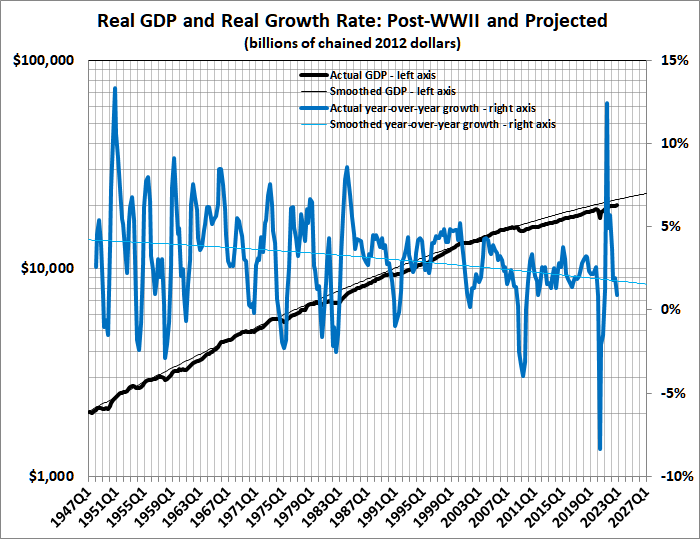
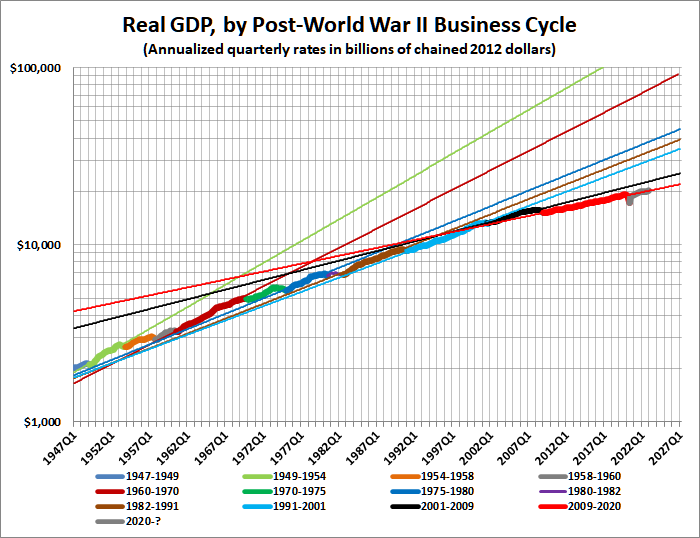
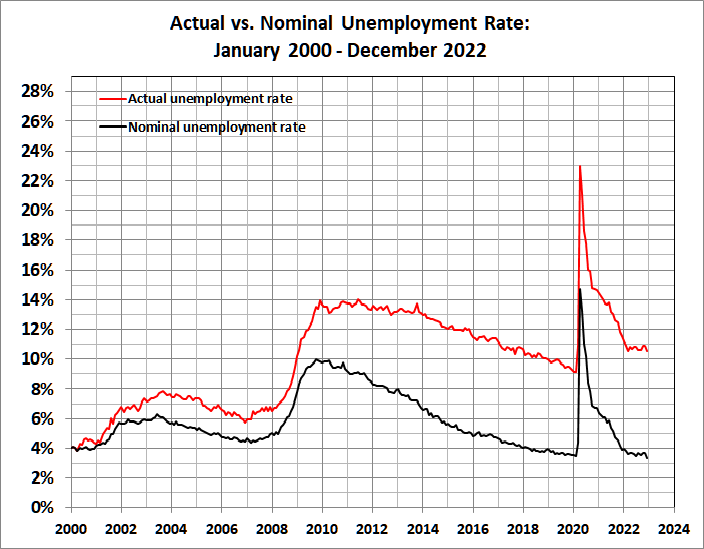
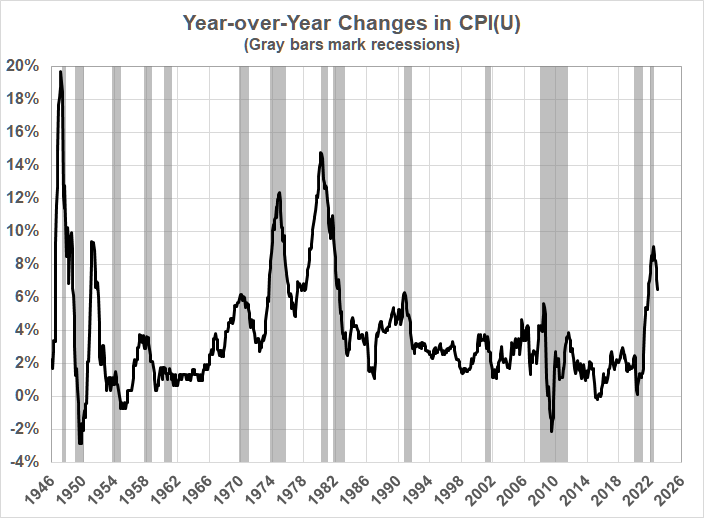

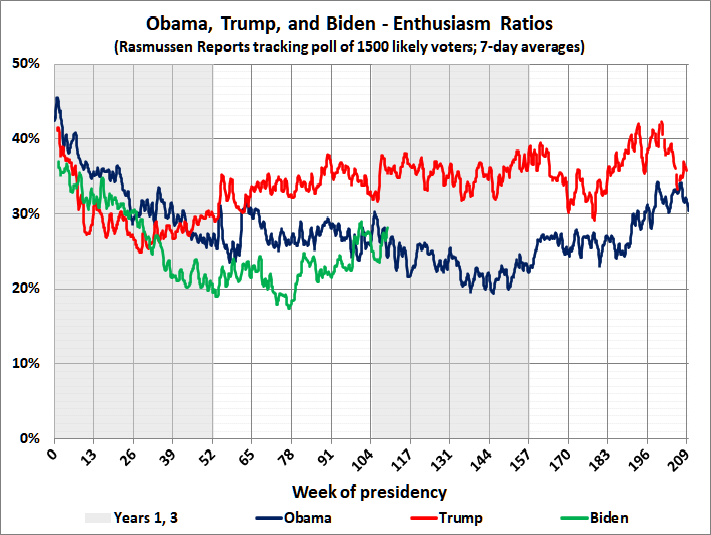
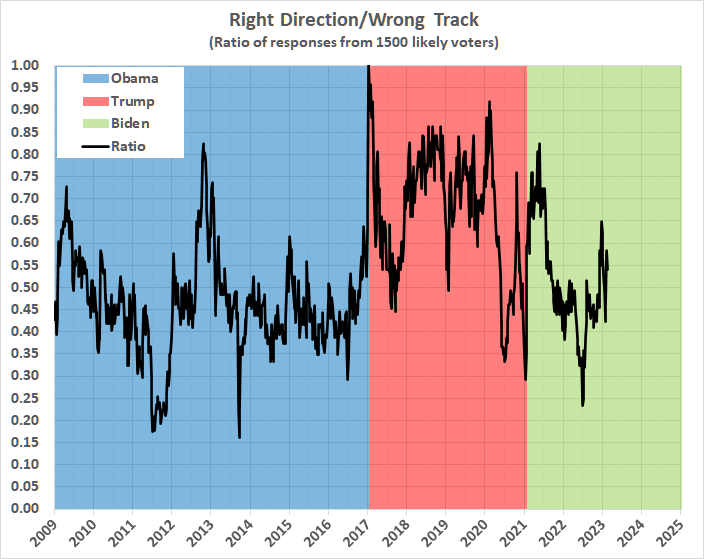


 Politics and Prosperity