Tamed Tigers

The 2006 season began brightly for the Detroit Tigers, a team that had posted a losing record in each of its preceding twelve seasons. The Tigers went 76-36 (.679) in the the first 112 games of the 2006 season, running up a ten-game lead in their division. The Detroiters then went cold and played 29-31 (.483) the rest of the way. As a result, they finished second in their division. Nevertheless, as a wild-card entry in post-season play, the Tigers managed to win the American League championship and advance to the World Series — a feat the underscores the vagaries of short, post-season series, which often see inferior teams come out on top.

But I digress. The tale of the 2006 Tigers (pun intended) has been retold, with embellishments, by the 2007 and 2008 teams. The 2007 team started 60-40 (.600), but finished 28-34 (.452) and wound up eight games behind the division leader (and, mercifully, out of the playoffs). The 2008 Tigers managed briefly to eke out a winning record — peaking at 52-49 (.515) — but have since played 19-31 (.380). If they don’t finish last in their division it will be thanks to the perennially abysmal Kansas City Royals.

So much for the Tigers’ (partial) season of glory, or sic transit gloria mundi.

UPDATE (09/24/08): The Tigers have lost six in a row, are a game behind KC, and face a season-ending four-game series with the Tampa Bay Rays. Even though the Tigers may manage to escape the cellar by a whisker (another pun intended), there can be no doubt that they have reverted to their perennially abysmal ways. Since their last division championship, 21 seasons ago, they have had only five winning seasons. Toothless.

Two Tenors

Compare the legendary John McCormack (1884-1945), an Irish tenor whose career spanned five decades, and Brooklyn-born Franklyn Baur (1904-1950), whose career lasted less than ten years.

Both singers recorded many popular songs of the 1920s (McCormack samples here and here; Baur samples here). McCormack’s influence on Baur (among others) is unmistakable, most notably in Irving Berlin’s “You Forgot to Remember.” Baur masked his native accent more successfully than did McCormack. But that is no criticism of McCormack, whose distinctive, lilting voice was supported by exemplary vocalism.

Baur, the original first tenor of The Revelers, was the engine of that group’s originality and success. (Aural evidence of Baur’s influence can be heard on Breezin’ Along with The Revelers, where the group’s innovative, jazzy sound turns more traditional — even “barbershoppy” — following Baur’s departure.) Had it not been for the influence of The Revelers, as they were in Baur’s time, the Comedian Harmonists — an even better ensemble — might not have been formed. (If you’ve never heard of the Comedian Harmonists, you must see Comedian Harmonists, a 1997 dramatization of the group’s history that is both toe-tapping and touching.) And without McCormack, the world might not have come to embrace Irish tenors.

We are fortunate that so many examples of McCormack’s and Baur’s art survive them.

Perspective on the Stock Market

Yes, we are in a bear market, as I foresaw here and confirmed here. But let’s put the downturn in perspective:

Dow Jones Wilshire 5000 Composite Index
(12,184.44, as of 4:46 p.m. ET today)

(c) BigCharts.com

Even with today’s significant drop (4.55 percent), the market is high by historical standards. (For example, the Wilshire 5000 Full-Cap Index, a broad measure of U.S. stock prices, is still higher than it was at any time before the “bubble” of the late 1990s, even after the index is adjusted for inflation.) Moreover, the decline from March 2000 to October 2002 — which somehow seems to be a distant memory for today’s headline writers — was far steeper and deeper than the slide that began last October. There may be a time to panic, but it hasn’t yet arrived.

Some of My Favorite Cars

The classic era of American automobile design began in the 1920s and lasted through the late 1930s. Here are some of my favorites:

1927 Kissel 8-75 Speedster

1929 Jordan Speedboy G

1929 Duesenberg J 350 Willoughby

1930 Pierce Arrow Roadster

1932 Cadillac 355B Sport Phaeton

1932 Pierce Arrow Model 54 7-Passenger Touring Car

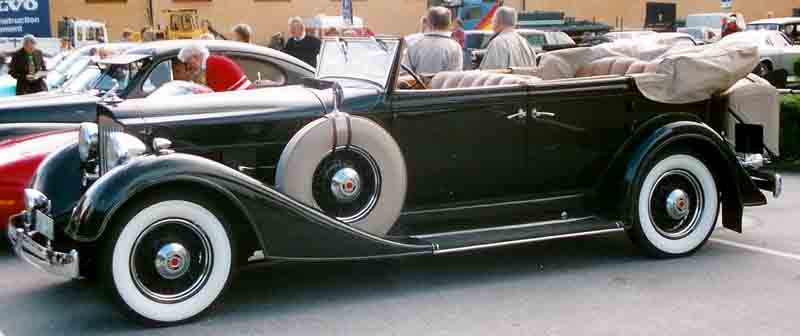
1934 Packard Eleventh Series Eight 1101 Convertible Sedan

1935 Auburn 8-851 Cabriolet

1937 Cord Model 812C Phaeton

1938 Lincoln Zephyr Convertible Coupe

Many collections of classic-car photos and specs are available online. Conceptcarz.com is the best that I have found. The collection there spans the late 1800s to the present. See also the excellent Crawford Collection of the Western Reserve Historical Society.

Unemployment

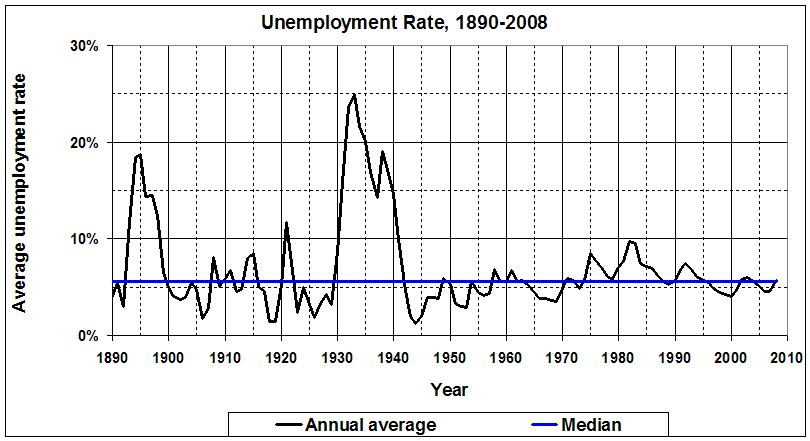
I present, without comment, a petite histoire graphique of the unemployment rate in the United States. The median is 5.5 percent.

Sources: Statistical Abstracts of the United States: Colonial Times to 1970, Series D85-D86 (http://www2.census.gov/prod2/statcomp/documents/CT1970p1-05.pdf) and Bureau of Labor Statistics, Employment Status of the Civilian Noninstitutional Population, 1942 to date (ftp://ftp.bls.gov/pub/special.requests/lf/aat1.txt). Rate for July 2008 used as the average for 2008.

One-Season Wonders?

Norm Cash and Brady Anderson had respectable careers by major-league norms, but each also had a “career year” that stood far above his other accomplishments as a player.

In Cash’s case, the one-season wonder was his league-leading batting average of .361 in 1961. It was Cash’s first and last .300 season in a career that included 14 full seasons of play. His second-best average was .283; his second-best finish was in 1969, when his .279 average garnered seventh place in the AL batting race; and his career average was only .271.

Anderson’s anomalous 1996 season saw him slug 50 home runs, finishing second in the AL to Mark McGwire. Anderson logged nine other full seasons of play, but in none of those seasons did he hit more than 24 home runs. He averaged only 19 home runs per 162 games over the span of his career.

Nevertheless, Cash and Anderson weren’t true one-season wonders. That “accolade” should be reserved for the likes of Gene Bearden and Mark Fidrych. Both were pitchers who had outstanding rookie years — Bearden with a W-L record of 20-7 in 1948; Fidrych with a W-L of 19-9 in 1976 — and then faded quickly, departing from the big leagues after brief, mediocre careers. (Actually, Fidrych faded after July 20 of his rookie season, by which date his record was 11-1; he went 8-8 for the balance of the season.)

Among position players, there’s Joe Charbonneau, AL Rookie of the Year in 1980 with a .289 average in 131 games. After that: .210 in 48 games, .214 in 22 games, and … gone from the majors.

Bearden, Fidrych, and Charbonneau are among the true one-season wonders of baseball.

The Best Announcer in Baseball’s History?

Many baseball fans consider Vin Scully to have been the best announcer in baseball’s long history. Others favor the Southern stylings of Ernie Harwell. I respect Scully and Harwell, but I prefer the late Skip Caray‘s acerbic wit.

Yes, Caray’s partisanship toward the Atlanta Braves was obvious, but he could be tough on the Braves, as well. In any event, he didn’t shirk from the truth about what had happened on the field, good or bad for the Braves. And, unlike most announcers of the past fifty years, Caray said nothing if there was nothing to be said; he didn’t babble just to fill air time. Caray and his long-time partner — the knowledgeable, soft-spoken Pete Van Wieren — made an ideal team: the best I’ve heard, by a long shot.

Mystery Solved

William Lyon (Billy) Phelps was, in his day (1865-1943), a noted professor of English literature (Yale), proponent of Jane Austen, writer of popular prose, public lecturer, and preacher (he was also an ordained minister). I learned of Phelps because he and his wife summered at Huron City, Michigan, not far from the village where my grandmother lived.

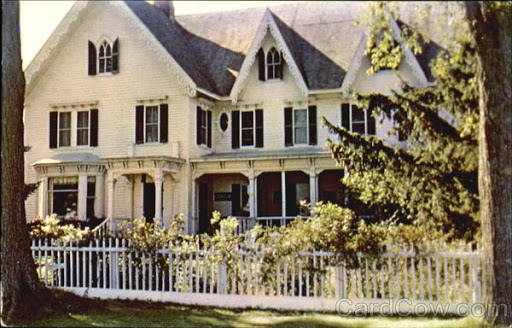
The Phelps’s summer home (which Mrs. Phelps inherited from her father) is known as Seven Gables. It is preserved as part of the Huron City Museum, a collection of old buildings and artifacts from the early days of Huron City. Below are successive views of Seven Gables. The first is from the road that runs in front of the house. The second shows the house and its seven gables from above. The third shows the house (toward the bottom of the photo) and an abandoned golf course across the road. The fourth, in which the house is a white speck near the center, shows the proximity of the house and golf course to Lake Huron, which is at the top of the photo.


The mystery (to me) was the golf course. Whenever we stopped at Huron City on the way to grandma’s house, I would walk to the edge of the road bordering the course, gaze down upon the derelict fairways and greens, and wonder about the course’s history. Had a country club been founded there in the boom times of the ’20s, only to fall victim to the Depression? Was the course too isolated to be a going proposition?

The mystery was solved when I learned recently that the course was on the Phelpses’ property — a personal, private course — and that Prof. Phelps played there regularly when he was in residence at Seven Gables. There it sits, abandoned — probably since 1939, the year of Prof. Phelps’s last visit to Huron City.

An Eon Ago…

…when I owned a small business in a rural village…

…one of my customers was the owner of a country inn. He and I traded services instead of paying each other in cash. (I did declare the value of services received as income on my tax returns.) As a result, my family and I enjoyed many a meal in this bucolic setting:

Our favorite seats were on the glassed-in porch (lower photo, left). There we had a splendid view of the nearby stream.

The inn has long since closed; the building is now a venue for music festivals and other “artsy” gatherings; and we now live 1,500 miles from the place. But my mind’s eye still recalls the evenings — sometimes snowy and sometimes showy with fall color — when we traversed country roads to the inn, where food, drink, and hospitality awaited us.

A Rumination on Red

I like red as an accent color. I especially like red’s brighter and deeper hues (for example, carmine, cerise, cherry, cinnabar, crimson, fuschia, magenta, maroon, ruby, sanguine, scarlet, and vermillion). Therefore:

Baseball and Groundhog Day

You may remember the movie Groundhog Day (1993), in which the character played by Bill Murray keeps having the same day over and over again. (If you haven’t seen the movie, do so; I recommend it.)

Has the same thing happened in major-league baseball? That is, in its 137-year history (1871-2007), has a season has ended with a league’s teams finishing in the same positions as those they had occupied at the end of the previous season? The answer is “no, but…”

To arrive at that answer, I went here and followed the links, which cover the following major baseball leagues and seasons of operation:

National Association, 1871-1875
National League, 1876-2007
American Association, 1882-1891
Union Association, 1884
Players League, 1890
American League, 1901-2007
Federal League, 1914-1915

An entire league has yet to end its season with all of its teams finishing in the same order as they did in the previous season. However, since the advent of divisional play in 1969, some division finishes have been duplicated, and even sextuplicated:

  • The duplication occurred in the American League’s Central Division in 1996 and 1997, when Cleveland, Chicago, Milwaukee, Minnesota, and Kansas City ended both seasons in that order (Cleveland first, etc.).
  • The sextuplication occurred in the American League’s Eastern Division from 1998 through 2003, when New York, Boston, Toronto, Baltimore, and Tampa Bay ended all six seasons in that order (New York first, etc.).

The 2005 season saw a repetition of the AL East’s pattern for 1998-2003. That’s seven identical finishes in a span of eight seasons. Moreover, the Yankees and Red Sox finished one-two in eight consecutive seasons (1998-2005). How ’bout that!

Election 2008: Signs and Portents

This isn’t a “political” post. Read on.

Forty-two different men have served as president of the United States, although the official number of presidents is 43 because Grover Cleveland was elected to two non-consecutive terms, each of which is counted as a separate presidency. Herein, I present some important facts about those 42 men and their 43 presidencies, and about the implications of those facts for the outcome of election 2008.

No person whose last name begins with “O” has served as president. The last names of three presidents begin with “M” (Madison, Monroe, McKinley); the last name of one president begins with “Mc” (McKinley). Advantage: McCain

Only three presidents’ last names end in vowel sounds (Monroe, McKinley, Kennedy); all the rest end in consonant sounds. Advantage: McCain

No president’s last name ends with “a”; 15 presidents’ last names end with “n.” Advantage: McCain

The mean number of letters in the presidents’ last names is 6.67; the median number is 7. McCain (6) is closer to the norm than Obama (5). Advantage: McCain

Of the 43 presidencies, 38 have occurred by election. (The five presidents who didn’t serve elected terms of office were Tyler, Fillmore, A. Johnson, Arthur, and Ford.) There have been 37 elected successions (Washington didn’t succeed anyone). In two of those successions, the newly elected president was the same age as his predecessor was when the predecessor was elected; in 15 cases, the successor was younger than his predecessor was; in 20 cases, the successor was older than his predecessor was. It is, therefore, more usual than otherwise for a newly elected president to be older than his predecessor was upon election. Such would be the case if McCain (72 by the time of this year’s election) succeeds G.W. Bush (54 at the time of his election in 2000). Alternatively, Obama (47 by the time of this year’s election) would be younger than G.W. Bush was in 2000. Advantage: McCain

Mr. Cranky has the edge over Mr. Change.

D.C. Isn’t a Baseball Town

It’s often said that Washington, D.C., isn’t a “baseball town.” Why, then, does D.C. have yet another major-league team? Only because Members of Congress, who live in and around D.C. and treat it as a second constituency (or colonial territory), pressured Major League Baseball to move the failing Montreal Expos to D.C.

The long, sad history of big-league ball in D.C. goes back to 1901 and the original Washington Senators, who — upon their transformation to the Minnesota Twins after the 1960 season — were replaced immediately by the expansion Washington Senators, who lasted only eleven seasons before their transformation to the Texas Rangers.

Anyway, D.C. has lost two major-league teams because it isn’t a baseball town — and the numbers prove it. In the following graph I compare attendance for D.C.’s hapless teams with the American League teams of New York and Detroit (real baseball towns). (Relative attendance is the ratio of a team’s home attendance for a season to the average for all major-league teams in the same season.) Even allowing for the fact that attendance tends to rise and fall with a team’s success (or lack thereof), it’s clear that the D.C. area has been, and remains, relatively cool to baseball:

Sources:
Major-league attendance by year: http://www.ballparksofbaseball.com/attendance.htm. Team attendance by year: http://www.baseball-almanac.com/stadium.shtml. Team won-lost records by year: http://www.baseball-reference.com/leagues/AL.shtml.

Yes, the Washington Nationals (2005-07) seem to be doing better than the previous Washington teams. But that showing is unimpressive compared with the records of real baseball towns, and can be chalked up to the novelty of baseball’s return to D.C. The novelty, in fact, lasted only a season; attendance in the Nats’ second and third seasons slid back toward the norm for D.C..

The rate of attendance at Nationals’ games has risen in 2008 — as one might expect, given the team’s new, costly, tax-funded stadium — but it is below the pace of 2005. As the Nats inevitably rack up losing seasons, the stadium will become an empty cavern, and the taxpayers of D.C. (and perhaps the nation) will be left holding the bag for it.

That’s All Folks

UPDATED, 09/05/09

That’s the end of my stint at Blogspot, I should say. All of my new posts are at Politics & Prosperity. (Note to readers: This is a new location. Please change your bookmarks and feed links.)

But don’t go away empty-handed. There are more than 2,000 posts here; you can’t have read all of them (if you’ve read any). Check out “The Best of Liberty Corner,” browse the archive, and explore the various categories linked in the sidebar.

The home schooler threat?

Guest commentary by Postmodern Conservative.

Here’s a perceptive op-ed from the Northeast Mississippi Daily Journal: Home-schoolers threaten our cultural comfort.” In all fairness, however, I think that the level of acceptance for home schooling has risen tremendously, at least in some parts of the country.

Here in Richmond, Va., sympathy for home schooling (or at least a lack of antipathy) is fairly high. I imagine that most of the rejection comes from leftists and/or adults who are into minimalist parenting. I suspect they are made to feel guilty by home schoolers, or more traditional parents in general.

Some of the article’s criticism is applicable to anyone who puts material goods ahead of the basic spiritual, emotional and intellectual needs of their children:

Young families must make the decision: Will junior go to day care and day school, or will mom stay home and raise him? The rationalizations begin. “A family just can’t make it on one income.” (Our parents did.) “It just costs so much to raise a child nowadays.” (Yeah, if you buy brand-name clothing, pre-prepared food, join every club and activity, and spend half the cost of a house on the daughter’s wedding, it does.) And so, the decision is made. We give up the bulk of our waking hours with our children, as well as the formation of their minds, philosophies, and attitudes, to strangers.

It’s the old “here are the keys to the car and leave me alone” syndrome; only now it’s “go play your video game, go on the internet, play with your iPhone, and leave me alone” syndrome. But when parents can no longer afford such distractions, as our economic downturn threatens levels of frugality unheard of in decades, the spoiled children will come home to roost. And then what?

The Budweiser Buy-Out

Guest commentary by Postmodern Conservative.

The coverage at The American Spectator is generally good. But everyone’s entitled to say something stupid at least once and awhile. In this case it’s G. Tracy Mehan, III (“This Bud’s Not for You“) waxing nostalgic about his hometown company, Anheuser-Busch, which has just been bought out by the Belgian mega-brewer, InBev. In his desperation Mr. Mehan says he’s willing to abandon his “free-market, free-trade principles” all because of “an American brand.” I’m just as nostalgic as anyone else at times, but when push comes to shove, A-B is an overrated producer of stale suds. So if InBev buys out a US brewery, what’s the upshot? I imagine that most of the jobs will stay and, heck…. maybe the beer will get better! After all, the Japanese gave America better cars. That’s what the market is all about.

The ANWR Slide Show

Here’s a great pictorial exhibit on ANWR and the impact of oil drilling in northern Alaska from Dr. Philip Blosser: The politics of oil and the truth about ANWR drilling (July 8, 2008). The facts speak for themselves.

Current Events in Catholicism

Guest commentary by Postmodern Conservative.

I know that not everyone reading this blog has a direct interest in religion or Catholicism. But theologically-minded or not there’s no denying that the Catholic Church figures heavily in the news, especially on political and ethical issues. Many conservatives—from Ronald Reagan through to the current president—have seen this as an important (and benevolent) role at the very least. One can cite the “tag-team effort” of Reagan and John Paul II in the collapse of the USSR and the Eastern Bloc. Then there is the enthusiastic alliance of George Bush and Benedict XVI in the ongoing culture wars.

At the same time, for many conservatives it is safe to say that the apparent “left turn” by the Church since the 1960s and Vatican II has been a source of consternation. This “modernization” (a.k.a. “modernism” in theological circles) or accommodation with contemporary culture is a point noted by people from every political viewpoint, by believers and non-believers alike. There is no disputing it. Yet whatever the superficial vicissitudes, it would seem that this change in policy has never affected Catholic fundamentals, which remain markedly unchanging. Still it has had an impact on day-to-day activities: the roles of the clergy and laity, the liturgy, pastoral policies, etc. And these things have been keenly felt, often with a sense of confusion and disappointment. Historically speaking, this is not without precedent. The Catholic Church has had plenty of ups and downs throughout the millennia—periods of apparent decline and corruption followed by reinvigoration and reform.

Now with the pontificate of Bendict XVI it is clear that the “Vatican II generation” is coming to an end, and in more ways than one. Benedict (Josef Ratzinger) was a key participant in the Council’s proceedings and will likely be the last cleric from that era to be made pope. He also signals the end of a generation because he has become one of the most outstanding critics of the post-conciliar Church. A good example of this is a recent discussion in Homiletic & Pastoral Review of Benedict’s encyclical Spe Salvi (“On Christian Hope”). As the Brian Graebe notes:

[I]t is what the encyclical does not say that has engendered no small amount of controversy. As numerous commentators quickly recognized, Spe Salvi contains not a single reference to any of the documents from the Second Vatican Council….. Throughout his writings, interviews and memoirs, Joseph Ratzinger clearly sees the legacy of Vatican II as having been hijacked, and needing to be restored to its proper place in the heritage of the Church.

Benedict is even more outspoken on the Catholic Mass (e.g., the liturgy) and his moves to restore the traditional forms of worship to the Latin (Western) Rite and to the Church as a whole. The recent Motu Proprio Summorum Pontificum which has garnered so much attention, is just one example. And the Mass, being the public worship of the Church, is undoubtedly the most visible point of dispute in recent years. To put it in a nutshell, both conservatives and liberals have seen the liturgy as not only an outward manifestation of Catholic culture and piety but also as a crucial indicator of theological direction. They are both right. The question is, how did people respond to the undeniable confusion that erupted in the wake of Vatican II?

Many people (including priests, monks and nuns) simply left. It was one of the worst mass exoduses from the Church in its 2000 year history. Others stayed on, as they always do, with varying degrees of commitment. Then there were the theological minorities on the “left” and “right.” Some liked what had happened and wanted to push things even further: changing Catholic teaching on contraception and divorce, admitting women to the priesthood, etc. Others dissented in the opposite direction, criticizing the New Mass that came out of Vatican II as well as many of the pastoral decisions. This “dissent on the right” spanned the spectrum from cautious conservatism to outright schism (e.g., those who denied that the pope was really the pope). In particular, those who insisted on maintaining the old Latin liturgy and criticizing some or all of the post-conciliar Vatican policies were known as Traditionalists. Even these latter represented many different shades of opinion. However it is interesting that a large of number of traditionalists over the years, including some fairly strong critics of the Vatican’s past policies have reconciled themselves, no doubt encouraged by the new course in Rome. The most recent example is the traditional Redemptorists based in Scotland.

It is clear that this pope is on a mission. His efforts at the restoration of “pre-Vatican II” Catholicism, as some have put it, were understandably cautious in the first months of his pontificate. But he now seems to have the bark of Peter under full sail. In addition to promoting the old Mass, which has seen an explosion of interest since it was freed up last year, Benedict is planning a commission to restore the New Mass to its original, more reverent rubrics. Meanwhile, as the Church of England, which broke from Rome in 1534, continues to fall apart in its own eager concessions to theological and moral progressivism, Bish. Andrew Burnham has announced his desire for a mass return to Rome on the part of conservative Anglicans.

Populist myths to the contrary, direction comes from the top—whether it’s in a family, a government, or a church. And after decades of papal inaction and/or neglect, which reached a low point in the much publicized clerical sex scandals a few years ago, Benedict XVI is taking a hands-on approach which is filtering down to all levels. The new generation of clerics is generally more orthodox than their predecessors and it is these men who are being promoted to influential positions. For example, Raymond Burke, previously Archbishop of St. Louis and an outspoken conservative, is now the first non-European head of the Apostolic Signatura, the highest judicial tribunal in the Church. Meanwhile, Cardinal Cañizares Llovera, a champion of traditional liturgy, is due to be appointed head of the Congregation of Divine Worship.

Summary: Apart from these purely religious developments it will be interesting to see on a secular level what impact a reinvigorated leadership of the Church has on the worldwide culture wars, on such topics as abortion, “alternative lifestyles,” and so forth. Just a few generations ago Catholicism had a tremendous moral influence on popular culture in the United States. It seems likely that the left-liberal status quo, now at the zenith of power and hubris, will once again be challenged…. from the highest levels!

The "Sixties Campus": Good Riddance at Last?

Guest commentary by Postmodern Conservative.

Here’s an interesting commentary from The New York Times (July 3, 2008):

Baby boomers, hired in large numbers during a huge expansion in higher education that continued into the ’70s, are being replaced by younger professors who many of the nearly 50 academics interviewed by The New York Times believe are different from their predecessors — less ideologically polarized and more politically moderate.

Whether this will reveal itself to be a positive trend remains to be seen. I never trust liberal analysis of what’s “good” or “moderate,” etc. But it is true that philosophical attitudes follow definite cycles. For example, after the French Revolution and Napoleon there was a conservative reaction in Europe. This happened again in the wake of the First World War and the Bolshevik Revolution, though it was cut short by the “success” of F.D.R.’s New Deal (in fact, it was the progressives riding on the coattails of American victory in World War II). In that sense, the leftist dominance of American campuses pre-dates the hippies.

Certainly a conservative resurgance—which we see elsewhere, in politics and religion—is welcome, though it’s no cause for complacency. So much damage has been done it will take a lot of work just to clear up the debris left by the old regime.

Parting Shot: What’s Wrong with The World

Guest commentary by Postmodern Conservative.

I won’t be posting as often to Liberty Corner in the coming weeks, as I catch up on some offline projects. Meanwhile, let me share my explanation of what’s wrong with the world (of politics) in less than 300 words.

* * *

What’s wrong has to do with human nature. That nature is flawed and it is also unchanging. However the safeguards that were once in place to deal with man’s frailties are falling away bit by bit. So the drift to the left has, as you’ve probably guessed, only increased.

Leftists dominate politics because they promise more than candidates and officials on the right. It’s not what you deliver but what you promise. Leftists can raise the gas tax but they can still promise more programs.

Leftists have an edge because they cater to people with too much time on their hands: welfare recipients and comfortable ideologues. Leftists, as a general rule, don’t like to raise their children. Other people can do that. Now these people have more time to spend on their leftist politics.

Political responsibility is not just a question of keeping busy, but what you keep busy with. For leftists it always seems to be someone else’s business. Leftists also offer more perks than conservatives for those who want to spend their time irresponsibly. People can do what they want and the consequences are either ignored or become the justification for more leftist programs.

Leftists offer meaningless freedoms. Real freedom requires responsibility and has to be worked for. It means that rewards are greater, but they are deferred. Leftists cater to instant gratification. They let consenting adults do whatever they want (except own firearms).

Finally, the leftist creed offers all the spiritual satisfaction of religion. You can feel better than others without changing your lifestyle. You just need to recycle more stuff. You can worship the earth, but you don’t have to obey the Ten Commandments. And any rules that are made are made for someone else (“not me”), imposed by means of government programs.