That "Southern Thing"

This explains it best:

Why are so many white people so irrationally invested in their regional mythology? However inept the [Confederate] flag’s defenders are at articulating it, the reason does in fact transcend race. The South’s ferocious sectional pride is the flip side of an inferiority complex, a chip-on-the-shoulder legacy of its savage defeat by a civilization it rejected long before the Civil War….The North’s scorched-earth war strategy was indeed designed to annihilate not just the South’s army but its entire civilization. As the Union general Philip Henry Sheridan declared, ”The people must be left nothing but their eyes to weep with over the war.”…

The perversely empowering allure of victimhood calls out even to the South’s most critical daughters. Some years ago, I was looking into a potential elementary school for my younger child. It was a highly recommended prospect, located on the politically correct Upper West Side of Manhattan and named after one of General Sheridan’s colleagues. Halfway through the school’s guided tour, I decided ”no way,” explaining to a fellow Southern mom who was there, ”Do you really think you could tell the folks back home that you’re sending your child to the William Tecumseh Sherman School?” [From a review in The New York Times by Diane McWhorter of John M. Coski’s history, The Confederate Battle Flag.]

I am not a native son of the South, but my sympathies are very much with those Southerners — and their intellectual allies in all regions — who invoke States’ rights in the name of liberty, not out of racial hatred.

A Mathematician’s Insight

G.H. Hardy (1877-1947) was, as Wikipedia says, “a prominent British mathematician, known for his achievements in number theory and mathematical analysis.” Non-mathematicians (as I am) know him mainly for A Mathematician’s Apology, “his essay from 1940 on the aesthetics of mathematics…with some personal content — which may be the layman’s best insight into the mind of a working mathematician.”

A Mathematician’s Apology is a fast and enriching read. I revisit it every few years. During my most recent visit, I was especially struck by this passage:

There are many highly respectable motives which may lead men to prosecute research, but three which are much more important than the rest. The first (without which the rest must come to nothing) is intellectual curiosity, desire to know the truth. Then, professional pride, anxiety to be satisfied with one’s performance, the shame that overcomes any self-respecting craftsman when his work is unworthy of his talent. Finally, ambition, desire for reputation, and the position, even the power or the money, which it brings. It may be fine to feel, when you have done your work, that you have added to the happiness or alleviated the sufferings of others, but that will not be why you did it. So if a mathematician, or a chemist, or even a physiologist, were to tell me that the driving force in his work had been the desire to benefit humanity, then I should not believe him (nor should I think any better of him if I did). His dominant motives have been those which I have stated and in which, surely, there is nothing of which any decent man need be ashamed. [1979 edition, p. 79]

That’s as incisive as anything Adam Smith had to say about self-interest being the engine of material progress.

Right (Coast) On!

UPDATED BELOW

Tom Smith of The Right Coast rants the best rant I’ve ever read (pace Lileks):

Mark Kleinman [sic throughout; s/b Kleiman: ED] seems to find my little artistic effort depicting Michael Schiavo in the Bad Place in poor taste. It may be. When wondering how to respond to the killing of a person whose parents just wanted to take care of her, good taste is one of the first things to go….

Besides, there’s a lot to talk about, such as, what should be done to make sure this sort of thing doesn’t happen again? By this sort of thing, I mean the slow killing of a woman, even though her parents stood ready to care for her, at the instigation of her former husband, a man of an apparently extremely selfish and spiteful character….Professor Kleinman calls me a ghoul, which is rich….I think all of us ghouls should unite, and keep an eye out for old people, babies, and people in power wheelchairs, because I think in the next decade or so, they’re going to need all the help they can get.

As I said upon learning of Terri Schiavo’s death by starvation and dehydration, “Are you next?” That’s all I could muster at the time. Tom Smith has articulated my outrage. Go, read his post.

UPDATE: Kleiman, not surprisingly, opposes the use of torture. I guess he forgot to add the footnote that says “except in the case of a speechless, defenseless, innocent person.”

Base Closure: A Model for Entitlement Reform?

President Bush has pre-empted a stalling tactic by Sen. Trent Lott (R-Miss.) by appointing a nine-member base closure commission while the Senate is in recess. The BRAC process (for Base Realignment and Closure) is aimed at taking local politics out of base closure decisions. BRAC was used in 1988, 1991, 1993, and 1995. Here’s how it works (adapted from Kenneth R. Mayer’s article, “The Limits of Delegation: The Rise and Fall of BRAC,” Regulation, Fall 1999):

  • An independent Base Closure and Realignment Commission surveys existing bases, working from a list of closures recommended by the Department of Defense, and identifies the facilities that could be closed or moved without reducing the combat readiness of the armed forces.
  • The commission then forwards a list of recommendations to the president, who can approve or disapprove the list, as a package.
  • If the president approves the list, it goes to Congress.
  • Unless Congress passes a joint resolution of disapproval within 45 days, the Secretary of Defense hads the authority to carry out the closures.

The process, in other words, requires the president and Congress to take a package deal, rather than tweak it to serve particular interests — local constituencies, in the case of base closings. (As Meyer explains, President Clinton, unlike Presidents Reagan and Bush 41, did inject local politics into the 1995 BRAC process. No surprise there.)

It is tempting to consider the use of similarly empowered independent commissions to find solutions to other politically explosive issues — Social Security and Medicare, for instance. But Mayer throws cold water on that notion:

The use of an independent commission may mask, but cannot eliminate, the fundamental tension between the interests of local constituencies [or interest groups: ED] and the broader “public benefit.” The resort to an independent commission is an attempt to take the politics out of politics and substitute a superficially rational process for a purely parochial one. Such an effort is not always effective — as we have seen even in the case of BRAC — nor is it always desirable.

Critics argue that an independent commission is simply political cover for legislators who are too timid to make their own choices. By delegating controversial decisions to a nonelected board or agency, legislators hope to evade both responsibility and accountability.

The limited success of independent commissions [which Mayer details: ED] stems from the basic parameters of congressional delegation. Delegation does not work unless legislators cede their power to make after-the-fact decisions. But the broader or more controversial the policy, the less likely it is that legislators will agree to cede that power. And rightly so.

Mayer may be right, but at this point I’d gladly see Congress appoint a Social Security-Medicare commission modeled on BRAC. Would it be a constitutional delegation of congressional power? Well, if BRAC is constitutional (and it seems to be), almost any kind of delegation is constitutional. (For the constitutionally fastidious among you, I offer two scholarly takes on the constitutionality of delegation.)

A Great Pro-Capitalist Movie

The Barbarian Invasions (Les Invasions Barbares), a French-Canadian flick that shreds socialized medicine and leftist politics with wit and bittersweet humor. A must see. I’m surprised that it wasn’t banned in Canada. (Caveat: in French, with English subtitles.)

Apropos Bankruptcy Reform

As I was saying about bankruptcy reform…

…here’s the dialogue from Zits (the comic strip) of March 10:

Jeremy: You expect me to pay a $400 cell phone bill?

Dad: Who incurred the charges?

Jeremy: Me.

Dad: Who promised to be responsible for any overages?

Jeremy: Me.

Dad: Who assured me that this would never happen?

Jeremy: Me.

Dad: So then who should pay the bill?

Jeremy: I’m not sure I follow your logic.

Then on March 12:

Friend: A $400 cell phone bill?? Dude!

Jeremy: How was I supposed to know that text messages cost 10 cents each?

Jeremy: Okay, I knew that.

Jeremy: But how was I supposed to know that they charge for sending and receiving?

Jeremy: Okay, I guess I knew that, too.

Friend: I was going to say life is unfair. But I guess it really isn’t.

Jeremy: I hate it when rules apply to me.

Thus spake the opponents of reform.

A Slate-lanche

From today’s blogs The latest chatter in cyberspace at Slate:

Are 1,300 scientists crying wolf?: A report, released today and backed by more than 1300 scientists from 95 countries, suggests that “the human race is living beyond its means” and that two-thirds of the world’s resources have been “used up.” The comprehensive survey “concludes that human activities threaten the Earth’s ability to sustain future generations.”

Most bloggers aren’t buying it. At Liberty Corner, [a] libertarian retiree…pooh-poohs the warnings, linking to another story full of dire, and ultimately inaccurate, estimates.

Thanks to Slate‘s David Wallace-Wells for the mention, which has yielded 13 hits in just over an hour.

FINAL (?) TALLY: The link from Slate yielded 77 hits (as of 5:38 p.m. CT, 04/02/05).

Are You Next?

Schiavo Dies 13 Days After Tube Removed

The Obesity Epidemic

Randall Parker — a.k.a. FuturePundit and social engineer extraordinaire — opines about obesity in “Response To Obesity Epidemic Should Be Urgent Priority.” But obesity isn’t contagious and therefore can’t be an epidemic.

What’s the problem, then? According to Parker,

food is cheap. As biotechnology advances food prices will rise more slowly than inflation. So food will become cheaper still.

That’s a problem? Tell it to the poor.

Here’s my solution: Let natural selection sort it out. If fatties aren’t fit to live, they won’t live as long as non-fatties or procreate at the same rate as non-fatties. So, if fatness is gene-related, there’ll be fewer fatties in succeeding generations. Otherwise, I don’t care how fat other people get, as long as I don’t have to pay for their food addiction.

Yet Another Look at Democracy

James Surowiecki’s The Wisdom of Crowds is a flawed masterpiece. Surowiecki seems to understand how unregulated markets make people better off, but in the end he succumbs to the notion that we can regulate our way to “the common good” through democracy. Surowiecki nevertheless gets it right when he says this:

[A] group of people…is far more likely to come up with a good decision if the people i the group are independent of each other….

Independence is important to intelligent decision making for two reasons. First, it keeps the mistakes that people make from becoming correlated. Errors in individual judgment won’t wreck the group’s collective judgment as long as those errors aren’t pointing systematically in the same direction….Second, independent individuals are more likely to have new information rather than the same old data everyone is already familiar with. The smartest groups, then, are made up of people with diverse perspectives who are able to stay independent of each other. Independence doesn’t imply rationality or impartiality, though. You can be biased and irrational, but as long as you’re independent, you won’t make the group any dumber.

If only Surowiecki had stopped there, on page 41.

Democracy undoes independence. It imposes on everyone the mistakes and mistaken beliefs of a controlling faction. It defeats learning. It defeats the sublime rationality of markets, which enable independent individuals to benefit each other through the pursuit of self-interest.

More about Democracy and Liberty

Fritz Machlup wrote this summary of a 1961 article (in German) by Friedrich Hayek:

[Hayek] asks why it is that personal liberty is in continual jeopardy and why the trend is toward its being increasingly restricted. The cause of liberty, he finds, rests on our awareness that our knowledge is inevitably limited. The purpose of liberty is to afford us an opportunity to obtain something unforeseeable; since it cannot be known what individuals will make of their freedom, it is all the more important to grant freedom to everybody….Liberty can endure only if it is defended not just when it is recognized to be useful in particular instances but rather continuously as a fundamental principle which may not be breached for the sake of any definite advantages obtainable at the cost of its suspension….It is not easy to convince the masses that they should sacrifice foreseeable benefits for unforeseeable ones. [From “Hayek’s Contribution to Economics,” in Essays on Hayek (1976), p. 41.]

That goes a long way toward explaining why unchecked democracy has become the enemy of liberty.

The Case Against Campus Speech Codes

The per curiam opinion of the U.S. Supreme Court in Brandenburg v. Ohio (1969):

The appellant, a leader of a Ku Klux Klan group, was convicted under the Ohio Criminal Syndicalism statute for “advocat[ing] . . . the duty, necessity, or propriety [445] of crime, sabotage, violence, or unlawful methods of terrorism as a means of accomplishing industrial or political reform” and for voluntarily assembl[ing] with any society, group, or assemblage of persons formed to teach or advocate the doctrines of criminal syndicalism. Ohio Rev.Code Ann. § 2923.13. He was fined $1,000 and sentenced to one to 10 years’ imprisonment. The appellant challenged the constitutionality of the criminal syndicalism statute under the First and Fourteenth Amendments to the United States Constitution, but the intermediate appellate court of Ohio affirmed his conviction without opinion. The Supreme Court of Ohio dismissed his appeal sua sponte “for the reason that no substantial constitutional question exists herein.” It did not file an opinion or explain its conclusions. Appeal was taken to this Court, and we noted probable jurisdiction. 393 U.S. 94 (196). We reverse.

The record shows that a man, identified at trial as the appellant, telephoned an announcer-reporter on the staff of a Cincinnati television station and invited him to come to a Ku Klux Klan “rally” to be held at a farm in Hamilton County. With the cooperation of the organizers, the reporter and a cameraman attended the meeting and filmed the events. Portions of the films were later broadcast on the local station and on a national network.

The prosecution’s case rested on the films and on testimony identifying the appellant as the person who communicated with the reporter and who spoke at the rally. The State also introduced into evidence several articles appearing in the film, including a pistol, a rifle, a shotgun, ammunition, a Bible, and a red hood worn by the speaker in the films.

One film showed 12 hooded figures, some of whom carried firearms. They were gathered around a large wooden cross, which they burned. No one was present [446] other than the participants and the newsmen who made the film. Most of the words uttered during the scene were incomprehensible when the film was projected, but scattered phrases could be understood that were derogatory of Negroes and, in one instance, of Jews. [note 1] Another scene on the same film showed the appellant, in Klan regalia, making a speech. The speech, in full, was as follows:

This is an organizers’ meeting. We have had quite a few members here today which are–we have hundreds, hundreds of members throughout the State of Ohio. I can quote from a newspaper clipping from the Columbus, Ohio, Dispatch, five weeks ago Sunday morning. The Klan has more members in the State of Ohio than does any other organization. We’re not a revengent organization, but if our President, our Congress, our Supreme Court, continues to suppress the white, Caucasian race, it’s possible that there might have to be some revengeance taken.

We are marching on Congress July the Fourth, four hundred thousand strong. From there, we are dividing into two groups, one group to march on St. Augustine, Florida, the other group to march into Mississippi. Thank you. [447]

The second film showed six hooded figures one of whom, later identified as the appellant, repeated a speech very similar to that recorded on the first film. The reference to the possibility of “revengeance” was omitted, and one sentence was added: “Personally, I believe the nigger should be returned to Africa, the Jew returned to Israel.” Though some of the figures in the films carried weapons, the speaker did not.

The Ohio Criminal Syndicalism Statute was enacted in 1919. From 1917 to 1920, identical or quite similar laws were adopted by 20 States and two territories. E. Dowell, A History of Criminal Syndicalism Legislation in the United States 21 (1939). In 1927, this Court sustained the constitutionality of California’s Criminal Syndicalism Act, Cal.Penal Code §§ 11400-11402, the text of which is quite similar to that of the laws of Ohio. Whitney v. California, 274 U.S. 357 (1927). The Court upheld the statute on the ground that, without more, “advocating” violent means to effect political and economic change involves such danger to the security of the State that the State may outlaw it. Cf. Fiske v. Kansas, 274 U.S. 380 (1927). But Whitney has been thoroughly discredited by later decisions. See Dennis v. United States, 341 U.S. 494, at 507 (1951). These later decisions have fashioned the principle that the constitutional guarantees of free speech and free press do not permit a State to forbid or proscribe advocacy of the use of force or of law violation except where such advocacy is directed to inciting or producing imminent lawless action and is likely to incite or produce such action. [note 2] As we [448] said in Noto v. United States, 367 U.S. 290, 297-298 (1961), “the mere abstract teaching . . . of the moral propriety or even moral necessity for a resort to force and violence is not the same as preparing a group for violent action and steeling it to such action.” See also Herndon v. Lowry, 301 U.S. 242, 259-261 (1937); Bond v. Floyd, 385 U.S. 116, 134 (1966). A statute which fails to draw this distinction impermissibly intrudes upon the freedoms guaranteed by the First and Fourteenth Amendments. It sweeps within its condemnation speech which our Constitution has immunized from governmental control. Cf. Yates v. United States, 354 U.S. 298 (1957); De Jonge v. Oregon, 299 U.S. 353 (1937); Stromberg v. California, 283 U.S. 359 (1931). See also United States v. Robel, 389 U.S. 258 (1967); Keyishian v. Board of Regents, 385 U.S. 589 (1967); Elfbrandt v. Russell, 384 U.S. 11 (1966); Aptheker v. Secretary of State, 378 U.S. 500 (1964); Baggett v. Bullitt, 377 U.S. 360 (1964).

Measured by this test, Ohio’s Criminal Syndicalism Act cannot be sustained. The Act punishes persons who “advocate or teach the duty, necessity, or propriety” of violence “as a means of accomplishing industrial or political reform”; or who publish or circulate or display any book or paper containing such advocacy; or who “justify” the commission of violent acts “with intent to exemplify, spread or advocate the propriety of the doctrines of criminal syndicalism”; or who “voluntarily assemble” with a group formed “to teach or advocate the doctrines of criminal syndicalism.” Neither the indictment nor the trial judge’s instructions to the jury in any way refined the statute’s bald definition of the crime [449] in terms of mere advocacy not distinguished from incitement to imminent lawless action. [note 3]

Accordingly, we are here confronted with a statute which, by its own words and as applied, purports to punish mere advocacy and to forbid, on pain of criminal punishment, assembly with others merely to advocate the described type of action. [note 4] Such a statute falls within the condemnation of the First and Fourteenth Amendments. The contrary teaching of Whitney v. California, supra, cannot be supported, and that decision is therefore overruled.

Reversed.

With that precedent in mind, I have to ask why it is permissible for a publicly funded university to have a speech code of any kind.

Favorite Posts: Academic Freedom and Freedom of Speech

It Made My Day

From Snopes.com:

Claim: Thief who tries to rob a gun shop is shot dead by those in the store.

Status: True.

On 3 February 1990, David Zaback attempted to hold up H&J Leather & Firearms Ltd., a gun shop located in Renton Highlands near Seattle, Washington. About 4:40 p.m. that day, he entered the crowded shop and announced his intention to rob it by Gun telling everyone to put their hands on the counter and saying if anybody moved, he’d kill them. He then spotted a uniformed policeman having coffee with Wendall Woodall, the shop’s owner. What happened next is less than clear in terms of who shot first, but there was an exchange of gunfire between David Zaback, the would-be robber; Timothy Lally, an 18-year veteran of the King County police force; and Danny Morris, one of the shop’s clerks.

Zaback, who had fired three times, was shot three times in the chest and once in the arm. He died in the hospital about four hours after the shooting. No one else was injured during the incident, and no charges were subsequently laid against Lally or Morris.

Lally and Morris should have been given a cut of the money taxpayers didn’t have to spend on Zaback’s trial, appeals, and imprisonment.

Reversed Causality

Jim VandeHei of The Washington Post — writing in the usual, no-liberal-bias mode of that “august” rag — complains:

Fortune 500 companies that invested millions of dollars in electing Republicans are emerging as the earliest beneficiaries of a government controlled by President Bush and the largest GOP House and Senate majority in a half century.

MBNA Corp., the credit card behemoth and fifth-largest contributor to Bush’s two presidential campaigns, is among those on the verge of prevailing in an eight-year fight to curtail personal bankruptcies. Exxon Mobil Corp. and others are close to winning the right to drill for oil in Alaska’s wildlife refuge, which they have tried to pass for better than a decade. Wal-Mart Stores Inc., another big contributor to Bush and the GOP, and other big companies recently won long-sought protections from class-action lawsuits.

Republicans have pursued such issues for much of the past decade, asserting that free market policies are the smartest way to grow the economy. But now it appears they finally have the legislative muscle to push some of their agenda through Congress and onto the desk of a president eager to sign pro-business measures into law. The chief reason is Bush’s victory in 2004 and GOP gains in Congress, especially in the Senate, where much of corporate America’s agenda has bogged down in recent years, according to Republicans and Democrats.

“These are not real high-profile, sexy issues like the war or Social Security, but these are issues that have huge economic consequences,” said Charles R. Black Jr., a GOP lobbyist and one of the president’s top fundraisers. “And there is more to come on that score.”

The implication, of course, is that Bush’s corporate supporters were buying favors. That’s not how it works. You support the candidate who’s most aligned with your interests, not because you can buy favors from that candidate but because you don’t have to buy favors from that candidate.

As for Bush’s “pro-business” bias, it’s a pro-growth, pro-jobs bias. But liberals wouldn’t understand that. It’s too complex for their allegedly nuanced minds to grasp. They’d rather have welfare and crime.

As Time Goes By

Nearly a year ago I noted the lingering presence of some once-famous persons who were then still alive at 90 (and more). Here’s how that list looks today:

George Kennan 100, Max Schmeling 98, Dale Messick 98, Fay Wray 96, John Mills 96 [97], Eddie Albert 95 [96], Estée Lauder 95, Al Lopez 95, Henri Cartier-Bresson 95, Michael DeBakey 95 [96], John Kenneth Galbraith 95 [96], George Beverly Shea 95 [96], Ernest Gallo 95 [96], Peter Rodino, Jr. 94 [95], Luise Rainer 94 [95], Constance Cummings 93 [94], Artie Shaw 93, Gloria Stuart 93 [94], Kitty Carlisle 93 [94], John Wooden 93 [94], Joseph Barbera 93 [94], Mitch Miller 92 [93], Jane Wyatt 92 [93], Byron Nelson 92 [93], Karl Malden 92 [93], Archibald Cox 91, Art Linkletter 91 [92], Julia Child 91, Lady Bird Johnson 91 [92], Frankie Laine 91, Oleg Cassini 91, Risë Stevens 90 [91], Robert Mondavi 90 [91], Ralph Edwards 90 [91], Geraldine Fitzgerald 90 [91], Tony Martin 90 [91], Jane Wyman 90 [91], Kevin McCarthy 90 [91], Sammy Baugh 90 [91], William Westmoreland 90 [91], Frances Langford 90

Eighty percent survived: 34 of 42. Amazing, to me.

And here are some “newcomers”:

Irwin Corey 90, Jack LaLanne 90, Ruth Hussey 90, Richard Widmark 90, John Profumo 90, Harry Morgan 90

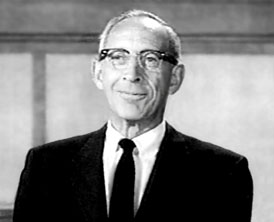
UPDATE: I’m adding actor Charles Lane to my list of oldtimers of interest. Lane, who celebrated his 100th birthday on January 26, made his first movie 1931 and (apparently) his last in 1995. That’s longevity for you. Lane’s career as a character actor in 254 feature films included roles in Mr. Deeds Goes to Town, Mr. Smith Goes to Washington, Arsenic and Old Lace, It’s a Wonderful Life, The Farmer’s Daughter, and The Music Man. Amazing. Here’s Charles Lane:

(Thanks to Dead or Alive? and its “People Alive over 85” feature for the list of oldtimers.)

But It’s Not Music

Tyler Cowen celebrates Pierre Boulez:

Today is his eightieth birthday, here are some appreciations and critiques. I side with George Benjamin:

…a rigorous compositional skill is coupled to an imagination of extraordinary aural refinement. Pli Selon Pli, Eclat/Multiples, the spectacularly inventive orchestral Notations, Explosante-Fixe – these are among the most beautiful works of our time. Boulez’s music has a very distinctive flavour – a love of rare timbres and spicy harmonies, a supreme formal elegance and a passion for virtuosity and vehement energy. The polemics that periodically surround him obscure the intensely poetic source of his musical vision.

But it’s not music. As Alex Ross, the music critic of The New Yorker, says:

Boulez arrived in Paris from the provinces in 1942….As a Schoenbergian atonalist,…he…found himself dissatisfied with twelve-tone music as it was then practiced. He was bothered by the fact that Schoenberg had radicalized harmony but still treated rhythm and form in traditional, even hackneyed ways. So he began working toward the idea of “serialism,” in which durations, dynamics, and instrumental attacks were organized along the same principles that governed the twelve-tone series. He achieved a mode of writing that was, if nothing else, internally consistent….

Even in the fifties and sixties, as Boulez abandoned strict serialism and began to write in a more fluid, impressionist style, he remained a composer of vibration, activity, unrest. He set the profile of “modern music” as it is popularly conceived and as it is still widely practiced—a rapid sequence of jabbing gestures, like the squigglings of a seismograph.

As I wrote a while back:

What happened around 1900 is that classical music became — and still is, for the most part — an “inside game” for composers and music critics. So-called serious composers (barring Gershwin and a few other holdouts) began treating music as a pure exercise in notational innovation, as a technical challenge to performers, and as a way of “daring” audiences to be “open minded” (i.e., to tolerate nonsense). But the result isn’t music, it’s self-indulgent crap (there’s no other word for it).

False Advertising

Prof. Gavin Kennedy of Edinburgh Business School, Heriot-Watt University, Edinburgh, Scotland — who presumes to lecture us about the meaning of Adam Smith’s writings — is in fact a professional bull**** artist:

His books on Negotiating include:

  • Managing Negotiations (co-author) (1980; 3rd edition, 1987 Business Books Ltd)
  • Everything is Negotiable (1983) (2nd edition, 1990 Arrow Books)
  • Negotiate Anywhere (1985 Arrow Books) Superdeal
  • How to Negotiate Anything (1986 Hutchinson)
  • The Economist Pocket Negotiator(1988 Basil Blackwell and the Economist Publications)

He is a co-author of the Negotiating Skills Portfolio (1986 Scotwork) and The Art of Negotiation, a Rank Training film, (1983) which is now available in the interactive format. He is also author of the video package: Everything is Negotiable, from Guild Sound, and Vision, 1987. Currently, he is working on Beyond Selling , a new training video for Rank. Professor Kennedy is a Fellow of the Chartered Institute of Marketing.

And what does Prof. Kennedy have to say about Adam Smith? Among Kennedy’s pearls of wisdom are these:

Smith never wrote a word about “capitalism”, yet he is hailed as the “high priest of capitalism”….He is alleged to be an advocate of “Laissez Faire” though he never used these words….

Yes, and the American Constitution doesn’t include the phrases “checks and balances” or “limited government,” but it demonstrably incorporates checks and balances and aims to limit the power of the central government.

Does the word “Bible” appear in the Bible? I doubt it. But the Bible is the Bible, nevertheless.

Poor Prof. Kennedy. If his name weren’t painted on his forehead he wouldn’t know who he is. Perhaps he doesn’t. Perhaps he thinks he’s Adam Smith.

The McCain-Feingold Insurrection

I have joined it. See the sidebar.

(Thanks to Josh’s Weblog for the tip.)

Why Fight for Life?

Those who resist the culture of death by decree do so for the same reason as those who resist taxation, regulation, and redistribution: to compromise is to surrender yet more of life — perhaps life itself — to the state.

Absolutism

The preservation of life and liberty necessarily requires a willingness to compromise on what — in the comfortable world of abstraction — seem to be inviolable principles. For example:

  • The First Amendment doesn’t grant anyone the right to go on the air to compromise a military operation by American forces.
  • An armed person or group of persons demonstrably bent on committing mayhem must be disarmed before the mayhem occurs, the Second Amendment notwithstanding.
  • Regardless of the Fourth, Fifth, and Sixth Amendments, a person who is caught in the act of transmitting a command to a terrorist cell should be deprived immediately of all the rights normally accorded a criminal suspect and questioned by the most effective means, for as long as it takes.

There can be no absolute liberties where life is at stake. Without life liberty is meaningless.