Race and Reason: The Achievement Gap — Causes and Implications

This is the third (and probably last) post in a series. The first two posts are “Race and Reason: The Derbyshire Debacle” and “Race and Reason: The Victims of Affirmative Action.” The purpose of the series, as suggested by the titles of the posts, is to inject reason (and facts) into the discussion of race. It has been done before, of course, but it cannot hurt to add another voice to the chorus of race-realism.

Yes, I am a race-realist. I believe (based on fact) that the socioeconomic divide between blacks and other racial-ethnic groups in America is primarily a product of genetic and cultural differences that work to the general disadvantage of blacks.

I know that some readers will quickly reject what I have to say, and a lot of them will do so as soon as they reach the end of the preceding paragraph. Why? Because the facts that I present will not comport with their view of the way the world ought to be. What is the “ought to be”? Briefly, it is an imaginary world in which all races are equal in ability, and in which cultural differences hove no bearing on economic achievement. If that is your view of the world, and if you are unwilling to consider a different, fact-based view, you may stop reading now and return to the land of unreality. Before you do that, however, I want you to be aware of one important thing: My own racial views are neutral; that is, I am unprejudiced toward blacks as blacks, though I am greatly opposed to pro-black policies (as opposed to race-neutral ones), which have been harmful to black Americans as well as their countrymen. For evidence of my race-neutrality, see the note at the bottom of this post.

Then there are those readers who might agree with the facts that I present here, but who prefer to ignore them because they might “feed racism” and be used as an excuse to treat blacks as second-class citizens. Racists need no help from me or anyone else who presents the facts about the causes of the socioeconomic divide in America. Racists are immune to facts and see the world as they think it ought to be, which is free of blacks or with blacks shunted to second-class citizenship. The socioeconomic gap between blacks and other Americans cannot be shrunk by ignoring the reasons for the gap. The gap can be shrunk (though never closed) only by understanding its real causes and adopting policies that address those causes.

A note about usage: It is my practice in this blog to put “liberal” (and its variants) in quotation marks when referring to modern liberalism, which is quite a different thing than classical liberalism. The difference, of course, is that modern liberals espouse statism. In particular, they believe that what is adjudged “good” by academic-political elites should be imposed on everyone by the state. And liberty — despite its etymological relationship to the word liberal — be damned. Thus the sarcastic quotation marks, or sneer quotes. In any event, I have, in this post, omitted the quotation marks for the sake of typographical neatness. Rest assured, however, that where I use “liberal” and its variants in this post I am referring to statists and statism.

Continued below the fold. Continue reading “Race and Reason: The Achievement Gap — Causes and Implications”

Homage to a Former Blogger

I learned recently, and belatedly, that Ilkka Kokkarinen — late of Sixteen Volts, The Fourth Checkraise, and The Wingnut Musings — has retired from blogging. Earlier this year, Kokkarinen published The Wingnut Musings, a no-longer-available book that seems to be drawn from his blog posts.

It is Kokkarinen’s misfortune (in my view) to live and work in uber-politically-correct Canada. (He teaches computer science at Ryerson University in Toronto.) A sad fate for someone like him, who seems born to coin politically incorrect mots justes by the bucketful. It was, evidently, political incorrectness that led to the shutting down of Sixteen Volts in 2006.

In 2007, however, Kokkarinen returned to blogging with The Fourth Checkraise. He took a brief break in 2010. At some point he renamed his blog The Wingnut Musings. That blog ended its run earlier this year. It is possible to find many snippets and chunks of Kokkarinen’s writings — just Google on Ilkka Kokkarinen or the names of his blogs (especially the last two). I cannot choose a favorite insight among his many incisive ones, but I can give you a typical one:

If national borders are bad and everyone should be allowed to live wherever they want regardless of their citizenship status and ethnic heritage… why do you think that it so wrong for some international corporation to move its factory (or some fat Western retiree to move his ass) to some poor Third World country?

You can find much more by Googling (e.g.,  this, this, and this).

It is fitting to close this homage to Kokkarinen by hoping that he will return to blogging (if he may), and by quoting the Amazon.com description of his book (a description that only he could have written):

Do you ever wonder how it is possible for all smart people to know that there is no such thing as intelligence? Or why the most progressive areas tend to have the highest levels of poverty, inequality and distrust, and even the progressives themselves do their best to insulate themselves and their loved ones from their ideas? Or why those eager to get the government out of our bedrooms seem to be equally adamant in giving the government the complete power over living rooms, kitchens, boardrooms, shop floors, classrooms and sports arenas? Or why the ideology that preaches environmentalism and localism but only when it comes to food can proudly extol its frequent flyer cosmopolitanism in all other things, while its twin ideology that preaches sustainability can barely sustain even itself more than one generation? Or how Wal-Mart, fast food, nuclear power, industrial farming and fishing, shopping malls, automobiles, suburbs, drug companies, oil, cheap airline travel and mass tourism can be targets to so much of intellectual disdain even though they have achieved more than all intellectuals together in making the average person wealthier, healthier and more free than the richest emperors of the past? This collection of short but all the more provocative essays throws rocks at many ideas that dominate the modern discourse but ultimately boil down to nothing but narrow group shibboleths for the social class that is anxious of its status, its position ever more precarious due to societal changes that have already made it obsolete. Their ideas are not meant to inform but to enforce conformity and groupthink, and to distinguish the anointed from the lower orders that they are not wealthy enough to avoid being mistaken for. They tolerate no competition or criticism, but form a pervasive and suffocating bubble that always provides the default answer for everything. Even worse, intentionally advocating policies that are harmful for weaker people serves as an imaginary status signal that has detrimental effects on society and those unable to escape their very real consequences… and this group will include many who blithely assumed that they would not be part of it, but will learn differently soon enough. A vaccination against many mind viruses that people believe not because they have thought through the facts and logic but merely because all nice people they know proclaim to believe these things, this book is guaranteed to annoy those on the left side of the political spectrum, and with its spirit of raucous zingers sprinkled amidst blunt observations, both educate and entertain those on the right side of ideas and history.

The force be with you, Ilkka.

The U.S. Supreme Court: Lines of Succession

I have added a page of that title to this blog. Readers may access it through a link near the top of the left sidebar. The page includes a large table that gives the dates of service and lines of succession for every person who has served on the U.S. Supreme Court. This is the text that accompanies the table:

Though there are now only nine justices and nine seats on the Supreme Court, this table lists eleven lines of succession. There is one for the chief justiceship and ten for the associate justiceships that Congress has created at one time an another by changing the size of the Court. In other words, two associate justiceships have “died out” in the course of the Court’s history. The present members of the Court, in addition to the chief justice, hold the first, second, third, fourth, sixth, eighth, ninth, and tenth associate justiceships created by Congress.

The name of every justice is associated with the name of the president who nominated that person to a justiceship (chief or associate). The first date under a justice’s name is the date on which he or she took the oath of office (or was appointed in a recess of the Senate). There is a second date below the name of every justice (except for the nine now serving). That date is the date on which the person left the Court, by death or resignation, and that date may be (and usually is) associated with a president other than one who nominated the justice. The date of a justice’s departure from the Court usually appears directly above the name of the next justice in the line of succession for the same seat on the Court.

Because there is a separate line of succession for the chief justiceship, persons who were already on the Court and then elevated to the chief justiceship are listed in two different places. Also, the names of a few justices appear in more than one place because they served non-consecutive terms on the Court.

Obamacare and Zones of Liberty

Uwe Reinhardt, a professor of economics at Princeton, offers this tantalizing idea:

Let us set up two distinct systems for health care within our nation. Call one the Social Solidarity system and the other the Libertarian system. Ask young people — at age 25 or so — to choose one or the other.

People joining the Social Solidarity system would know that they will be asked to subsidize their less fortunate fellow citizens in health care through taxes or premiums or both. They would also know, however, that the community will take care of them, and they will not go broke, should serious illness befall them.

People choosing the Libertarian system would not have to pay taxes to subsidize other people’s health care, and they would pay actuarially fair health insurance premiums — low for healthy people and high for sicker people.

Libertarians, however, would not be allowed to come into the Social Solidarity system, unless they were so pauperized as to qualify for Medicaid. Hospitals would have every right to use tough measures to make them pay their medical bills in full, to prevent freeloading at the expense of others.

Furthermore, care would have to be taken to prohibit the kind of estate planning that now often permits well-to-do individuals to take advantage of Medicaid benefits. [“Health Care: Solidarity vs. Rugged Individualism,” in Economix, The New York Times, June 29, 2012]

Reinhardt’s suggestion has much merit — his loaded labels aside. The “social solidarity” model really amounts to freeloading, or the futile attempt to freeload. The “rugged individualism” model really amounts to a preference for making one’s own decisions instead of having decisions rammed down one’s throat by government — in other words, a preference for liberty.

But, as I say, the suggestion has merit. And the merit extends far beyond the matter of health care. As John Goodman puts it, “why restrict the choice to health care?”

Which leads to my immodest proposal for zones of liberty:

The 50 States (and their constituent municipalities) are incompatible with the kind of federalism envisioned by the Framers. Today’s State and municipal governments are too bureaucratic and too beholden to special interests; they have become smaller versions of the federal government. For, in today’s populous States and municipalities, coalitions of minority interests are able to tyrannize the populace. (The average State today controls the destinies of 25 times as many persons as did the average State of 1790.) Those Americans who “vote with their feet” through internal migration do not escape to regimes of liberty so much as they escape to regimes that are less tyrannical than the ones in which they had been living.

The kind of federalism envisioned by the Framers — and the kind of federalism necessary to liberty — would require the devolution to small communities and neighborhoods of all but a few powers: war-making, the conduct of foreign affairs, and the regulation of inter-community commerce for the sole purpose of ensuring against the erection of barriers to trade. With that kind of federalism, the free markets of ideas and commerce would enable individuals to live in those communities and neighborhoods that best serve their particular conceptions of liberty.

What do I have in mind? A zone of liberty would be something like a “new city” — with a big difference. Uninhabited land would be acquired by a wealthy lover (or lovers) of liberty, who would establish a development authority for the sole purpose of selling the land in the zone. The zone would be populated initially by immigrants from other parts of the United States. The immigrants would buy parcels of land from the development authority, and on those parcels they could build homes or businesses of their choosing. Buyers of parcels would be allowed to attach perpetual covenants to the parcels they acquire, and to subdivide their parcels with (or without) the covenants attached. All homes and businesses would have to be owned by residents of the zone, in order to ensure a close connection between property interests and governance of the zone.

Infrastructure would be provided by competing vendors of energy, telecommunications, and transportation services (including roads and their appurtenances). Rights-of-way would be created through negotiations between vendors and property owners. All other goods and services — including education and medical care — would be provided by competing vendors. No vendor, whether or not a resident of the zone, would be subject to any regulation, save the threat of civil suits and prosecution for criminal acts (e.g., fraud). Any homeowner or business owner could import or export any article or service from or to any place, including another country; there would be no import controls, duties, or tariffs on imported or exported goods and services.

The zone’s government would comprise an elected council, a police force, and a court (all paid for by assessments based on the last sale price of each parcel in the zone). The police force would be empowered to keep the peace among the residents of the zone, and to protect the residents from outsiders, who would be allowed to enter the zone only with the specific consent of resident homeowners or business owners. Breaches of the peace (including criminal acts) would be defined by the development of a common law through the court. The elected council (whose members would serve single, four-year terms) would oversee the police force and court, and would impose the assessments necessary to defray the costs of government. The council would have no other powers, and it would be able to exercise its limited powers only by agreement among three-fourths of the members of the council. The members, who would not be salaried, would annually submit a proposed budget to the electorate, which would have to approve the budget by a three-fourths majority. The electorate would consist of every resident who is an owner or joint owner of a residence or business (not undeveloped land), and who has attained the age of 30.

A zone of liberty would not be bound by the laws (statutory and otherwise) of the United States, the individual States, or any of political subdivision of a State. (The federal government could impose a per-capita tax on residents of the zone, in order to defray the zone’s per-capita share of the national budget for defense and foreign affairs.) The actions of the zone’s government would be reviewable only by the U.S. Supreme Court, and then only following the passage of a bill of particulars by two-thirds of each house of Congress, and with  the concurrence the president. (A zone could be abolished only with the approval of four-fifths of each house of Congress, and with the concurrence of the president.)

Absent such an experiment, I see only one hope for liberty — albeit a slim one — a Supreme Court that revives the Constitution. Politics as usual will only take us further down the road to serfdom.

I wrote that two years ago, and it is based on a post that is now more than six years old. Much has happened since, almost all of it to the detriment of liberty. Would our rulers dare allow at least a few of us to undertake an experiment in liberty? It is doubtful, because they fear the possibility that the experiment would succeed. And if it did, they would face the prospect of demands for more of the same. And where would that leave them? Without vast power. Scratch the idea of asking the federal government or any State government for a zone of liberty.

But maybe it isn’t necessary to ask. Suppose that a new (unincorporated) city were to spring up in, say, an isolated county with a friendly government. Suppose, further, that the new city’s citizens were to do nothing to organize themselves but (a) set up a police department and (b) hire legal counsel to ensure that the residents obey those State and federal laws that they must obey. And suppose that the city were to be an economic and social success, despite the absence of all of the codes and ordinances that ensnare the residents and businesses of today’s typical city.

Isn’t it worth a try? And doesn’t it beat trying to entice libertarians to move to New Hampshire (brrr!) or to live in international waters (pirates off the bow)?

Obama: Not Bailed out by CJ Roberts

UPDATED 07/03/12

Chief Justice Roberts’s bailout of Obama care — a.k.a. CJ Roberts’s sellout — may have brought some wavering believers in big government back into the corral, but probably not enough of them to rescue Obama from defeat at the hands of Mitt Romney. I continue to forecast a Romney win over Obama, the strong possibility of a GOP takeover of the Senate, and approximately no change in the GOP’s large House majority (see left sidebar).

Further evidence for my forecasts, is found in Scott Rasmussen’s polls about the “popularity” (i.e., unpopularity) of Obama and Obamacare:


Sources: Rasmussen Reports, Obama Approval Index History and Health Care Law.

The latest poll results show a net disapproval rating of -18 for Obama (as of July 3) and a net disapproval rating of -14 for Obamacare (as of June 29-30, the two days immediately following CJ Roberts’s bombshell).

Obama’s net disapproval rating measures the percentage of respondents who strongly approve of his performance, minus the percentage of respondents who strongly disapprove of his performance. It has been three years since the arithmetic yielded a positive number, which is why I usually refer to the poll results as Obama’s disapproval or unpopularity rating.

The ratings for Obamacare are constructed as follows: For the period before Obamacare was signed into law on March 23, 2010, the numbers represent the percentage of respondents who strongly favored the passage of Obamacare, less the percentage of respondents who strongly opposed the passage of Obamacare. From the enactment of Obamacare to the present, the numbers represent the percentage of respondents who have strongly opposed the repeal of Obamacare, minus the percentage of respondents who have strongly favored the repeal of Obamacare.

Needless to say, Obamacare has always been in negative territory. In the latest poll (June 29-30) it gained only one percentage point from the poll conducted a week earlier. The recent uptick began in May, probably as a result of the intense p.r. campaign conducted by Obama and other Democrats (most notably Sen. Patrick Leahy, chairman of the Senate Judiciary Committee).

The save-Obamacare campaign may have worked on CJ Roberts, but its overall effect has been small. In fact, the recent gain in popularity is minuscule in comparison to the bandwagon-effect gain that began in January 2010 — when it became clear that Obamacare would become law — and continued until the eve of enactment on March 23, 2010.

The real silver lining in the Supreme Court’s Obamacare decision — if there is any silver lining — is that the Obamacare target still hangs from Obama’s neck.

Another Thought or Two about the Obamacare Decision

In the preceding post, I alluded to commentators who found silver linings in Chief Justice Roberts’s alignment with the Court’s liberal wing in upholding the individual mandate. I feel compelled to say more about the supposed silver linings.

I begin with Ilya Somin, writing at The Volokh Conspiracy:

Although the Supreme Court upheld the individual mandate as an exercise of the Tax Power, a majority of the justices also ruled that it is not a legitimate exercise of Congress’ powers under the Commerce Clause. In doing so, they endorsed the plaintiffs’ argument that the individual mandate exceeds the scope of the Commerce power because it does not regulate “economic activity,” but instead targets inactivity.

But, as Somin points out:

The problem is that Roberts then proceeds to “empower Congress to make those decisions [to buy health insurance]” for us under the guise of imposing taxes.

Why did Roberts not simply join the four dissenting justices and throw out Obamacare while making clear the limits on Congress’s Commerce Clause power? The same (hypothetical) majority opinion also would have found unconstitutional the feds’ expansion of Medicaid.

Sean Trende, writing at RealClearPolitics, has much to say in Roberts’s defense, including this:

Thursday’s health care ruling shocked most observers. It upheld the health care law as constitutional. But rather than find that the law was justified under Congress’ authority to regulate commerce, it instead found it was justified only under Congress’ power to tax. It also imposed limits upon Congress’ ability to condition spending grants to the states upon those states taking certain steps. To my knowledge, former Solicitor General Walter Dellinger was the only person who thought that the court would ultimately rule on those grounds. I certainly was surprised.

Even more surprising, the decision was 5-4, and Chief Justice John Roberts authored the majority opinion upholding the law, rather than Anthony Kennedy. Conservatives are flabbergasted by the chief’s decision (or, in their view, betrayal)….

But I think if you scratch the surface here, Roberts embarked upon a gambit much like [Chief Justice John] Marshall did 200 years ago [in Marbury v. Madison]

Let’s start with Roberts’ presumed crass political considerations. Namely, as a conservative Republican, he would not want the health care law implemented….

If Republicans win the Senate and presidency, the law is doomed. They will use reconciliation to repeal it, or to gut it….

And the decision may help to ensure a GOP sweep in November by energizing unenthusiastic conservatives and fiscally prudent independents.

Trende continues:

Five justices just signaled to lower courts that, but for the unique taxation power argument, they were prepared to rule that a major act of Congress that plainly touched upon economic activity exceeded Congress’ commerce powers….

The most important aspect of the ruling, however, comes with respect to the spending clause. Seven justices just agreed to real limits on Congress’ ability to attach strings to legislation. This is significant. Until today, these limits were hypothetical, and it was believed that Congress could, for example, remove all Medicaid funding as a punishment for a state’s refusal to comply with the Medicaid expansion. I did not expect the court to rule the way it did here, much less to do so by a 7-2 vote….

Roberts has basically … [i]nsulate[d] the court from criticism of bald partisan bias and infidelity to, as he once put it, calling balls and strikes. He’s earning plaudits from the left. Though the right is grumbling, I suspect they won’t be doing so for long.

This is not the last battle to be fought on the Roberts Court. It might not even be the most significant. In the next term, for example, the court is being asked to reconsider its affirmative action jurisprudence. There are almost certainly five votes to overturn court rulings from a decade ago upholding some forms of affirmative action.

Following that, the court will face a variety of tough decisions. There are probably five votes to uproot the entire campaign finance system, a decision that would make Citizens United look like small fry. And there are probably five votes to invalidate Section 5 of the Voting Rights Act.

I don’t think invalidating the ACA would have affected the court’s legitimacy that much, at least outside of liberals in the legal academy. But taken as a whole, this series of decisions really might have irrevocably hurt the court’s reputation for independence.

But Roberts has something of an ace up his sleeve now. Accusations of hyper-partisanship are much harder to make against him, and he has more freedom to move on these issues….

Yes, but Roberts and his conservative brethren have life tenure, and what the public thinks about the Court surely is less important that what the Court does. Giving ground to seem “nice” is a classic conservative blunder.

Perhaps I can find solace in a column by Tom Socca, writing at Slate:

There were two battles being fought in the Supreme Court over the Affordable Care Act. Chief Justice John Roberts—and Justice Anthony Kennedy—delivered victory to the right in the one that mattered….

The scholars expected to see the court gut existing Commerce Clause precedent and overturn the individual mandate in a partisan decision: Five Republican-appointed justices voting to rewrite doctrine and reject Obamacare; four Democratic-appointed justices dissenting.

Roberts was smarter than that. By ruling that the individual mandate was permissible as a tax, he joined the Democratic appointees to uphold the law—while joining the Republican wing to gut the Commerce Clause (and push back against the necessary-and-proper clause as well)….

This is a substantial rollback of Congress’ regulatory powers, and the chief justice knows it. It is what Roberts has been pursuing ever since he signed up with the Federalist Society. In 2005, Sen. Barack Obama spoke in opposition to Roberts’ nomination, saying he did not trust his political philosophy on tough questions such as “whether the Commerce Clause empowers Congress to speak on those issues of broad national concern that may be only tangentially related to what is easily defined as interstate commerce.” Today, Roberts did what Obama predicted he would do.

Roberts’ genius was in pushing this health care decision through without attaching it to the coattails of an ugly, narrow partisan victory. Obama wins on policy, this time. And Roberts rewrites Congress’ power to regulate, opening the door for countless future challenges. In the long term, supporters of curtailing the federal government should be glad to have made that trade.

This strikes me as more of the same. But perhaps Trende and Socca are on to something. Roberts, by reaching out the the Court’s left, may have gained useful allies for future fights. Kennedy, despite his surprising (to me) absolute opposition to Obamacare, can and will stray off the conservative reservation without warning.

There is also the important and still-to-be-decided issue of Obamacare’s effects on religious freedom. This is from a post by Sarah Marshall and Jennifer Torre at The Foundry:

…The Court’s ruling to uphold Obamacare doesn’t mean the law has cleared its legal challenges, however. Twenty-three federal lawsuits against Obamacare’s Health and Human Services (HHS) mandate—which goes into effect on August 1—now take on added urgency….

The HHS anti-conscience mandate is a completely separate rule from the individual mandate, and its constitutionality was not considered by the Supreme Court in the cases decided today. The HHS mandate, along with the individual mandate and the rest of Obamacare, still presents a clear threat to individual and religious liberty. Nothing short of full repeal of the statute will adequately protect our freedoms from this federal overreach.

The next legal battleground against Obamacare resides in the fight to protect employers from the coercive requirement to provide coverage of abortion-inducing drugs, contraception, and sterilization under the HHS mandate….

Obamacare’s anti-conscience mandate affords the narrowest religious exemption in federal law, effectively covering only formal houses of worship. Countless other religious employers, like schools, hospitals, and religious charities, are forced to provide coverage for the mandated services despite moral or religious objections—simply because they step outside the four walls of a church to serve others.

Creating the choice to violate conscience or forgo providing health insurance entirely—and risk hefty fines under Obamacare—the HHS mandate profoundly and adversely affects many employers and the people they serve….

Perhaps this is one of the fights anticipated by Roberts. And perhaps he wants to win it by more than 5-4 (or to ensure that he wins it). Robert John Araujo of Mirror of Justice has some related thoughts:

[The following observation of Justice Ginsburg and her colleagues in their partial concurrence and dissent might suggest that the debate and probably the litigation involving the legality of this legislation will continue for some time to come. As she says about the provisions of the Constitution that exist to check Congressional overreaching:

A mandate to purchase a particular product would be unconstitutional if, for example, the edict impermissibly abridged the freedom of speech, interfered with the free exercise of religion, or infringed on a liberty interest protected by the Due Process Clause.

…[I]t would appear that this subject which Justice Ginsburg, and those who agree with her, has identified may well be in the courts in the not-too-distant future [as discussed in the preceding quotation].

Could Roberts be angling to enlist Ginsburg as an ally in the looming freedom-of-conscience cases? That strikes me as a long shot because Ginsburg — “good” statist that she is, will no doubt find a way to wiggle out of her implied commitment to the free exercise of religion. But Roberts’s real targets may be Justices Breyer and Kagan, who joined his opinion — including the ruling that the expansion of Medicaid was unduly coercive of the States.

If Roberts has made the political calculations attributed to him — and I wouldn’t be surprised if he has — my only wish is that his calculations prove correct. If they are not, he simply will have wasted what would have been a perfectly good majority opinion, namely, the dissent of Justices Scalia, Kennedy, Thomas, and Alito.

Obamacare, Slopes, Ratchets, and the Death Spiral of Liberty

Today’s ruling by the U.S. Supreme Court in the matter of Obamacare (National Federation of Business et al. v. Sebelius, Secretary of Health and Human Services, et al.) is portrayed by some commentators as a victory of sorts for limited government. Consider the following excerpts of the Syllabus:

[T]he individual mandate is not a valid exercise of Congress’s power under the Commerce Clause and the Necessary and Proper Clause….

The power to regulate commerce presupposes the existence of commercial activity to be regulated. This Court’s precedent reflects this understanding: As expansive as this Court’s cases construing the scope of the commerce power have been, they uniformly describe the power as reaching “activity.”…  The individual mandate, however, does not regulate existing commercial activity. It instead compels individuals to become active in commerce by purchasing a product, on the ground that their failure to do so affects interstate commerce.

Construing the Commerce Clause to permit Congress to regulate individuals precisely because they are doing nothing would open a new and potentially vast domain to congressional authority. Congress already possesses expansive power to regulate what people do. Upholding the Affordable Care Act under the Commerce Clause would give Congress the same license to regulate what people do not do. The Framers knew the difference between doing something and doing nothing. They gave Congress the power to regulate commerce, not to compel it. Ignoring that distinction would undermine the principle that the Federal Government is a government of limited and enumerated powers. The individual mandate thus cannot be sustained under Congress’s power to “regulate Commerce.”…

Nor can the individual mandate be sustained under the Necessary and Proper Clause as an integral part of the Affordable Care Act’s other reforms. Each of this Court’s prior cases upholding laws under that Clause involved exercises of authority derivative of, and in service to, a granted power…. The individual mandate, by contrast, vests Congress with the extraordinary ability to create the necessary predicate to the exercise of an enumerated power and draw within its regulatory scope those who would otherwise be outside of it. Even if the individual mandate is “necessary” to the Affordable Care Act’s other reforms, such an expansion of federal power is not a “proper” means for making those reforms effective.

So far, so good, but

for the reasons explained, the Commerce Clause does not give Congress that power.It is therefore necessary to turn to the Government’s alternative argument: that the mandate may be upheld as within Congress’s power to “lay and collect Taxes.”… In pressing its taxing power argument, the Government asks the Court to view the mandate as imposing a tax on those who do not buy that product. Because “every reasonable construction must be resorted to, in order to save a statute from unconstitutionality,”… the question is whether it is “fairly possible” to interpret the mandate as imposing such a tax….

The Affordable Care Act describes the “[s]hared responsibility payment” as a “penalty,” not a “tax.” That label is fatal to the application of the Anti-Injunction Act. It does not, however, control whether an exaction is within Congress’s power to tax. In answering that constitutional question, this Court follows a functional approach,“[d]isregarding the designation of the exaction, and viewing its substance and application.”…

Such an analysis suggests that the shared responsibility payment may for constitutional purposes be considered a tax.

What a strange tax it is that must be paid to the government in order to breathe life into a program for which there is no constitutional remit in the “limited and enumerated powers” of the government. The government’s powers to tax and spend are not open-ended; they must serve a constitutional purpose.

There is more:

[T]he Medicaid expansion violates the Constitution by threatening States with the loss of their existing Medicaid funding if they decline to comply with the expansion….

The Spending Clause grants Congress the power “to pay the Debts and provide for the . . . general Welfare of the United States.”… Congress may use this power to establish cooperative state-federal Spending Clause programs. The legitimacy of Spending Clause legislation, however, depends on whether a State voluntarily and knowingly accepts the terms of such programs…. When Congress threatens to terminate other grants as a means of pressuring the States to accept a Spending Clause program, the legislation runs counter to this Nation’s system of federalism….

Under the Affordable Care Act, Medicaid is transformed into a program to meet the health care needs of the entire nonelderly population with income below 133 percent of the poverty level. A State could hardly anticipate that Congress’s reservation of the right to “alter” or “amend” the Medicaid program included the power to transform it so dramatically. The Medicaid expansion thus violates the Constitution by threatening States with the loss of their existing Medicaid funding if they decline to comply with the expansion….

The constitutional violation is fully remedied by precluding the Secretary from … withdraw[ing] existing Medicaid funds for failure to comply with the requirements set out in the expansion.

Again, gratifying as the holding may be to some parties, it assumes (and therefore affirms) the constitutionality of an act that “meet[s] he health care needs of the entire nonelderly population with income below 133 percent of the poverty level.” Where does the Constitution set forth Congress’s power to do any such thing?

My outrage is echoed in the dissent by Justices Scalia, Kennedy, Thomas, and Alito; for example:

The striking case of Wickard v. Filburn, … , which held that the economic activity of growing wheat, even for one’s own consumption, affected commerce sufficiently that it could be regulated, always has been regarded as the ne plus ultra of expansive Commerce Clause jurisprudence. To go beyond that, and to say the failure to grow wheat (which is not an economic activity, or any activity at all) nonetheless affects commerce and therefore can be federally regulated, is to make mere breathing in and out the basis for federal prescription and to extend federal power to virtually all human activity.

As for the constitutional power to tax and spend for the general welfare: The Court has long since expanded that beyond (what Madison thought it meant) taxing and spending for those aspects of the general welfare that were within the Federal Government’s enumerated powers… Thus, we now have sizable federal Departments devoted to subjects not mentioned among Congress’ enumerated powers, and only marginally related to commerce: the Department of Education, the Department of Health and Human Services, the Department of Housing and Urban Development. The principal practical obstacle that prevents Congress from using the tax-and-spend power to assume all the general-welfare responsibilities traditionally exercised by the States is the sheer impossibility of managing a Federal Government large enough to administer such a system. That obstacle can be overcome by granting funds to the States, allowing them to administer the program. That is fair and constitutional enough when the States freely agree to have their powers employed and their employees enlisted in the federal scheme. But it is a blatant violation of the constitutional structure when the States have no choice.

The Act before us here exceeds federal power both in mandating the purchase of health insurance and in denying nonconsenting States all Medicaid funding. These parts of the Act are central to its design and operation, and all the Act’s other provisions would not have been enacted without them. In our view it must follow that the entire statute is inoperative.

Amen to that. And the same goes for Social Security and Medicare. (My words, not the words of the dissenting justices, unfortunately.)

Where does today’s ruling leave Americans? Further down the slippery slope to serfdom. The “slippery slope” is

an argument for the likelihood of one event or trend given another. Invoking the “slippery slope” means arguing that one action will initiate a chain of events that will lead to a (generally undesirable) event later. The argument is sometimes referred to as the thin end of the wedge or the camel’s nose.

That is to say, once it became accepted that the federal government could establish programs like Social Security, Medicare, and Medicaid, it became relatively easy to expand those programs to encompass the “national emergency” of the day. And so, the stage has been set for  government-run health care in the United States, with all that goes with it: long queues, worse care, rationing, and death panels, and more.

Another metaphor for the inexorable engrossment of state power is the ratchet effect,

the commonly observed phenomenon that some processes cannot go backwards once certain things have happened, by analogy with the mechanical ratchet that holds the spring tight as a clock is wound up.

The acceptance of the status quo (Social Security, Medicare, and Medicaid) as a baseline sets the stage for a ratcheting up to a new, more expansive and expensive status quo (Obamacare), on the ground that if X is good, X+ will be better. That X is good and X+ will be better are articles of faith, which become widely accepted without serious consideration of the burden they impose on the most productive citizens, the negative effect of that burden on the nation’s economy, or the liberty of the people. It has been heartening that most Americans have opposed Obamacare, in the main because of the perceived insult to liberty known as the individual mandate. But, alas, a majority of the Supreme Court has found a legalistic way in which to ratchet up the mainspring of government power.

Perhaps the best metaphor for today’s ruling is the death spiral. Reliance on government usually creates more problems than it solves. But, having become accustomed to relying on government, most Americans rely on government to deal with the problems caused by government’s previous enactments. That only makes matters worse, which causes Americans to rely further on government, etc., etc. etc.

In the case of Obamacare, what we have is a reaction to the high costs of medical services and the presumed failure of markets to provide adequate health care for large chunks of the population. It escapes the notice of most Americans — and is of no interest to most politicians — that the high costs and supposed “market failures” are due to government action: tax subsidies for employer-provided insurance (which results in an artificially high demand for medical services); mandated insurance coverages; barriers to interstate competition in insurance markets; the FDA’s long, death-inducing approval process for new drugs; the AMA’s government-sponsored stranglehold on the training and licensing of doctors; a similar stranglehold on the establishment of health-care facilities; and on and on.This is the real “national emergency,” which today’s majority blithely ignored in its quest to find an extra-constitutional (i.e., precedential) basis for the further expansion of government power.

It is long past time for Americans to declare their independence from the legislative, executive, and judicial tyranny under which we labor for the benefit of politicians, bureaucrats, and freeloaders.

Directly related posts:
Fear of the Free Market — Part I
Fear of the Free Market — Part II
Fear of the Free Market — Part III
Free-Market Healthcare
Social Security Is Unconstitutional
Rationing and Health Care
The Perils of Nannyism: The Case of Obamacare
More about the Perils of Obamacare
Health-Care Reform: The Short of It
The Unconstitutionality of the Individual Mandate
Does the Power to Tax Give Congress Unlimited Power?
Does Congress Have the Power to Regulate Inactivity?

Posts about government power, its effects, and ways to combat it:
FDR and Fascism
The People’s Romance
Fascism
Fascism with a “Friendly” Face
Secession
Democracy and Liberty
The Interest-Group Paradox
Is Statism Inevitable?
Inventing “Liberalism”
The Price of Government
A New, New Constitution
Zones of Liberty
Fascism and the Future of America
Secession Redux
A New Cold War or Secession?
The Price of Government Redux
The Real Constitution and Civil Disobedience
The Near-Victory of Communism
A Declaration of Independence
The Mega-Depression
Tocqueville’s Prescience
First Principles
As Goes Greece
Accountants of the Soul
Ricardian Equivalence Reconsidered
Zones of Liberty
The Constitution: Original Meaning, Corruption, and Restoration
Society and the State
I Want My Country Back
Estimating the Rahn Curve: Or, How Government Inhibits Economic Growth
The Bowles-Simpson Report
The Bowles-Simpson Band-Aid
Regime Uncertainty and the Great Recession
Re-Forming the United States
The Stagnation Thesis
Taxing the Rich
More about Taxing the Rich
America’s Financial Crisis Is Now
The Southern Secession Reconsidered
A Declaration of Civil Disobedience
The Repealer
Regulation as Wishful Thinking
The Real Multiplier
Vulgar Keynesianism and Capitalism
Why Are Interest Rates So Low?
The Commandeered Economy
Estimating the Rahn Curve: A Sequel
In Defense of the 1%
The Real Multiplier (II)
Lay My (Regulatory) Burden Down
The Burden of Government
Constitutional Confusion
Reclaiming Liberty throughout the Land
Economic Growth Since World War II
More Evidence for the Rahn Curve

In Mourning

I am in mourning for liberty in the United States, which has been killed by today’s ruling by the U.S. Supreme Court. Thus the black band at the top of this blog.

More to come.

UPDATE (09/06/13)

I’ve gone back to red because I’m fighting mad, and plan to stay that way.

“Big SIS”: A Review

“Big SIS” is the special-interest state, of which James V. DeLong writes in Ending “Big SIS” (The Special Interest State) and Renewing the American Republic.It is a non-fiction horror story, one that should outrage every reader. A reader must be impervious facts and logic if he gets very far into “Big SIS” without grasping the direness of America’s present condition.

What is that condition? It is enslavement (not too strong a word) to the regulatory state. DeLong does an admirable job of describing the growth and entrenchment of the regulatory state (chapter 2). But the most compelling parts of his thoroughly factual narrative arrive with his documentation of the costs of the regulatory state and his enumeration of example after example of its lunacies. If you have a visceral feeling that government in the United States has become entirely too intrusive in its methods and perverse in its results, DeLong’s book will confirm that feeling and give you plenty of weapons with which to refute those who believe in government as a disinterested, omniscient force for good.

If chapters 2 and 3 outrage you, as they should, surely chapter 4 will depress you. There, DeLong enumerates and explicates the many reasons that the regulatory state’s death grip on America is unlikely to be loosened. DeLong holds out some hope for change in chapter 5, where he discusses many ways in which the death-grip might be loosened.

But I am less sanguine than DeLong seems to be about the possible efficacy of his proposed counter-measures. The forces that DeLong describes in chapter 4 are likely to prove too strong to be defeated in gentlemanly fashion. In the end, it may well come to non-gentlemanly counter-measures, something along the lines of a new Declaration of Independence from the imperial state that has arisen in Washington.

If it does come to that, DeLong’s catalog of imperial acts and their vile consequences would serve splendidly as a replacement for the original Declaration’s enumeration of King George III’s “repeated injuries and usurpations, all having in direct object the establishment of an absolute Tyranny.”

Related posts:
FDR and Fascism
The People’s Romance
Fascism
Fascism with a “Friendly” Face
Secession
Democracy and Liberty
The Interest-Group Paradox
Is Statism Inevitable?
Inventing “Liberalism”
The Price of Government
A New, New Constitution
Zones of Liberty
Fascism and the Future of America
Secession Redux
The Indivisibility of Economic and Social Liberty
A New Cold War or Secession?
The Price of Government Redux
The Real Constitution and Civil Disobedience
The Near-Victory of Communism
A Declaration of Independence
The Mega-Depression
Tocqueville’s Prescience
First Principles
As Goes Greece
Accountants of the Soul
Ricardian Equivalence Reconsidered
Zones of Liberty
The Constitution: Original Meaning, Corruption, and Restoration
Estimating the Rahn Curve: Or, How Government Inhibits Economic Growth
The Bowles-Simpson Report
The Bowles-Simpson Band-Aid
Regime Uncertainty and the Great Recession
Re-Forming the United States
More about Taxing the Rich
America’s Financial Crisis Is Now
The Southern Secession Reconsidered
A Declaration of Civil Disobedience
The Repealer
Regulation as Wishful Thinking
The Real Multiplier
Vulgar Keynesianism and Capitalism
Why Are Interest Rates So Low?
The Commandeered Economy
Estimating the Rahn Curve: A Sequel
In Defense of the 1%
The Real Multiplier (II)
Lay My (Regulatory) Burden Down
The Burden of Government
Constitutional Confusion
Reclaiming Liberty throughout the Land
Economic Growth Since World War II
More Evidence for the Rahn Curve

Life’s Lessons: Part One

It is good to be trusting, as long as you first verify the trustworthiness of those in whom you place your trust.

Perseverance yields many rewards, not the least of which is the satisfaction of getting things done, and done well.

Impatience often results in making decisions based on too little information, which is to say that impatience usually leads to mistakes.

Rage can be useful, if it is well controlled and carefully targeted. That rules out spontaneous rage as a useful emotion.

Emotion is more powerful than reason. Emotion is more easily communicated and is often more persuasive than reason. Those who try to rely solely on reason usually overlook the power of emotion, and they fail to see it at work in themselves.

Making a commitment and honoring it is good practice for marriage.

Love changes as one grows older. It becomes less self-centered and more truly reciprocal; that is, it becomes less fragile.

It is good to admit mistakes, if only to oneself. Those who acknowledge their mistakes — inwardly, at least — are able to learn from them.

A deliberate offense against another person is not a “mistake,” and should never be excused as one. The number of such “mistakes” seems to mount as the years pass and Americans grow more self-centered and less aware or caring about the effects of their actions on others.

Caring is a personal virtue, and it is demonstrated by a person’s voluntary behavior toward others, away from the glare of publicity. The advocacy of  “compassionate” schemes that involve coercion by government is a demonstration of self-centeredness, not caring.

Everything that makes government stronger weakens its subjects, even those who are the purported beneficiaries of its largesse. This is a lesson that I did not begin to learn until I was in my 30s. It is, unfortunately, a lesson that most Americans seem unable or unwilling to learn.

A mind that has not been stretched by constant learning and hard thinking becomes flabby and betrays its owner. It becomes a warehouse of unreliable memories instead of a machine that produces rational thoughts and feasible plans.

Sometimes I wish I had known in my 20s what I know in my 70s. Then it occurs to me that one of the joys of growing older is the learning of life’s lessons.

Obesity and Statism

Richard Posner, a leader of the law and economics movement, exposes himself as an out-and-out statist:

I am not particularly interested in saving the obese from themselves. I am concerned about the negative externalities of obesity—the costs that the obese impose on others. Some of the others are the purchasers of health insurance and the taxpayers who pay for Medicaid and Medicare and social security disability benefits…. Obesity kills, but slowly, and en route to dying the obese run up heavy bills that, to a great extent, others pay.

Even more serious are the harmful effects of obesity, and of the food habits that contribute to it, on children…. Children who grow up in a household of obese parents (often there is just one parent, and she is obese) very often acquire the same bad habits.

One might think that since most parents are altruistic toward their children, parents would strive to prevent their children from acquiring their bad habits. But if they don’t know how to avoid becoming obese themselves, it is unlikely that they know how to prevent their children from becoming obese.

Then too, the more people in one’s family or circle of friends or coworkers who are obese, the more obesity seems normal. This is an implication of the fact that homo sapiens is a social animal. We want to blend in with our social peers….

Bloomberg’s proposal is widely criticized, not only on the shallow ground that it interferes with freedom of choice, but on the more substantial ground that it can’t have much effect, since the same sugared drinks can be sold in smaller containers…. [I]f the sale of sugared drinks in big containers is forbidden, there will be at least a slight drop in the purchase of those drinks and hence in their consumption….

More important is the symbolic significance of Bloomberg’s proposal (if it is adopted and enforced). It is an attention getter! It tells New Yorkers that obesity is a social problem warranting government intervention, and not just a personal choice.

Think of the history of cigarette regulation…. Cigarette smoking fell, from an average of 40 percent of the adult population in the 1970s to 19 percent today. There is some grumbling about this massive governmental intrusion into consumer choice, but very little. I certainly am not grumbling about it.

If there is to be a parallel movement to reduce obesity, it has to start somewhere. Maybe it will start with Bloomberg’s container proposal—an attention getter. Maybe it will grow. Maybe someday it will be as effective, and receive as much public approbation, as the anti-smoking movement. [From Posner’s post about “Bloomberg, Sugar, and Obesity,” at The Becker-Posner Blog, June 18, 2012.]

There you have a reputedly keen “legal mind” in the throes of economistic thinking. It perfectly illustrates a phenomenon about which I write in “A Man for No Seasons“:

[T]oo many economists justify free markets on utilitarian grounds, that is, because free markets produce more (i.e., are more efficient) than regulated markets. This happens to be true, but free markets can and should be justified mainly because they are free, that is, because they allow individuals to pursue otherwise lawful aims through voluntary, mutually beneficial exchanges of products and services. Liberty is a principle, a deep value; economic efficiency is merely a byproduct of adherence to that value.

It is evident that Posner cares not a jot about liberty; efficiency is his god.

Posner’s facile analysis of the costs of obesity is obviously grounded in an aversion to obese persons. He gives his game away by lauding the anti-cigarette campaign, which is really based on two things:

  • an esthetic revulsion
  • the snobbishness of the middle and upper-middle classes toward their “inferiors.”

The parallels to the anti-obesity campaign are so evident that I need say nothing more on this point.

In any event, the real problem is not obesity. It is that Americans have been forced to accept responsibility for other persons’ health. Posner almost grasps this when he writes about “the purchasers of health insurance and the taxpayers who pay for Medicaid and Medicare and social security disability benefits.” These problems would largely disappear if government did not distort the cost of health insurance through mandates and barriers to entry, and did not force some Americans to subsidize the health care of others through Medicare, Medicaid, and various State and local programs. The consumption of junk food, which Posner correctly indicts as a cause of obesity, is undoubtedly subsidized (indirectly) by welfare payments and food stamps.

The growing fraction of Americans who are considered obese is, in fact, a symptom of the ability of competitive markets to deliver more nourishment at a lower real cost. If obesity is concentrated among low-income groups — and I believe that it is — it means that low-income groups, on the whole, are better nourished than they were in the past. But, in typical fashion, paternalists like Posner focus on the aspects of progress that they find distasteful, while ignoring the larger picture.

If Posner were really serious about saving Americans from the consequences of their own behavior, he would be agitating for a ban on automobiles and the prohibition of alcoholic beverages. Oh, prohibition was tried and it failed because of its unintended consequences? My, my, what a surprise.

The unintended consequences of a war on obesity should be obvious to Posner — or would be if he were not blinded by paternalism. Regulators, armed with the power to limit what Americans can consume, would inevitably do great mischief to the health and enjoyment that Americans derive from the preparation and consumption of foodstuffs. Regulators love to impose one-size-fits all restrictions on everyone, instead of allowing individuals and firms to choose those courses of action that best suit them. And so — in the name of health and under the influence of various food-Nazis — regulators would move beyond Bloomberg’s simplistic “solution” to truly draconian measures. Almost anything that is believed to be harmful to some persons (e.g., salt, fat, nuts) would be strictly metered if not banned for all persons. (I have no taste for raw fish, but I would be aghast if those who like sashimi were unable to buy it because of the health risk that accompanies its consumption.) Then there are the opportunities for various interest groups (e.g., American cheese manufacturers) to rig the regulatory game in their favor. In short, it is not far down the regulatory slope from a ban on super-size drinks to a ban on foods that most of us find enjoyable, and even healthful.

But Mrs. Grundy — er, Judge Posner and his ilk — will not be deterred. And if the Grundy-Posners succeed in their paternalistic crusade, they will have turned America into a land of grim, granola-crunching Zombies. For that is liberty, Posner-style.

Related posts:
How to Combat Beauty-ism
The Mind of a Paternalist, Revisited
Utilitarianism and Psychopathy
Externalities and Statism

The Clemens Verdict

This does not surprise me:

Roger Clemens, who intimidated even the toughest batters while becoming one of the best pitchers in baseball history, was acquitted Monday of all charges that he lied to Congress in 2008 when he insisted he never used steroids or human growth hormone during his long career. [Juliet Macur, “Clemens Found Not Guilty of Lying About Drug Use,” The New York Times, June 18, 2012]

I did not follow the trial closely, and cannot recite details of the evidence presented by the government or the defense’s response to the evidence. I am unsurprised by the verdict because there is no statistical case that Clemens used (or derived benefit from) steroids or human growth hormone (HGH). The statistical evidence — or lack of it — is spelled out in my post of February 18, 2008, “Did Roger Do It?

Leaks, What Leaks?

Victor Davis Hanson is in a justifiable state of stratospheric dudgeon about the leaks that clearly are meant to portray Barack Obama as a steely, anti-terrorist warrior:

Recent leaks — the cyberwar secrets, the drone methodology, the double agent in Yemen, the details of the bin Laden mission, and the trove of information that accrued from it — juxtaposed with polls that have consistently shown uncertainty about Obama’s natural-security fides (cf. the serial boasting of Joe Biden that Obama’s decision is the most significant accomplishment in recent military history) are a time bomb.

Unlike the terrible Fast and Furious scandal, the Secret Service fiasco, the Solyndra boondoggle and solar con, or the GSA mess, we are talking about endangerment to the collective security of the entire United States — and not just due to laxity or incompetence but apparently due to calibrated political advantage. These targeted leaks seem to be part of a larger culture of narrowly defined and opportunistic access and political imaging. For is there not something terribly wrong when, to take just two examples, a David Sanger is apparently given access to such top-secret information, or when a David Ignatius, chest-thumps “exclusive,” as he offers his own analyses of once classified al-Qaeda documents seized from the bin Laden compound, for which he alone apparently was selected as gatekeeper to examine and analyze what he thinks is and is not important for Americans to know?…

This scandal will not go away, because it is so reckless that it will go well beyond Republican efforts to score political points, as it equally enrages congressional Democrats, Defense Department non-political officials, the CIA, and the intelligence community at large, whose careers and lives are jeopardized by such serial leaking. There is a toxic relationship now between high members of this administration, and favored marquee reporters such as those at the New York Times and Washington Post, who have crafted a hand-washes-hand relationship that, whether inadvertent or not, has put all our safety at risk. Obama himself seems not so much angry that his own are leaking to form favorable narratives, but angry that anyone would dare suggest to him that they are. That, too, is an untenable position and will change.

This will not stand, and until those who are doing these terrible things to the country are fired, the story will not go away. [“Court Journalism and the National Interest,” The Corner at National Review Online, June 12, 2012]

Update (06/13/12): Today, Hanson writes:

Securitygate has Nixonian trademarks all over it and is far more injurious to the republic than all the previous Obama administration–era scandals combined. Attorney General Holder simply cannot select an attorney to investigate key players in the administration who was both a recent appointee of Obama and a campaign contributor to and political supporter of him….

That the result was lives endangered and national policy imperiled makes an outside investigator essential. Even more chilling is that unlike prior leaking during past administrations when the media was at odds with the executive branch, in this case the administration apparently welcomed the leaks. The reporters involved were assumed to operate, not as self-proclaimed auditors trying to enhance their careers purportedly by keeping government honest, but rather more as court toadies determined to make their sources look good as payback for “exclusives.”…

At some point, watch the journalistic community: Typically they rally around the leaky reporter and law breaker as some sort of wounded fawn punished for trying to speak truth to power, but now what? Are they to close ranks with Ministry of Truth careerists who may well have been used as stooges of a government that serially broke the law for partisan advantage? [“Securitygate Is Not Going Away,” The Corner at National Review Online, June 13, 2012]

Here are links to some of the leak-ticles that prompted Hanson’s [continued] sub-orbital flight:

Secret ‘Kill List’ Proves a Test of Obama’s Principles and Will,” Jo Becker and Scott Shane, The New York Times, May 29, 2012

Obama Order Sped Up Wave of Cyberattacks Against Iran,” David Sanger, The New York Times, June 1, 2012

Stuxnet was work of U.S. and Israeli experts, officials say,” Ellen Nakashima and Joby Warwick, The Washington Post, June 1, 2012

And here links to some relevant commentary (in addition to Hanson’s):

Covert Wars, Waged Virally: ‘Confront and Conceal’,” a review by Thomas Ricks of David Sanger’s book about cyberwar against Iran and various anti-terrorist action, The New York Times, June 5, 2012

For U.S. Inquiries on Leaks, a Difficult Road to Prosecution,” Charlie Savage, The New York Times, June 9, 2012

Obama loses veneer of deniabilty with intelligence leaks,” Richard Cohen, The Washington Post, June 11, 2012

Ricks, an erstwhile Pentagon correspondent of some note, seems unfazed by leakage — an indifference that must have served him well in the day. He notes, without irony, that

Mr. Sanger clearly has enjoyed great access to senior White House officials, most notably to Thomas Donilon, the national security adviser.

Well, the moral code of Washington is encapsulated in “go along to get along” and “give something to get something.” (A former colleague — now a late and (by me) unlamented one — of no firm convictions, who fancied himself politically astute, was fond of spouting those feeble justifications of his sleaziness.) Thus Ricks’s next sentences should come as no shock to anyone but a pre-schooler:

Mr. Donilon, in effect, is the hero of the book, as well as the commenter of record on events. He leads the team that goes to Israel and spends “five hours wading through the intelligence in the basement of the prime minister’s residence.” He is shown studying the nettlesome problems of foreign relations, working closely with the president, and fending off the villains of this story— which in Mr. Sanger’s account tend to be the government of Pakistan and, surprisingly, the generals of the American military.

Yes, there is righteous outrage in Washington. Savage’s piece opens with this:

Anger over leaks of government secrets and calls for prosecution have once again engulfed the nation’s capital. Under bipartisan pressure for a crackdown, Attorney General Eric H. Holder Jr. on Friday announced the appointment of two top prosecutors to lead investigations into recent disclosures.

But

the prospects for those efforts are murky. Historically, the vast majority of leak-related investigations have turned up nothing conclusive, and several of the nine that have been prosecuted — six already under the Obama administration, and just three more under all previous presidents — collapsed.

“These cases are very difficult to pursue,” said Kenneth L. Wainstein, a former assistant attorney general for national security under President George W. Bush.

Why?

Many people are surprised to learn that there is no law against disclosing classified information, in and of itself. The classification system was established for the executive branch by presidential order, not by statute, to control access to information and how it must be handled. While officials who break those rules may be admonished or fired, the system covers far more information than it is a crime to leak.

Instead, leak prosecutions rely on a 1917 espionage statute whose principal provision makes it a crime to disclose, to persons not authorized to receive it, national defense information with knowledge that its dissemination could harm the United States or help a foreign power.

The statute should be changed to make it a criminal act to knowingly disclose classified information to anyone not authorized to receive it. But that would not suit the leak-happy mentality of Washington. Nor would it suit the primary beneficiaries of that mentality, namely, the major media outlets. So, the leaks will continue apace and every once in a while they will be condemned — even by the leakers, if not the leakees.

Cue Lefty Cohen, who makes sport of the whole thing:

Pity the poor Obama administration leakers. They impart their much-cherished secrets to make their man look good and then, at the first chirp of criticism, are ordered to confess their (possible) crimes by the very same president they were seeking to please. In this, they are a bit like the male praying mantis. He does as asked, and then the female bites his head off.

What is remarkable about the recent leaks is the coincidence — it can only be that — that they all made the president look good, heroic, decisive, strong and even a touch cruel; born, as the birthers long suspected, not in Hawaii — but possibly on the lost planet Krypton. The leak that displayed all these Obamian attributes was the one that said the president personally approves the assassinations of terrorists abroad. He gives his okay, and the bad guys are dispatched via missiles from drones.

Cohen is not worried so much about leaks, which are potage to the Post, as he is about those terrorists who refuse to surrender to American justice and so are dispatched at long distance:

The leak that troubles me concerns the killing of suspected or actual terrorists. The triumphalist tone of the leaks — the Tarzan-like chest-beating of various leakers — not only is in poor taste but also shreds a long-standing convention that, in these matters, the president has deniability. The president of the United States is not the Godfather.

But he is commander-in-chief, and if he has performed any constitutionally legitimate act during his presidency, it has been to advance the common defense by terrorizing terrorists.

But that does not excuse the acts of leakage, which are morally if not legally criminal. They have been committed on behalf of Barack Obama, and — I cannot doubt — at his behest.

Not-So-Random Thoughts (IV)

Links to the other posts in this occasional series may be found at “Favorite Posts,” just below the list of topics.

Demystifying Science

Read my post about “Demystifying Science.” If you do, you will be unsurprised by Via Media’s post about “Unsettling Science.” Samples:

Me —

It is hard for scientists to rise above their human impulses. Einstein, for example, so much wanted quantum physics to be deterministic rather than probabilistic that he said “God does not play dice with the universe.” To which Nils Bohr replied, “Einstein, stop telling God what to do.” But the human urge to be “right” or to be on the “right side” of an issue does not excuse anti-scientific behavior, such as that of so-called scientists who have become invested in AGW.

There are many so-called scientists who subscribe to AGW without having done relevant research. Why? Because AGW is the “in” thing, and they do not wish to be left out. This is the stuff of which “scientific consensus” is made. If you would not buy a make of automobile just because it is endorsed by a celebrity who knows nothing about automotive engineering, why would you “buy” AGW just because it is endorsed by a herd of so-called scientists who have never done research that bears directly on it?

There are two lessons to take from this. The first is  that no theory is ever proven. (A theory may, if it is well and openly tested, be useful guide to action in certain rigorous disciplines, such as engineering and medicine.) Any theory — to be a truly scientific one — must be capable of being tested, even by (and especially by) others who are skeptical of the theory. Those others must be able to verify the facts upon which the theory is predicated, and to replicate the tests and calculations that seem to validate the theory. So-called scientists who restrict access to their data and methods are properly thought of as cultists with a political agenda, not scientists. Their theories are not to be believed — and certainly are not to be taken as guides to action.

The second lesson is that scientists are human and fallible. It is in the best tradition of science to distrust their claims and to dismiss their non-scientific utterances.

Mead (at Via Media) —

Reports that the public is losing “faith in science” have caused a lot of chin stroking, head wagging and even some and finger pointing among the intelligentsia — especially since the studies point to a particularly sharp decline among conservatives.

Via Meadia isn’t so sure all this is on the right; the last time we looked, environmentalists around the world were denouncing decades of careful scientific research on the safety of genetically modified organisms, with dire economic consequences for African development. We’ve also noticed a distinct lack of faith in arithmetic by blue politicians who think that promising large pensions to union workers while failing to set money aside to pay those promises is a course of action that can somehow end well.

There is no sport intellectual elites enjoy more than recounting and bewailing the follies and errors of the Great Unwashed out there in flyover land, so in the academy and elsewhere the story of declining confidence in science is seen as reflecting a declining confidence in reason itself — and evidence of the rising tide of stupidity against which we enlightened few must ceaselessly battle.

But are things really so simple?…

Back in May 2011, Harvard University was rocked by the scandal of Professor Marc Hauser. A decorated senior scientist consistently voted one of the most popular professors by students, Hauser was the director of the university’s Mind, Brain and Behavior program and a trailblazer in the field of evolutionary psychology. He was also a fraud who falsified data in his experiments and was ultimately outed by his own graduate students. When the truth came out, he was barred from teaching and resigned from Harvard in disgrace.

Hauser’s case was far from an isolated incident. Seven months later, the New York Times reported on the corruption of noted Netherlands psychologist Diederik Stape, who managed to mislead the top scientific journals and bamboozle the best science reporters (including those at the Times) with article after article of fraudulent findings:

Corrupt, incompetent scientists? Lax research standards? Systemically flawed peer review processes? These problems, alas, are anything but rare. Stories like Stapel’s, plus reports on the findings of the evidence-based medicine movement about the unreliability of much medical science, and studies like Leslie John’s in Psychological Science (which revealed that the vast majority of psychologists engaged in questionable research practices and that one in ten falsified data)–not to mention the various alarmist exaggerations of some climate researchers–demonstrate that in many cases scientists have no one but themselves to blame for the loss of public faith in their work. Through laziness, politicization of findings, and outright falsification, the practitioners of some of our most important sciences have discredited their disciplines. Every Stapel and Hauser strengthens the voices of science skeptics — and rightly so.

More Inconvenient Facts about “The Rich”

Remember my posts “Taxing the Rich” and “More About Taxing the Rich,” in which I recorded my correspondence with an envious “progressive” leveler.  If not, this your chance to read them. Here are a couple of passages from the second post:

[I]t’s important to keep in mind that people aren’t “stuck” in a particular quintile; there’s a general tendency to move up as one ages, and then to drop down a bit after retiring. For more, see this: http://mjperry.blogspot.com/2008/02/rich-getting-richer-and-poor-are.html.

As you know from our earlier exchange, high-income people already are paying the lion’s share of taxes in this country. (And, surprisingly, more than their peers in the other industrialized nations: http://www.taxfoundation.org/blog/show/27134.html.)

Mark Perry recently posted more about the volatility of high-income groups and the share of taxes paid by whoever happens to be in a high-income group. In “Significant Turnover in the Top 400 U.S. Earners; From 1992-2009, 85% Were in Just 1 or 2 Years,” Perry notes that the

IRS has a new report on the 400 taxpayers reporting the highest adjusted gross incomes (AGI) from 1992 to 2009, and the table above shows the frequency of appearing the “Fortunate 400” over the entire period (Table 4 in the IRS report). The 7,200 tax returns (400 highest earners x 18 years) from 1992 to 2009 represented 3,869 unique, individual taxpayers, since some taxpayers made it into the top 400 earner group more than one year. The data show that:

1. Of the group of 3,869 top earners from 1992-2009, 2,824 individuals made it into the “Fortunate 400” only one time during the 18-year period. Those 2,824 one-timers represent about 73% of the total (3,869), so only about one out of every four, or 27% of the total, made it into the top 400 more than once between 1992 and 2009 (see columns 2 and 3 above).

2. Moreover, 2,824 earners made it into the top 400 once (73%), and another 458 ( about 12%) made it into the top group twice. So 85% made it into the “Fortunate 400” group either once or twice, and only about 15% made it into the top group more than twice.

3. There were only 87 taxpayers out of the 3,869 total taxpayers in the group (2.25%) who were in the top 400 in 10 or more years.

4. Of the 7,200 total returns filed over the 18-year period, 2,824 represent one-timers, so on average in any given year, about 40% of the returns are filed by taxpayers who are not in the “Fortunate 400” in any of the other 17 years (see last two columns).  And more than half of the total 7,200 “Fortunate 400” returns between 1992-2009 (3,740 and 52%) were filed by taxpayers whose returns only appeared in one or two of the 17 years.

According to the IRS, “The data reveal a mostly changing group of taxpayers over time. In fact, there were 3,869 different taxpayers represented in total for the 18-year period. Of these, a little more than 27 percent appear more than once and slightly more than 2 percent were represented in 10 or more years.”

Perry followed with “Top 400 Taxpayers Paid Almost As Much in Federal Income Taxes in 2009 as the Entire Bottom 50%.” The title says it all.

That’s it for today, folks. One more thing…

The Myth That Same-Sex “Marriage” Causes No Harm

That’s the title of a post from last October, in which I quote an article by Stephen Heaney. He says (among other things):

If government exists to support us in our flourishing, then it is obligated, in the deepest sense, to function in accordance with the truth of what is fitting for us. It is obligated to try to protect us from harm, and to support us in what is good for us….

The cause du jour, the primary contest over human flourishing, is the debate over the meaning of marriage.

The truth of marriage is that it can only exist between one man and one woman, for the sake of the children who may come as a result of their sexual union. Thus government is obligated to recognize the truth of marriage; to protect and support that project of bringing children into the world and caring for them; to recognize all and only actual marriages; and to discourage sexual acts in other contexts.

One of the arguments for same-sex “marriage” is that

research shows no difference in outcomes between children whose parents have same-sex relationships and their peers raised by heterosexual parents.

That is from “New Research on Children of Same-Sex Parents Suggests Differences Matter,” which goes on to note the following:

Yesterday the academic journal Social Science Research published a detailed methodological review of the research on which the APA bases its conclusion—a study that questions the validity of the “no difference” assertion. Conducted by a Louisiana State University family scholar, the article concludes:

[N]ot one of the 59 studies referenced in the 2005 APA Brief compares a large, random, representative sample of lesbian or gay parents and their children with a large, random, representative sample of married parents and their children. The available data, which are drawn primarily from small convenience samples, are insufficient to support a strong generalizable claim either way. Such a statement would not be grounded in science. To make a generalizable claim, representative, large-sample studies are needed—many of them.

A large representative sample is supplied in a second new study, conducted by a University of Texas–Austin sociologist and published in the same journal. The New Family Structures Study (NFSS), under the direction of Dr. Mark Regnerus, provides the most representative picture to date of young adults whose parents had same-sex relationships. NFSS is a large, random, nationally representative sample….

According to NFSS, just 1.7 percent of young adults ages 18 to 39 reported having a parent who has had a same-sex romantic relationship. The experience of long-term stability in same-sex households is rarer still….

Only two respondents whose mothers had a same-sex relationship reported that this living arrangement lasted all 18 years of their childhood. No respondents with fathers who had a same-sex relationship reported such longevity….

Compared to young adults in traditional, intact families, young adults whose mothers had a same-sex relationship tended to fare worse than their peers in intact biological families on 24 of the 40 outcomes examined. For example, they were far more likely to report being sexually victimized, to be on welfare, or to be currently unemployed.

Young adults whose fathers had a same-sex relationship showed significant differences from their peers in intact families on 19 of the outcomes. For example, they were significantly more likely to have contemplated suicide, to have a sexually transmitted infection, or to have been forced to have sex against their will….

A significant improvement on the limited research to date on child outcomes and same-sex parenting, this new study marks an important development in the research. As findings based on studies using the NFSS and other large, nationally representative data on same-sex parents and their children accumulate, a more generalizable picture will begin to emerge.

At present, far too little is known about this new household form into which activist courts are pushing America—and much of what has been presented to date gives an inaccurate picture of the reality that children of same-sex parenting have experienced.

NFSS project director Dr. Mark Regnerus concludes in a piece running on Slate today that “the stable, two-parent biological married model [is] the far more common and accomplished workhorse of the American household, and still—according to the data, at least—the safest place for a kid.”

Ah, but don’t tell your typical libertarian that the “harm principle” is an empty concept that lends itself to socially destructive causes like same-sex “marriage.”

Secession, Anyone?

As a denizen of the People’s Republic of Austin, I “relate” to this piece by Will Wilkinson:

…Lorrie Moore, a professor of English at the University of Wisconsin-Madison and fiction writer of note, reports that the acrimonious recall campaign has set brother against brother from Eau Claire to Kenosha:

Despite the assertion by journalist David Brooks (and others) that Americans live in more like-minded communities than ever before and are therefore cut off from values and opinions at variance with their own, more than a year later Wisconsin’s recall of its Governor and several legislators is now said to have pitted neighbor against neighbor. It is being called “a civil war,” and as in our American Civil War some family members are not talking to other family members. Despite a history of bipartisanship, people have chosen sides (as midwesterners tend to do in divorce; not for them the pseudo-sophisticated friends-with-all approach). Tales of confrontation abound: A driver with a “Recall Walker” bumper sticker might be tailed on the highway then passed in the adjacent lane by someone holding up a “Fuck the Recall” sign.

…Trust and a convincing imitation of geniality keep the public institutions of the upper Midwest running relatively smoothly. One hopes the discord brought upon the Badger State by moneyed outsiders bent on proving partisan points dies down after the vote is in, but I’m afraid this sort of fight will become increasingly common in so-called “swing states” as Americans continue to polarise along partisan lines.

The Pew Research Center’s “2012 American Values Survey” finds that Americans have never been more polarised, at least not since polarisation has been measured. Here’s a picture of the extent of the partisan divide:

….

America is dotted with hundreds of islands of concentrated liberalism, thanks to its largely publicly-funded university system. In Wisconsin, for example, it is not at all unusual to hear the state capital called “the People’s Republic of Madison”, on account of the university and its attendant politics. The role of universities in the story of American polarisation seems to me under-appreciated. America’s college towns facilitate within-state sorting according to political affinity by offering temperamentally liberal Wisconsinites or Georgians or Texans attractive places to live among fellow bleeding hearts, but without having to go too far from home. Big state universities also act as magnets drawing “foreign”, out-of-state academics, artists and their wannabe students away from their natural habitats on the coasts….

Now, as partisan polarisation increases nationwide, the town-gown divide inevitably grows more stark and hostile. The denizens of our nation’s inland archipelago of people’s republics grow politically further and further from the surrounding citizenry, whose taxes and tuition keep college-town bookstores in Bataille [link added]….

Regarding the partisan divide and the Pew survey, Arnold Kling says ” I do not think that this will end well.”

It could end quite well — if enough politicians at the State level would muster the guts to do the right thing, which is to secede en bloc. What would a Free States of America look like? Possibly like this:

The States in red went for G.W. Bush in 2000 and 2004. I have omitted three other twice-Bush States — Nevada, Colorado, and Virginia — because they went for Obama in 2008 by margins of greater than 5 percentage points. I would welcome Nevada, Colorado, and Virginia into the fold. New Mexico (which went for Bush in 2004) would be welcome, too, for the sake of territorial integrity. (The other once-Bush States are Iowa, which is suspect because of its attachment to ethanol, and New Hampshire, which (sad to say) is trending “blue.”)

What about the bastions of “liberalism,” like Austin? Well, without the support of a central government that underwrites and encourages its fads and foibles, it would become a saner, freer place as its “liberals” gradually emigrate to friendlier climes.

See also “The Constitution: Myths and Realities“.

Abortion, “Gay Rights,” and Liberty

Among the items that drew my attention today is “A Prime Instance of Political Correctness: The Blackballing of Nat Hentoff,” by Maverick Philosopher.

My opposition to abortion on libertarian grounds is of long standing, with this being the most recent of many posts on the subject. As it turns out, Nat Hentoff, who on many issues might be considered a leftist, holds views similar to mine. This, for example, is from his “Indivisible Fight for Life“:

I’ll begin by indicating how I became aware, very belatedly, of the “indivisibility of life.” I mention this fragment of autobiography only be cause I think it may be useful to those who are interested in bringing others like me – some people are not interested in making the ranks more heterogeneous, but others are, as I’ve been finding out – to a realization that the “slippery slope” is far more than a metaphor.

When I say “like me,” I suppose in some respects I’m regarded as a “liberal,” although I often stray from that category, and certainly a civil libertarian – though the ACLU and I are in profound disagreement on the matters of abortion, handicapped infants and euthanasia, because I think they have forsaken basic civil liberties in dealing with these issues. I’m considered a liberal except for that unaccountable heresy of recent years that has to do with pro-life matters.

It’s all the more unaccountable to a lot of people because I remain an atheist, a Jewish atheist. (That’s a special branch of the division.) I think the question I’m most often asked from both sides is, “How do you presume to have this kind of moral conception without a belief in God?” And the answer is, “It’s harder.” But it’s not impossible….

Now, I had not been thinking about abortion at all. I had not thought about it for years. I had what W. H. Auden called in another context a “rehearsed response.” You mentioned abortion and I would say, “Oh yeah, that’s a fundamental part of women’s liberation,” and that was the end of it.

But then I started hearing about “late abortion.” The simple “fact” that the infant had been born, proponents suggest, should not get in the way of mercifully saving him or her from a life hardly worth living. At the same time, the parents are saved from the financial and emotional burden of caring for an imperfect child.

And then I heard the head of the Reproductive Freedom Rights unit of the ACLU saying – this was at the same time as the Baby Jane Doe story was developing on Long Island – at a forum, “I don’t know what all this fuss is about. Dealing with these handicapped infants is really an extension of women’s reproductive freedom rights, women’s right to control their own bodies.”

That stopped me. It seemed to me we were not talking about Roe v. Wade. These infants were born. And having been born, as persons under the Constitution, they were entitled to at least the same rights as people on death row – due process, equal protection of the law. So for the first time, I began to pay attention to the “slippery slope” warnings of pro-lifers I read about or had seen on television. Because abortion had become legal and easily available, that argument ran – as you well know – infanticide would eventually become openly permissible, to be followed by euthanasia for infirm, expensive senior citizens….

Recently, I was interviewing Dr. Norman Levinsky, Chief of Medicine of Boston University Medical Center and a medical ethicist. He is one of those rare medical ethicists who really is concerned with nurturing life, as contrasted with those of his peers who see death as a form of treatment. He told me that he is much disturbed by the extent to which medical decisions are made according to the patient’s age. He says there are those physicians who believe that life is worth less if you’re over 80 than if you’re 28.

So this is capsulizing an incremental learning process. I was beginning to learn about the indivisibility of life. I began to interview people, to read, and I read Dr. Leo Alexander. Joe Stanton, who must be the greatest single resource of information, at least to beginners – and, I think, non-beginners – in this field, sent me a whole lot of stuff, including Dr. Leo Alexander’s piece in the New England Journal of Medicine in the 1940s. And then I thought of Dr. Alexander when I saw an April 1984 piece in the New England Journal of Medicine by 10 physicians defending the withdrawal of food and water from certain “hopelessly ill” patients. And I found out that Dr. Alexander was still alive then but didn’t have much longer to live. And he said to Patrick Duff, who is a professor of philosophy at Clarke University and who testified in the Brophy case, about that article, “It is much like Germany in the 20s and 30s. The barriers against killing are coming down.”…

Back to Dr. Norman Levinsky. This is all part of this learning process. It is not a huge step, he said, from stopping the feeding to giving the patient a little more morphine to speed his end. I mean it is not a big step from passive to active euthanasia.

Well, in time, a rather short period of time, I became pro-life across the board, which led to certain social problems, starting at home. My wife’s most recurrent attack begins with, “You are creating social mischief,” and there are people at my paper who do not speak to me anymore. In most cases, that’s no loss.

Which leads to “Blackballing Nat Hentoff,” by Mark Judge (writing at RealClearReligion):

Hentoff’s conversion from pro-choice to pro-life, and the fallout that resulted, is explained in an essay in the new book, The Debate Since Roe: Making the Case Against Abortion 1975-2010. It’s a compendium of essays from the journal Human Life Review….

Hentoff’s liberal friends didn’t appreciate his conversion: “They were saying, ‘What’s the big fuss about? If the parents had known she was going to come in this way, they would have had an abortion. So why don’t you consider it a late abortion and go on to something else? Here were liberals, decent people, fully convinced themselves that they were for individual rights and liberties but willing to send into eternity these infants because they were imperfect, inconvenient, costly. I saw the same attitude on the part of the same kinds of people toward abortion, and I thought it was pretty horrifying.”

The reaction from America’s corrupt fourth estate was instant. Hentoff, a Guggenheim fellow and author of dozens of books, was a pariah. Several of his colleagues at the Village Voice, which had run his column since the 1950s, stopped talking to him. When the National Press Foundation wanted to give him a lifetime achievement award, there was a bitter debate amongst members whether Hentoff should even be honored (he was). Then they stopped running his columns. You heard his name less and less. In December 2008, the Village Voice officially let him go.

The blackballing of Hentoff, reprehensible and revealing of the left’s moral bankruptcy as it may be, has one positive aspect: It seems to have been accomplished by private action; that is, the power of the state has not been wielded against Hentoff. (As far as I know.)

The power of the state has been wielded against those who dare to resist the “gay rights” movement and its ancillary activities. Here is Hentoff, writing in September 2000 (“Media Ignores Far-Ranging Gag Order“) about one such instance:

On March 30, the Boston chapter of the national Gay, Lesbian, and Straight Education Network (GLSEN) held a conference at Tufts  University. Present, from around the state, were teen-agers and some children as young as 12, as well as teachers who received state ‘professional development credits’ for being there.

One of the sessions was titled, ‘What They Don’t Tell You About Queer Sex & Sexuality in Health Class: A Workshop for Youth Only, Ages 14-21.’ Instructing the students were two employees of the state Department of Education and a consultant from the Department of Public Health.

Scott Whiteman of the conservative Parents Rights Coalition attended  that class and secretly taped it. I have a copy of the transcript.  When a youngster asked, ‘What’s fisting?’ in gay sex, a woman from the Education Department explained how to do it. There might be some pain, she said, but it’s an ‘experience of letting somebody into your body that you want to be that close and intimate with.’

Among other lessons, there was a ‘hand diagram’ to show how lesbians have sex. Another workshop was: ‘Early Child Educators: How to Decide Whether to Come Out at Work or Not.’

Part of the tape was played on Boston talk-radio station WTKK-FM by the host, Jeanine Graf, whom I’ve known for years as a vigorous advocate for free speech.

The Parents Rights Coalition made the tape available to others, and GLSEN sued to have it and any transcripts suppressed. On May 17, Suffolk County Superior Court Judge Allan van Gestel, who moonlights as a lecturer at Harvard Law School, issued one of the most  far-ranging prior-restraint orders in American judicial history….

It included not only the Parents Rights Coalition but anyone, including  lawyers, who tried ‘to disclose or use such tape in any forum’ or its contents. That included the press, electronic and print….

The … media [other than the Boston Herald] was silent, except for WTKK’s Graf. She kept playing the tape. And, on her program, Harvard law professor Alan Dershowitz and Harvey Silverglate – a civil-rights and civil-liberties lawyer as well as a national columnist – attacked the prior restraint as a violation of a series of U.S. Supreme Court decisions.

I went on Graf’s show to violate the gag order. I discussed what was on the tape and underlined the judge’s contempt for settled First Amendment law. Also criticizing the prior restraint was Jay Severin, a WTKK commentator.

The Massachusetts affiliate of the American Civil Liberties Union was silent….

On May 25, van Gestel modified his gag rule, saying, ‘Nothing in this preliminary injunction shall be deemed to apply in any way to the print or electronic news media.’ But the rest of the prior restraint continued….

Subsequently, there has been some coverage of this assault on the First Amendment and the acquiescence of most of the Boston media. Rod Dreher, a New York Post columnist, wrote an indignant ‘Banned in Boston’ article in the July 3-10 issue of The Weekly Standard….

Aside from Dreher’s piece, I’ve seen no mention in the national press of this gag order that should go into the Guinness Book of World Records. If a similar suppression of speech had been handed down by a judge against a secret taping of a David Duke-sponsored conference by the National Association for the Advancement of Colored People, would there have been such media silence?

Fast forward to 2012, where the leftist-statist conspiracy to advance “gay rights” (i.e., gay privileges) is alive and well. A case in point is described in “Wedding Photographer May Be Required (on Pain of Legal Liability) to Photograph Same-Sex Commitment Ceremonies,” at The Volokh Conspiracy:

So the New Mexico Court of Appeals held last week in the long-pending Elane Photography v. Willock (N.M. Ct. App. May 31, 2012). The court began by holding that the state law that bans sexual orientation discrimination in places of public accommodation applies to professional wedding photographers’ decisions not to photograph same-sex commitment ceremonies: Such photography businesses are “places of public accommodation” under the language of the law, and the discrimination between legally recognized opposite-sex marriages (New Mexico only recognizes such marriages) and same-sex commitment ceremonies constitutes discrimination based on sexual orientation.

The court then rejected the argument of the photographer (Elane Huguenin, the co-owner and principal photographer for Elane Photography) that penalizing her for not photographing such same-sex ceremonies was an unconstitutional “speech compulsion.” The First Amendment, Huguenin argued, has been repeatedly held to protect the right to speak as well as the right not to speak; and the right not to speak includes the right not to create artistic expression that one doesn’t want to create. And just as the First Amendment protects speech that is said for money (indeed, most books, newspapers, movies, and the like are created and distributed commercially), so it protects the right not to create certain artistic works for money, even if one is in that line of business. But the court disagreed….

I don’t think this [ruling] is right, for reasons that I discussed in my earlier posts about earlier stages of this case. It seems to me that the right to be free from compelled speech includes the right not to create First-Amendment-protected expression — photographs, paintings, songs, press releases, or what have you — that you disagree with, even if no-one would perceive you as endorsing that expression….

Amen to that.

Not that I am surprised by the court’s action. This is from “Civil Society and Homosexual “Marriage,” a post that I wrote three years ago:

[A]s sure as the sun sets in the west, the state will begin to apply the equal protection clause of the Fourteenth Amendment in order to protect homosexual “marriage” from its critics. Acting under the rubric of “civil rights” — and  in keeping with the way that anti-discrimination laws have been applied to date — the state will deal harshly with employers, landlords, and clergy who seem to discriminate against homosexual “marriage” and its participants.

The post concludes with this:

Many will dismiss consequential arguments against homosexual “marriage” by asserting that the state’s refusal to legitimate homosexual marriage simply isn’t “fair.” In return, I will ask this:

Unfair to whom, to the relatively small number of persons who seek to assuage their pride or avoid paying a lawyer to document the terms of their relationship, or generally unfair to members of society (of all sexual proclivities), whose well-being is bound to suffer for the sake of homosexual pride or cost-avoidance?

As a practicing minarchist, I would rather have the state stay out of “the marriage business.”  But given that the state is already in that business — and is unlikely to get out of it — the next-best outcome is for the state to uphold societal norms instead of bowing to the preferences of the gay lobby and its influential supporters.

Faced with a choice between libertarian shibboleth and libertarian substance, I have chosen substance. I now say: Ban homosexual marriage and avoid another step down the slippery slope toward incivility and bigger government.

And, while we are striking blows for liberty, let us ban abortion, too.

Related posts (abortion):
Law, Liberty, and Abortion
Substantive Due Process and the Limits of Privacy
Crimes against Humanity
Abortion and Logic
Abortion, Doublethink, and Left-Wing Blather

Related posts (homosexual “marriage”):
Libertarianism, Marriage, and the True Meaning of Family Values
Same-Sex Marriage
“Equal Protection” and Homosexual Marriage
“Family Values,” Liberty, and the State
Civil Society and Homosexual “Marriage”
Perry v. Schwarzenegger, Due Process, and Equal Protection
Rationalism, Social Norms, and Same-Sex “Marriage”
Pseudo-Libertarian Sophistry vs. True Libertarianism
Bounded Liberty: A Thought Experiment
More Pseudo-Libertarianism
The Meaning of Liberty
In Defense of Marriage
The Myth That Same-Sex “Marriage” Causes No Harm

The End Game?

Yesterday, Walter Russell Mead wrote about and quoted George Soros on the subject of Europe and its economic fate:

Regular readers know that while I disagree with George Soros on a number of points, I find him to be one of the keenest observers of world events. And of all the subjects on which George is brilliant, Europe is perhaps his best….

In a speech recently given in Trento, Italy, George lays out his vision of the crisis of the European Union and the prospects for its recovery….

The first third is a rehash of some basic concepts that George uses to distinguish between the social sciences and the natural sciences….

Once he’s worked through this concept, George turns his attention to what went wrong in Europe — and to what could be done about it. In a nutshell, he says that the Europe of the last twenty years was a kind of bubble: it was a “fantastic object” — something that was so alluring and attractive that people behaved as if it existed even though in fact it did not.

Now that the financial crisis (which George diagnoses as both a sovereign debt crisis like the third world debt crisis of 1982 and a banking crisis) is upon us….

And what does the world’s most successful financial investor thinks will actually happen?

But the likelihood is that the euro will survive because a breakup would be devastating not only for the periphery but also for Germany…  So Germany is likely to do what is necessary to preserve the euro – but nothing more. That would result in a eurozone dominated by Germany in which the divergence between the creditor and debtor countries would continue to widen and the periphery would turn into permanently depressed areas in need of constant transfer of payments. That would turn the European Union into something very different from what it was when it was a “fantastic object” that fired peoples imagination. It would be a German empire with the periphery as the hinterland.

Today, Mead writes:

After months upon months of fruitless back-and-forth over the Eurozone crisis, as Greece and then Spain brought the continent ever-closer to the brink of catastrophe, the signs of a coherent German policy are beginning to emerge. The Wall Street Journal reports:

Germany is sending strong signals that it would eventually be willing to lift its objections to ideas such as common euro-zone bonds or mutual support for European banks if other European governments were to agree to transfer further powers to Europe….

Unfortunately, the end result is still anything but foreordained. The French, for their part, have balked at the kind of loss of sovereignty over fiscal matters that the Germans are demanding here. And the fact that this kind of sweeping change would require the rewriting and re-ratification of scores of EU treaties means that no solution is immediately at hand, even if all of Europe’s leaders agree to a solution. It’s not at all clear that markets will give Europe the time its sclerotic political process needs to work through — and it’s even less clear that all the other EU countries will sign up for Germany’s new plan.

But a step forward is a step forward, and given the stakes, any sign of life from Europe’s political leadership is to be welcomed.

All may be for naught, however, because of the huge pile of indebtedness and obligations that the industrialized nations have accumulated. One financial expert, Raoul Pal, sees it this way:

…Pal expects a series of sovereign defaults, the “biggest banking crisis in world history”, and asserts that we don’t have many options to stop it.

Pal previously co-managed the GLG Global Macro Fund. He is also a Goldman Sachs alum. He currently writes for The Global Macro Investor, a research publication for large and institutional investors.

A note on the presentation; the last slide is not meant to suggest that we’re going back to the economic activity of 3000 years ago. It refers to the 3000 year old trade links between the nations along the Indian Ocean, which Mr. Pal believes will be the center of world’s opportunities. Just like the West 50 years ago, they have “…low debts, high savings and a young population”….

Read it and … panic? I link, you decide.

Related posts:
The Causes of Economic Growth
In the Long Run We Are All Poorer
Mr. Greenspan Doth Protest Too Much
A Short Course in Economics
Addendum to a Short Course in Economics
The Price of Government
The Price of Government Redux
The Mega-Depression
As Goes Greece
Ricardian Equivalence Reconsidered
The Real Burden of Government
The Illusion of Prosperity and Stability
Estimating the Rahn Curve: Or, How Government Inhibits Economic Growth
The Deficit Commission’s Deficit of Understanding
The Bowles-Simpson Report
The Bowles-Simpson Band-Aid
The Stagnation Thesis
Taxing the Rich
More about Taxing the Rich
America’s Financial Crisis Is Now
Money, Credit, and Economic Fluctuations
A Keynesian Fantasy Land
The Keynesian Fallacy and Regime Uncertainty
Why the “Stimulus” Failed to Stimulate
The “Jobs Speech” That Obama Should Have Given
Regime Uncertainty and the Great Recession
The Real Multiplier
Vulgar Keynesianism and Capitalism
Why Are Interest Rates So Low?
The Commandeered Economy
Stocks for the Long Run?
We Owe It to Ourselves
Stocks for the Long Run? (Part II)
Estimating the Rahn Curve: A Sequel
In Defense of the 1%
Bonds for the Long Run?
The Real Multiplier (II)
Lay My (Regulatory) Burden Down
The Burden of Government
Economic Growth Since World War II
More Evidence for the Rahn Curve

Hopefully, This Post Will Be Widely Read

Geoff Nunberg rushes to the defense of “hopefully,” in “The Word ‘Hopefully’ Is Here to Stay, Hopefully,” which appears at npr.org. Numberg (or the headline writer) may be right in saying that “hopefully” is here to stay. But that does not excuse the widespread use of the word in ways that are imprecise and meaningless.

The crux of Nunberg’s defense is that “hopefully” conveys a nuance that “language snobs” (like me) are unable to grasp:

Some critics object that [“hopefully” is] a free-floating modifier (a Flying Dutchman adverb, James Kirkpatrick called it) that isn’t attached to the verb of the sentence but rather describes the speaker’s attitude. But floating modifiers are mother’s milk to English grammar — nobody objects to using “sadly,” “mercifully,” “thankfully” or “frankly” in exactly the same way.

Or people complain that “hopefully” doesn’t specifically indicate who’s doing the hoping. But neither does “It is to be hoped that,” which is the phrase that critics like Wilson Follett offer as a “natural” substitute. That’s what usage fetishism can drive you to — you cross out an adverb and replace it with a six-word impersonal passive construction, and you tell yourself you’ve improved your writing.

But the real problem with these objections is their tone-deafness. People get so worked up about the word that they can’t hear what it’s really saying. The fact is that “I hope that” doesn’t mean the same thing that “hopefully” does. The first just expresses a desire; the second makes a hopeful prediction. I’m comfortable saying, “I hope I survive to 105” — it isn’t likely, but hey, you never know. But it would be pushing my luck to say, “Hopefully, I’ll survive to 105,” since that suggests it might actually be in the cards.

Floating modifiers may be common in English, but that does not excuse them. Given Numberg’s evident attachment to them, I am unsurprised by his assertion that “nobody objects to using ‘sadly,’ ‘mercifully,’ ‘thankfully’ or ‘frankly’ in exactly the same way.”

Nobody, Mr. Nunberg? Hardly. Anyone who cares about clarity and precision in the expression of ideas will object to such usages. A good editor would rewrite any sentence that begins with a free-floating modifier — no matter which one of them it is.

Nunberg’s defense against such rewriting is that Wilson Follet offers “It is to be hoped that” as a cumbersome, wordy substitute for “hopefully.” I assume that Nunberg refers to Follett’s discussion of “hopefully” in Modern American Usage: A Guide, a book that I have owned and consulted often, for several decades, and which remains authoritative on the many points of language that it addresses. Nunberg, once again, proves himself an adherent of imprecision, for this is what Follett actually says about “hopefully”:

The German language is blessed with an adverb, hoffentlich, that affirms the desirability of an occurrence that may or may not come to pass. It is generally to be translated by some such periphrasis as it is to be hoped that; but hack translators and persons more at home in German than in English persistently render it as hopefully. Now, hopefully and hopeful can indeed apply to either persons or affairs. A man in difficulty is hopeful of the outcome, or a situation looks hopeful; we face the future hopefully, or events develop hopefully. What hopefully refuses to convey in idiomatic English is the desirability of the hoped-for event. College, we read, is a place for the development of habits of inquiry, the acquisition of knowledge and, hopefully, the establishment of foundations of wisdom. Such a hopefully is un-English and eccentric; it is to be hoped is the natural way to express what is meant. The underlying mentality is the same—and, hopefully, the prescription for cure is the same (let us hope) / With its enlarged circulation–and hopefully also increased readership–[a periodical] will seek to … (we hope) / Party leaders had looked confidently to Senator L. to win . . . by a wide margin and thus, hopefully, to lead the way to victory for. . . the Presidential ticket (they hoped) / Unfortunately–or hopefully, as you prefer it–it is none too soon to formulate the problems as swiftly as we can foresee them. In the last example, hopefully needs replacing by one of the true antonyms of unfortunately–e.g. providentially.

The special badness of hopefully is not alone that it strains the sense of -ly to the breaking point, but that appeals to speakers and writers who do not think about what they are saying and pick up VOGUE WORDS [another entry in Modern American Usage] by reflex action. This peculiar charm of hopefully accounts for its tiresome frequency. How readily the rotten apple will corrupt the barrel is seen in the similar use of transferred meaning in other adverbs denoting an attitude of mind. For example: Sorrowfully (regrettably), the officials charged with wording such propositions for ballot presentation don’t say it that way / the “suicide needle” which–thankfully–he didn’t see fit to use (we are thankful to say). Adverbs so used lack point of view; they fail to tell us who does the hoping, the sorrowing, or the being thankful. Writers who feel the insistent need of an English equivalent for hoffentlich might try to popularize hopingly, but must attach it to a subject capable of hoping.

Follett, contrary to Nunberg’s assertion, does not offer “It is to be hoped that” as a substitute for “hopefully,” which would “cross out an adverb and replace it with a six-word impersonal passive construction.” Follett gives “it is to be hoped for” as the sense of “hopefully.” But, as the preceding quotation attests, Follett is able to replace “hopefully” (where it is misused) with a few short words that take no longer to write or say than “hopefully,” and which convey the writer’s or speaker’s intended meaning more clearly. And if it does take a few extra words to say something clearly, why begrudge those words?

What about the other floating modifiers — such as “sadly,” “mercifully,” “thankfully” and “frankly” — which Nunberg defends with much passion and no logic? Follett addresses those others in the third paragraph quoted above, but he does not dispose of them properly. For example, I would not simply substitute “regrettably” for “sorrowfully”; neither is adequate. What is wanted is something like this: “The officials who write propositions for ballots should not have said … , which is misleading (vague/ambiguous).” More words? Yes, but so what? (See above.)

In any event, a writer or speaker who is serious about expressing himself clearly to an audience will never say things like “Sadly (regrettably), the old man died,” when he means either “I am (we are/they are/everyone who knew him) is saddened by (regrets) the old man’s dying,” or (less probably) “The old man grew sad as he died” or “The old man regretted dying.” I leave “mercifully,” “thankfully,” “frankly” and the rest of the over-used “-ly” words as an exercise for the reader.

The aims of a writer or speaker ought to be clarity and precision, not a stubborn, pseudo-logical insistence on using a word or phrase merely because it is in vogue or (more likely) because it irritates so-called language snobs. I doubt that even the pseudo-logical “language slobs” of Nunberg’s ilk condone “like” and “you know” as interjections. But, by Nunberg’s “logic,” those interjections should be condoned — nay, encouraged — because “everyone” knows what someone who uses them is “really saying”: “I am too stupid or lazy to express myself clearly and precisely.”

Related posts:
Remedial Vocabulary Training
One Small Step for Literacy
Punctuation
Unsplit Infinitives
Data Are
“Hopefully” Arrives

Not Guilty of Libertarian Purism

I highly recommend “Understanding Hayek” as a companion-piece to this post.

UPDATED (BELOW), 06/01/12

This post is in response to Jason Brennan’s post of May 30, “We Are Statists in Classical Liberal Clothing.” Brennan’s post was triggered ” by “Bleeding Heart Libertarians = Left-Statists,” which I posted on May 10.

I must say, first, that I am grateful to Brennan for linking to my blog, my bio, and the post that offends him. Today, the number of page views at Politics & Prosperity is about double the usual total for a Wednesday.

Now, what is right and what is wrong in Brennan’s reaction to my (admittedly and intentionally) provocative post? The first thing that is wrong with it is that I am not a libertarian, at least not of a kind that Brennan and company would recognize as such. I call myself a Burkean libertarian because (a) I am a Burkean conservative and (b) true libertarianism is found in Burkean conservatism; to wit:

A “true” libertarian respects socially evolved norms because those norms evidence and sustain the mutual trust, respect, forbearance, and voluntary aid that — taken together — foster willing, peaceful coexistence and beneficially cooperative behavior. And what is liberty but willing peaceful coexistence and beneficially cooperative behavior?

If socially evolved norms include the condemnation of abortion (because it involves the murder of a living human being) and the rejection of same-sex “marriage” (because it mocks and undermines the institution through which children are born and raised by an adult of each gender, fate willing), the “true” libertarian will accept those norms as part and parcel of the larger social order — as long as it is a peaceful, voluntary order.

The “pseudo” libertarian — in my observation — will reject those norms because they interfere with the “natural rights” (or some such thing) of the individuals who want to abort fetuses and/or grant same-sex “marriage” the same status as heterosexual marriage. But to reject and reverse norms as fundamental as the condemnation of abortion and same-sex “marriage”  is to create strife and distrust, therefore undermining the conditions upon which liberty depends….

The pseudo-libertarian … is afraid to admit that the long evolution of rules of conduct by human beings who must coexist  might just be superior to the rules that he would arbitrarily impose, reflecting as they do his “superior” sensibilities. I say “arbitrarily” because pseudo-libertarians have not been notably critical of the judicial impositions that have legalized abortion and same-sex marriage, or of the legislative impositions that have corrupted property rights in the pursuit of “social justice.”

All in all, it seems that pseudo-libertarians believe in the possibility of separating the warp and woof of society without causing the disintegration of the social fabric. The pseudo-libertarian, in that respect, mimics the doctrinaire socialist who wants prosperity but rejects one of its foundation stones: property rights.

A true libertarian will eschew the temptation to prescribe the details of social conduct. He will, instead, take the following positions:

  • The role of the state is to protect individuals from deceit, coercion, and force.
  • The rules of social conduct are adopted voluntarily within that framework are legitimate and libertarian.

There is much more to it than that, of course. So, before anyone challenges my view of what truly constitutes libertarianism, he or she should first read the many posts that I link to at the bottom of this one.

Brennan’s second mistake is to assume that I am interested in libertarian purity. The original title of his post was “Libertarian Purity: Statists in Classical Liberal Clothing”; he calls me a hardcore libertarian; and — following a flawed reconstruction of my argument (about which more, below) — he links to an “antidote,” which is a piece by Alexander McCubin called “Let’s Reject the Purity Test.” But, as a non-libertarian, I am uninterested in libertarian purity.

What I am interested in, in the case of Brennan, many of his co-authors at Bleeding Heart Libertarians, and others of their ilk, is how they can call themselves libertarians when they are willing to invoke the power of the state to bring the social and economic order into compliance with their preconceptions of its proper shape. It is not as if I suddenly arrived at that assessment. Here is a list of fourteen earlier posts in which I address various aspects of the contorted libertarianism of BHLs:

The Meaning of Liberty” (03/09/11)
Positive Liberty vs. Liberty” (03/25/11)
More Social Justice” (03/30/11)
On Self-Ownership and Desert” (04/22/11)
Corporations, Unions, and the State” (06/30/11)
In Defense of Subjectivism” (08/02/11)
The Folly of Pacifism, Again” (08/28/11)
What Is Libertarianism?” (09/06/11)
Why Stop at the Death Penalty?” (09/22/11)
Regulation as Wishful Thinking” (10/13/11)
What Is Bleeding-Heart Libertarianism?” (12/17/11)
The Morality of Occupying Private Property” (12/21/11)
The Equal-Protection Scam and Same-Sex ‘Marriage’” (01/03/12)
Liberty, Negative Rights, and Bleeding Hearts” (02/13/12)

A third, arguably wrong thing in Brennan’s post is his statement that “Hayek was more ‘statist’ than Zwolinski or I.” I do not know how to measure degrees of statism (perhaps Brennan can tell me), but I respect Hayek and his memory because, for one thing, he did not pretend to be a libertarian. This passage from the Wikipedia article about Hayek comports with what I know of him and his ideas:

Hayek wrote an essay, “Why I Am Not a Conservative”[94] (included as an appendix to The Constitution of Liberty), in which he disparaged conservatism for its inability to adapt to changing human realities or to offer a positive political program, remarking, “Conservatism is only as good as what it conserves”. Although he noted that modern day conservatism shares many opinions on economics with classic liberals, particularly a belief in the free market, he believed it’s because conservatism wants to “stand still,” whereas liberalism embraces the free market because it “wants to go somewhere”. Hayek identified himself as a classical liberal but noted that in the United States it had become almost impossible to use “liberal” in its original definition, and the term “libertarian” has been used instead.

However, for his part, Hayek found this term “singularly unattractive” and offered the term “Old Whig” (a phrase borrowed from Edmund Burke) instead. In his later life, he said, “I am becoming a Burkean Whig.” However, Whiggery as a political doctrine had little affinity for classical political economy, the tabernacle of the Manchester School and William Gladstone.[95] His essay has served as an inspiration to other liberal-minded economists wishing to distinguish themselves from conservative thinkers, for example James M. Buchanan‘s essay “Why I, Too, Am Not a Conservative: The Normative Vision of Classical Liberalism”.

A common term in much of the world for what Hayek espoused is “neoliberalism“. A British scholar, Samuel Brittan, concluded in 2010, “Hayek’s book [The Constitution of Liberty] is still probably the most comprehensive statement of the underlying ideas of the moderate free market philosophy espoused by neoliberals.”[96]

In Why F A Hayek is a Conservative,[97] British policy analyst Madsen Pirie believes Hayek mistakes the nature of the conservative outlook. Conservatives, he says, are not averse to change – but like Hayek, they are highly averse to change being imposed on the social order by people in authority who think they know how to run things better. They wish to allow the market to function smoothly and give it the freedom to change and develop. It is an outlook, says Pirie, that Hayek and conservatives both share.

If Hayek was, in some respects, more statist than Brennan and company, his essential program was nevertheless more libertarian — by my lights — because it was more grounded in an understanding of and respect for society as a complex organism. That is why I dedicate this blog to Hayek’s memory.

BHLs, in contrast to Hayek, strike me as shallow and naive. They seem to believe that their proposed interventions in the name of “social justice” would (a) work as intended and (b) not invite further interventions from entrenched (and more powerful) interests. Interventions are to the state what raw meat is to a beast. Libertarians should be proposing ways to tame the beast, not feed it.

Which brings me to my final point: Brennan’s reconstruction of an argument (my argument?) that he attributes to “hardcore libertarians”:

  1. Most of the BHLers think that the consequences of different kinds of institutions matter sufficiently that, under at least some hypothetical circumstances, they would not advocate anarcho-capitalism or minimal statism.
  2. If 1, then BHLers are left-statists.
  3. Therefore, BHLers are left-statists.
  4. Either the BHLers are stupid and don’t know they are left-statists, or they are conniving and know they are left-statists.
  5. The BHLers are not stupid. [Thanks for the bone!]
  6. Therefore, the BHLers are conniving and know they are left-statists.

My argument was rather more complex and nuanced than that. I will not replicate or summarize it here; you can read it for yourself. Brennan focuses on one (non-essential) aspect of my argument, the one that offends him — namely, that BHLs are conniving left-statists. Brennan’s post convinces me that I was wrong to imply that BHLs are connivers; they (or too many of them) are just arrogant in their judgments about “social justice” and naive when they presume that the state can enact it. It follows that (most) BHLs are not witting left-statists; they are (too often) just unwitting accomplices of left-statism.

Accordingly, if I were to re-title the offending post I would call it “Bleeding-Heart Libertarians: Crypto-Statists or Dupes for Statism?”.

UPDATE (06/01/12):

I will not respond to every commentary about this post, but I will say some things about “Saving Liberty from the ‘True Libertarians’,” by “dL” of Libérale et libertaire. First, though, I want to thank dL for using an attractive WordPress theme, Suburbia, I liked the look of dL’s blog so much that I switched to Suburbia almost as soon as I had finished reading dL’s post. [06/08/12: I later found and switched to DePo Masthead. It is another multi-column theme, but unlike Suburbia, the front page of DePo Masthead displays complete, properly formatted posts.] [06/12/12: DePo Masthead had drawbacks that were not evident when I previewed it. I am now using NotesIL, which is much like Enterprise, the theme I had used for at least a few years, but with a brighter look and a sidebar on the left.]

Now, for the serious stuff. It would seem that dL did not heed what I say in the original post:

[B]efore anyone challenges my view of what truly constitutes libertarianism, he or she should first read the many posts that I link to at the bottom of this one.

Had dL done what I suggest, he or she would have learned that I do, in fact, accept Hayek’s “evolutionary social framework methodology.” I repeatedly invoke “voluntarily evolved social norms” as the bedrock of a truly libertarian social order.

And why is such a social order “truly libertarian”? Well, it is easy to say, as dL does, that

Liberty is simply defined as “do what you want, constrained only by the harm to others.”

This is an empty formulation that is nowhere close to an operational definition of liberty. Real liberty — what I call “true liberty” — is not a string of words on paper, it is a feasible social order. It is — as I say in several of the posts that dL evidently did not read — a modus vivendi. To spare dL (and others) the trouble of digging through my posts, I quote at length from “The Meaning of Liberty“:

[A]t least one of the bloggers at Bleeding Heart Libertarians — a new group blog whose eight contributors (thus far) are professors of law and/or philosophy — advances the proposition that “liberty” means whatever non-philosophers think it means. The contributor in question, Jason Brennan, justifies his preference by saying  that liberty “is a concept philosophers are interested in, but it’s a not a philosopher’s technical term.”

That may be so, but I would think that philosophers who are going to use a term that is central to the theme of their blog — the connection of libertarianism to social justice — would begin by searching for a relevant and logically consistent definition of liberty. Brennan, instead, casts a wide net and hauls in a list of seven popular definitions, one of which (negative liberty) has three sub-definitions. That may be a useful starting point, but Brennan leaves it there, thus implying that liberty is whatever anyone thinks it is….

I am struck by the fact that none of the definitions offered by Brennan is a good definition of liberty (about which, more below)…. I therefore humbly suggest that the next order of business at Bleeding Heart Libertarianism ought to be a concerted effort to define the concept that is part of the blog’s raison d’etre.

To help Brennan & Co. in their quest, I offer the following definition of liberty, which is from the first post at this blog, “On Liberty“:

peaceful, willing coexistence and its concomitant: beneficially cooperative behavior

The problem with the definitions listed by Brennan should now be obvious. Those definitions focus on the individual, whereas the relevant definition of liberty is a social one. That is to say, one cannot address social justice and its connection to liberty unless liberty is viewed as a modus vivendi for a group of individuals. There is no such thing as the ability to do as one pleases — the dominant motif of Brennan’s list — unless

  • one lives in complete isolation from others, or
  • one lives in the company of others who are of identical minds, or
  • one rules others.

The first condition is irrelevant to the matter of social justice. The second is implausible. The third takes the point of view of a dictator, and omits the point of view of his subjects.

The implausibility of the second condition is critical to a proper understanding of liberty. Brennan says (in “Positive Liberty and Legal Guarantees“) that “[w]e often equate freedom with an absence of constraints, impediments, or interference.” In a political context (i.e., where two or more persons coexist), there are always constraints on the behavior of at least one person, even in the absence of coercion or force. Coexistence requires compromise because (I daresay) no two humans are alike in their abilities, tastes, and preferences. And compromise necessitates constraints on behavior; that is, compromise means that the parties involved do not do what they would do if they were isolated from each other or of like minds about everything.

In sum, “peaceful, willing coexistence” does not imply “an absence of constraints, impediments, or interference.” Rather, it implies that there is necessarily a degree of compromise (voluntary constraint) for the sake of “beneficially cooperative behavior.” Even happy marriages are replete with voluntary constraints on behavior, constraints that enable the partners to enjoy the blessings of union.

The specific landscape of liberty — the rights and obligations of individuals with respect to one another — depends on the size and composition of the social group in question. It is there that the question of positive vs. negative liberty (really positive vs. negative rights) takes on importance. I will tackle that question in a future post.

I would expect dL (and many others) to protest that I hold a morally relative view of what constitutes liberty. I might let that assertion bother me if morality existed as an ideal (Platonic) form, visible to superior beings like dL, but not to mere mortals like me. But morality, itself, arises from the nature of human beings as social animals, a nature that is widely (though not universally) shared across races, ethnicities, and cultures. (On this point, see my posts “Libertarianism and Morality” and “Libertarianism and Morality: A Footnote.”) Unlike dL and his or her ilk, I prefer to ground political theory in the possible, not the imaginary ideal.

It seems that dL is especially vexed by what he or she calls my “byline.” This is a slogan that appears near the title of this blog, a slogan that I change from time to time. The current slogan is “Gay ‘marriage’: a tyranny of a minuscule minority.” This, to dL, is evidence that I am a defender of a “’tradition’ is not the actual tradition”; that is, I am anxious to defend a particular status quo instead of allowing social norms to evolve, as a good Hayekian would do.

I do not see how it is unfaithful to conservatism of the Burkean-Hayekian kind to oppose gay “marriage” in the current circumstances. Put simply, we have on the one hand a long-standing social institution that pre-dates the state, and on the other hand a “movement” to redefine that institution through the use of state power: legislative, executive, and judicial. If popular opinion is swinging toward support for gay “marriage,” as has been reported, we can chalk up a good deal of the swing to the influence of state action on popular opinion, and not vice versa. Is that dL’s idea of “actual tradition”?

The “About” page at dL’s blog opens with this quotation:

Liberty is the mother, not the daughter, of order Pierre-Joseph Proudhon

This is exactly 180 degrees from what is true and feasible in the real world. It is order (of a socially agreed kind) that fosters liberty and defines its precise contours.

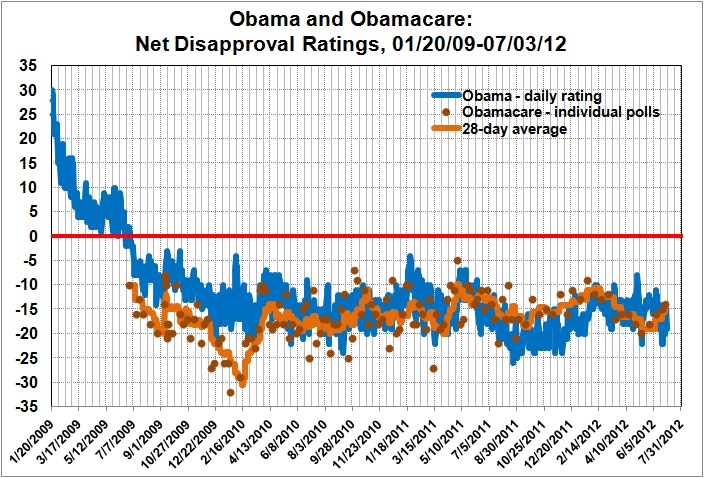
David Brooks, Useful Idiot for the Left

David Brooks’s latest atrocity, “The Role of Uncle Sam,” appears in The New York Times of yesterday. I quote, in relevant part:

[T]he federal [government’s] role [in the economy] has historically been sharply limited. The man who initiated that role, Alexander Hamilton, was a nationalist. His primary goal was to enhance national power and eminence, not to make individuals rich or equal….

But this Hamiltonian approach has been largely abandoned. The abandonment came in three phases. First, the progressive era. The progressives were right to increase regulations to protect workers and consumers. But the late progressives had excessive faith in the power of government planners to rationalize national life. This was antithetical to the Hamiltonian tradition, which was much more skeptical about how much we can know and much more respectful toward the complexity of the world.

Second, the New Deal. Franklin Roosevelt was right to energetically respond to the Depression. But the New Deal’s dictum — that people don’t eat in the long run; they eat every day — was eventually corrosive. Politicians since have paid less attention to long-term structures and more to how many jobs they “create” in a specific month. Americans have been corrupted by the allure of debt, sacrificing future development for the sake of present spending and tax cuts.

Third, the Great Society. Lyndon Johnson was right to use government to do more to protect Americans from the vicissitudes of capitalism. But he made a series of open-ended promises, especially on health care. He tried to bind voters to the Democratic Party with a web of middle-class subsidies.

In each case, a good impulse was taken to excess. A government that was energetic and limited was turned into one that is omnidirectional and fiscally unsustainable. A government that was trusted and oriented around long-term visions is now distrusted because it tries to pander to the voters’ every momentary desire. A government that devoted its resources toward future innovation and development now devotes its resources to health care for the middle-class elderly….

In his engrossing new book, “Our Divided Political Heart,” E.J. Dionne, my NPR pundit partner, argues that the Hamiltonian and Jacksonian traditions formed part of a balanced consensus, which has been destroyed by the radical individualists of today’s Republican Party. But that balanced governing philosophy was destroyed gradually over the 20th century, before the Tea Party was even in utero. As government excessively overreached, Republicans became excessively antigovernment.

We’re not going back to the 19th-century governing philosophy of Hamilton, Clay and Lincoln. But that tradition offers guidance. The question is not whether government is inherently good or evil, but what government does.

Brooks begins by assuming that the Hamiltonian approach to government is the correct one: An assertion that Madison and Jefferson would refute.

Beyond that, Brooks ignores the evidence of his own analysis, which is that each aggrandizement of governmental power (economic and social) — beginning with Hamilton’s nationalism — fostered subsequent expansions of governmental power. It is a combination of ratchet effects and slippery slopes. The status quo is a baseline from which retreat is nigh impossible because of vested interests; the only possible next step, therefore, is an expansion of government to serve the newest “compelling need.”

Dionne’s so-called consensus never was a consensus. Consider, for example, the relative narrowness of FDR’s and LBJ’s “mandates,” which were in fact  60-40 splits. The fact of the matter is that the rules of the political game — as they have evolved through utter disregard of the real Constitution and the wishes of large segments of the populace — simply have allowed the accretion of power in Washington, even when there has been a “consensus” to diminish that power. I am, of course, thinking of the election of presidents like Harding, Coolidge, and Reagan by margins as great as those bestowed on FDR and LBJ.

If “government excessively overreached” — as Brooks admits — how could it be that “Republicans became excessively antigovernment”? It would seem that their (largely imagined) excessiveness is necessary and proper.

Nor should the “antigovernment” label be allowed to pass without comment. There is a difference between being “antigovernment” (i.e., anarchistic) and “pro-limited-government” (i.e., Madisonian and Jeffersonian rather than Hamiltonian). The “antigovernment” label is a cynical libel routinely deployed by the forces of big government in an effort to discredit those who are bold enough to point out that the expansion of governmental power has undermined social comity and prosperity. (The most cynical of efforts to discredit the opponents of big government occurred in the aftermath of Timothy McVeigh’s atrocious act in Oklahoma City. McVeigh was an antigovernment terrorist. And so it became the theme-of-the-month among the NPR crowd that everyone who is for less government is “antigovernment” and, by extension, a kind of terrorist.)

Brooks wants a limited government, but only if it is limited to a Hamiltonian scope. But the instant that government is allowed to exceed its brief, as it was when Hamilton’s “nationalism” became the central government’s leitmotif, the proverbial genie comes out of the bottle. It can only be stuffed back into the bottle by getting government completely out of the business of trying (in any way) to help business (except to protect it from domestic and foreign predators, of course).

Markets respond quite nicely to real needs, thank you. On the other hand, powerful governments (Hamiltonian and worse) respond to the capricious and costly commands of those who govern.

Related posts:
Unintended Irony from a Few Framers
Freedom of Contract and the Rise of Judicial Tyranny
Social Security Is Unconstitutional
The Constitution in Exile
What Is the Living Constitution?
Blame It on the Commerce Clause
The Slippery Slope of Constitutional Revisionism
Substantive Due Process, Liberty of Contract, and the States’ Police Power
The Price of Government

The Real Constitution and Civil Disobedience
Columnist, Heal Thyself
The Mega-Depression
The Real Burden of Government
Toward a Risk-Free Economy
The Left
The Constitution: Original Meaning, Corruption, and Restoration
Our Miss Brooks
The Illusion of Prosperity and Stability
Society and the State
I Want My Country Back
Estimating the Rahn Curve: Or, How Government Inhibits Economic Growth
Undermining the Free Society
Intelligence, Personality, Politics, and Happiness
“Intellectuals and Society”: A Review
Does the Power to Tax Give Congress Unlimited Power?
Does Congress Have the Power to Regulate Inactivity?
Government vs. Community
The Stagnation Thesis
The Left’s Agenda
The Public-School Swindle
The Evil That Is Done with Good Intentions
The Left and Its Delusions
The Destruction of Society in the Name of “Society”
Miss Brooks’s “Grand Bargain”
More Fool He
Externalities and Statism
Taxes: Theft or Duty?
Society and the State
The Spoiled Children of Capitalism
Politics, Sophistry, and the Academy
Subsidizing the Enemies of Liberty
Estimating the Rahn Curve: A Sequel
A Nation of (Unconstitutional) Laws
Are You in the Bubble?
Lay My (Regulatory) Burden Down
Conservatives vs. “Liberals”