Determination

That’s the title of a piece by Thomas Lifson at The American Thinker. Some key points:

…America’s strategic vision and will to use force are also hugely important to the tyrants who oppose us. Ask Colonel Gadhafi of Libya, who has voluntarily surrendered his nuclear arms program. Strangely enough, Senator Kerry has nothing to say about this when denouncing Iraq as the wrong war, in the wrong place, at the wrong time.

Contrary to what Americans are being told relentlessly, our forces in Iraq are not posted there to serve as targets for Islamist terrorists. Nor are they present in Iraq solely to ensure the transition of that country into a democratic state – a project which will take years, even decades to accomplish fully. That mission is extremely important, to be sure.

The American forces in Iraq are also a forward deployment in the War on Terror – a signal of the utter seriousness placed on removing the bases from which terrorists operate. As President Bush’s re-election is looking more probable, people like Assad are realizing that they are not to be granted relied from this pressure by a verdict of the American electorate….

Students of the history of warfare realize that as the enemy is facing defeat, casualties often mount, as desperation attacks are carried out, in the consciousness that the only alternative is capitulation. In World War II, consider the awful toll in American blood paid in the Battle of the Bulge, the invasion of Okinawa, and in the Kamikaze suicide attacks on American aircraft carriers. The escalation in casualties was not an indicator of defeat or a “quagmire.”…

Determination is what it’s all about. We can stay the course and tighten the noose around the necks of terrorists and their sponsors, or we can retire to the illusory safety of our homeland and allow the enemy to capture the Middle East, make nuclear weapons, and train terrorists with impugnity.

Determination is what wins wars and keeps the peace.

Determination is a character trait. Some have it; many don’t.

I speak from experience. I know the determination it takes to achieve a strategic objective. I succeeded in moving my company out of the second-rate quarters we were forced to take, in a political deal, and into first-rate quarters. It took 12 years, and it happened only because I was determined to make it happen, in spite of considerable internal opposition and diffidence on the part of my CEO.

Determination on the part of Democrats is what changed the dominant economic system in the United States from something like laissez-faire capitalism to something much more like socialism. If only Democrats had the same determination to win the war on terror.

Defense, Anarcho-Capitalist Style

The Traditional View: Defense Must Be Produced by Government

Defense usually is considered a public good, which Wikipedia defines thus:

In economics, a public good is one that cannot or will not be produced for individual profit, since it is difficult to get people to pay for its large beneficial externalities. A public good is defined as an economic good which possesses two properties:

• …once it has been produced, each person can benefit from it without diminishing anyone else’s enjoyment.

• …once it has been created, it is impossible to prevent people from gaining access to the good….

The public goods problem is that a free market is unlikely to produce the theoretically optimum amount of any public good: such important goods as national defense will be underproduced due to the free-rider problem….

A free-rider is an individual who is extremely individualistic, considering benefits and costs that affect only him or her. Suppose this individual thinks about exerting some extra effort to defend the nation. The benefits to the individual of this effort would be very low, since the benefits would be distributed among all of the millions of other people in the country. Further, the free rider knows that he or she cannot be excluded from the benefits of national defense. There is also no way that these benefits can be split up and distributed as individual parcels to people. But just because one person refuses to defend the country does not mean that the nation is not going to be defended. So this person would not voluntarily exert any extra effort, unless there is some inherent pleasure in doing so….

If voluntary provision of public goods will not work, then the obvious solution is making their provision involuntary. (Each of us is saved from our own individualistic short-sightedness.) One general solution to the problem is for governments or states to impose taxation to fund the production of public goods….

Defense as a Marketable Good: The Anarcho-Capitalist View

Anarcho-capitalists take an entirely different view. They see the state as illegitimate. Defense, therefore, is something that individuals should provide for themselves. How would that work? To find out, we turn to the Mises Institute, which in 2003 published a book of essays with the title The Myth of National Defense: Essays on the Theory and History of Security Production. The Mises Review (Vol. 10, No. 1; Spring 2004) carries an incestuous and, therefore, sycophantic and faithful review of that tome. Here are excerpts of the review, with my comments interspersed:

…History shows that no civilized community of substantial size can exist without a state; and arguments from political theory and economics show that the state is a necessity for adequate defense. The state may be evil, but it is a necessary evil.

The contributors to the Myth of National Defense dissent entirely from the line of thought just sketched. They raise a host of objections to the conventional view….

Jeffrey Hummel succinctly presents the argument that history shows the necessity of the state: “If private defense is better than government defense, why has government kept winning over the centuries? Indeed, the State’s military prowess has more than seemingly precluded the modern emergence of any anarcho-capitalist society….How can [radical libertarians such as Rothbard] attribute the origins of government to successful conquest and simultaneously maintain that a completely free society, without government, could prevent such conquest”…?

Both Hummel and the team of Luigi Marco Bassani and Carlo Lottieri endeavor in differing ways to respond to the argument just posed. According to Hummel,…”The free-rider problem, long presented by economists as a normative justification of the State, is in reality a positive explanation for why the State first arose and persisted”….

[D]oes not his very explanation render impossible successful resistance to the contemporary state? Will not the free-rider problem once more explain the persistence of the state?

Hummel has an ingenious response. Since the Industrial Revolution, wealth has become much more important than before in military conflict. This gives stateless groups a better chance of success than before, given the undoubted fact that the free market promotes economic growth more efficiently than a state-controlled society.

Aha! Things are different now. We’re in a “new economy” — just as we were before the stock market bubble burst in 2000. Well, when are the stateless groups going to get off their duffs and provide their own defense? We have stateless groups providing “offense” against which we must defend. Why haven’t the wealthy investment bankers who were victimized on 9/11 (and who might well be victimized again) raised mercenary armies to track down terrorists?

But what about the free-rider problem? Hummel maintains that this does not totally rule out collective action. It can be overcome if people have a strong enough commitment to the rightness of their cause….

If, if, if! The magic word. The world would be perfect only if it weren’t imperfect

Bassani and Lottieri respond in a different way. They reject the conquest theory of the state, as well as other accounts that postulate for the state a vast antiquity. Quite the contrary, they contend that the state began only when the Middle Ages came to an end. Not until then did people suffer from that baleful development, a centralized authority holding a monopoly of force over a national territory….

Once we grasp the modern origins of the state, is not our task of resistance to it made easier? No longer need we view the state as a fixed and irremovable presence. If the state did not always exist, may we not hope to remove it?…

Bad logic. It won’t work unless you can remove the conditions that arose at the end of the Middle Ages. That is, it won’t work unless you have a time-reversal machine.

Hobbes argued that without a state, individuals would find themselves in constant conflict. In order to avoid the “war of all against all,” must not everyone surrender his arms to the sovereign, who will then protect us? Hans Hoppe finds this argument less than convincing. Hobbes maintains that “in order to institute peaceful cooperation among themselves, two individuals, A and B, require a third independent party, S, as ultimate judge and peacemaker….To be sure, S will make peace between A and B, but only so that he himself can rob both of them more profitably. Surely S is better protected, but the more he is protected, the less A and B are protected against attacks by S”….Hobbes fails to show that the sovereign improves on the state of nature….

Well, by that example the sovereign doesn’t do worse than the state of nature. But there’s more:

[T]he question raised earlier recurs. Even if the state acts as a predator, is it not needed for defense against other states? But why should we accept this contention?

Here we must turn to arguments from economic theory. It is often alleged that national defense is a “public good” that the market cannot supply in adequate quantity. Both Larry Sechrest and Walter Block dissent from this all-too-prevalent orthodoxy. Why should we think that defense is a single good that must be supplied on an equal basis to everyone resident in a nation? “It is neither impossible to exclude nonpayers nor is it true that bringing in an additional person under the safety umbrella costs no additional resources”….With his customary imaginative flair, Block offers numerous ingenious examples to support his challenge to the standard view….

Well, here’s a counter-example for you: How would you have excluded non-payers who happened to be working in the World Trade Center on 9/11? And, if the Air Force had arrived on the scene in time to shoot down the hijacked airliners before they struck the World Trade Center, how would it have cost more to shoot them down if, say, one more non-payer had been present in the World Trade Center?

Joseph Stromberg strengthens the case with a vital point. It by no means follows that a free society must match the bloated expenditures of the Leviathan state in order to defend itself effectively. “I assume that minimal states and anarchies can do without nuclear bombs, cruise missiles, stealth bombers, and expensive ‘systems’ suited to world conquest or universal meddling.

This is merely an assertion that a people who “mind their own business” don’t’ need to be ready to defend themselves of their overseas interests against potential aggressors. It’s head-in-the-sand isolationism of the most naïve sort. It assumes that aggressors act only when provoked and not for their own reasons.

As for the ‘force structure’ of mere defense, I believe we would see some rough combination of militias and ‘insurance companies’—perhaps not as mutually exclusive as we think—with resort to mass-based guerrilla war, however and by whomever organized, in extremis”….

Right! Our overseas economic interests won’t be attacked if we lack offensive weapons and we can protect our domestic interests solely with militias and “insurance companies”. How would that work? The militias would rise up on the spot to protect…whom? subscribers?. What happens when those who underwrite the militias get tired of paying for protection when nothing’s happening? Do they just drop out of the syndicate? And what happens when enough of them do it and the militias are practically disarmed? Aha! That’s when terrorists strike. And what do “insurance companies” do, sell protection? How do the bad guys discriminate between policy-holders and free-riders? They can’t, unless you believe that terrorists will go door-to-do and attack only those who don’t have a policy. And there’s the problem of what happens when people tire of paying premiums when things have been calm for a long while.

The state, like it or not, is less likely to lose interest in what’s going on. The state isn’t perfect, certainly, but it has an incentive to make things look bad so that it can maintain large, standing armed forces and intelligence systems. Now, that may seem like a damaging admission on my part, but it isn’t. There are things it’s better to have too much of than too little of. Too much defense is expensive — but it’s likely to save your neck. Too little defense is cheap — but fatal. And anyone who thinks he can prescribe just the right amount and kind of defense must also think he knows, now, when the next stock market bubble will form and burst.

And so we approach the finale:

The argument for libertarian defense rests on two points. First, a libertarian society would have a much less ambitious agenda than states in the contemporary world.

Oh really? No overseas economic interests? And what about predators who don’t care about our agenda?

Murray Rothbard, with characteristic incisiveness, makes clear the drastically limited circumstances in which war is justified. Specifically, there is no universal mandate to impose a good society all over the world: nations must mind their own business….

That is, the United States must mind its own business. And if other nations — or independent operators — decide not to mind their own business, they’ll simply leave us alone because of the purity of our motives. There’s more of that, but it’s just nonsense:

…Democracies, swollen with self-righteousness, tend to wage unlimited wars that ignore humane restraints….

As opposed to fanatical totalitarian regimes?

[T]here is good reason to think that if a libertarian society found itself the victim of invasion, guerrilla warfare would prove a successful response…”We start from the truism that defense has the advantage….And once people are driven to guerrilla tactics defeating them raises the ratio of attackers to defenders to somewhere between 4-to-1 and 6-to-1 or higher. Successful ‘pacification’ and occupation may require a 10-to-1 superiority”….

These guys have been watching too many movies. (Red Dawn comes immediately to mind.)

Conclusion

The merry band of anarcho-capitalists at the Mises Institute must believe that Laden and his ilk wouldn’t bother us if we were retreat to within our borders, though that would mean abandoning vital economic interests overseas. (I guess those are of no interest to anarcho-capitalists, who are free to assume oil wells in every yard.) The critical assumption, of course, is that we would be left alone. Is that a reasonable assumption to make? I don’t think so. Bin Laden and his ilk are religious fanatics, bent on avenging the past failures of Islam, which they attribute wrongly to infidels.

Anarcho-capitalists also must believe that by effectively disarming we wouldn’t be inviting other nation-states to arm and fill the power void. That belief flies in the face of human nature. Greed and power-lust are self-generating; they aren’t brought into existence by provocation. If these anarcho-capitalists believe that Hitler only wanted “lebensraum” and Stalin only wanted a buffer zone around his “utopia”, then these anarcho-capitalists are bigger fools than Neville Chamberlain, Franklin D. Roosevelt, and Jimmy Carter.

Finally — resorting to the logic that “my client isn’t guilty, but if he is guilty he only acted in self-defense” — anarcho-capitalists admit that we might be attacked by terrorists or nation-states even if we were to withdraw within our borders and effectively disarm, as a nation. Then, they assert, some of us could resort to guerrilla warfare, for which militias and “insurance companies” would be well prepared. Now there’s a strategy for you: Wait until the enemy attacks us, then hope that he only attacks those who haven’t paid for protection. Or hope that enough of us have voluntarily paid someone to have stockpiled the right kinds of weapons and trained properly — for a guerrilla war against weapons of mass destruction. I’d laugh if it weren’t suicidally stupid.

Anarcho-capitalists, meet Alice. I’m sure you’ll all be very happy together in Wonderland.

P.S. Notice how I got through all that without invoking images of competing ganglords, gunbattles in the streets, innocent bystanders being shot, and other innocents being forced to pay protection money at gunpoint? Well, I couldn’t resist adding this P.S. about those, the penultimate consequences of anarcho-capitalism — before an outside enemy would swoop in and bring “peace” to our troubled shores.

Epstein’s Freedom

In a post about Richard Epstein and his book, Skepticism and Freedom, Tim Sandefur of Freespace says:

The title comes from Epstein’s belief that we ought to be highly skeptical of the idea that an outside party has better knowledge about the choices (and the benefits from them) that a person makes. The person making the deal is in the best position to know whether the deal meets his desires or not, and unless the bystander is directly injured, he shouldn’t be able to substitute his choices.

But Sandefur later says:

A related element of Epstein’s argument — indeed, I think it’s the real thesis of the book — is that he believes the state may force exchanges between parties, without their consent, so long as these exchanges leave no party worse off, and leaves at least one party better off. The principle of eminent domain — about which Epstein wrote extensively in his book Takings — embodies this idea, ideally. Epstein acknowledges that this element of his thought makes him pretty unique among libertarians, who probably would not accept it. But Epstein believes that it is a necessary element of society; there are many collective agreements which would leave everyone better off, but which, due to some transaction cost, cannot be enforced. The law can then serve to enforce these agreements. This principle allows Epstein to (in theory) escape some of the more complicated problems of political philosophy, since it allows society to evolve in a direction that accommodates liberty in a practical manner[.]

Which leads me to ask:

1. In light of Epstein’s belief that we ought to be highly skeptical of the idea that an outside party has better knowledge about the choices (and the benefits from them) that a person makes, how does Epstein reckon that the state, as an outside party, is able to determine that the parties to a forced exchange will be better off as a result of the exchange?

2. What happens to the transactions costs that (presumably) keep the parties from undertaking an exchange that the state decides to force? Do the costs simply vanish or does the state (that is, taxpayers) defray them?

3. Is Epstein’s concept of forced exchange a justification of the integration of commerce (e.g., forcing whites to accommodate blacks at hotels, restaurants, etc., and forcing whites to offer houses to black as well as white buyers)?

4. If Epstein’s concept of forced exchange justifies the integration of commerce, how does the state account for the preference of whites not to trade with blacks, or does the state simply regard that preference as illegitimate?

5. If the state chooses to treat the preference of whites as illegitimate, by what criterion does the state judge the legitimacy of the preferences of parties to a forced exchange being contemplated by the state?

Favorite Posts: Affirmative Action and Race

What’s a "Doozy"?

Yesterday I used “doozy” in a post. If you’re too young to know what a “doozy” is, here goes:

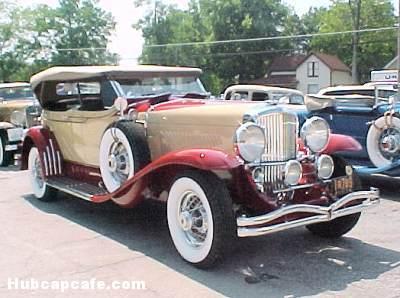
It was John Ciardi, I think, who suggested that doozy (as some dictionaries prefer to spell it) had something to do with the famous Duesenberg automobile, a car named after the brothers who developed it. Certainly the vehicles were known as Duesies in the 1920s and 1930s. But…the noun doozy was already well established.

[R]eference books, especially the Random House Historical Dictionary of American Slang, suggest it first appeared about 1903.

You might think etymologists are slipping their mental gears if I tell you that they’re fairly sure that it comes from the flower named daisy. But that was once English slang, from the eighteenth century on, for something that was particularly appealing or excellent. It moved into North American English in the early nineteenth century….

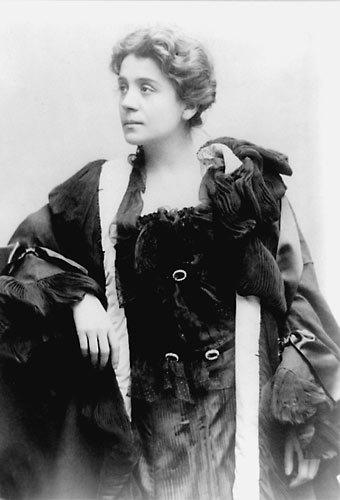
Experts think that that sense -— which was still around at the end of the nineteenth century -— might have been influenced by the name of the famous Italian actress Eleonora Duse [pronounced “doo-zay”: ED], who first appeared in New York in 1893. Something Dusey was clearly excellent of its kind, and it is very likely that it and daisy became amalgamated in people’s minds to create a new term.

(Source: Questions & Answers.)

So here’s Duse and a Duesie:

Recommended Reading

From my son:

Escape from the Soviets, by Tatiana Tchernavin, 1934. Just finished it. An account of a woman’s escape with her husband and son across the border into Finland. It’s the kind of book we should have been given to read in school. I seem to recall that the worst thing about the USSR, as we understood it, was that jeans were expensive and people had to stand in long lines. Amazing that with accounts like this people only began to admit to Soviet concentration camps (word author uses in the original, before the German variety became well known) and massive deaths through executions and starvation in the 1980s. If nothing else, it’s an excellent commentary on socialism, which she doesn’t hesitate to excoriate.

Don’t Le(f)t the Facts Confuse You

Lambert at corrente is still pushing this line:

Cowardly Broadcasting System….

CBS News said yesterday that it had postponed a “60 Minutes” segment that questioned Bush administration rationales for going to war in Iraq….

According to the Newsweek report, the “60 Minutes” segment was to have detailed how the administration relied on false documents when it said Iraq had tried to buy a lightly processed form of uranium, known as yellowcake, from Niger. The administration later acknowledged that the information was incorrect and that the documents were most likely fake….

(via the pretty-cowardly-themselves Times)

WHEN WOULD IT BE MORE APPROPRIATE TO RUN A STORY ABOUT FAKE DOCUMENTS THAT BUSH USED TO JUSTIFY THE WAR THAN BEFORE AN ELECTION IN WHICH BUSH IS RUNNING? HAS THE WHOLE WORLD GONE MAD? WHY DOESN’T CBS JUST SHUT THEIR WHOLE OPERATION DOWN? WTF?

The problem is this (from Clarice Feldman at The American Thinker):

…In his State of the Union speech, the President said these sixteen words:

The British government has learned that Saddam Hussein recently sought significant quantities of uranium from Africa.

The statement was true, and recently a British Commission confirmed that was so. Days afterward, however, the US received forged documents about uranium sales from Africa to Saddam. (Documents, I should add that an Italian inquiry established were forged by a man working for French intelligence – apparently to discredit the good information upon which Bush and Blair had relied, and thereby to embarrass them.)

And was this French farce forgery used for that purpose? Indeed it was. By Joseph A. Wilson (author of Politics of Truth), then an outspoken Kerry supporter and advisor. And where is Wilson today? Well, he has been thoroughly discredited by anyone who actually studied his testimony before the bipartisan Senate Intelligence Committee. That includes the Committee and the brilliant Christopher Hitchens.

How could CBS have missed that? After all, once the Senate Intel report came out, the Kerry website was scrubbed of the special page devoted to Wilson.

Howard Kurtz of the Washington Post did report that the very media (including, of course, CBS) which had given enormous play to Wilson’s tale had failed to report his denouement. So if all the news Sixty Minutes got was from CBS, maybe they missed it.

Still, how clueless can you be?…

As clueless as a left-wing blog like corrente.

In the "Stupid Headline" Department

AP: Carter Still Promoting Peace at 80

No, no, no! It is not promoting peace when you cozy up to left-wing dictators, coddle Arab terrorists, and oppose the liberation of Iraq. It’s promoting war and terror and torture.

When will the press learn to look beneath the surface of Carter’s prissy moralism to the depths of its consequences?

A Very Telling Profile of Kerry

The New York Times has this:

Kerry as the Boss: Always More Questions
By ADAM NAGOURNEY and JODI WILGOREN

Published: September 26, 2004

WASHINGTON, Sept. 25 – For 15 minutes in Milwaukee the other day, Senator John Kerry pummeled his staff with questions about an attack on President Bush, planned for later that morning, that accused the White House of hiding a huge Medicare premium increase.

Talking into a speakerphone in his hotel suite, sitting at a table scattered with the morning newspapers, Mr. Kerry instructed aides in Washington to track down the information he said he needed before he could appear on camera. What could have slowed down the premium increase? How much of it was caused by the addition of a prescription drug benefit? What would the increase cost the average Medicare recipient?

Mr. Kerry got the answers after aides said they spent the morning on the telephone and the Internet, but few of those facts found their way into his blistering attack.

The morning Medicare call was typical of the way Mr. Kerry, a four-term senator with comparatively little management experience, has run his campaign. And, his associates say, it offered a glimpse of an executive style he would almost surely bring to the White House.

Mr. Kerry is a meticulous, deliberative decision maker, always demanding more information, calling around for advice, reading another document – acting, in short, as if he were still the Massachusetts prosecutor boning up for a case. He stayed up late Sunday night with aides at his home in Beacon Hill, rewriting – and rearguing – major passages of his latest Iraq speech, a ritual that aides say occurs even with routine remarks….

In interviews, associates repeatedly described Mr. Kerry as uncommonly bright, informed and curious. But the downside to his deliberative executive style, they said, is a campaign that has often moved slowly against a swift opponent, and a candidate who has struggled to synthesize the information he sweeps up into a clear, concise case against Mr. Bush.

Even his aides concede that Mr. Kerry can be slow in taking action, bogged down in the very details he is so intent on collecting, as suggested by the fact that he never even used the Medicare information he sent his staff chasing….

Unlike Mr. Bush, who was a governor and a business executive before he ran for president, Mr. Kerry – who has spent the past 20 years as a legislator, with a staff of perhaps 60 – has little experience in managing any kind of large operation….

The difference between Kerry and Bush isn’t experience, it’s temperament. I worked for a Kerry-like CEO — always asking questions, probing answers, asking more questions, ad infinitum. He always postponed decisions as long as possible, not because he lacked the facts but because he had confused himself with the facts. He sought facts for their own sake, not because they would help him plot the best path toward a specific goal. He was almost purely inductive, hoping to find his principles in a morass of information.

That’s how Kerry, with his limitless flip-flopping, has struck me — a man without principles who hopes to discover them in the next piece of information that he receives. The Times article confirms that view.

To change metaphors: You don’t advance the ball down the field by counting the laces on it. You advance the ball down the field by knowing where the goal is and then choosing the plays that will help you reach it. Kerry knows how many laces there are. Bush figures out where to throw the ball, and all Kerry knows how to do is carp like an armchair quarterback when some of the passes aren’t caught.

Speaking of V-8s…

…as I was yesterday, here’s the first car I remember: a 1938 Ford V-8.


My father bought one in 1940 and ran it until 1951.

A Prescription for Pork-Barrel Spending

FuturePundit has this:

Anti-Depressant Drug Treats Kleptomania

Stanford researchers have shown in a preliminary non-double blind trial that the anti-depressant Selective Serotonin Uptake Inhibitor (SSRI) escitalopram (Lexapro) reduces the severity of kleptomania.

Quick, buy a truckload and send it to Washington.

More on the Legality of Discrimination

Yesterday, I wrote about the distinction between state-sponsored racial discrimination and private racial discrimination in “Is There Such a Thing as Legal Discrimination?“. There I spelled out my theory that collective agreement on an issue (e.g., racial discrimination) isn’t tantamount to state action. I argued that

regardless of how many citizens agree on a particular subject, that agreement is not tantamount to state action if the subject lies outside the power granted the state. Enforcement of an extra-constitutional collective agreement rests on the voluntary submission of citizens to that agreement. The same citizens who entered the collective agreement may dissolve it piecemeal by abandoning it, one or a few at a time, whereas they cannot similarly revoke a power specifically granted the state.

I conclude that the state has no business telling its citizens how they may or may not carry their racial attitudes into the conduct of their affairs, as long as that conduct is passive — that is, as long as it takes such forms as not buying from, hiring, or otherwise associating with members of certain groups. I say that not out of bigotry — I long ago outgrew the attitudes of my native State — but because we have gone far beyond the abolition of slavery and the granting of equal civil rights. We have practically repudiated freedom of association, we have severely undermined property rights, and — more lately with speech codes and hate-crime laws — we have entered an early stage of thought policing.

In sum, liberty is being vanquished in the name of liberty. It wouldn’t be happening if collective agreements were, indeed, tantamount to state action.

My post was prompted by two recent posts written by Tim Sandefur of Freespace. Sandefur has replied at length, and constructively, here. You should read all of it. I’m just going to touch on some of the points salient to my argument.

Sandefur notes that I took him “a bit more strongly” than he intended on the subject of collective agreement as a form of state action. He says:

First, I’m not trying to make an “argument,” since I’ve tried to make clear that I don’t really know what I think on this issue. My only point is that I’m troubled by the too-easy distinction between state-action discrimination (bad) and everyone-in-society-agreeing-privately discrimination (perfectly okay). One reason I am troubled by that is because I think if everyone in society agrees to something, the distinction between that and state action becomes illusory….So there’s no “argument”…just a qualm, and [the author of Liberty Corner] has done nothing to ease my concern.

Fair enough. Sandefur still has a qualm where I have none.

Sandefur goes on, in an aside, to question an antecedent argument to the conclusion I restated above, namely, that

the collective agreement that creates the state doesn’t give the state unlimited power of action. In fact it specifically limits the state’s power of action. The citizens of the state may — and do — withhold certain powers from the state, for the private exercise of citizens.

In response to that proposition Sandefur says:

First, it is true that the social compact doesn’t give the state unlimited power, but we ought to carefully distinguish between the moral and the constitutional limits on the state. The social compact is only limited by moral constraints—-that is, the people may write any social compact they wish so long as it gives the state no power that exceeds their moral authority. Constitutional limits then come on top of those limits. It is in the realm of Constitutional limits that the people withhold powers from the state for the private exercise of citizens (or to vest those powers in a different sovereign). At the level of moral limits on the social compact, the people do not withhold powers for their own private exercise, because they have no right to exercise those powers which are withheld. In other words, the people in forming the social compact are limited only by moral constraints-—they can’t steal, can’t murder, and can’t make a government that does these things. They don’t withhold these powers for their own private exercise.

There are subtleties in that statement which I don’t grasp, such as the distinction between moral and constitutional constraints, and whence moral constraints flow. Nevertheless, the statement seems to imply something like this: The state can’t have the power to allow slaveholding because slaveholding is an immoral power that the people themselves cannot exercise. But, as Sandefur says elsewhere in his post,

Many slaveowners prior to the [Civil W]ar pointed out that there just weren’t any laws that created slavery. It was closer to everyone-in-society-agreeing-privately discrimination than it was to state-action discrimination.

So, it seems to me that the people can exercise moral authority (or, in this case, immoral authority) that’s outside the scope of the state’s power. Before the passage of the Thirteenth Amendment the (Southern white) people reserved the power to hold slaves and the state didn’t have the power to deprive them of slaves. (If I have this wrong, I’m sure I’ll hear promptly from Sandefur. And I’ll gladly correct it.)

Now Sandefur comes to my point that a collective agreement is not tantamount to state action if the subject of the agreement lies outside the power granted the state. Sandefur says:

Perhaps. But…sometimes that line [between a private, collective agreement and state action] is not so obvious. Or, my favorite conundrum, the situation of tenant farmers in Mississippi, whose white landlords would immediately evict them if they dared register to vote. Now, this attitude was unanimous among the white landlords….[I]s [the author of Liberty Corner] willing to say that he has no problem with such a practice?

I do have a serious problem with such a practice. As far as I’m concerned it was an extortionate denial of a civil liberty granted under the Fourteenth Amendment. But the extortionate denial of the right to vote is a particular manifestation of racial discrimination, which the people (I believe) had empowered the state to deal with through the Fourteenth Amendment. That the state didn’t deal with it until the 1960s was due a failure on the part of the state to exercise a granted power, not to a lack of power.

But racial discrimination, in its broader manifestations (e.g., refusal to live near blacks) is neither an action of the state nor an action that the state can prohibit, per se. The state can be — and has been — empowered to deal with specific manifestations of racial discrimination, manifestations that deprive blacks of the constitutional rights conferred on them by the Thirteenth and Fourteen Amendments, among them the right to vote.

Sandefur concludes by saying,

I’m not trying to offer a systematic (or even coherent!) theoretical* defense of government intervention to correct racist outcomes. I just think that even in the absence of an explicit agreement…private action can be tantamount to state action. That’s why the Civil Rights Acts strike down “patterns and practices” as well as explicit policies.

*-I would definitely offer a systematic constitutional defense of such intervention. I think Harlan’s 13th Amendment argument regarding slavery and badges of servitude is absolutely right and that attacks on Jim Crow should have been made under that Amendment, or perhaps the privileges or immunities clause of the 14th amendment, and not under the commerce clause.

There’s the crux of the issue. Sandefur believes private action can be tantamount to state action. I disagree, for the reasons I have spelled out in my previous post on the subject and in this one. I further disagree with the validity of Harlan’s Thirteenth Amendment argument, and with the striking down of “patterns and practices” of racial discrimination. The use of such broad terms as “badges of servitude” and “patterns and practices” gives the state license to butt into private affairs at will.

Favorite Posts: Affirmative Action and Race

The Curse of the Bambino

George Vecsey, a sports writer for The New York Times and the originator of the legend known as the “Curse of the Bambino,” distances himself from some of the unsavoriness that surrounds the legend. (You can read his story here.) But he can’t distance himself from the underlying facts: Since the owner of the Boston Red Sox traded Babe Ruth to the New York Yankees after the 1919 season, the Red Sox have failed to win a World Series. If that’s not a curse, I don’t know what is.

Speaking of Obesity…

FuturePundit points to a reason to avoid it:

Obesity Causes Inflammation Which Accelerates Aging

Quite a large body of research literature is building in support of the idea that chronic inflammation is a major cause of many degenerative diseases. One of the causes of chronic inflammation is obesity….

From Smoking to Fast Food

We know that the anti-smoking gig reflects middle-to-upper class disdain for the “sweaty masses.” The anti-fast food crusade is more of the same. Brendan O’Neill at Spiked has the right take on fast-food bashing:

Bashing the McMasses

by Brendan O’Neill

In the docu-blockbuster-cum-human-experiment Super Size Me, released in British cinemas over the weekend, New York filmmaker Morgan Spurlock eats nothing but McDonald’s meals three times a day for a month…[I]n one scene, having spent 22 minutes eating a Super Size Double Quarterpounder Meal, pukes it up out of his car window – all for the apparently worthy cause of showing Americans ‘the real price they are paying for their “addiction” to fast food’….

Sounds radical, right, taking on the Golden Arches of America and charging them with making poor folk sick and miserable by forcefeeding them junk? In fact, Super Size Me, like so many other anti-McDonald’s campaigns, comes with a generous side order of snobbery. Its real target is the people who eat in McDonald’s – the apparently stupid, fat, unthinking masses who scoff Big Macs without even asking to see a nutritional and calorie breakdown first. Spurlock and his ilk might hate McDonald’s, but they seem to loathe the McMasses even more….

On both sides of the Atlantic there’s a large portion of moralising in the panics over obesity, school dinners, junk-food-guzzling and the rest. What is presented as straightforward medical concern for our health and wellbeing is often really a judgement on lifestyle and behaviour – and especially the lifestyle and behaviour of a certain class of people….

[I]n the faux class war between anti-McDonald’s campaigners and the McMasses, I’m on the side of the ‘happy eaters’ every time.

Me, too. When I’m on the road I stop at a McDonald’s only to use the restroom. But that’s only because I prefer other brands of fast food. And I ain’t no iggerant, fat slob neither.

If my allergies could stand the smoke, I’d be back on cigarettes in a flash, even though it would make me look like a redneck — or a movie star.

I Shoulda Had a V-8, Too

My father owned several cars with V-8 engines, but I’ve never owned one. (A straight-8 and some V-6s, yes, but never a V-8.) Now I’m reminded of what I’ve missed:

I Shoulda Had a V-8

By Ralph Kinney Bennett

Published 09/23/2004

In September 1914, just 90 years ago, the makers of a very good American car made a dramatic leap from good to great.

That was when Cadillac, which had already established a reputation in the luxury field with its high-quality four cylinder cars, introduced the all new “Type 51” with a V-8 engine….

Advances in internal combustion engine technology give today’s motorists a wide variety of smooth powerful engines — fours, sixes and eights — and the perfection of the V-6 over the past couple of decades has given them power and acceleration rivaling V-8s.

But there’s still something about those extra two cylinders. Drive a Chrysler 300 with its fine V-6, for instance. Then get behind the wheel of a 300 with the new Hemi V-8. Whooee! Automotive engineers can give you technical reasons for the difference but it’s better just to experience it, to feel it….”

More about Libertarian Hawks and Doves

A few weeks ago I posted about a piece by Max Borders, “Flying with Libertarian Hawks.” Comments by a reader led me to do a followup post.

Borders, too, has been getting mail, so he has followed up with “Sparring with Libertarian Doves.” He makes some points that I’ve made in various posts on libertarianism and war, but he makes them so compellingly that I can’t resist the urge to quote:

…It is by virtue of both security and the rule of law that we are both free and united as a people. Sometimes these forces — i.e. national security and the rule of law — appear, at times, to come into conflict — much like human cells and the immune system. But one can’t exist without the other.

That is why I find it even more curious that some libertarians advocate a private, decentralized protective apparatus. When such a system is worked out properly, I might be convinced. Until then, I’ll pay my taxes and pray that my leaders keep me safe to the best of their judgment, using the best available information….

Now, at the strategic level, critics may be right in saying that the Iraqis may not be able to sustain a liberal democracy. But it will be worth it to find out (despite the bellyaching of anarcho-capitalists who don’t want to underwrite such measures). A long term strategy to plant the seeds of liberal democracy in places where serious threats would otherwise fester in the status quo is a necessary evil — and I should add doesn’t require “wholly remaking the social and political order.” (I believe that all people prefer freedom to tyranny and the process emergent order can follow after they get some momentum.) And while it may seem un-libertarian to use tax revenues for adventures that some people just don’t get is, well, the nature of the beast — that is, the actions of an imperfect nation-state, doing what it has to do in an age of deadly weapons proliferation and terrorism.

Finally, other libertarians believe that invasions like Iraq run afoul of the rights of those we would attack. Indeed, some critics of my article claimed that my brand of libertarianism “denies a right not to be killed to people who are not liberal democrats or who do not live in liberal democracies.” Ultimately, I think rights — as such — are conferred by constitutions at home and to a lesser degree by international alliances abroad. Beyond that, human rights are just words we can afford to use when we’re certain about our safety. To think otherwise is to be willing to die and expect fellow citizens to die for what are little more than libertarian flights of fancy [emphasis mine: ED].

Zing! Ouch!

I am working on a piece about the viability of the kind of “private, decentralized protective apparatus” espoused by anarcho-capitalists. It will be a doozy. Stay tuned.

Speaking of Discrimination…

…a story at The Washington Times says:

Discrimination against white male found

By George Archibald

THE WASHINGTON TIMES

An English professor at the University of North Carolina illegally subjected a student to “intentional discrimination and harassment” because he was “a white, heterosexual Christian male” who expressed disapproval of homosexuality, the U.S. Education Department’s Office of Civil Rights has ruled.

Professor Elyse Crystall violated student Timothy R. Mertes’ civil rights, the agency said, by improperly accusing him of “hate speech” in an e-mail sent to students after a class discussion in which Mr. Mertes said he was a Christian and felt “disgusted, not threatened” by homosexual behavior.

“The e-mail message not only subjected the student to intentional discrimination and harassment, but also discouraged the robust exchange of ideas that is intrinsic to higher education and is at the very heart of the Constitution’s protection of free speech,” Alice B. Wender, the Education Department’s southern regional director of civil rights concluded in a letter to UNC Chancellor James Moeser on Wednesday.

It’s about time.

Is There Such a Thing as Legal Discrimination?

According to an Encarta article about Detroit, the Motor City’s population peaked at 1,850,000 in 1950. Its black population at the time was 16 percent of the total, that is, about 300,000. Detroit’s population in 2000 was about 950,000, of which 81.6 percent — about 776,000 — were black. Thus the non-black population of Detroit dropped by almost 90 percent in 50 years. The “white flight” from Detroit made property there much cheaper than in the nearby suburbs to which whites were fleeing. And so, as low-income blacks filled much of the space left by whites, Detroit’s black population increased by more than 250 percent during the same 50 years.

The white-flight phenomenon leads me to ask two questions: Was the desertion of Detroit (and other large Northern cities) by non-blacks a form of discrimination? If so, was that discrimination legal? I ask because Tim Sandefur in two recent posts at Freespace (here and here), has left me wondering whether there is any legal scope for widespread acts of racial discrimination.

It’s clear to me that non-blacks were discriminatory in leaving Detroit. I grew up in Michigan. I can vouch for its combination of Northern charm and Southern racial attitudes. Detroit’s whites might have rationalized their flight as a response to the greater prevalence of crime and drugs in the black community, but white flight stemmed from a visceral dislike on the part of most whites for living near blacks. (Detroit is, of course, only emblematic of racial attitudes and their consequences throughout the North.) The greater prevalence of crime and drug use among blacks gave whites an excuse for fleeing Detroit, but the underlying cause of white flight was old-fashioned bigotry.

Now the question is whether white flight was legal. Actually, I have no doubt that it was perfectly legal for the vast majority of Detroit’s white citizens to abandon that city and practically ghetto-ize it. Each departing household simply made a voluntary decision to leave and each arriving household simply made a voluntary decision to move in. But Sandefur’s posts lead me to wonder at what point it becomes illegal for the majority of citizens to act similarly out of racial prejudice. Here’s Sandefur, writing about the refusal of most Southern whites to trade with Southern blacks in the days of legal segregation:

If everyone in the state makes an agreement (even sub silentio) not to engage in trade with blacks, even if they don’t stamp that agreement with the state’s imprimatur, it is still a social compact, which means that it can’t pretend not to be state action….

[A] person has the right to discriminate in almost all cases, but when that discrimination reaches such a massive collective agreement, it becomes state action, I think, and subject to the same objections as state discrimination.

These statements are consistent with an earlier post, in which Sandefur says:

As Frederick Douglass pointed out in his speech on the Civil Rights Cases, what sense does it make that we say “the state may not do X, if we say all of the citizens may do X”?

Thus, if I’ve followed Sandefur’s reasoning correctly, it seems to be this:

1. A collective agreement amounts to state action.

2. The state cannot act to deny an explicit constitutional right or any other fundamental right, say, the right to engage in commerce.

3. Therefore, the widespread refusal of whites to refuse to engage in commerce with blacks is an unlawful state action.

The linchpin of Sandefur’s argument is his conflation of collective agreements and state action, a conflation that he traces to Frederick Douglass. Sandefur’s argument collapses if not all collective agreements amount to state action. Well, his argument collapses because:

1. It’s true that the state arises out a collective agreement of its citizens (or their chosen representatives).

2. But the collective agreement that creates the state doesn’t give the state unlimited power of action. In fact it specifically limits the state’s power of action. The citizens of the state may — and do — withhold certain powers from the state, for the private exercise of citizens.

3. Therefore, regardless of how many citizens agree on a particular subject, that agreement is not tantamount to state action if the subject lies outside the power granted the state. Enforcement of an extra-constitutional collective agreement rests on the voluntary submission of citizens to that agreement. The same citizens who entered the collective agreement may dissolve it piecemeal by abandoning it, one or a few at a time, whereas they cannot similarly revoke a power specifically granted the state.

I conclude that the state has no business telling its citizens how they may or may not carry their racial attitudes into the conduct of their affairs, as long as that conduct is passive — that is, as long as it takes such forms as not buying from, hiring, or otherwise associating with members of certain groups. I say that not out of bigotry — I long ago outgrew the attitudes of my native State — but because we have gone far beyond the abolition of slavery and the granting of equal civil rights. We have practically repudiated freedom of association, we have severely undermined property rights, and — more lately with speech codes and hate-crime laws — we have entered an early stage of thought policing.

In sum, liberty is being vanquished in the name of liberty. It wouldn’t be happening if collective agreements were, indeed, tantamount to state action.

Favorite Posts: Affirmative Action and Race

Repeat This Until You Understand It

I’ve said it before. Dale Franks at QandO says it again:

[T]he enemy is not an inanimate object upon which we impose our will. Instead, the enemy is composed of thinking, reasoning human beings who are doing their best to divine our intentions, and to prevent us from accomplishing them.

It seems that it can’t be said too often.

Florida Supremes Make a Tough Call

I’m not surprised by the substance of the Florida Supreme Court’s decision in the case of Terry Schiavo, which enables the removal of the brain-damaged woman’s feeding tube. I am intrigued by the legal logic underlying the court’s decision. From AP via Yahoo! News:

Fla. Court Nixes Law Keeping Woman Alive

By JACKIE HALLIFAX, Associated Press Writer

TALLAHASSEE, Fla. – The Florida Supreme Court on Thursday struck down a law that was rushed through the Legislature last fall to keep a severely brain-damaged woman hooked up to a feeding tube against her husband’s wishes.

The unanimous court said the law that kept Terri Schiavo alive violated the separation of powers between the judicial branch and the legislative and executive branches.

Lower courts had ruled that Michael Schiavo could have the tube removed, but the Legislature passed the law to overrule the courts. Gov. Jeb Bush then used the law to order the tube reinserted. The court’s decision came just weeks after oral arguments….

“It is without question an invasion of the authority of the judicial branch for the Legislature to pass a law that allows the executive branch to interfere with the final judicial determination in a case,” Chief Justice Barbara Pariente wrote for the court. “That is precisely what occurred here.”

The court said the law improperly delegated legislative powers to the governor, who had complete authority to issue or lift a stay….

The 40-year-old woman left no written instructions before suffering brain damage when her heart stopped beating 14 years ago. But in Florida a person’s wishes must be honored even if they are expressed orally.

Schiavo’s parents disagree with their son-in-law about her wishes, insisting their daughter wanted to live and could be helped with therapy. Courts have generally sided with Michael Schiavo, but parents Bob and Mary Schindler have won stays that have kept their daughter alive.

Why didn’t the court simply accept Michael Schiavo’s word that his wife didn’t want to live in a vegetative state? Is the court using the Schiavo case as a way of getting back at Florida’s Republican legislature and governor for the outcome of Bush v. Gore? In that case, as you know, the U.S. Supreme Court overruled the predominantly Democrat Florida court, which had overruled the intent of the Florida legislature, as properly interpreted by Jeb Bush’s secretary of state, so that Gore’s minions could continue to manufacture the votes Gore needed to defeat Bush.

That’s the only way I can read it.

Since when has it been improper for a legislature to make a law that effectively overrules a judicial determination? It would be improper if the law itself is unconstitutional. But how is it unconstitutional for the Florida legislature to authorize the governor to issue a stay in the matter? Legislatures don’t issue stays, but they can authorize the executive to issue them.

Mmmm…this one may be headed to the U.S. Supreme Court.