Stop, Frisk, and Save Lives

The next time I read about “racial” profiling I may punch my monitor. It isn’t “racial” profiling it’s “observed correlation between race and crime” profiling. But don’t tell that to Shira Scheindlin, a United States District Court Judge for the Southern District of New York.

Scheindlin, as most readers will know, is the judge who recently found New York City’s stop-and-frisk program to be unconstitutional, ordered immediate changes to the program, and called for a monitor to supervise related reforms. The judge’s ruling has been reinforced by New York’s City Council:

The nation’s biggest police department will get a new watchdog and face easier standards for people to file profiling lawsuits against it after the City Council on Thursday overrode mayoral vetoes amid applause from supporters and angry warnings from opponents.

The measures mark the most aggressive legislative effort in years to put new checks on the New York Police Department, and the vote came less than two weeks after [Judge Shira Scheindlin] imposed new oversight of her own….

The legislation drew national attention from civil rights groups and a vehement response from Mayor Michael Bloomberg, who slapped it down earlier this summer. He said Thursday it will make it “harder for our police officers to protect New Yorkers and continue to drive down crime.”

“Make no mistake: The communities that will feel the most negative impacts of these bills will be minority communities across our city, which have been the greatest beneficiaries of New York City’s historic crime reductions,” he said in a statement….

Earlier this month, U.S. District Court Judge Shira Scheindlin appointed an outside monitor to reform stop and frisk, a practice she said the police department had used in a way that violated the rights of hundreds of thousands of black and Hispanic men. The city is appealing….

Opponents said the measures would lower police morale but not crime, waste money and not solve a broader problem of a police force under pressure after shrinking by thousands of officers during the last decade.

“These bills are downright dangerous,” Councilman Eric Ulrich said.

My view, precisely. And it is the view of William L. Gensler, writing at American Thinker:

In 2012, 74% of shooting victims in New York City were black, as were 75% of those arrested for these shootings. Blacks also comprised 73% of all firearm arrests. They were also the victim 38% of the time, and the arrestee in 48% of all rapes.

60% of murder victims were black, as were 51% of those arrested for murder. Blacks were the victim of 32% of all robberies and were the arrestee 62% of the time. 52% of those arrested for felonious assault were black. They were also 48% of the victims. They encompassed 52% of those arrested for grand larceny, which is the theft of property with a value in excess of one thousand dollars.

45% of felony drug arrests were black as were 50% of misdemeanor drug arrests. 52% of those arrested for felony possession of stolen property were black as were 47% of those arrested for misdemeanor possession of stolen property.

66% of the suspects of violent crime were black and 55% of those stopped and frisked were also black. This last part is the statistic Mayor Bloomberg was referring to when he claimed the program didn’t stop enough minorities.

In 2009, the esteemed Walter Williams estimated that in America as a whole, there are somewhere around 7,000 blacks murdered each year, and in 94% of those murders, the person doing the murdering was also black. The Wall Street Journal presents data supporting the 94% figure.

Between 2000 and 2010 in all states except Florida, there were 165,068 murders. 78,521 of those murdered were black. 68,531 of the killers were also black. This means that in the first decade of the twenty first century, around 41.5% of all murders in America were committed by blacks (assuming Florida’s numbers were similar) and 47.5% of the victims were also black….

In 1990 there were 2,245 murders in New York City — in 1991 there were 2,154….

There were 419 murders in New York City in 2012. This dramatic improvement from more than 2,200 killings in 1990 to a little over 400 in 2012 was the result of “Stop and Frisk.”

The program has been successful in removing the illegal weapon from the calculus of crime and saved thousands of lives. Michael Bloomberg authoritatively states that more 8,000 guns and 80,000 other weapons were taken off the street during his 2 ½ terms as NYC Mayor. He also estimates that more than 7,300 people are alive today who wouldn’t be, if not for “Stop and Frisk.” Ray Kelly, the New York City Police Commissioner agrees, putting the lives saved at 7.383.

I never liked Mayor Bloomberg, and rarely agree with him. But, he is right on “Stop and Frisk.”

On this issue, Bloomberg is a “stopped clock” — uncharacteristically right.

If you want less crime, you have to lock up criminals. In order to lock up criminals, you have to identify them.

*****

Cross-posted at Blogger News Network.

*****

Related posts:
Does Capital Punishment Deter Homicide?
Libertarian Twaddle about the Death Penalty
Crime and Punishment
Abortion and Crime
Saving the Innocent?
Saving the Innocent?: Part II
More on Abortion and Crime
More Punishment Means Less Crime
More About Crime and Punishment
More Punishment Means Less Crime: A Footnote
Clear Thinking about the Death Penalty
Let the Punishment Fit the Crime
Another Argument for the Death Penalty
Less Punishment Means More Crime
Crime, Explained
Abortion and Crime (from a different angle than the earlier post of the same name)
Lock ‘Em Up

The Value of Experience, Updated

Here.

IQ, Political Correctness, and America’s Present Condition

This is a wandering post, in which I use a recent controversy about IQ to make some observations about political correctness, which leads to a tale of leftist subversion and America’s descent into statism.

Since my last post about IQ, more than a year ago, the biggest kerfuffle on the IQ front arose when Jason Richwine was chased from his job at Heritage Foundation. The proximate cause of Richwine’s departure from Heritage was the usual kind of witch hunt that accompanies the discovery of anything coming from a conservative source that might offend political correctness. Richwine was “guilty” of having penned a dissertation that contains unremarkable statements about ethnic differences in average IQ, including the IQ difference between Hispanics and non-Hispanic whites.

These are excerpts of John Derbyshire’s narration of l’affaire Richwine as it unfolded:

… Following the release of a report by the Heritage Foundation arguing that the Rubio-Schumer immigration bill will cost the nation $6.3 trillion, the Slave Power set their dwarf miners to digging.

They soon found gold. One of the co-authors of the study is twentysomething Jason Richwine, a Heritage analyst. Not just an analyst, but a quantitative analyst: “Heritage’s senior policy analyst in empirical studies.” …

After a few days’ digging the Nibelungs turned up Richwine’s Ph.D. thesis from Harvard University, title: “IQ and Immigration Policy.” The mother lode! (You can download it from here.)

The Washington Post ran a gleeful story on the find under the headline “Heritage study co-author opposed letting in immigrants with low IQs.” [By Dylan Matthews, May 8, 2013]. They note that:

Richwine’s dissertation asserts that there are deep-set differentials in intelligence between races.

Eek! A witch! …

Post columnist Jennifer Rubin, on secondment from Conservatism, Inc. to offer some pretense of “balance” at the Post, hastened to join the lynch mob. “It undermines the cause of all immigration opponents to have their prized work authored by such a character,” she wrote, reading Richwine out of respectable society….

She then brings in Jennifer S. Korn for a quote. Ms. Korn was Secretary for Hispandering in the George W. Bush White House….

What does Ms. Korn have to tell us?

Richwine’s comments are bigoted and ignorant. America is a nation of immigrants; to impugn the intelligence of immigrants is to offend each and every American and the foundation of our country….

Even if you take Ms. Korn’s usage of “impugn” to mean Richwine has stated that immigrants have lower mean IQ than natives, she is wrong. Table 2.2 in the thesis (p. 30) gives an average estimated mean IQ of 105.5 for immigrants from Northeast Asia….

And so another “anti-racist” witch hunt commences….

The forces of orthodoxy have identified a heretic. They’re marching on his hut with pitchforks and flaming brands. The cry echoes around the internet: “Burn the witch!” … (“‘Burn the Witch’: Heritage Foundation Scuttles Away from Jason Richwine–and the Cold, Hard Facts,” VDare.com, May 9, 2013)

The impetus for politically correct witch-hunting comes from the left, of course. This is unsurprising because leftists, on average, are dumber than conservatives and libertarians. (See this and this, for example.) Which would explain their haste to take offense when the subject of IQ is raised.

But facts are facts, and Richwine summarizes them neatly in a recent (post-Heritage) essay; for example:

The American Psychological Association (APA) tried to set the record straight in 1996 with a report written by a committee of experts. Among the specific conclusions drawn by the APA were that IQ tests reliably measure a real human trait, that ethnic differences in average IQ exist, that good tests of IQ are not culturally biased against minority groups, and that IQ is a product of both genetic inheritance and early childhood environment. Another report signed by 52 experts, entitled “Mainstream Science on Intelligence,” stated similar facts and was printed in the Wall Street Journal. (“Why Can’t We Talk about IQ?,” Politico, August 9, 2013)

Richwine continues:

[W]hen Larry Summers, then the president of Harvard University, speculated in 2005 that women might be naturally less gifted in math and science, the intense backlash contributed to his ouster.Two years later, when famed scientist James Watson noted the low average IQ scores of sub-Saharan Africans, he was forced to resign from his lab, taking his Nobel Prize with him.

When a Harvard law student was discovered in 2010 to have suggested in a private email that the black-white IQ gap might have a genetic component, the dean publicly condemned her amid a campus-wide outcry. Only profuse apologies seem to have saved her career.

In none of these cases did an appeal to science tamp down the controversy or help to prevent future ones. My own time in the media crosshairs would be no different.

So what did I write that created such a fuss? In brief, my dissertation shows that recent immigrants score lower than U.S.-born whites on a variety of cognitive tests. Using statistical analysis, it suggests that the test-score differential is due primarily to a real cognitive deficit rather than to culture or language bias. It analyzes how that deficit could affect socioeconomic assimilation, and concludes by exploring how IQ selection might be incorporated, as one factor among many, into immigration policy.

Because a large number of recent immigrants are from Latin America, I reviewed the literature showing that Hispanic IQ scores fall between white and black scores in the United States. This fact isn’t controversial among experts, but citing it seems to have fueled much of the media backlash.

Derbyshire follows up:

Jason, who can hardly be more than thirty, has not yet grasped an important thing about humanity at large: that most of our thinking is magical, superstitious, religious, social, and egotistical. Very little of it is empirical. I myself am as stone-cold an empiricist as you’ll meet in a month of Sundays; yet every day when I walk my dog there is a certain tree I have to pat as we pass it. (It’s on the wrong side of the road. The family joke is that I shall one day be hit by a truck while crossing the road to pat my lucky tree.)

Hence Jason’s puzzlement that 25 years after Snyderman and Rothman, 19 years after The Bell Curve and the follow-up “Mainstream Science on Intelligence” declaration, the public discourse even in quality outlets is dominated by innumerate journo-school graduates parroting half-remembered half-truths from Stephen Jay Gould’s The Mismeasure of Man, the greatest work of Cultural Marxist propaganda yet produced.

That’s how we are. That’s the shape of human nature. Alan Cromer explained it in his 1993 book Uncommon Sense: The Heretical Nature of Science. Not many people can think empirically much of the time. At the aggregate level, where the lowest common denominator takes over and social acceptance is at the front of everyone’s mind, empiricism doesn’t stand a chance unless it delivers some useful technology.

Nor is it quite the case that “emotion trumps reason.” What mostly trumps reason is the yearning for respectability, leading us to conform to ambient dogmas—in the present-day West, the dogmas of Cultural Marxism, which waft around us like a noxious vapor….

This is how we are: jumbles of superstition, emotion, self-deception, and social conformism, with reason and science trotting along behind trying to keep up.

Science insists that there is an external world beyond our emotions and wish-fulfillment fantasies. It claims that we can find out true facts about that world, including facts with no immediate technological application. The human sciences insist even more audaciously that we ourselves are part of that world and can be described as dispassionately as stars, rocks, and microbes. Perhaps one day it will be socially acceptable to believe this. (“Why We Can’t Talk about IQ,” Taki’s Magazine, August 15, 2013)

Much has been made of the “bland” 1950s and the supposed pressure to conform to the Ozzie and Harriett way of life. Though i was never clear about the preferred alternative. On the evidence of the past 50 years, it seems to have been a potent mix of blue language, promiscuous sex, sodomy, broken families, drugs, violence, and ear-blasting “music.”

The true forces of conformity had begun their work many years before Ricky Nelson was a gleam in his father’s eye. There was, of course, the Progressive Era of the late 1800s and early 1900s, from which America was beginning to recover by the late 1920s.. But then came the Great Depression, the New Deal, and the establishment in America of a fifth column dedicated to the suppression of liberty:

As recounted in [KGB: The Inside Story by KGB Colonel Oleg Gordievsky and Cambridge intelligence expert Christopher Andrew]  … Harry Hopkins — FDR’s confidant, advisor, and policy czar, who actually resided in the White House during World War II — was the Big Enchilada among American agents of influence working for the USSR. Gordievsky recounts attending a lecture early in his career by Iskhak Akhmerov, the KGB’s top “illegal” spy in the U.S. during the 1940s (In espionage parlance, “illegals” do not have legal cover if caught). According to Gordievsky, Akhmerov spoke for a long period about Hopkins, calling him the top Soviet asset in the US. Yet, Gordievsky and Andrew tiptoe around this allegation by representing that Hopkins was a naïve devotee who only courted Stalin to ensure victory over Hitler’s Germany.

Although I know Andrew well, and have met Gordievsky twice, I now doubt their characterization of Hopkins…. It does not ring true that Hopkins was an innocent dupe dedicated solely to defeating the Nazis. Hopkins comes over in history as crafty, secretive and no one’s fool, hardly the personality traits of a naïve fellow traveler. And his fingerprints are on the large majority of pro-Soviet policies implemented by the Roosevelt administration. [Diana] West [author of American Betrayal: Secret Assault on Our Nation’s Character] deserves respect for cutting through the dross that obscures the evidence about Hopkins, and for screaming from the rooftops that the U.S. was the victim of a successful Soviet intelligence operation….

West mines Venona, the testimony of “Red spy queen” Elizabeth Bentley — who confessed her work for the communist underground to the FBI in 1945 — and the book Blacklisted by History by M. Stanton Evans, a re-examination of the McCarthy era using Venona and hundreds of other recently declassified documents from the FBI, CIA, and other agencies. And West lambastes the Truman administration for not revealing data from Venona that would have exonerated McCarthy and informed the nation that Soviet agents had indeed infiltrated key departments of the FDR administration….

The Rosenbergs, Alger Hiss, Harry Dexter White, Laurence Duggan, and 397 more American agents have been confirmed and verified as Soviet agents. West claims Harry Hopkins has been outed too in Venona, but Radosh and other scholars say this identification is bogus. But the Soviets also ran important agents of influence with great attention to the security of their identities. In essence, whether or not Hopkins is ever identified in Venona, he remains, as the cops say, a person of interest. (Bernie Reeves, “Reds under the Beds: Diana West Can’t Sleep,” American Thinker, August 10, 2013)

Influence flows downhill. What happened in Washington was repeated in many a city and State because the New Deal had made leftism respectable. By the end of World War II, which made nationalization the norm, the “mainstream” had shifted far to the left of where it had flowed before the Great Depression.

Influence also flows laterally. The growing respectability of leftism emboldened and empowered those institutions that naturally lean left: the media, academia, and the arts and letters. And so they went forth into the wilderness, amplifying the gospel according to Marx.

The most insidious influence has been the indoctrination of students — from pre-Kindergarten to graduate school — in the language and ideals of leftism: world government (i.e., anit-Americanism); redistributionism (as long as it hits only the “rich,” of course); favoritism for “minorities” (i.e., everyone but straight, white males); cultural diversity (any kind of crap in the arts, music, and literature, as long as it wasn’t produced by dead, white mailes); moral relativism (e.g., anti-feminism is bad, unless it’s practiced by Muslims). All of that, and much more, is the stuff of political correctness, which is an especially corrosive manifestation of social conformism, as Jason Richwine learned the hard way.

And then came the “pod people.” These are the masses of “ordinary people” who may have been deaf or impervious to indoctrination by teachers and professors, but who in vast numbers were (and continue to be) seduced by into collaboration with the left by years and decades of post-educational exposure to leftist cant. Seduced by slanted opinionators — usually disguised as reporters. Seduced by novelists, screenwriters, playwrights, and other denizens of the world of arts and letters. Seduced by politicians (even “conservative” ones) trading “free lunches” and “local jobs” for votes.

It is more than a small wonder that there is such a sizable remnant of true conservatives and non-leftish libertarians (unlike this leftish one). But we are vastly outnumbered by staunch leftists, wishy-washy “moderates,” and “conservatives” whose first instinct is to defend sacred cows (Social Security and Medicare, for example) instead of defending liberty.

I will have more to say, in future posts, about the subversion of “Old America.” For now, I end with this observation from an earlier post:
If America was ever close to being a nation united and free, it has drifted far from that condition — arguably, almost as far as it  had by 1861. And America’s condition will only worsen unless leaders emerge who will set the nation (or a large, independent portion of it) back on course. Barring the emergence of such leaders, America will continue to slide into baseness, divisiveness, and servitude.

*     *     *

Related posts:
Affirmative Action: Two Views from the Academy
Affirmative Action, One More Time
A Contrarian View of Segregation
After the Bell Curve
A Footnote . . .
Schelling and Segregation
Affirmative Action: Two Views from the Academy, Revisited
“Family Values,” Liberty, and the State
Is There Such a Thing as Society
Intellectuals and Capitalism
Secession
A New, New Constitution
Secession Redux
A New Cold War or Secession?
The Real Constitution and Civil Disobedience
A Declaration of Independence
First Principles
The Shape of Things to Come
The Near-Victory of Communism
The Constitution: Original Meaning, Corruption, and Restoration
“Intellectuals and Society”: A Review
Intelligence, Personality, Politics, and Happiness
The Left’s Agenda
The Left and Its Delusions
Intelligence as a Dirty Word
Crimes against Humanity
Abortion and Logic
The Myth That Same-Sex “Marriage” Causes No Harm
The Spoiled Children of Capitalism
Politics, Sophistry, and the Academy
Subsidizing the Enemies of Liberty
Are You in the Bubble?
Abortion, Doublethink, and Left-Wing Blather
Reclaiming Liberty throughout the Land
Race and Reason: The Victims of Affirmative Action
Abortion, “Gay Rights,” and Liberty
Race and Reason: The Achievement Gap–Causes and Implications
Dan Quayle Was (Almost) Right
Tolerance on the Left
The Eclipse of “Old America”
Genetic Kinship and Society
Government in Macroeconomic Perspective
Keynesianism: Upside-Down Economics in the Collectivist Cause
Secession for All Seasons
Liberty and Society
Liberty as a Social Construct: Moral Relativism?
A Contrarian View of Universal Suffrage
Well-Founded Pessimism
America: Past, Present, and Future
Defending Liberty against (Pseudo) Libertarians
“Conversing” about Race
The Fallacy of Human Progress
Political Correctness vs. Civility

Political Correctness vs. Civility

Rust belt philosopher (Eli Horowitz) doesn’t care for Stella Morabito’s “Dissecting Political Correctness” (Public Discourse, August 13, 2013). Here’s Horowitz’s commentary, in full:

Stella Morabito may be on the wrong side, but she’s not wrong just because she’s on the wrong side. So to speak.

“Victory in the war of ideas often hinges more on the conditions of battle than on the quality of arguments. You know this instinctively if you’ve ever been shouted down, smeared, or ignored when you were simply trying to state a point. Truly civil public discourse becomes much harder when our dialogue is hijacked by thought policing—euphemistically referred to as ‘political correctness,’ or PC.Political correctness has cultivated an illusion of support for laws that undermine fundamental institutions of society, including marriage and family. The only way to dispel this illusion, and to reverse the damage these laws will do, is to revive true civil discourse.”

Morabito’s tiresome bigotry aside, she describes in this article the idea of “an opinion cascade,” which (loosely) is the thing that happens when an idea achieves such memetic dominance that it is protected and promoted within a given group by the sorts of mechanisms that she describes (i.e., stigma, media endorsements, etc.); in short, a cascade is a thing that shifts “the conditions of battle.” You might think, given that description and the paragraphs above, that she was opposed to such cascades altogether. After all, she says that these cascades are at least sometimes incompatible with “truly civil public discourse,” which she takes to be a good and even a necessary thing. Yet the fact of the matter is quite the opposite: she likes cascades, just so long as they benefit her side.

“If enough people come out of isolation and shed the fear of speaking their minds, a genuine cascade of truth will ensue. Then civil society can be rebuilt, and real public discourse based on reason and logic can flourish.”

Clearly, this is unforgivably stupid. She begins by claiming that civil discourse cannot happen when people are “shouted down, smeared, or ignored,” and that’s absolutely correct. She also says that opinion cascades establish those forms of stigma, and that’s also correct. Put these two facts together and you’ll easily conclude that no cascade can be compatible with civil discourse, because every cascade will include the construction of new conversational stigmas. Pretty straightforward, right? Except then, at the end, Morabito fucks it up: her cascades, she says, allow civil discourse to flourish. Alas, that’s bullshit: the right cascades are the ones that establish the proper stigmas (among other criteria), and the proper stigmas do not stop being stigmas just because they’re proper.

Morabito’s main point seems to elude Horowitz. Morabito — perhaps not clearly enough — equates “opinion cascades” with “manufactured cascades,” and these are not the same as the social norms that manufactured cascades are meant to overturn. Long-standing norms are not manufactured cascades. As Edward Feser explains in “Hayek and Tradition,”

[t]radition, being nothing other than the distillation of centuries of human experience, itself provides the surest guide to determining the most rational course of action. Far from being opposed to reason, reason is inseparable from tradition, and blind without it. The so-called enlightened mind thrusts tradition aside, hoping to find something more solid on which to make its stand, but there is nothing else, no alternative to the hard earth of human experience….

Liberty and happiness cannot be found in the abstract; they must be found in the real world, among real people. There is no escaping the fact that the attainment of something like liberty and happiness requires the acceptance of — and compliance with — some social norms that one may find personally distasteful if not oppressive.

The knee-jerk libertarian and “liberal” will say, for example, that abortion and same-sex marriage are consistent with and required by liberty. But they are not. They are steps down a slippery slope toward the further loss of liberty, just as the “progressivism” of the Roosevelts nudged and pushed us down a slippery slope toward the regulatory-welfare state in which we are now mired.

Libertarians and “liberals” seem willing to credit is the possibility that abortion is of a piece with selective breeding and involuntary euthanasia, wherein the state fosters eugenic practices that aren’t far removed from those of the Third Reich. And when those practices become the norm, what and who will be next? Libertarians, of all people, should be alert to such possibilities. Instead of reflexively embracing “choice” they should be asking whether “choice” will end with fetuses.

The same principle applies to same-sex marriage; it will have consequences that most libertarians are unwilling to consider. Although it’s true that traditional, heterosexual unions have their problems, those problems have been made worse, not better, by the intercession of the state. (The loosening of divorce laws, for example, signaled that marriage was to be taken less seriously, and so it has been.) Nevertheless, the state — in its usual perverse wisdom — may create new problems for society by legitimating same-sex marriage, thus signaling that traditional marriage is just another contractual arrangement in which any combination of persons may participate. Heterosexual marriage — as Jennifer Roback Morse explains — is a primary and irreplicable civilizing force. The recognition of homosexual marriage by the state will undermine that civilizing force. The state will be saying, in effect, “Anything goes. Do your thing. The courts, the welfare system, and the taxpayer — above all — will “pick up the pieces.” And so it will go.

In sum, Morabito doesn’t f*** it up. She defends civilizing social norms against organized and virulent campaigns to overthrow them. (For a closer look at those campaigns and their essential dishonesty, see this and the third item in this post.)

Moreover, Horowitz’s language underscores Morabito’s point about the incivility of politically correct discourse. Morabito makes a polite case against the strident language of political correctness. Horowitz not only attacks Morabito’s argument (and gets it wrong), but also resorts to “tiresome bigotry,” “unforgivably stupid,” “fucks it up,” and “bullshit.” As if to prove Morabito’s charge, Horowitz commits a written version of “shouting down” and “smearing.”

Related posts:
I Missed This One
A Century of Progress?
The Marriage Contract
Feminist Balderdash
Libertarianism, Marriage, and the True Meaning of Family Values
Consider the Children
Marriage and Children
Same-Sex Marriage
“Equal Protection” and Homosexual Marriage
Social Norms and Liberty
A Footnote about Liberty and the Social Compact
Finding Liberty
The Harm Principle
Footnotes to “The Harm Principle”
The Harm Principle, Again
Parenting, Religion, Culture, and Liberty
“Family Values,” Liberty, and the State
On Liberty
Civil Society and Homosexual “Marriage”
Perry v. Schwarzenegger, Due Process, and Equal Protection
Rationalism, Social Norms, and Same-Sex “Marriage”
Pseudo-Libertarian Sophistry vs. True Libertarianism
The Myth That Same-Sex “Marriage” Causes No Harm
Bounded Liberty: A Thought Experiment
More Pseudo-Libertarianism
The Meaning of Liberty
Positive Liberty vs. Liberty
In Defense of Marriage
Not-So-Random Thoughts (IV) (third item)
Burkean Libertarianism
What Is Libertarianism?
True Libertarianism, One More Time
Liberty and Society
Tolerance on the Left
Liberty as a Social Construct: Moral Relativism?

Spooky Numbers, Evolution, and Intelligent Design

“Spooky numbers” refers to Steven Landsburg’s position — expressed here in commenting on a post by Bob Murphy about intelligent design — that natural numbers just are. This encapsulates Landsburg’s thesis:

The natural numbers are irreducibly complex, moreso (by any reasonable definition) than anything in biology. But the natural numbers were not designed and did not evolve….

I previously addressed Landsburg’s claim about natural numbers, here; for example:

Why have humans, widely separated in time and space, agreed about numbers and the manipulation of numbers (mathematics)? Specifically, with respect to the natural numbers, why is there agreement that something called “one” or “un” or “ein” (and so on) is followed by something called “two” or “deux” or “zwei,” and so on? And why is there agreement that those numbers, when added, equal something called “three” or “trois” or “drei,” and so on? Is that evidence for the transcendent timelessness of numbers and mathematics, or is it nothing more than descriptive necessity?By descriptive necessity, I mean that numbering things is just another way of describing them. If there are some oranges on a table, I can say many things about them; for example, they are spheroids, they are orange-colored, they contain juice and (usually) seeds, and their skins are bitter-tasting.

Another thing that I can say about the oranges is that there are a certain number of them — let us say three, in this case. But I can say that only because, by convention, I can count them: one, two, three. And if someone adds an orange to the aggregation, I can count again: one, two, three, four. And, by convention, I can avoid counting a second time by simply adding one (the additional orange) to three (the number originally on the table). Arithmetic is simply a kind of counting, and other mathematical manipulations are, in one way or another, extensions of arithmetic. And they all have their roots in numbering and the manipulation of numbers, which are descriptive processes.

But my ability to count oranges and perform mathematical operations based on counting does not mean that numbers and mathematics are timeless and transcendent. It simply means that I have used some conventions — devised and perfected by other humans over the eons — which enable me to describe certain facets of physical reality.

Mathematics is merely a tool that can be useful in describing some aspects of the real world. Evolution and intelligent design, on the other hand, are theories about the real world. Though evolution and intelligent design are not complete theories of the real world, they are far more than mere mathematical descriptions of it.

To understand the distinction that I’m making, consider this: Some of the differences between apples and oranges can be described by resorting to the mathematics of color, taste, shape, and so on. But an apple or an orange — as an entity — is more than the sum of its various, partial descriptors. So, too, is the real world more than the sum of any number of mathematics or descriptors (physics, chemistry, biology, etc.) that have mathematical components. The real world encompasses love, hate, social customs, and religion — among many things that defy complete (or even partial) mathematical description.

Now, what about evolution and intelligent design? Are they reconcilable theories? Murphy implies that they are. He says that

Michael Behe–[a leading proponent of intelligent design] who (in)famously said that the bacterial flagellum exhibited too much design to have arisen through unguided evolution in the modern neo-Darwinian sense–does not have a problem with the idea that all of today’s cells share a common ancestor….

So yes, Behe is fine with the proposition that if we had a camera and a time machine, we could go observe the first cell on earth as it reproduced and yielded offspring. There would be nothing magical in these operations; they would obey the laws of physics, chemistry, and biology. The cells would further divide and so on, and then over billions of years there would be mutations and the environment would favor some of the mutants over their kin, such that natural selection over time would yield the bacterial flagellum and the human nervous system.

Yet Behe’s point is that when you look at what this process spits out at the end, you can’t deny that a guiding intelligence must be involved somehow.

The question-begging of that last sentence is what frustrates scientists. It says, in effect, that there must be a guiding intelligence, and the complexity of the products of evolution proves it.

No, it doesn’t prove it. God — as an entity apart from the material universe — cannot be shown to exist by pointing to particular aspects of the material universe, be they evolution or the Big Bang (to offer but two examples). God is a logical necessity, beyond empirical proof or disproof.

I greatly respect the sincerity of theists and the credence they give to sacred texts and accounts of visions and miracles. Their credence may be well-placed. But I am just too much of a doubting Thomas to rely on unfalsifiable, second-hand evidence about the nature of God and His role in the workings of the universe.

I will say this: Given the logical necessity of God, it follows that the universe operates in accordance with the “laws” that are inherent in His creation. Intelligent design, as an explanation for the forms taken by living creatures, is therefore something of a truism. But intelligent design cannot be proved by reference to products of evolution.

Related posts:
Atheism, Religion, and Science
The Limits of Science
Beware of Irrational Atheism
The Creation Model
The Thing about Science
Free Will: A Proof by Example?
A Theory of Everything, Occam’s Razor, and Baseball
Words of Caution for Scientific Dogmatists
Science, Evolution, Religion, and Liberty
Science, Logic, and God
Is “Nothing” Possible?
Debunking “Scientific Objectivity”
What Is Time?
Science’s Anti-Scientific Bent
The Tenth Dimension
The Big Bang and Atheism
Einstein, Science, and God
Atheism, Religion, and Science Redux
The Greatest Mystery
What Is Truth?
The Improbability of Us
A Digression about Probability and Existence
More about Probability and Existence
Existence and Creation
Probability, Existence, and Creation
The Atheism of the Gaps
Demystifying Science
Scientism, Evolution, and the Meaning of Life
Are the Natural Numbers Supernatural?
Not-So-Random Thoughts (II) (first item)
Mysteries: Sacred and Profane
Something from Nothing?
Something or Nothing
My Metaphysical Cosmology
Further Thoughts about Metaphysical Cosmology
Nothingness

Pinker Commits Scientism

Steven Pinker, who seems determined to outdo Bryan Caplan in wrongheadedness, devotes “Science Is Not Your Enemy” (The New Republic,  August 6, 2013), to the defense of scientism. Actually, Pinker doesn’t overtly defend scientism, which is indefensible; he just redefines it to mean science:

The term “scientism” is anything but clear, more of a boo-word than a label for any coherent doctrine. Sometimes it is equated with lunatic positions, such as that “science is all that matters” or that “scientists should be entrusted to solve all problems.” Sometimes it is clarified with adjectives like “simplistic,” “naïve,” and “vulgar.” The definitional vacuum allows me to replicate gay activists’ flaunting of “queer” and appropriate the pejorative for a position I am prepared to defend.

Scientism, in this good sense, is not the belief that members of the occupational guild called “science” are particularly wise or noble. On the contrary, the defining practices of science, including open debate, peer review, and double-blind methods, are explicitly designed to circumvent the errors and sins to which scientists, being human, are vulnerable.

After that slippery performance, it’s all smooth sailing — or so Pinker thinks — because all he has to do is point out all the good things about science. And if scientism=science, then scientism is good, right?

Wrong. Scientism remains indefensible, and there’s a lot of scientism in what passes for science. You don’t need to take my word for it; Pinker’s own words tell the tale.

But, first, let’s get clear about the meaning and fallaciousness of scientism. The various writers cited by Pinker describe it well, but Hayek probably offers the most thorough indictment of it; for example:

[W]e shall, wherever we are concerned … with slavish imitation of the method and language of Science, speak of “scientism” or the “scientistic” prejudice…. It should be noted that, in the sense in which we shall use these terms, they describe, of course, an attitude which is decidedly unscientific in the true sense of the word, since it involves a mechanical and uncritical application of habits of thought to fields different from those in which they have been formed. The scientistic as distinguished from the scientific view is not an unprejudiced but a very prejudiced approach which, before it has considered its subject, claims to know what is the most appropriate way of investigating it…..

The blind transfer of the striving for quantitative measurements to a field in which the specific conditions are not present which give it its basic importance in the natural sciences, is the result of an entirely unfounded prejudice. It is probably responsible for the worst aberrations and absurdities produced by scientism in the social sciences. It not only leads frequently to the selection for study of the most irrelevant aspects of the phenomena because they happen to be measurable, but also to “measurements” and assignments of numerical values which are absolutely meaningless. What a distinguished philosopher recently wrote about psychology is at least equally true of the social sciences, namely that it is only too easy “to rush off to measure something without considering what it is we are measuring, or what measurement means. In this respect some recent measurements are of the same logical type as Plato’s determination that a just ruler is 729 times as happy as an unjust one.”…

Closely connected with the “objectivism” of the scientistic approach is its methodological collectivism, its tendency to treat “wholes” like “society” or the “economy,” “capitalism” (as a given historical “phase”) or a particular “industry” or “class” or “country” as definitely given objects about which we can discover laws by observing their behavior as wholes. While the specific subjectivist approach of the social sciences starts … from our knowledge of the inside of these social complexes, the knowledge of the individual attitudes which form the elements of their structure, the objectivism of the natural sciences tries to view them from the outside ; it treats social phenomena not as something of which the human mind is a part and the principles of whose organization we can reconstruct from the familiar parts, but as if they were objects directly perceived by us as wholes….

The belief that human history, which is the result of the interaction of innumerable human minds, must yet be subject to simple laws accessible to human minds is now so widely held that few people are at all aware what an astonishing claim it really implies. Instead of working patiently at the humble task of rebuilding from the directly known elements the complex and unique structures which we find in the world, and of tracing from the changes in the relations between the elements the changes in the wholes, the authors of these pseudo-theories of history pretend to be able to arrive by a kind of mental short cut at a direct insight into the laws of succession of the immediately apprehended wholes. However doubtful their status, these theories of development have achieved a hold on public imagination much greater than any of the results of genuine systematic study. “Philosophies” or “theories” of history (or “historical theories”) have indeed become the characteristic feature, the “darling vice” of the 19th century. From Hegel and Comte, and particularly Marx, down to Sombart and Spengler these spurious theories came to be regarded as representative results of social science; and through the belief that one kind of “system” must as a matter of historical necessity be superseded by a new and different “system,” they have even exercised a profound influence on social evolution. This they achieved mainly because they looked like the kind of laws which the natural sciences produced; and in an age when these sciences set the standard by which all intellectual effort was measured, the claim of these theories of history to be able to predict future developments was regarded as evidence of their pre-eminently scientific character. Though merely one among many characteristic 19th century products of this kind, Marxism more than any of the others has become the vehicle through which this result of scientism has gained so wide an influence that many of the opponents of Marxism equally with its adherents are thinking in its terms. (Friedrich A. Hayek, The Counter Revolution Of Science [Kindle Locations 120-1180], The Free Press.)

After a barrage like that (and this), what’s a defender of scientism to do? Pinker’s tactic is to stop using “scientism” and start using “science.” This makes it seem as if he really isn’t defending scientism, but rather trying to show how science can shed light onto subjects that are usually not in the province of science. In reality, Pinker preaches scientism by calling it science.

For example:

The new sciences of the mind are reexamining the connections between politics and human nature, which were avidly discussed in Madison’s time but submerged during a long interlude in which humans were assumed to be blank slates or rational actors. Humans, we are increasingly appreciating, are moralistic actors, guided by norms and taboos about authority, tribe, and purity, and driven by conflicting inclinations toward revenge and reconciliation.

There is nothing new in this, as Pinker admits by adverting to Madison. Nor was the understanding of human nature “submerged” except in the writings of scientistic social “scientists.” We ordinary mortals were never fooled. Moreover, Pinker’s idea of scientific political science seems to be data-dredging:

With the advent of data science—the analysis of large, open-access data sets of numbers or text—signals can be extracted from the noise and debates in history and political science resolved more objectively.

As explained here, data-dredging is about as scientistic as it gets:

When enough hypotheses are tested, it is virtually certain that some falsely appear statistically significant, since every data set with any degree of randomness contains some spurious correlations. Researchers using data mining techniques if they are not careful can be easily misled by these apparently significant results, even though they are mere artifacts of random variation.

Turning to the humanities, Pinker writes:

[T]here can be no replacement for the varieties of close reading, thick description, and deep immersion that erudite scholars can apply to individual works. But must these be the only paths to understanding? A consilience with science offers the humanities countless possibilities for innovation in understanding. Art, culture, and society are products of human brains. They originate in our faculties of perception, thought, and emotion, and they cumulate [sic] and spread through the epidemiological dynamics by which one person affects others. Shouldn’t we be curious to understand these connections? Both sides would win. The humanities would enjoy more of the explanatory depth of the sciences, to say nothing of the kind of a progressive agenda that appeals to deans and donors. The sciences could challenge their theories with the natural experiments and ecologically valid phenomena that have been so richly characterized by humanists.

What on earth is Pinker talking about? This is over-the-top bafflegab worthy of Professor Irwin Corey. But because it comes from the keyboard of a noted (self-promoting) academic, we are meant to take it seriously.

Yes, art, culture, and society are products of human brains. So what? Poker is, too, and it’s a lot more amenable to explication by the mathematical tools of science. But the successful application of those tools depends on traits that are more art than science (bluffing, spotting “tells,” avoiding “tells,” for example).

More “explanatory depth” in the humanities means a deeper pile of B.S. Great art, literature, and music aren’t concocted formulaically. If they could be, modernism and postmodernism wouldn’t have yielded mountains of trash.

Oh, I know: It will be different next time. As if the tools of science are immune to misuse by obscurantists, relativists, and practitioners of political correctness. Tell it to those climatologists who dare to challenge the conventional wisdom about anthropogenic global warming. Tell it to the “sub-human” victims of the Third Reich’s medical experiments and gas chambers.

Pinker anticipates this kind of objection:

At a 2011 conference, [a] colleague summed up what she thought was the mixed legacy of science: the eradication of smallpox on the one hand; the Tuskegee syphilis study on the other. (In that study, another bloody shirt in the standard narrative about the evils of science, public-health researchers beginning in 1932 tracked the progression of untreated, latent syphilis in a sample of impoverished African Americans.) The comparison is obtuse. It assumes that the study was the unavoidable dark side of scientific progress as opposed to a universally deplored breach, and it compares a one-time failure to prevent harm to a few dozen people with the prevention of hundreds of millions of deaths per century, in perpetuity.

But the Tuskegee study was only a one-time failure in the sense that it was the only Tuskegee study. As a type of failure — the misuse of science (witting and unwitting) — it goes hand-in-hand with the advance of scientific knowledge. Should science be abandoned because of that? Of course not. But the hard fact is that science, qua science, is powerless against human nature, which defies scientific control.

Pinker plods on by describing ways in which science can contribute to the visual arts, music, and literary scholarship:

The visual arts could avail themselves of the explosion of knowledge in vision science, including the perception of color, shape, texture, and lighting, and the evolutionary aesthetics of faces and landscapes. Music scholars have much to discuss with the scientists who study the perception of speech and the brain’s analysis of the auditory world.

As for literary scholarship, where to begin? John Dryden wrote that a work of fiction is “a just and lively image of human nature, representing its passions and humours, and the changes of fortune to which it is subject, for the delight and instruction of mankind.” Linguistics can illuminate the resources of grammar and discourse that allow authors to manipulate a reader’s imaginary experience. Cognitive psychology can provide insight about readers’ ability to reconcile their own consciousness with those of the author and characters. Behavioral genetics can update folk theories of parental influence with discoveries about the effects of genes, peers, and chance, which have profound implications for the interpretation of biography and memoir—an endeavor that also has much to learn from the cognitive psychology of memory and the social psychology of self-presentation. Evolutionary psychologists can distinguish the obsessions that are universal from those that are exaggerated by a particular culture and can lay out the inherent conflicts and confluences of interest within families, couples, friendships, and rivalries that are the drivers of plot.

I wonder how Rembrandt and the Impressionists (among other pre-moderns) managed to create visual art of such evident excellence without relying on the kinds of scientific mechanisms invoked by Pinker. I wonder what music scholars would learn about excellence in composition that isn’t already evident in the general loathing of audiences for most “serious” modern and contemporary music.

As for literature, great writers know instinctively and through self-criticism how to tell stories that realistically depict character, social psychology, culture, conflict, and all the rest. Scholars (and critics), at best, can acknowledge what rings true and has dramatic or comedic merit. Scientistic pretensions in scholarship (and criticism) may result in promotions and raises for the pretentious, but they do not add to the sum of human enjoyment — which is the real aim of literature.

Pinker inveighs against critics of scientism (science, in Pinker’s vocabulary) who cry “reductionism” and “simplification.” With respect to the former, Pinker writes:

Demonizers of scientism often confuse intelligibility with a sin called reductionism. But to explain a complex happening in terms of deeper principles is not to discard its richness. No sane thinker would try to explain World War I in the language of physics, chemistry, and biology as opposed to the more perspicuous language of the perceptions and goals of leaders in 1914 Europe. At the same time, a curious person can legitimately ask why human minds are apt to have such perceptions and goals, including the tribalism, overconfidence, and sense of honor that fell into a deadly combination at that historical moment.

It is reductionist to explain a complex happening in terms of a deeper principle when that principle fails to account for the complex happening. Pinker obscures that essential point by offering a silly and irrelevant example about World War I. This bit of misdirection is unsurprising, given Pinker’s foray into reductionism, The Better Angels of Our Nature: Why Violence Has Declined, which I examine here.

As for simplification, Pinker says:

The complaint about simplification is misbegotten. To explain something is to subsume it under more general principles, which always entails a degree of simplification. Yet to simplify is not to be simplistic.

Pinker again dodges the issue. Simplification is simplistic when the “general principles” fail to account adequately for the phenomenon in question.

If Pinker is right about anything, it is when he says that “the intrusion of science into the territories of the humanities has been deeply resented.” The resentment, though some of it may be wrongly motivated, is fully justified.

Related reading (added 08/10/13 and 09/06/13):
Bill Vallicella, “Steven Pinker on Scientism, Part One,” Maverick Philosopher, August 10, 2013
Leon Wieseltier, “Crimes Against Humanities,” The New Republic, September 3, 2013 (gated)

Related posts about Pinker:
Nonsense about Presidents, IQ, and War
The Fallacy of Human Progress

Related posts about modernism:
Speaking of Modern Art
Making Sense about Classical Music
An Addendum about Classical Music
My Views on Classical Music, Vindicated
But It’s Not Music
A Quick Note about Music
Modernism in the Arts and Politics
Taste and Art
Modernism and the Arts

Related posts about science:
Science’s Anti-Scientific Bent
Modeling Is Not Science
Physics Envy
We, the Children of the Enlightenment
Demystifying Science
Analysis for Government Decision-Making: Hemi-Science, Hemi-Demi-Science, and Sophistry
Scientism, Evolution, and the Meaning of Life
The Candle Problem: Balderdash Masquerading as Science
Mysteries: Sacred and Profane
The Glory of the Human Mind

Economics: A Survey

I have reproduced this post as a separate page. It will always be accessible by clicking the link that appears below the banner.

Until I muster the will to finish a plain-language primer on economics that I began several years ago, this post will have to do. It is an annotated compilation of links to the posts at this blog which, taken together, will enlighten those readers who seek a rounded view of economics, that is, one that is both fundamental and practical. The fundamental posts address the principles of economics without resorting to abstruse mathematical expressions. The practical posts (in the main) address the effects of government policy on economic activity.

Many of the posts cited below are illustrated by statistics that are a few months to several years out of date.  The conclusions remain valid, however.

PRINCIPLES

The place to begin is “Trade.” It explains the benefits of voluntary exchange, which is the essence of economic activity.

Trade, in the jargon of economics, is microeconomic activity. Attempts to aggregate and explain economic activity are called macroeconomics. “Macroeconomics and Microeconomics” addresses the relationship between the two disciplines.

Other foundational posts are “The Rationality Fallacy” and “Income and Diminishing Marginal Utility.” The first exposes an error common among economists, which is to equate wealth maximization and happiness. The second exposes an error common among economists and leftists (but I repeat myself), which is to assume that a person’s marginal utility (gain in happiness) diminishes with income.

A Short Course in Economics” and “Addendum to a Short Course in Economics” state a number of basic propositions about economics and economic behavior. These aren’t rigorous expositions of economic principles, but they will point a neophyte in the right direction — that is, away from the upside-down economics spouted by leftists and “journalists” (but I repeat myself).

Closely related is “The Causes of Economic Growth,” which cuts through the gobbledygook that prevails in academic circles.

All of the above posts are non-mathematical because the principles of economics do not have to be stated mathematically. In fact, the mathematization of economic theory is a scam, as discussed in “Mathematical Economics.” Economics, as a discipline, suffers from “physic envy”; too many of its practitioners believe that a coat of mathematical varnish can turn it into a science. But economics is not a science — or if it is, in is only a “soft science” that relies more on intuition than it does on the scientific method. For more on this subject, see “Science, Axioms, and Economics.”

PRACTICE: THE GENERAL ECONOMIC INFLUENCE OF GOVERNMENT

Minimal government protects citizens from foreign and domestic predators, thus enabling peaceful, mutually beneficial, and voluntary exchange (i.e., free markets). When government goes beyond its minimal role and interferes in the economy it inhibits economic output in three ways. First, government spending and borrowing divert resources from productive uses to (mainly) unproductive and counterproductive ones. Second, taxes penalize success and divert resources from growth-inducing capital creation. Third, regulations inhibit business formation and expansion.  These relationships are explored systematically in “Government in Macroeconomic Perspective.”

You may wish to skip that technical and somewhat plodding post, and go directly to some of my estimates of the scope and economic costs of government intervention. Begin with the qualitative assessment given in “The Real Burden of Government,” then turn to “The Laffer Curve, ‘Fiscal Responsibility,’ and Economic Growth,” “The Commandeered Economy,” “Estimating the Rahn Curve: Or, How Government Inhibits Economic Growth,” “The Mega-Depression,” and “Economic Growth since World War II.” (Another, often overlooked, consequence of government intervention in economic affairs is the resulting diminution of liberty; see, for example, “The Indivisibility of Economic and Social Liberty.”)

The posts cited in the preceding paragraph assess the long-run effects of government interventions. Government policy imposes additional costs in the short run, that is, in the span of years rather than decades. The Federal Reserve, to name the main culprit, can claim responsibility for the Great Depression and the Great Recession, as well as other recessions. See “Mr. Greenspan Doth Protest Too Much,” “The Fed and Business Cycles,” and “Money, Credit, and Economic Fluctuations.”

Then there is a phenomenon known as regime uncertainty, in which entrepreneurship and capital formation are discouraged — temporarily, at least — by the threat of new government interventions. That threat that is more potent now than it has been since the New Deal-Great Society era. I address regime uncertainty in “The Keynesian Fallacy and Regime Uncertainty,” “Regime Uncertainty and the Great Recession,” and “Obamanomics: A Report Card.”

Government interventions in economic affairs are prompted by many interests and impulses — power-seeking, rent-seeking, economic illiteracy, and plain old do-goodism being among them. Among the chief reasons given for interventions is “market failure,” which is among the subjects addressed in “Regulation as Wishful Thinking.” Closely related posts that bear reading are “Socialist Calculation and the Turing Test,” “What Free-Rider Problem?,” and “Don’t Just Stand There, ‘Do Something’.” The political economy of government intervention is treated generally in “Tocqueville’s Prescience” and “Understanding Hayek.” The darker impulses are addressed in “Don’t Use the ‘S’ Word When the ‘F’ Word Will Do.” (The “S” and “F” words are “socialism” and “fascism.”)

Last, but only because I put it here, is the baleful influence of Keynesianism on economic policy. I expose the fallacy of Keynesianism and “stimulus” spending in “The Keynesian Multiplier: Phony Math” and “The True Multiplier.” Also relevant, though superseded by the preceding two posts, are “A Keynesian Fantasy Land,” “Why the Stimulus Failed to Stimulate,” “The Real Multiplier,” “The Real Multiplier (II),” and “Keynesianism: Upside-Down Economics in the Collectivist Cause.”

PRACTICE: SALIENT ISSUES

We’re not through with government, which plays an explicit and implicit role in the following matters (arranged alphabetically):

Government Debt and Deficits. The best posts on this subject were inspired by the Bowles-Simpson Deficit Commission, whose work — flawed as it is — seems to have been ignored. The “can” is still being kicked down the road, and the consequences will be dire. Read on: “The Deficit Commission’s Deficit of Understanding,” “The Bowles-Simpson Report,” “The Bowles-Simpson Band-Aid,” and “America’s Financial Crisis Is Now.”

Income Inequality and Redistribution. Some persons earn more money than other persons because of differences in ability, performance, and the value of their contributions to the well-being of others. This straightforward explanation doesn’t suit idiots like Robert Reich, who are handicapped by economic illiteracy, guilt, and hypocrisy. The inescapable fact of income inequality is often conflated with the so-called “war” on the middle class. (Pending a post on that subject, I refer you to this one by Mark J. Perry.)

I have addressed inequality several times. The brief post, “The Last(?) Word about Income Inequality” provides several links that are worth following. Other posts expose income inequality as a bogus issue and warn of the dire economic consequences of taxing “the rich” more than they are already taxed: “Taxing the Rich,” “More about Taxing the Rich,” “In Defense of the 1%,” and “Progressive Taxation Is Alive and Well in the U.S. of A,” and “How High Should Taxes Be?

If you’re in the mood for a more fundamental treatment of the “inequality problem,” try “Income and Diminishing Marginal Utility,” “Greed, Cosmic Justice, and Social Welfare,” “Positive Rights and Cosmic Justice,” “Utilitarianism, ‘Liberalism,’ and Omniscience,” “Utilitarianism vs. Liberty,” “Accountants of the Soul,” “Rawls Meets Bentham,” “Enough of ‘Social Welfare’,” “Positive Liberty vs. Liberty,” “Social Justice,” “More Social Justice,”  “Luck Egalitarianism and Moral Luck,” and “Utilitarianism and Psychopathy.”

Inflation.  Or the threat of it, seems to be a perennial problem. At root, it is a government problem, as I discuss in “Why Government Spending Is Inherently Inflationary,” “Is Inflation Inevitable?,” and “Does the CPI Understate Inflation?

Interest Rates. Government-induced stagnation, addressed above, reappears in “Why Are Interest Rates So Low?” See also “Bonds for the Long Run?

International Trade and Outsourcing. Start with “Trade” (also cited above) and “Why Outsourcing Is Good: A Simple Lesson for ‘Liberal’ Yuppies.” If you need more, go to “Trade-Deficit Hysteria,” “Trade, Government Spending, and Economic Growth,” and “Gains from Trade.”

Monopoly. It’s a dirty word, on a par with “asbestos.” Monopoly — or the hope of attaining it — is essential to economic growth, as discussed in “Monopoly and the General Welfare.” If you want to see a dysfunctional monopoly, look at government (a central point of “Krugman and Monopoly“). Private monopoly, on the other hand, is preferable to government regulation: “Monopoly: Private Is Better than Public.”

Paternalism. “Libertarian paternalism” is an oxymoron; more accurately, it is dangerous, anti-libertarian treachery. My many posts on the subject begin with an eponymous one, and continue through “The Mind of a Paternalist, Revisited.” Pseudo-libertarians have no corner on paternalism, of course. Witness the wars on smoking and obesity of the past 60 years. My most recent post about paternalism is “Obesity and Statism.” Links to all of my posts on paternalism can be found at “Favorite Posts,” under categories V, VII, X and XI.

Two leading proponents of “libertarian paternalism” are Richard Thaler, an economist, and Cass Sunstein, a law professor and erstwhile “regulatory czar” for Obama. Thaler, given his academic background, might once have been a libertarian, but clearly has lost his way. Sunstein never came close to being one, and is about as anti-libertarian as they come, as you will learn if you read the posts about him, which are listed in category VII of “Favorite Posts.” Begin with this one and continue through this one. See especially (but not exclusively) “Cass Sunstein’s Truly Dangerous Mind.”

Regulation. It is fitting to jump from “Paternalism” to “Regulation,” inasmuch as regulation is paternalism writ huge. Regulation touches every facet of our lives and livelihoods. I have written about it so many times that it is hard to choose a list of representative posts. I began with “Fear of the Free Market — Part I,” and continued with “Part II” and “Part III.” Those three (long) posts make a theoretical and practical case against regulation. “Regulation as Wishful Thinking” makes the same case, though less thoroughly (but in far fewer words). The extent of the regulatory burden, at the federal level, is summarized in “Lay My (Regulatory) Burden Down.” That post includes an estimate of the economic cost of regulation.

“Social Insurance” Schemes.  “Social insurance” is properly called income redistribution. The primary engines of income redistribution — in addition to progressive taxation — are Social Security, Medicare, and Medicaid — as expanded by Obamacare. The monumental government debt that will accrue as a result of these schemes is addressed above, under “Government Debt and Deficits.” I have covered income redistribution, generally, under “Income Inequality and Redistribution.” Posts specifically about “social insurance” schemes include “The Mythical, Magical, Social Security Trust Fund,” “Social Security: The Permanent Solution,” and “Saving Social Security.” Obamacare is treated (not gently) in “Rationing and Health Care,” “The Perils of Nannyism: The Case of Obamacare,” “Health-Care ‘Reform’: The Short of It,”

As a bonus, I offer “Social Security Is Unconstitutional,” “The Unconstitutionality of the Individual Mandate,” “Does the Power to Tax Give Congress Unlimited Power?,” and “Does Congress Have the Power to Regulate Inactivity?.” Yes, Social Security and the individual mandate (along with Medicare and Medicaid) are unconstitutional, various majorities of the Supreme Court to the contrary notwithstanding; no, the power to tax doesn’t give Congress unlimited power (according the Constitution); and no, Congress doesn’t have the constitutional power to regulate inactivity (i.e., to penalize or tax a person for not buying insurance).

Tax Policy. Tax policy is implicated in many of the posts already listed. I also address it, directly, in “Productivity Growth and Tax Cuts,” “A True Flat Tax,” “‘Tax Expenditures’ Are Not Expenditures,” “Taxes: Theft or Duty?,” and “Is Taxation Slavery?” (yes).

Fighting Modernity

Yesterday, in this post, I quoted this one. The writer, one Tim Stanley, makes some other good points; for example:

I don’t belong in this era and I really do not like it….

Traditionalists have little to no political power, precisely because they are out of step with the age and so out of step with the democratic will. So, short of building a time machine and going back to the 1860s, what is there left to do?…

I’ve reached the conclusion that traditionalists should reject politics and focus on art. We should take back control of the cultural institutions – universities, academies, churches, periodicals – and use them to promote beauty. We should try to live charitably, fully and well – to be examples and trend setters…. And we should not accept our fate as mere critics of civilisation … but instead become the architects of a new one. For we traditionalists don’t contribute nearly enough to our society. Helping to improve it could mean anything from blogging to writing a symphony.

It is premature to give up on politics, and it is quixotic to seek control of universities (or very many of them).But until that day when traditionalists are no longer free to express themselves openly, the least we can do is strive to preserve a semblance of beauty, civility, and truth in literature and the arts, in political discourse, and even in science, which is becoming a tool of statist schemers.

The Glory of the Human Mind

As an antidote to the bleakness of “Nothingness” and in tribute to the glory that is the human mind, I refer you to three old posts of mine: “Flow,” “The Purpose-Driven Life,” and “In Praise of Solitude.”

And I also refer you to every great artist, writer, and thinker, from Socrates and Shakespeare to Newton and Einstein to Bach and Dvorak to Nabakov and Nagel.

A particular mind may be evanescent, but the beauty, wisdom, and knowledge that is produced by the best minds is priceless. The sum total of beauty, wisdom, and knowledge that is available to us — though too often ignored and derided — is overwhelming. No one can possibly absorb and understand all of it, which means that no one must waste his time on mindless intellectual and artistic dreck.

That so much time is wasted on dreck — often whole lifetimes — is a greater tragedy than the inevitable death of any particular artist, writer, or thinker. Equally tragic is the rejection of civilizing traditions, which are also sublime products of the human mind. Thus:

I hate modern art that swaps form for dead sharks; and modern music that exchanges harmony for noise…. I hate religious leaders who think that God is found “in the spaces” and that worship is therapy. I hate our pornographic culture, our tasteless battery foods, and our TV that treats adults like children and children like adults. I hate our obsession with irony, as if a shrug of the shoulders is cleverer than serious inquiry. I hate the death of chivalry, manners and the doffed hats. I hate our promotion of sex over romance – today’s Brief Encounters are very different things. I hate the eradication of guilt and shame, very useful concepts that hold us back from indulgence. (Tim Stanley, “Conservatives: Don’t Despair of Our Corrupt, Decadent Age. Write about It,” The Telegraph, August 2, 2013)

Life needn’t be like that. When all else fails us, we can take refuge in our own minds, where beauty dwells — if we have cultivated our minds so that beauty thrives there.

The potentiality of the human mind allows us to be more — much more — than the “most robots” of New Atheism. Thank God for that.

Obamanomics: A Report Card (Updated)

Here.

Nothingness

Edward Feser’s post, “Fifty Shades of Nothing,” prompts this one.

Preamble:

Nothing is the alternative to the existence of the universe,* that is, to the existence of something. Something is either caused by a self-existent, uncaused entity (i.e., God), or something simply exists. In the letter case, something must be uncaused and eternal, ruling out the possibility of nothing.

Therefore, given the necessity of God, nothing is possible, though there has been something for at least 14 billion years, according to the Big Bang theory. And there may have been something into the indefinite past, according to cyclic models of cosmology.

This suggests the following questions:

A. Given that nothing is possible, what can be said about it, other than that is the alternative to something?

Consider:

1. Make a fist and then open it. What do you see? “Nothing” is the usual answer if you’re not holding an object in your hand. But the “nothing” that you see is in fact the absence of an object in your hand. (It would be mere pedantry to say that your hand is “holding” a column of air, which is “something,” anyway.) Therefore, you don’t see “nothing”; you see an open hand, which happens not to hold an object. But the open hand is part of something, that is, the universe. If there were nothing, there would be no open hand to begin with. A vacuum in a bottle or in outer space is of the same ilk; it is an apparent emptiness (lack of matter-energy) that is noticed only because there is something, the universe that includes the bottle and the objects that surround and define outer space

2. If you are a philosophical materialist (i.e., disbeliever in supernatural phenomena or divine interventions),** you believe that a person ceases to exist when his brain ceases to function (if not when the person lapses into permanent unconsciousness). From your perspective, the cessation of brain function (or even of consciousness) puts an end to the things that made the person a particular being with a unique set of characteristics: personality, memory, habits, ways of talking, laughing, etc. You might even say that where there was a particular person there is now “nothing.” But that “nothing” is really an absence or negation of the particular person who existed before brain death (or permanent lapse into unconsciousness). It is not the kind of nothing that is understood as an alternative to the existence of the universe; it is the perceived absence of an erstwhile portion of that universe. In fact, by the laws of physics, that erstwhile portion of the universe continues to exist, though not in a form that you would you would call a person. Here again, we have “nothing” (i.e., absence of a person) only because there is something.

Generally:

No more can be said of nothing than that it is the alternative to something (i.e., the universe). Nothing, by definition, has no characteristics. It is neither imaginable nor describable, despite the temptation to think and speak of it as some kind of empty blackness within which nothing exists. The image of an empty blackness is an image of something, not nothing.

B. Can nothing follow something, as death follows life?

Nothing can follow something only if something (i.e., the universe) is annihilated. Annihilation necessarily means the disappearance of all traces of matter and energy and the space that contains their existence. It doesn’t mean the conversion of matter, energy, and space to a mere blankness (black, white, or otherwise).

Annihilation is beyond the ability of humans, and beyond the forces of nature. It is a job for God.

C. Does the fact that there is something rule out the possibility of nothing?

No. See the preamble and the answer to B.

__________
* I use “universe” generally, to include the possibility of a spatial and/or temporal multiverse.

** I am a kind of philosophical materialist, but unlike most materialists I am not an atheist. Specifically, I believe that the universe was created by God. But I also doubt (regretfully) that God plays an active role in the workings of His creation, except to sustain it (as against the possibility of annihilation). As long as the universe is sustained, it (seemingly) operates according to “laws” that are (in theory) discoverable, though the ultimate nature of existence is not discoverable.

Related posts:
Atheism, Religion, and Science
The Limits of Science
Beware of Irrational Atheism
The Creation Model
The Thing about Science
Free Will: A Proof by Example?
A Theory of Everything, Occam’s Razor, and Baseball
Words of Caution for Scientific Dogmatists
Science, Evolution, Religion, and Liberty
Science, Logic, and God
Is “Nothing” Possible?
Debunking “Scientific Objectivity”
What Is Time?
Science’s Anti-Scientific Bent
The Tenth Dimension
The Big Bang and Atheism
Einstein, Science, and God
Atheism, Religion, and Science Redux
The Greatest Mystery
What Is Truth?
The Improbability of Us
A Digression about Probability and Existence
More about Probability and Existence
Existence and Creation
Probability, Existence, and Creation
The Atheism of the Gaps
Demystifying Science
Scientism, Evolution, and the Meaning of Life
Not-So-Random Thoughts (II) (first item)
Mysteries: Sacred and Profane
Something from Nothing?
Something or Nothing
My Metaphysical Cosmology
Further Thoughts about Metaphysical Cosmology

The Fallacy of Human Progress

Steven Pinker’s The Better Angels of Our Nature: Why Violence Has Declined is cited gleefully by leftists and cockeyed optimists as evidence that human beings, on the whole, are becoming kinder and gentler because of:

  • The Leviathan – The rise of the modern nation-state and judiciary “with a monopoly on the legitimate use of force,” which “can defuse the [individual] temptation of exploitative attack, inhibit the impulse for revenge, and circumvent…self-serving biases.”
  • Commerce – The rise of “technological progress [allowing] the exchange of goods and services over longer distances and larger groups of trading partners,” so that “other people become more valuable alive than dead” and “are less likely to become targets of demonization and dehumanization”;
  • Feminization – Increasing respect for “the interests and values of women.”
  • Cosmopolitanism – the rise of forces such as literacy, mobility, and mass media, which “can prompt people to take the perspectives of people unlike themselves and to expand their circle of sympathy to embrace them”;
  • The Escalator of Reason – an “intensifying application of knowledge and rationality to human affairs,” which “can force people to recognize the futility of cycles of violence, to ramp down the privileging of their own interests over others’, and to reframe violence as a problem to be solved rather than a contest to be won.”

I can tell you that Pinker’s book is hogwash because two very bright leftists — Peter Singer and Will Wilkinson — have strongly and wrongly endorsed some of its key findings. Singer writes:

Pinker argues that enhanced powers of reasoning give us the ability to detach ourselves from our immediate experience and from our personal or parochial perspective, and frame our ideas in more abstract, universal terms. This in turn leads to better moral commitments, including avoiding violence. It is just this kind of reasoning ability that has improved during the 20th century. He therefore suggests that the 20th century has seen a “moral Flynn effect, in which an accelerating escalator of reason carried us away from impulses that lead to violence” and that this lies behind the long peace, the new peace, and the rights revolution. Among the wide range of evidence he produces in support of that argument is the tidbit that since 1946, there has been a negative correlation between an American president’s I.Q. and the number of battle deaths in wars involving the United States.

I disposed of this staggeringly specious correlation here:

There is the convenient cutoff point of 1946. Why 1946? Well, it enables Pinker-Singer to avoid the inconvenient fact that the Civil War, World War I, and World War II happened while the presidency was held by three men who [purportedly] had high IQs: Lincoln, Wilson, and FDR….

If you buy the brand of snake oil being peddled by Pinker-Singer, you must believe that the “dumbest” and “smartest” presidents are unlikely to get the U.S. into wars that result in a lot of battle deaths, whereas some (but, mysteriously, not all) of the “medium-smart” presidents (Lincoln, Wilson, FDR) are likely to do so….

Let us advance from one to two explanatory variables. The second explanatory variable that strongly suggests itself is political party. And because it is not good practice to omit relevant statistics (a favorite gambit of liars), I estimated an equation based on “IQ” and battle deaths for the 27 men who served as president from the first Republican presidency (Lincoln’s) through the presidency of GWB….

In other words, battle deaths rise at the rate of 841 per IQ point (so much for Pinker-Singer). But there will be fewer deaths with a Republican in the White House (so much for Pinker-Singer’s implied swipe at GWB)….

All of this is nonsense, of course, for two reasons: [the] estimates of IQ are hogwash, and the number of U.S. battle deaths is a meaningless number, taken by itself.

… [The] estimates of presidents’ IQs put every one of them — including the “dumbest,” U.S. Grant — in the top 2.3 percent of the population. And the mean of Simonton’s estimates puts the average president in the top 0.1 percent (one-tenth of one percent) of the population. That is literally incredible.

As for Wilkinson, he praises statistics adduced by Pinker that show a decline in the use of capital punishment:

In the face of such a decisive trend in moral culture, we can say a couple different things. We can say that this is just change and says nothing in particular about what is really right or wrong, good or bad. Or we can take take say this is evidence of moral progress, that we have actually become better. I prefer the latter interpretation for basically the same reasons most of us see the abolition of slavery and the trend toward greater equality between races and sexes as progress and not mere morally indifferent change. We can talk about the nature of moral progress later. It’s tricky. For now, I want you to entertain the possibility that convergence toward the idea that execution is wrong counts as evidence that it is wrong.

My observation:

I would count convergence toward the idea that execution is wrong as evidence that it is wrong, if … that idea were (a) increasingly held by individuals who (b) had arrived at their “enlightenment” unnfluenced by operatives of the state (legislatures and judges), who take it upon themselves to flout popular support of the death penalty. What we have, in the case of the death penalty, is moral regress, not moral progress.

Moral regress because the abandonment of the death penalty puts innocent lives at risk. Capital punishment sends a message, and the message is effective when it is delivered: it deters homicide. And even if it didn’t, it would at least remove killers from our midst, permanently. By what standard of morality can one claim that it is better to spare killers than to protect innocents? For that matter, by what standard of morality is it better to kill innocents (in the womb) than to spare killers? Proponents of abortion (like Singer and Wilkinson) — who by and large oppose capital punishment — are completely lacking in moral authority.

Returning to Pinker’s thesis that violence has declined, I quote a review at Foseti:

Pinker’s basic problem is that he essentially defines “violence” in such a way that his thesis that violence is declining becomes self-fulling. “Violence” to Pinker is fundamentally synonymous with behaviors of older civilizations. On the other hand, modern practices are defined to be less violent than newer practices.

A while back, I linked to a story about a guy in my neighborhood who’s been arrested over 60 times for breaking into cars. A couple hundred years ago, this guy would have been killed for this sort of vandalism after he got caught the first time. Now, we feed him and shelter him for a while and then we let him back out to do this again. Pinker defines the new practice as a decline in violence – we don’t kill the guy anymore! Someone from a couple hundred years ago would be appalled that we let the guy continue destroying other peoples’ property without consequence. In the mind of those long dead, “violence” has in fact increased. Instead of a decline in violence, this practice seems to me like a decline in justice – nothing more or less.

Here’s another example, Pinker uses creative definitions to show that the conflicts of the 20th Century pale in comparison to previous conflicts. For example, all the Mongol Conquests are considered one event, even though they cover 125 years. If you lump all these various conquests together and you split up WWI, WWII, Mao’s takeover in China, the Bolshevik takeover of Russia, the Russian Civil War, and the Chinese Civil War (yes, he actually considers this a separate event from Mao), you unsurprisingly discover that the events of the 20th Century weren’t all that violent compared to events in the past! Pinker’s third most violent event is the “Mideast Slave Trade” which he says took place between the 7th and 19th Centuries. Seriously. By this standard, all the conflicts of the 20th Century are related. Is the Russian Revolution or the rise of Mao possible without WWII? Is WWII possible without WWI? By this consistent standard, the 20th Century wars of Communism would have seen the worst conflict by far. Of course, if you fiddle with the numbers, you can make any point you like.

There’s much more to the review, including some telling criticisms of Pinker’s five reasons for the (purported) decline in violence. That the reviewer somehow still wants to believe in the rightness of Pinker’s thesis says more about the reviewer’s optimism than it does about the validity of Pinker’s thesis.

That thesis is fundamentally flawed, as Robert Epstein points out in a review at Scientific American:

[T]he wealth of data [Pinker] presents cannot be ignored—unless, that is, you take the same liberties as he sometimes does in his book. In two lengthy chapters, Pinker describes psychological processes that make us either violent or peaceful, respectively. Our dark side is driven by a evolution-based propensity toward predation and dominance. On the angelic side, we have, or at least can learn, some degree of self-control, which allows us to inhibit dark tendencies.

There is, however, another psychological process—confirmation bias—that Pinker sometimes succumbs to in his book. People pay more attention to facts that match their beliefs than those that undermine them. Pinker wants peace, and he also believes in his hypothesis; it is no surprise that he focuses more on facts that support his views than on those that do not. The SIPRI arms data are problematic, and a reader can also cherry-pick facts from Pinker’s own book that are inconsistent with his position. He notes, for example, that during the 20th century homicide rates failed to decline in both the U.S. and England. He also describes in graphic and disturbing detail the savage way in which chimpanzees—our closest genetic relatives in the animal world—torture and kill their own kind.

Of greater concern is the assumption on which Pinker’s entire case rests: that we look at relative numbers instead of absolute numbers in assessing human violence. But why should we be content with only a relative decrease? By this logic, when we reach a world population of nine billion in 2050, Pinker will conceivably be satisfied if a mere two million people are killed in war that year.

The biggest problem with the book, though, is its overreliance on history, which, like the light on a caboose, shows us only where we are not going. We live in a time when all the rules are being rewritten blindingly fast—when, for example, an increasingly smaller number of people can do increasingly greater damage. Yes, when you move from the Stone Age to modern times, some violence is left behind, but what happens when you put weapons of mass destruction into the hands of modern people who in many ways are still living primitively? What happens when the unprecedented occurs—when a country such as Iran, where women are still waiting for even the slightest glimpse of those better angels, obtains nuclear weapons? Pinker doesn’t say.

Pinker’s belief that violence is on the decline reminds me of “it’s different this time,” a phrase that was on the lips of hopeful stock-pushers, stock-buyers, and pundits during the stock-market bubble of the late 1990s. That bubble ended, of course, in the spectacular crash of 2000.

Predictions about the future of humankind are better left in the hands of writers who see human nature whole, and who are not out to prove that it can be shaped or contained by the kinds of “liberal” institutions that Pinker so obviously favors.

Consider this, from an article by Robert J. Samuelson at The Washington Post:

[T]he Internet’s benefits are relatively modest compared with previous transformative technologies, and it brings with it a terrifying danger: cyberwar. Amid the controversy over leaks from the National Security Agency, this looms as an even bigger downside.

By cyberwarfare, I mean the capacity of groups — whether nations or not — to attack, disrupt and possibly destroy the institutions and networks that underpin everyday life. These would be power grids, pipelines, communication and financial systems, business record-keeping and supply-chain operations, railroads and airlines, databases of all types (from hospitals to government agencies). The list runs on. So much depends on the Internet that its vulnerability to sabotage invites doomsday visions of the breakdown of order and trust.

In a report, the Defense Science Board, an advisory group to the Pentagon, acknowledged “staggering losses” of information involving weapons design and combat methods to hackers (not identified, but probably Chinese). In the future, hackers might disarm military units. “U.S. guns, missiles and bombs may not fire, or may be directed against our own troops,” the report said. It also painted a specter of social chaos from a full-scale cyberassault. There would be “no electricity, money, communications, TV, radio or fuel (electrically pumped). In a short time, food and medicine distribution systems would be ineffective.”

But Pinker wouldn’t count the resulting chaos as violence, as long as human beings were merely starving and dying of various diseases. That violence would ensue, of course, is another story, which is told by John Gray in The Silence of Animals: On Progress and Other Modern Myths. Gray’s book — published  18 months after Better Angels — could be read as a refutation of Pinker’s book, though Gray doesn’t mention Pinker or his book.

The gist of Gray’s argument is faithfully recounted in a review of Gray’s book by Robert W. Merry at The National Interest:

The noted British historian J. B. Bury (1861–1927) … wrote, “This doctrine of the possibility of indefinitely moulding the characters of men by laws and institutions . . . laid a foundation on which the theory of the perfectibility of humanity could be raised. It marked, therefore, an important stage in the development of the doctrine of Progress.”

We must pause here over this doctrine of progress. It may be the most powerful idea ever conceived in Western thought—emphasizing Western thought because the idea has had little resonance in other cultures or civilizations. It is the thesis that mankind has advanced slowly but inexorably over the centuries from a state of cultural backwardness, blindness and folly to ever more elevated stages of enlightenment and civilization—and that this human progression will continue indefinitely into the future…. The U.S. historian Charles A. Beard once wrote that the emergence of the progress idea constituted “a discovery as important as the human mind has ever made, with implications for mankind that almost transcend imagination.” And Bury, who wrote a book on the subject, called it “the great transforming conception, which enables history to define her scope.”

Gray rejects it utterly. In doing so, he rejects all of modern liberal humanism. “The evidence of science and history,” he writes, “is that humans are only ever partly and intermittently rational, but for modern humanists the solution is simple: human beings must in future be more reasonable. These enthusiasts for reason have not noticed that the idea that humans may one day be more rational requires a greater leap of faith than anything in religion.” In an earlier work, Straw Dogs: Thoughts on Humans and Other Animals, he was more blunt: “Outside of science, progress is simply a myth.”

…Gray has produced more than twenty books demonstrating an expansive intellectual range, a penchant for controversy, acuity of analysis and a certain political clairvoyance.

He rejected, for example, Francis Fukuyama’s heralded “End of History” thesis—that Western liberal democracy represents the final form of human governance—when it appeared in this magazine in 1989. History, it turned out, lingered long enough to prove Gray right and Fukuyama wrong….

Though for decades his reputation was confined largely to intellectual circles, Gray’s public profile rose significantly with the 2002 publication of Straw Dogs, which sold impressively and brought him much wider acclaim than he had known before. The book was a concerted and extensive assault on the idea of progress and its philosophical offspring, secular humanism. The Silence of Animals is in many ways a sequel, plowing much the same philosophical ground but expanding the cultivation into contiguous territory mostly related to how mankind—and individual humans—might successfully grapple with the loss of both metaphysical religion of yesteryear and today’s secular humanism. The fundamentals of Gray’s critique of progress are firmly established in both books and can be enumerated in summary.

First, the idea of progress is merely a secular religion, and not a particularly meaningful one at that. “Today,” writes Gray in Straw Dogs, “liberal humanism has the pervasive power that was once possessed by revealed religion. Humanists like to think they have a rational view of the world; but their core belief in progress is a superstition, further from the truth about the human animal than any of the world’s religions.”

Second, the underlying problem with this humanist impulse is that it is based upon an entirely false view of human nature—which, contrary to the humanist insistence that it is malleable, is immutable and impervious to environmental forces. Indeed, it is the only constant in politics and history. Of course, progress in scientific inquiry and in resulting human comfort is a fact of life, worth recognition and applause. But it does not change the nature of man, any more than it changes the nature of dogs or birds. “Technical progress,” writes Gray, again in Straw Dogs, “leaves only one problem unsolved: the frailty of human nature. Unfortunately that problem is insoluble.”

That’s because, third, the underlying nature of humans is bred into the species, just as the traits of all other animals are. The most basic trait is the instinct for survival, which is placed on hold when humans are able to live under a veneer of civilization. But it is never far from the surface. In The Silence of Animals, Gray discusses the writings of Curzio Malaparte, a man of letters and action who found himself in Naples in 1944, shortly after the liberation. There he witnessed a struggle for life that was gruesome and searing. “It is a humiliating, horrible thing, a shameful necessity, a fight for life,” wrote Malaparte. “Only for life. Only to save one’s skin.” Gray elaborates:

Observing the struggle for life in the city, Malaparte watched as civilization gave way. The people the inhabitants had imagined themselves to be—shaped, however imperfectly, by ideas of right and wrong—disappeared. What were left were hungry animals, ready to do anything to go on living; but not animals of the kind that innocently kill and die in forests and jungles. Lacking a self-image of the sort humans cherish, other animals are content to be what they are. For human beings the struggle for survival is a struggle against themselves.

When civilization is stripped away, the raw animal emerges. “Darwin showed that humans are like other animals,” writes Gray in Straw Dogs, expressing in this instance only a partial truth. Humans are different in a crucial respect, captured by Gray himself when he notes that Homo sapiens inevitably struggle with themselves when forced to fight for survival. No other species does that, just as no other species has such a range of spirit, from nobility to degradation, or such a need to ponder the moral implications as it fluctuates from one to the other. But, whatever human nature is—with all of its capacity for folly, capriciousness and evil as well as virtue, magnanimity and high-mindedness—it is embedded in the species through evolution and not subject to manipulation by man-made institutions.

Fourth, the power of the progress idea stems in part from the fact that it derives from a fundamental Christian doctrine—the idea of providence, of redemption….

“By creating the expectation of a radical alteration in human affairs,” writes Gray, “Christianity . . . founded the modern world.” But the modern world retained a powerful philosophical outlook from the classical world—the Socratic faith in reason, the idea that truth will make us free; or, as Gray puts it, the “myth that human beings can use their minds to lift themselves out of the natural world.” Thus did a fundamental change emerge in what was hoped of the future. And, as the power of Christian faith ebbed, along with its idea of providence, the idea of progress, tied to the Socratic myth, emerged to fill the gap. “Many transmutations were needed before the Christian story could renew itself as the myth of progress,” Gray explains. “But from being a succession of cycles like the seasons, history came to be seen as a story of redemption and salvation, and in modern times salvation became identified with the increase of knowledge and power.”

Thus, it isn’t surprising that today’s Western man should cling so tenaciously to his faith in progress as a secular version of redemption. As Gray writes, “Among contemporary atheists, disbelief in progress is a type of blasphemy. Pointing to the flaws of the human animal has become an act of sacrilege.” In one of his more brutal passages, he adds:

Humanists believe that humanity improves along with the growth of knowledge, but the belief that the increase of knowledge goes with advances in civilization is an act of faith. They see the realization of human potential as the goal of history, when rational inquiry shows history to have no goal. They exalt nature, while insisting that humankind—an accident of nature—can overcome the natural limits that shape the lives of other animals. Plainly absurd, this nonsense gives meaning to the lives of people who believe they have left all myths behind.

In the Silence of Animals, Gray explores all this through the works of various writers and thinkers. In the process, he employs history and literature to puncture the conceits of those who cling to the progress idea and the humanist view of human nature. Those conceits, it turns out, are easily punctured when subjected to Gray’s withering scrutiny….

And yet the myth of progress is so powerful in part because it gives meaning to modern Westerners struggling, in an irreligious era, to place themselves in a philosophical framework larger than just themselves….

Much of the human folly catalogued by Gray in The Silence of Animals makes a mockery of the earnest idealism of those who later shaped and molded and proselytized humanist thinking into today’s predominant Western civic philosophy.

There was an era of realism, but it was short-lived:

But other Western philosophers, particularly in the realm of Anglo-Saxon thought, viewed the idea of progress in much more limited terms. They rejected the idea that institutions could reshape mankind and usher in a golden era of peace and happiness. As Bury writes, “The general tendency of British thought was to see salvation in the stability of existing institutions, and to regard change with suspicion.” With John Locke, these thinkers restricted the proper role of government to the need to preserve order, protect life and property, and maintain conditions in which men might pursue their own legitimate aims. No zeal here to refashion human nature or remake society.

A leading light in this category of thinking was Edmund Burke (1729–1797), the British statesman and philosopher who, writing in his famous Reflections on the Revolution in France, characterized the bloody events of the Terror as “the sad but instructive monuments of rash and ignorant counsel in time of profound peace.” He saw them, in other words, as reflecting an abstractionist outlook that lacked any true understanding of human nature. The same skepticism toward the French model was shared by many of the Founding Fathers, who believed with Burke that human nature isn’t malleable but rather potentially harmful to society. Hence, it needed to be checked. The central distinction between the American and French revolutions, in the view of conservative writer Russell Kirk, was that the Americans generally held a “biblical view of man and his bent toward sin,” whereas the French opted for “an optimistic doctrine of human goodness.” Thus, the American governing model emerged as a secular covenant “designed to restrain the human tendencies toward violence and fraud . . . [and] place checks upon will and appetite.”

Most of the American Founders rejected the French philosophes in favor of the thought and history of the Roman Republic, where there was no idea of progress akin to the current Western version. “Two thousand years later,” writes Kirk, “the reputation of the Roman constitution remained so high that the framers of the American constitution would emulate the Roman model as best they could.” They divided government powers among men and institutions and created various checks and balances. Even the American presidency was modeled generally on the Roman consular imperium, and the American Senate bears similarities to the Roman version. Thus did the American Founders deviate from the French abstractionists and craft governmental structures to fit humankind as it actually is—capable of great and noble acts, but also of slipping into vice and treachery when unchecked. That ultimately was the genius of the American system.

But, as the American success story unfolded, a new collection of Western intellectuals, theorists and utopians—including many Americans—continued to toy with the idea of progress. And an interesting development occurred. After centuries of intellectual effort aimed at developing the idea of progress as an ongoing chain of improvement with no perceived end into the future, this new breed of “Progress as Power” thinkers began to declare their own visions as the final end point of this long progression.

Gray calls these intellectuals “ichthyophils,” which he defines as “devoted to their species as they think it ought to be, not as it actually is or as it truly wants to be.” He elaborates: “Ichthyophils come in many varieties—the Jacobin, Bolshevik and Maoist, terrorizing humankind in order to remake it on a new model; the neo-conservative, waging perpetual war as a means to universal democracy; liberal crusaders for human rights, who are convinced that all the world longs to become as they imagine themselves to be.” He includes also “the Romantics, who believe human individuality is everywhere repressed.”

Throughout American politics, as indeed throughout Western politics, a large proportion of major controversies ultimately are battles between the ichthyophils and the Burkeans, between the sensibility of the French Revolution and the sensibility of American Revolution, between adherents of the idea of progress and those skeptical of that potent concept. John Gray has provided a major service in probing with such clarity and acuity the impulses, thinking and aims of those on the ichthyophil side of that great divide. As he sums up, “Allowing the majority of humankind to imagine they are flying fish even as they pass their lives under the waves, liberal civilization rests on a dream.”

And so it goes. On the left there are the ichtyophils of America, represented in huge numbers by “progressives” and their constituents and dupes (i.e., a majority of the public). They are given aid and comfort by a small but vociferous number of pseudo-libertarians (as discussed here, for example). On the right stands a throng of pseudo-conservatives — mainly identified with the Republican Party — who are prone to adopt the language and ideals of progressivism, out of power-lust and ignorance. Almost entirely muted by the sound and fury emanating from left and right — and relatively few in number — are the true libertarians: Burkean conservatives.

And so Leviathan grows, crushing the liberty envisioned by our Burkean Founders in the name of “progress” (i.e., social and economic engineering). And as Robert Samuelson points out, the growth of Leviathan doesn’t ensure our immunity to chaos and barbarity in the event of a debilitating attack on our fragile infrastructure. It is ironic that we would be better able to withstand such an attack without descending into chaos and barbarity had not Leviathan weakened and sundered many true social bonds, in the name of “progress.”

Our thralldom to an essentially impotent Leviathan is of no importance to Pinker, to “progressives,” or the dupes and constituents of “progressivism.” They have struck their Faustian bargain with Leviathan, and they will pay the price, sooner or later. Unfortunately, all of us will pay the price — even those of us who despise and resist Leviathan.

*     *     *

Related reading: Wesley Morganston, “The Long, Slow Collapse: What Whig History Can’t Explain,” Theden, October 26, 2014

Related posts:
Democracy vs. Liberty
Something Controversial
More about Democracy and Liberty
Yet Another Look at Democracy
Law, Liberty, and Abortion
Abortion and the Slippery Slope
Privacy: Variations on the Theme of Liberty
An Immigration Roundup
Illogic from the Pro-Immigration Camp
The Ruinous Despotism of Democracy
On Liberty
Illegal Immigration: A Note to Libertarian Purists
Inside-Outside
A Moralist’s Moral Blindness
Pseudo-Libertarian Sophistry vs. True Libertarianism
The Folly of Pacifism
Positivism, “Natural Rights,” and Libertarianism
What Are “Natural Rights”?
The Golden Rule and the State
Libertarian Conservative or Conservative Libertarian?
Bounded Liberty: A Thought Experiment
Evolution, Human Nature, and “Natural Rights”
More Pseudo-Libertarianism
More about Conservative Governance
The Meaning of Liberty
Positive Liberty vs. Liberty
On Self-Ownership and Desert
In Defense of Marriage
Understanding Hayek
Rethinking the Constitution: Freedom of Speech and of the Press
The Golden Rule as Beneficial Learning
Why I Am Not an Extreme Libertarian
Facets of Liberty
Burkean Libertarianism
Rights: Source, Applicability, How Held
The Folly of Pacifism, Again
What Is Libertarianism?
True Libertarianism, One More Time
Human Nature, Liberty, and Rationalism
Utilitarianism and Psychopathy
Privacy Is Not Sacred
A Declaration and Defense of My Prejudices about Governance
The Libertarian-Conservative Fusion Is Alive and Well
Libertarianism and Morality
Libertarianism and Morality: A Footnote
Merit Goods, Positive Rights, and Cosmic Justice
More about Merit Goods
What Is Bleeding-Heart Libertarianism?
Society and the State
Prohibition, Abortion, and “Progressivism”
Liberty, Negative Rights, and Bleeding Hearts
Cato, the Kochs, and a Fluke
Conservatives vs. “Liberals”
Not-So-Random Thoughts (II)
Why Conservatism Works
The Pool of Liberty and “Me” Libertarianism
Bleeding-Heart Libertarians = Left-Statists
Enough with the Bleeding Hearts, Already
Not Guilty of Libertarian Purism
Liberty and Society
The Eclipse of “Old America”
Genetic Kinship and Society
Liberty as a Social Construct: Moral Relativism?
A Contrarian View of Universal Suffrage
Well-Founded Pessimism
Defending Liberty against (Pseudo) Libertarians

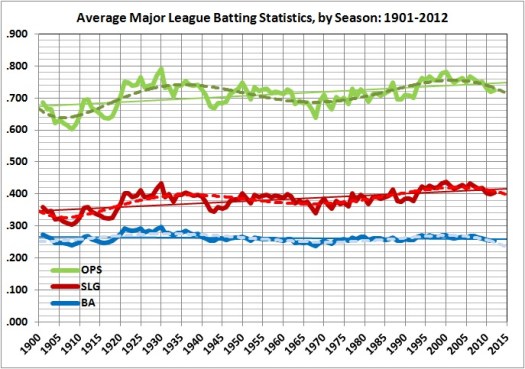
Driving and Politics (2)

In an earlier post I described 16 bad-driving habits that are common in Austin, and concluded that

the prevalence of bad-driving behavior in Austin — where “liberalism” is hard-left and dominant — reflects the essentially anti-social character of “liberalism.” Despite the lip-service that “liberals” give to such things as compassion, community, and society, they worship the state and use its power to do their will — without thought or care for the lives and livelihoods thus twisted and damaged.

I can now test my hypothesis, having learned of Allstate Insurance Company’s Annual Best Drivers Report. According to this page at Allstate’s web site, the report “ranks America’s 200 largest cities in terms of car collision frequency to identify which cities have the safest drivers.” (Actually, the report cover 195 cities, not 200, but that discrepancy doesn’t affect my analysis.)

Allstate rates each city according to the difference between the accident rate for Allstate-insured drivers in that city and the national average for Allstate-insured drivers. The report also gives each city’s rank on the accident-rate measure, its population, its population rank, and the average number of years between accidents.

The report has some limitations, which are described here (in the sixth paragraph). But the main limitation seems to be the exclusion of Massachusetts — and therefore Boston, with its notoriously bad drivers and predominantly Democrat voters — because Allstate (wisely) doesn’t operate in that State. That relationship is consistent with my hypothesis. But as I am about to show, the hypothesis is well-supported despite the absence of Boston.

To test the hypothesis, I compared Allstate’s 20 best cities and 20 worst cities, after excluding three very large ones (New York, Los Angeles, and Philadelphia) from the sample of worst cities. I did that because — as one would expect — a city’s accident rate is positively correlated with its population; the more drivers there are in an area, the greater the likelihood that they’ll run into each other. This is true for the 195 cities covered by Allstate’s report, though the correlation is only 0.198. (This is actually a rather weak correlation, and with a standard error of 0.069, it barely manages to be significantly greater than zero.)

In any event, the 20 best cities had an average accident rate 18 percent below the national average; the 20 worst cities (excluding NYC, LA, and Philly) had an average accident rate 57 percent above the national average. The average populations of the two samples — 247,000 and 280,000 — are not significantly different; that is, the comparison isn’t biased by the use of two essentially different samples (with respect to population).

The 20 best cities, with an average accident rate 18 percent below the national average, are situated in counties* whose voters gave Mitt Romney 48 percent of the popular vote in 2012. The 20 worst cities, with an average accident rate 57 above the national average, are situated in counties that gave Mitt Romney only 32 percent of the popular vote in 2012. Taking the lower Romney percentage as an indication of a city’s leftishness, these results strongly support my hypothesis that bad driving and left-wing politics go together.

To put it another way, a jerk’s a jerk — in the voting booth and on the highway.
__________
* I obtained voting percentages from Dave Leip’s Atlas of U.S. Presidential Elections, where county-level voting records are readily available. I used counties as proxies for the cities on Allstate’s list, except where city-level records were given for cities that are coterminous with counties, and for cities that are independent of counties.

“Conversing” about Race

UPDATED BELOW, 08/04/13

The “conversation” about race so devoutly wished by Barack Obama, Eric Holder, and their ilk (of all colors) doesn’t seem to be on the track that they have in mind. That track, as some have noted, is for Obama, Holder, et al. to tell us white folks how to think about black folks, and thenceforth to think and act accordingly.

It seems that it has become acceptable for commentators outside what are known as “racialist” circles to acknowledge openly certain facts of life that are strongly tied to race. Thus, on July 20, we have Ron Unz declaring that

if we examine the official FBI arrest statistics, we find that these seem to support the most straightforward interpretation of our racial crime correlations.  For example, blacks in America were over six times as likely to be arrested for homicide in 2011 as non-blacks and over eight times as likely to be arrested for robbery; the factors for previous years were usually in a similar range.  The accuracy of this racial pattern of arrests is generally confirmed by the corresponding racial pattern of victim-identification statements, also aggregated by the FBI.

This declaration of facts is especially noteworthy, coming from Unz, who is a firm disbeliever in the proposition that intelligence has a strong genetic component. (I have addressed Unz’s treatise at length — and negatively — in this post.)

Then, along came Victor Davis Hanson on July 25, writing at National Review Online — the organ whose editor had fired John Derbyshire for his infelicitous comments about race (in another venue). Among other tidbits about young black males and crime, Hanson offered this:

I suspect — and statistics would again support such supposition — that [Attorney General Eric ]Holder privately is more worried that his son is in greater danger of being attacked by other black youths than by either the police or a nation of white-Hispanic George Zimmermans on the loose.

Will Hanson go the way of Derbyshire and be fired by NRO? It seems unlikely. Hanson is far more temperate than Derbyshire, as Derbyshire gladly demonstrates in his commentary on Hanson’s column; for example:

The race issue in America is a tadpole, with black/nonblack the mighty head and everything else an inconsequential tail.

In per capita intensity of feeling, black hatred of nonblacks is about an 8 out of 10, nonblack dislike of blacks about a 3 or 4, and any other antagonism you care to name—Hispanic hostility to East Asians, Hmong feelings about Native Americans, whatever—well down below 1.

And in the sheer amount of sturm und drang generated, the conflict is, as I keep telling you, really just between two big blocs of white people who loathe each other, the liberal bloc recruiting nonwhites as not-much-trusted support troops—a Cold Civil War.  As Prof. Hanson said, the liberal bloc personally avoids the great mass of blacks as much as they can—except when a latrine trench needs digging.

That’s more like it. And there’s a lot more where that came from. (UPDATE: Derbyshire’s followup, in which he tackles Hanson’s distortions of his views, is here.)

Well, I can be as inflammatory as Mr. Derbyshire, and so I will quote a recent bit of advice about how to be stupid:

… Intelligence is largely potential and theoretical, but stupidity is practical….

The key ingredient in applied stupidity is lack of effort….

Teachers often blame poor educational performance on the home lives of their students, insisting that lack of parental involvement deprives the children of motivation, and keeps good study habits from taking root….

Stupid behavior correlates fairly well with childish behavior, because let’s face it, kids do a lot of silly things.  This is to be expected – they’re children, after all.  They have limited experience, they have trouble staying focused, and they can’t control their impulses.  An adult who displays these traits on a constant basis will reliably behave stupidly.  Acting in a mature manner – seeking information, staying focused, delaying immediate gratification, and remaining patient – is therefore a good strategy for avoiding stupidity.  Courteous behavior, the hallmark of adult communication, is a combination of these behaviors.  The acolyte of stupidity should therefore be short-tempered, rude, impatient, and hostile at all times.

Anyone can make mistakes, but consistency is the difference between error and folly.  Smart people make mistakes and learn from them.  Stupid people make the same mistakes over and over again.  That’s not necessarily because they can’t learn from their mistakes.  Sometimes they refuse to learn…..

Apathy is another sinkhole for energy.  Apathetic people don’t care, so they don’t try.  The result is functionally equivalent to stupidity.  A mind pumped full of despair, and convinced the world is hopelessly stacked against it, loses the enthusiasm necessary to process information and make good decisions.

The inability to express yourself clearly may lead others to conclude you are stupid.  This could be viewed as yet another manifestation of apathy and carelessness.  The basic rules of grammar and syntax are durable, fairly straightforward, and taught repeatedly to children during every year of their primary education.  Someone who doesn’t make the effort to express themselves using those basic rules of clear speech, knowing that listeners expect them to be followed, is either being lazy or arrogant, which for the purposes of stupidity engineering have similar practical results….

Most people have the neural capacity to conduct themselves in a reasonably intelligent and expressive manner, so if you want to be stupid, the key technique is to avoid putting any effort into thinking.  Tell yourself that you shouldn’t have to try hard, or that the rest of the world should accommodate your indolence.  Insist that it’s unfair to expect patience or diligence from you. Share your raw emotional reactions with the world around you, in the most crudely impassioned manner possible…. Rely on aggression instead of co-operation, demands instead of persuasion, and nihilism over optimism.  Focus on what you deserve, not what you have earned.  Accept responsibility for nothing, because that’s the first step in learning from your mistakes, and you can’t afford a single step in that direction, if you wish to remain stupid.

There’s plenty of such stupidity to go around, but too much of it seems to find its way into black communities. Thomas Sowell would say that this is mainly due to what he calls “black redneck” culture — a position that I have addressed by saying:

If “black redneck” culture is the cause of the inter-racial gap in IQ, and if blacks choose to perpetuate the “black redneck” culture, then the perpetuation of the IQ gap might as well be genetic. For, it will be the result of blacks’ self-imposed servitude to the forces of ignorance.

That is the kind of “conversation” about race which Obama, Holder, and their ilk ought to initiate. Bill Cosby tried, and for his pains has been vilified, and his message has been ignored by spineless, race-baiting politicians — black and “liberal” white, alike.

UPDATE — Related reading: Bill Vallicella, “Cleveland Heights Coventry Art Fair Canceled Again,” Maverick Philosopher, August 4, 2013

Related posts:
Diversity
Putting Hate Crimes in Perspective
The Cost of Affirmative Action
The Face of America
Race and Acceptance
Affirmative Action: A Modest Proposal
Race, Intelligence, and Affirmative Action
Affirmative Action: Two Views from the Academy
Affirmative Action, One More Time
A Contrarian View of Segregation
Much Food for Thought
A Law Professor to Admire
Guilty Until Proven Innocent
After the Bell Curve
A Footnote . . .
Schelling and Segregation
A Black Bigot Speaks
More Anti-Black Bigotry from the Left
Societal Suicide
A “Taste” for Segregation
Black Terrorists and “White Flight”
Affirmative Action: Two Views from the Academy, Revisited

It’s the Little Things That Count
A Footnote to a Footnote
Let Me Be Perfectly Clear…
Racism among the Deracinated
Crime, Explained
Lock ‘Em Up
Conspicuous Consumption and Race
I Want My Country Back
A Declaration and Defense of My Prejudices about Governance (item 3)
Legislating Morality
Legislating Morality (II)
Obama’s Latest Act of Racism
Free Will, Crime, and Punishment
Race and Reason: The Derbyshire Debacle
Race and Reason: The Victims of Affirmative Action
Not-So-Random Thoughts (III) (second item)
Race and Reason: The Achievement Gap — Causes and Implications
The Hidden Tragedy of the Assassination of Lincoln
Left-Libertarians, Obama, and the Zimmerman Case

Baseball Statistics and the Consumer Price Index

Faithful readers of this blog will have noticed that I like to invoke baseball when addressing matters far afield from America’s pastime. (See this, this, this, this, this, this, this, this, and this.) It lately occurred to me that baseball statistics, properly understood, illustrate the inherent meaninglessness of the Consumer Price Index (CPI).

What does the CPI purport to measure? The Bureau of Labor Statistics (BLS) — compiler of the index — says that it “is a measure of the average change over time in the prices paid by urban consumers for a market basket of consumer goods and services.” Read that statement carefully. The CPI does not measure the average change in prices of the goods and services purchased by every urban consumer; it measures the prices of a “market basket” of goods and services that is thought to represent the purchases of a “typical” consumer. Further, the composition of that “market basket” is assumed to change, over time, in accordance with the preferences of the “typical” consumer. (There is more about the CPI in the note at the bottom of this post.)

To understand the arbitrariness of the CPI — as regards the construction of the “market basket” and the estimation of the prices of its components — one must read no further than the Bureau’s own list of questions and answers, some of which I have reproduced in the footnote. As a measure of your cost of living — at any time or over time — the CPI is as useful as the statement that the average depth of a swimming pool is 5 feet; a non-swimmer who is 6 feet tall puts himself in danger of drowning if he jumps into the deep end of such a pool.

The BLS nevertheless computes one version CPI back to January 1913. If you believe that prices in 1913 can be compared with prices in 2013, you must believe that baseball statistics yield meaningful comparisons of the performance of contemporary players and the players of bygone years. I enjoy making such comparisons, but I do not endorse their validity. As I will discuss later in this post, my reservations about cross-temporal comparisons of baseball statistics apply also to cross-temporal comparisons of prices.

Let us begin our journey into baseball statistics with three popular measures of batting prowess: batting average (BA), slugging percentage (SLG), and on-base plus slugging (OPS). The “normal” values of these statistics have varied widely:

Average major league batting statistics_1901-2012
Source: League Year-by-Year Batting at Baseball-Reference.com.

Aside from the upward trends of SLG and OPS, which are unsurprising to anyone with a passing knowledge of baseball’s history, the most striking feature of these statistics is their synchronicity. Players (and fans) of the 1920s and 1930s enjoyed an upsurge in BA, SLG, and OPS that was echoed in the 1980s and 1990s. How can the three statistics rise in lockstep when BA usually suffers with emphasis on the long ball (captured in SLG and OPS)? The three statistics can rise in lockstep only because of changes in the conditions of play that allow batters to hit for a better average while also getting more long hits. By the same token, changes in conditions of play can have the opposite effect of causing offensive statistics to fall, across the board. But given constant conditions of play, there usually is a tradeoff between batting average and long hits. A key point, to which I will return, is the essential incommensurability of statistics gathered under different conditions of play (or economic activity).

There are many variations in the conditions of play that have resulted in significant changes in offensive statistics. Among those changes are the use of cleaner and more tightly wound baseballs, the advent of night baseball, better lighting for night games, bigger gloves, lighter bats, bigger and stronger players, the expansion of the major leagues in fits and starts, the size of the strike zone, the height of the pitching mound, and — last but far from least in this list — the integration of black and Hispanic players into major league baseball. In addition to these structural variations, there are others that mitigate against the commensurability of statistics over time; for example, the rise and decline of each player’s skills, the skills of teammates (which can boost or depress a player’s performance), the characteristics of a player’s home ballpark (where players generally play half their games), and the skills of the opposing players who are encountered over the course of a career.

Despite all of these obstacles to commensurability, the urge to evaluate the relative performance of players from different teams, leagues, seasons, and eras is irrepressible. Baseball-Reference.com is rife with such evaluations; the Society for American Baseball Research (SABR) revels in them; many books offer them (e.g., this one); and I have succumbed to the urge more than once.

It is one thing to have fun with numbers. It is quite another thing to ascribe meanings to them that they cannot support. Consider the following cross-temporal comparison of baseball statistics:

Top-25 single-season offensive records
Source: Derived from the Play Index at Baseball-Reference.com. (Most baseball fans will recognize all of the names but one: Cy Seymour. His life and career are detailed in this article.)

Take, for example, the players ranked 17-25 in single-season BA. The range of BA for those 9 seasons (.384 to .388) is insignificantly small; it represents a maximum difference of only 4 hits per 1,000 times at bat. Given the vastly different conditions of play — and of the players — what does it mean to say that Rod Carew in 1977 and George Brett in 1980 had essentially the same BA as Honus Wagner in 1905 and 1908? It means nothing. The only thing that is essentially the same is the normalized BA that I concocted to represent those (and other) seasons. Offering normalized BA in evidence is to beg the question. In fact, any cross-temporal comparison of BA (or SLG or OPS) is essentially meaningless.

By the same token, it means nothing to say that prices in 2013 are X times as high as prices in 1913, when — among many other things — consumers in 2013 have access to a vastly richer “market basket” of products and services. Further, the products and services of 2013 that bear a passing resemblance to those of 1913 (e.g., houses, automobiles, telephone service) are demonstrably superior in quality.

So, it is fun to play with numbers, but when it comes to using them to make cross-temporal comparisons — especially over a span of decades — be very wary. Better yet, resist the temptation to make those cross-temporal comparisons, except for the fun of it.
____________
A SELECTION OF QUESTIONS AND ANSWERS ABOUT THE CPI, FROM THIS PAGE AT THE WEBSITE OF THE BUREAU OF LABOR STATISTICS:

Whose buying habits does the CPI reflect?

The CPI reflects spending patterns for each of two population groups: all urban consumers and urban wage earners and clerical workers. The all urban consumer group represents about 87 percent of the total U.S. population. It is based on the expenditures of almost all residents of urban or metropolitan areas, including professionals, the self-employed, the poor, the unemployed, and retired people, as well as urban wage earners and clerical workers. Not included in the CPI are the spending patterns of people living in rural nonmetropolitan areas, farm families, people in the Armed Forces, and those in institutions, such as prisons and mental hospitals. Consumer inflation for all urban consumers is measured by two indexes, namely, the Consumer Price Index for All Urban Consumers (CPI-U) and the Chained Consumer Price Index for All Urban Consumers (C-CPI-U)….

The Consumer Price Index for Urban Wage Earners and Clerical Workers (CPI-W) is based on the expenditures of households included in the CPI-U definition that also meet two requirements: more than one-half of the household’s income must come from clerical or wage occupations, and at least one of the household’s earners must have been employed for at least 37 weeks during the previous 12 months. The CPI-W population represents about 32 percent of the total U.S. population and is a subset, or part, of the CPI-U population….

Does the CPI measure my experience with price change?

Not necessarily. It is important to understand that BLS bases the market baskets and pricing procedures for the CPI-U and CPI-W populations on the experience of the relevant average household, not of any specific family or individual. It is unlikely that your experience will correspond precisely with either the national indexes or the indexes for specific cities or regions….

How is the CPI market basket determined?

The CPI market basket is developed from detailed expenditure information provided by families and individuals on what they actually bought. For the current CPI, this information was collected from the Consumer Expenditure Surveys for 2007 and 2008. In each of those years, about 7,000 families from around the country provided information each quarter on their spending habits in the interview survey. To collect information on frequently purchased items, such as food and personal care products, another 7,000 families in each of these years kept diaries listing everything they bought during a 2-week period….

What goods and services does the CPI cover?

The CPI represents all goods and services purchased for consumption by the reference population (U or W) BLS has classified all expenditure items into more than 200 categories, arranged into eight major groups. Major groups and examples of categories in each are as follows:

  • FOOD AND BEVERAGES (breakfast cereal, milk, coffee, chicken, wine, full service meals, snacks)
  • HOUSING (rent of primary residence, owners’ equivalent rent, fuel oil, bedroom furniture)
  • APPAREL (men’s shirts and sweaters, women’s dresses, jewelry)
  • TRANSPORTATION (new vehicles, airline fares, gasoline, motor vehicle insurance)
  • MEDICAL CARE (prescription drugs and medical supplies, physicians’ services, eyeglasses and eye care, hospital services)
  • RECREATION (televisions, toys, pets and pet products, sports equipment, admissions);
  • EDUCATION AND COMMUNICATION (college tuition, postage, telephone services, computer software and accessories);
  • OTHER GOODS AND SERVICES (tobacco and smoking products, haircuts and other personal services, funeral expenses)….

For each of the more than 200 item categories, using scientific statistical procedures, the Bureau has chosen samples of several hundred specific items within selected business establishments frequented by consumers to represent the thousands of varieties available in the marketplace. For example, in a given supermarket, the Bureau may choose a plastic bag of golden delicious apples, U.S. extra fancy grade, weighing 4.4 pounds to represent the Apples category….

How do I read or interpret an index?

An index is a tool that simplifies the measurement of movements in a numerical series. Most of the specific CPI indexes have a 1982-84 reference base. That is, BLS sets the average index level (representing the average price level)-for the 36-month period covering the years 1982, 1983, and 1984-equal to 100. BLS then measures changes in relation to that figure. An index of 110, for example, means there has been a 10-percent increase in price since the reference period; similarly, an index of 90 means a 10-percent decrease….

Can the CPIs for individual areas be used to compare living costs among the areas?

No, an individual area index measures how much prices have changed over a specific period in that particular area; it does not show whether prices or living costs are higher or lower in that area relative to another. In general, the composition of the market basket and the relative prices of goods and services in the market basket during the expenditure base period vary substantially across areas….

The Fallacy of the Reverse-Mussolini Fallacy

UPDATED BELOW

Ilya Somin describes it and gives an example:

People fall prey to the Reverse Mussolini Fallacy any time they make an argument to the effect that “bad people believe X, therefore X must be wrong.” The flaw in this reasoning is that bad people can still be right about some things. In the abstract, almost everyone recognizes that. But many still fall prey to the Reverse Mussolini Fallacy in practice, even if they understand its flaws in theory.

Unfortunately, the Reverse Mussolini Fallacy often crops up in conservative and libertarian reactions to PC excesses on the left. I suspect it’s an additional reason for the sympathy that some libertarians and conservatives display towards the Confederacy, especially if they do so out of ignorance. It’s easy for such people to decide that if PC leftists hate the Confederacy, that must mean that the Confederacy was actually a good thing.

It’s not that simple.

PC leftists hate the Confederacy not only because of slavery (a hatred shared by anyone entitled to call himself a libertarian or conservative), but also because the Confederacy stands for hatred of an unconstitutionally powerful central government.

It is the idea of secession from such a government that rightly attracts many libertarians and conservatives. And it is that idea which rightly leads those libertarians and conservatives to detest PC leftists, whose anti-Confederacy stance is really a cynical defense of statism.

UPDATE:

Somin, in an addendum to his post, says that my response, which he quotes in full, “exemplifies the very fallacy the post [his post] criticizes.” He continues:

Even if PC leftists have dubious motives for hating the Confederacy, that does not prove that the hatred is unjustified or that the Confederacy is somehow good. Moreover, as I discuss here, the Confederates did not in fact oppose having “an unconstitutionally powerful central government.” They had not problem with constitutionally dubious federal power so long as that power was used to bolster slavery, as in the case of the Fugitive Slave Act. And they also didn’t have a principled commitment to state autonomy, as witness their efforts to coerce Kentucky and Missouri into joining the Confederacy, despite the fact that the majority of the population (including even the white population) in those states wanted to stay in the Union. Finally, as I have emphasized on several occasions (e.g. here), Confederate secession can only be considered a “rightful” exercise of popular sovereignty if you completely discount the views of the black population of the seceding states. If you count them as part of the people whose consent was required for secession, then it becomes clear that secession from the Union did not have majority support in any state in the South.

There is no doubt that some libertarians and conservatives are guilty of a reverse-Mussolini fallacy, as described by Somin. But he seems to have missed my main point, probably because I didn’t make it clearly enough.

I certainly said nothing to indicate that “the Confederacy is somehow good.” What I said was that “the Confederacy stands for hatred of an unconstitutionally powerful central government.” I should have made it clear that the Confederacy stands for (symbolizes) hatred of an unconstitutionally powerful central government because it represents a course of action (secession) with which many libertarians and conservatives sympathize, given the unconstitutional power wielded by today’s central government. I did not mean to say — and did not say — that the Confederacy itself stood for hatred of an unconstitutionally powerful central government.

Nor did I say — or mean to say — that the hatred of PC leftists for the Confederacy is unjustified, to the extent that it is legitimate. But it is a facile hatred, on a par with hating Hitler and Stalin. I give little credence to facile hatred when it is directed at a symbol of resistance to the very kind of government that PC leftists admire.

Further, it seems to me that PC leftists deliberately commit a logical fallacy when they make the following claim (as many of them do): Libertarians and conservatives want a government that is as limited in its power as, say, the government of the late 1800s; therefore, those libertarians and conservatives want to revert to the racial and sexual oppression that was rampant in that era.

Logical fallacies abound. But I didn’t commit one in my original post.

UPDATE 2:

To make explicit a point that is implicit in what I’ve said, admiration for what the Confederacy symbolizes — becoming free of an unconstitutionally powerful central government — is animated by hatred of that government. I very much doubt that admiration for what the Confederacy symbolizes has anything to do with the views of PC leftists.

As for my own view of the Confederacy:

1. I believe that secession was (and is) legal (see this, for example). But that doesn’t absolve the Confederacy of its sins …

2. The defeat of the Confederacy was salutary because it meant the end of slavery in the United States.

If some libertarians and conservatives actually admire the Confederacy, I am confident that they are in the vast minority among libertarians and conservatives. (I dismiss pro-Confederacy-Stars-and-Bars-waving yahoos, who no more deserve to be called “conservative” than today’s leftists deserve to be called “liberal.”)

UPDATE 3:

I should add that when it comes to secession, Somin and I seem to agree about the importance of separating legality (which is one issue) from cause (which is a separate ssue). (See the first section of this post.) Further, on the whole, I have bee favorably impressed by Somin’s writings at The Volokh Conspiracy. (See also this, this, and this.)

Economic Horror Stories: The Great “Demancipation” and Economic Stagnation

UPDATED 08/03/13

Alternate title: “What We Can Learn from the Labor-Force Participation Rate”

The wholesale entry of women into the labor force after 1960 was considered (and still is, by many) to be a key sign women’s “emancipation.” Because of the baleful effects of that “emancipation,” I prefer to call it “demancipation.” What baleful effects? I begin with this, from a post that I wrote more than eight years ago:

Monetary measures of GDP exclude a lot of things that might be captured in the term “quality of life”; for example:

[F]ailing to account for the output produced within households may lead to misleading comparisons of economy-wide production, as conventionally measured. The female labor force participation rate in the United States has grown enormously since the early part of the 20th century. To the extent that the entry of women into paid employment has reduced the effort women devote to household production, the long-term trend in output, as measured by gross domestic product (GDP), may exaggerate the true growth in national output. [Committee on National Statistics (CNSTAT), Designing Nonmarket Accounts for the United States: Interim Report (2003), p. 9 in HTML version]

The “effort that women devote to household production” involves a lot more than shopping, cooking, cleaning, and all of the other activities usually associated with the term “housewife.” Not the least among those activities is the raising of children. Child-rearing (a quaint but still meaningful phrase) includes more than feeding, bathing, and toilet training. Parents — and especially mothers — impart lessons about civility — lessons that are neglected when children are left on their own to disport with friends, watch TV, and imbibe the nihilistic lyrics that pervade popular music.Yet, the apparently robust growth of real GDP per capita between owes much to the huge increase in the proportion of women seeking work outside the home. The labor-force participation rate for women of “working age” (14 and older in 1900, 16 and older in 2000) grew from 19 percent in 1900 to 60 percent in 2000, while the rate for men dropped only slightly, from 80 percent to 75 percent. Who knows how much damage society has suffered — and will yet suffer — because of the exodus into the workforce of women with children at home?

I went on, in that post and in later ones, to address the damage.

As it turned out, both the female participation rate and the overall rate peaked around 2000 (details here, Table 585). Here is a picture of the overall rate since 1960:

Labor force participation rate_Jan 1960 - Jul 2013
Source: Bureau of Labor Statistics, Labor Force Statistics from the Current Population Survey, Civilian Labor Force Participation Rate (LNS11300000).

The end of demancipation around 2000 wasn’t necessarily an unmixed blessing. Why? Because the graph points to another horror story: economic stagnation.

Look at relationship of the labor-force participation rate and recessions, which are represented by the gray columns in the chart. (The recessionary periods are those defined by the National Bureau of Economic Research, here.) Each recession has marked a reduction or leveling off of the labor force participation rate. This is an unsurprising relationship because dimmed prospects for employment will deter persons from joining or rejoining the labor force.

But the decline since 2000 — and especially since 2009 — is eloquent testimony to a growing lack of faith in the country’s economic prospects. That lack of faith is entirely justified, as I have explained in many of the following related posts:
The Laffer Curve, “Fiscal Responsibility,” and Economic Growth
The Causes of Economic Growth
In the Long Run We Are All Poorer
A Short Course in Economics
Addendum to a Short Course in Economics
The Price of Government
The Price of Government Redux
The Mega-Depression
As Goes Greece
Ricardian Equivalence Reconsidered
The Real Burden of Government
The Illusion of Prosperity and Stability
Estimating the Rahn Curve: Or, How Government Inhibits Economic Growth
Taxing the Rich
More about Taxing the Rich
America’s Financial Crisis Is Now
A Keynesian Fantasy Land
The Keynesian Fallacy and Regime Uncertainty
Why the “Stimulus” Failed to Stimulate
The “Jobs Speech” That Obama Should Have Given
Say’s Law, Government, and Unemployment
Unemployment and Economic Growth
Regime Uncertainty and the Great Recession
Regulation as Wishful Thinking
The Real Multiplier
Vulgar Keynesianism and Capitalism
Why Are Interest Rates So Low?
The Commandeered Economy
Estimating the Rahn Curve: A Sequel
In Defense of the 1%
The Real Multiplier (II)
Lay My (Regulatory) Burden Down
The Burden of Government
Economic Growth Since World War II
More Evidence for the Rahn Curve
The Economy Slogs Along
The Obama Effect: Disguised Unemployment
The Stock Market as a Leading Indicator of GDP
Government in Macroeconomic Perspective
Where We Are, Economically
Keynesianism: Upside-Down Economics in the Collectivist Cause
The Economic Outlook in Brief
Obamanomics: A Report Card

Left-Libertarians, Obama, and the Zimmerman Case

I’ll begin with some samples of loony left-libertarianism (to which I will not link lest I inflame a loon). This one, for example, is simply loaded with misstatements of fact and interpretation, all of which I’ve bolded:

I am appalled to see that some of my fellow Libertarians are supporting accused murderer George Zimmerman, in the wake of the end of his trial for the killing of teenager Trayvon Martin.

As Libertarians we should be advancing the cause of civil rights and standing up against the racists in this country. The last thing we should do is echo the Republicans who are praising Zimmerman.

Facebook and Twitter continue to urge citizens to stand up for Trayvon Martin through protest: Sunday marks the National Blackout Day in angry response to Zimmerman’s freedom, according to Policymic.

Here are some of the demonstrations taking place around the country today, in opposition to the court ruling that freed Zimerman – and made it legal to sta[l]k and accost unarmed teens and shoot them to death[.]

Zimmerman isn’t a racist. Some Republicans may be pleased by the outcome of the trial because Zimmerman was unjustly prosecuted, but they aren’t “praising” Zimmerman for having shot Martin. And just how does acquittal for an obvious act of self-defense make it “legal to stalk and accost unarmed teens and shoot them to death”?

Another left-libertarian is coherent, up to a point, but then:

The fact is far too many black men fail in our country, being raised in dysfunction households, attending dysfunctional schools, and living in dysfunctional communities. Prior to the expansion of the welfare state during the 1960s, blacks had about the same unemployment rate and about the same level of family instability as whites. They just earned less. But, even with regard to earnings, blacks – with hardly any outside help – moved from 30 percent of white earnings at the time of emancipation to 85 percent by the 1960s. Since then, there has been no further progress in narrowing the income gap, and the black family and community, the inner city public schools and the inner city economy have all fallen apart.

What does any of that have to do with the essential facts of the case, which are that Trayvon Martin attacked George Zimmerman, who justifiably felt that his life was in danger?  The foregoing sociological recitation may (may, I say) have something to do with Martin’s actions, but it doesn’t contain a glimmer of an excuse for those actions.

The painful fact is that the rampant dysfunctionality among young black men, in black households, and in black communities is the predictable product of black genes, black culture, and government meddling. (For much more, go here, and scroll down to “Affirmative Action, Race, and Immigration.” See also Maverick Philosopher‘s “The Importance of Self-Control,” and item 3 at “A Declaration and Defense of My Prejudices about Governance.”)

Then there is Will Wilkinson, whose penchant for wrong-headedness I have often addressed (e.g., here, here, here, here, here, here, here, here, here, and here). In a post at The Economist (“Getting Away With It“), Wilkinson writes:

Now, I don’t know it, but I seriously doubt Mr Zimmerman needed to shoot Mr Martin, even if Mr Martin did attack him. And I seriously doubt Mr Martin would have been shot if he hadn’t been a black kid. In my heart of hearts, I too think Mr Zimmerman did something terribly wrong, and that this misdeed reflects a number of things that are terribly wrong in our culture.

The only supportable statement in that passage is Wilkinson’s admission that he doesn’t know that Zimmerman didn’t need to shoot Martin. The rest is knee-jerk. leftist. second-guessing. When Zimmerman’s head was being pounded on concrete and his face was being pummeled, do you suppose that he had a good reason to believe that Martin would relent before his (Zimmerman’s) jaw or skull had been fractured or he had suffered a debilitating concussion, if not worse?

Given the circumstances, the only reason that Martin wouldn’t have been shot if he hadn’t been black (“kid” is a bit of misdirection) is that if he had been white it is less likely that Zimmerman would have been suspicious of his behavior. Therefore, if Martin had been white, Zimmerman would less likely have followed him and been confronted by him. But Martin’s blackness — coupled with his age, dress, and demeanor — would matter to a bona-fide member of a neighborhood watch patrol, as Zimmerman was, and one with no discernible animus toward blacks. Zimmerman was doing his job, and for his pains was attacked by a violent, drug-ingesting punk who — unsurprisingly — was a young, black male.

Last — and least, in merit — is today’s performance by Barack Obama, wherein he plays not just one race card but a whole deck of them; for example:

There are very few African American men in this country who haven’t had the experience of being followed when they were shopping in a department store.  That includes me.  There are very few African American men who haven’t had the experience of walking across the street and hearing the locks click on the doors of cars.  That happens to me — at least before I was a senator.  There are very few African Americans who haven’t had the experience of getting on an elevator and a woman clutching her purse nervously and holding her breath until she had a chance to get off.  That happens often.

Well, it’s no wonder, is it? Who’s to blame (if blame is the right word), whites who don’t want to be victims or the dysfunctional, government-abetted, culture of violence that pervades black communities?

Obama almost acknowledges the fact of pervasive violence:

Now, this isn’t to say that the African American community is naïve about the fact that African American young men are disproportionately involved in the criminal justice system; that they’re disproportionately both victims and perpetrators of violence.  It’s not to make excuses for that fact — although black folks do interpret the reasons for that in a historical context.  They understand that some of the violence that takes place in poor black neighborhoods around the country is born out of a very violent past in this country, and that the poverty and dysfunction that we see in those communities can be traced to a very difficult history.

But guess where the blame for that violence lands? On long-dead Southern bigots, of course. It’s as if the white-on-black violence of 50 to 250 years ago was somehow imprinted indelibly on blacks. Come again? Why is it that black-on-white violence — now far more common that its opposite — hasn’t caused whites to become more violent?

I am just plain sick and tired of leftists (“libertarian” and otherwise) and black race-baiters (Obama, Holder, Jackson, Sharpton, etc.) who cannot and will not honestly face up to the dysfunctionality of black culture and the role of government in compounding that dysfunctionality. A pox on all of you.

The only (potentially) good news to come out of Obama’s performance is the hint that Gauleiter Holder will not instigate a federal civil-rights charge against Zimmerman:

I know that Eric Holder is reviewing what happened down there, but I think it’s important for people to have some clear expectations here.  Traditionally, these are issues of state and local government, the criminal code.  And law enforcement is traditionally done at the state and local levels, not at the federal levels.

But I’m not holding my breath waiting for Obama and his minions to do the right thing.

Related page: My Moral Profile (See especially the final section, “Implicit Racial Preferences,” to know that I write about blacks without bias or animus toward them.)

Related reading: Heather Mac Donald, “Obama Strikes Out,” City Journal, July 22, 2013

Related posts:
Diversity
Putting Hate Crimes in Perspective
The Cost of Affirmative Action
The Face of America
Race and Acceptance
Affirmative Action: A Modest Proposal
Race, Intelligence, and Affirmative Action
Affirmative Action: Two Views from the Academy
Affirmative Action, One More Time
A Contrarian View of Segregation
Much Food for Thought
A Law Professor to Admire
Guilty Until Proven Innocent
After the Bell Curve
A Footnote . . .
Schelling and Segregation
A Black Bigot Speaks
More Anti-Black Bigotry from the Left
Societal Suicide
A “Taste” for Segregation
Black Terrorists and “White Flight”
Affirmative Action: Two Views from the Academy, Revisited

It’s the Little Things That Count
A Footnote to a Footnote
Let Me Be Perfectly Clear…
Racism among the Deracinated
Crime, Explained
Lock ‘Em Up
Conspicuous Consumption and Race
I Want My Country Back
A Declaration and Defense of My Prejudices about Governance (item 3)
Legislating Morality
Legislating Morality (II)
Free Will, Crime, and Punishment
Race and Reason: The Derbyshire Debacle
Race and Reason: The Victims of Affirmative Action
Not-So-Random Thoughts (III) (second item)
Race and Reason: The Achievement Gap — Causes and Implications
The Hidden Tragedy of the Assassination of Lincoln

Defending Liberty against (Pseudo) Libertarians

(Pseudo) libertarians like to demonstrate their bogus commitment to liberty by proclaiming loudly their support for unfettered immigration, unfettered speech, unfettered abortion, unfettered same-sex coupling (and legal recognition thereof as “marriage’), and unfettered you-name-it.. In the minds of these moral relativists, liberty is a dream world where anything goes — anything of which they approve, that is.

The aim of today’s sermon is to embellish what I’ve said previously in many of the posts listed at the bottom of this one on the subject of (pseudo) libertarians and (pseudo) libertarianism. I begin with Bryan Caplan.

My disdain for Caplan’s (pseudo) libertarian, pacifistic, one-worldishness is amply documented: here, here, here, here, here, and here (second item). Caplan has been at it again, in recent posts about immigration (as in opening the floodgates thereto).

Consider this post, for example, where Caplan tries (in vain) to employ Swiftian hyperbole in defense of unfettered immigration. In the following block quotation, each of Caplan’s “witty” proposals is followed by my observations (in brackets and bold type):

Libertarians’ odd openness to using immigration restrictions to protect American freedom has me thinking.  There are many statist policies that could indirectly lead to more libertarian policy.  If you’re open to one, you should logically be open to all.

Here are just a few candidates:

1. Make public schools teach libertarianism.  Sure, public education should be abolished.  But as long as public education exists, wouldn’t it be better if the schools taught children about the value of freedom and the wonder of markets?

[Well, yes, our course it would. But public schools don’t do that — and won’t do that — because they were long ago taken over by leftist “educators.” Next stupid idea…]

2. Discourage fertility of less libertarian groups.  If you really think that Muslims or Hispanics are unusually statist, their high birth rates should worry you.  Indeed, any birth rate above zero should worry you.  A moderate step would be to offer members of these groups extra subsidies for birth control.  From there, it’s just a hop, skip, and a jump to subsidized sterilization, tax penalties, or a selective One Child Policy.

[But why allow the immigration of statist-leaning groups in the first place? In fact, it would be a good idea to encourage them — and others — to leave. If the encouragement were financial, it would be a good investment.]

3. Censor statist ideas.  Sure, Paul Krugman has a right to free speech.  But the rest of us have a right to not be ruled by people swayed by Krugman.  It’s childish to deny the trade-off, no?

[It is childish to deny the trade-off. That’s why idiots like Caplan deny it. They believe that theft is wrong, but they don’t believe in preventing (or reducing) the amount of theft committed by government because statist ideas have been and are allowed to flourish. See below for more on this point.]

4. Subsidize vacations for less libertarian groups on election day.  Suppose the government gave members of unlibertarian groups free trips to Cancun that conveniently coincided with election day.  While some of the eligible would file an absentee ballot, there is little doubt that this would heavily depress turnout.  So why not?

[Better yet — and far less expensive — establish meaningful eligibility standards for voting; for example, being at least 30 years of age, owning one’s home, and being able to read and write at the 12th-grade level. This might empower more “liberals” than conservatives, give the tendency of educated persons to adhere to statism. But their power would be constrained by the sensible prohibition of speech that advocates theft in the name of the state.]

The first link in the block quotation is to an earlier post by Caplan, in which, for practical purposes, he joins with Don Boudreaux in proclaiming (psuedo) libertarian absolutism on such other matters as freedom of speech. As Boudreaux puts it,

Freedom may well destroy itself.  That’s a risk I’m willing to take, especially if the proposed means of saving freedom is to restrict it.

This reminds me of “it was necessary to destroy the village in order to save it.” It’s a position that defies logic; thus:

  1. Freedom is not merely literal freedom from captivity; it is the enjoyment of that freedom through the peaceful pursuit of happiness. (Freedom, as a general condition, is possible only if everyone’s pursuit of happiness is peaceful with respect to other persons and their property.)
  2. It is wrong to deny any person his freedom, regardless of his demonstrated enmity toward freedom as defined in 1. (This is Boudreaux’s stated position, which — taken literally — precludes the imprisonment of convicted murderers, rapists, thieves, and others whose acts deny to others the peaceful pursuit of happiness.)
  3. Freedom, therefore, consists only of literal freedom. (This conclusion, which contradicts the full definition of freedom given in 1, is the logical consequence of Boudreaux’s position. And yet, Boudreaux would be the last person to accept this limited definition of freedom.)

It doesn’t matter whether the person whose demonstrated hostility toward freedom (properly defined) is a thief or a socialist. One is the same as the other when it comes to the defense of freedom (properly defined). Boudreaux and his ilk would be consistent (though wrong) if they were to say that thieves shouldn’t be imprisoned, but I doubt that they would say such a thing because they are staunch defenders of property rights. Why then, do they defend the right of statists to spread the gospel of government control over our lives and livelihoods, which is nothing but government-sponsored theft and demonstrably more damaging than garden-variety theft?

As I say at the end of this post,

Liberty is lost when the law allows “freedom of speech, and of the press” to undermine the civil and state institutions that enable liberty.

There is a very good case for the view that the First Amendment sought to protect only those liberties necessary for the preservation of republican government. The present statist regime is a long way from the kind of republican government envisioned by the Framers.

Another staple of (pseudo) libertarian thought is a slavish devotion to privacy — when that devotion supports a (pseudo) libertarian position. Economists like Caplan and Boudreaux are cagy about abortion. But other (pseudo) libertarians are less so; for example:

I got into a long conversation yesterday with a [Ron] Paul supporter who took me to task for my criticisms of Paul’s positions. For one thing, he insisted, Paul’s position on abortion wasn’t as bad as I made it out, because Paul just thinks abortion is a matter for the states. I pointed out that in my book, saying that states can violate the rights of women [emphasis added] is no more libertarian than saying that the federal government can violate the rights of women.

Whence the “right” to abort an unborn child? Here, according to the same writer:

I do believe that abortion is a liberty protected by the Fourteenth Amendment….

This train of “logic” is in accord with the U.S. Supreme Court’s manufactured “right” to an abortion under the Fourteenth (or was it the Ninth?) Amendment, which I have discussed in various places, including here. All in the name of “privacy.”

Here, again, we see devotion to a value for its own sake, regardless of the implications for liberty. As I say here,

if privacy were an absolute right, it would be possible to get away with murder in one’s home simply by committing murder there. In fact, if there are any absolute rights, privacy certainly isn’t one of them.

(Psuedo) libertarians choose not to characterize abortion as murder. They prefer to think of it as a form of control over one’s own body. But an unborn child is not “one’s own body” — it is its own body, created (in the overwhelming majority of cases) by consensual sex between the mother and a male person. Abortion is nothing more than a murderous flight from personal responsibility, which is a trait highly praised (in the abstract) by (pseudo) libertarians. And it is a long step down a very slippery eugenic slope.

It is no wonder that many (pseudo) libertarians like to call themselves liberaltarians. It is hard to distinguish (pseudo) libertarians from “liberals,” given their shared penchant for decrying and destroying freedom of association and evolved social norms. It is these which underlie the conditions of mutual respect, mutual trust, and forbearance that enable human beings to coexist peacefully and cooperatively. That is to say, in liberty.

Related posts:
Law, Liberty, and Abortion
Abortion and the Slippery Slope
Privacy: Variations on the Theme of Liberty
An Immigration Roundup
Illogic from the Pro-Immigration Camp
On Liberty
Illegal Immigration: A Note to Libertarian Purists
Inside-Outside
A Moralist’s Moral Blindness
Pseudo-Libertarian Sophistry vs. True Libertarianism
The Folly of Pacifism
Positivism, “Natural Rights,” and Libertarianism
What Are “Natural Rights”?
The Golden Rule and the State
Libertarian Conservative or Conservative Libertarian?
Bounded Liberty: A Thought Experiment
Evolution, Human Nature, and “Natural Rights”
More Pseudo-Libertarianism
More about Conservative Governance
The Meaning of Liberty
Positive Liberty vs. Liberty
On Self-Ownership and Desert
In Defense of Marriage
Understanding Hayek
Rethinking the Constitution: Freedom of Speech and of the Press
The Golden Rule as Beneficial Learning
Why I Am Not an Extreme Libertarian
Facets of Liberty
Burkean Libertarianism
Rights: Source, Applicability, How Held
The Folly of Pacifism, Again
What Is Libertarianism?
True Libertarianism, One More Time
Human Nature, Liberty, and Rationalism
Utilitarianism and Psychopathy
Privacy Is Not Sacred
A Declaration and Defense of My Prejudices about Governance
The Libertarian-Conservative Fusion Is Alive and Well
Libertarianism and Morality
Libertarianism and Morality: A Footnote
Merit Goods, Positive Rights, and Cosmic Justice
More about Merit Goods
What Is Bleeding-Heart Libertarianism?
Prohibition, Abortion, and “Progressivism”
Liberty, Negative Rights, and Bleeding Hearts
Cato, the Kochs, and a Fluke
Conservatives vs. “Liberals”
Not-So-Random Thoughts (II)
Why Conservatism Works
The Pool of Liberty and “Me” Libertarianism
Bleeding-Heart Libertarians = Left-Statists
Enough with the Bleeding Hearts, Already
Not Guilty of Libertarian Purism
Liberty and Society
The Eclipse of “Old America”
Genetic Kinship and Society
Liberty as a Social Construct: Moral Relativism?

Coming Out

I blogged under my own name some years ago. As my blogging became more provocative, I adopted the pseudonym of Fritz (nickname for Friedrich, as in Friedrich Hayek, an intellectual hero). I then switched, briefly, to HLM, for Henry Louis Mencken (another intellectual hero).

Anonymity is impossible given the ubiquity of the NSA. I have therefore posted my own picture on this blog, and identified myself by my true initials (TEA). Anyone with more than an ounce of sleuthing skill will discover my full name and where I live. The NSA certainly has done so, or will do so after reading my earlier post of today (see #8).

That’s all there is to the title of this post. It has nothing to do with my sexuality, which is decidedly and happily orthodox.