Death Panels

Obamacare is an obama-nation — no doubt about it. The addition of many millions of persons to the rolls of the insured, at little or no cost to them, will cause the vast majority of Americans to receive worse medical care, and to pay more for it.

The federal government’s takeover of the health-care industry will lead, inevitably, to rationing of the constricted supply of medical products and services (limited by government action, that is). And one aspect of rationing, which was widely predicted years ago, is the establishment of death panels. They won’t be called that, of course, but whatever they are called, their function will be to determine who gets health care and who doesn’t. But that’s all right (isn’t it?) because everyone will be in the same, leaky boat (well, everyone but politicians and the “rich” whom they claim to disdain).

I must admit that I have mixed feelings about death panels. They are abhorrent in principle. But I have three parents and parents-in-law in their doddering, whining, inflexible, troublesome 90s, and I am beginning to think of death panels as a plus. (Though I may change my mind in about 20 years.)

A Zone of Liberty in the Making?

I am breaking my silence — for the moment, at least — because I see a faint ray of hope for liberty. The source is not electoral politics, which has become liberty’s burial ground.

The source is an initiative that seems to be modeled on a proposal that I made almost almost seven years ago, in this post. There, I proposed an arrangement that I call the “zone of liberty.” What is it? As I explain here, it

would be something like a “new city” — with a big difference. Uninhabited land would be acquired by a wealthy lover (or lovers) of liberty, who would establish a development authority for the sole purpose of selling the land in the zone. The zone would be populated initially by immigrants from other parts of the United States. The immigrants would buy parcels of land from the development authority, and on those parcels they could build homes or businesses of their choosing. Buyers of parcels would be allowed to attach perpetual covenants to the parcels they acquire, and to subdivide their parcels with (or without) the covenants attached. All homes and businesses would have to be owned by residents of the zone, in order to ensure a close connection between property interests and governance of the zone.

Infrastructure would be provided by competing vendors of energy, telecommunications, and transportation services (including roads and their appurtenances). Rights-of-way would be created through negotiations between vendors and property owners. All other goods and services — including education and medical care — would be provided by competing vendors. No vendor, whether or not a resident of the zone, would be subject to any regulation, save the threat of civil suits and prosecution for criminal acts (e.g., fraud). Any homeowner or business owner could import or export any article or service from or to any place, including another country; there would be no import controls, duties, or tariffs on imported or exported goods and services.

The zone’s government would comprise an elected council, a police force, and a court (all paid for by assessments based on the last sale price of each parcel in the zone). The police force would be empowered to keep the peace among the residents of the zone, and to protect the residents from outsiders, who would be allowed to enter the zone only with the specific consent of resident homeowners or business owners. Breaches of the peace (including criminal acts) would be defined by the development of a common law through the court. The elected council (whose members would serve single, four-year terms) would oversee the police force and court, and would impose the assessments necessary to defray the costs of government. The council would have no other powers, and it would be able to exercise its limited powers only by agreement among three-fourths of the members of the council. The members, who would not be salaried, would annually submit a proposed budget to the electorate, which would have to approve the budget by a three-fourths majority. The electorate would consist of every resident who is an owner or joint owner of a residence or business (not undeveloped land), and who has attained the age of 30.

A zone of liberty would not be bound by the laws (statutory and otherwise) of the United States, the individual States, or any of political subdivision of a State. (The federal government could impose a per-capita tax on residents of the zone, in order to defray the zone’s per-capita share of the national budget for defense and foreign affairs.) The actions of the zone’s government would be reviewable only by the U.S. Supreme Court, and then only following the passage of a bill of particulars by two-thirds of each house of Congress, and with  the concurrence the president. (A zone could be abolished only with the approval of four-fifths of each house of Congress, and with the concurrence of the president.)

Now comes a proposal for the establishment of the Commonwealth of Belle Isle, which seems to be modeled on my zone of liberty. The following explanatory material is from the FAQ page for the Commonwealth:

Where is Belle Isle?

Belle Isle is a 982 acre island located in the Detroit River, which separates the cities of Detroit, Michigan and Windsor, Ontario.

What is Belle Isle used for currently?

It is owned by the City of Detroit.  It is uninhabited and functions as a public park.

What happens to Belle Isle … ?

Belle Isle is sold by the City of Detroit to a group of investors for $1 billion.  The island is then developed into a city-state of 35,000 people, with its own laws and customs, under United States supervision as a Commonwealth.  Set 29 years into the future, the book is a fictional, although the main characters are based on real people.

Is it possible to put 35,000 people on Belle Isle?

Yes.  The city-state of Monaco has 33,000 people on land half the size of Belle Isle.

What are expected to be the primary industries of Belle Isle?

The primary industries are expected to be finance, insurance and investments.  As land is very limited, no large plants will be built on Belle Isle.  However, it is highly likely plants will be built across the Detroit River in Detroit, with the engineering and management functions on Belle Isle.  Companies from all over the world will locate on Belle Isle, bringing massive amounts of capital and GDP to the area.  Detroit, the State of Michigan and the U.S. will benefit from this influx of capital and ongoing GDP growth.

How will someone become a citizen of Belle Isle?

There will be an application process which will be reviewed by a citizenship board.  Applicants will have to post a citizenship fee, which will probably be in the $300,000 range, plus have a working command of English.  The citizenship fees will repay the investors who funded the purchase of the island from the City of Detroit, plus built the infrastructure such as sewer, water, paving, electric and gas utilities and the monorail.

Will the citizenship fee pay for the purchase of any land for homes or businesses on Belle Isle?

No- that will be an additional cost.

What are the main principles of the Belle Isle society?

There are three:

1)      Government is limited in its scope and provides only services required for the benefit of all citizens.  This is the fundamental enabler of low taxation, itself a key factor in competitiveness.  Competitiveness in turn drives the economy, providing both job and wage growth.  Also, the government is highly transparent and overseen by an active “Anti-Corruption Group”, which employs strict measures to prevent, as opposed to catch after the fact, corruption.  The government operates at or below 10% of GDP, by constitutional dictate.  The social safety net is operated by charities, which are highly encouraged and supported by the government.

2)       Belle Isle has exceptional aesthetics.  It is a walking community without motor vehicles, except service vehicles in the middle of the night.  A monorail provides the primary transportation, both around the island and to the Transportation Center located on the Detroit side of the river.  The buildings conform to high architectural standards, overseen by a talented planning director, who is advised by the best architects and planners from around the world.

3)      One of the core values is respect for all its citizens, no matter their station in life.  Belle Isle doesn’t encourage anything which might cause divisiveness or envy among its citizens, by segmenting people into groups.  The culture is one of bringing people together, not dividing them.  Also, a command of English is required to be an immigrant, as a common language fosters common understandings.  Probably the most important personal value we like to see is that of “Self-Reliance.”  It is so important to individual freedom and a sense of worth, and is the key to limited government (55% of U. S. government spending is for entitlements).  It was one of the key principles on which America was based and has gradually been forgotten over the years.

What is the tax system of Belle Isle?

Taxes have to conform to three basic principles.  They need to be transparent, never levied on what is encouraged, and the costs of collection low.  Importantly, there are no income taxes on individuals or companies, and no taxes on interest, dividends, capital gains or estates.

There are three sources of revenue.  The first is user fees, which apply primarily to the monorail.  A 10% sales tax provides a second source.  Importantly, sales taxes encourage thrift and are collected outside the cost structure of the products. Real estate taxes provide the third, but the system is radically different than that employed in the U.S.  Only the raw land value is taxed, not what the owner builds on it.  This follows the principle of government only receiving compensation for what it provides.  Government didn’t pay to construct buildings on the owner’s land, nor does it bear the risk of loss.  We encourage development of property, not discourage it.

The goal, which is very achievable, is to have total tax expense limited to 10% of GDP of Belle Isle, compared to the 40% of GDP government expense in America.

Do Belle Isle citizens pay taxes to the United States?

Yes.  As a Commonwealth of the United States, Belle Isle relies upon the United States for its defense.  Belle Isle pays its share of the U.S. defense budget, based on its population.  It amounts to about $2,000 per person per year.

How does Belle Isle achieve a spending level of only 10% of GDP?

Belle Isle achieves 10% in substantial measure because people here are able to take care of themselves throughout their lives.  That’s where self-reliance begins.  Self-reliance will be possible as a result of the  abundance of jobs and strong wages arising from Belle Isle’s economic advantages.  The question Washington should ask every morning is “what can we do to permit our people to become more competitive?”  Small government, , low levels of taxation and taxing the right things, and competitive levels of regulation are where the conversation should start.  This is the question we asked when we envisioned Belle Isle with high levels of efficiency and a minimal governmental burden on her people.

There is much more that I will not reproduce here. But I must include this:

What are the chances this vision could become reality?

That is the $64 dollar question!  The hurdle is entirely political.  Will the U.S. allow this experiment to happen?  There are other commonwealths of the United States- namely Northern Marianas and Puerto Rico, so there is existing precedent.  The compelling political argument in favor of letting this happen is the benefit of Belle Isle being a game-changer for Detroit, which many will argue is the city in the U.S. most in need of a turnaround.  The influx of capital and jobs will be staggering.  The author [of the book on which the Commonwealth is based] estimates 200,000 job years will be created in the construction phase alone…. The author has no doubt, if allowed, it will happen as the book describes.  And once the discussion turns to the feasibility of the ideas in the book, rather than the politics of permitting it, the “impossible” will become the “inevitable.”  Detroiters will see this vision as the answer to their prayers, and how could the federal government deny Detroit a chance to turn itself around, accelerate its re-birth, all at no cost to the taxpayer?  How could they deny this long suffering population of over 700,000 their first real shot at the American dream.

Leftists will oppose the Commonwealth of Belle Isle for fear of its success, which would undercut their claim that a people cannot prosper and coexist peacefully absent heavy-handed government. Invoking”compassion” and “fairness,” the left will agree to the establishment of the Commonwealth only if it is subject to all of the laws and regulations of the United States — the same laws and regulations that now stifle Americans’ liberty and prosperity. Leftists will begin by insisting that the citizenship fee and language requirement are discriminatory and should not be imposed. They will go from there to demand acceptance of affirmative action, recognition of labor unions, conformance with edicts of the U.S. Treasury and Federal Reserve, and compliance with the myriad regulations and tariffs that burden America’s social and economic liberty — and prosperity — in the name of the children, the environment, fairness, consumerism, and the bogus threat du jour (e.g., anthropgenic global warming).

That said, any step toward a libertarian regime within the United States would be a step in the right direction. Let us hope that the developers of the Commonwealth have the political savvy and connections required to take that step successfully. Their success would be a step toward the establishment of a New Republic.

Related posts about Big Government and how to escape it (listed chronologically):
Finding Liberty
The Laffer Curve, “Fiscal Responsibility,” and Economic Growth
How to Think about Secession
The Causes of Economic Growth
In the Long Run We Are All Poorer
A Short Course in Economics
Secession
Addendum to a Short Course in Economics
The Price of Government
Is Statism Inevitable?
The Interest-Group Paradox
Utilitarianism vs. Liberty
Greed, Cosmic Justice, and Social Welfare
Positive Rights and Cosmic Justice
Fascism and the Future of America
Secession Redux
Negative Rights, Social Norms, and the Constitution
A New Cold War or Secession?
Rights, Liberty, the Golden Rule, and the Legitimate State
The Price of Government Redux
The Real Constitution and Civil Disobedience
The Near-Victory of Communism
A Declaration of Independence
The Mega-Depression
Tocqueville’s Prescience
State of the Union: 2010
The Shape of Things to Come
As Goes Greece
Ricardian Equivalence Reconsidered
The Real Burden of Government
Zones of Liberty
The Constitution: Original Meaning, Corruption, and Restoration
A Conversation with Uncle Sam
The Illusion of Prosperity and Stability
Estimating the Rahn Curve: Or, How Government Inhibits Economic Growth
Taxing the Rich
More about Taxing the Rich
America’s Financial Crisis Is Now
The Southern Secession Reconsidered
A Declaration of Civil Disobedience
A Keynesian Fantasy Land
The Keynesian Fallacy and Regime Uncertainty
Why the “Stimulus” Failed to Stimulate
The “Jobs Speech” That Obama Should Have Given
Say’s Law, Government, and Unemployment
Re-Forming the United States
Unemployment and Economic Growth
Regime Uncertainty and the Great Recession
Regulation as Wishful Thinking
The Real Multiplier
Vulgar Keynesianism and Capitalism
Why Are Interest Rates So Low?
The Commandeered Economy
Stocks for the Long Run?
We Owe It to Ourselves
Stocks for the Long Run? (Part II)
Estimating the Rahn Curve: A Sequel
In Defense of the 1%
Bonds for the Long Run?
The Real Multiplier (II)
Lay My (Regulatory) Burden Down
Our Perfect, Perfect Constitution
The Burden of Government
Reclaiming Liberty throughout the Land
Economic Growth Since World War II
Race and Reason: The Victims of Affirmative Action
More Evidence for the Rahn Curve
Secession, Anyone?
Race and Reason: The Achievement Gap — Causes and Implications
The Economy Slogs Along
The Obama Effect: Disguised Unemployment
The Stock Market as a Leading Indicator of GDP
Government in Macroeconomic Perspective
Where We Are, Economically
Keynesianism: Upside-Down Economics in the Collectivist Cause
Secession for All Seasons
The Economic Outlook in Brief
A New Constitution for a New Republic
Is Taxation Slavery? (yes)
A Contrarian View of Universal Suffrage
Obamanomics: A Report Card

The Fourth Stage of Grief

My absence from blogging (except for a few brief notes) approaches two month. Why the absence? My self-diagnosis is that I am in the fourth stage of Elisabeth Kübler-Ross’s Five Stages of Grief:

  • Denial
  • Anger
  • Bargaining
  • Depression
  • Acceptance

I am, of course, grieving about the re-election of Barack Obama, the failure of Republicans to gain control of the Senate, and the resurgence of Obama’s popularity in the wake of his re-election. All of this bodes ill for the nation’s political and economic future — higher taxes, more spending, more regulation, quasi-socialized medicine, and on and on.

My denial came just before the election, when I clung to the hope — despite polling evidence to the contrary — that Obama would lose and the GOP would gain at least a tie in the Senate.

My anger was evident in my first post-election offering: “Secession for All Seasons.”

Bargaining followed, as I began writing about how to arrange a division of the United States between “Reds” and “Blues,” so that those of us who love liberty might be able to have it.

Depression (of a kind) overcame me, however, and I have been unable to muster the energy required to lay out a workable plan for division.

But whatever happens — even if I never post again — I will not advance to the stage of acceptance. Never, never, never. If I must revert to anger, I will, and happily.

Well-Founded Pessimism

I have never been more pessimistic than I am now about the future of the United States. Not even in the aftermath of 9/11, when the enemy was without and could be defeated, with persistence and resolve.

Patrick Buchanan observes that

Americans are already seceding from one another—ethnically, culturally, politically. Middle-class folks flee high-tax California, as Third World immigrants, legal and illegal, pour in to partake of the cornucopia of social welfare benefits the Golden Land dispenses.

High-tax states like New York now send tens of thousands of pension checks to Empire State retirees in tax-free Florida. Communities of seniors are rising that look like replicas of the suburbs of the 1950s. People gravitate toward their own kind. Call it divorce, American-style.

What author William Bishop called “The Big Sort”—the sorting out of people by political beliefs—proceeds. Eighteen states have gone Democratic in six straight presidential elections. A similar number have gone Republican.

“Can we all just get along?” asked Rodney King during the Los Angeles riot of 1992. Well, if we can’t, we can at least dwell apart.

After all, it’s a big country.

Buchanan has it right — until he counsels voluntary segregation as an antidote to statism. Liberty lovers cannot escape the dictatorial grip of the central government simply by living in a Red locale in a Red State. Big Brother is everywhere: carting off chunks of our income; dictating the manufacture of products that we use; dictating the wages and benefits that must be paid to the employees of companies that we patronize; driving up the cost of the health care that we need while driving providers and insurers out of the market for health care; subsidizing the follies of State and local governments through grants of “federal” (taxpayer) money; setting standards for education at local public schools; undermining the quality of the products and services we buy, locally and on the web, by dictating the racial and gender composition of workforces; driving the economy into stagnation (if not outright decline) through profligate spending on “entitlements”; and on an on.

The country is not big enough — not by a long shot — for voluntary segregation to work. Something has to give, and give soon, or those of us who prefer liberty to slavery will never escape the serfdom into which our “leaders” are marching us. What has to give, of course, is our attachment to the union that was preserved by the force of arms in 1865. As long as we cling to that union we remain subject to its now-irreversible statist commitments. At best, the election of conservative presidents and legislators will slow our descent into total statism, but it will not halt that descent.

Finally (for now), I am rightly pessimistic about the willingness of the left to allow a return to the true federalism that was supposed to have been ensured by the Constitution. The left’s mantra is control, control, control — and it will not relinquish its control of the machinery of government. The left’s idea of liberty is the “liberty” to follow its dictates. I will continue to point out the follies and fallacies of leftist policies, but I will not waste my time by dissecting the left’s specious arguments for its policies. Enough!

More to come.

Is Taxation Slavery?

Thomas Nagel writes:

Some would describe taxation as a form of theft and conscription as a form of slavery — in fact some would prefer to describe taxation as slavery too, or at least as forced labor. Much might be said against these descriptions, but that is beside the point. For within proper limits, such practices when engaged in by governments are acceptable, whatever they are called. If someone with an income of $2000 a year trains a gun on someone with an income of $100000 a year and makes him hand over his wallet, that is robbery. If the federal government withholds a portion of the second person’s salary (enforcing the laws against tax evasion with threats of imprisonment under armed guard) and gives some of it to the first person in the form of welfare payments, food stamps, or free health care, that is taxation. In the first case it is (in my opinion) an impermissible use of coercive means to achieve a worthwhile end. In the second case the means are legitimate, because they are impersonally imposed by an institution designed to promote certain results. Such general methods of distribution are preferable to theft as a form of private initiative and also to individual charity. This is true not only for reasons of fairness and efficiency, but also because both theft and charity are disturbances of the relations (or lack of them) between individuals and involve their individual wills in a way that an automatic, officially imposed system of taxation does not. [Mortal Questions, “Ruthlessness in Public Life,” pp. 87-88]

How many logical and epistemic errors can a supposedly brilliant philosopher make in one (long) paragraph? Too many:

  • “For within proper limits” means that Nagel is about to beg the question by shaping an answer that fits his idea of proper limits.
  • Nagel then asserts that the use by government of coercive means to achieve the same end as robbery is “legitimate, because [those means] are impersonally imposed by an institution designed to promote certain results.” Balderdash! Nagel’s vision of government as some kind of omniscient, benevolent arbiter is completely at odds with reality.  The “certain results” (redistribution of income) are achieved by functionaries, armed or backed with the force of arms, who themselves share in the spoils of coercive redistribution. Those functionaries act under the authority of bare majorities of elected representatives, who are chosen by bare majorities of voters. And those bare majorities are themselves coalitions of interested parties — hopeful beneficiaries of redistributionist policies, government employees, government contractors, and arrogant statists — who believe, without justification, that forced redistribution is a proper function of government.
  • On the last point, Nagel ignores the sordid history of the unconstitutional expansion of the powers of government. Without justification, he aligns himself with proponents of the “living Constitution.”
  • Nagel’s moral obtuseness is fully revealed when he equates coercive redistribution with “fairness and efficiency,” as if property rights and liberty were of no account.
  • The idea that coercive redistribution fosters efficiency is laughable. It does quite the opposite because it removes resources from productive uses — including job-creating investments. The poor are harmed by coercive redistribution because it drastically curtails economic growth, from which they would benefit as job-holders and (where necessary) recipients of private charity (the resources for which would be vastly greater in the absence of coercive redistribution).
  • Finally (though not exhaustively), Nagel’s characterization of private charity as a “disturbance of the relations … among individuals” is so wrong-headed that it leaves me dumbstruck. Private charity arises from real relations among individuals — from a sense of community and feelings of empathy. It is the “automatic, officially imposed system of taxation” that distorts and thwarts (“disturbs”) the social fabric.

In any event, the answer to the question posed in the title of this post is “yes”; taxation for the purpose of redistribution is slavery (see number 2 in the second set of definitions). It amounts to the subjection of one person (the taxpayer) to other persons: deadbeats, do-gooders, and  demagogues. If “slavery” is too strong a word, “theft” will do quite well.

A New Constitution for a New Republic

INTRODUCTION

Secession is much in the air. I have said much about it during the past four years. (See this post and the posts listed at the bottom of it.) I will have more to say about the separation of liberty-loving States from the United States. However, I will not counsel secession, which probably is fruitless even though it is legal, Justice Scalia’s dictum to the contrary notwithstanding.

Instead, a future post will propose a treaty of division. I will make the case that secession is legal, offer (in detail) a treaty of division as a beneficial alternative to secession, address practical and ideological objections to division, and discuss its advantages to all parties.

Left-wing opponents of division are likely to charge that the New Republic, as I like to think of it, would be inimical to the rights that Americans now enjoy under the Constitution, as amended and interpreted. I would answer that charge by offering the following new constitution, which would more than adequately safeguards the liberty rights of all who live under it. The most cynical (i.e., left-wing) opponents of division will not acknowledge the sincerity of a commitment to liberty, of course, but nothing will sway them, in any case. The new constitution, along with my proposal, will be aimed at persons of good will who are prepared to act in good faith for the good of all Americans.

The main problem with the Constitution of the United States is not its meaning; it is the fact that inappropriate meanings have been imputed to it because it is too often vague and ambiguous. The following Constitution for the New Republic of America is not only far more specific than the present Constitution of the United States — and more restrictive of the powers of government — but it also includes more checks on those powers. For example, there are these provisions in Article V:

Congress may, by a majority of three-fifths of the members of each House present, when there is a quorum consisting of three-fourths of the number of persons then holding office in each House…. provide for the collection of revenues in order to pay the debts and expenses of the New Republic…. [emphasis added]

*   *   *

A judgment of any court of the New Republic may be revised or revoked by an act of Congress, provided that such any revision or revocation is approved by two-thirds of the members of each house and leads to a result that conforms to this Constitution.

Then there are Articles VII and VIII, Keeper of the Constitution and Conventions of the States, which open thusly:

The responsibility for ensuring that the legislative, executive, and judicial branches adhere to this constitution in the exercise of their respective powers shall be vested in a Keeper of the Constitution. The Keeper may review acts of Congress, the executive branch, and judicial branch that have the effect of making law and appropriating monies.

*    *    *

Delegations of the States shall convene every four years for the purpose of considering revisions to and revocations of acts of the government that is established by this constitution. Such conventions (hereinafter “convention of the States”) may revise and/or revoke any act or acts and/or any holding or holdings, in the sole discretion of a majority of State delegations present and voting.

On top of that, there is Article IX, which authorizes petitions and subsequent elections for the revocation of a broad range of governmental acts and the expulsion of members of Congress, the President, Vice President and justices of the Supreme Court. Also, a constitutional convention may be called pursuant to a successful petition.

To the extent that Articles VII, VIII, and IX would inhibit presidential and congressional ventures into unconstitutional territory, so much the better.

This new Constitution also provides for secession, the threat of which might further help to preserve its original meaning.

The new Constitution is below the fold. Continue reading “A New Constitution for a New Republic”

Secession for All Seasons

REVISED 11/07/12

I do not want my liberty (or yours) to depend on the preferences of voters in places like California, Massachusetts, New York, and Vermont. Nor should my liberty (or yours) be hostage to the outcome of a presidential election, to the vagaries of Supreme Court rulings, or to a filibuster-proof cabal of leftists in the U.S. Senate.

It is not supposed to be that way. (See the The Federalist Papers and the Constitution of the United States.) The last time that the presidency of the United States was in the hands of someone who gave a damn about liberty (Ronald Reagan), he did not have enough support in Congress to do more than chisel at the edges of federal power. Now, the GOP-controlled House of Representatives can only try to block Barack Obama’s statist initiatives — and he will go around the House, by issuing unconstitutional executive orders.

In “Secession, Anyone?” I suggested the formation of the Free States of America. The FSA could be built upon Red-Red States. A Red-Red State meets three criteria: (1) its electoral votes have gone to the Republican presidential candidate in the last four elections; (2) its governorship and its legislature will remain in the hands of Republicans for at least two more years (Nebraska’s “nonpartisan” legislature is here counted as Republican); and both of its U.S. Senate seats are held by Republicans (and will be for at least the next two years).  There are 13 Red-Red States:

(If the southeast quadrant of that map resembles an earlier union of disaffected States, so be it. Secession and slavery are separate and separable issues.)

With the fertile ground afforded by those 13 States, it should be possible to create a new republic — one that is bound by a restored Constitution.

When? Sooner rather than later. Sooner because with Democrats in control of the White House and the Senate, the egregious governmental acts of the past four years will not be reversed. Therefore, all who remain subjects of the United States will suffer the consequences of those egregious acts: economic stagnation and rationed health care being two of the more salient consequences.

How? By insisting on the constitutional right of every State to withdraw from the union known as the United States.

Getting out would not be a simple thing, by any means, and there would be a price to pay (e.g., less-free trade between the USA and the FSA; a more costly defense, per capita). But it seems to me that the left ought to be ecstatic about the prospect of controlling a nation — even a somewhat diminished one — while meeting less resistance. Not only would the Red-Red States be gone, but surely a lot of conservatives in Blue States would emigrate to the FSA. What could be more enticing to a leftist than the opportunity to issue edicts at will?

What I am suggesting, of course, is a negotiated secession — a treaty of division, if you will. Do not rule it out. The alternative is worse.

See also “The Constitution: Myths and Realities“.

Economists and Voting

It is the time of year when economists like to remind the unwashed that voting is a waste of time. A classic of the genre appeared seven years ago, in the form of  “Why Vote?,” by Stephen J. Dubner and Steven D. Levitt (of Freakonomics fame). Here are some relevant passages:

The odds that your vote will actually affect the outcome of a given election are very, very, very slim. This was documented by the economists Casey Mulligan and Charles Hunter, who analyzed more than 56,000 Congressional and state-legislative elections since 1898. For all the attention paid in the media to close elections, it turns out that they are exceedingly rare. The median margin of victory in the Congressional elections was 22 percent; in the state-legislature elections, it was 25 percent. Even in the closest elections, it is almost never the case that a single vote is pivotal. Of the more than 40,000 elections for state legislator that Mulligan and Hunter analyzed, comprising nearly 1 billion votes, only 7 elections were decided by a single vote, with 2 others tied. Of the more than 16,000 Congressional elections, in which many more people vote, only one election in the past 100 years – a 1910 race in Buffalo – was decided by a single vote….

Still, people do continue to vote, in the millions. Why? Here are three possibilities:

1. Perhaps we are just not very bright and therefore wrongly believe that our votes will affect the outcome.

2. Perhaps we vote in the same spirit in which we buy lottery tickets. After all, your chances of winning a lottery and of affecting an election are pretty similar. From a financial perspective, playing the lottery is a bad investment. But it’s fun and relatively cheap: for the price of a ticket, you buy the right to fantasize how you’d spend the winnings – much as you get to fantasize that your vote will have some impact on policy.

3. Perhaps we have been socialized into the voting-as-civic-duty idea, believing that it’s a good thing for society if people vote, even if it’s not particularly good for the individual. And thus we feel guilty for not voting. [The New York Times Magazine, November 6, 2005]

In true economistic fashion, Dubner and Levitt omit a key reason for voting: It makes a person feel good. Even if one’s vote will not change the outcome of an election, one attains a degree of satisfaction from taking an official (even if secret) stand in favor of or in opposition to a certain candidate, bond issue, or other item on a ballot.

Dubner and Levitt (and their ilk) seem to inhabit a world in which a thing is not worth doing unless the payoff can be measured with some precision and compared with other, similarly quantifiable, uses of one’s time and money. I doubt they govern their own lives accordingly. If they do, they must be missing out on a lot of life’s pleasures: sex and ice cream, to name only two.

Their article continues on a different tack:

But wait a minute, you say. If everyone thought about voting the way economists do, we might have no elections at all. No voter goes to the polls actually believing that her single vote will affect the outcome, does she? And isn’t it cruel to even suggest that her vote is not worth casting?

This is indeed a slippery slope – the seemingly meaningless behavior of an individual, which, in aggregate, becomes quite meaningful. Here’s a similar example in reverse. Imagine that you and your 8-year-old daughter are taking a walk through a botanical garden when she suddenly pulls a bright blossom off a tree.

“You shouldn’t do that,” you find yourself saying.

“Why not?” she asks.

“Well,” you reason, “because if everyone picked one, there wouldn’t be any flowers left at all.”

“Yeah, but everybody isn’t picking them,” she says with a look. “Only me.”

Clever, what? Too clever by half. This argument overlooks the powerful effect of exemplary behavior — where “exemplary,” as used here, does not imply “laudable.” By Dubner and Levitt’s account, allowing a vandal to deface a public building would not encourage other vandals to do the same thing, and would not lead to the widespread defacement of buildings and other anti-social acts. (I refer, of course, to James Q. Wilson’s widely accepted Broken Windows Theory, which Levitt and Dubner tried to cast doubt on in Freakonomics. They wrongly suggested that the onset of legalized abortion was instrumental in the reduction of crime rates.)

Dubner and Levitt’s argument also overlooks the key fact that when economists preach against voting, they are not just preaching to themselves. Dubner and Levitt’s sermon appeared in the pages of one of the country’s most widely read and influential publications. It was not addressed to an individual, but to thousands and thousands of individuals. And I doubt that they would have objected if the article had appeared in every newspaper and magazine in the country. In effect, the Dubner-Levitt argument is not just an argument that the marginal vote makes little difference — it is advice to millions of Americans that they should abstain from voting.

In that respect, Levitt and Dubner are guilty of paternalism as well as economism. Thus the many links to posts about paternalism in the following list of related posts:
The Rationality Fallacy
Libertarian Paternalism
A Libertarian Paternalist’s Dream World
The Short Answer to Libertarian Paternalism
Second-Guessing, Paternalism, Parentalism, and Choice
Another Thought about Libertarian Paternalism
Back-Door Paternalism
Another Voice Against the New Paternalism
Slippery Paternalists
A Further Note about “Libertarian” Paternalism
Apropos Paternalism
Beware of Libertarian Paternalists
Externalities and Statism
Extreme Economism
Irrational Rationality
Not-So-Random Thoughts (III) (third item)
Obesity and Statism

Katrina and Sandy

I will not discuss Sandy or the lessons of Sandy. Instead, I will post links to what I wrote about Katrina:

Katrina’s Aftermath: Who’s to Blame? (09/01/05)
“The Private Sector Isn’t Perfect” (09/02/05)
A Modest Proposal for Disaster Preparedness (09/07/05)
No Mention of Opportunity Costs (09/08/05)
Whose Incompetence Do You Trust? (09/10/05)
An Open Letter to Michael Moore (09/13/05)
Enough of Amateur Critics (09/13/05)

Enough said.

Keynesianism: Upside-Down Economics in the Collectivist Cause

A recent post, “Government in Macroeconomic Perspective,” is dauntingly long and replete with equations. The equations are simple ones, but may be off-putting to readers who are allergic to mathematical notation. Herewith is an abridged version of the post. Please refer to the original for details of the argument and references to supporting material.

A nation’s aggregate economic activity usually is measured by its Gross Domestic Product (GDP). I accept GDP as an aggregate, monetary measure of national output. But it is impossible to sum the true value of the myriad economic transactions that GDP is supposed to represent because each transaction means something different to the participants in the transaction; that is, the true value of economic goods is subjective.

GDP, nevertheless, affords a rough measure of the general level of a nation’s material output, that is, the rate at which goods and services are being produced (exclusive of such important things as “household production”). All things being the same, a large fraction of a nation’s citizens — but certainly not all of them — will be better off materially if GDP is growing and worse off if it is shrinking. Governmental activities have led to an economy that produces a small fraction of its potential output. And yet, the true believers in big government seek to make it larger and ever more destructive.

Government spending – beyond a certain level — does not increase GDP, but generally redistributes and decreases it. Government spending is beneficial up to the point where it becomes a drain on GDP; that is, at the point where government exceeds a minimal, protective role and acts in ways that discourage productive effort.

Government spending enables governmental activities of five types:

  1. transfer payments to individuals (e.g., Social Security), which impose costs because the payments transfer income to those who did not earn from those who did;
  2. de facto transfer payments, namely, the compensation of government employees, and the compensation that flows to the employees, shareholders, and creditors of government contractors – all of which must be financed by private-sector entitites;
  3. purchases of consumables and capital that are used directly by government in the provision of government services (e.g., fuel for government vehicles, electricity for government buildings, government vehicles, and government buildings);
  4. the continuation, initiation, modification, and enforcement of tax codes, regulations, administrative procedures, statutes, ordinances, executive orders, and judicial decrees; and
  5. the financing of items 1 – 4.

The net effect of items 1 and 2 is almost certainly a reduction of GDP. Why? The diversion of income to the unproductive (e.g., persons on Social Security) and counterproductive (e.g., government employees who write and enforce regulations) – by whatever means (taxing or borrowing) is bound to disincentivize work, saving, innovation, and investment. That causes GDP to be lower than it otherwise would be, but the effect is multiplicative, not merely a matter of addition or subtraction. (A Keynesian would argue that the actions encompassed in item 1 tend to raise GDP because the recipients of nominal transfer payments probably have higher marginal propensities to consume than do the persons from whom the transfer payments are exacted. This facile claim overlooks the disincentivizing effects of taxation on the more productive components of an economy, and on the resulting reduction in work effort and growth-producing investment.)

Similarly, the diversion of resources to items 3 and 4 cannot be thought of as additions to or subtractions from GDP, but as multiplicative, because of the same kind of disincentivizing leverage. For example, one effect of item 4 is the unobserved but very real burden placed on the private sector by federal regulations. It has been estimated, reliably, that those regulations impose a hidden cost greater than 15 percent of GDP.

Then there is item 5: financing. In the end, it matters not whether governmental activities are financed by borrowing or taxation, and if by borrowing, whether the lenders are domestic or foreign. This is because it is government spending that diverts resources from private uses, and it is government spending that enables destructive governmental activities (e.g., the writing and enforcement of regulations).

Government long ago became larger than necessary to perform its minimal protective functions. Consider what has happened since 1890, when the early legislative “accomplishments” of the Progressive Era – the establishment of the Interstate Commerce Commission in 1887 and the passage of the Sherman Antitrust Act in 1890 – began to weigh on the economy.

Real GDP (in year 2005 dollars) was $319 billion in 1890; it had risen to $13.3 trillion in 2011 — a compound growth rate of about 3.1 percent. But real GDP in 2011 would have been more than $104 trillion had growth continued at an annual rate of 4.9 percent after 1890 (the rate of growth from 1866 through 1890). What happened? The heavy hand of government (at all levels) — especially after 1929 — made itself felt by discouraging work, discouraging the saving that makes investment possible, discouraging innovation, and (even to the extent that innovation persists) discouraging the investments required to bring innovation on line. How? It begins with the diversion of resources to governmental activities, and is compounded by the cumulative disincentivizing effects of taxes, regulations, administrative procedures, statutes, ordinances, executive orders, and judicial decrees.

Defenders of big government will say that the rate of growth could not have been sustained at something like 5 percent. But such an assertion, if it is based on anything other than ignorance, is based on a simple, sub-exponential model of growth, where returns on investment are diminishing. This model overlooks the effects of innovation and recombination (the use of previous innovations in new ways). If the model of ever-diminishing growth were correct, the U.S. economy would not have experienced rising growth in the first 20 to 25 years after the end of World War II. No, the defenders of sub-exponential growth must look to the Great Society — and to the continuous expansion of the regulatory-welfare state — if they wish to understand the artificially low rate at which the economy is growing: currently about 2 percent a year.

Despite what I have said here about the deleterious effects of bigger-than-minimal government, there are true believers who maintain that the greater the scope and scale of government, the better and richer America will be. These true believers evidently have not considered the cumulative effect  of big government on the incomes and wealth of Americans. As the preceding analysis suggests, those relatively few Americans who would not be better off with minimal government would be the beneficiaries of a pool of charitable giving that is vastly greater than the present pool.

That big government might be harmful, even to the “little people” who are its supposed beneficiaries, is of no account to its worshipers – as long as they run it, advise in the running of it, profit by it, or simply enjoy watching it run roughshod over the lives and fortunes of others. Power and the vicarious enjoyment of power are habit-forming drugs.

The ranks of true believers are peopled such left-wing economists as Brad DeLong, James K. Galbraith, and Paul Krugman. They adhere to and popularize two major rationalizations of big government — the Keynesian fallacy and the myth that government is the same as community.

In “A Keynesian Fantasy Land” I discuss six reasons for the ineffectiveness of Keynesian “stimulus”; in summary:

1. The “leakage” to imports

“Part of the extra spending stimulus fails to stimulate domestic income because as much as 0.3 of the multiplier might leak out through extra imports.” (Anthony de Jasay, “Micro, Macro, and Fantasy Economics,” Library of Economics and Liberty, December 6, 2010)

2. The disincentivizing effects of government borrowing and spending

Even if additional debt does not crowd out private-sector borrowing to finance business expansion, it will nevertheless inhibit investments in business expansion. This inhibiting effect is compounded by the reasonable expectation that many items in a “stimulus” package will become permanent fixtures in the government’s budget

3. The timing-targeting problem

The lag between the initial agitation for “stimulus” and its realization. In the extreme, the lag can be so great as to have no effect other than to divert employed resources from private to government uses. But even where there is a relatively brief lag, “stimulus” spending is essentially wasted if the result is simply to divert already employed resources from private to government uses.

4. Inadequate Aggregate Demand (AD) is a symptom, not a cause

A drop in AD usually is caused by an exogenous event, and that exogenous event usually is a credit crisis. Pumping money into the economy — especially when it results in the bidding up the prices of already employed resources — does not reinflate the punctured credit bubble that caused the slowdown.

5. Inequity, moral hazard, and their consequences

Favorable treatment of defaulters and failing companies generates considerable popular resentment, which — in the present instance — has found a vocal and politically potent outlet in the Tea Party movement. Favorable treatment of defaulters and failing companies also creates moral hazard; that is, it encourage unwise risk-taking that can (and probably will) spark future crises, leading the government to assume more obligations and impose more regulations, in a futile effort to change human nature.

6. The human factor

Those who cling to the Keynesian multiplier would like the world to comply with it. But the world does not because it is filled with people, whose behavior is not determined (or described) by a simplistic model but by their responses to incentives, their political predispositions, their informed and reasonable skepticism about the consequences of government intervention in economic matters, and — above all else — their fallibility.

In truth, the Keynesian multiplier is a mathematical fiction, as explained here, and government spending is in fact destructive of economic growth, as discussed here and in some of the posts listed at the end.

“We owe it to ourselves” is a phrase used by Paul Krugman (among others on the left). It is a variant of the stock rationale for socializing gains and losses: “We’re all in this together.” As if the citizens of the United States were members of an extraordinarily large community, with a perpetual town-hall meeting conducted by the government of the United States.

Consider the intellectual dishonesty of Krugman’s claim that “we” owe the debt of the U.S. government to “ourselves.” Who are “we”? If government borrows money and spends it on goodies for Congressman X, Y, and Z’s districts, how do I get my cut? Or does the happiness generated in Congressman X, Y, and Z’s districts simply radiate in waves across the country, eventually reaching me and making me feel better?

If the borrowed money makes (some) people in Congressman X, Y, and Z’s districts better off, why is it that “we” (i.e. the rest of us and/or our descendants) end up repaying the debt that made those others better off? I do not understand how I “owe it to myself” when (a) I didn’t ask to borrow the money and (b) I gained nothing as a result of the borrowing.

You might claim that my personal wishes are of no account because Congress and the president are duly elected by majorities of voters. But that is tantamount to saying that Congress and the president possess a kind of omniscient super-consciousness that somehow overrides the harm, hate, and discontent that flow from their acts.

The left succeeds, in large part, because apologists for big government — from Krugman to Obama — are skillful practitioners of slippery logic. An assumption here, an assumption there, and government spending is made out to be a source of enrichment. The hard truth is that government spending — and the big government that it supports — is the source of America’s impending impoverishment.

Related posts:
Trade Deficit Hysteria
Trade, Government Spending, and Economic Growth
The Causes of Economic Growth
In the Long Run We Are All Poorer
A Short Course in Economics
Addendum to a Short Course in Economics
The Price of Government
Gains from Trade
The Price of Government Redux
The Indivisibility of Economic and Social Liberty
Trade
The Mega-Depression
As Goes Greece
Ricardian Equivalence Reconsidered
The Real Burden of Government
Toward a Risk-Free Economy
Enough of “Social Welfare”
Subjective Value: A Proof by Example
Microeconomics and Macroeconomics
The Illusion of Prosperity and Stability
Society and the State
I Want My Country Back
Estimating the Rahn Curve: Or, How Government Inhibits Economic Growth
Our Enemy, the State
“Intellectuals and Society”: A Review
Subjective Value: A Proof by Example
The Stagnation Thesis
Taxing the Rich
More about Taxing the Rich
Does World War II “Prove” Keynesianism?
Money, Credit, and Economic Fluctuations
A Keynesian Fantasy Land
The Keynesian Fallacy and Regime Uncertainty
Creative Destruction, Reification, and Social Welfare
Why the “Stimulus” Failed to Stimulate
The “Jobs Speech” That Obama Should Have Given
Say’s Law, Government, and Unemployment
Regime Uncertainty and the Great Recession
Regulation as Wishful Thinking
The Real Multiplier
Vulgar Keynesianism and Capitalism
Why Are Interest Rates So Low?
Merit Goods, Positive Rights, and Cosmic Justice
The Commandeered Economy
We Owe It to Ourselves
Estimating the Rahn Curve: A Sequel
The Real Multiplier (II)
Lay My (Regulatory) Burden Down
The Burden of Government
Economic Growth Since World War II
More Evidence for the Rahn Curve
“Big SIS”: A Review
The Capitalist Paradox Meets the Interest-Group Paradox
Progressive Taxation Is Alive and Well in the U.S. of A.
The Obama Effect: Disguised Unemployment
Some Thoughts about Leftist Hypocrisy
The State as Jailer
Where We Are, Economically

Not-So-Random Thoughts (VI)

Links to the other posts in this occasional series may be found at “Favorite Posts,” just below the list of topics.

Arnold Kling reprises and expands on a point that I have made in “Liberty and Society” (among other posts, linked therein):

My inclination is to approve of organizations that promote group objectives and attempt to limit individual choices, as long as participation in these organizations is voluntary….

I read Adam Smith as approving of social pressure….

In Smith’s psychology, we imagine ourselves being regarded by others, and this imaginative exercise strongly influences our self-regard. Smith seems to me to suggest that this is good for mankind as a whole, because it encourages moral behavior.

Along these lines, there is a tradition within libertarian thought that champions the institutions of civil society as an alternative to statism….

In Hayek’s view, social norms are not the product of one person’s design; rather, they are the outcome of an evolutionary process….

Social norms, like the market, embody knowledge that is beyond the capability of any one individual to possess. I believe that for Hayek, trying to arrive at moral decisions solely on the basis of objective reasoning would be as futile a project as attempting to centrally plan an economy. Either project discards too much useful information to be successful….

I believe that modern research offers support for the views of Smith and Hayek on the nature of human psychology. For example, Jonathan Haidt, in The Righteous Mind, says that we have evolved to care about our status within groups. An important way to achieve status within a group is to adhere to and defend its norms.

One view is that systems of social norms are a necessary ingredient in human progress. For example, Haidt writes,

Moral systems are interlocking sets of values, virtues, norms, practices, identities, institutions, technologies, and evolved psychological mechanisms that work together to suppress or regulate self-interest and make cooperative societies possible.

…[W]e live in a world that demands enormous levels of trust among strangers. We want to be able to use credit cards in remote villages in underdeveloped countries, to be able to buy and sell used goods on eBay, to hire contractors and service workers on Craigslist, and so on. We could not live the way we do if our trust circles were limited to something like a Dunbar number (the 150 or so people we can know well enough personally)….

What I am saying is that we should not become wedded to the view that the world we want is one in which irrational group attachments have been completely eradicated from the human psyche. Yes, this capacity for group attachment is manifest in state-worship that we find troubling. But group norms are a fundamental component of human nature. We probably owe a debt of gratitude to the part of human behavior that becomes irrationally attached to groups and to group norm enforcement.

It may be that the role of libertarians is to point out that political demagogues are exploiting the tribal loyalty instincts of citizens against their better interests, as is typically the case. But it may be neither realistic nor desirable to “educate” people in order that they should lose all sense of group attachment, including attachment to the state. (“Libertarians and Group Norms,” Library of Economics and Liberty)

Kling’s academic even-handedness aside, he is on exactly the right track. Liberty is a social construct, not a Platonic ideal.

*   *   *

Call it selection bias, if you will, but The Hockey Schtick posts a seemingly endless stream of academic papers that refute “warmism” and support natural explanations of the brief period of warming during the final quarter of the 20th century. Go there, and then go to “Anthropogenic Global Warming Is Dead, Just Not Buried Yet, ” and follow the links therein.

*   *   *

Theodore Dalrymple addresses Britain’s National Health Service and rationing:

Traditionally, the NHS has been inexpensive compared with most health-care systems, Britain spending less on its health care per head and as a proportion of GDP than any other developed country. But this reality is changing quickly. The NHS was inexpensive because it rationed care by means of long waiting lists; it also neglected to spend money on new hospitals and equipment. I once had a patient who had been waiting seven years for his hernia operation. The surgery was repeatedly postponed so that a more urgent one might be performed. When he wrote to complain, he was told to wait his turn.

Such rationing has become increasingly unacceptable to the population, aware that it does not occur elsewhere in the developed world. This was the ostensible reason for the Labour government’s doubling of health-care spending between 1997 and 2007. To achieve this end, the government used borrowed money and thereby helped bring about our current economic crisis. Waiting times for operations and other procedures fell, but they will probably rise again as economic necessity forces the government to retrench.

But the principal damage that the NHS inflicts is intangible. Like any centralized health-care system, it spreads the notion of entitlement, a powerful solvent of human solidarity. Moreover, the entitlement mentality has a tendency to spread over the whole of human life, creating a substantial number of disgruntled ingrates.

And while the British government long refrained from interfering too strongly in the affairs of the medical profession, no government can forever resist the temptation to exercise its latent powers. Eventually, it will dictate—because that is what governments and their associated bureaucracies, left to their own devices, and of whatever political complexion, do. The government’s hold over medical practice in Britain is becoming ever firmer; it now dictates conditions of work and employment, the number of hours worked, the drugs and other treatments that may be prescribed, the way in which doctors must be trained, and even what should be contained in applicants’ references for jobs. Doctors are less and less members of a profession; instead, they are production workers under strict bureaucratic control, paid not so much by result as by degree of conformity to directives. (“Universal Mediocrity,” City Journal, Summer 2012)

Rationing? It can’t happen here, right? Wrong. For more, see my “Rationing and Health Care.” “The Perils of Nannyism: The Case of Obamacare,” “More about the Perils of Obamacare.” and “The Rationing Fallacy.”

*   *   *

Cato’s loony libertarians (on matters of defense) once again trot out Herr Doktor Professor John Mueller. He writes:

We have calculated that, for the 12-year period from 1999 through 2010 (which includes 9/11, of course), there was one chance in 22 million that an airplane flight would be hijacked or otherwise attacked by terrorists. (“Serial Innumeracy on Homeland Security,” Cato@Liberty, July 24, 2012)

Mueller’s “calculation” consists of an recitation of known terrorist attacks pre-Benghazi and speculation about the status of Al-Qaeda. Note to Mueller: It is the unknown unknowns that kill you. I refer Herr Doktor Professor to “Riots, Culture, and the Final Showdown” and “Mission Not Accomplished.”

Government in Macroeconomic Perspective

 I. INTRODUCTION

A nation’s aggregate economic activity usually is measured by its Gross Domestic Product (GDP). I accept GDP as an aggregate, monetary measure of national output. But it is impossible to sum the true value of the myriad economic transactions that GDP is supposed to represent because each transaction means something different to the participants in the transaction; that is, the true value of economic goods is subjective. (See, for example, Peter Boettke’s “Austrian School of Economics,” at The Concise Encyclopedia of Economics., and my posts, “Subjective Value: A Proof by Example” and “Microeconomics and Macroeconomics.”)

GDP, nevertheless, affords a rough measure of the general level of a nation’s material well-being. All things being the same, a large fraction of a nation’s citizens — but certainly not all of them — will be better off materially if GDP is growing and worse off if it is shrinking. But no one who is paying attention to the state of the nation should mistake material progress for real progress. (See, for example, “I Want My Country Back.”)

The usual way of representing GDP is called the expenditure method. In simple form, it expresses GDP this way:

GDP = private consumption + gross investment + government spending + (exportsimports), or

GDP = C + I + G + (X – M)

Note: “Gross” means that GDP measures production regardless of the various uses to which that production can be put. Production can be used for immediate consumption, for investment in new fixed assets or inventories, or for replacing depreciated fixed assets. “Domestic” means that GDP measures production that takes place within the country’s borders. In the expenditure-method equation given above, the exports-minus-imports term is necessary in order to null out expenditures on things not produced in the country (imports) and add in things produced but not sold in the country (exports). (Taken from “Gross domestic product” at Wikipedia. See also Mack Ott’s “National Income Accounts” at The Concise Encyclopedia of Economics.)

This equation has become so familiar that its correctness is taken for granted. But a bit of reflection reveals it as a model of inconsistency. The dichotomy between consumption and investment is sensible. But the goods acquired and sold in international trade are of the same two types; there is no reason to segregate them from consumption and investment. This is especially true because the sum of consumption and investment is greater than it would be in the absence of international trade. Government, on the other hand, is a net consumer of economic output, not a net producer of it, as the “+ G” term might suggest.

With that background, I will offer an alternative to the standard expenditure method of describing GDP. The journey is step-wise: from a closed economy without international trade or government to an economy with international trade, but without government, to an economy with both international trade and government. Along the way, I fully acknowledge the importance of government as a contributor to GDP, as long as its role is to foster beneficial exchange by maintaining the rule of law and defending Americans from predators, at home and abroad.

That said, government activities (as reflected in total government spending) have led to an economy that produces a small fraction of its potential output. And yet, the true believers in big government seek to make it larger and ever more destructive. I expand on these points at length in Part II, An Alternative Expenditure Model; Part III, The High Cost of Big Government; and Part IV, The Heart of the Problem: Big-Government Worship and Pseudo-Intellectualism. (Continued below the fold.) Continue reading “Government in Macroeconomic Perspective”

The State as Jailer

A triangle, as you probably know, is a stabilizing element in structures. Civil society is s stabilizing element in the affairs of citizens. Left alone by government (except as protector), the institutions of civil society establish and enforce the “rules of the game” that allow people to engage in voluntary, mutually beneficial behavior. The primary institutions of civil society — its triangular superstructure — are work, community, and family. (Community includes church, club, friendships, and the like; it does not include the kind of government-forced “community” beloved of leftists.). Absent interference by government, there is freedom within the three corners of civil society’s institutions; thus:

What happens when government goes beyond its protective role to encroach on the institutions of civil society? Aside from weakening those institutions and creating dependence on government, the main effect is to restrain freedom of action — contrary to the stated beliefs of the proponents of encroachment; thus:
The diamond-shaped space is attractive because it has been created, over the decades, by promising more freedom but, in fact, delivering less. Despite that failure, the promises are repeated ad nauseam and drummed into the minds gullible citizens, even as their freedom is being stripped away.

Related posts:
Civil Society and Homosexual “Marriage”
Law and Liberty
Rights, Liberty, the Golden Rule, and the Legitimate State
Down with “We”
Our Enemy, the State
Government vs. Community
The Destruction of Society in the Name of “Society”
The Golden Rule as Beneficial Learning
The Myth That Same-Sex “Marriage” Causes No Harm
Liberty and Society
The Eclipse of “Old America”
Genetic Kinship and Society
Liberty as a Social Construct: Moral Relativism?

Some Thoughts about Leftist Hypocrisy

The anti-wealth stance of the left — hypocritical as it is when it emanates (as it often does) from highly paid academics, well-connected politicians, cosseted bureaucrats, and a sparkling array of super-rich entertainers, celebrities, and “moguls” – is of a piece with other leftist displays of Puritanism: anti-smoking, anti-obesity, anti-censoriousness (toward the left’s pets, such as Islam, gays, and selected “minorities”). The anti-wealth stance and other displays of Puritanism are attitudes that mark one as a superior being — a person who is compassionate and deserving of his worldly goods. But where is the left’s compassion for the “little guy” when the “little guy” is a job-holding, beer-drinking, fast-food eating, overweight, married-with-children, possibly church-going, white, wage-laborer?

Given that the rich and famous are often heard to declaim against the “privileges” of the economic class to which they belong, one must suppose that their hypocrisy arises from economic ignorance. This ignorance leads them to believe that they are the beneficiaries of a zero-sum game, thus causing (misplaced) guilt about their wealth. I have noticed that this guilt, though it may cause the rich and famous to contribute to charity, also causes them to press for higher taxes on their ilk, as if higher taxes (which benefit already well-paid politicians and bureaucrats) were somehow better than charity. Charity, at least, can be showered directly on the unfortunate. Taxes are a form of trickle-down charity, where precious little trickles down — as evidenced by the fact that some of the nation’s wealthiest counties surround the District of Columbia.

The call for higher taxes is a misguided admission of guilt, not a sign of compassion. Were wealthy leftists truly compassionate about the plight of the unfortunate, they would give away their worldly goods and spend their lives working with the unfortunate, to lead them by example onto the path of success. Instead, wealthy leftists live among their ilk — and live truly well. If only they would not feel guilty about it.

Dispatches from the Front

I correspond almost daily with a friend of 40 years: B. He initiates a lot of our exchanges by sending links to articles in The New York Times and comments that he has received from others about those articles. In the last few days, B and I have had three exchanges that are worth noting here.

*   *   *

Another correspondent, D, sent this to B:

Obama has been pictured as having many negative qualities by the Right Wing.    Three things are especially repugnant to many on the right.  He’s black, he’s a Socialist or Communist and lately (including this latest one) he is thought to be like Hitler.  Do they see some inconsistency for Obama being thought of as both Fascist and a Communist?

B replied (with copy to me):

You could bend your mind like a pretzel trying to portray Obama as both a Fascist and a Communist.

My response to B:

There is a fairly easy way to reconcile Fascism and Communism. Both are (in practice) forms of statism, wherein the power of the state is marshaled to attain certain ends that are proclaimed to serve the “common interest.”

I think of political ideologies as compass points. Placing anarchism arbitrarily at 0, hard statism (whatever its label) is at 90, “social democracy” (including the U.S. variety) is at 180, and at 270 is libertarianism (the minimal state for defense of life, property, and liberty — close to the spirit of the Constitution).

*   *   *

B forwarded some quotations culled by another friend, marking the 106th anniversary of the birth of Dmitri Shostakovich. Two of the quotations:

The Fifth Symphony of Shostakovich always has been singularly irritating to this  chronicler… Whenever I hear one of his marches, my imagination fastens upon a picture of the parades in Red Square and the banners of Uncle Joe, and my irritation becomes powerful.

– Cyrus Durgin, The Boston Globe (25 October 1952)

The composer apparently does not set himself the task of listening to the desires and expectations of the Soviet public.  He scrambles sounds to make them interesting to formalist elements who have lost all taste…  The power of good music to affect the masses has been sacrificed to a petty-bourgeois, “formalist” attempt to create originality through cheap clowning.  It is a game of clever ingenuity that may end very badly.*

Pravda (on the Shostakovich opera Lady MacBeth of Mtsensk,
“Muddle Instead of Music,” January 1936)

B called out Durgin’s commentary. I replied:

I like Durgin’s statement and share his irritation. In this case, I am also in sync with Pravda, which homes in on the truth about “modern” music: “scrambles sounds to make them interesting to formalist elements who have lost all taste.”

“Modern” music is an “inside” game, played by composers for their own benefit and for the benefit of effete critics and certain audiences who place a high value on being au courant. The latter are the kind of people who applaud Occupy from the safety of their Park Avenue penthouses (radical chic). The practitioners of radical chic are (I suspect) the major source of private funding for the “arts,” which would explain the otherwise inexplicable degree to which modernism permeates not only formal music but also formal dance and the visual arts.

I was a faithful listener of WETA-FM, in the days when it carried classical music in the morning, afternoon, and evening — before the intrusion of “relevant,” consciousness-raising news and blather (e.g., Fresh Air). There was (and probably still is) a 5-minute feature that ran in the afternoon, called Composers Datebook. Every segment closed with “reminding you that all music was once new.” Yes, it was all new (what a blindingly obvious statement) — just as a lot of formal dance and visual art was once new — but was it good?

The foregoing is adapted from a short post of mine: “The Arts: Where Regress Is Progress.”

*   *   *

B often links to something written by David (faux conservative) Brooks. Today, he linked to a piece titled “The Conservative Mind,” wherein Brooks tries to drive a wedge between what he calls economic conservatives (i.e., free-marketeers) and traditional conservatives (i.e., Edmund Burke, Russell Kirk, and — in his later years — Friedrich Hayek):

There are very few willing to use government to actively intervene in chaotic neighborhoods, even when 40 percent of American kids are born out of wedlock.

Another of B’s correspondent’s said, quite sensibly:

I would suggest that it is because of government intervention in the neighborhood that we have 40% of American kids born out of wedlock.  If the government didn’t make it economically affordable and in some cases beneficial to have children out of wedlock, the rate would be much lower.

This was my reaction to Brooks’s muddled attempt to discredit economic conservatives:

The kind of social conservatism that Brooks rightly praises cannot flourish when government distorts social relationships, as it has done through various welfare schemes that created dependencies on government, and through ham-handed egalitarianism (e.g., affirmative action as I have seen it in action, first hand). All such efforts are divisive, not unifying, because they disrupt traditional social relationships and create suspicions, animosities, and rivalries (e.g., who gets to be first in line at the public trough).

Where Brooks goes badly wrong (as I read him) is to place economic and social conservatism in opposition to each other. Economic liberty, where it is allowed, requires and fosters mutual trust and respect. It is, in other words, a unifying instrument of social comity and law-abidingness. Economic liberty requires government, to be sure, but it is a government that is concerned with enforcing the rules of the game (no stealing or cheating), not with enforcing certain outcomes.

LIberty as a Social Construct: Moral Relativism?

This is the fourth installment of a series that explores the true nature of liberty, how liberty depends on society, how society (properly understood) has been eclipsed by statism and its artifacts, and how society — and therefore liberty — might re-emerge in the United States. In this installment, I take up the second of several possible objections to my model of a society’s essence and workings. This series will close with a blueprint for the restoration of society and liberty in America.

If you have not read the first three installments, “Liberty and Society,” “The Eclipse of ‘Old America’,” and “Genetic Kinship and Society,” I recommend that you do so before you continue. This post addresses the following question: Am I Endorsing Moral Relativism?

In “Liberty and Society,” I argue that

liberty — “do what you want, constrained only by the harm to others” — is an empty concept unless it rests on a specific definition of harm. Why? Because harm is not a fixed thing — like the number 1 or your house — it is a vague concept that has meaning only when it refers to specific types of act, which then may be judged as harmful by some and unharmful by others. But until harm is defined and agreed through mutual consent (explicit or implicit), liberty lacks real meaning.

Liberty, in other words, is a social construct, without a fixed meaning. Further, harm is not a single thing; it is many things, each of which is socially defined. Each harm refers to a right; the right not to be killed without (specified) cause, for example. The collection of rights (anti-harms) defines the scope of liberty in a particular society. Liberty is therefore divisible, to some extent; that is, a person might enjoy most of his socially agreed rights, but not all of them, because of this action by government or that action by a compatriot or enemy. (It is wrong, however, to assume that one can divide rights between social and economic categories; what is called economic activity is nothing more than a particular aspect of social activity, and the denial of certain economic rights is also a denial of social rights.)

Before you accuse me of moral relativism, consider the following. I am not endorsing a particular social construct, merely describing reality. The ugly reality is that in some societies there are barbarous acts which are considered to be moral, or to be justified because they are committed to enforce a moral code. One need look no further than certain Islamic sects, which endorse acts of terror against infidels, the stoning to death of adulterous women, and the imprisonment of homosexuals just because they are homosexuals. Are those acts justified by their broad acceptance within the Islamic sects that preach and practice them? Not in my view, certainly. But abhorrence of such acts does not negate the fact that they are accepted as normal within certain societies.

These facts will not dissuade moral absolutists, among whose number are deontological libertarians. Such libertarians like to believe that there is a “correct” moral code, and that it is known to them. This is a rather priestly pretension for a sect whose ranks are populated mainly by atheists. Persons who come to moral absolutism through religious conviction have the advantage of intellectual consistency.

By the deontological account, every human being is endowed with certain inalienable rights — “natural rights.”  What are those rights? One might assume that deontologists agree unanimously about them, inasmuch as deontologists accept the non-aggression principle and self-ownership as axiomatic. But the devil, as always, is in the details. Does the non-aggression principle preclude abortion? Some deontologists say that it does; others, that it does not. Does the non-aggression principle preclude a preemptive strike when it is evident that an enemy is about to attack? Again, it depends on which deontologist answers the question. I could go on, but that should be enough to tell you that deontology is no guarantee of moral certainty. In fact, deontology is nothing more than Mill’s harm principle in fancy dress And it has the same fatal flaw: It is a general statement into which one may pour a variety of specific meanings. (See “Liberty and Society.”) Efforts by deontologists to ground “natural rights” in evolutionary biology are equally fatuous. (See “Evolution, Human Nature, and ‘Natural Rights’,” and “More Thoughts about Evolutionary Teleology.”)

Then there are consequentialist libertarians, who claim that a regime of negative rights is best because it yields the greatest good for the greatest number. But the problem with that stance is its utilitarianism, that is, its presumption that the welfare of one person can be weighed against that of another person. (See “Enough of Social Welfare.”)

What about “progressives,” who are like deontological libertarians in the certainty with which they proclaim “natural rights,” which they (“progressives”) like to call “universal rights” and “human rights.” Unsurprisingly, “progressive” conceptions of rights are unlike those of most libertarians, who recognize only negative rights (“bleeding hearts” excepted). “Progressives” are champions of positive rights, that is, claims against the produce and property of others.

Who is to say that the “progressives” are wrong and hard-core libertarians are right? In other words, if there is a moral high ground, who decides who is standing on it? If a group of “progressives” were to form a cohesive society in which certain positive rights were agreed and accepted by all, without resort to coercion, would that not be a legitimate state of affairs? I have to admit that it would be.

That said, there is among “progressives” broad resistance to a pure share-and-share-alike ethos. In fact, “progressives” adhere to a share-this-much-but-no-more ethos. Though the “sharing” is not true sharing but redistribution by government edict. And the proper amount of “sharing” is always an idiosyncratic product of “progressive” attitudes du jour.

If you seek a good example of moral relativism, you can always find it in “progressivism,” with its ad hoc morality. Consequentialist libertarianism is no better, in principle, though when it comes to policy, consequentialists tend to be indistinguishable from deontologists. The latter, if they are nothing else, are demi-paragons of moral absolutism. If they were paragons, they would all discover the same operational code — one that goes deeper than an invocation of “natural rights.”

But I have wandered from the main point, which is whether variations in moral codes necessarily denote significant differences as to the nature of morality. Moral codes have two types of component: core values and instrumental values. Core values usually are expressed as absolutes: You shall not kill; you shall not steal; and so on. And those values may be held in common by many societies, even though those societies may have markedly different instrumental values.

The Amish, for example, subscribe to the core values that are enunciated in the Ten Commandments. But their instrumental values vary from sect to sect; thus:

Amish lifestyle is dictated by the Ordnung (German, meaning: order), which differs slightly from community to community, and, within a community, from district to district. What is acceptable in one community may not be acceptable in another. No summary of Amish lifestyle and culture can be totally adequate, because there are few generalities that are true for all Amish. Groups may separate over matters such as the width of a hat-brim, the color of buggies, or other issues.

The last sentence of the quotation will cause “sophisticates” to smirk, though secular “sophisticates” are loathe to associate with persons who hold “mistaken” views about abortion, child-rearing, capital punishment, and the proper role of government — to name but a few examples. And yet, those same “sophisticates” will agree with their ideological enemies that murder, theft, and several other acts are wrong. The devil, as I say, is in the details.

Instrumental values may be as trivial (to the non-Amish) as the width of a hat-brim, or as consequential (to a large number of persons on the left and right) as the proper punishment for premeditated murder (i.e., whether it should be incarceration, perhaps with a rehabilitative aim, or execution).

Why are instrumental values so important? And do differences about instrumental values preclude common cause with respect to core values?

A society is much more than its core values, As I have said,

[a] society coheres around genetic kinship, and is defined by its common culture, which includes its moral code. The culture is developed, transmitted through, and enforced by the voluntary institutions of society (civil society). The culture is the product of trial and error, where those elements that become part of received culture serve societal coherence and — in the best case — help it to thrive. Coherence and success depend also on the maintenance of mutual respect, trust, and forbearance among society’s members. Those traits arise in part from the sharing of a common culture (which is an artifact of societal interaction) and from genetic kinship, which is indispensable to societal coherence.

(On the importance of genetic kinship, see Genetic Kinship and Society.”)

But genetic kinship stretches only so far as a bonding material. When a person — even a person of the “right” race and ethnicity — flouts a society’s instrumental values, he signals disrespect for all of that society values, not just disrespect for the instrumental values in question. Take the predominantly white, flag-burning, rampaging, long-haired, bearded war-protestors of the 1960s and early 1970s, for example. Even though the United States is not a society and never has been one, it cohered in Old America because of commonalities among the societies of which it was composed. To be long-haired and bearded in the 1960s and early 1970s was (rightly) taken not just as a sign of one’s anti-war views but as a sign of one’s rejection of the values common to the societies of Old America. And so it was that to wear one’s hair long and to sport a beard (especially if the hair and beard were unkempt) was to risk a beating at the hands of white “good old boys.” (That the “good old boys” later adopted long hair and shaggy beards only underscores the role of signaling in social solidarity.)

It is nevertheless possible for societies that differ in their instrumental values to find common cause — as long as the differences are not too great:

Old America‘s core constituents, undeniably, were white, and they had much else in common: observance of the Judeo-Christian tradition; British and north-central European roots; hard work and self-reliance as badges of honor; family, church, and club as cultural transmitters, social anchors, and focal points for voluntary mutual aid. The inhabitants of Old America were against “entitlements” (charity was real and not accepted lightly); for punishment (as opposed to excuses about poverty, etc.); overtly religious or respectful of religion (and, in either case, generally respectful of the Ten Commandments, especially the last six of them); personally responsible (stuff happens, and it is rarely someone else’s fault); polite, respectful, and helpful to strangers (who are polite and respectful); patriotic (the U.S. was better than other countries and not beholden to international organizations, wars were fought to victory); and anti-statist (even if communitarian in a voluntary way). Living on the dole, weirdness for its own sake, open hostility to religion, habitual criminality, “shacking up,” and homosexuality were disgraceful aberrations, not “lifestyles” to be tolerated, celebrated, or privileged.

Old America was a large and richly diverse nation, united as much as it could be — and as much as it needed to be for mutual self-defense. Much of that unity has been undone by the purveyors of “diversity” (i.e., state-imposed preferences), who are also the purveyors of “equality” (i.e., unearned entitlements). Those same purveyors are moral relativists who cannot bring themselves to keep Americans safe from violent sub-cultures, at home and abroad.

Which brings me to my criteria for judging moral codes:

1. A code must be socially evolved, not imposed by the state. (Though the state may enforce a moral code that reflects social norms.)

2. A code that fosters beneficent behavior must conform to the Ten Commandments, or to the last six of them, at least.

3. Those who dissent from the code must be able to voice their dissent; otherwise, the code ceases to be socially evolved. (Dissent does not encompass treason.)

4. Those who cannot abide the code must be able to exit society’s jurisdiction, without penalty.

There is more, if a society is part of a larger polity.

5. That polity is illegitimate if it overrides the otherwise legitimate moral codes of its constituent societies.

6. That polity is illegitimate if it honors inimical moral codes, either overtly or by making acts of obeisance to them. (A case in point: Obama’s support for uprisings in the Middle East — uprisings led by Muslim extremists, as Obama must surely have known.)

7. That polity is illegitimate if, in overriding those moral codes, it effectively negates voice and exit. (This has happened in America, where we are hostages in our own land.)

In closing, it is true that liberty is a social construct. But that is a realistic position, not a morally relativistic one. I am quite prepared to be judgmental of societies and polities. There is a “best” morality. It was widely practiced in Old America. Though it is still practiced in the remnants of Old America, it is vanishing from the United States, mainly because government has sundered social bonds and usurped the role of  society as the arbiter of morality. The government of the United States and the governments of most of its political subdivisions are illegitimate because their legal impositions are, for the most part, rooted in envy and power-lust — and not in Judeo-Christian morality.

Related posts:
On Liberty
Rights, Liberty, the Golden Rule, and the Legitimate State
What Is Conservatism?
Law and Liberty
Zones of Liberty
Society and the State
I Want My Country Back
The Golden Rule and the State
Government vs. Community
Evolution, Human Nature, and “Natural Rights”
More about Conservative Governance
The Meaning of Liberty
Evolution and the Golden Rule
Understanding Hayek
The Golden Rule as Beneficial Learning
Facets of Liberty
True Libertarianism, One More Time
Human Nature, Liberty, and Rationalism
Why Conservatism Works
Reclaiming Liberty throughout the Land
Rush to Judgment
Secession, Anyone?
Race and Reason: The Achievement Gap — Causes and Implications
Liberty and Society
The Eclipse of “Old America”
Genetic Kinship and Society

How Not to Cope with Government Failure

A member of a Google Group to which I belong has posted an article from the Dayton Daily News of September 9. It says, in part, that

The Air Force Institute of Technology has launched an “acquisition center of excellence” to reduce costs and better manage the test and evaluation of U.S. military weapons and programs from the KC-46 aerial refueling tanker to anti-missile defenses, a program leader said.

The Defense Department initiative will partner with 20 acquisition programs worth more than $150 billion across each branch of the military to outline plans to more rigorously test weapon systems and other programs in development….

Loren B. Thompson, a defense analyst with the Lexington Institute in Arlington, Va., said the addition will be “a definite plus” for the Air Force, which has been plagued with acquisition issues such as the recent cancellation and rebidding of an estimated $350 million program to equip the Afghan air force with 20 light attack turboprop aircraft.

The Air Force also has dealt with hypoxia-related issues to the F- 22 stealth fighter program that temporarily grounded the high-tech fighters and later forced the Pentagon to impose flying restrictions for the safety of pilots.

“This (center) will not help the F-22 situation because that is a … very unusual challenge where normal procedures have not uncovered what the problem is,” Thompson said. “But it will certainly help the Air Force get better at obtaining the performance it wants for a lower price.”…

My reaction?  The establishment of the “acquisition center of excellence” is from the standard repertoire of responses to bureaucratic failure: appoint a “blue ribbon” panel, appoint a “watchdog” agency or “czar,” and/or reorganize. Bureaucratic failure is a systemic problem because bureaucracies are not self-correcting. The particular response to a particular bureaucratic failure might rectify that failure, but it is unlikely to prevent or correct the next bureaucratic failure, which will be of a different kind and will crop up in an entirely different bureaucracy.

Markets “fail,” in that individual firms make mistakes, but free markets are self-correcting. Even if a mistake is not fatal to a particular firm, its customers (almost always) will have the option of getting what they need (or a good substitute) elsewhere. And, unlike government agencies, bad mistakes result in the elimination of the entities that make them — unless those entities are bailed out by government, of course.

In sum, the best way to cope with government failure is to have less government in the first place. There is no other preventative or cure for government failure. At the same time, less government interference in markets is bound to make markets more efficient and effective in providing what people want.

If you disagree with me, I advise you to think of a counter-example other than the financial crisis that sparked the Great Recession. That crisis was deeply rooted in government failure. For chapter and verse, see Arnold Kling’s monograph, Not What They Had in Mind.

Genetic Kinship and Society

UPDATED (08/18/12) BELOW

This is the third installment of a series that explores the true nature of liberty, how liberty depends on society, how society (properly understood) has been eclipsed by statism and its artifacts, and how society — and therefore liberty — might re-emerge in the United States. In this installment, I take up the second of several possible objections to my model of a society’s essence and workings. This series will close with a blueprint for the restoration of society and liberty in America.

If you have not read the first two installments, “Liberty and Society” and “The Eclipse of ‘Old America’,” I recommend that you do so before you continue. This post addresses the following question: Is Genetic Kinship an Indispensable Aspect of Society?

In “Liberty and Society,” I define society as “an enduring and cooperating social group whose members have developed organized patterns of relationships through interaction with one another.” Near the end of the post, I say this:

A society coheres around genetic kinship, and is defined by its common culture, which includes its moral code. The culture is developed, transmitted through, and enforced by the voluntary institutions of society (civil society). The culture is the product of trial and error, where those elements that become part of received culture serve societal coherence and — in the best case — help it to thrive. Coherence and success depend also on the maintenance of mutual respect, trust, and forbearance among society’s members. Those traits arise in part from the sharing of a common culture (which is an artifact of societal interaction) and from genetic kinship, which is indispensable to societal coherence. If the foregoing description is correct, there is one aspect of society — and one only — that a society cannot “manufacture” through its social processes. That aspect is genetic-cultural kinship.

In the sequel, “The Eclipse of ‘Old America’,” there is this:

The United States, for a very long time, was a polity whose disparate parts cohered, regionally if not nationally, because the experience of living in the kind of small community sketched above was a common one. Long after the majority of Americans came to live in urban complexes, a large fraction of the residents of those complexes had grown up in small communities.

This was Old America — and it was predominant for almost 200 years after America won its independence from Britain. Old America‘s core constituents, undeniably, were white, and they had much else in common: observance of the Judeo-Christian tradition; British and north-central European roots; hard work and self-reliance as badges of honor; family, church, and club as cultural transmitters, social anchors, and focal points for voluntary mutual aid.

The focus of this post is the indispensable contribution of genetic kinship to society. Before I continue, I want to make it clear that I do not use “society” in the loose way that politicians do, that  is, as a feel-good word for “nation.” The United States, as a nation, may comprise societies of the kind defined above, but the United States is not a society. It is a political convenience, held together by force, not by mutual trust, respect, and forbearance — which are the operational characteristics of a society.

Mutual trust, respect, and forbearance arise from the emotional force of genetic kinship. They may be mimicked in arrangements of convenience, such as economic ones. But those arrangements last only as long as they are profitable to all parties.

Arrangements of convenience may be facilitated by social bonding, but they cannot replace social bonding. For example, disparate peoples may trade with each other, to their mutual advantage, but they are not bound to each other emotionally. History is replete with examples of peoples who have turned against each other, despite their economic ties. Diplomatic ties are even less binding, because of their superficiality.

Whence the emotional bonds of genetic kinship? Are they found only in the nuclear family? (No.) Do they encompass the extended family? (Yes.) Are they enhanced by social relationships (e.g., church and club)? (Yes.) Do they extend to broad racial-ethnic groupings? (Yes.)

Emotional bonds may be reinforced (or not) by familial and social relationships, but they begin with racial-ethnic (genetic) kinship:

[S]tudies have demonstrated that relatedness is often important for human altruism in that humans are inclined to behave more altruistically toward kin than toward unrelated individuals.[22] Many people choose to live near relatives, exchange sizable gifts with relatives, and favor relatives in wills in proportion to their relatedness.[22]

A study interviewed several hundred women in Los Angeles to study patterns of helping between kin versus non-kin. While non-kin friends were willing to help one another, their assistance was far more likely to be reciprocal. The largest amounts of non-reciprocal help, however, were reportedly provided by kin. Additionally, more closely related kin were considered more likely sources of assistance than distant kin.[23] Similarly, several surveys of American college students found that individuals were more likely to incur the cost of assisting kin when a high probability that relatedness and benefit would be greater than cost existed. Participants’ feelings of helpfulness were stronger toward family members than non-kin. Additionally, participants were found to be most willing to help those individuals most closely related to them. Interpersonal relationships between kin in general were more supportive and less Machiavellian than those between non-kin.[24]….

A study of food-sharing practices on the West Caroline islets of Ifaluk determined that food-sharing was more common among people from the same islet, possibly because the degree of relatedness between inhabitants of the same islet would be higher than relatedness between inhabitants of different islets. When food was shared between islets, the distance the sharer was required to travel correlated with the relatedness of the recipient—a greater distance meant that the recipient needed to be a closer relative. The relatedness of the individual and the potential inclusive fitness benefit needed to outweigh the energy cost of transporting the food over distance.[26]

Humans may use the inheritance of material goods and wealth to maximize their inclusive fitness. By providing close kin with inherited wealth, an individual may improve his or her kin’s reproductive opportunities and thus increase his or her own inclusive fitness even after death. A study of a thousand wills found that the beneficiaries who received the most inheritance were generally those most closely related to the will’s writer. Distant kin received proportionally less inheritance, with the least amount of inheritance going to non-kin.[27]

A study of childcare practices among Canadian women found that respondents with children provide childcare reciprocally with non-kin. The cost of caring for non-kin was balanced by the benefit a woman received—having her own offspring cared for in return. However, respondents without children were significantly more likely to offer childcare to kin. For individuals without their own offspring, the inclusive fitness benefits of providing care to closely related children might outweigh the time and energy costs of childcare.[28]

Family investment in offspring among black South African households also appears consistent with an inclusive fitness model.[29] A higher degree of relatedness between children and their caregivers frequently correlated with a higher degree of investment in the children, with more food, health care, and clothing being provided. Relatedness between the child and the rest of the household also positively associated with the regularity of a child’s visits to local medical practitioners and with the highest grade the child had completed in school. Additionally, relatedness negatively associated with a child’s being behind in school for his or her age.

Observation of the Dolgan hunter-gatherers of northern Russia suggested that, while reciprocal food-sharing occurs between both kin and non-kin, there are larger and more frequent asymmetrical transfers of food to kin. Kin are also more likely to be welcomed to non-reciprocal meals, while non-kin are discouraged from attending. Finally, even when reciprocal food-sharing occurs between families, these families are often very closely related, and the primary beneficiaries are the offspring.[30]

Other research indicates that violence in families is more likely to occur when step-parents are present and that “genetic relationship is associated with a softening of conflict, and people’s evident valuations of themselves and of others are systematically related to the parties’ reproductive values”.[31]

Numerous other studies pertaining to kin selection exist, suggesting how inclusive fitness may work amongst peoples from the Ye’kwana of southern Venezuela to the Gypsies of Hungary to even the doomed Donner Party of the United States.[32][33][34] Various secondary sources provide compilations of kin selection studies.[35][36] [from Wikipedia, “Kin selection,” as of 08/14/12]

*   *   *

[E.O.] Wilson used sociobiology and evolutionary principles to explain the behavior of the social insects and then to understand the social behavior of other animals, including humans, thus established sociobiology as a new scientific field. He argued that all animal behavior, including that of humans, is the product of heredity, environmental stimuli, and past experiences, and that free will is an illusion. He has referred to the biological basis of behaviour as the “genetic leash.”[17] The sociobiological view is that all animal social behavior is governed by epigenetic rules worked out by the laws of evolution. This theory and research proved to be seminal, controversial, and influential.[18]

The controversy of sociobiological research is in how it applies to humans. The theory established a scientific argument for rejecting the common doctrine of tabula rasa, which holds that human beings are born without any innate mental content and that culture functions to increase human knowledge and aid in survival and success. In the final chapter of the book Sociobiology and in the full text of his Pulitzer Prize-winning On Human Nature, Wilson argues that the human mind is shaped as much by genetic inheritance as it is by culture (if not more). There are limits on just how much influence social and environmental factors can have in altering human behavior….

Wilson has argued that the unit of selection is a gene, the basic element of heredity. The target of selection is normally the individual who carries an ensemble of genes of certain kinds.” With regard to the use of kin selection in explaining the behavior of eusocial insects, Wilson said to Discover magazine, the “new view that I’m proposing is that it was group selection all along, an idea first roughly formulated by Darwin.”[22] [from Wikipedia, “E.O. Wilson,” as of 08/14/12]

*   *   *

Wilson suggests the equation for Hamilton’s rule:[19]

rb > c

(where b represents the benefit to the recipient of altruism, c the cost to the altruist, and r their degree of relatedness) should be replaced by the more general equation

(rbk + be) > c

in which bk is the benefit to kin (b in the original equation) and be is the benefit accruing to the group as a whole. He then argues that, in the present state of the evidence in relation to social insects, it appears that be>rbk, so that altruism needs to be explained in terms of selection at the colony level rather than at the kin level. However, it is well understood in social evolution theory that kin selection and group selection are not distinct processes, and that the effects of multi-level selection are already fully accounted for in Hamilton’s original rule, rb>c.[20] [from Wikipedia, “Group selection,” as 0f 08/14/12]

The idea that social bonding has a deep, genetic basis is beyond the ken of leftists and pseudo-libertarian rationalists. Both prefer to deny reality, though for different reasons. Leftists like to depict the state as society. Pseudo-libertarian rationalists seem to believe that social bonding is irrelevant to cooperative, mutually beneficial behavior; life, to them, is an economic arrangement.

Leftists and libertarians like to slander the mutual attraction of genetic kin by calling it “tribalism.” On that subject, the author of Foseti writes:

People are – in general – tribal. Let’s take it for granted that we all wish that this were not so. Further, let’s take it for granted that some individual people are much more tribal than others.

The fact remains, however, that people are tribal. It’s one thing to suggest that people should not be tribal in their daily dealings with others. Let’s stipulate that this is moral. It does not, however, follow that it would be moral to organize society around the principle the people will in fact act anti-tribally….

Lots of progressives (especially those of the libertarian sort) are fond of saying that restricting immigration is tribal. They simply can’t support immigration restrictions because they oppose tribalism.

There is no better way of demonstrating your high-status in today’s society than proclaiming your anti-tribalism. You should therefore be skeptical of these proclamations. However, many people are indeed not particularly tribal.

Your humble blogger is not a tribal person. There is no sort of person that I see on the street and say to myself, “wow, I bet he and I have a lot in common – we should look out for each other.” Temperamentally, I’m very much an individualist type. But it’s wishful thinking to generalize from my personal preferences to population-wide-shoulds.

Tribalism is, has always been, and likely always will be a feature of human societies.

Occasionally, we get not-so-gentle reminders that people are tribal. We would do well to learn. Here’s a more light-hearted example. Here’s a reminder that democratic politics is always tribal.

You’re free, of course, to consider yourself above tribalism. However, if you do so, you’ll be an idiot when you try to describe geopolitics, local politics, national politics, and public policies in general. By all means, bury your head in the sand, just don’t preach while you’re down there.

James_G makes a nice analogy in this post. He likens anti-tribal beliefs to communist beliefs. It’s true that some groups of humans can function reasonably well under communistic conditions. It’s similarly true that many human beings are not particularly tribal. However, it’s dangerously immoral to generalize from these exceptions to the general conclusions that communism works on a large scale or that all countries should be rainbow nations…. [from “The immorality of anti-tribalism,” July 25, 2012]

In America, the pursuit of happiness in the form of money has sundered many a tribal community. (See “The Eclipse of ‘Old America’,” especially the 11th and 12th paragraphs.) But tribalism nevertheless remains a potent force in America:


Source: Census.gov, Ancestry: 2000 — Census 2000 Brief, Figure 3. (Right-click to open in a new tab, then click to enlarge.)

I venture to say that the “Americans” who predominate in large swaths of the South are the descendants of the English and Scots-Irish settlers of the colonial and early post-colonial era. They are “Americans” because their ancestors were (for the most part) the Americans of yore.

Not represented in the graph, because it is based on county-level statistics, are the high concentrations of Jews in many urban areas (especially in and around New York City and Miami), the coalescence of Arabs in the Detroit area, and the numerous ethnic enclaves (e.g., Chinese, Czech, Greek, Korean, Polish, Swedish, and Thai) — urban, semi-rural, and rural — that persist long after the original waves of immigration that led to their formation.

If genetic kinship is such a binding force, why is the closest kind of genetic kinship — the nuclear family — so often dysfunctional? Nuclear families are notoriously prone to strife, or so it would seem if one were to count novels and screenplays in evidence. Novels and screenplays are not dispositive, of course, because they emphasize strife for dramatic purposes. That said, there is a lot of evidence to suggest that the American nuclear family is a less binding force than it used to be. But that is to be expected, given the interventions by the state that have eased divorce and lured women out of the home (e.g., affirmative action, subsidies for day care, mandated coverages for employer-provided health insurance).

There are other reasons to reject the (exaggerated) dysfunctionality of the nuclear family as evidence against the importance of genetic kinship to social bonding:

1. Strife is inevitable where humans interact, and family life affords a disproportionate number of opportunities for interaction. (For example, conflicts between the members of a nuclear family — parent vs. child, sibling vs. sibling — often begin during the childhood or adolescence of one or all parties to the conflict.)

2. Blood ties have a way of overcoming “bad blood” when a family member is in need of help. (Thus, for example, children of middle-age and older often are supportive of needful siblings and aged parents out of duty, not love.)

3. Many a person compensates for tense or distant relations with parents and siblings by maintaining close ties to grandparents, aunts, uncles, and cousins.

This is not to say that the bonds of genetic kinship in America are everywhere as strong as in years past. The state’s interventions, the search for greener pastures, and the inexorable force of cross-racial and cross-ethnic sexual attraction have led to a more homogenized America.

But genetic kinship will always be a strong binding force, even where the kinship is primarily racial. Racial kinship boundaries, by the way, are not always and necessarily the broad ones suggested by the classic trichotomy of Caucasoid, Mongoloid, Negroid. (If you want to read for yourself about the long, convoluted, diffuse, and still controversial evolutionary chains that eventuated in the sub-species homo sapiens sapiens, to which all humans are assigned arbitrarily, without regard for their distinctive differences, begin here, here, here, and here.)

The obverse of of genetic kinship is “diversity,” which often is touted as a good thing by anti-tribalist social engineers. But “diversity” is not a good thing when it comes to social bonding. Michael Jonas reports on a study by Harvard political scientist Robert Putnam, “E Pluribus Unum: Diversity and Community in the Twenty-first Century“:

It has become increasingly popular to speak of racial and ethnic diversity as a civic strength. From multicultural festivals to pronouncements from political leaders, the message is the same: our differences make us stronger.

But a massive new study, based on detailed interviews of nearly 30,000 people across America, has concluded just the opposite. Harvard political scientist Robert Putnam — famous for “Bowling Alone,” his 2000 book on declining civic engagement — has found that the greater the diversity in a community, the fewer people vote and the less they volunteer, the less they give to charity and work on community projects. In the most diverse communities, neighbors trust one another about half as much as they do in the most homogenous settings. The study, the largest ever on civic engagement in America, found that virtually all measures of civic health are lower in more diverse settings….

…Putnam’s work adds to a growing body of research indicating that more diverse populations seem to extend themselves less on behalf of collective needs and goals.

His findings on the downsides of diversity have also posed a challenge for Putnam, a liberal academic whose own values put him squarely in the pro-diversity camp. Suddenly finding himself the bearer of bad news, Putnam has struggled with how to present his work. He gathered the initial raw data in 2000 and issued a press release the following year outlining the results. He then spent several years testing other possible explanations.

When he finally published a detailed scholarly analysis in June in the journal Scandinavian Political Studies, he faced criticism for straying from data into advocacy. His paper argues strongly that the negative effects of diversity can be remedied, and says history suggests that ethnic diversity may eventually fade as a sharp line of social demarcation.

“Having aligned himself with the central planners intent on sustaining such social engineering, Putnam concludes the facts with a stern pep talk,” wrote conservative commentator Ilana Mercer, in a recent Orange County Register op-ed titled “Greater diversity equals more misery.”….

The results of his new study come from a survey Putnam directed among residents in 41 US communities, including Boston. Residents were sorted into the four principal categories used by the US Census: black, white, Hispanic, and Asian. They were asked how much they trusted their neighbors and those of each racial category, and questioned about a long list of civic attitudes and practices, including their views on local government, their involvement in community projects, and their friendships. What emerged in more diverse communities was a bleak picture of civic desolation, affecting everything from political engagement to the state of social ties….

After releasing the initial results in 2001, Putnam says he spent time “kicking the tires really hard” to be sure the study had it right. Putnam realized, for instance, that more diverse communities tended to be larger, have greater income ranges, higher crime rates, and more mobility among their residents — all factors that could depress social capital independent of any impact ethnic diversity might have.

“People would say, ‘I bet you forgot about X,'” Putnam says of the string of suggestions from colleagues. “There were 20 or 30 X’s.”

But even after statistically taking them all into account, the connection remained strong: Higher diversity meant lower social capital. In his findings, Putnam writes that those in more diverse communities tend to “distrust their neighbors, regardless of the color of their skin, to withdraw even from close friends, to expect the worst from their community and its leaders, to volunteer less, give less to charity and work on community projects less often, to register to vote less, to agitate for social reform more but have less faith that they can actually make a difference, and to huddle unhappily in front of the television.”

“People living in ethnically diverse settings appear to ‘hunker down’ — that is, to pull in like a turtle,” Putnam writes….

In a recent study, [Harvard economist Edward] Glaeser and colleague Alberto Alesina demonstrated that roughly half the difference in social welfare spending between the US and Europe — Europe spends far more — can be attributed to the greater ethnic diversity of the US population. Glaeser says lower national social welfare spending in the US is a “macro” version of the decreased civic engagement Putnam found in more diverse communities within the country.

Economists Matthew Kahn of UCLA and Dora Costa of MIT reviewed 15 recent studies in a 2003 paper, all of which linked diversity with lower levels of social capital. Greater ethnic diversity was linked, for example, to lower school funding, census response rates, and trust in others. Kahn and Costa’s own research documented higher desertion rates in the Civil War among Union Army soldiers serving in companies whose soldiers varied more by age, occupation, and birthplace.

Birds of different feathers may sometimes flock together, but they are also less likely to look out for one another. “Everyone is a little self-conscious that this is not politically correct stuff,” says Kahn….

In his paper, Putnam cites the work done by Page and others, and uses it to help frame his conclusion that increasing diversity in America is not only inevitable, but ultimately valuable and enriching. As for smoothing over the divisions that hinder civic engagement, Putnam argues that Americans can help that process along through targeted efforts. He suggests expanding support for English-language instruction and investing in community centers and other places that allow for “meaningful interaction across ethnic lines.”

Some critics have found his prescriptions underwhelming. And in offering ideas for mitigating his findings, Putnam has drawn scorn for stepping out of the role of dispassionate researcher. “You’re just supposed to tell your peers what you found,” says John Leo, senior fellow at the Manhattan Institute, a conservative think tank…. [from “The downside of diversity,” The Boston Globe (boston.com), August 5, 2007]

Putnam’s reluctance about releasing the study and his attempt to soften its implications say much about the relationship that anti-tribalist social engineers (like Putnam) have with truth. Here is more from John Leo:

Putnam’s study reveals that immigration and diversity not only reduce social capital between ethnic groups, but also within the groups themselves. Trust, even for members of one’s own race, is lower, altruism and community cooperation rarer, friendships fewer. The problem isn’t ethnic conflict or troubled racial relations, but withdrawal and isolation. Putnam writes: “In colloquial language, people living in ethnically diverse settings appear to ‘hunker down’—that is, to pull in like a turtle.”…

Neither age nor disparities of wealth explain this result. “Americans raised in the 1970s,” he writes, “seem fully as unnerved by diversity as those raised in the 1920s.” And the “hunkering down” occurred no matter whether the communities were relatively egalitarian or showed great differences in personal income. Even when communities are equally poor or rich, equally safe or crime-ridden, diversity correlates with less trust of neighbors, lower confidence in local politicians and news media, less charitable giving and volunteering, fewer close friends, and less happiness….

Putnam has long been aware that his findings could have a big effect on the immigration debate. Last October, he told the Financial Times that “he had delayed publishing his research until he could develop proposals to compensate for the negative effects of diversity.” He said it “would have been irresponsible to publish without that,” a quote that should raise eyebrows. Academics aren’t supposed to withhold negative data until they can suggest antidotes to their findings…

Though Putnam is wary of what right-wing politicians might do with his findings, the data might give pause to those on the left, and in the center as well. If he’s right, heavy immigration will inflict social deterioration for decades to come, harming immigrants as well as the native-born. Putnam is hopeful that eventually America will forge a new solidarity based on a “new, broader sense of we.” The problem is how to do that in an era of multiculturalism and disdain for assimilation…. [from “Bowling with Our Own,” City Journal, June 25, 2007]

*   *   *

UPDATE (08/18/12):

I can do no better at this point than inject some passages from Byron M. Roth’s The Perils of Diversity: Immigration and Human Nature. The following observations, taken from Chapter I, are supported by the rich detail that Roth delivers in the following several hundred pages of the book:

…Multiculturalists … ignore the historical record that suggests that social harmony among different ethnic and language groups is at best rare, and where it exists, tenuous. The history of Europe, whatever else it is, is one long tale of religious and ethnic conflict, almost ceaseless war, and the slaughter and the destruction it entails. The enlightenment, and the scientific advances it engendered, did nothing to mitigate this tale of horrific and bloody conflict, with the twentieth century exhibiting the most lethal and unsparing carnage in European history. In addition, in the twentieth century, class conflict was raised to a level in Europe and Asia never seen before. Communist rulers in Europe and Asia effectively divided their societies along economic lines and managed over the century to slaughter even more people than the ethnically based World Wars I and II.

The breakup of the British Empire led to bloody civil strife throughout the former colonies among the disparate peoples held together by British force of arms. The civil war that led to the partition of India and Pakistan left an estimated one million dead in its wake. Similar terrible and murderous turmoil in Southeast Asia, in for example Cambodia and Vietnam, followed the withdrawal of the European Colonial powers. Among the former European colonies in Africa, even today, civil strife is rampant.

In the wake of the fall of Communism those multiethnic societies that had been held together by authoritarian dictators quickly fell asunder. Czechoslovakia divided in a peaceful and largely amiable way. Yugoslavia, on the other hand, was torn by vicious civil war and genocidal ethnic cleansing. Iraq, after the fall of Saddam Hussein, presents a similar case. The ongoing Israeli-Palestinian conflict is a different and bloody example of the difficulties of establishing harmony among groups of differing cultures and religions. Even Belgium, (the seat of the European Union Parliament) is in danger of splitting into its Dutch-speaking and French-speaking halves.8 Canadians of French and English ancestry are grappling with similar problems. In addition, there is a fundamental inconsistency at the base of the multiculturalist program, in that it applauds ethnic minorities who maintain their cultural traditions, but looks askance at majority populations who wish to do the same. Political elites in all Western societies take a negative view of those who wish to preserve their traditional values and patterns of living and question whether those patterns can be sustained in the face of large numbers of newcomers who do not share those values or are actually hostile to them….

…[T]he social science evidence that a harmonious society composed of identifiable ethnic groups with different cultural and religious backgrounds can be arranged is, almost without exception, negative. Has some new type of social engineering appeared which would allow this historic pattern to be broken? Has some new sort of human being been born who will not repeat the follies of his ancestors? Will the world find a way to emulate the example of the Swiss? Policy makers should be trying to understand how the Swiss have managed to preserve their experiment in multicultural harmony for so long, when so many others have failed so utterly. Perhaps Switzerland can be a model for the new multicultural societies? On the other hand, maybe Switzerland is a special case that cannot be copied. Switzerland, for all its ethnic harmony, is, in effect, a confederation of separate but closely related European ethnicities who reside in different cantons, who speak their own languages (French, German, Italian, and Native Swiss), and maintain their ethnic customs and tastes. It would be reasonable to ask if such an arrangement could be widely duplicated in very different settings, but few in the multicultural camp appear interested in such a question.

Similarly, the assimilationists who support mass immigration seem equally nonchalant about the evidence for their position. Clearly, the history of immigration to the United States has been fortunate and largely successful. But in the past virtually all successful immigration was from European cultures very similar to that of the original English settlers. In addition, those settlers usually came with similar skills and abilities, often better than those of the earlier settlers, and generally had little difficulty in competing with them. Once in America, they could easily blend in, there being few physical or social features which set them apart. Usually they came in small numbers over an extended period of time and were forced to acquire the language of their host country if they expected to thrive. This was because (except for German and French speakers in some areas) no one group could sustain communities sufficiently large as to be economically independent and thereby sustain their native language for general commerce. As a counterexample, the French community in Quebec did possess sufficient size and was therefore able to maintain its language as well as its ethnic identity.

The United States was so vast and the opportunities it offered so generous that group conflict was generally muted. Conflict among immigrant Europeans was generally limited to the crowded multiethnic coastal cities, and those who wished to avoid those conflicts could migrate to the interior, often gravitating to ethnic enclaves. Even in those less crowded settings, however, conflict was not uncommon, though it usually took the form of political differences over the place of religion in society and the nature of education. Is this an immigration pattern that could be replicated today in modern societies when the immigrant groups come in large numbers from vastly different cultural and ethnic backgrounds compared to the residents of their host countries? Can this model work in crowded Western Europe where land for housing is limited and where unemployment remains at chronically high levels? In other words, is the American immigration experience prior to 1965 an exceptional one? Can it be the model for future immigration cycles or are the conditions today so different as to make the model inapplicable? These are questions that need to asked, but rarely are.

A clear implication of Roth’s analysis is that conflict — political, if not violent — is bound to result from racial-ethnic-cultural commingling — unless the disparate groups are geographically separated and politically autonomous in all respects (except, perhaps, that they each bear a “fair share” of the cost of a common defense).

*   *   *

The idea that society– properly defined and understood — requires genetic kinship is nevertheless anathema to anti-tribalist social tinkerers of Putnam’s ilk. It is ironic (but not surprising) that anti-tribalists often seek connections with “kindred” souls. The leftist groves of academe are notorious for their exclusion of libertarians and conservatives, but an academic mistakes his like-minded colleagues for altruistic kinsmen at his own peril. (I speak from the experience of years in a quasi-academic think-tank, and as a former “friend” in many a work-based “friendship.”)

Libertarians, who are notoriously individualistic and aloof, also seek to bond with like-minded persons. Libertarians are responsible for the less-than-successful Free State Project and for seasteading (formally neutral in its ideology, but mainly attractive to libertarians). I expect such experiments in coexistence, if they get off the ground, to be as inconsequential as their anti-libertarian equivalent: the commune. Communes have been around for a while, of course, though none of them has lasted long or attracted many adherents. They are, after all, nothing more than economic arrangements with some “Kumbaya” thrown in.

So, yes, genetic kinship is indispensable to society, where society is properly understood as “an enduring and cooperating social group whose members have developed organized patterns of relationships through interaction with one another.” But, as I discuss here, not all societies based on genetic kinship are created equal. Trying to make them equal is a fool’s errand.

The fourth installment is here.

Related posts:
On Liberty
Rights, Liberty, the Golden Rule, and the Legitimate State
What Is Conservatism?
Zones of Liberty
Society and the State
I Want My Country Back
The Golden Rule and the State
Government vs. Community
Evolution, Human Nature, and “Natural Rights”
More about Conservative Governance
The Meaning of Liberty
Evolution and the Golden Rule
Understanding Hayek
The Golden Rule as Beneficial Learning
True Libertarianism, One More Time
Human Nature, Liberty, and Rationalism
Why Conservatism Works
Reclaiming Liberty throughout the Land
Rush to Judgment
Secession, Anyone?
Race and Reason: The Achievement Gap — Causes and Implications
Liberty and Society
The Eclipse of “Old America”

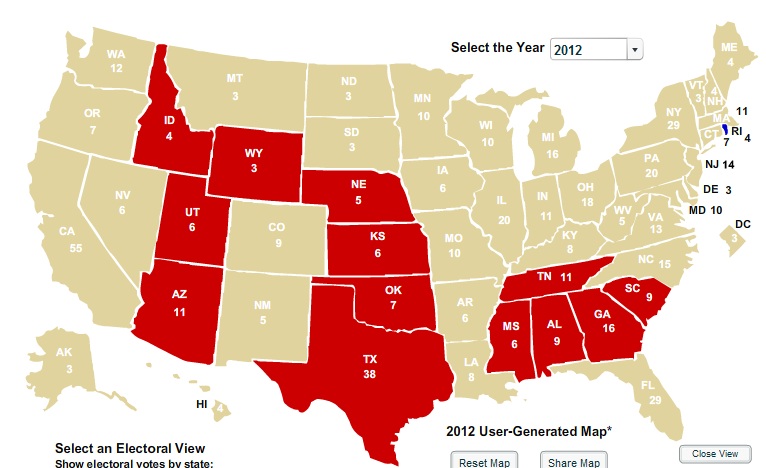
Not-So-Random Thoughts (V)

Links to the other posts in this occasional series may be found at “Favorite Posts,” just below the list of topics.

Added 08/13/12: Patience as a Tool of Strategy

I wrote about this a while ago. My closing thoughts:

Patience is not a virtue that accrues to amorphous masses, like nations. It can be found only in individuals or groups of individuals who share the same objectives and are able to work together long enough to attain those objectives. Whether such individuals or groups lead nations — and lead them wisely — is another matter.

Imlac’s Journal has a relevant post, about Roman consul and general Fabius Maximus (280 – 203 B.C.),

exemplary in terms of his patience, endurance and self-sacrifice.  He reminds one in many ways of George Washington. Both men lost battles, but in the long run their steady and sensible strategies won wars.

It is possible to be impatient in small things — to have a hair-trigger temper — and yet to be patient in the quest for a major goal. Impatience in small things may even serve the strategy of patience, if impatience (deployed sparingly and selectively) helps to maintain discipline among the ranks.

Added 08/13/12: Beauty-ism

I was amused to find that my post “How to Combat Beauty-ism” has been linked to in the opening paragraph of “Beauty and the Beast: The ‘Othering’ of Women by the Beauty Industry.” This post is on the website of something called The South African Civil Society Information Service: A nonprofit news agency promoting social justice. Seeking answers to the question: How do we make democracy work for the poor?

The author, one Gillian Schutte, who seems to be a regular contributor, is styled “an award winning independent filmmaker, writer and social justice activist.” Ms. Schutte (if “Ms.” is the proper appellation for a South African) appears to be a well-groomed, passably attractive (but not beautiful) person of middle age. She writes:

Beautyism is an assumption that physical appeal prevails [sic] knowledge, value, or anything personable [sic]. It is the inherent bias that bestows all sorts of unproved talents and privileges onto a person simply because she is beautiful.

And it could be, as Ms. Schutte’s writing demonstrates, that a lack of beauty is no guarantee of intelligence. In fact, it might be a source of bitterness, which surfaces as rage against the West and those who dare to be civilized and prosperous. Thus, according to Schutte, the beauty industry

along with the mainstream media, is premised on beautyism and has employed a very effective tool of “othering” those who do not fit into the idealised picture of what is pleasing to the male gaze….

“[O]thering” is a tactic that is used in the marginalisation of many groups of people by the moneyed mainstream. These include the LGBTI sector, the poor, Muslims, and Blacks – and they are marginalised so that those doing the marginalisation can use them as a means to an end. An example is the demonization of Islam in order to push the imperialist oil grabbing agenda of the West.

Wow! From beauty-ism (my preferred spelling) to oil-grabbing in a single post.

I have not seen any oil-grabbing recently, unless it is considered oil-grabbing when Westerners choose to buy the oil that Islamic nations deign to offer for sale. If Islam has been demonized, chalk it up to Islamic extremists, who — among many things — have committed acts of terror against innocents, have punished and murdered persons of the “LGBTI sector,” and are not known for their appreciation of the social value of women, except as bed-partners, bearers of children, and domestic slaves. Such is the selective outrage of the professional “social justice activist.” I could not have written a better parody of “social justice activism” than the one that Ms. Schutte has unwittingly produced.

Income Inequality — The Pseudo-Problem That Will Not Die

The Mismeasure of Inequality” (Kip Hagopian and Lee Ohaian, Policy Review, August 1, 2012) is as thorough a primer on the pseudo-problem of inequality as anyone is likely to find, anywhere. The authors’ facts and logic will not convince hard-leftists who believe in income redistribution and are blind and deaf to its dire consequences for low-income persons. But reasonable people might be swayed.

Closely related are Deirdre McCloskey’s powerful defense of free markets: “Actual Free Market Fairness” (Bleeding Heart Libertarians, June 26 2012) and authoritative demolition of MIchael Sandel’s anti-market screed, “What Money Can’t Buy: The Moral Limit of Markets” (Prudentia, August 1, 2012).

Related posts:
The Causes of Economic Growth
Positive Rights and Cosmic Justice
A Short Course in Economics
Democracy and Liberty
Addendum to a Short Course in Economics
Utilitarianism, “Liberalism,” and Omniscience
Utilitarianism vs. Liberty
The Near-Victory of Communism
Accountants of the Soul
Rawls Meets Bentham
The Left
Enough of “Social Welfare”
A True Flat Tax
A True Flat Tax
Taxing the Rich
More about Taxing the Rich
Positive Liberty vs. Liberty
More Social Justice
Luck-Egalitarianism and Moral Luck
Nature Is Unfair
Elizabeth Warren Is All Wet
“Occupy Wall Street” and Religion
Merit Goods, Positive Rights, and Cosmic Justice
More about Merit Goods
What Is Bleeding-Heart Libertarianism?
The Morality of Occupying Private Property
In Defense of the 1%

Cass Sunstein

Ken Masugi’s “Missing the Significance of Cass Sunstein” (Library of Law and Liberty, August 7, 2012) is a just indictment of Sunstein’s anti-libertarian agenda. For example:

Sunstein has written among the most radical critiques of the American Constitution ever espoused. While not a Marxist revolutionary, his criticism is scarcely less transformative. His project of radicalizing the New Deal and the work of Progressives is captured in the subtitle to his book The Second Bill of Rights: FDR’s Unfinished Revolution and Why We Need It More than Ever. But the book that is even more explicit is After the Rights Revolution: Reconceiving the Regulatory State (1993).

Sunstein claims to present the regulatory measures of bureaucratic government “in a way that is fundamentally faithful” to the American Constitution. The book’s second sentence acknowledges that “Modern regulation has profoundly affected constitutional democracy, by renovating the original commitments to checks and balances, federalism, and individual rights.” That transformation of basic constitutional principles “culminated in the rights revolution of the 1960s and 1970s”—meaning the Great Society and post-Watergate programs. Sunstein’s task is to reinterpret the regulatory regime “in a way that is fundamentally faithful to constitutional commitments and promotes, in a dramatically different environment, the central goals of the constitutional system—freedom and welfare.”

Sunstein weaves three “more particular goals” throughout the book: 1.) the practical one of combating the Reagan and Thatcher reforms, which were based on market principles and “private right,” 2.) defending the history of government regulation in America, and 3.) proposing “a theory of interpretation that courts (and administrative agencies) …. might invoke in order to improve the performance of modern government.” Sunstein emphasizes that he wishes to save the “basic commitments of the American constitutional system,” not the text of the Constitution or the structure it sets forth. Of course the “rights revolution” has transformed the meaning of those commitments, so we are left in a universe that is open to Sunstein’s creative interpretation. As Postell observes, “The final triumph of postmodernism is to avail itself of modern or pre-modern justifications whenever they come in handy, and disparage them when they don’t.”

This post-modern perspective is richly abundant throughout After the Rights Revolution. If you thought freedom of speech is a “basic commitment” of America, think again: The “fairness doctrine” and even more extreme measures are justified to protect citizens from injuries to their “character, beliefs, and even conduct.” (For Sunstein’s regulatory schemes for the internet, including schemes for requiring links and pop-ups to alternative points of view, see Edward Erler’s Claremont Review of Books  essay, “Liberalchic.gov”)  In a regime of equal opportunity, racial preferences remedy market failures that permit employment discrimination. Of course property rights yield to the common good, as determined by political arrangements on behalf of the general welfare. Thus, the Civil War was fought not to affirm the founding principle of self-government (not to mention the quaint notion that each man owns himself) but to herald the regulatory regime of the New Deal.

With “friends” like Sunstein, liberty and the Constitution need no enemies.

Related posts:
Sunstein at the Volokh Conspiracy
More from Sunstein
Cass Sunstein’s Truly Dangerous Mind
An (Imaginary) Interview with Cass Sunstein
Libertarian Paternalism
Slippery Sunstein
A Libertarian Paternalist’s Dream World
The Short Answer to Libertarian Paternalism
Second-Guessing, Paternalism, Parentalism, and Choice
Another Thought about Libertarian Paternalism
Back-Door Paternalism
Another Voice Against the New Paternalism
Sunstein and Executive Power
The Feds and “Libertarian Paternalism”
A Further Note about “Libertarian” Paternalism
Apropos Paternalism
FDR and Fascism
Fascism
Are We All Fascists Now?
Fascism with a “Friendly” Face
Fascism and the Future of America
Discounting and Libertarian Paternalism
The Mind of a Paternalist
Another Entry in the Sunstein Saga
Don’t Use the “S” Word When the “F” Word Will Do

Free Will

This perennial subject of philosophical and psychological debate gets another going-over by Steven Landsburg, in “Free to Choose” (The Big Questions, July 18, 2012). Landsburg defends the idea of free will. I prefer my defense (from “Free Will: A Proof by Example?“):

Is there such a thing as free will, or is our every choice predetermined? Here’s a thought experiment:

Suppose I think that I might want to eat some ice cream. I go to the freezer compartment and pull out an unopened half-gallon of vanilla ice cream and an unopened half-gallon of chocolate ice cream. I can’t decide between vanilla, chocolate, some of each, or none. I ask a friend to decide for me by using his random-number generator, according to rules of his creation. He chooses the following rules:

  • If the random number begins in an odd digit and ends in an odd digit, I will eat vanilla.
  • If the random number begins in an even digit and ends in an even digit, I will eat chocolate.
  • If the random number begins in an odd digit and ends in an even digit, I will eat some of each flavor.
  • If the random number begins in an even digit and ends in an odd digit, I will not eat ice cream.

Suppose that the number generated by my friend begins in an even digit and ends in an even digit: the choice is chocolate. I act accordingly.

I didn’t inevitably choose chocolate because of events that led to the present state of my body’s chemistry, which might otherwise have dictated my choice. That is, I broke any link between my past and my choice about a future action.

I call that free will.

I suspect that our brains are constructed in such a way as to produce the same kind of result in many situations, though certainly not in all situations. That is, we have within us the equivalent of an impartial friend and an (informed) decision-making routine, which together enable us to exercise something we can call free will….

Even if our future behavior is tightly linked to our past and present states of being — and to events outside of us that have their roots in the past and present — those linkages are so complex that they are safely beyond our comprehension and control.

If nothing else, we know that purposive human behavior can make a difference in the course of human events. Given that, and given how little we know about the complexities of existence, we might as well have free will.

See also “Is Free Will an Illusion?” (a virtual colloquium at The Chronicle of Higher Education), “Brain might not stand in the way of free will” (New Scientist, August 9, 2012), and my post, “Free Will, Crime, and Punishment.”

The Capitalist Paradox Meets the Interest-Group Paradox

An insightful post at Imlac’s Journal includes this quotation:

Schumpeter argued the economic systems that encourage entrepreneurship and development will eventually produce enough wealth to support large classes of individuals who have no involvement in the wealth-creation process. This generates apathy or even disgust for market institutions, which leads to the gradual takeover of business by bureaucracy, and eventually to full-blown socialism. [Matt McCaffrey, “Entrepreneurs and Investment: Past, Present, … Future?,” International Business Times, December 9, 2011]

This, of course, is the capitalist paradox, of which the author of Imlac’s Journal writes. He concludes with these observations:

[U]nder statist regimes, people’s choices are limited or predetermined. This may, in theory, obviate certain evils. But as McCaffrey points out, “the regime uncertainty” of onerous and ever changing regulations imposed on entrepreneurs is, ironically, much worse than the uncertainties of the normal market, to which individuals can respond more rapidly and flexibly when unhampered by unnecessary governmental intervention.

The capitalist paradox is made possible by the “comfort factor” invoked by Schumpeter. (See this, for example.) It is of a kind with the foolishness of extreme libertarians who decry defense spending and America’s “too high” rate of incarceration, when it is such things that keep them free to utter their foolishness.

The capitalist paradox also arises from the inability and unwillingness of politicians and voters to see beyond the superficial aspects of legislation and regulation. In Bastiat‘s words,

a law produces not only one effect, but a series of effects. Of these effects, the first alone is immediate; it appears simultaneously with its cause; it is seen. The other effects emerge only subsequently; they are not seen; we are fortunate if we foresee them.

The unseen effects — the theft of Americans’ liberty and prosperity — had been foreseen by some (e.g., Tocqueville and Hayek). But their wise words have been overwhelmed by ignorance and power-lust. The masses and their masters are willfully blind and deaf to the dire consequences of the capitalist paradox because of what I have called the interest-group paradox:

The interest-group paradox is a paradox of mass action….

Pork-barrel legislation exemplifies the interest-group paradox in action, though the paradox encompasses much more than pork-barrel legislation. There are myriad government programs that — like pork-barrel projects — are intended to favor particular classes of individuals. Here is a minute sample:

  • Social Security, Medicare, and Medicaid, for the benefit of the elderly (including the indigent elderly)
  • Tax credits and deductions, for the benefit of low-income families, charitable and other non-profit institutions, and home buyers (with mortgages)
  • Progressive income-tax rates, for the benefit of persons in the mid-to-low income brackets
  • Subsidies for various kinds of “essential” or “distressed” industries, such as agriculture and automobile manufacturing
  • Import quotas, tariffs, and other restrictions on trade, for the benefit of particular industries and/or labor unions
  • Pro-union laws (in many States), for the benefit of unions and unionized workers
  • Non-smoking ordinances, for the benefit of bar and restaurant employees and non-smoking patrons.

What do each of these examples have in common? Answer: Each comes with costs. There are direct costs (e.g., higher taxes for some persons, higher prices for imported goods), which the intended beneficiaries and their proponents hope to impose on non-beneficiaries. Just as importantly, there are indirect costs of various kinds (e.g., disincentives to work and save, disincentives to make investments that spur economic growth). (Exercise for the reader: Describe the indirect costs of each of the examples listed above.)

You may believe that a particular program is worth what it costs — given that you probably have little idea of its direct costs and no idea of its indirect costs. The problem is millions of your fellow Americans believe the same thing about each of their favorite programs. Because there are thousands of government programs (federal, State, and local), each intended to help a particular class of citizens at the expense of others, the net result is that almost no one in this fair land enjoys a “free lunch.” Even the relatively few persons who might seem to have obtained a “free lunch” — homeless persons taking advantage of a government-provided shelter — often are victims of the “free lunch” syndrome. Some homeless persons may be homeless because they have lost their jobs and can’t afford to own or rent housing. But they may have lost their jobs because of pro-union laws, minimum-wage laws, or progressive tax rates (which caused “the rich” to create fewer jobs through business start-ups and expansions).

The paradox that arises from the “free lunch” syndrome is…. like the paradox of panic, in that there is a  crowd of interest groups rushing toward a goal — a “pot of gold” — and (figuratively) crushing each other in the attempt to snatch the pot of gold before another group is able to grasp it. The gold that any group happens to snatch is a kind of fool’s gold: It passes from one fool to another in a game of beggar-thy-neighbor, and as it passes much of it falls into the maw of bureaucracy.

[The interest-group paradox] has dominated American politics since the advent of “progressivism” in the late 1800s. Today, most Americans are either “progressives” (whatever they may call themselves) or victims of “progressivism.” All too often they are both.

Related posts:
Democracy and Liberty
The Interest-Group Paradox
Is Statism Inevitable?
Inventing “Liberalism”
The Price of Government
Fascism and the Future of America
The Indivisibility of Economic and Social Liberty
Law and Liberty
The Devolution of American Politics from Wisdom to Opportunism
The Price of Government Redux
The Near-Victory of Communism
The Mega-Depression
Tocqueville’s Prescience
Accountants of the Soul
Ricardian Equivalence Reconsidered
The Real Burden of Government
Rawls Meets Bentham
Is Liberty Possible?
The Left
The Divine Right of the Majority
The “Forthcoming Financial Collapse”
Estimating the Rahn Curve: Or, How Government Inhibits Economic Growth
The Deficit Commission’s Deficit of Understanding
Our Enemy, the State
Understanding Hayek
The Bowles-Simpson Report
The Bowles-Simpson Band-Aid
The Stagnation Thesis
America’s Financial Crisis Is Now
Utilitarianism and Psychopathy
Estimating the Rahn Curve: A Sequel
Lay My (Regulatory) Burden Down
The Burden of Government
Economic Growth Since World War II
More Evidence for the Rahn Curve
Obamacare, Slopes, Ratchets, and the Death-Spiral of Liberty