I was reminded of effective altruism by the notoriety of Samuel Bankman-Fried Fraud. According to the Wikipediaarticle about effective altruism, Fried/Fraud
became associated with the effective altruism movement [in 2019], announcing that his goal was to “donate as much as [he] can”. After [FTX’s] collapse in late 2022, [his] relationship with effective altruism has been called into question as a public relations strategy.
This comes as no surprise to me, inasmuch as effective altruism is founded on two mistaken ideas.
The first mistaken idea is that altruism is an unselfish psychological urge. I’ll say no more here about that mistake. Just see my post “Egoism and Altruism”.
The second mistaken idea is that charity (a more accurate word than altruism) is more effective if (in the words of the Wikipedia article) those who give money to help others
“us[e] evidence and reason to figure out how to benefit others as much as possible, and tak[e] action on that basis”….
Popular cause priorities within effective altruism include global health and development, social inequality, animal welfare, and risks to the survival of humanity over the long-term future. Effective altruism emphasizes impartiality and the global equal consideration of interests when choosing beneficiaries [e.g., distant Africans are the same as one’s countrymen and kinsmen].
Everything else (global health, social inequality, animal welfare, etc.) is the stuff that mass-marketed charities are made of. Emotion rules decisions to give to such charities, not “evidence” and “reason”. How do I know? Because there’s no way to equate such causes. They’re of a piece with the mythical “social welfare function”.
If ever there was an effective altruist, it was Andrew Carnegie, the “robber baron” who made a huge fortune by pioneering the mass-production of steel. That was his most effectively altruistic accomplishment because he made his fortune by making things that bettered the lives of countless persons in America and overseas.
On top of that, he endowed 3,000 public libraries (I remember one of them well), museums, art galleries, Carnegie Hall, a university, and various scientific endeavors. He also funded some institutions and efforts in the name of “world peace”, which just goes to show that anyone can be foolish in one way or another. But the bulk of his philanthropy was practical and actually uplifting (the libraries, galleries, museums, Carnegie Hall, and the university).
What about people in distant lands? Well, if you feel sorry for them and can find a charity that won’t divert most of your donation to bloated salaries, grandiose buildings, and costly marketing campaigns go for it. But even then don’t expect great or even small miracles — there haven’t been any in my lifetime.
The conditions that cause poverty and oppression in distant lands are rooted in the geography, politics, and culture of such places. Those conditions can’t be altered by charity or magical thinking. But magical thinking is precisely what animates the loonyleftists who are the main proponents of effective altruism.
Without using a cumbersome and vulnerable password manager.
Tech sites like PCMag have been touting password managers for years. I’ve tried some of them, and even the ones that are supposedly easy to use are cumbersome. Not only that, but the vendors’ servers are natural targets for password thieves.
Well, it’s bad. LastPass has lost a copy of customers’ encrypted password data to a hacker, who recently breached the company’s systems.
The hacker looted the password data by copying a “backup of customer vault data” from an encrypted storage container during the intrusion, LastPass said on Thursday.
The company supplied the update three weeks after LastPass announced it had suffered a breach that led to the hacker stealing customer information….
The stolen vault data contained “fully-encrypted sensitive fields such as website usernames and passwords, secure notes, and form-filled data,” along with unencrypted website URLs.
LastPass is emphasizing that the stolen vault data remains protected because it’s been secured with 256-bit AES encryption. To decrypt the data, the hacker would need the vault’s master password — something only the customer should know….
The problem is that the hacker could exploit various ways to obtain a customer’s master password. This could involve trying to guess it by using brute-force attacks. However, LastPass says this would be incredibly hard to pull off if the customer had used a complex password. As a security measure, LastPass also requires a master password to be at least 12 characters long.
Still, the other way a hacker could steal a master password is by phishing customers. This could involve sending fake emails or text messages pretending to be LastPass in an effort to dupe unsuspecting users into giving up the login credential.
During the breach, the hacker also obtained “basic customer account information,” including email addresses, telephone numbers, billing address and IP addresses —making it easy for the culprit to target individual users.
So to guard against such phishing, LastPass is telling users: “It is important to know that LastPass will never call, email, or text you and ask you to click on a link to verify your personal information. Other than when signing into your vault from a LastPass client, LastPass will never ask you for your master password.”
Hah! Good luck with that.
Here’s what I do: Generate random passwords myself. Store them in a password-protected file on my PC. Allow my web browsers to save passwords (for ease of access to online accounts and websites that store personal data and payment information), but password-protect my PC. Print a paper copy of all the passwords (including the passwords for the file and the PC). Keep the paper copy in a secure place in my home (which is protected by a monitored alarm system), and allow only my wife to know the location of the copy. (There’s a secure process by which our children can access the copy, but they won’t know how to do it unless both of us have died or are incapacitated.)
How does one generate random passwords? PCMag, in an article that touts password managers, explains how to do it. My method is somewhat different, but it comes down to the same thing: Use Excel to randomly generate unique and extremely strong passwords.
The rest — setting up an Excel routine, generating passwords, and securing what you’ve generated — is up to you.
Don’t waste your money on brick-and-mortar hearing-aid providers.
I have used hearing aids for 16 years. My first pair (Siemens) cost $3,900 in 2006. My second pair (Oticon) cost $6,700 in 2013. My third pair (Oticon) cost $7,500 (including recharger and TV audio-streaming device) in 2019. I bought all three pairs from brick-and-mortar audiologists.
The first Oticons were the best of the three pairs. I especially liked them because they were good at focusing on the person sitting across from me in a noisy restaurant. Also, the sound quality was good. I went to a new pair of Oticons only because my hearing had deteriorated. But the newer Oticons, despite many adjustments (at $50 a pop), were never as good as the first ones in noisy settings. Then, after only three years of use, the right hearing aid died.
I had been reading about how good over-the-counter (OTC) hearing aids have become, and was persuaded by this well-researched article to try Jabra Enhance Select 200 devices. The alternative was driving to a brick-and-mortar audiologist (during the holidays!) and getting stuck with an expensive repair bill for a hearing aid that wasn’t delivering the goods when it was working.
Wow! I took an online hearing test, got the results immediately, ordered the Jabras, and received them in three days (via FedEX). I charged them (charger included), popped them into my ears (a perfect fit), and was introduced to a new and better — and much less expensive — world of hearing. I paid $1,845 for the pair (after an online discount of $150). That’s right, for about 25 percent of the cost of my highly rated Oticons, the Jabras deliver better sound and a lot of other things:
more precise volume control
equalization of treble, bass, and mid-range sounds
filtering out background sounds
delivering “crisper” speech to my ears (there’s a setting for that)
adjusting for the ambiance (normal, restaurant, music, outdoors)
three years of Zoom and telephone consultations with audiologists to answer questions, resolve problems, and make adjustments.
All I had to do (aside from paying for the hearing aids) was to take the simple online hearing test (for which bluetooth headphones are needed). The hearing aids arrived already programmed, based on the results of the test. Perhaps they’ll need some adjustments — I’ll find out in my first Zoom consultation next week — but they’re already far superior to the defunct Oticons.
A final note. The article linked above recommends the Jabra Enhance Select 200 devices (and other OTC hearing aids) for persons with mild to moderate hearing loss. Well, my hearing loss is severe, but the Jabras are more than adequate to the task of restoring my hearing to normal.
Government censorship via private entities gets a big ho-hum in the mainstream media.
Mounting evidence about the destructiveness of COVID lockdowns gets the same big ho-hum.
Gas prices drop (probably because of a looming recession) so American voters view Biden more favorably despite his damaging extremism on wokeness, “climate change”, and immigration.
Democrats in Congress (and some RINOs) applaud such things while continuing to fixate on the “sins” of Donald Trump, who never was what he was alleged to be and never again will become president.
There are similar and identical goings-on throughout the Western world, from Australia and New Zealand through the United States and Canada and across the Atlantic to the British Isles and continental Europe. To take just one chilling example, there is the Dutch government’s plan to shut down 3,000 farms in the name of combating “climate change”.
The pseudo-science of “climate change” is just the most glaring instance of the destruction of objective science in the name of “equity” (and other such claptrap). Government agencies and government-run institutions of “higher learning” are integral members of the wrecking crew (e.g., see this).
For those and many other reasons, there should be blood in the streets of national capitals — the blood of tyrants like Biden and Trudeau — and masses of legislators, bureaucrats, and judges should have been taken out and shot. To put it in more politely, there should be an electoral equivalent of a revolution against today’s tyranny in the form of mass rejections of the left-wing governments that are impoverishing their citizens and destroying the moral, social fabric, and scientific fabric of their nations.
But what do I see on TV? Joe Average indulging himself in mindless game shows, talentless “talent” shows, biased news programs, and absolutely tasteless “entertainment”. It’s “I’m all right, Jack” on steroids.
What will it take to move people to reclaim their liberty? Will there big (electoral) uprisings (if not armed ones), or will we all go down the drain with a whimper? At the moment, my money’s on the latter.
Anarchists and defenders of non-governmental censorship to the contrary notwithstanding, there is no dividing line between private and state action. I address this point in “Is Anarchy a Viable Concept?“. I elaborate the point here.
Anarchists like to draw a bright line between the state and the private sphere so that they can argue, foolishly, for the replacement of the state by private actors. Defenders of non-governmental censorship (e.g., suppression of tweets by Twitter and deplatforming by Facebook) are simply political theorists in thrall the mistaken belief that the “marketplace of ideas” is self-correcting and eventually yields truth. (Even if it were self-correcting, devastating harm would result before truth emerges.)
I will begin with the futility of drawing a bright line — or any line — between state and private action. Before going any further I should be clear about what I mean by “state”.
A state is defined as “the supreme public power within a sovereign political entity” (4.a.). This definition suggests that a state is some kind of disembodied essence. But a state does not exist unless it is embodied in institutions that are operated by human beings. And the power exercised by those human beings is meant to serve specific (if inchoate) aims that are personal to them or to persons to whom they are beholden; for example, higher-ranking government officials, major campaign contributors, influential voting blocs, or a person or group with whom one wishes to curry favor.
Government power is exercised through agencies that are usually characterized as legislative, executive, and judicial. But there is a fourth type of agency that operates, much of the time, independently of the other three types. It is the “administrative state”, a conglomeration of executive agencies that usurps legislative and judicial functions. The “deep state” includes members of the administrative state who strive (often successfully) to impose their own agendas through their control of the minutiae of government operations. This phenomenon underscores the essentially private nature of state action.
The power of the four types of agency is exercised through a combination of force, fear on the part of the governed, and submission by those among the governed who naively view the state and its edicts as something akin to divinity and divine writ.
The power of government is augmented by its ability to control information and perceptions about governmental activities. Such control, nowadays, is abetted by (most) members of the media when government is controlled by Democrats and undermined by (most) members of the media when government is controlled by Republicans.
The state, thus properly understood, is merely an outlet for private action. In so-called democracies (democratic republics) elections and appointments determine which private interests control the power of the state.
Democracies differ from oligarchies only in that voters in democracies go through the exercise of choosing the oligarchies — the collection of interest groups — that will rule them.
The difference between democracies and dictatorships is one of degree, not of kind. The ruling interests in a democracy are simply somewhat more changeable than the ruling interests in a dictatorship. But in both cases the ruling interests pursue private agendas. Dictatorships are more blatantly oppressive. Democracies hide their fascism behind a friendly face.
The bottom line: The state embodies and implements private action.
Given that the state, in the service of many (and sometimes competing) private agendas, must trample on the lives, liberty, or property of most of its subjects it would seem obviously desirable to devolve political power. And, logically, devolution ought to proceed to the lowest level: the person or a group of persons who choose to be treated as a unit (e.g., the nuclear family).
This solution is superficially appealing. But it omits crucial realities, which are reflected in the state of the world throughout recorded history (and probably for eons before that). Human beings band together in order to accomplish certain ends (e.g., defense against marauders, hunting and gathering), and the banding together almost always creates leaders and subjects. Thus is a primitive state established. And once it is established, it exerts control over a geographic area or a roving band, and everyone who lives in that area or joins that band becomes a subject of the state. Primitive states then band together — either for self-defense or because of conquest — forming larger and larger states, each of which holds its subjects in thrall. An occasional revolution or schism sometimes leads to the dissolution of a particular state, but the subjects of that state simply become subjects of a successor state or of neighboring states avid to control the territory and subjects of the defunct state.
So it has gone for millennia, and so it will go for millennia to come.
That would be the last word … but the duped defenders of corporate censorship cannot go unanswered. As I once observed, power is power. If government censorship is wrong, why is it right for powerful corporations to censor speech and effectively nullify the First Amendment? To put a point on it, why is it right for powerful corporations whose leaders share the ideologies and interests of a particular political party to act as surrogates for that party, and to suppress and distort opposing views?
The revised bottom line: The state embodies and implements private action, and private actors who do the bidding of state actors are merely minions of partisan private interests.
As a conservative by disposition who is a radical-right-minarchist in his politics, I recognize the need for a state — but a state that is strictly constrained. Its sole justification for being is to protect negative rights (including property rights) and civil society.
Specifically:
1. An actionable harm — a harm against which the state may properly act — is one that deprives a person of negative rights or undermines the voluntarily evolved institutions and norms of civil society.
2. The state should not act — or abet action by private entities — except as it seeks to deter, prevent, or remedy an actionable harm to its citizens.
3. An actionable harm may be immediate (as in the case of murder) or credibly threatened (as in the case of a conspiracy to commit murder). But actionable harms extend beyond those that are immediate or credibly threatened. They also result from actions by the state that strain and sunder the bonds of trust that make it possible for a people to coexist civilly, through the mutual self-restraint that arises from voluntarily evolved social norms. The use of state power has deeply eroded such norms. The result has been to undermine the trust and self-restraint that enable a people to enjoy liberty and its fruits; for example:
Affirmative action and other forms of forced racial integration deny property rights and freedom of association, prolong racial animosity, and impose unwarranted economic harm on those who are guilty of nothing but the paleness of their skin.
The legalization of abortion, in addition to allowing murder, invites infanticide and euthanasia.
The granting of special “rights” to “protected groups” leads inevitably to the suppression of the freedoms of expression and association.
4. An expression of thought cannot be an actionable harm unless it
is defamatory
would directly obstruct governmental efforts to deter, prevent, or remedy an actionable harm (e.g., divulging classified defense information, committing perjury)
intentionally causes or would directly cause an actionable harm (e.g., plotting to commit an act of terrorism, forming a lynch mob)
purposely — through a lie or the withholding of pertinent facts — causes a person to act against self-interest
purposely — through its intended influence on government — results in what would be an actionable harm if committed by a private entity (e.g., the taking of income from persons who earn it, simply to assuage the envy of those who earn less). (In this case, the remedy for such harms should not be the suppression or punishment of the harmful expressions; the remedy should be the enforcement of constitutional restrictions on the powers exercised by government.)
With those exceptions, a mere statement of fact, belief, opinion, or attitude cannot be an actionable harm. Otherwise, those persons who do not care for the facts, beliefs, opinions, or attitudes expressed by other persons would be able to stifle speech they find offensive merely by claiming to be harmed by it. And those persons who claim to be offended by the superior income or wealth of other persons would be entitled to recompense from those other persons. (It takes little imagination to see the ramifications of such thinking; rich heterosexuals, for example, could claim to be offended by the existence of persons who are poor or homosexual, and could demand their extermination as a remedy.)
5. Except where there is a moral obligation to act (e.g., to save one’s child from drowning) it cannot be an actionable harm to commit a private, voluntary act of omission (e.g., the refusal of social or economic relations for reasons of personal preference), other than a breach of contract or fiduciary responsibility. Nor can it be an actionable harm to commit a private, voluntary act which does nothing more than arouse resentment, envy, or anger in others. A legitimate state does not judge, punish, or attempt to influence private, voluntary acts that are not otherwise actionable harms.
6. By the same token, a legitimate state does not judge, punish, or attempt to influence private, voluntary acts of commission which have undesirable but avoidable consequences. For example:
Government prohibition of smoking on private property is illegitimate because non-smokers could choose not to frequent or work at establishments that allow smoking.
Other government restrictions on the use of private property (e.g., laws that bar restrictive covenants or mandate public accommodation) are illegitimate because they (1) diminish property rights and (2) discourage ameliorating activities (e.g., the evolution away from cultural behaviors that play into racial prejudice, investments in black communities and black-run public accommodations).
Tax-funded subsidies for retirement and health care are illegitimate because they discourage private charity, hard work, saving, and other prudent habits — habits that would lead to less dependence on government, were those habits encouraged.
7. It is also wrong for the state to make and enforce distinctions among individuals that have the effect of advantaging some persons because of their age, gender, sexual orientation, skin color, ethnicity, religion, or economic status.
8. Except in the case of punishment for an actionable harm, it is an actionable harm to bar a competent adult from expressing his views, as long as they are not defamatory or meant to incite harm and oppression.
9. The proper role of the state is to enforce the preceding principles in several ways:
Remain neutral with respect to evolved social norms, except where those norms violate negative rights, as with the systematic disenfranchisement or enslavement of particular classes of persons.
Foster economic freedom (and therefore social freedom) by ensuring open trade within the nation and (to the extent compatible with national security) open trade with (but selective immigration from) other nations.
Ensure free expression of thought, except where such expression is tantamount to an actionable harm (as in a conspiracy to commit murder or mount a campaign of harassment).
See that just laws — those enacted in accordance with the principles of actionable harm — are enforced swiftly and surely, with favoritism toward no person or class of persons.
Defend citizens against predators, foreign and domestic.
**********
The foregoing principles are not rules for making everyone happy. They are rules for ensuring that each citizen is able to pursue happiness without impinging on the negative rights of others or subverting civil society.
The state should apply the principles of actionable harm only to citizens and legitimate residents of the United States. Sovereignty is otherwise meaningless; the United States exists for the protection of citizens and persons legitimately in residence; it is not an eleemosynary institution.
By the same token, those who harm (or clearly intend to harm) citizens and legitimate residents of the United States must be dealt with swiftly — and harshly, as necessary.
According to a report by the Center for the Study of Partisanship and Ideology:
A quarter of [college] students are LGBT, and there are roughly equal shares of Christian and nonreligious students. LGBT, Nonreligious, and Christians are set to become more important political groups among America’s future leaders.
Liberal arts colleges are the least politically diverse. Many have almost no conservatives, and thus very low viewpoint diversity. But they have high sexual diversity, at nearly 40 percent LGBT.
23 percent of American college students identify as LGBTQ. That percentage is close to the results of a Gallup poll, in which 21% of Generation Z identified as LGBT ten months ago.
Far fewer older people identify as LGBT. The overall percentage of Americans identifying as LGBT was only 7% in the Gallup poll.
What do all the numbers mean? They mean that young persons — even (or especially) the most intelligent among them — are impressionable and easily swayed by their peers. The LGBT fad on college campuses exemplifies the bandwagon effect.
It’s another good reason to slash the funding of colleges and universities, especially the funding of illiberal arts departments and programs. Unfortunately, it’s too late to prevent the next generation of adults from becoming even more radical, irrational, and destructive than the generation that was spawned by the “flower children” of the 1960s and 1970s.
Not that it will ever happen, unless there’s a national divorce, but it would be a good thing to rewrite the Constitution with the history of its corruption in mind. (See “The Constitution: Myths and Realities”, especially Part IV.) This is my version of a Constitution that would undo the damage done to the original Constitution by Congress, the executive branch, and the courts. To that end, the entire document is necessarily much longer and more detailed than the present Constitution (as amended). Among many things, Article II is new and establishes strict standards for citizenship and voting. Articles VI through X are essentially new, and are designed to keep the central government under control, which is the main purpose of the whole document. I earnestly solicit your comments and suggestions.
I. PURPOSES AND PRINCIPLES
A. Purposes
We, the citizens of the States giving effect to this Constitution, do hereby reaffirm the union of States known as the United States of America. The purposes of this Constitution are
• to establish a government of and for the United States of America (hereinafter government of the United States);
• to delineate the powers, duties, and rights of that government, of the States and their respective governments, and of the citizens of the States, who are thereby citizens of the United States; and
• to dedicate the United States, its government, the States, and their governments to their paramount objective, which is to protect the lives, liberty, and property of citizens.
B. Sovereignty of the Citizens of the United States
The premise of this Constitution is that governments derive their just powers from the consent of the governed. The citizens of the United States retain ultimate sovereignty, and through this Constitution give their consent to the States and the government of the United States to exercise those powers — and only those powers — that are delegated to them in this Constitution. The citizens of the United States and each State reserve to themselves all rights — enumerated and unenumerated — that are not subsumed in those delegated powers. Among the enumerated rights are the rights of initiative and recall, as defined in Article IX of this Constitution.
C. Primacy, Scope, and Interpretation of the Constitution
1. This Constitution is the supreme law of the land. The governments of the United States and every State are bound by this supreme law.
2. The language of this Constitution shall be understood and applied according to its meaning at the time of its original submission to the States for ratification, except that additions and revisions pursuant to an amendment shall be understood and applied according to the meaning of that language at the time the amendment was submitted to the States for ratification.
3. Throughout this Constitution, any reference to a State or States shall be understood to encompass all components and agents of any State government, all governmental units within any State, any corporate or educational entity that is operated or funded primarily by any State or governmental unit within a state, and any intergovernmental entity created for any purpose by two or more States.
4. Except as expressly provided herein, the powers of the governments of the States are proscribed to the same extent as the powers of the government of the United States.
5. The titles of the Articles and sections of this Constitution have no authority. All of the authority of this Constitution is expressed in the text of its Articles and their subordinate parts, except that its statement of Purposes (Article I, Section A) shall not be construed to grant or deny any powers or rights to the government of the United States or the States or the people thereof.
D. Recognition of Governmental Debt
1. All debt of the government of the United States authorized by law in accordance with this Constitution is valid.
2. Neither the government of the United States nor of any State may assume or pay any debt or obligation incurred in aid of treason, rebellion, insurrection, or terrorism against the United States or any State. All such debts, obligations, and claims are illegal and void.
E. Oath of Office Required
All elected and appointed officials, employees, and agents of the governments of the United States and its constituent States shall be bound by oath or affirmation to uphold this Constitution. A failure by an official, employee, or agent of any such government to uphold this Constitution is grounds for removal from office, by impeachment or other process prescribed by law, whether or not the failure is deliberate or criminal in nature.
II. CITIZENSHIP, VOTING, AND RELIGIOUS TESTS FOR OFFICE
A. Citizenship upon Adoption of This Constitution
Every person shall be a citizen of the United States who was a citizen in accordance with the law of the United States as it stood at the time of the ratification of this Constitution.
B. Citizenship by Birth
A person who is born after the ratification of this Constitution becomes a citizen of the United States, regardless of that person’s place of birth, if at the time of birth that person has a least one parent who is a citizen of the United States (including a parent who was a citizen of the United States but who died before the birth). Birth within the territory of the United States, within any of its States, or within a territory, possession, or foreign installation of the United States does not, in itself, convey citizenship.
C. Citizenship by Naturalization
The government of the United States shall provide by law for the naturalization of persons who are not born citizens of the United States.
D. Voting
1. Only citizens of the United States may cast ballots in elections, referenda, recalls, or other matters pertaining to the governance of the United States or any State.
2. The minimum attained age of a voter shall be at least twenty-one, although a State may by law set a higher minimum age. The minimum age established by a State shall apply to voting within that State, including voting in elections for offices of the government of the United States.
3. The right to vote may not otherwise be denied or abridged by the government of the United States or any State, except on the basis a person’s criminal record or certified mental incompetence, as the governments of the United States and each State provide by law regarding persons under their respective jurisdictions.
4. The right of eligible persons to vote in elections of the United States or the States many not otherwise be denied or abridged for failure to pay any kind of tax, fee, penalty, or other monetary imposition of government.
5. The ballots for all elections, referenda, recalls, or other matters pertaining to the governance of the United States shall be cast on a consecutive Saturday and Sunday on dates established by Congress for the election of the president, vice president, and members of the Congress of the United States. The legislatures of the respective States shall establish by law the dates for voting on all matters pertaining to the governance of the States, except that the dates for each election, referendum, recall, or other matters pertaining to the governance of a State must span two consecutive days, the first being a Saturday.
6. All ballots shall be cast in person at polling places designated in accordance with the laws of each State, except that a State legislature may by law allow the casting of absentee ballots by persons who are disabled (as provided by State law), over the age of sixty-five, or who will at the time of an election be absent from the districts in which they are registered to vote. Persons casting absentee ballots shall deliver them or cause them to be delivered to locations designated by State law. Absentee ballots may not be made available to an eligible voter except upon written request by that voter or his legally authorized agent; may not be made available to an eligible voter more than thirty days before the date of the pertinent election, referendum, recall or other matter pertaining to governance; and may not be counted until the beginning of the first day of voting in an eligible voter’s State.
7. All ballots cast in each State shall be counted no less than seventy-two hours after the close of in-person voting in the State. The results of each election, referendum, recall, etc., shall be certified by the official designated by State law to make such certification no later than ninety-six hours after the close of in-person voting in the State, unless there is a recount of ballots conducted in accordance with State law, in which case the results shall be certified no less than one hundred and forty-four hours after the close of in-person voting in the State.
8. All ballots for all elections in the United States shall be printed on paper. Each ballot must be marked by the eligible voter who is casting the ballot, except where a voter’s physical handicap requires the marking of a ballot by another person, who shall sign, under penalty of perjury, attesting to his identity, the identity of the person for whom he is marking a ballot, and the conformity of the completed ballot with the instructions of the voter.
9. No person or organization may collect more than five absentee ballots for delivery to a place designated by a State legislature for the collection of absentee ballots.
10. No non-governmental organization may plan, oversee, or administer any aspect of any election, referendum, recall, or other matter pertaining to the governance of the United States or any State. This provision includes but is not limited to the creation or maintenance of registries of eligible voters, the review of eligibility to cast absentee ballots, the preparation and transmission of such ballots, and the collection and delivery of such ballots to such places as may be designated by State law.
11. With respect to the District of Columbia and other places that are under the direct jurisdiction of the government of the United States, all of the proceeding provisions of this Section C of Article II shall be construed as if Congress were a State legislature and the executive branch of the United States government were an executive branch of a State government.
D. Religious Tests for Office
No religious test may be required as a qualification for a government office or position of public trust under the government of the United States or any State.
III. RIGHTS AND PRIVILEGES OF CITIZENS
Rights and privileges conferred by and reserved under this Constitution apply equally to citizens of the United States but not to persons who are not citizens, except as provided herein. Neither the government of the United States nor any State may abridge any rights conferred by or reserved under this Constitution.
A. Equality and Guarantee of Rights and Privileges
Neither the government of the United States nor that of any State may do any of the following things:
1. Deprive any person, corporation, or other private entity living or operating lawfully within the jurisdiction of the government of the United States or any State of life, liberty, or property without due process of law. Due process, for this purpose, shall be understood as the disposition of a civil suit or criminal charge by verdict or settlement, and not any other act of government.
2. Prohibit the free exercise of religion, except where a particular religious activity would result in the commission of an act that otherwise is criminal, irrespective of its religious connotations or provenance (Article III, Section A, Clause 6 pertains). The free exercise of religion includes but is not limited to the use of government-owned, -operated, or -funded property — including institutions of learning — for brief periods of meditation and for teaching about religion, as long as such teaching is comparative. Such property, when not in use by a governmental unit, may be used for religious activities or observances of any lawful kind, as long as such functions are not endorsed or sponsored by a governmental unit, and as long as the same property is made available under the same terms and conditions to other users. It is a denial of the free exercise of religion for any governmental unit to bar the invocation or mention of a deity or other religious figure by any person at any time or place.
3. Establish religion, either directly or by funding or giving material aid to any religion, religious activity, or any activity conducted by or on behalf of a religion or religious institution. Allowing the free exercise of religion in accordance with the preceding clause is not an establishment of religion. Further, this clause shall not be construed to prohibit the giving of funds or material support directly to individual persons, even though such funding or support might be used by those persons to underwrite a religious purpose — including but not limited to religious education — as long as such funding or support is given for a non-religious purpose, including but not limited to education, and is made generally available to all eligible persons without regard for their religious affiliations or lack thereof.
4. Abridge, influence, shape, restrict, or give preference to the expression of ideas or information for any purpose by any citizen of the United States or on behalf of a business or other private organization operating lawfully within the United States. Congress may nevertheless enact laws prohibiting and punishing the release of information by any person, whether or not affiliated with the press, that would endanger the security of the United States or any State or citizen (including their businesses wherever located), or that would jeopardize the ability of the armed forces of the government of the United States to perform their missions. Congress may also enact laws prohibiting and punishing the utterance or publication of ideas that would circumscribe the economic or social liberties of citizens of the United States, as they are recognized in this Constitution.
5. Abridge the right of citizens to assemble peaceably and to petition government for the redress of grievances. This right does not include acts that threaten or harm persons or their property or which impede or obstruct the access of any person to any place, public or private. Neither the government of the United States nor any State shall incur or reimburse any expense related to or arising from acts of assembly and petition, except to indemnify or rectify damage that may have arisen pursuant to such acts.
6. Establish or delineate special classes of citizens or special rights or privileges for classes of citizens within its jurisdiction, for any purpose. Prohibited delineations include but are not limited to race, ethnicity, religion, gender, sexual orientation or preference, and status as a veteran of the armed forces of the government of the United States or any State. But this clause does not limit the ability of Congress to provide by law for the treatment by employers of members of the armed forces when they are called to active duty, or to compensate or provide material support to veterans of the armed forces. Veterans of the armed forces otherwise may not by law be granted special rights or privileges, such as preferential treatment in hiring or promotion based on their status as veterans.
7. Abridge the right of any citizen, business, or other private entity operating lawfully within the United States to choose freely the persons or organizations they will associate with, employ, or do business with, notwithstanding any contractual or funding relationship with the government of the United States or any State. This clause specifically, though not exclusively, bars any form of governmental interference in the decisions of private employers to hire, promote, transfer, or terminate employees. Also barred specifically, though not exclusively, is any governmental act that requires, enables, or recognizes the formation of any organization of employees for the purpose of bargaining with employers about the terms or conditions of employment.
8. As an employer, discriminate or authorize discrimination, in any explicit or implicit way, for any reason, with respect to gender, race, ethnicity, national origin, language, religion, sexual orientation, or veteran status, except that a governmental unit may by law be authorized to practice such discrimination for the sole purpose of ensuring the effective performance of that unit. This clause may not be construed to prohibit the establishment of mental and physical standards of performance, as long as those standards are job-related and applied impartially to all classes of employees and persons eligible for employment.
9. Nullify, alter, or otherwise affect any contract, either expressed or implied, that does not contravene this Constitution or otherwise constitute or suborn a crime against any third party. This clause applies to any voluntary transaction of any kind, where the parties to such a transaction are adult persons, corporations, or other private entities authorized by law, or any combination of these. This clause does not apply to marriage, civil unions, or similar arrangements, which shall be regulated by the States, individually.
10. Grant any rights, benefits, or privileges to non-citizens, except that non-citizens, including persons and corporations or other private entities operated by non-citizens, shall be entitled to due process of law for civil and criminal proceedings of the government of the United States or any State to which they may be subject. This clause does not apply to enemy combatants, the definition and treatment of which are prescribed elsewhere in this Constitution.
B. Security of Persons and Property
1. Neither the government of the United States or any State may authorize, enable, encourage, or condone these things:
a. Abortion, except where it is determined by a panel of three court-appointed physicians to be necessary because the mother’s life would, with certainty, be forfeit during the course of pregnancy or as a direct result of delivery by any means.
b. Medically assisted death, except where a person has expressly authorized the cessation of efforts to sustain his or her life under conditions that are certain to lead to death or a persistent unresponsive state, in a medical opinion attested to by impartial witnesses.
c. Slavery or involuntary servitude, except as the latter may be imposed by law as a punishment for crime.
2. The governments of the United States and every State make the following guarantees:
a. The right of citizens to keep and bear arms shall not be denied or abridged on any basis other than a citizen’s criminal record or certified mental incompetence.
b. In peacetime, members of the armed forces of the government of the United States or the militia of the States may not be quartered in any private building without the consent of its owner or lawful occupant. When the armed forces of the government of the United States or the militia of the States are engaged in war, suppression of insurrection or rebellion, or anti-terrorist actions they may be quartered only as Congress prescribes by law.
c. Persons and their private buildings and land, houses, papers, effects, and communications may not be unreasonably searched, seized, intercepted, or placed under surveillance by the government of the United States or that of any State. Congress shall enact uniform procedures for searches, seizures, interceptions, and surveillance by agents of the governments of the United States and the States. Such uniform procedures shall include provisions for searches, seizures, interceptions, and surveillance for the purpose of gathering intelligence about acts or potential acts of war, insurrection, rebellion, or terrorism against the United States, the States, their citizens, and their property, including the property of businesses owned by citizens of the United States, wherever that property may be located. Warrants for intelligence-gathering activities shall be required only as Congress directs by law. Warrants are required for the gathering of evidence and for arrests in criminal cases, and shall describe the suspected conspiracy to commit crime(s) or the actual crime(s) under investigation; the persons, places, or things to be arrested, searched, seized, intercepted, or placed under surveillance; and the period of time in which such arrests, searches, seizures, interceptions, or surveillances are to take place. No warrant pertaining to a criminal case, except an arrest warrant, may be valid for more than twelve months, but any warrant may be renewed for successive periods if at each renewal it complies with this clause.
d. Private property may be taken only for the exclusive use of a specified governmental unit of the United States or a State. Private property may not be taken nor may its value be materially diminished by a governmental act without fair compensation. For purposes of this clause, a governmental act of that applies incidentally but not specifically to a taken property shall not be construed as a taking.
e. Private property may not otherwise be taken except pursuant to the lawful verdict of a court in a criminal or civil proceeding. But no law shall allow the taking of property because of its use in a criminal act unless the owner of the property has been duly charged with and found guilty of the same criminal act or acts.
C. Justice
1. Where two or more States claim jurisdiction in a civil or criminal proceeding, the cause of which is the same act or acts, precedence shall be determined by the order in which proceedings were initiated in a court of law, unless the involved States, by mutual agreement, determine a different order of precedence.
2. Where there is a dispute involving persons or entities from different States, jurisdiction shall be granted to the State in which proceedings were first initiated in a court of law.
3. A resident of one State who is brought before a civil or criminal court of a second State shall be accorded the same rights, privileges, and immunities as residents of that second State.
4. Where a State and the government of the United States both claim jurisdiction in a criminal case, the State shall take precedence over the government of the United States. Where the same act gives rise to both criminal and civil charges, the criminal charges shall take precedence over the civil charges.
5. All felony charges shall be tried by an impartial jury unless the accused knowingly and before the appropriate court of law waives this right. A trial shall be held in the State in which the crime was committed or, when not committed within a State, where Congress directs by law.
6. Only a grand jury may bring charges against a person for a felony, except in cases arising in the armed forces of the government of the United States or in the militia when it has been activated.
7. In cases under common law, the right of a jury trial is assured where the value at issue is greater than an amount which Congress determines by law, and appellate rulings in the courts of the government of the United States and every State shall be based on common law.
8. A citizen of the United States may not be:
a. detained, arrested, or charged by a law-enforcement officer or any other person except on reasonable suspicion or probable cause, or pursuant to a lawful warrant;
b. brought before a criminal or civil court to answer for the same act or acts that had been judged previously, under any rubric of law, by any criminal or civil court of any State or the United States;
c. charged with or tried for an act that was not unlawful when it was committed;
d. charged with or convicted of a criminal act on the basis of information or evidence not obtained in accordance with this Article III;
e. compelled to testify against himself or herself when detained or arrested, charged with, or tried for a crime, except that a person may be compelled by law or lawful warrant to submit to a thorough search of his or her person and/or to provide physical evidence about his or her relevant biological characteristics (including but not limited to fingerprints, hair samples, fingernail cuttings, DNA samples, or semen samples); or
f. otherwise deprived of life, liberty, or property in contravention of this Constitution or without due process of law.
9. In all criminal prosecutions, an accused person has the right:
a. to be tried promptly and publicly in the State and district (previously determined by law) in which the crime was committed (Congress determines by law where to try crimes not committed within the jurisdiction of the government of the United States but not within the geographic boundaries of one of the States.);
b. to be informed of the nature and cause of the accusation;
c. to be confronted with the witnesses against himself or herself, unless in the determination of the cognizant court of law such confrontation would compromise national security or the integrity of a current criminal investigation, in which case the court, acting for the prosecution and defense, shall confront the relevant witnesses in camera (Congress may by law determine the circumstances in which this clause applies and specify detailed procedures for such instances, including the screening of persons who may participate in closed hearings.);
d. to subpoena witnesses in his or her favor; and
e. to have counsel of his or her choosing, except that a court shall appoint counsel for an indigent person.
10. Excessive bail may not be required, excessive fines may not be imposed, and cruel and unusual punishments may not be inflicted. Congress shall by law establish and from time to time revise a uniform code regarding bail, fines, and punishments, which code shall apply to the governments of the United States and every State.
11. The death penalty is not a cruel or unusual punishment, and the uniform code established by the authority of the preceding clause shall provide for punishment by death in cases of murder in the first degree and such other cases as Congress may in its sole discretion designate. Where a State has jurisdiction in a criminal case, no sentence of death may be appealed to a court of the government of the United States.
12. The privilege of the writ of habeas corpus may not be suspended for citizens, except to protect the public safety in the case of insurrection, rebellion, terrorism, or war, as Congress may provide by law.
13. Treason by a citizen of the United States consists of:
a. the commission of acts of war, rebellion, or terrorism against persons or property within the jurisdiction of the government of the United States or any State; or
b. a conspiracy to commit any such act; or
c. providing, conspiring to provide, or asking others to provide any money, material, or information to any person or entity (domestic or foreign) who has committed, is committing, or is endeavoring to commit an act of war, rebellion, or terrorism against the United States, any State, any citizen of the United States, or the property of any citizen of the United States, including the property of a business owned by a citizen of the United States, wherever such property may be located.
14. A person may be convicted of treason only on the testimony of two witnesses to the same act, or on confession in open court. Punishment for treason may not extend to persons other than those found guilty of it.
15. Notwithstanding any other provision of this Constitution, any person, whether or not a citizen of the United States, shall be considered an enemy combatant who is apprehended by the armed forces or agents of the government of the United States or the militia or agents of any State while engaged in or materially aiding war, rebellion, insurrection, or terrorism against the United States or any State, or the citizens or property thereof, including the property of businesses owned by citizens of the United States, either within or without the geographical boundaries of the United States. Enemy combatants shall be subject to detention, judgment, and punishment — and shall be entitled to appeal the same — only according (a) an applicable treaty or treaties to which the government of the United States is a signatory (but not otherwise to international law), (b) an applicable act or acts of Congress where there is no applicable treaty, or (c) an applicable act or acts of Congress in abrogation or supersession of a treaty or treaties.
16. A person who engages in a public demonstration for or against and act or proposed act of government shall not be considered an enemy combatant, rebel, insurrectionist, or terrorist solely because of participation in a public demonstration. But such a persons may otherwise be arrested and prosecuted for crimes he or she commits against persons or property in the course of the public demonstration. A public demonstration includes but is not limited to any speech, writing, or physical act performed on public property or transmitted by a medium which is accessible to the public.
D. Unenumerated Rights, Benefits, and Privileges
1.Unenumerated rights, benefits, and privileges are those which (a) are not expressly recognized or denied in this Constitution and which (b) may be recognized by the government of the United States or any State without contravening any provision of this Constitution.
2. To be recognized by the government of the United States or any State, an unenumerated right, benefit, or privilege must be one that has a history of general acceptance by law or custom at the time of the ratification of the Fourteenth Amendment to the former Constitution that is superseded by this Constitution.
IV. THE GOVERNMENT OF THE UNITED STATES
A. Congress
The legislative power of the government of the United States resides in the Congress of the United States, which consists of a Senate and a House of Representatives.
1. The House of Representatives
a. Each Representative has one vote and represents one congressional district.
b. The number of seats in the House of Representatives is divided among the States in proportion to the populations of their citizens, as those populations are determined by a decennial census, which shall be carried out as Congress provides by law, but only for the purpose of enumeration.
c. The legislature of each State apportions that State’s seats in the House of Representatives by designating congressional districts that are approximately equally populated, as determined by the most recent decennial census. Specifically, the population of the most populous district may not exceed the population of the least populous district by more than 50,000 citizens. The designation of congressional districts by a State’s legislature may not be challenged in any place for any reason, other than an alleged failure to comply with the preceding sentence. A State’s legislature may re-apportion that State’s seats in the House of Representatives at any time between each decennial census, but no more often than every three years.
d. The total number of seats in the House of Representatives shall be five hundred, initially. The number of seats shall then change following each decennial census, in proportion to the change in the total number of citizens of all States.
e. Each Representative shall be elected for a term of four years.
f. The executive authority of each State orders elections to fill any vacancies in its delegation of Representatives, but a State may by law empower the executive to make temporary appointments until an election.
g. A Representative shall be at least thirty-five years old upon taking office, have been a citizen of the United States for at least ten years in total and, when elected, be an inhabitant of the State and district that he or she represents.
h. A person may not be elected a Representative or appointed to fill a vacancy in the House of Representatives if that person would have been a Representative for more than twelve years at the end of the elective or appointive term.
i. A person may not serve as a Representative who engages in or has engaged in an act of treason, rebellion, insurrection, or terrorism against the United States or any State.
j. The House of Representatives chooses its Speaker and other officers.
k. The House of Representatives has the sole power to impeach the President, Vice President, and other civil officers and judges of the government of the United States. The House of Representatives may exercise its impeachment power by a majority vote of the number of Representatives then holding office.
2. The Senate
a. Each Senator has one vote and represents his or her State at large.
b. The Senate is composed of three senators from each State, chosen for six years by the legislatures of their respective States, as each State prescribes by law. Each Senator has one vote.
c. Senators are divided into three classes, so that the terms of one-third of the Senators expire every two years. The first Senators who are elected pursuant to this clause shall be assigned to classes by lottery.
d. Vacancies in the Senate are filled as each State prescribes by law.
e. A Senator shall be at least forty years old upon taking office, have been a citizen of the United States for at least ten years in total and, when elected, be a resident of the State he or she represents.
f. A person may not be chosen for a full term in the Senate or appointed for a partial term to fill a vacancy in the Senate if that person would have been a Senator for more than twelve years at the end of the elective or appointive term.
g. A person may not serve as a Senator who engages in or has engaged in an act of treason, rebellion, insurrection, or terrorism against the United States or any State.
h. The Senate chooses a President and its other officers, including a president pro tempore who acts in the absence of the President of the Senate.
i. The Senate has the sole power to try all impeachments. When sitting for that purpose, Senators are on oath or affirmation to do impartial justice and to refrain from commenting publicly, by any direct or indirect means, on a pending or current impeachment trial. When the President of the United States is tried, the Chief Justice presides under rules adopted by the Senate. Conviction of any person requires the concurrence of two-thirds of the number of Senators then holding office, and results in the convicted person’s immediate removal from office and disqualification from holding any office of the government of the United States or any State.
3. Election, Terms, and Sessions of Congress
a. Congress, by law, sets the times for holding elections for Senators and Representatives. The States, individually, determine the places and manner of the elections for their legislatures.
b. The full terms of Senators and Representatives begin at noon on the third day of January following a general election, and end at noon on the third day of January six and four years later, respectively.
c. Congress assembles at least once a year, beginning at noon on the third day of January, unless it sets a different day by law.
d. Each house of Congress, including its committees and sub-committees meeting officially or unofficially, may be in session no longer than ninety days in a calendar year, excluding extraordinary sessions convened by the President of the United States.
4. General Rules for the House of Representatives and Senate
a. Each house is the sole judge of the elections, returns, and qualifications of its own members. Each house punishes its members for disorderly behavior, and may expel a member with the concurrence of two-thirds of the other members then holding office.
b. A majority of each house constitutes a quorum to do business, but a smaller number may adjourn a daily meeting. When there is not a quorum, those present in each house may compel the attendance of absent members, in the manner and under penalties provided for by each house.
c. Approval of legislation, resolutions, rules, and other actions shall require the concurrence of no less than a majority of the members present in each house, or no less than a super-majority where required by this Constitution. Each house may, in its sole discretion, determine other circumstances in which a super-majority is required.
d. Each house shall keep and publish a journal of its proceedings, except those parts that may require secrecy because they bear on the ability of the United States to defend itself from, to wage war against, or to gather intelligence about other nations or potential enemies (foreign or domestic). Upon the request of one-fifth of the members present, the individual votes on any question are entered on the journal.
e. When Congress is in session, neither house may adjourn for more than three days or meet in a different place without the consent of the other.
f. Each house determines the other rules of its proceedings.
5. Compensation, Immunity, and Other Offices of Senators and Representatives
a. Senators and Representatives are compensated for their services, as determined by law, from the Treasury of the government of the United States. Any law varying their compensation will not take effect until after the next general election.
b. Except for treason, rebellion, insurrection, or terrorism against the United States or any State, or breach of the peace, Senators and Representatives are immune from arrest when they are attending a session of their respective houses, and in going to and returning from such sessions. They may not be questioned outside their respective houses for any speech or debate on the floor of either house, when a quorum is present, or in scheduled meetings of its committees and sub-committees.
c. No person who is serving as a Senator or Representative may at the same time hold a civil office in the government of the United States or any State or serve on active duty in the armed forces of the government of the United States. Six years shall elapse between service as a Senator or Representative and the holding of a civil office in the government of the United States.
6. General Rules of Legislation
a. Each house of Congress shall adopt rules that limit the length of debate allowed on any bill, resolution, nomination, treaty, or other matter.
b. A quorum shall be presumed for the purpose of voting on a bill if, when the House or Senate is in session, at least twenty-four hours have elapsed since the same bill could not be voted upon because of the absence of a quorum.
c. As a matter of order, all bills for raising revenue and appropriating funds shall originate in the House of Representatives. Further, all bills for raising revenue and appropriating funds shall require the concurrence of no less than two-thirds of the members then holding office in each house of Congress.
d. If, because of the limit in this Article IV on the length of congressional sessions, appropriations have not been made for any branch, department, office, or other activity of the government of the United States when its fiscal year begins, each such entity may continue to incur obligations at a rate that is the least of (1) its last annual appropriation, (2) the amount requested in the last budget submitted to Congress, or (3) any lesser amount Congress may determine by law. Such continuing obligational authority expires at the end of the fiscal year for which it is effective or, if there is an appropriation before the end of that fiscal year, on the day the appropriation is enacted into law. Such an appropriation may be greater than, less than, or the same as the continuing obligational authority.
e. Before becoming law, every bill passed by the House of Representatives and Senate shall be presented to the President of the United States, who shall approve or disapprove each bill in its entirety. The President signs the bill if he or she approves it. If not, the President returns it with his or her objections to the house in which it originated. That house enters the objections on its journal and reconsiders the bill. If two-thirds of the members of that house approve the bill, it is sent, with the objections, to the other house, which also reconsiders it. If two-thirds of the members of that house approve the bill, it becomes law. In all such cases, the votes of both houses are determined by recorded votes. If a bill is not returned by the President within fourteen days after being presented to the President, the bill becomes law, whether or not Congress is in session.
f. Except for adjournments, all other matters requiring the concurrence of both houses shall be presented to the President of the United States, who shall approve them before they take effect. If disapproved by the President, Congress shall follow the above procedures for reconsideration of bills.
B. The Presidency
1. The executive power of the government of the United States is vested in the President of the United States, who, with the Vice President, is elected for a six-year term, as follows:
a. The election for President and Vice President is held on the same day as the general election for Representatives and Senators. The executive of each State and the District of Columbia certifies the number of popular votes cast for each candidate for President and Vice President. The Speaker of the House of Representatives, in the presence of the Senate and House of Representatives opens all the certificates and counts the votes. The person with the most votes for President will become President if the number of votes for that person is at least half of the total number of popular votes cast for President in all States and the District of Columbia. If no one has such a majority, the House of Representatives immediately chooses, by recorded vote, among the three persons who received the highest number of popular votes. Voting is by Representative. A majority of the Representatives then holding office is required to elect a President.
b. The person with the most votes for Vice President will become Vice President if the number of votes for that person is at least half of the total number of popular votes cast for Vice President in all States and the District of Columbia. If no one has such a majority, the Senate immediately chooses, by recorded vote, between the three persons who received the highest number of popular votes. There must be a quorum of at least two-thirds of the total number of Senators. A majority of the Senators then holding office is required to elect a Vice President.
c. No person constitutionally ineligible to the office of President is eligible to be Vice President.
d. Congress shall provide by law for the case of the death of any of the persons from whom the House of Representatives or Senate may choose a President or Vice President.
e. If the President-elect dies before taking office, the Vice President-elect becomes President.
f. If a President has not been chosen by the time the President’s term is to begin, or if the President-elect is not qualified for office, the Vice President-elect acts as President until a President qualifies. Congress may provide by law for the selection of an acting President if neither a President-elect nor a Vice President-elect qualifies. The person thus chosen acts until a President or Vice President qualifies.
2. Qualifications for Office
a. The President shall be at least fifty years of age upon taking office and have been a citizen of the United States for twenty-five years.
b. A person may not serve as President who previously took an oath to support this Constitution and then engaged in an act of treason, rebellion, insurrection, or terrorism against the United States or any State.
c. No person may be elected President more than once, and no person may serve as President or acting President for a total of more than ten years. If this clause requires the resignation or removal of a President, a successor shall be chosen as provided in the next section of this Constitution.
3. Succession to the Presidency
a. If the President is removed from office, dies, or resigns, the Vice President becomes President.
b. Whenever there is a vacancy in the office of Vice President, the President nominates a Vice President who will take office upon confirmation by a majority vote of both Houses of Congress.
c. Whenever the President states in writing to the President of the Senate and the Speaker of the House of Representatives that he or she is unable to serve, and until he or she sends them a written statement to the contrary, the Vice President serves as acting President.
d. Whenever the Vice President and a majority of the heads of the executive departments, or other body designated by law, states in writing to the President of the Senate and the Speaker of the House of Representatives that the President is unable to serve, the Vice President immediately becomes acting President. But if the President then states in writing to the President of the Senate and the Speaker of the House of Representatives that he or she is able to serve, The President resumes office unless the Vice President and a majority of the heads of the executive departments, or other body designated by law, within four days state in writing to the President of the Senate and the Speaker of the House of Representatives that the President is unable to serve. Congress then decides the issue, assembling within forty-eight hours to do so if it is not in session. The Vice President continues as acting President if Congress determines by a vote of two-thirds of the number of members then holding office in each house that the President is unable to resume office; the vote shall come within twenty-one days after receipt of the written declaration of the President’s continued inability or within twenty-one days after Congress assembles if it was not in session. Otherwise, the President resumes office.
4. Compensation and Emoluments of the President
a. The President’s compensation cannot be increased or decreased during his or her term of office.
b. The President may not receive any other compensation from the government of the United States or any State while in office.
c. All contemporaneous records, in any form, of the acts of the President and his or her administration are the property of the government of the United States and may not be used for any purpose except as authorized by law, but no law may authorize the use of such records for any purpose that yields income to a private person or entity.
5. The President-elect or other person succeeding to the presidency shall take the following oath or affirmation before assuming the office of President: “I do solemnly swear (or affirm) that I will faithfully execute the office of President of the United States, and will obey, preserve, protect, and defend the Constitution of the United States.”
6. The full terms of the President and Vice President begin at noon on the third day of January in the year following their election, and end at noon on the third day of January six years later.
C. The Courts
1. The judicial power of the government of the United States resides in the Supreme Court of the United States and in subordinate courts established by law.
2. The judges of the Supreme Court of the United States and subordinate courts are appointed by the President of the United States, subject to confirmation by a three-fifths of the members of the Senate then holding office. The rules of the Senate to the contrary notwithstanding, no Senator or group of them may prevent the Senate from voting on a judicial nomination by any means.
3. Judges of the United States may hold their offices for life, unless removed by impeachment and conviction.
4. The compensation of judges of the United States may not be reduced during their tenure.
D. Removal of the President, Other Civil Officers, and Judges
1. As specified in this Article IV, upon impeachment by the House of Representatives and conviction by the Senate, the President, Vice President, or any civil officer or judge of the government of the United States is punished by removal from office and disqualification from holding any office in the government of the United States.
2. The grounds for impeachment and conviction are in the sole discretion of the House of Representatives and Senate, respectively.
3. The party convicted may be held accountable for the same act(s) in a criminal or civil court.
V. OBLIGATIONS AND POWERS OF THE GOVERNMENT OF THE UNITED STATES
A. General Obligations and Powers
1. The government of the United States:
a. guarantees to every State a republican form of government, which shall include at least one legislative chamber that is apportioned by population, but need not include two legislative chambers so apportioned;
b. shall protect States from invasion, insurrection, and rebellion; and
c. shall protect a State from domestic violence when asked by the legislature of a State, or by its executive if the legislature cannot be convened.
2. The government of the United States holds only those powers that are specifically delegated to it by this Constitution.
B. Specific Powers of Congress
1. Congress may, by a majority of three-fifths of the members of each House present, when there is a quorum consisting of three-fourths of the number of persons then holding office in each House:
a. provide for the collection of revenues in order to pay the debts and expenses of the government of the United States, so long as (1) the debts and expenses are incurred through constitutional actions; (2) the revenues are not collected through taxes or levies on income or assets; (3) all taxes and levies are uniform throughout the United States; and (4) there is published a regular statement and account of the receipts and expenditures of all public money;
b. borrow money on the credit of the government of the United States in order to pay its legitimate debts, in accordance with these conditions:
(1) The indebtedness of the government of the United States may not increase over any ten-year period, as determined by comparing the amount of indebtedness at the end of the preceding fiscal year with the amount of indebtedness at the end of the tenth preceding fiscal year.
(2) For the purpose of determining the change in indebtedness over any ten-year period. the amount of indebtedness at the end of the preceding fiscal year shall not include the sums spent during the ten-year period for any purpose contemplated in this Constitution, if said expenditures were made pursuant to appropriations approved by at least three-fourths of the members of each House present when there is a quorum of at least three-fourths of the number of persons then holding office in each House.
(3) If the indebtedness of the government of the United States does increase, as determined in accordance with the two preceding clauses, then no person who served as a member of Congress or as President or Vice President of the United States during the ten-year period in which the amount of indebtedness increased shall thereafter be eligible for election or appointment to Congress or an executive or judicial office of the government of the United States.
(4) Further, if indebtedness shall have increased, as determined in accordance with clauses (1) and (2) above, outlays by the government of the United States for all purposes except national defense shall be reduced pro-rata — and without recourse to legislative, executive, or judicial action — in the amounts required to offset the increase in indebtedness within two fiscal years.
(5) Determinations of indebtedness for purposes of the preceding four clauses shall be made by a special master appointed by a majority of the current members of the Supreme Court of the United States.
c. regulate trade with foreign nations, but only to the extent necessary to prevent the sale or disclosure of materials and techniques involved in national defense;
d. ensure free trade among States, but not otherwise regulate transactions or transportation involving parties within a State or in different States (see clauses 4.c and 4.d of this Article V, Section B);
e. establish a uniform rule of naturalization and uniform bankruptcy laws throughout the United States;
f. issue money, but not to the exclusion of other forms of money that private parties may agree to use among themselves;
g. declare certain forms of money legal tender for the payment of debts, but not to the exclusion of other forms of money that private parties may accept willingly;
h. provide for the punishment of counterfeiting the securities and current money of the United States;
i. fix a standard of weights and measures, but not to the exclusion of standards that private parties may agree to use among themselves;
j. issue patents, copyrights, and other forms of protection for intellectual property for limited times, but not to exceed a total of 50 years in any instance (This provision shall be made retroactive by law.);
k. establish courts subordinate to the Supreme Court of the United States;
l. define and punish piracies and felonies committed on the high seas, and offenses against international law;
m. authorize war and the use of armed force against invaders, foreign enemies, insurrectionists, rebels, and terrorists; grant authority to seize and destroy the property of invaders, enemies, insurrectionists, rebels, and terrorists; and make rules about captures of their property;
n. establish and support from appropriations armed forces for the purpose of defending the territory and possessions of the United States; preventing entry by unauthorized persons into said territory and possessions; and protecting the persons, property, and interests of citizens of their businesses, wherever said persons, property, and interests may be situated;
o. make rules governing the armed forces, provided that such rules may not contravene other provisions of this Constitution;
p. make laws defining, prohibiting, and punishing espionage against the armed forces and defense plans of the government of the United States;
q. provide for calling forth the militia to execute the laws of the United States, to suppress domestic violence or rebellion, and to engage in combat with invaders, foreign enemies, insurrectionists, rebels, and terrorists, either within or without the geographic boundaries of the United States;
r. provide for organizing, arming, and disciplining the militia, and for governing those units called to the service of the United States (But the States retain the power to appoint officers and to train the militia as prescribed by Congress.);
s. exercise exclusive jurisdiction over the District of Columbia, or any district that succeeds it as the seat of government, and exercise like authority over all installations of the government of the United States which are located in the States (The land for each such installation must be purchased with the consent of the legislature of the State where it will be located.);
t. provide by law for the simultaneous death or incapacitation of the President and Vice President, or more than ten members of Congress, or more than two justices of the Supreme Court of the United States, or any combination of the preceding, and further, provide by law for the operation of the government of the United States in the event of a breakdown in telecommunications and/or computing systems that would impair the ability of the President or his successor to execute the duties of his office; and
u. make all laws, and only those laws, required to execute the preceding powers and other powers that this Constitution vests specifically in the government of the United States.
2. Congress may dispose of and, as necessary, make rules and regulations affecting territory or other property belonging to the government of the United States, but nothing in this Constitution is meant to prejudice any claims of any State or citizen.
3. Congress determines the punishment for treason, but punishment may not extend to persons other than the guilty.
4. Congress may not:
a. admit new states to the Union, except as provided in Article X of this Constitution;
b. sustain or make laws that result in the imposition of costs on the government of any State or the governments of all of them;
c. either directly, through the empowerment of a regulatory agency, or as an incidental effect of legislation determine what goods and services are exchanged in intra-State, inter-State, or international commerce (except to regulate the international flow of weapons, military technology, or information that might compromise national security), or determine how such goods and services are produced or priced; or determine how businesses so engaged are operated;
d. levy taxes or duties on exports from or imports to any State, give any preference to one State over another in its regulation of commerce, or determine the routes of commerce between the States;
e. allow money to be spent without an appropriation, except as provided in Article IV of this Constitution;
f. except pursuant to an authorization of war, appropriate any monies for the use of foreign nations or peoples (This provision shall not be construed to prohibit appropriations for the purpose of supporting the participation of the government of the United States in an international organization or alliance to which it belongs pursuant to a duly ratified treaty.);
g. grant any honorific or title of nobility or allow anyone holding an office or position of trust of the government of the United States to accept any gift, compensation, office, or title from a foreign state or its officials or representatives;
h. make any law whose direct effect is to establish, support, favor, bestow financial benefits on, or restrict the privileges of a particular person or class of persons, business or class of businesses, or other private institution or class of private institutions;
i. make any law whose direct or indirect effect is to provide old-age, survivors’, disability, or medical benefits to any person, except that Congress may by law provide pension and medical benefits for members and former members of the armed forces of the United States, and pension benefits for civilian employees of the government of the United States;
j. sustain for more than ten years after the ratification of this Constitution any extant programs that provide old-age, survivors’, disability, or medical benefits not contemplated in the preceding clause;
j. authorize or allow any agency of the government of the United States effectively to exercise legislative or judicial power on its behalf;
k. authorize any agency to act independently of one of the three branches of government established by this Constitution; or
k. make any law or appropriation or take any other action that contravenes any part of this Constitution.
5. Treaties
a. The Senate must ratify all treaties and agreements with foreign nations and international organizations, except those agreements that the President is by law empowered to execute pursuant to a ratified treaty.
b. The Senate may not ratify any treaty that directly or indirectly places the United States, its territories or possessions, its property, its citizens, or its armed forces under the jurisdiction or control of any foreign power or international organization.
c. The Senate may not ratify any treaty that contravenes any provision of this Constitution or any constitutional law previously enacted by Congress.
7. Acts of Congress may be revised or revoked as provided in Articles VII, VIII, and IX of this Constitution.
C. Specific Responsibilities and Powers of the President of the United States
1. The President, as chief executive of the government of the United States,
a. sees to the faithful execution of the laws and treaties of the government of the United States;
b. may recommend legislation to Congress;
c. commissions the officers of the uniformed services of the government of the United States; and
d. receives ambassadors and ministers of other nations.
2. The President is commander-in-chief of the armed forces of the government of the United States, and of the State militia when they are called into the service of the United States.
3. The President, as commander-in-chief, may order, without enabling legislation, the armed forces of the government of the United States and the militia of any State into combat against invaders, insurrectionists, rebels, terrorists, or foreign enemies upon learning of an attack or imminent threat by any of them, provided that he or she promptly informs Congress of such action and ceases such action if Congress does not authorize it within thirty days after it has begun. Congress, if it is not in session when notified of such an action by the President, shall assemble promptly for the purpose of considering that action.
4. As commander-in-chief, the President may, as provided by law, order the detention and punishment of non-citizens when the armed forces of the government of the United States are engaged in lawful combat.
5. The President may require the written opinions of the heads of the executive departments on any matter related to their duties, and may dismiss any of them at any time and for any reason.
6. The President has the power to grant reprieves and pardons for offenses against the United States, except in cases of impeachment or treason, subject to approval by majorities of both houses of Congress.
7. With the consent of a majority of the Senators then holding office, the President may make treaties; appoint ambassadors, other public ministers and consuls; appoint judges of the Supreme Court and subordinate courts of the government of the United States; and, as required by law, appoint other officers of the government of the United States. The Senate shall, in all such cases, vote up or down on a treaty or appointment in the same year in which such a matter comes before it.
8. Congress may by law give the President and the heads of departments under him the power to appoint certain subordinate officers, either with without the consent of the Senate, as specified by law, except that the President may not fill vacancies occurring during the recess of the Senate.
9. In any event, no one may be appointed to an office of the government of the United States who has engaged in an act of treason, rebellion, insurrection, or terrorism against the United States or any State.
10. If the houses of Congress disagree about the time of adjournment, the President may adjourn them to a time he or she determines, and may, on occasions of national emergency, convene either or both houses.
11. Acts of the executive branch may be revised or revoked as provided in Articles VII, VIII, and IX of this Constitution.
D. Powers of the Courts of the Government of the United States
1. Except as Congress may by law provide, the judicial power of the government of the United States extends to all cases arising under this Constitution, whether brought on behalf of or against said government; to the laws and treaties of that government; to all cases affecting ambassadors, other public ministers and consuls; to all cases of admiralty and maritime jurisdiction; to controversies to which the government may be a party; and to controversies between two or more States.
2. The judicial power of the government of the United States does not extend to any suit against one of the States by its own citizens, the citizens of another State, or citizens or subjects of a foreign state; between citizens of different States; between citizens of the same State claiming lands under grants of different States; or between a State or its citizens and foreign states or their citizens or subjects.
3. In those cases to which the judicial power of the government of the United States extends, the Supreme Court of the United States has original jurisdiction in cases affecting ambassadors, other public ministers and consuls, and those in which a State is a party. In all other cases, the Supreme Court has appellate jurisdiction, both as to law and fact, except as Congress determines by law.
4. All judgments of the courts of the governments of the United States and every State must comply with the text of this Constitution and with the constitutional laws and treaties of the government of the United States.
5. All subordinate courts shall be bound by the precedents of the Supreme Court of the United States, but the Supreme Court shall not be bound by its own precedents.
6. A judgment of any court of the government of the United States may be revised or revoked by an act of Congress, provided that such any revision or revocation is approved by two-thirds of the members of each house and leads to a result that conforms to this Constitution.
7. Judgments of the courts of the government of the United States may be revised or revoked as provided in Articles VII, VIII, and IX of this Constitution.
VI. OBLIGATIONS AND POWERS OF THE STATES
A. Obligations of the States to Each Other
1. Each State shall give full credence to the public acts, records, and judicial proceedings of every other State. Congress may enforce this provision through the enactment of laws.
2. A person who flees from justice in one State and is found in another State shall be returned to the State in which he or she was charged on the demand of the executive authority of that State.
B. Powers Ceded by the States to the Government of the United States
1. States may not exercise any of the powers specifically delegated to or denied the government of the United States in Article V of this Constitution, except that Congress may by law empower States to:
a. levy taxes or duties on imports or exports, when necessary for executing inspection laws (The net revenue from all taxes and duties on imports and exports shall go to the Treasury of the government of the United States, and laws imposing such taxes and duties are subject to review and control by Congress.);
b. levy duties on the capacity of carriers;
c. enter into agreements or compacts with foreign powers, but only where such agreements neither contravene the treaties of the government of the United States nor directly or indirectly place any State, its property, its citizens, or its militia under the jurisdiction or control of any foreign power or international organization.
2. The defense of the United States and its territorial possessions, its property (wherever situated), and its citizens and their property (wherever situated) is primarily the responsibility of the government of the United States. However, whenever the government of the United States fails to discharge its responsibility, a State may deploy its militia for the purpose of repelling invaders, combating foreign enemies, or suppressing insurrections, rebellions, and terrorism. Such deployment shall not be questioned or challenged in any governmental body or court of law except in the State that deploys its militia for the aforementioned purposes.
C. General Powers and Rights of the States
1. The States retain all powers that are not delegated to the government of the United States in this Constitution. But none of the States may assert or exercise any power by a legislative, executive, or judicial act if that power contravenes the rights or privileges of citizens that are provided for by this Constitution.
2. Each State retains the right to secede from this Union, but secession shall in each case be approved by three-fourths of the members of each house of a State’s legislature. The executive of a State may not veto or otherwise interfere with or encourage, enable, or condone interference with the execution of an act of secession that is duly approved by the State’s legislature.
3. Each State may by law limit the length of service of elected or appointed officers or legislators of the State and of legislators who represent the State in the Congress of the United States. Such limits may not be negated by acts of Congress or challenged in any court of law of the United States or any State.
4. Whether or not a State is a party at interest in a particular matter, its legislature or executive, as provided by State law, may at any time petition the Supreme Court of the United States for a review of the constitutionality of any act of Congress. In each such case, the Supreme Court of the United States, or any subordinate court directed to do so by the Supreme Court, shall make a prompt judgment, which shall be final and binding on the governments of the United States and every State.
VII. KEEPER OF THE CONSTITUTION
A. Responsibility and Authority
1. The responsibility for ensuring that the legislative, executive, and judicial branches of the government of the United States adhere to this Constitution in the exercise of their respective powers shall be vested in a Keeper of the Constitution. The Keeper may review acts of Congress, the executive branch, and judicial branch that have the effect of making law and appropriating monies. The term “making law” includes but is not limited to a legislative, executive, or judicial interpretation of an existing law or laws. Covered acts of the judicial branch include but are not limited to denials of appeals or writs of certiorari. The Keeper’s purview does not extend to the ratification of or amendments to this Constitution; the admission of States to the Union or the secession of States from it; declarations of war; statutes, appropriations, regulations, or orders pertaining directly to the armed forces or intelligence services of the government of the United States; or the employment of the armed forces or intelligence services of the government of the United States. Nor does the Keeper’s purview extend to appointments made by or with the consent of the legislative, executive, or judicial branches.
2. The Keeper may revoke any act that lies within his purview, as defined in section A.1 of this Article VII, provided that the act occurred no more than one year before the date on which he nullifies it. The Keeper shall signify each revocation by informing the Speaker of the House of Representatives, President pro tempore of the Senate, President of the United States, and Chief Justice of the Supreme Court of the United States of his decision and the reason(s) therefor. The Keeper shall, at the same time, issue a public notice of his decision and the reason(s) therefor.
3. The affected branch(es) of government shall, in each case, act promptly to implement the Keeper’s decision. Each implementing act shall be subject to review, as specified in sections A.1 and A.2 of this Article VII.
B. Selection
1. The Speaker of the House of Representatives and President of the United States, acting jointly, shall nominate a Keeper of the Constitution to the Supreme Court of the United States. The Supreme Court must vote on a nominee no later than thirty days after receipt of a nomination. A nominee shall become Keeper upon the approval by at least three-fourths of the sitting justices of the Supreme Court.
2. If a nominee is rejected by the Supreme Court, the Speaker and President, acting jointly, shall nominate a different person as Keeper, and shall send this second nomination to the House of Representatives and Senate. The House of Representatives and Senate must, within thirty days of receipt of the nomination, meet as a single body and vote on the nominee. The nominee shall become Keeper upon approval by two-thirds of the total number of Representatives and Senators present and voting, in the presence of a quorum of each house of Congress.
3. If a nominee is rejected by both the Supreme Court and combined membership of the House of Representatives and Senate, the Speaker and President, acting jointly, shall nominate a different person as Keeper, and shall send this third nomination to the Senate. The Senate must, within thirty days of receipt of the nomination, vote on the nominee. The nominee shall become Keeper upon approval by a majority of Senators present and voting, in the presence of a quorum of the Senate.
C. Tenure, Removal, and Replacement
1. The Keeper shall hold office during good behavior for a term of seven years. The same person may not hold the office of Keeper more than once.
2. The Keeper may be removed from office only as follows: The Speaker of the House of Representatives and President of the United States must jointly apply to the Supreme Court of the United States for removal of the Keeper, specifying the instance(s) of official misfeasance or malfeasance prompting their application. The Supreme Court, upon the receipt of such an application, and with due deliberation, shall vote on its merits. If three-fourths of the justices of the Supreme Court approve the application, the Keeper shall thereupon forfeit his office; otherwise, the Keeper shall retain his position until a proper application for his removal is approved by three fourths of the sitting justices of the Supreme Court, or his term of office expires.
3. Upon removal of the Keeper from office by the foregoing procedure, a new Keeper shall be appointed, in accordance with section B of this Article VII. Upon the appointment of a new Keeper, he shall enter upon a three-year term of office, which he may hold during good behavior.
4. If the Keeper resigns, dies in office, or becomes unable to hold office because of a physical or mental condition attested to in writing by a unanimous panel of three doctors of medicine appointed jointly by the Speaker of the House of Representatives, the President pro tempore of the Senate, the President of the United States, and at least three-fourths of the sitting justices of the Supreme Court, a successor shall be appointed in accordance with section B of this Article VII.
D. The Keeper’s Compensation and Budget
The Keeper shall be paid a salary of $1 per annum, but may be reimbursed for reasonable personal expenses related to the execution of his or her duties. Congress shall appropriate monies for the reimbursement of the Keeper’s reasonable, personal expenses; for the reasonable compensation of the Keeper’s staff; and for the procurement, operation, and maintenance of facilities, equipment, and services that the Keeper and his staff may require for the execution of the Keeper’s responsibilities. The total cost of the foregoing must not exceed $100 million per annum, plus annual increases, on the anniversary of the date on which this Constitution takes effect, in the same percentage as the most recent increase (if any) in cost-of-living adjustments to the pensions of veterans of the armed forces of the government of the United States.
VIII. CONVENTIONS OF THE STATES
A. Frequency, Purpose, Assembly, and Voting
1. Delegations of the States shall convene every five years for the purpose of considering revisions to and revocations of acts of the government established by this Constitution. Such conventions (hereinafter “Convention [or Conventions] of the States”) may revise and/or revoke any act or acts and/or any holding or holdings, in the sole discretion of a majority of State delegations present and voting. However, no Convention may revoke or revise a ratification of or amendment to this Constitution; the admission of States to the Union, or the secession of States from it; declarations of war; statutes, appropriations, regulations, or orders pertaining directly to the armed forces or intelligence services of the government of the United States; or the employment of the armed forces or intelligence services of the government of the United States. Nor shall a Convention’s purview extend to appointments made by or with the consent of the legislative, executive, or judicial branches.
2. The first Convention of the States shall be held in the second odd-numbered year following the year in which this Constitution takes effect. Each Convention of the States shall assemble on the first Monday of July following the 4th of July. A Convention shall stay in session for as long as there is a quorum of at least one delegate from each of three-fourths of the States when a convention is in general session, and until a Convention is dissolved by a majority vote of the delegations present and attending, but not later than December 31 of the same year.
3. The first Convention of the States shall be held in a place in Kansas to be determined by the most numerous house of the legislature thereof. The manner of determining the site of subsequent Conventions of the States shall be decided at the first Convention. The expenses of each Convention of the States shall be defrayed by the States. Each State shall be responsible for the expenses of its delegation to each Convention, and all of the attending States shall share equally in the cost of providing facilities and support for each Convention.
4. The most numerous (or sole) house of the legislature of each State shall select that State’s delegation for each convention of the States. Each State’s delegation shall vote as a unit on all matters coming before a Convention, as directed by the most numerous house of that State’s legislature. The officers of each Convention shall be elected by a majority of the delegations appointed and attending, which delegations may also by majority vote appoint committees and establish procedures for setting the rules of the Convention.
B. Revocation or Revision of Acts of Congress or Holdings of the Supreme Court
1. A majority of the delegations present and voting shall be sufficient to revise and/or revoke a specific act (or acts) of Congress or a specific holding (or holdings) of the Supreme Court of the United States, provided that the instrument of revision and/or revocation must specifically identify the act (or acts) of Congress and/or the holding (or holdings) of the Supreme Court of the United States that are being revised and/or revoked, and then specifically revise and/or revoke such act, acts, holding, and/or holdings.
2. The revision and/or revocation of an act (or acts) of Congress and/or a holding (or holdings) of the Supreme Court of the United States shall be effective upon the publication of same by the presiding officer of the Convention, whereupon the government of the United States and all other governmental units in the every State which may be affected by any such revised and/or revoked act, acts, holding, and/or holdings shall be duty-bound to honor such revisions and/or revocations as the supreme law of the land.
3. A revised or revoked act of Congress or holding of the Supreme Court of the United States may not be further revised and/or reinstated by Congress, the Supreme Court of the United States, or Convention of the States until at least eight years have passed since the publication of the last revision or revocation of the same act or holding. This prohibition applies to any new or amended act or holding that would effectively revise or reinstate any act(s) or holding(s) originally revised or revoked by a Convention of the States.
C. Non-Interference
1. The government of the United States may not, directly or indirectly, or overtly or covertly, attempt by any manner of means to influence the assembly of, proceedings of, or decisions of any Convention of the States. No State which chooses not to send a delegation to a particular Convention may directly or indirectly, or overtly or covertly, attempt by any manner of means to influence the proceedings of or decisions of said Convention.
2. Neither the government of the United States nor that of any State shall presume to certify or challenge, by any manner or means, the decisions of any Convention of the States.
D. Perpetual Enforcement
Each Convention of the States shall create an office of legal counsel with authority to act in perpetuity for the Convention by which said counsel was appointed. Legal counsel shall bring suit against the government of the United States, the government of any State, or any succeeding Convention of the States if said entity, in counsel’s opinion, shall have violated any provision of this Article VIII. Actions against the courts of the government of the United States, including the Supreme Court thereof, shall be tried promptly in the Senate, and disposed of by a majority of the number of Senators then holding office. All other actions shall be heard and resolved promptly by the Supreme Court of the United States.
IX. CITIZEN INITIATIVES
A. Scope
The citizens of the United States have the right to initiate referenda for the purpose of revoking certain acts of the government of the United States; to expel from office any of the following principal officers of the government of the United States: members of Congress, President, Vice President, and justices of the Supreme Court; and to call for a new constitutional convention.
B. Referenda
1. Upon the valid application by citizens who have attained the age of twenty-on, in a number equal to or exceeding twenty-five percent of the number of persons who voted for candidates for President in the preceding general election, any act(s) of any branch of the government of the United States may be considered for revocation in a referendum, except that the act(s) to be voted upon may not include a ratification of or amendment to this Constitution; the admission of States to the Union or the secession of States from it; declarations of war; statutes, appropriations, regulations, or orders pertaining directly to the armed forces or intelligence services of the government of the United States; or the employment of the armed forces or intelligence services of the government of the United States. The application must specify, in detail, the act(s) proposed for revocation, and the constitutional reason(s) for proposing revocation. The application also must specify the precise language to be presented to voters at a referendum, where the language must indicate clearly that a “yes” vote is a vote for revocation and a “no” vote is a vote against revocation.
2. The Keeper of the Constitution shall promptly determine the validity of an application for a referendum. If an application is valid, he or she shall convey to the executive authority of each State the language to be placed on ballots, and shall designate the date of the referendum, which must be the same in every State. A referendum must occur no later than three months after the Keeper of the Constitution has validated an application therefor. The date of a referendum may coincide with the date of an election in some or all States.
3. When a referendum has taken place and the votes of every State have been counted, the tallies shall be sent by the States to the Keeper of the Constitution within one week of the referendum. The Keeper of the Constitution shall, within one day, announce the result publicly.
4. The act(s) being voted upon shall be revoked if the total number of “yes” votes exceeds the total number of “no” votes. If the total number of “no” votes exceeds the total number of “yes” votes, the act(s) being voted upon shall not be revoked.
5. Within three months of an announcement by the Keeper of the Constitution that an act or acts of government have been revoked, the cognizant branch of government shall completed the requisite legal, organizational, and monetary adjustments, including just compensation for acts that cannot be undone.
C. Expulsions
1. Upon the valid application by citizens who have attained the age of thirty, in a number equal to or exceeding twenty-five percent of the number of persons who voted for candidates for President in the preceding general election, there will be scheduled a recall election for the purpose of expelling from office a member or members of Congress, the President, the Vice President, and/or a justice or justices of the Supreme Court.
2. The Keeper of the Constitution shall promptly determine the validity of an application for a recall election. If an application is valid, he shall convey to the executive authority of each State the language to be placed on ballots, and shall designate the date of the recall election, which must be the same in every State. A recall election must occur no later than nine months after the Keeper of the Constitution has validated an application therefor. The date of a recall election may coincide with the date of an election in some or all States.
3. When a recall election has taken place and the votes of every State have been counted, the tallies shall be sent by the States to the Keeper of the Constitution within one week of the recall election. The Keeper of the Constitution shall, within one day, announce the result publicly.
4. In every case where a the result of a recall election is in favor of an expulsion or expulsions, the expulsion or expulsions take effect immediately upon the Keeper of the Constitutions’s announcement of the results of the recall election. Expelled officials shall be replaced as provided elsewhere in this Constitution.
D. Constitutional Conventions
1. Upon the valid application by citizens who have attained the age of twenty-one, in a number equal to or exceeding twenty-five percent of the number of persons who voted for candidates for President in the preceding general election, there will be scheduled a constitutional convention. The purpose of the convention, which must be specified in the application, may be to rewrite this Constitution in part or entirely. No part of this Constitution is exempt from revision or deletion by a duly-called constitutional convention.
2. The Keeper of the Constitution shall promptly determine the validity of an application for a constitutional convention. If an application is valid, he shall confirm its validity to the President of the Senate.
3. Upon notification by the Keeper of the Constitution of a valid application for a constitutional convention, the President of the Senate shall call a convention. The convention must begin within three months of the notification by the Keeper of the Constitution. Congress shall timely appropriate the funds required for convention facilities; each State shall provide for the transportation, lodging, and subsistence of its delegates.
4. Each State determines by law the composition of and rules governing its delegation. In convention, each State casts a single vote on each item of business set before the convention.
5. Any revisions to this Constitution or a new Constitution, if approved by a duly called convention, become effective immediately upon their approval.
6. Unless the revised or new constitution provides otherwise, within ten days after the revision of this Constitution or the adoption of a new one, the Keeper of the Constitution shall publish the revised or new Constitution.
7. The Keeper of the Constitution shall maintain and publish continuously, by electronic means, the official Constitution, incorporating any and all duly ratified amendments.
X. EFFECTING AND AMENDING THIS CONSTITUTION
A. Ratification
1. This Constitution, to take effect, must be ratified by at least three-fourths of the present States of the United States. Ratification by a State shall be by a majority vote of the sitting members of each house of the State’s legislature, the same having been elected by and acting on behalf of the citizens of that State.
2. The executive of a State whose legislature has ratified this Constitution shall promptly certify the ratification in writing to the Secretary of the Constitutional Convention at which this Constitution was drafted.
3. The Secretary of the Constitutional Convention shall maintain the official record of certifications. When this Constitution is given effect, the Secretary shall promptly announce that event; in the alternative, he shall announce that it has not been given effect.
4. If this Constitution is given effect, it shall become binding on every State of the United States.
5. Ratification shall be by a majority vote of the members of each house of the State’s legislature, the same having been elected by and acting on behalf of the citizens of the admitted State.
6. Any State, whether or not it ratifies this Constitution, may later secede from the Union, as provided in Article VI of this Constitution.
B. Transition
1. Each State which remains in the Union after the ratification of this Constitution must be in full compliance with this Constitution within three years after its ratification.
2. After the three years have elapsed, the compliance of a State may be challenged by the legislature of any other State by direct appeal to the Supreme Court of the United States. The Supreme Court shall make a prompt judgment in each case, which judgment shall be final and binding, except as it may be revised or revoked pursuant to Articles VII and VIII of this Constitution.
C. Construction
1. Each word, phrase, clause, sentence, section, and article of this Constitution, as amended, shall be construed in accordance with the meanings of the aforesaid at the time of their ratification.
2. Where there is ambiguity about the meaning of any portion of this Constitution listed in the foregoing section of this Article VIII, its meaning shall be determined by reference to the speeches and writings of the proponents of the language adopted through ratification.
3. The meaning of any portion of this Constitution may not be altered to include subjects or powers not specifically contemplated in the language of this Constitution, as determined in accordance with the foregoing sections of this Article VIII.
4. Despite exigencies, real or proclaimed, the subjects of this Constitution and the powers herein granted or denied may be changed only by amendment, in accordance with the provisions of this Constitution.
D. Amendments and Official Version
1. An amendment to this Constitution may be considered for ratification when a Motion to Amend is approved by three-fourths of the number of Senators then holding office. Or, an amendment to this Constitution may be considered for ratification when a Motion to Amend is approved by the legislatures of three-fourths of the States, there being no limit on the amount of time that this method may take. (For this purpose, approval by a State legislature of a Motion to Amend requires the assent by a majority of the number of members of each house of that State’s legislature.) In the second event, the executive of each State whose legislature has approved a Motion to Amend shall communicate that approval to the President of the Senate. In either event, a Motion to Amend may consist of one or more proposed amendments to this Constitution.
2. Upon the approval of a Motion to Amend, the President of the Senate must call a convention to consider the Motion, which convention must begin within three months of the date on which the Motion was approved by a three-fourths vote of the Senate or State legislatures. Congress shall timely appropriate the funds required for convention facilities; each State shall provide for the transportation, lodging, and subsistence of its delegates.
3. Each State determines by law the composition of and rules governing its delegation. In convention, each State casts a single vote on each proposed amendment.
4. A proposed amendment becomes a part of this Constitution when it has been ratified by the votes of three-fourths of the States then belonging to the Union.
5. Within ten days after ratification of an amendment, the Keeper of the Constitution shall publish a revised Constitution that incorporates the ratified amendment. Each amendment shall be incorporated into the text of the Constitution by adding, deleting, or revising its text at the appropriate place(s). Amendments shall not be appended to this Constitution.
6. The Keeper of the Constitution shall maintain and publish continuously, by electronic means, the official version of this Constitution, incorporating any and all duly ratified amendments.
7. A State legislature (and only a State legislature) may challenge the validity of the revised text by petitioning the Supreme Court of the United States. Each such petition must be approved by a majority of the membership of each house of a legislature, and must be received by the Supreme Court within thirty days after the publication of the revised text being challenged. The Supreme Court of the United States shall make a prompt judgment in each case, which shall be final and binding unless and until it is revised or revoked by a later amendment to the Constitution.
8. The fulfillment of the preceding conditions is necessary but not sufficient to effect an amendment to this Constitution. No amendment to this Constitution may rescind, revoke, or alter the power of Congress to enact laws prohibiting and punished the utterance or publication of ideas that would circumscribe the economic or social liberties of citizens of the United States, a provided for in this Constitution.
E. Articles Not Subject to Amendment
Articles VII, VIII, IX, and X of this Constitution may not be amended, except as provided in Section D of Article IX.
F. Subordinate Laws, Orders, Regulations, and Judicial Decisions
1. Every bill introduced in Congress, every act of Congress that becomes law, every executive order issued by or on behalf of the President of the United States, every regulation issued by an agency of the government of the United States, and every judicial decision by a court of the government of the United States shall, in a preamble, (a) cite the specific Article(s), Section(s), Sub-sections(s), and (as necessary) paragraph(s) of this Constitution from which it draws its authority, and (b) explain precisely how it comports with the portions of the Constitution thus specified.
2. Except for a declaration of war or use of armed forces in accordance with this Constitution and constitutional laws, no law, executive order, or regulation shall have effect unless its complete text and preamble has been publicized for at least thirty (30) days on the Internet.
3. Every judicial decision, including its full text and preamble, shall be published promptly on the Internet.
ATTEST: _____________________, Secretary of the Convention of the States, by direction of the Convention, on this the __________ day of __________, in the year 20__.
If change is mutually agreed, the parties to it are more likely than not to have anticipated its effects and found them to be beneficial.
If change is imposed, the imposing parties will have only a dim view of its effects. The parties imposed upon will, in most cases, be made worse off because because the change upsets beneficial arrangements.
Opposition to change is a wise first-order response.
Fox News reports that Karen Bass, the new mayor of Los Angeles,
announced her first action in the role … will be to declare a state of emergency on homelessness….
According to Bass, far too many Angelinos do not have any other choice but to crowd multiple families into homes.
Many people are struggling to pay their bills and cover car repairs. Oftentimes, the mayor said, many people get pushed into a crisis that can include addiction, then lose their homes.
For the last three weeks, Bass has been working through the transition into office with Mayor Eric Garcetti.
Part of that transition has included calling on city council members, the city attorney, comptroller, and others to unify and react with urgency to solve the issue of homelessness.
“We have already started,” Bass said, throwing out the request for everyone to lock arms with her as she takes on this task. “You elected me to lead and lead I will do.”
What are her options? One is to crack down on camping, sleeping, and panhandling in public spaces and buildings. Another is to throw money at the “problem” and make it worse. Because Bass is a Democrat, I know that she’ll choose the second option.
It has long been my contention that homelessness is encouraged by programs to aid the homeless. Fact of life: If you offer people a chance to get something for doing nothing, some of them will take your offer. (The subsidization of unemployment with extended unemployment benefits, welfare payments, food stamps, etc., is among the reasons that the real unemployment rate is markedly higher than the official rate.)
[T]he $271 million per year would place San Francisco right near the top of the heap in per capita spending by a municipality to solve the homelessness problem. With a population of about 900,000, $271 million would come to about $300 per capita per year. By comparison, champion spender New York City, with a population close to ten times that of San Francisco, is up to spending some $3.2 billion annually on the homeless, which would be about $375 per capita….
So surely, with all this spending, homelessness in San Francisco must have at least begun its inevitable rapid decline? No, I’m sorry. Once again, it is the opposite. According to a piece in the City Journal by Erica Sandberg on October 10, the official count of homeless in San Francisco is now 9,780. That represents an increase of at least 30% just since 2017.
There’s more. It comes from The Economist, a magazine that was founded in the era of classical liberalism (a.k.a., conservatism) but which has gone over to the dark side: modern “liberalism”. In case you don’t know the difference, see “Political Ideologies“.
In “Homelessness Is Declining in America” (available with a limited-use free subscription), the real story is buried. The fake story is the nationwide decline of homelessness since 2009, which is unsurprising given that 2009 marked the nadir of the Great Recession.
The real story is that despite the nationwide decline of homelessness, its incidence has risen in major cities, where reigning Democrats are bent on solving the problem by throwing money at it; thus this graph, which is well down the page:
Further, The Economist acknowledges the phenomenon discussed by Menton:
Despite significant public efforts—such as a surcharge on sales tax directed entirely towards homeless services and a $1.2bn bond issue to pay for affordable housing—the problem of homelessness is worsening in Los Angeles. It has emerged as the greatest liability for Eric Garcetti, the mayor, and may have hindered his ambitions to run for president. After spending hundreds of millions, the city was surprised to learn in July that the number of homeless people had increased by 12% from the previous year (city officials point out that this was less than in many other parts of California). Though it can be found everywhere, homelessness, unlike other social pathologies, is not a growing national problem. Rather it is an acute and worsening condition in America’s biggest, most successful cities.
Every year in January, America’s Department of Housing and Urban Development mobilises thousands of volunteers to walk the streets and count the unsheltered homeless. Along with data provided by homeless shelters, these create an annual census of types of homeless residents. Advocates think that the methodology produces a significant undercount, but they are the best statistics available (and much higher quality than those of other developed countries). Since 2009 they show a 12% decline nationally, but increases of 18% in San Francisco, 35% in Seattle, 50% in Los Angeles and 59% in New York. [These figures seem to be drawn from HUD reports that can be found here and here.]
The Economist tries to minimize the scope of the problem by addressing “myths”:
The first is that the typical homeless person has lived on the street for years, while dealing with addiction, mental illness, or both. In fact, only 35% of the homeless have no shelter, and only one-third of those are classified as chronically homeless. The overwhelming majority of America’s homeless are in some sort of temporary shelter paid for by charities or government. This skews public perceptions of the problem. Most imagine the epicentre of the American homeless epidemic to be San Francisco—where there are 6,900 homeless people, of whom 4,400 live outdoors—instead of New York, where there are 79,000 homeless, of whom just 3,700 are unsheltered.
The “mythical” perception about the “typical homeless person” is a straw man, which seems designed to distract attention from the fact that homelessness is on the rise in big cities. Further, there is the attempt to distinguish between sheltered and unsheltered homeless persons. But sheltering is part of the problem, in that the availability of shelters makes it easier to be homeless. (More about that, below.)
The second myth is that rising homelessness in cities is the result of migration, either in search of better weather or benefits. Homelessness is a home-grown problem. About 70% of the homeless in San Francisco previously lived in the city; 75% of those living on the streets of Los Angeles, in places like Skid Row, come from the surrounding area. Though comparable data do not exist for Hawaii—which has one of the highest homelessness rates in the country—a majority of the homeless are ethnic Hawaiians and Pacific Islanders, suggesting that the problem is largely local.
The fact that homelessness is mainly a home-grown problem is consistent with the hypothesis that spending by big-city governments helps to promote it. The Economist doesn’t try to rebut that idea, but mentions in a sneering way a report by the Council of Economic Advisers “suggesting that spending on shelters would incentivise homelessness.” Well, I found the report (“The State of Homelessness in America“), and it cites evidence from actual research (as opposed to The Economist‘s hand-waving) to support what should be obvious to anyone who thinks about it: Sheltering incentivizes homelessness.
The Economist isn’t through, however:
All this obscures the chief culprit, however, which is the cost of housing. Even among the poor—of which there are officially 38m in America—homelessness is relatively rare, affecting roughly one in 70 people. What pushes some poor people into homelessness, and not others, remains obscure. So too are the reasons for the sharp racial disparities in homelessness; roughly 40% of the homeless are black, compared with 13% of the population. But remarkably tight correlations exist with rent increases.
An analysis by Chris Glynn and Emily Fox, two statisticians, predicts that a 10% increase in rents in a high-cost city like New York would result in an 8% increase in the number of homeless residents. Wherever homelessness appears out of control in America—whether in Honolulu, Seattle or Washington, DC—high housing costs almost surely lurk. Fixing this means dealing with a lack of supply, created by over-burdensome zoning regulations and an unwillingness among Democratic leaders to overcome entrenched local interests.
Ah, yes, “affordable housing” is always the answer if you’re a leftist. But it isn’t the answer in reality. “Affordable housing” means subsidization. Subsidization forces people who earn money to give it to people who don’t earn money (or very much money), thus blunting everyone’s incentive to earn more.
Nobody promised anybody a rose garden — at least not until the welfare state came along in the 1930s. And, despite that, my father and grandfathers held menial jobs during the Great Depression and paid for their own housing, such as it was. If people are different now, it’s because personal responsibility diminished as the welfare state grew.
Finally, homelessness is also encouraged by “enlightened” policies that allow (or don’t discourage) camping, sleeping, and panhandling in public spaces and buildings.
All of this underscores a fact that leftists won’t acknowledge: Government policies aimed at solving “problems” create more “problems” for government to “solve” — and on and on and on.
This popped up on my radar: “The Constitution Has Already Been Terminated”, by John and Nisha Whitehead of The Rutherford Institute. I don’t agree with all of the authors’ stark characterizations of the ways in which Americans have lost their fundamental rights. Nor do I agree with their view that the Constitution has been “terminated”. But they have captured the momentum of events, and the Constitution is in dire straits — no doubt about it.
But I firmly disagree with this:
Unfortunately, we have done this to ourselves.
We allowed ourselves to be seduced by the false siren song of politicians promising safety in exchange for relinquished freedom. We placed our trust in political saviors and failed to ask questions to hold our representatives accountable to abiding by the Constitution. We looked the other way and made excuses while the government amassed an amazing amount of power over us, and backed up that power-grab with a terrifying amount of military might and weaponry, and got the courts to sanction their actions every step of the way. We chose to let partisan politics divide us and turn us into easy targets for the government’s oppression.
What really happened is that majorities of voters — often slim majorities — elected power-hungry politicians to office. Those politicians, in turn, empowered power-hungry bureaucracies and appointed anti-constitutional judges. The bureaucracies lived on and arrogated more and power to themselves, regardless of who was in office. Anti-constitutional judges lived on and were joined and replaced by enough anti-constitutional judges to enforce and expand anti-constitutionalism.
Realistically, it would be almost impossible for voters to overcome such obstacles and overthrow of anti-constitutionalism. (And it must be admitted that a healthy fraction of voters don’t want to do it, and another healthy fraction of them is clueless.) What has been done by presidents, Congresses, and courts would be very hard to undo. Too many interests are vested in the regulatory-welfare state that has usurped the Framers’ noble vision. Vote-selling (promises of “free stuff”) and log-rolling are more powerful than words on paper. Even a Supreme Court majority of strict constitutionalists probably would decline to roll back the New Deal and most of what has come in its wake. In any event, the Supreme Court can’t initiate cases, and the pernicious doctrine of stare decisis hasn’t yet been put to the torch.
If you want to point fingers, point them at the Framers of the Constitution. The Articles of Confederation gave real veto power to individual States. In establishing a national government of “limited and enumerated powers” the Framers underestimated the will to power that animates office-holders — elected and non-elected.
The Constitution’s wonderful design — horizontal and vertical separation of powers — which worked rather well until the late 1800s, cracked under the strain of populism, as the central government began to impose national economic regulation at the behest of muckrakers and do-gooders. The Framers’ design then broke under the burden of the Great Depression, as the Supreme Court of the 1930s (and since) has enabled the national government to impose its will in matters far beyond its constitutional remit.
The Framers’ fundamental error can be found in Madison’s Federalist No. 51. Madison was correct in this:
It is of great importance in a republic not only to guard the society against the oppression of its rulers, but to guard one part of the society against the injustice of the other part. Different interests necessarily exist in different classes of citizens. If a majority be united by a common interest, the rights of the minority will be insecure.
But Madison then made the error of assuming that, under a central government, liberty is guarded by a diversity of interests:
[One method] of providing against this evil [is] … by comprehending in the society so many separate descriptions of citizens as will render an unjust combination of a majority of the whole very improbable, if not impracticable…. [This] method will be exemplified in the federal republic of the United States. Whilst all authority in it will be derived from and dependent on the society, the society itself will be broken into so many parts, interests, and classes of citizens, that the rights of individuals, or of the minority, will be in little danger from interested combinations of the majority.
In a free government the security for civil rights must be the same as that for religious rights. It consists in the one case in the multiplicity of interests, and in the other in the multiplicity of sects. The degree of security in both cases will depend on the number of interests and sects; and this may be presumed to depend on the extent of country and number of people comprehended under the same government. This view of the subject must particularly recommend a proper federal system to all the sincere and considerate friends of republican government, since it shows that in exact proportion as the territory of the Union may be formed into more circumscribed Confederacies, or States oppressive combinations of a majority will be facilitated: the best security, under the republican forms, for the rights of every class of citizens, will be diminished: and consequently the stability and independence of some member of the government, the only other security, must be proportionately increased.
Madison then went on to contradict what he had said in Federalist No. 46 about the States being a bulwark of liberty:
It can be little doubted that if the State of Rhode Island was separated from the Confederacy and left to itself, the insecurity of rights under the popular form of government within such narrow limits would be displayed by such reiterated oppressions of factious majorities that some power altogether independent of the people would soon be called for by the voice of the very factions whose misrule had proved the necessity of it. In the extended republic of the United States, and among the great variety of interests, parties, and sects which it embraces, a coalition of a majority of the whole society could seldom take place on any other principles than those of justice and the general good; whilst there being thus less danger to a minor from the will of a major party, there must be less pretext, also, to provide for the security of the former, by introducing into the government a will not dependent on the latter, or, in other words, a will independent of the society itself. It is no less certain than it is important, notwithstanding the contrary opinions which have been entertained, that the larger the society, provided it lie within a practical sphere, the more duly capable it will be of self-government. And happily for the REPUBLICAN CAUSE, the practicable sphere may be carried to a very great extent, by a judicious modification and mixture of the FEDERAL PRINCIPLE.
Madison assumed (or asserted) that in creating a new national government with powers greatly exceeding those of the Confederation a majority of States would not tyrannize the minority and that a collection minorities with overlapping interests would not concert to tyrannize the majority. Madison was so anxious to see the Constitution ratified that he oversold himself and the States’ ratifying conventions on the ability of the national government to hold itself in check.
Thus the Constitution is lamentably silent on nullification and secession, which would be real checks on the power of the national government.
Political ideologies proceed in a circle. Beginning arbitrarily with conservatism and moving clockwise, there are roughly the following broad types of ideology: conservatism, anti-statism (libertarianism), and statism. Statism is roughly divided into left-statism and right-statism, which are distinguishable by their goals and constituencies.
By statism, I mean the idea that government should do more than merely defend the people from force and fraud. Conservatism and libertarianism are both anti-statist, but there is a subtle and crucial difference between them, which I will explain.
What I aim to do here is expand on “statism”, for which a better word is “authoritarianism”.
Here’s what I say in “Political Ideologies” about left-statism:
Nothing is off the table for a left-statist. The state must bring everyone in line with whatever passes for “progressive” thinking at the moment: anti-religionism, same-sex marriage, gender fluidity, “women must be believed” (unless they challenge Democrats), untrammeled immigration, environmental extremism, the end of fossil fuels, socialized medicine, universal basic income, universal day-care, etc., etc., etc. Such things aren’t merely to be enacted, but transgressions against them must be punished by public shaming if not by criminal penalties. And nothing can stand in the way of the furtherance of the left-statist agenda — certainly not the Constitution. If Congress balks, use the courts, regulatory agencies, and left-dominated State and local governments. Above all, use public schools, universities, the media, and Big Tech to overwhelm the opposition by swaying public opinion and indoctrinating the next generation of voters.
If there is a distinction between “liberalism”, “progressivism”, and left-statism, it is one of attitude rather than aims. Many a “liberal” and “progressive” wants things that require oppressive state control, but is loath to admit the truth that oppressive state control is required to have such things. These naifs want to believe the impossible: that the accomplishment of the “progressive” agenda is compatible with the preservation of liberty. The left-statist simply doesn’t care about liberty; the accomplishment of the left-statist agenda is the end that justifies any and all means. Those “liberals” and “progressives” who aren’t left-statists by attitude are merely useful idiots to hard-core, Lenin-like left-statists.
Regarding the difference between left-statism and right-statism, I say:
Leftism is destructive of society and the economy, whether purposely or not. This is because the reigning disposition on the left is to hold and exercise power for the “greater good” — as the leftist sees it. The toll is heavy: the destruction of traditional social norms that bind and civilize society; the rejection of free markets because they “fail” to produce outcomes desired by the left; and on and on.
Rightism aims to preserve society and to ensure a robust economy.
I focus on what I call right-populism, about which I say:
A right-populist will not embrace conservative ideology because it implies smaller government, or because it fits his disposition. He will embrace conservative ideology as a protest against “progressivism”, while wanting government to do the things for him that government is perceived as doing for the left’s clients, and for the big corporations that are perceived as allied with the left and benefiting from government-granted privileges.
This isn’t to say, by any means, that right-populists are just as wrong-headed as the elitists they scorn. Right-populist instincts, if enacted, would result in much less costly and oppressive governance than elitist programs. There are vast and largely uncounted economic and social costs attached to the schemes hatched and enacted by elitists [examples follow]….
More than that, right-populist instincts include the preservation of the binding and civilizing social norms that “progressives” seek to subvert. That subversion has been so successful in wide swaths of government, business, the media, the academy, and public “education” that it can only be reversed by a state as powerful as the one that the left has erected.
I am too easy on right-statism, mainly because it currently represents no threat to liberty in America. But if it were somehow to arise as a threat (for the first time in America’s history) — and not a fear-fantasy promoted by the left — it would be a puritanically oppressive mirror-image of left-statism. To take one example: Religion might dominate the law, whereas, the law is now used to override religion.
In any event, both left-statism and right-statism are manifestations of authoritarianism. I can’t wholeheartedly endorse this article about the research of some psychologists at Emory University, but it offers some good insights about authoritarianism. Here are some of them:
[Right-wing and left-wing authoritarians] are almost like mirror images of one another that both share a common psychological core, the researchers conclude.
“Authoritarians have a predisposition for liking sameness and opposing differences among people in their environment,” [lead author Thomas] Costello says. “They are submissive to people they perceive as authority figures, they are dominant and aggressive towards people they disagree with, and they are careful to obey what they consider the norms for their respective groups.”…
“It’s a mistake to think of authoritarianism as a right-wing concept, as some researchers have in the past,” he says. “We found that ideology becomes secondary. Psychologically speaking, you’re an authoritarian first, and an ideologue only as it serves the power structure that you support.”
This is a refreshing change of tone from the decades-long proclivity of psychologists to label (wrongly) authoritarianism as a right-wing or conservative phenomenon.
I once declared baseball the “king of team sports”. But I would agree with anyone who says that baseball is past its prime. When was that prime? Arguably, it was the original lively ball era, which by my reckoning extended from 1920 through 1941. The home run had become much more prevalent than it was in the dead-ball era (1901 through 1919, in the American League). But the home run did not become so prevalent that it dominated offensive strategy. Thus batting averages were high and scoring proceeded at a higher pace than in any of the other eras that I’ve identified.
In 1930, for example, the entire National League batted .303. The Chicago Cubs of that season finished in second place and batted .309 (not the highest team average in the league). The average number of runs scored in a Cubs’ game was 12.0 — a number surpassed only by the lowly Philadelphia Phillies, whose games yielded an average of 13.8 runs, most of them scored by the Phillies’ opponents. Despite the high scoring, the average Cubs game of the 1930 season lasted only 2 hours and 5 minutes. (An estimate that I derived from the sample of 67 Cubs’ games for which times are available, here.)
In sum, baseball’s first lively ball era produced what fans love to see: scoring. A great pitching duel is fine, but a great pitching duel is a rare thing. Too many low-scoring games are the result of failed offensive opportunities, which are marked by a high count of runners left of base. Once runners get on base, what fans want (or at least one team’s fans want) is to see them score.
Baseball has declined since the first lively ball era, not just because the game has become more static — get on base and wait for a home run — but also because it now unfolds at a much slower pace. The average length of a game reached 3 hours in 2012, and has yet to fall below that benchmark. As recently as 1946, the average game was an hour shorter. And it was even shorter in the dead-ball and early live-ball eras:
Though the NL began play in 1876, I have analyzed its record from 1901 through 2022, for parallelism with the AL, which began play in 1901. The similarity of the two time series lends weight to the analysis that I will offer shortly.
First, what do the numbers mean? The deviation between a team’s won-lost (W-L) record and the average for the league is simply Dt = Rt – Rl , where Rt is the team’s record and Rl is the league’s record in a given season.
If the team’s record is .600 and the league’s record is .500 (as it always was until the onset of interleague play in 1997), then Dt = .100. And if a team’s record is .400 and the league’s record is .500, then Dt = -.100. Given that wins and losses cancel each other, the mean deviation for all teams in a league would be zero, or very near zero, which wouldn’t tell us much about the spread around the league average. So I use the absolute values of Dt and average them. In the case of teams with deviations of .100 and -.100, the absolute values of the deviations would be .100 and .100, yielding a mean of .100. In a more closely contested season, the deviations for the two teams might be .050 and -.050, yielding a mean absolute deviation of .050.
The smaller the mean absolute deviation, the more competitive the league in that season.
The mean absolute deviations change a lot from season to season, so I added polynomial regression lines (the curved lines), which help to distinguish long-term trends from annual “noise”. Remarkably, the regression lines for the NL and AL are identical; the red line for the NL data series nestles precisely in the center of the double black line for the AL data series.
The regression lines suggest that both major leagues became more competitive from the early 1900s until about 1975. The raw numbers suggest that the leagues remained relatively competitive until about 2000. In any case, the trend reversed — with a loud bang in the NL and erratically but emphatically in the AL.
Unfortunately, the trend toward greater competitiveness reversed even as games continued to grow longer. Thus my characterization of major-league baseball as a less-competitive yawn-fest.
Baseball is sometimes called a metaphor for life. (It’s a better metaphor than soccer, to be sure.) I venture to say that the decline of baseball is a metaphor for the decline of liberty in America, which began in earnest — and perhaps inexorably — during the New Deal, even as the first lively ball era was on the wane.
I [Koffler] am not in a position to write about the scenarios based on actual wargames that I participated in [because of their classification]. All I can say is that my experience is similar to that of RAND Corporation analyst David Ochmanek, who has participated in RAND wargames sponsored by the Pentagon, and former deputy secretary of defense (DEPSECDEF) Robert Work. “In our games, when we fight Russia and China, blue [the U.S. military] gets its ass handed to it,” Ochmanek disclosed to the publication Breaking Defense. Former DEPSECDEF Work echoed Ochmanek’s commentary: “The simulated enemy forces tend to shut down [U.S.] networks so effectively that nothing works.” Worst of all, both former DEPSECDEF and the RAND analyst said, “The [United States] doesn’t just take body blows, it takes a hard hit in the head as well.… Its communications satellites, wireless networks, and other command-and-control systems suffer such heavy hacking and jamming that they are suppressed, if not shattered.” And then, according to Work, when “the red force really destroys our command and control, we stop the exercise, … instead of figuring out how to keep fighting when your command post gives you nothing but blank screens and radio static.” This is exactly what the Russian doctrine envisions and counts on — breaking the U.S. forces’ will to fight by taking away their technological advantages and crutches.
Since then, I have heard from two esteemed correspondents who have, between them, extensive and impressive credentials in the fields of Soviet/Russian studies, war-gaming, and warfare analysis.
This is from the expert in Soviet/Russian studies and war-gaming:
Games are designed for a variety of purposes — to test operational strategies, to attempt to elicit a particular response from an adversary, to probe the capability and fidelity of friends and allies, and on and on. They are not attempts at determining the effectiveness or vulnerability of weapon systems…. Instead, those [estimates of effectiveness or vulnerability] are built into the game as system constants — or perhaps as variables to be determined by some algorithm (or the throw of the die). Umpires are not necessarily even handed: often there’s a thumb on the scale (or more) in order that the game not be terminated prematurely…. The games are not played to see who wins–that could never be an objective, nor could it be a coherent outcome. It’s all about process — move, countermove, and counter-countermove….
[W]e don’t “stop the exercise.” We make what are called “branches and sequels” to get around it to keep the game going. The carriers don’t all get sunk because that would end the game and we’d all go home, even though the game was scheduled to last a week…
Nevertheless, games can tease out ideas, tactics, and strategies that nobody ever thought of. That’s their value — and sometimes (perhaps always) it requires the game to be saved (or resuscitated) to get to the gems…
All of which, as the writer suggested, I already knew. But it is telling that U.S. estimates of Russia’s cyber-war systems and processes seem unfailingly to stymie U.S. forces — according to Robert Work, a former deputy secretary of defense. Why would Work lend credence to a surmise that U.S. military forces would be shut down by Russia’s cyber-war systems? Assuming the harsh truth of the assessment about Russia’s cyber-war prowess, Work could only be pleading for more emphasis (in the form of systems, redundancy, tactical counter-measures, training, etc.) on efforts to blunt Russia’s ability to shut down U.S. combat forces.
Which brings me to the other correspondent, who is expert in electronic warfare. He sent me a copy of a paywalled article that appeared recently in The Economist (“Lessons from Russia’s Cyber-War in Ukraine”, November 30, 2022), with this comment:
It details, open source, some of the actions, reactions, strategies, and tactics on both sides between Russia and Ukraine. Surely there are classified versions among the interested parties, including the US. It is short on opinion and long on documented evidence. Certainly worth reading.
I take that as an endorsement of the article, which includes these passages:
Western officials say that Russia failed to plan and launch highly destructive cyber-attacks on power, energy and transport not because it was unable to do so, but because it assumed it would soon occupy Ukraine and inherit that infrastructure. Why destroy what you will soon need? When the war dragged on instead, it had to adapt. But cyber-weapons are not like physical ones that can simply be wheeled around to point at another target and replenished with ammunition. Rather, they have to be tailored specifically to particular targets….
“Russia is almost certainly capable of cyber-attacks of greater scale and consequence than events in Ukraine would have one believe,” notes Mr Cattler. The war “has not yet involved both sides using top-end offensive cyber-capabilities against each other”, agrees Mr Willett.
If all this is true, those capabilities might yet be unleashed. The sabotage of the Nord Stream 1 and 2 pipelines in September, and missile attacks on Ukraine’s power grid, suggest that the Kremlin’s appetite for risk is growing. There are signs of this in the cyber-domain, too. One British official says that Russia, mindful of the NotPetya incident, was keen at first to confine its attacks to Ukraine, to avoid picking a fight with NATO. But that may be changing. In late September Sandworm launched the first intentional attack on targets in a NATO-country, with “Prestige”, a disruptive piece of malware that was directed at transport and logistics in Poland, a hub for arms supplies to Ukraine.
I am in no position to make technical judgments about such matters, but the thrust of what I have presented here leaves me worried that the U.S. has been deterred from engaging in direct combat with Russia, short of nuclear warfare.
And there, I believe, Russia also holds the edge because Putin (and presumably, his military commanders) is willing to make the first move. (See this, for example.) Putin probably believes — and rightly so — that U.S. “leaders” would not respond to a nuclear attack of any kind by Russia — not even by threatening a limited retaliatory strike. To threaten retaliation, let alone to undertake it, would lead Russia to conduct a massive nuclear strike (but not one that would involve its ultimate deterrent, the Russian fleet of submarines armed with ICBMS). And that would end in devastation that Americans cannot brook. And U.S. “leaders” know it.
As I said recently in another connection: “Woke” is weak, and Putin knows it.
The rhetoric of leftism has wide appeal because to adopt and echo it is to make oneself feel kind, caring, and generous. It matters not whether the policies that flow from leftist rhetoric actually make others better off. The important things, to a leftist, are how he feels about himself and how others perceive him.
It is easy for a leftist to seem kinder, more caring, and more generous than a conservative because a leftist focuses on intentions rather than consequences. No matter that the consequences of leftist dogma could match their stated intentions only if Santa Claus or the Tooth Fairy ruled the world.
In the leftist’s imagination, of course, government is Santa Claus and the Tooth Fairy. Government, despite the fact that it consists of venal and fallible humans, somehow (in the leftist’s imagination) wields powers that enable it to make “good” things happen with the stroke of a pen and at no cost. Well, at no cost to anyone who matters to a leftist, which rules out most hard-working taxpayers.
It follows that a leftist wants government to dictate (to others) the terms and conditions of human striving — what is made, how it is made, whether it is made, how much of it is made, and to whom it should be distributed. Such dictatorship has failed in many places because it omits economic facts of life: the variety of tastes and preferences, the benefits of competition, the importance of the profit incentive, and the beneficial inventions and innovations that are spurred by the foregoing.
Economic reality is of no consequence to a leftist. For him, human progress is attained by the magical powers of government, which can raise up the impoverished, cure the stricken, and banish strife from the land. It is up to government to do such things because, in the view of a leftist, nothing that happens to anyone who is on the left’s list of favored groups is that person’s fault. It is the fault of “society” or the uncaring, unkind, ungenerous exploiters who (in the left’s imagination) control society. The ultimate irony is that the uncaring, unkind, and ungenerous exploiters are the leftists who strive to write the rules by which mere mortals live.
In sum, the true nature of leftism is a blend of Utopianism and power-lust. Thus, in the left’s view of things, human wants can be met, but only without mussing the face of the Earth; people can live and work wherever they choose, as long as it is in compact cities in which government owns the only means of transportation; people can say what they want and associate with whom they please, as long as they say nothing to offend certain kinds of persons and are forced to associate with them, like it or not. (The list goes on, but that is more than enough to make my point.)
The idea of allowing individuals to make their own way (and sometimes to fail in the process of trying), to become sick and die because of the “lifestyles” they prefer, and to avoid one another (usually for very good reasons) is beyond the ken of the leftist. Imperfection — in the mind of a leftist — is impermissible, as long as the imperfect are favored by the left. Individuals must not be allowed to fail, to become ill, or to harbor ill feelings, except toward the enemies of leftism. The antidote to failure is to arrange our lives and business affairs as the leftist would like to see them arranged. All in the name of kindness, compassion, and generosity, of course.
In addition to their ability to believe and proclaim impossible and contradictory things, leftists have the advantage of being ruthless. They pull no punches; they project their proclivities onto their opponents; they skirt the law — and violate it — to get what they want; they use the law and the media to go after their ideological opponents; and on and on.
Why such ruthlessness? Leftists want to rearrange the world to fit their idea of perfection. They have it all figured out, and dissent from the master plan will not be tolerated. Their models aren’t Madison and Jefferson but Hitler and Stalin.
Conservatives, by contrast, simply want people to figure out for themselves how to arrange their private corner of the world within the roomy confines of traditional morality (don’t cheat, don’t steal, don’t murder, etc.) and with respect for the (moral) beliefs and (morally acquired) earnings and property of others. But that kind of quaint arrangement doesn’t have the public-relations appeal of the left’s never-ending search for “social justice” and its dispensation by Santa Claus and the Tooth Fairy.
It’s easy to see why the left slowly but surely has accrued power, changed the legal and moral landscape, and move “mainstream” thinking leftward: Its rhetoric and (false) promises are more appealing to the gullible and to those who believe in “free lunches” — which is probably a majority of mankind. Add ruthlessness to the mixture and it’s surprising that America didn’t long ago become a clone of the USSR, Cuba, and similar dictatorships.
The fact that America remains relatively free (though losing ground fast) is a testament to the moral courage of some American politicians (whose numbers seem to be dwindling) and the moral character of a large (but shrinking) percentage of Americans.
Let’s be clear: the work of science has nothing whatever to do with consensus. Consensus is the business of politics. Science, on the contrary, requires only one investigator who happens to be right, which means that he or she has results that are verifiable by reference to the real world. In science consensus is irrelevant. What is relevant is reproducible results. The greatest scientists in history are great precisely because they broke with the consensus.
There is no such thing as consensus science. If it’s consensus, it isn’t science. If it’s science, it isn’t consensus. Period….
And so, in this elastic anything-goes world where science — or non-science — is the hand maiden of questionable public policy, we arrive at last at global warming. It is not my purpose here to rehash the details of this most magnificent of the demons haunting the world. I would just remind you of the now-familiar pattern by which these things are established. Evidentiary uncertainties are glossed over in the unseemly rush for an overarching policy, and for grants to support the policy by delivering findings that are desired by the patron. Next, the isolation of those scientists who won’t get with the program, and the characterization of those scientists as outsiders and “skeptics” in quotation marks-suspect individuals with suspect motives, industry flunkies, reactionaries, or simply anti-environmental nutcases. In short order, debate ends, even though prominent scientists are uncomfortable about how things are being done.
When did “skeptic” become a dirty word in science? When did a skeptic require quotation marks around it?
Crichton’s lecture is the first entry in “‘Climate Change’: A Bibliography”. The bibliography is replete with quantitative analyses that support Cricton’s points and put the lie to the hysteria about “climate change” — hysteria that has been translated into economically devastating efforts to suppress the use of fossil fuels. This very long post would become an impossibly long post if I were to quote from the many relevant posts and articles listed in the bibliography, so I will just select from several of them and add some observations of my own.
Recent discussion about record weather events, such as the warmest year on record, is a totally misleading and scientifically useless exercise. This is especially true when restricted to the instrumental record that covers about 25% of the globe for at most 120 years. The age of the Earth is approximately 4.54 billion years, so the sample size is 0.000002643172%. Discussing the significance of anything in a 120-year record plays directly into the hands of those trying to say that the last 120-years climate is abnormal and all due to human activity. It is done purely for political propaganda, to narrow people’s attention and to generate fear.
The misdirection is based on the false assumption that only a few variables and mechanisms are important in climate change, and they remain constant over the 4.54 billion years. It began with the assumption of the solar constant from the Sun that astronomers define as a medium-sized variable star. The AGW proponents successfully got the world focused on CO2 [emphasis added], which is just 0.04% of the total atmospheric gases and varies considerably spatially and temporally…. [I]t is like determining the character, structure, and behavior of a human by measuring one wart on the left arm. In fact, they are only looking at one cell of that wart….
Two major themes of the AGW claims are that temperature change is greater and more rapid than at any time in the past. This is false, as a cursory look at any longer record demonstrates…. The Antarctic and Greenland ice core records both illustrate the extent of temperature change in short time periods. Figure 1 shows a modified Antarctic ice core record.
Figure 1 (Original Source SPPI.org no longer available)
The total temperature range is approximately 12°C (-9°C to +3°C). The variability is dramatic even though a 70–year smoothing average was applied. The diagram compares the peak temperatures in the current interglacial with those of the four previous interglacials. The horizontal scale on the x-axis is too small to identify even the length of the instrumental record.
Steve Goreham shows how small a portion it is in this diagram of the last 10,000 years (Figure 2).
Figure 2
Another graph shows the same period, the Holocene Optimum, in a different form (Figure 3).
Figure 3
Christopher Monckton of Brenchley offers similar observations:
The Medieval Warm Period that [Michael Mann] the denizen of Penn State (or should those two words be transposed?) so ingeniously tried to abolish with his Hokey-Stick cartoon is revealingly present in both records. The Warm Period (I remember it well) was warmer than the year 2000. That was why we were able to build the great cathedrals of Britain and Europe.
Here is another record of global temperature changes, this time stretching back to the year dot. It was as warm in 100 AD as in 2000.
Again, the peak temperature of the medieval warm period is shown as warmer than the year 2000. Yet the planet somehow survived.
As Lord Monckton observes elsewhere in his post, it is easy to make the (purported) recent rise in temperatures look alarming: Just change the aspect ratio by stretching the vertical axis (temperature) and shrinking the horizontal axis (time). How else is one supposed to alarm the gullible portion of the populace with a story about a (purported) temperature change that is dwarfed by the daily experience of almost everyone on Earth?
With that in mind, let’s look at the federal government’s official temperature records (here), which are produced by NASA’s Goddard Institute for Space Studies (GISS). The GISS database comprises surface thermometer records going back to January 1880. It takes a lot of massaging to construct a monthly time series of “global” temperatures that spans 142 years with spotty coverage of Earth’s surface (even now), and wide variability in site conditions. There’s the further issue of data manipulation, an egregious example of which was the erasure of the pause that had lasted for almost 19 years.
Taking the GISS numbers at face value, for the moment, what do they suggest about changes in Earth’s temperature (whatever that means)? Almost nothing, when viewed in proper perspective. When viewed, that is, in terms of absolute (Kelvin) temperature readings:
If the temperature record were correct — and it isn’t — the trend represented by the red line would suggest a rise of 0.72 degrees Celsius (1.296 degrees Fahrenheit) per century. Inasmuch as 1880 was smack in the middle of the Second Industrial Revolution, it is only reasonable to begin there, rather than in the late 1970s, where alarmists often prefer to begin (while ignoring long pauses in the rise of estimated temperatures since then). In any event, Dr. Ball and Lord Monckton (and many others) have put the recent rise in perspective, so I will say no more about that.
THE INADEQUACY OF THE DATA
The (purported) variation in Earth’s “average temperature” since 1880 been minute. The maximum of 288.52K is only 0.8 percent higher than the minimum of 286.34K. This minuscule difference must be swamped by measurement and estimation errors. It is credible that Earth’s average temperature — had it been somehow defined and then measured consistently over the past 142 years — would have changed less than the GISS record indicates. It is credible that the observed uptrend is an artifact of selective observation and interpretation. It became warmer where I used to live, for example, but the warming was explained entirely by the urban-heat-island effect.
Which brings me to another aspect of “global warming” which hasn’t been properly accounted for. Dr. Roy Spencer addresses the urban-heat-island effect here:
[The following figure] shows the raw temperature trends versus the de-urbanized temperature trends. When stations in each of the 37 states [in the sample] are averaged together, and the state averages are area-weighted, there is a 40% reduction in the average temperature trend for those 37 states.
[T]his might well be an underestimate of the full urbanization effect on eastern U.S. temperature trends.
There is also evidence that warming is exacerbated by the reduction of cloud cover, which is poorly modeled. Charles Blaisdell summarizes:
The key to [Cloud Reduction Global Warming] is water evaporation, transpiration, or run off on land. When water (rain or snow) falls on the land it can soak into the ground or run off…. [W]hen ground water is not available the relative humidity drops… [A]ny man-made structure that covers … land prevents water from soaking in and increases [run off], When water is not available for evaporation or transpiration, … relative humidity drops.,,, Some man-made … sources of relative humidity reduction are:
· Cities
· Any man-made structure that covers the natural ground
· Forest to farm land or pasture land
· Pumping water from aquifers
· Forest fire land change.
· Flood water prevention like dams and levees.
“Global warming”, as shown above, is a minute phenomenon at best. If some fraction of “global warming” is caused by human activity, the use of fossil fuels can only account for a small fraction of the minute phenomenon.
CO2 FAIL
With respect to the role of CO2, I have observed that that there is no connection between CO2 emissions and the amount of CO2 in the atmosphere. This suggests that emissions have little or no effect on the concentration of CO2. A post at Watts Up With That? notes that emissions hit a record high in 2021. What the post doesn’t address is the relationship between emissions and the concentration of CO2 in the atmosphere.
See for yourself. Here’s the WUWT graph of emissions from energy combustion and industrial processes:
Here’s the record of atmospheric CO2:
It’s obvious that CO2 has been rising monotonically, with regular seasonal variations, while emissions have been rising irregularly — even declining and holding steady at times. This relationship (or lack thereof) supports the hypothesis that the rise in atmospheric CO2 is the result of warming, not its cause.
For example, Dr. Roy Spencer, in a post at his blog, writes:
[T]he greatest correlations are found with global (or tropical) surface temperature changes and estimated yearly anthropogenic emissions. Curiously, reversing the direction of causation between surface temperature and CO2 (yearly changes in SST [dSST/dt] being caused by increasing CO2) yields a very low correlation.
That is to say, temperature changes seem to drive CO2 levels, not the other way around (which is the conventional view).
MODELING ISN’T SCIENCE
There is a recent legal brief challenging EPA’s Endangerment Finding about greenhouse gases — and the resulting effort to eliminate the use of fossil fuels in the U.S. The brief offers ample evidence of the inadequacies and errors the reside in climate models. Here are some relevant excerpts of that brief:
EPA uses climate models to “attribute” warming to human greenhouse gas emissions, and to set regulatory policy. EPA uses models for attribution by claiming that observed warming cannot be reproduced by climate models without including the warming effects of human greenhouse gas emissions. EPA reasons that it does not know what else could be causing the warming, so it must be caused by human greenhouse gas emissions. This is not how real science, or even simple logic, actually works….
If a proposition is contradicted or unsupported by valid empirical data, no amount of appeal to authority and consensus and degrees and credentials can change that. That is the position EPA finds itself in with the Endangerment Finding. And it does not take a “scientist” to point out obvious flaws in logic and evidence. Anyone of normal intelligence can see that EPA is blowing smoke….
[O]fficial temperature records relied on by EPA to show warming temperatures in fact use fabricated average surface temperature data for vast regions of the earth’s surface for much of that record. This fact invalidates not only the surface temperature records line of evidence but also the physical understanding and models as well because to be valid themselves they both require valid temperature data.
Second, multiple separate and distinct econometric structural analyses of more than a dozen different credible temperature time series records show that after adjusting for natural factors, there has been no statistically significant trend in temperature in any of these time series.
Third, … the key assumption supporting the global warming claim and the theory in all models, the Hot Spot theory, is invalidated by the fact that there is, in fact, no trend in natural-factor-adjusted temperature data in the tropics.
I urge readers to open the brief and read the evidence regarding the first and second points. Here, I will focus on the third point:
A critical and necessary component of both the “physical understanding” of climate and climate modeling is the Hot Spot. The Hot Spot is explained in U.S. Climate Change Science Program Synthesis and Assessment Product 1.1, Temperature Trends in the Lower Atmosphere – Understanding and Reconciling Differences, Chapter 1, § 1.1, The Thermal Structure of the Atmosphere, p. 17- 19, explicitly relies upon the Hot Spot:
The presence of such greenhouse gases (e.g., carbon dioxide, methane, nitrous oxide, halocarbons) increases the radiative heating of the surface and troposphere. … In general, the lapse rate can be expected to decrease with warming such that temperature changes aloft exceed those at the surface….
In adopting the Endangerment Findings, EPA irrevocably placed primary reliance on the U.S. Synthesis and Assessment Product reports and the Fourth Assessment Report from the Intergovernmental Panel on Climate Change….
The U.S. Synthesis and Assessment Product cited above said that if the Hot Spot were missing, it would be a “potentially serious inconsistency.”… EPA also acknowledged in the Technical Support Document for the Endangerment Finding that if the Hot Spot were missing it would be “an important inconsistency.”
Dr. John Christy, in the previously cited Congressional testimony [link added], presented a comprehensible version of [the relevant figure] from the Fifth Assessment Report, in which the Hot Spot would be visible if it actually existed. Christy’s chart rewards a mere moment’s review, for it makes plain that observations invalidate the predictions of theory and climate modeling. His caption explains the chart:
Figure 5. Simplification of an IPCC20 AR521 Figure 4. The colored lines represent the range of results for the models and observations. The key point displayed is the lack of overlap between the GHG22 model results (red) and the observations (gray). The non-GHG model runs (blue) overlap the observations almost completely.
Dr. Christy explained the significance in his prepared testimony:
What is immediately evident [from Fig. 5] is that the model trends in which extra GHGs are included lie completely outside of the range of the observational trends, indicating again that the models, as hypotheses, failed a simple “scientific-method” test applied to this fundamental, climate-change variable. … Incredibly, what Fig. 5 shows is that the bulk tropical atmospheric temperature change is modeled best when no extra GHGs are included – a direct contradiction to the IPCC conclusion that observed changes could only be modeled if extra GHGs were included.
Which brings me to another scientific finding — also by Dr. Christy. In the same testimony he presented this graph and followed it with his observations:
Here we have climate model results (i.e. “claims” or “hypotheses”) to compare with observational datasets in a test to check whether the model average agrees with the observed data (i.e. the “claim” or “hypothesis”). We test the model average because it represents the consensus of the theoretical models and is used to develop policy which is embodied in policy-related products such as the Social Cost of Carbon, the National Climate Assessment and the EPA Endangerment Finding.
I provided the model and observational information as annual temperature anomalies (both tropical and global) to Dr. Ross McKitrick (University of Guelph) who has published extensively as an applied econometrician on the application of statistical techniques to the testing of climate hypotheses. He applied the Vogelsang-Franses F-Test method to these data as described in McKitrick, Ross R., S. McIntyre and C. Herman (2010) “Panel and Multivariate Methods for Tests of Trend Equivalence in Climate Data Sets”…. This method is particularly suitable for determining whether the trends of two time series are equivalent or significantly different….
What we are really testing here are the rates of warming depicted by the models and the observations for the period 1979-2016. I have simplified a depiction of the test in [the previous figure] so the rate of warming is directly viewed, showing what the test is measuring.
The basic test question is, “Is the red line significantly different from the others?” The results are shown in Table 1 [not reproduced here] recognizing that there is no equivalence between the model average trend and the observational datasets whenever the value of the test is [statistically significant] at the <1% level. As shown, all test values exceed [the requisite value], and thus the mean model trend is highly significantly different from the observations.
In other words, the models are worthless.
CONCLUSION
A proper explanation of the recent and minute variations in Earth’s temperature — if real — would incorporate all of the factors that influence Earth’s temperature, starting from Earth’s core and going out into the far reaches of the universe (e.g., to account for the influence of cosmic radiation). Among many things, a proper explanation would encompass the massive upwelling of CO2 from ocean currents, changes in Earth’s core, movements of tectonic plates (including related volcanic activity), effects of the expansion of the universe, the position and movement of the Milky Way, the position and movement of the Solar System, and the position and movement of Earth within the Solar System, and variations in Earth’s magnetic field.
But global climate models (or GCMs) are limited to superficial factors that are hypothesized to cause those changes — but only those factors that can be measured or estimated by complex and often-dubious methods (e.g., the effects of cloudcover). This is equivalent to searching for one’s car keys under a street lamp because that’s where the light is, even though the car keys were dropped 100 feet away.
The deeper and probably more relevant causes of Earth’s ambient temperature are to be found, I believe, in Earth’s core, magma, plate dynamics, ocean currents and composition, magnetic field, exposure to cosmic radiation, and dozens of other things that — to my knowledge — are ignored by GCMs. Moreover, the complexity of the interactions of such factors, and others that are usually included in GCMs, cannot possibly be modeled.
In sum:
Changes in Earth’s temperature are unknown with any degree of confidence.
At best, the changes are minute.
The causes of the changes are unknown.
It is impossible to model Earth’s temperature or changes in it.
It is therefore impossible to say whether and to what extent human activity causes Earth’s temperature to change.
It is further impossible for a group of scientists, legislators, or bloviators to say whether Earth’s warming — if indeed it is warming — is a bad thing. It is a good thing for agriculture — up to some point. It’s a good thing for human comfort (thus the flight of “snowbirds”) — up to some point. But for all the reasons given above (and more), it’s truly unknown whether those points will be reached. But even if they are, human beings will adapt — as they have in the past — unless their ability to adapt is preempted or hampered by the interventions of government that have (and will) wreak economic devastation and foreclose the conduct and implementation of real science.
You’ve heard that many universities have abandoned the use of standardized tests (i.e., intelligence tests) for the sake of “equity”. You’ve heard about the push for reparations for “climate change”, slavery, and various other things for which non-affluent and blameless masses would be forced to pay non-victims to assuage the consciences of affluent elites. You’ve heard about rapes committed by “girls” and “women” (i.e., boys and men who claim to be women). You’ve heard about “white privilege”, which is supposed to explain all of the woes of blacks. You’ve heard about “patriarchy”, which is supposed to explain the failure of women to dominate the world (though they seem to be making a good show of it anyway). You’ve heard about the “unfairness” of vast differences in wealth and income, though not about the actual reasons for such differences (mainly intelligence and ambition).
If, like me, you’re tired of hearing about such things, I have come up with a simple solution to all of the failings of the “system” that allows for divergent outcomes in life. Here it is:
Establish a world government with the power to make and enforce decrees about the distribution of income and wealth. (How to get Russia, China, Saudi Arabia, and several other nations to go along with this is a separate issue.)
Monitor and record all transactions and accumulations of wealth.
Assign a trans-national monetary value to all transactions and accumulations of wealth.
Compute the global values of income and wealth and the per-capita average of each.
Assume that interpersonal differences are the result of the kinds of imperfections alluded to in the opening paragraph.
Through taxes and subsidies, arrange a new distribution of income and wealth that results in equal incomes and wealth.
Voila: All is for the best in the best of all possible worlds.
I should add, however, that such a glorious result would require the realization of some magical thinking; for example:
None of the above would adversely affect incentives to produce goods and services of value to others. (Otherwise, everyone would have equal slices of dramatically smaller income and wealth “pies”.)
None of the above would adversely affect social comity or ersatz empathy. (The effete elite would gladly share bathrooms with the homeless.)
None of the above would lead to a war that decimates the world’s populace and its productive capacity. (Russia, China, Saudi Arabia, and others would go hand in hand with Western elites down the yellow-brick road.)
Oh, well, maybe it would be easier to let present trends run their course. The results will be about the same.
One of the most astonishing things about the woke is their high boredom threshold. They seem to have the same thoughts about the same subjects, expressed in the same language, all their waking lives. They never tire or let their vigilance down. They look at Raphael or Botticelli and see only social injustice. They are terrible bores.
The explanation of their persistence, which resembles that of flies on a corpse, is that truth, which holds no interest for them, is not their object, but power, the cynosure of every ambitious mediocrity’s eyes.
It occurred to me recently that I had a box seat for one of wokeism’s earliest performances: the replacement of “Christmas Party” by “Holiday Party”.
The company where I was a senior manager had laid on an annual Christmas Party for many years. One quipster characterized the refreshments as a box of Ritz crackers, a slab of Velveeta, and jug of cheap, red wine. It wasn’t that bad, but certainly toward that end of the cheap-lavish scale.
Somehow or other a party committee was established, and the parties grew more lavish: fully catered affairs with roast beef, various luscious tidbits spanning hors d’oeuvres to dessert, and a full (free) bar that included a palatable sparkling wine. At the same time, however, the party began to be billed as the Holiday Party.
The culprit, behind the scenes, was the Human Resources Department — which I had grudgingly allowed to be re-christened after decades of existence as the Personnel Department. Well, the real culprit wasn’t a department, which is an insentient abstraction, but the ladies women females cis-females of the department who attended to such matters in the interest of employee morale (or for the sake of their inner bossiness).
Our company was far from the only one to be complicit in the politically correct adoption of euphemistic language, lest anyone by offended. But it was certainly one of the horde of unwitting abettors of the advancement of wokeism at the expense of inoffensive and binding tradition. (Perhaps that’s why it was easy for me to put the kibosh on the Holiday Party several years after it became known as such, during a budget squeeze.)
Our Christmas Parties, before they had been renamed, were gladly attended by atheists, agnostics, Hindus, Muslims, Jews, Christians of various sects, and who knows what else. That the parties became better attended after their renaming had everything to do with their increasing lavishness and nothing to do with what they were called. There had not been, in our company, a complaint about the use of “Christmas Party”. It was just that someone in HR had picked up on a trend that had begun somewhere else — probably in California, at the instigation of an exceptionally sensitive cis-female.
The substitution of “Holiday Party” for “Christmas Party” may seem like an inconsequential matter, but it was not. It was the proverbial camel’s nose. And now, because too many persons (like me) who were in a position to fight political correctness but did not, Americans are living a linguistic nightmare: The use of the wrong word in the wrong place at the wrong time can mean the loss of a job, social ridicule and censure, and financial devastation.
Mea culpa.
See also, “Writing: A Guide — Part IV” (scroll to B.5)
I am using “wokesters” as a convenient handle for persons who subscribe to a range of closely related movements, which include but are not limited to wokeness, racial justice, equity, gender equality, transgenderism, social justice, cancel culture, environmental justice, and climate-change activism. It is fair to say that the following views, which might be associated with one or another of the movements, are held widely by members of all the movements (despite the truths noted parenthetically):
Race is a social construct. (Despite strong scientific evidence to the contrary.)
Racism is a foundational and systemic aspect of American history. (Which is a convenient excuse for much of what follows.)
Racism explains every bad thing that has befallen people of color in America. (Ditto.)
America’s history must be repudiated by eradicating all vestiges of it that glorify straight white males of European descent. (Because wokesters are intolerant of brilliance and success of it comes from straight white males of European descent.)
The central government (when it is run by wokesters and their political pawns) should be the sole arbiter of human relations. (Replacing smaller units of government, voluntary contractual arrangements, families, churches, clubs, and other elements of civil society through which essential services are provided, economic wants are satisfied efficiently, and civilizing norms are inculcated and enforced), except for those institutions that are dominated by wokesters or their proteges, of course.)
[You name it] is a human right. (Which — unlike true rights, which all can enjoy without cost to others — must be provided at cost to others.)
Economics is a zero-sum game; the rich get rich at the expense of the poor. (Though the economic history of the United States — and the Western world — says otherwise. The rich get rich — often rising from poverty and middling circumstances — by dint of effort risk-taking, and in the process produce things of value for others while also enabling them to advance economically.)
Profit is a dirty word. (But I — the elite lefty who makes seven figures a year, thank you — deserve every penny of my hard-earned income.)
Sex gender is assigned arbitrarily at birth. (Ludicrous).
Men can bear children. (Ditto.)
Women can have penises. (Ditto.)
Children can have two mommies, two daddies, or any combination of parents in any number and any gender. And, no, they won’t grow up anti-social for lack of traditional father (male) and mother (female) parents. (Just ask blacks who are unemployed for lack of education and serving prison time after having been raised without bread-winning fathers.)
Blacks, on average, are at the bottom of income and wealth distributions and at the top of the incarceration distribution — despite affirmative action, subsidized housing, welfare payments, etc. — because of racism. (Not because blacks, on average, are at the bottom of the intelligence distribution and have in many black communities adopted and enforced a culture the promotes violence and denigrates education?)
Black lives matter. (More than other lives? Despite the facts adduced above?)
Police are racist Nazis and ought to be de-funded. (So that law abiding blacks and other Americans can become easier targets for rape, murder, and theft.)
Grades, advanced placement courses, aptitude tests, and intelligence tests are racist devices. (Which happen to enable the best and brightest — regardless of race, sex, or socioeconomic class — to lead the country forward scientifically and economically, to the benefit of all.)
The warming of the planet by a couple of degrees in the past 150 years (for reasons that aren’t well understood but which are attributed by latter-day Puritans to human activity) is a sign of things to come: Earth will warm to the point that it becomes almost uninhabitable. (Which is a case of undue extrapolation from demonstrably erroneous models and a failure to credit the ability of capitalism — gasp! — to adapt successfully to truly significant climatic changes.)
Science is real. (Though we don’t know what science is, and believe things that are labeled scientific if we agree with them. We don’t understand, or care, that science is a process that sometimes yields useful knowledge, or that the “knowledge” is always provisional, always in doubt, and sometimes wrong. We support the movement of recent decades to label some things as scientific that are really driven by a puritanical, anti-humanistic agenda, and which don’t hold up against rigorous, scientific examination, such as the debunked “science” of “climate change”; the essential equality of the races and sexes, despite their scientifically demonstrable differences; and the belief that a man can become a woman, and vice versa.)
Illegal immigrants migrants are just seeking a better life and should be allowed free entry into the United States. (Because borders are arbitrary — except when it comes to my property — and it doesn’t matter if the unfettered entry to illegal immigrants burdens tax-paying Americans and brings disruption and crime to communities along and near the southern border.)
The United States spends too much on national defense because (a) borders are arbitrary (except when they delineate my property), (b) there’s no real threat to this country (except for cyberattacks and terrorism sponsored by other states, and growing Chinese and Russian aggression that imperils the economic interests of Americans), (c) America is the aggressor (except in World War I, World War II, the Korean War, the Vietnam War, Gulf War I, the terrorist attacks on 9/11, and in the future if America significantly reduces its defense forces), and (d) peace is preferable to war (except that it is preparedness for war that ensures peace, either through deterrence or victory).
What wokesters want is to see that these views, and many others of their ilk, are enforced by the central government. To that end, steps will be taken to ensure that the Democrat Party is permanently in control of the central government and is able to control most State governments. Accordingly, voting laws will be “reformed” to enable everyone, regardless of citizenship status or other qualification (perhaps excepting age, or perhaps not) to receive a mail-in ballot that will be harvested and cast for Democrat candidates; the District of Columbia and Puerto Rico (with their iron-clad Democrat super-majorities) will be added to the Union; the filibuster will be abolished; the Supreme Court and lower courts will be expanded and new seats will be filled by Democrat nominees; and on, and on.
Why do wokesters want what they want? Here’s my take:
They reject personal responsibility.
They don’t like the sense of real community that is represented in the traditional institutions of civil society.
They don’t like the truth if it contradicts their view of what the world should be like.
They are devoid of true compassion.
They are — in sum — alienated, hate-filled nihilists, the produce of decades of left-wing indoctrination by public schools, universities, and the media.
What will wokesters (and all of us) get?
At best, what they will get is a European Union on steroids, a Kafka-esque existence in a world run by bureaucratic whims from which entrepreneurial initiative and deeply rooted, socially binding cultures have been erased.
Somewhere between best and worst, they will get an impoverished, violent, drug-addled dystopia which is effectively a police state run for the benefit of cosseted political-media-corprate-academic elites.
At worst (as if it could get worse), what they will get is life under the hob-nailed boots of Russia and China; for example:
Russians are building a military focused on killing people and breaking things. We’re apparently building a military focused on being capable of explaining microaggressions and critical race theory to Afghan Tribesmen.
A country whose political leaders oppose the execution of murderers, support riots and looting by BLM, will not back Israel in it’s life-or-death struggle with Islamic terrorists, and use the military to advance “wokeism” isn’t a country that you can count on to face down Russia and China.
Wokesters are nothing but useful idiots to the Russians and Chinese. And if wokesters succeed in weakening the U.S. to the point that it becomes a Sino-Soviet vassal, they will be among the first to learn what life under an all-powerful central government is really like. Though, useful idiots that they are, they won’t survive long enough to savor the bitter fruits of their labors.


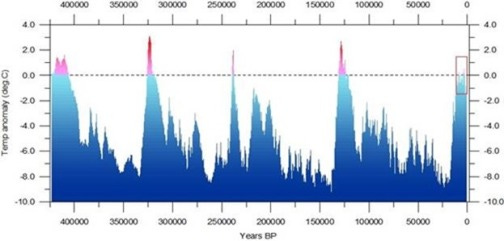
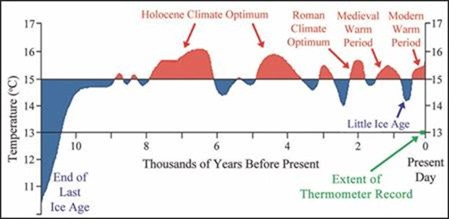
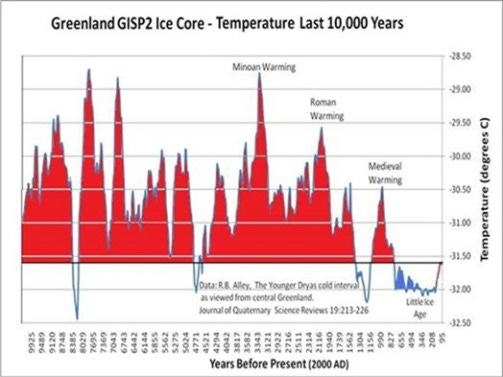
 Politics and Prosperity