Where I Stand on Kavanaugh

As I acquire new information about Christine Blasey Ford’s porous and perjurious memory, I will add links at the bottom of this post.

The cold civil war that rages in America became a bit hotter on September 27, 2018, when Judge Brett Kavanaugh bared his righteous outrage and dared to attack the Democrats who are hypocritically attacking him. Hypocritically? Yes, because Ted Kennedy, Bill Clinton, and Keith Ellison (among many others) have been spared the wrath of Democrats for having committed acts during their adulthood that are far better documented than the charges leveled against Judge Kavanaugh.

Now, Kavanaugh is under attack for having bared his outrage. As if he were not entitled to outrage because, after all, “women must be believed”. There’s a syllogism in there somewhere. It probably goes like this:

Women never lie.

Christine Blasey Ford is a women.

Therefore, Christine Blasey Ford isn’t lying.

That’s a logically valid statement. But, as any respectable professor of logic would tell you, a logically valid statement isn’t necessarily a true statement. The truth of a logically valid statement depends on the truth of its premises. The major premise — women never lie — is prima facie untrue. “Women must be believed” doesn’t pass the smell test.

That’s not to say that sexual assault doesn’t happen. It does, and it should be reported to the police and investigated by the police — as soon as possible after it happens.

Nor do I rule out the possibility that something like the events retailed by CBF happened in 1982. Though there is vast room for doubt given the vagueness and lateness of CBF’s recovered memory, and the lack (thus far) of corroboration by persons she has named as participants in the “party” where she was purportedly attacked. UPDATE: CBF  may soon join the ranks of exposed hoaxers. See this.

If (most of) the Republicans on the Senate Judiciary Committee accept Kavanaugh’s denial of CBF’s allegation, it is only because the Democrats on the committee are bent on convicting Kavanaugh on the flimsiest of evidence, so as to deny the “conservative wing” of the Court a majority.. This is another battle in the cold civil war, which is about control of government and, ultimately, control of our lives. The Republicans, for all of their many faults, are on the side of liberty. The Democrats, for all of their much worse faults, are on the side of oppression. That’s what it comes down to.

In any event, with respect to CBF’s allegation, what is the worst-case scenario? It is that Kavanaugh — as a 17-year-old — did something in a drunken state that he would not have done when sober. What does that have to do with his qualifications for sitting on the Supreme Court if, as seems to be the case, he has never come close to doing something similar in the ensuing 36 years, drunk or sober?

The correct answer is “nothing”. As lawprof blogger Tom Smith says,

a lot of people in positions of high authority are not very nice at all. Some of the Dems on the Senate Judiciary Committee make me want a long, hot shower after listening to them. I care about the environment, so I don’t listen to them. Some of the judges I have known were frankly a**holes, always jockeying for political advantage and not caring deeply about the law. Indeed, we seem to have entered an era in which few people care deeply about the law, attributable mostly it seems to me, and ironically, to law professors. Judge K seems ambitious but to at least care about the law.

In politics, you reach a point, usually near the beginning but almost always by the end, where you have to choose the greater good or the lesser evil. That’s where we are with Judge K. It’s possible he did sexually assault Ford long ago and does not remember it or half-remembers it now. It’s possible Ford has confabulated her memory of this possibly fictional incident. Lots of things are possible. Few lives, except mine of course, could stand up to the sort of hyperpartisan de- and reconstruction that K’s has been subject to. K seems to have been clean as a whistle since at least his graduation from law school. If he was something of a frat boy aggressor while drunk against young women, he seems to have gotten over that a long time ago, if indeed he actually had anything to get over. And yes, I realize this tags me as one of those old white guys who does not think it’s practical to dredge up 30+ year old accusations against an otherwise outstanding-seeming judge in a hyper-political context.

Here’s the bottom line:

But just hypothetically [emphasis added], whom would you choose: a guy who was perhaps, maybe, based on far from ideal memories from 30+ years ago, a heavy drinker and sexual assaulter, but who would uphold the basic structure of the republic, versus another Sotomayor, who is arguendo personally morally upstanding, but who would gnaw obsessively at the pilings under-girding our form of government? Given the choice, I know what I would do.

As the saying goes: Me, too.


CBF’s incredibility:

Sean Davis, “Christine Blasey Ford’s Ex-Boyfriend Told Senate Judiciary He Witnessed Her Coach A Friend On Polygraphs“, The Federalist, October 2, 2018

Christopher DGroot: “Christine Ford: A Singular Fraud“, FrontPage Mag, October 9, 2018

Quin Hillyer, “Ford: Confused. Kavanaugh: Innocent“, The American Spectator, October 3, 2018

Scott Johnson, “Visualize This“, Power Line, October 3, 2018

Kimberlee Kaye, “Grassley’s Gloves are Off: Third Request for Withheld Evidence Mentions Recently Uncovered Information’“, Legal Insurrection, October 5, 2018

R. Corl Kirkwood, “Multiple Perjury Counts For Kavanaugh Accuser Ford? Records, Boyfriend Contradict Sworn Testimony“, The New American, October 3, 2018

Thomas Lifson, “Blasey Ford Facing Perjury Trap?“, American Thinker, October 3, 2018

Patricia McCarthy, “The Kavanaugh Setup Becomes Clear“, American Thinker, October 5, 2018

Ilana Mercer, “Christine Blah-Blah Ford and Her Hiippocampus“, American Greatness, October 5, 2018

Tyler Watkins, “On the Fallibility of Memory and Importance of Evidence“, Quillette, October 4, 2018

Michael Thau, “Did the Deep State Recruit Christine Blasey Ford?“, American Greatness, October 15, 2018

Chistopher DeGroot, “Christine Ford, Washington Post, and Junk Science“, FrontPage Mag, October 19, 2018

Michael Thau, “Christine Blasey Ford’s Polygraph Was B.S.”, American Greatness, October 21, 2018

Lisa Boothe, “The Media’s Orchestrated Smear of Brett Kavanaugh“, Fox News, October 30, 2018

Kristina Wong, “Senate Report Reveals Christine Blasey Ford Had an Encounter Similar to Her Kavanaugh Claim“, Breitbart.com, November 4, 2018

Margot Cleveland, “7 Top Takeaways from Grassley’s Report about Kavanaugh’s Accusers“, The Federalist, November 5, 2018

Atheistic Scientism Revisited

I recently had the great pleasure of reading The Devil’s Delusion: Atheism and Its Scientific Pretensions, by David Berlinksi. (Many thanks to Roger Barnett for recommending the book to me.) Berlinski, who knows far more about science than I do, writes with flair and scathing logic. I can’t do justice to his book, but I will try to convey its gist.

Before I do that, I must tell you that I enjoyed Berlinski’s book not only because of the author’s acumen and biting wit, but also because he agrees with me. (I suppose I should say, in modesty, that I agree with him.) I have argued against atheistic scientism in many blog posts (see below).

Here is my version of the argument against atheism in its briefest form (June 15, 2011):

  1. In the material universe, cause precedes effect.
  2. Accordingly, the material universe cannot be self-made. It must have a “starting point,” but the “starting point” cannot be in or of the material universe.
  3. The existence of the universe therefore implies a separate, uncaused cause.

There is no reasonable basis — and certainly no empirical one — on which to prefer atheism to deism or theism. Strident atheists merely practice a “religion” of their own. They have neither logic nor science nor evidence on their side — and eons of belief against them.

As for scientism, I call upon Friedrich Hayek:

[W]e shall, wherever we are concerned … with slavish imitation of the method and language of Science, speak of “scientism” or the “scientistic” prejudice…. It should be noted that, in the sense in which we shall use these terms, they describe, of course, an attitude which is decidedly unscientific in the true sense of the word, since it involves a mechanical and uncritical application of habits of thought to fields different from those in which they have been formed. The scientistic as distinguished from the scientific view is not an unprejudiced but a very prejudiced approach which, before it has considered its subject, claims to know what is the most appropriate way of investigating it. [The Counter Revolution Of Science]

As Berlinski amply illustrates and forcibly argues, atheistic scientism is rampant in the so-called sciences. I have reproduced below some key passages from Berlinski’s book. They are representative, but far from exhaustive (though I did nearly exhaust the publisher’s copy limit on the Kindle edition). I have forgone the block-quotation style for ease of reading, and have inserted triple asterisks to indicate (sometimes subtle) changes of topic.

*   *   *

Richard Dawkins, the author of The God Delusion, … is not only an intellectually fulfilled atheist, he is determined that others should be as full as he. A great many scientists are satisfied that at last someone has said out loud what so many of them have said among themselves: Scientific and religious belief are in conflict. They cannot both be right. Let us get rid of the one that is wrong….

Because atheism is said to follow from various scientific doctrines, literary atheists, while they are eager to speak their minds, must often express themselves in other men’s voices. Christopher Hitchens is an example. With forthcoming modesty, he has affirmed his willingness to defer to the world’s “smart scientists” on any matter more exigent than finger-counting. Were smart scientists to report that a strain of yeast supported the invasion of Iraq, Hitchens would, no doubt, conceive an increased respect for yeast….

If nothing else, the attack on traditional religious thought marks the consolidation in our time of science as the single system of belief in which rational men and women might place their faith, and if not their faith, then certainly their devotion. From cosmology to biology, its narratives have become the narratives. They are, these narratives, immensely seductive, so much so that looking at them with innocent eyes requires a very deliberate act. And like any militant church, this one places a familiar demand before all others: Thou shalt have no other gods before me.

It is this that is new; it is this that is important….

For scientists persuaded that there is no God, there is no finer pleasure than recounting the history of religious brutality and persecution. Sam Harris is in this regard especially enthusiastic, The End of Faith recounting in lurid but lingering detail the methods of torture used in the Spanish Inquisition….

Nonetheless, there is this awkward fact: The twentieth century was not an age of faith, and it was awful. Lenin, Stalin, Hitler, Mao, and Pol Pot will never be counted among the religious leaders of mankind….

… Just who has imposed on the suffering human race poison gas, barbed wire, high explosives, experiments in eugenics, the formula for Zyklon B, heavy artillery, pseudo-scientific justifications for mass murder, cluster bombs, attack submarines, napalm, intercontinental ballistic missiles, military space platforms, and nuclear weapons?

If memory serves, it was not the Vatican….

What Hitler did not believe and what Stalin did not believe and what Mao did not believe and what the SS did not believe and what the Gestapo did not believe and what the NKVD did not believe and what the commissars, functionaries, swaggering executioners, Nazi doctors, Communist Party theoreticians, intellectuals, Brown Shirts, Black Shirts, gauleiters, and a thousand party hacks did not believe was that God was watching what they were doing.

And as far as we can tell, very few of those carrying out the horrors of the twentieth century worried overmuch that God was watching what they were doing either.

That is, after all, the meaning of a secular society….

Richard Weikart, … in his admirable treatise, From Darwin to Hitler: Evolutionary Ethics, Eugenics, and Racism in Germany, makes clear what anyone capable of reading the German sources already knew: A sinister current of influence ran from Darwin’s theory of evolution to Hitler’s policy of extermination.

*   *   *

It is wrong, the nineteenth-century British mathematician W. K. Clifford affirmed, “always, everywhere, and for anyone, to believe anything upon insufficient evidence.” I am guessing that Clifford believed what he wrote, but what evidence he had for his belief, he did not say.

Something like Clifford’s injunction functions as the premise in a popular argument for the inexistence of God. If God exists, then his existence is a scientific claim, no different in kind from the claim that there is tungsten to be found in Bermuda. We cannot have one set of standards for tungsten and another for the Deity….

There remains the obvious question: By what standards might we determine that faith in science is reasonable, but that faith in God is not? It may well be that “religious faith,” as the philosopher Robert Todd Carroll has written, “is contrary to the sum of evidence,” but if religious faith is found wanting, it is reasonable to ask for a restatement of the rules by which “the sum of evidence” is computed….

… The concept of sufficient evidence is infinitely elastic…. What a physicist counts as evidence is not what a mathematician generally accepts. Evidence in engineering has little to do with evidence in art, and while everyone can agree that it is wrong to go off half-baked, half-cocked, or half-right, what counts as being baked, cocked, or right is simply too variable to suggest a plausible general principle….

Neither the premises nor the conclusions of any scientific theory mention the existence of God. I have checked this carefully. The theories are by themselves unrevealing. If science is to champion atheism, the requisite demonstration must appeal to something in the sciences that is not quite a matter of what they say, what they imply, or what they reveal.

*   *   *

The universe in its largest aspect is the expression of curved space and time. Four fundamental forces hold sway. There are black holes and various infernal singularities. Popping out of quantum fields, the elementary particles appear as bosons or fermions. The fermions are divided into quarks and leptons. Quarks come in six varieties, but they are never seen, confined as they are within hadrons by a force that perversely grows weaker at short distances and stronger at distances that are long. There are six leptons in four varieties. Depending on just how things are counted, matter has as its fundamental constituents twenty-four elementary particles, together with a great many fields, symmetries, strange geometrical spaces, and forces that are disconnected at one level of energy and fused at another, together with at least a dozen different forms of energy, all of them active.

… It is remarkably baroque. And it is promiscuously catholic. For the atheist persuaded that materialism offers him a no-nonsense doctrinal affiliation, materialism in this sense comes to the declaration of a barroom drinker that he will have whatever he’s having, no matter who he is or what he is having. What he is having is what he always takes, and that is any concept, mathematical structure, or vagrant idea needed to get on with it. If tomorrow, physicists determine that particle physics requires access to the ubiquity of the body of Christ, that doctrine would at once be declared a physical principle and treated accordingly….

What remains of the ideology of the sciences? It is the thesis that the sciences are true— who would doubt it?— and that only the sciences are true. The philosopher Michael Devitt thus argues that “there is only one way of knowing, the empirical way that is the basis of science.” An argument against religious belief follows at once on the assumptions that theology is not science and belief is not knowledge. If by means of this argument it also follows that neither mathematics, the law, nor the greater part of ordinary human discourse have a claim on our epistemological allegiance, they must be accepted as casualties of war.

*   *   *

The claim that the existence of God should be treated as a scientific question stands on a destructive dilemma: If by science one means the great theories of mathematical physics, then the demand is unreasonable. We cannot treat any claim in this way. There is no other intellectual activity in which theory and evidence have reached this stage of development….

Is there a God who has among other things created the universe? “It is not by its conclusions,” C. F. von Weizsäcker has written in The Relevance of Science, but by its methodological starting point that modern science excludes direct creation. Our methodology would not be honest if this fact were denied . . . such is the faith in the science of our time, and which we all share” (italics added).

In science, as in so many other areas of life, faith is its own reward….

The medieval Arabic argument known as the kalam is an example of the genre [cosmological argument].

Its first premise: Everything that begins to exist has a cause.

And its second: The universe began to exist.

And its conclusion: So the universe had a cause.

This is not by itself an argument for the existence of God. It is suggestive without being conclusive. Even so, it is an argument that in a rush covers a good deal of ground carelessly denied by atheists. It is one thing to deny that there is a God; it is quite another to deny that the universe has a cause….

The universe, orthodox cosmologists believe, came into existence as the expression of an explosion— what is now called the Big Bang. The word explosion is a sign that words have failed us, as they so often do, for it suggests a humanly comprehensible event— a gigantic explosion or a stupendous eruption. This is absurd. The Big Bang was not an event taking place at a time or in a place. Space and time were themselves created by the Big Bang, the measure along with the measured….

Whatever its name, as far as most physicists are concerned, the Big Bang is now a part of the established structure of modern physics….

… Many physicists have found the idea that the universe had a beginning alarming. “So long as the universe had a beginning,” Stephen Hawking has written, “we could suppose it had a creator.” God forbid!

… Big Bang cosmology has been confirmed by additional evidence, some of it astonishing. In 1963, the physicists Arno Penzias and Robert Wilson observed what seemed to be the living remnants of the Big Bang— and after 14 billion years!— when in 1962 they detected, by means of a hum in their equipment, a signal in the night sky they could only explain as the remnants of the microwave radiation background left over from the Big Bang itself.

More than anything else, this observation, and the inference it provoked, persuaded physicists that the structure of Big Bang cosmology was anchored into fact….

“Perhaps the best argument in favor of the thesis that the Big Bang supports theism,” the astrophysicist Christopher Isham has observed, “is the obvious unease with which it is greeted by some atheist physicists. At times this has led to scientific ideas, such as continuous creation or an oscillating universe, being advanced with a tenacity which so exceeds their intrinsic worth that one can only suspect the operation of psychological forces lying very much deeper than the usual academic desire of a theorist to support his or her theory.”…

… With the possibility of inexistence staring it in the face, why does the universe exist? To say that universe just is, as Stephen Hawking has said, is to reject out of hand any further questions. We know that it is. It is right there in plain sight. What philosophers such as ourselves wish to know is why it is. It may be that at the end of these inquiries we will answer our own question by saying that the universe exists for no reason whatsoever. At the end of these inquiries, and not the beginning….

Among physicists, the question of how something emerged from nothing has one decisive effect: It loosens their tongues. “One thing [that] is clear,” a physicist writes, “in our framing of questions such as ‘How did the Universe get started?’ is that the Universe was self-creating. This is not a statement on a ‘cause’ behind the origin of the Universe, nor is it a statement on a lack of purpose or destiny. It is simply a statement that the Universe was emergent, that the actual Universe probably derived from an indeterminate sea of potentiality that we call the quantum vacuum, whose properties may always remain beyond our current understanding.”

It cannot be said that “an indeterminate sea of potentiality” has anything like the clarifying effect needed by the discussion, and indeed, except for sheer snobbishness, physicists have offered no reason to prefer this description of the Source of Being to the one offered by Abu al-Hassan al Hashari in ninth-century Baghdad. The various Islamic versions of that indeterminate sea of being he rejected in a spasm of fierce disgust. “We confess,” he wrote, “that God is firmly seated on his throne. We confess that God has two hands, without asking how. We confess that God has two eyes, without asking how. We confess that God has a face.”…

Proposing to show how something might emerge from nothing, [the physicist Victor Stenger] introduces “another universe [that] existed prior to ours that tunneled through . . . to become our universe. Critics will argue that we have no way of observing such an earlier universe, and so this is not very scientific” (italics added). This is true. Critics will do just that. Before they do, they will certainly observe that Stenger has completely misunderstood the terms of the problem that he has set himself, and that far from showing how something can arise from nothing, he has shown only that something might arise from something else. This is not an observation that has ever evoked a firestorm of controversy….

… [A]ccording to the many-worlds interpretation [of quantum mechanics], at precisely the moment a measurement is made, the universe branches into two or more universes. The cat who was half dead and half alive gives rise to two separate universes, one containing a cat who is dead, the other containing a cat who is alive. The new universes cluttering up creation embody the quantum states that were previously in a state of quantum superposition.

The many-worlds interpretation of quantum mechanics is rather like the incarnation. It appeals to those who believe in it, and it rewards belief in proportion to which belief is sincere….

No less than the doctrines of religious belief, the doctrines of quantum cosmology are what they seem: biased, partial, inconclusive, and largely in the service of passionate but unexamined conviction.

*   *   *

The cosmological constant is a number controlling the expansion of the universe. If it were negative, the universe would appear doomed to contract in upon itself, and if positive, equally doomed to expand out from itself. Like the rest of us, the universe is apparently doomed no matter what it does. And here is the odd point: If the cosmological constant were larger than it is, the universe would have expanded too quickly, and if smaller, it would have collapsed too early, to permit the appearance of living systems….

“Scientists,” the physicist Paul Davies has observed, “are slowly waking up to an inconvenient truth— the universe looks suspiciously like a fix. The issue concerns the very laws of nature themselves. For 40 years, physicists and cosmologists have been quietly collecting examples of all too convenient ‘coincidences’ and special features in the underlying laws of the universe that seem to be necessary in order for life, and hence conscious beings, to exist. Change any one of them and the consequences would be lethal.”….

Why? Yes, why?

An appeal to still further physical laws is, of course, ruled out on the grounds that the fundamental laws of nature are fundamental. An appeal to logic is unavailing. The laws of nature do not seem to be logical truths. The laws of nature must be intrinsically rich enough to specify the panorama of the universe, and the universe is anything but simple. As Newton remarks, “Blind metaphysical necessity, which is certainly the same always and everywhere, could produce no variety of things.”

If the laws of nature are neither necessary nor simple, why, then, are they true?

Questions about the parameters and laws of physics form a single insistent question in thought: Why are things as they are when what they are seems anything but arbitrary?

One answer is obvious. It is the one that theologians have always offered: The universe looks like a put-up job because it is a put-up job.

*   *   *

Any conception of a contingent deity, Aquinas argues, is doomed to fail, and it is doomed to fail precisely because whatever He might do to explain the existence of the universe, His existence would again require an explanation. “Therefore, not all beings are merely possible, but there must exist something the existence of which is necessary.”…

… “We feel,” Wittgenstein wrote, “that even when all possible scientific questions have been answered, the problems of life remain completely untouched.” Those who do feel this way will see, following Aquinas, that the only inference calculated to overcome the way things are is one directed toward the way things must be….

“The key difference between the radically extravagant God hypothesis,” [Dawkins] writes, “and the apparently extravagant multiverse hypothesis, is one of statistical improbability.”

It is? I had no idea, the more so since Dawkins’s very next sentence would seem to undercut the sentence he has just written. “The multiverse, for all that it is extravagant, is simple,” because each of its constituent universes “is simple in its fundamental laws.”

If this is true for each of those constituent universes, then it is true for our universe as well. And if our universe is simple in its fundamental laws, what on earth is the relevance of Dawkins’s argument?

Simple things, simple explanations, simple laws, a simple God.

Bon appétit.

*   *   *

As a rhetorical contrivance, the God of the Gaps makes his effect contingent on a specific assumption: that whatever the gaps, they will in the course of scientific research be filled…. Western science has proceeded by filling gaps, but in filling them, it has created gaps all over again. The process is inexhaustible. Einstein created the special theory of relativity to accommodate certain anomalies in the interpretation of Clerk Maxwell’s theory of the electromagnetic field. Special relativity led directly to general relativity. But general relativity is inconsistent with quantum mechanics, the largest visions of the physical world alien to one another. Understanding has improved, but within the physical sciences, anomalies have grown great, and what is more, anomalies have grown great because understanding has improved….

… At the very beginning of his treatise Vertebrate Paleontology and Evolution, Robert Carroll observes quite correctly that “most of the fossil record does not support a strictly gradualistic account” of evolution. A “strictly gradualistic” account is precisely what Darwin’s theory demands: It is the heart and soul of the theory.

But by the same token, there are no laboratory demonstrations of speciation either, millions of fruit flies coming and going while never once suggesting that they were destined to appear as anything other than fruit flies. This is the conclusion suggested as well by more than six thousand years of artificial selection, the practice of barnyard and backyard alike. Nothing can induce a chicken to lay a square egg or to persuade a pig to develop wheels mounted on ball bearings….

… In a research survey published in 2001, and widely ignored thereafter, the evolutionary biologist Joel Kingsolver reported that in sample sizes of more than one thousand individuals, there was virtually no correlation between specific biological traits and either reproductive success or survival. “Important issues about selection,” he remarked with some understatement, “remain unresolved.”

Of those important issues, I would mention prominently the question whether natural selection exists at all.

Computer simulations of Darwinian evolution fail when they are honest and succeed only when they are not. Thomas Ray has for years been conducting computer experiments in an artificial environment that he has designated Tierra. Within this world, a shifting population of computer organisms meet, mate, mutate, and reproduce.

Sandra Blakeslee, writing for the New York Times, reported the results under the headline “Computer ‘Life Form’ Mutates in an Evolution Experiment: Natural Selection Is Found at Work in a Digital World.”

Natural selection found at work? I suppose so, for as Blakeslee observes with solemn incomprehension, “the creatures mutated but showed only modest increases in complexity.” Which is to say, they showed nothing of interest at all. This is natural selection at work, but it is hardly work that has worked to intended effect.

What these computer experiments do reveal is a principle far more penetrating than any that Darwin ever offered: There is a sucker born every minute….

… Daniel Dennett, like Mexican food, does not fail to come up long after he has gone down. “Contemporary biology,” he writes, “has demonstrated beyond all reasonable doubt that natural selection— the process in which reproducing entities must compete for finite resources and thereby engage in a tournament of blind trial and error from which improvements automatically emerge— has the power to generate breathtakingly ingenious designs” (italics added).

These remarks are typical in their self-enchanted self-confidence. Nothing in the physical sciences, it goes without saying— right?— has been demonstrated beyond all reasonable doubt. The phrase belongs to a court of law. The thesis that improvements in life appear automatically represents nothing more than Dennett’s conviction that living systems are like elevators: If their buttons are pushed, they go up. Or down, as the case may be. Although Darwin’s theory is very often compared favorably to the great theories of mathematical physics on the grounds that evolution is as well established as gravity, very few physicists have been heard observing that gravity is as well established as evolution. They know better and they are not stupid….

… The greater part of the debate over Darwin’s theory is not in service to the facts. Nor to the theory. The facts are what they have always been: They are unforthcoming. And the theory is what it always was: It is unpersuasive. Among evolutionary biologists, these matters are well known. In the privacy of the Susan B. Anthony faculty lounge, they often tell one another with relief that it is a very good thing the public has no idea what the research literature really suggests.

“Darwin?” a Nobel laureate in biology once remarked to me over his bifocals. “That’s just the party line.”

In the summer of 2007, Eugene Koonin, of the National Center for Biotechnology Information at the National Institutes of Health, published a paper entitled “The Biological Big Bang Model for the Major Transitions in Evolution.”

The paper is refreshing in its candor; it is alarming in its consequences. “Major transitions in biological evolution,” Koonin writes, “show the same pattern of sudden emergence of diverse forms at a new level of complexity” (italics added). Major transitions in biological evolution? These are precisely the transitions that Darwin’s theory was intended to explain. If those “major transitions” represent a “sudden emergence of new forms,” the obvious conclusion to draw is not that nature is perverse but that Darwin was wrong….

Koonin is hardly finished. He has just started to warm up. “In each of these pivotal nexuses in life’s history,” he goes on to say, “the principal ‘types’ seem to appear rapidly and fully equipped with the signature features of the respective new level of biological organization. No intermediate ‘grades’ or intermediate forms between different types are detectable.”…

… [H[is views are simply part of a much more serious pattern of intellectual discontent with Darwinian doctrine. Writing in the 1960s and 1970s, the Japanese mathematical biologist Motoo Kimura argued that on the genetic level— the place where mutations take place— most changes are selectively neutral. They do nothing to help an organism survive; they may even be deleterious…. Kimura was perfectly aware that he was advancing a powerful argument against Darwin’s theory of natural selection. “The neutral theory asserts,” he wrote in the introduction to his masterpiece, The Neutral Theory of Molecular Evolution, “that the great majority of evolutionary changes at the molecular level, as revealed by comparative studies of protein and DNA sequences, are caused not by Darwinian selection but by random drift of selectively neutral or nearly neutral mutations” (italics added)….

… Writing in the Proceedings of the National Academy of Sciences, the evolutionary biologist Michael Lynch observed that “Dawkins’s agenda has been to spread the word on the awesome power of natural selection.” The view that results, Lynch remarks, is incomplete and therefore “profoundly misleading.” Lest there be any question about Lynch’s critique, he makes the point explicitly: “What is in question is whether natural selection is a necessary or sufficient force to explain the emergence of the genomic and cellular features central to the building of complex organisms.”…

When asked what he was in awe of, Christopher Hitchens responded that his definition of an educated person is that you have some idea how ignorant you are. This seems very much as if Hitchens were in awe of his own ignorance, in which case he has surely found an object worthy of his veneration.

*   *   *

Do read the whole thing. It will take you only a few hours. And it will remind you — as we badly need reminding these days — that sanity reigns in some corners of the universe.


Related posts:

Same Old Story, Same Old Song and Dance
Atheism, Religion, and Science
The Limits of Science
Beware of Irrational Atheism
The Thing about Science
Evolution and Religion
Words of Caution for Scientific Dogmatists
The Legality of Teaching Intelligent Design
Science, Logic, and God
Debunking “Scientific Objectivity”
Science’s Anti-Scientific Bent
The Big Bang and Atheism
Atheism, Religion, and Science Redux
Religion as Beneficial Evolutionary Adaptation
A Non-Believer Defends Religion
The Greatest Mystery
Landsburg Is Half-Right
Evolution, Human Nature, and “Natural Rights”
More Thoughts about Evolutionary Teleology
A Digression about Probability and Existence
Existence and Creation
Probability, Existence, and Creation
The Atheism of the Gaps
Demystifying Science
Religion on the Left
Scientism, Evolution, and the Meaning of Life
Something from Nothing?
Something or Nothing
My Metaphysical Cosmology
Further Thoughts about Metaphysical Cosmology
Nothingness
Pinker Commits Scientism
Spooky Numbers, Evolution, and Intelligent Design
The Limits of Science (II)
The Pretence of Knowledge
“The Science Is Settled”
The Limits of Science, Illustrated by Scientists
Some Thoughts about Evolution
Rationalism, Empiricism, and Scientific Knowledge
Fine-Tuning in a Wacky Wrapper
Beating Religion with the Wrong End of the Stick
Quantum Mechanics and Free Will
“Science” vs. Science: The Case of Evolution, Race, and Intelligence
The Fragility of Knowledge
Altruism, One More Time
Religion, Creation, and Morality
The Pretence of Knowledge
Evolution, Intelligence, and Race

Why Race Matters

Race preoccupies the left and the media (pardon the redundancy). Media attention to race makes it seem far more important than it really is to most Americans. In fact, it should be more important, but not for the reasons that the media (and various “anti-racist” hate groups) would like it to be.

What is the point of the left’s obsession with race? It is an attempt to claim the moral high ground. But the moral high ground, in the left’s cockeyed view, can be claimed only if one opposes “racism” against blacks, Hispanics, Muslims, and other “oppressed” groups. Whites, Jews, and Asians don’t matter to the left. So much for the moral high ground.

In the left’s view, it is racist to believe that (a) there are races, (b) they differ in their genetic inheritance (which is much the same thing), and (c) the distribution of intelligence (vis-a-vis other races) is a manifestation of genetic inheritance (and therefore of race) is a racist. Which leads me to ask this: If there is no such thing as race, how can there be racism and racists?

It is supremely ironic that leftists — who love to proclaim their allegiance to science — are eager to deny scientific facts: There is such a thing as race (and gender); and races (and genders) differ broadly in mental and physical characteristics. Leftists are in denial not only because of their biases, but also because their denial justifies the casting of aspersions on whites — well, whites of the “wrong kind” (i.e., straight white males and conservatives of all hues).

The left (with too much help from others) fights the war against “racism” (“sexism”, “homophobia”, etc.) by such things as:

  • preferences in college admissions, jobs, and promotions
  • anti-gentrification ordinances
  • housing subsidies and affordable-housing mandates for new developments
  • public-education gimmicks (Head Start, racial quotas, etc.)
  • restrictions on speech by universities (including tax-supported ones), some State and local governments (e.g., the Colorado Human Rights Commission), and media-information companies that hold state-like power

All such things are anti-libertarian and economically and socially destructive. Moreover, they work against the members of favored groups by (a) inciting resentment against them, (b) inviting doubts about the validity of their credentials, and (c) setting them up for failure.

There is a deeper and more troubling implication of racial favoritism: It fosters a dysgenic trend in the populace., by encouraging and enabling the more rapid reproduction of persons of lower intelligence (and higher criminality). The remedy for this dygenic trend is not to promote abortion among the “lower classes” (as advocated by the notorious RBG and opposed by me).

But the fact remains that the anti-libertarian and economically and socially destructive programs of “anti-racism” have a dysgenic side effect that weakens America — socially and economically.


Related reading:

Grace Carr, “Genes Affect Level of Educational Attainment, Study Reveals“, The Daily Caller, July 23, 2018

Gregory Cochran, “Forget Nature vs. Nuture. Nature Has Won“, Quillette, September 25, 2018

Thomas B. Edsall, “Why Don’t We Always Vote in Our Own Self-Interest?“, The New York Times, July 19, 2018 (a beautiful illustration of left-wing smugness about race)

Karen Effram and Jane Robbins, “Will Congress Heed Evidence That Government Pre-School is Worthless?“, The American Spectator, July 24, 2018 (more evidence here)

Gregory Hood, “Race Is the Main Political Divide“, American Renaissance, September 28, 2018

Thomas Jackson, “On the Trail of the Great Taboo“, American Renaissance, November 1990

Thomas Jackson, “The Future of an Illusion“, American Renaissance, July 1999

Thomas Jackson, “The Animal in the Man“, American Renaissance, September 2000

R. Cort Kirkwood, “Analyst: Refugees Go on Welfare, Cost More Than They Contribute“, The New American, August 16, 2018

George Leef, “Exposing the Harms of the ‘Diversity Delusion’“, The James G. Martin Center for Academic Renewal (website), September 26, 2018

Patrick McDermott,”Why White Liberals Will Wake Up“, American Renaissance, September 28, 2018 probably too late)

John J. Ray, “The EQ Dream“, Dissecting Leftism, January 31, 2018

Steve Sailer, “A Half Century of Amnesia“, Taki’s Magazine, August 1, 2018

Daniel John Sobieski, “Mollie Tibbetts and the Lower Alien Crime-Rate Lie“, American Thinker, August 27, 2018

Related pages and posts:

Intelligence
Leftism

An Immigration Roundup
“Intellectuals and Society”: A Review
The Left’s Agenda
The Left and Its Delusions
The Spoiled Children of Capitalism
Politics, Sophistry, and the Academy
Race and Reason: The Victims of Affirmative Action
Race and Reason: The Achievement Gap — Causes and Implications
“Conversing” about Race
IQ, Political Correctness, and America’s Present Condition
Evolution and Race
The Culture War
Alienation
“Wading” into Race, Culture, and IQ
Round Up the Usual Suspects
Evolution, Culture, and “Diversity”
Ruminations on the Left in America
The Harmful Myth of Inherent Equality
Crime Revisited
Academic Ignorance
The Euphemism Conquers All
Defending the Offensive
Superiority
A Dose of Reality
Immigration and Crime
God-Like Minds
Immigration and Intelligence
Let’s Have That “Conversation” about Race
Non-Judgmentalism as Leftist Condescension
An Addendum to (Asymmetrical) Ideological Warfare
Affirmative Action Comes Home to Roost
The IQ of Nations
Retrospective Virtue-Signalling
“Tribalists”, “Haters”, and Psychological Projection
Race and Social Engineering
More about Intelligence
Nature, Nurture, and Leniency
Some Notes about Psychology and Intelligence
Who’s Obsessing, Professor McWhorter?
Racism on Parade
How’s Your (Implicit) Attitude?
Immigration Blues
Social Norms, the Left, and Social Disintegration
Selected Writings about Intelligence
“Liberalism” and Virtue-Signaling

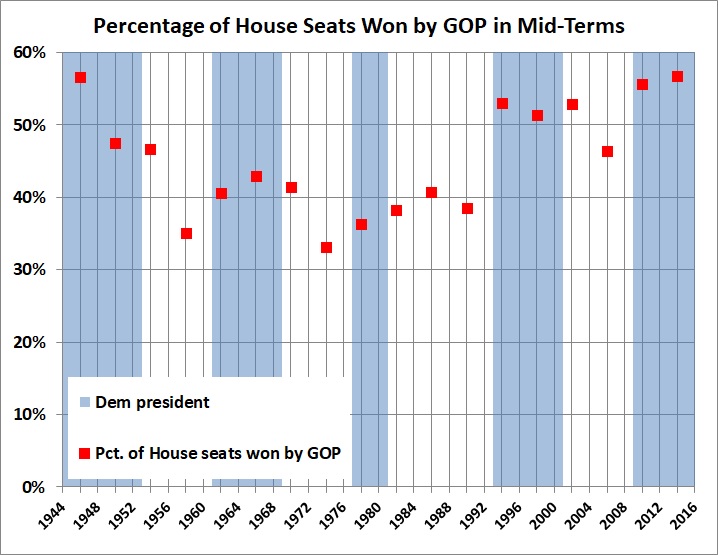
The House Hangs in the Balance

Incorporated in this post.

James Burnham’s Misplaced Optimism

I will occasionally add items to the list of related readings.

James Burnham’s Suicide of the West: An Essay on the Meaning and Destiny of Liberalism was published in 1964. Had I read Burnham’s book then I would have agreed with his description of “liberalism”, as it was at the time, for I was one of the breed. I would not have agreed with Burnham’s prognosis of suicide. But I hadn’t yet seen what I would see in the following five-plus decades.

Burnham correctly foresaw that “liberalism” would lead to a kind of suicide. But he (unsurprisingly) failed to foresee the nasty turn that “liberalism” would take in America, and the fratricide (figurative, I hope) that looms on the horizon. It is that fratricide, if “liberalism” emerges triumphant, which will lead to suicide at the hands of external enemies. But I am getting ahead of myself.

Burnham (1905-1987) was, according to Wikipedia,

an American philosopher and political theorist. Burnham was a prominent Trotskyist activist in the 1930s…. Burnham left Marxism and became a public intellectual of the American conservative movement. His book, The Managerial Revolution, published in 1941, speculated on the fate of capitalism. Burnham was also an editor and a regular contributor to the American conservative publication, National Review.

There was much more to Burnham than that, according to Matthew Continetti’s “James Burnham: A Visionary Like No Other” (National Review, March 26, 2015):

By the early 1950s Burnham’s departure from liberalism had become irreparable. He did not rule out the possibility of nuclear war with the Soviet Union, he warned of a “fifth column” of Soviet infiltrators operating in the West, he dismissed pieties involving the ballot box, equality, education, and free speech, and his attitude toward Joseph McCarthy was much too ambivalent for the bourgeois liberals within his social circle. So he left….

The defection was finalized when Burnham agreed to join William F. Buckley Jr. in the creation of National Review in 1955. A quarter century later, Buckley would say of Burnham, “Beyond any question, he has been the dominant intellectual influence in the development of this journal.”

At NR, Burnham was the first person to speak at editorial meetings. He wrote a regular column on foreign affairs, penned numerous unsigned editorials and items for “The Week,” edited the biweekly National Review Bulletin newsletter, and was understood to be in charge of the magazine whenever Buckley was traveling, which was often.

As for Suicide of the West, in which Burnham forecast the eponymous demise at the hands of dmodern “liberalism”, Continetti says this:

What is liberalism? Burnham identifies 19 of its assumptions. His list … is still relevant…. He is uninterested in refuting liberalism — indeed, he does not believe such a refutation possible. “The question of the truth or falsity of an ideology is in any case of minor importance,” he writes. “Human beings believe an ideology, as a rule, not because they are convinced rationally that it is true but because it satisfies psychological and social needs and serves, or seems to serve, individual or group interests.”

Guilt is the psychological need satisfied by liberalism. Not only is man a fallen creature, according to Burnham; man is conscious of his fallen nature. And such awareness produces in him existential dread, unease about the world, a restlessness that manifests itself in enthusiastic activity. What soothes this dread for most people in most places at most times is religion. Christianity, for instance, “faces the reality of guilt, provides an adequate explanation of it, and offers a resolution of the anxiety to which it inevitably gives rise.”

But modern society, especially educated society, is secular. The religious answer is ignored, regarded as a private affair, attacked and subverted. What is an affluent and credentialed and professional and secular man to do? “Liberalism,” Burnham writes, “permits him to translate his guilt into the egalitarian, anti-discrimination, democratist, peace-seeking liberal principles, and to transform his guilty feeling into” a “passion for reform.”

Liberalism for Burnham is a form of political religion. It responds to the tragic facts of life by denying those facts and substituting myths. “Thanks to the reassuring provisions of the liberal ideology,” he writes, “I can go about my ordinary business and meanwhile take sufficient account of my moral duties by affirming my loyalty to the correct egalitarian principles, voting for the correct candidates, praising the activists and contributing to their defense funds when they get into trouble, and joining promptly in the outcry against reactionaries who pop up now and then in a desperate effort to preserve power and privilege.”

Here is Continetti’s money paragraph:

Whether it is the Soviet Union, Third World insurgents, the criminal underclass, student revolutionaries, Vladimir Putin, the Ayatollah, the Castro brothers, or Hamas, whether it is rioters, drug pushers, or pornographers, liberalism offers reasons to justify, sympathize with, and appease the agents of violence and disorder and decline. Acting like a narcotic, it enables the intellectual “to leave the real world and take refuge in that better world of his ideology where tigers purr like kittens and turn in their claws to the United Nations.” Which is why Burnham called liberalism “suicidal”: It “permits Western civilization to be reconciled to dissolution.”

Burnham was right about the moral rot inherent in the tenets of “liberalism”. And he was right to see that the rot would lead to a kind of suicide, namely, surrender to or conquest by the enemies of liberty. But the route to that suicide is somewhat different than the one envisioned by Burnham.

At the present rate — which neither Burnham nor anyone else could have foreseen in 1964 — America will first surrender to its internal enemy: the virulent leftism that has grown out of 1964’s “liberalism”. (Burnham foreshadows the transition in chapter 11, “Pas d’Ennemi à Gauche” — there Is no enemy to the left. Therefore, except in quotations where a writer uses “liberal” and its variants, I will hereinafter use “left” and its variants.)

The subsequent surrender to some coalition of external enemies will be de facto, a de jure surrender being beside the point when America has already become a moral and economic wasteland at the hands the left.

A surrender to the likes of Russia and China, whose imperialistic ambitions are undisguised, will be easy enough for the left to accept and foster. The left’s present anti-Russia rhetoric and opposition to a “trade war” with China are merely opportunistic, anti-Trump ploys. In the end, when the left triumphs over the body politic, it will revert to its usual moral relativism, reject a robust national defense as “dangerously provocative”, and consign America to vassalage. This need not be outright political subjugation; meek compliance with the social and economic regimes of the superior powers on America’s flanks will do nicely — for the superior powers and cowering leftists, that is.

It is time to give some space to Burnham. To begin at the end, here is Burnham’s prognosis, taken from chapter 16, “The Function of Liberalism”:

Liberalism is the ideology of Western suicide. When once this … is understood, everything about liberalism— the beliefs, emotions and values associated with it, the nature of its enchantment, its practical record, its future— falls into place….

… There is a really dazzling ingenuity in the liberal explanations of defeat as victory, abandonment as loyalty, timidity as courage, withdrawal as advance. The liberal ideologues proceed in a manner long familiar to both religion and psychology: by constructing a new reality of their own, a transcendental world, where the soul may take refuge from the prosaic, unpleasant world of space and time. In that new and better world, the abandonment of a million of one’s own countrymen and the capitulation to a band of ferocious terrorists become transformed into what is called “liberation.” The loss of control over the strategic axis of the Great Continent [FDR’s surrender of Eastern Europe to the USSR] becomes a vindication of universal law…. The failure to retaliate against gross insults and injuries to envoys, citizens and property becomes a proof of maturity and political wisdom. [Remember, this is 1964, before the self-inflicted defeat in Vietnam, the bug-outs from Lebanon and Somalia, the attacks on the homeland in 2001, the debacle in Benghazi, the substitution of defeat for victory in Iraq, and much more.] …

Domestic tribulations yield as readily as do foreign to the magical transformation. At the beginning of September 1963, at a moment when the nation’s constitutional and social fabric was being torn by generalized racial conflict [urban race riots] that was posing issues impossible to settle and therefore certain to become graver and more dangerous over the coming years [as it did], the American Psychological Foundation held a large conference in Philadelphia. The New York Times (September 2, 1963) singled out for report the address in which Professor Gordon W. Allport of Harvard explained that the “racial demonstrations in America are basically a sign of good national emotional health…. It is easy to imagine Professor Allport in late Roman days, explaining how the animals in the Colosseum are generally a playful lot…. You are worried, citizens, about an active enemy beachhead situated within our strategic periphery? Just let Richard Rovere run the matter through his ideological converter, and you will be relieved to discover that the Cuban situation is, on the absolute contrary, a blessing to be grateful for….

… Mr. Rovere’s incantations, though they have a rather wide public reverberation, are at several layers remove from the inner seats of power. Professor Walt Whitman Rostow, as chief of the State Department’s policy-planning staff, has stood close to the very center, and has for some years been there in spirit through his books and memoranda. In his most prestigious work, The Stages of Growth…. Professor Rostow assures us that every society, when “the pre-conditions for take-off” along the industrial path appear, moves upward in a sequence of stages that culminates in “maturity” and “the age of high-mass consumption.” That consummation duly arrived at, the aggressive habits of the immature society are discarded, and the populace seeks peace and order in which to pursue its mature goals of more autos, suburban houses and babies. It is no coincidence, you may be sure, since this is why the work exists, that Professor Rostow’s most volubly discussed example is the Soviet Union, which, it turns out, is soon to cross, granted forbearance and help from us, that final hump into the peaceful promised land of cars and toddlers.

… Translated from the ideological, what Professor Rostow is saying is: “The stronger our enemy gets, the better for us; and if he gets strong enough— preferably as strong as we or stronger— we shall have nothing to worry about.” Nobody needs to be told what a ridiculous statement that is. But what Professor Rostow is up to has nothing to do with truth and falsity about the real world. He is brewing a drug to enable our minds and his own to leave the real world and take refuge in that better world of his ideology where tigers purr like kittens and turn in their claws to the United Nations.

It is as if a man, struck with a mortal disease, were able to say and to believe, as the flush of the fever spread over his face, “Ah, the glow of health returning!”; as his flesh wasted away, “At least I am able to trim down that paunch the doctor always warned me about!”; as a finger dropped off with gangrene or leprosy, “Now I won’t have that bothersome job of trimming those nails every week!” Liberalism permits Western civilization to be reconciled to dissolution; and this function its formulas will enable it to serve right through to the very end, if matters turn out that way: for even if Western civilization is wholly vanquished or altogether collapses, we or our children will be able to see that ending, by the light of the principles of liberalism, not as a final defeat, but as the transition to a new and higher order in which Mankind as a whole joins in a universal civilization that has risen above the parochial distinctions, divisions and discriminations of the past.

America arrives at this resigned state because of the nature of leftism. Here, in paraphrase (with my parenthetical commentary), are the 19 tenets (assumptions) of leftism alluded to by Continetti, which Burnham details in chapters 3, 4, and 5 (“Human Nature and the Good Society”, “The Universal Dialogue”, and “Equality and Welfare”):

1. Man’s nature is not fixed but changing, with an indefinitely large potential for positive development. (See commentary on 16.)

2. The leftist is a rationalist. The rationalist never doubts the power of his “reason”.

3. It follows from 1 and 2 that there is nothing in human nature to block achievement of the good society, given the application of “reason”. (The “good society”, of course, is society as the leftist wishes it to be, regardless of the limitations of nature and human nature, which the leftist ignores or wills away by concocting impracticable “solutions”.)

4. Only “bad” institutions, “bad” ideas, and “bad” people (i.e., those who wish to decide for themselves) stand in the way of the achievement of the good society, that is, “progress”.

5. Most long-established institutions, ideas, and and modes of conduct are “bad” because they stand in the way of “progress”.

6. “Bad” ideas can be eliminated by universal, rationally grounded education. (This project has led to the indoctrination of generations of Americans in “progressive” ideas by public-school teachers, college professors, and the “entertainment” and “news” media.)

7. “Bad” institutions can be eliminated or made powerless (by governmental suppression or co-option) at the behest of (indoctrinated) voters, (under the rubric of “democracy”).

8. The elimination of “bad” ideas and “bad” institutions will alleviate the evils of society: crime, delinquency, war, hunger, unemployment, etc. It follows as a corollary that there is no rational basis for “blaming” criminals for their crimes, etc. They are the products of the ideas and institutions that leftism will erase.

9. The elimination of “bad” ideas requires universal and absolute freedom of opinion in the schoolroom — above a certain academic level — and in universities. (This assumption has gone by the boards, freedom of opinion having delivered the academy — and much else — safely into the hands of leftists. Now it is necessary to suppress “bad” ideas, lest they push “democracy” in the wrong direction. And not just “bad” ideas in the present, but also “bad” ideas from the past.)

10. Politics is education generalized: a school in which all voters are the pupils. Absolute freedom of speech is therefore essential if politics is deliver humanity from the evils of “bad” ideas and institutions. (This assumption has gone by the boards for the reason stated in my commentary on 9. “Bad” ideas are being suppressed by institutions with actual state power — tax-funded schools and universities, the Supreme Court [e.g., freedom from religion], and State and local governments [e.g., hate-crime laws, suppression of those who oppose homosexuality and same-sex “marriage”]. And by those with state-like power — the information-cum-social-media complex (Google, Facebook, et al.)

11. Why should there be almost-absolute freedom of speech if “reason” leads us to the truth? Because we cannot be certain that we know the truth — if, indeed, there is any such thing as objective truth. (Here, again, the impetus for freedom of speech — which gave leftism its foothold — has given way to the triumphant rise of leftism in the academy, the media, etc. Freedom of speech now means “freedom” not to be contradicted by ideas that run counter to leftist dogma.)

12. Government ought instantly to reflect the will of the (properly indoctrinated) democratic majority. (Mediating institutions and the norms fostered by them must be suppressed because they obstruct the realization of leftist dogma.)

13. There is no need for the realization of leftist dogma to stop at the water’s edge. Long-standing institutions and cultural differences being of no account, world government (reflecting the will of an avaricious majority of mankind) is desirable and attainable.

14. All men (and women) are brothers (and sisters) under the skin, given their essential attributes of plasticity and rationality. (See commentaries on 15 and 16.)

15. It follows that tribalism, patriotism, and social hierarchies and distinctions can and should be swept away. (As Orwell said, “All animals are equal, but some are more equal than others.” Leftists are consummate tribalists, witness their intramural virtue-signaling. They are patriotic about their imaginary world of “progress”, boundary-less comradeship, and freedom from the past. They — and their protegees — stand above the unwashed, in their own minds. Consider, for example, the virtue-signaling that is involved in erasing traces of the Confederacy, espousing same-sex marriage, and so on, ad nauseum.)

16. Another corollary of the foregoing is that subgroups of humanity defined by color, race, sex, or other physical or physiological attributes do not differ in their potential. (This, like much that precedes it, relies on the “blank slate” theory of the human mind. The blank-slate theory has been thoroughly debunked by a leftist no less — Steven Pinker. Leftism to the contrary notwithstanding, race and gender figure mightily in the potential and achievements of human beings.)

17. Given the innate goodness and perfectibility of mankind, and the anti-“progressive” nature of long-standing institutions (especially religion), there is no room in lefitism for religion. (This laughable proposition ignores the fact that leftism is a religion-substitute in which the banal theories of left-wing intellectuals are inculcated by public education, etc., etc., etc.)

18. War is wrong because it substitutes coercion and force for “reason”, and disrupts the effort to bind all people in their common humanity. Warriors and those who support military preparedness are therefore despicable. (This attitude was evident during the Clinton and Obama administrations, and is found generally among leftists. Their fixation on the horrors of war and the fate of warriors is nothing but an reflexive anti-war message disguised as “compassion”.)

19. Unlike the proto-liberals of the 19th century, leftists insist that the entry of government into nearly every phase of social and economic life aids rather than hinders the attainment of the good life and the good society. (This is an admission against perfectibility and rationality, and an assumption that a government consisting of imperfect and irrational human beings is somehow capable of doing what human beings cannot otherwise do cooperatively for their mutual benefit. It is an argument for that most illiberal of things: governmental coercion.)

All of this is ideological, as opposed to realistic. Thomas Sowell, in A Conflict of Visions, posits two opposing visions: the unconstrained vision of left-wing ideology, and the constrained (realistic) vision of conservatism. In chapter 2, Sowell writes:

The dichotomy between constrained and unconstrained visions is based on whether or not inherent limitations of man are among the key elements included in each vision…. These different ways of conceiving man and the world lead not merely to different conclusions but to sharply divergent, often diametrically opposed, conclusions on issues ranging from justice to war.

Burnham, in his chapter 6 (“Ideological Thinking”), illustrates the point concretely, for pages on end. Toward the end of the chapter, Burnham writes:

It is a characteristic of ideological thinking, whatever the given ideology, that it cannot be refuted by logical analysis or empirical evidence. Actually, the internal logical structure of a developed ideology is usually quite good anyway, rather like the logical structure of paranoiac obsessions, which ideologies resemble in other ways also; and when a logical gap appears — as happened to liberalism in the doctrinal shift from limited to welfare state — sufficient ingenuity can always patch it up again…. The ideology is a way of interpreting the world, an attitude toward the world and a method for dealing with the world. So long as I adhere faithfully to the ideology there is no specific happening, no observation or experiment that can unmistakably contradict it. I can always adjust my categories and my attitude to allow for whatever it is that happens or that I observe; if necessary I can shut my eyes.

There is much more of the same in chapter 7 (“A Critical Note in Passing”), where Burnham contrasts each of the 19 tenets of leftism with its conservative (realistic) counterpart. He does this in parallel lists: the l-list (leftist) and the x-list (conservative). Burnham then writes that

there is a difference in structure as well as content between the two sets of nineteen taken in their entirety.

The l-list is the verbalization of a single, more or less systematic ideology: the ideology of modern liberalism. The x-list, though it perhaps has a recognizably “conservative” cast, does not constitute an ideology, not any ideology at all. The nineteen x-beliefs are related much more loosely to each other, both logically and psychologically, than the nineteen l-beliefs.

That’s as it should be in a comparison of an idealized world and the real one.

Burnham closes the chapter by focusing on the delusional and suicidal nature of leftism:

The findings of the modern scientific study of genetics seem to strike a multiple blow at the liberal conception of man and his prospects. The fixity of unit characteristics, their biological transmission through the genes according to mathematical laws of probability, and the non-inheritability of acquired characteristics combine to reinforce the non-liberal belief that human nature has a permanent sub-stratum, that there are ineradicable differences among men not traceable to social circumstance, and that there are limits, often quite low, to what even the most perfect education could accomplish. Genetics certainly gives no support to any doctrine holding that education and social reform could transform man into a creature so radically different from what he has been as would be the case if he dropped his aggressive, destructive and other troublemaking traits. The conclusions to be drawn from genetics would, indeed, seem to be even more drastically counter to the liberal faith in secular progress….

Because the ideology of modern liberalism has become so powerful an influence in contemporary American thought and conduct, it is worth noting that the liberal doctrine of human nature is sharply at variance with the view that prevailed among the Founding Fathers of the republic….

Ignorance, liberal doctrine tells us, is in the last analysis the only obstacle to the good society— peaceful, free, just, prosperous and happy; and ignorance can be dispelled by a rational education accepting the axioms of academic freedom and free speech. Even the problem of reforming bad institutions is secondary to education, because once education overcomes ignorance, then men— men as defined by liberal ideology— will know what is wrong with the institutions, and will take steps to correct them. What do the facts show?

The facts show plainly that there are many obstacles on the road to the good society that are at least as formidable as ignorance: obstacles, such as I have cited, innate to the human organism and psyche; obstacles planted in the physical nature around us; the accumulated weight of history that unavoidably presses on all of us….

Athens was the most educated society of the ancient world and in some respects of all time; and Athens fell as much from inner decay as from external foes. Germany has been the most literate, the most thoroughly educated nation of the twentieth century; and Germany bred Hitler, Nazism and the gas chambers….

In the United States, all of our children go to school; but in many of our cities they are much worse behaved and more dangerous to society than their unschooled ancestors of a few generations ago….

There are a number of other practical dilemmas that modern liberalism cannot avoid. Take, as one additional example, the meaning of the liberal declaration against social hierarchies, segregation, discrimination, against what sets one group of men apart from others. Certainly some sorts of discrimination are of a kind that seems cruel and unjust to almost everyone. But the trouble is that human beings— the human beings of the real world— are hierarchical and segregating and discriminating animals. There has never been a human society anywhere, at any time, from the most primitive tribe to the freest republic to the most civilized empire, in which there have not been segregations, discriminations and groupings: into young and old, male and female, warrior and peasant, slave and citizen, black and brown and white, believer and unbeliever, tall and short, rich and poor, egghead and blockhead. There is always apartheid— the South African word means merely “apartness”— in some degree, on some basis or other. Even in college there are clubs and fraternities, freshmen and seniors, athletes and brains, chess players and beer drinkers and aesthetes. Prison and concentration camp are no different from other forms of human society. The French writer David Rousset, who was for some years an inmate of Nazi concentration camps, wrote a brilliant study of what he called “The Concentrationary Universe.” Its main point is to record the existence within the camps of the same patterns of social division and discrimination that exist in the outside world; and his findings have been confirmed by many ex-inmates of the Soviet camps.

Now the fact that social discriminations always exist does not justify this particular discrimination, whatever it may be. Perhaps we ought to get rid of this one, or at least try to mitigate its degree. But it shows that the attempt to get rid of all discriminations, all apartheid, is illusory. The undiscriminating effort to end all discrimination must necessarily fail. Either the old groupings remain, perhaps with new protective disguises; or they are replaced by new and different types of discrimination that may be worse than the old: party member and outsider; bureaucrat and plain citizen; college graduate and non-graduate; secret policeman and concentration camp candidate.

As Simon Mawer says in The Gospel of Judas,

the universe is not a very liberal place. That is what the modern world seems not to understand….

How might the delusional tenets of leftism lead to the suicide of the West, and of America in particular? The path should be obvious. America’s legacy is that of a limited central government standing guard over civil society — the mediating institutions (family, church, club, community, etc.) that promulgate and enforce Northern European social norms, as they were at the time of America’s founding and for some generations afterward. (I don’t mean to imply that the observance of such norms is restricted to persons of Northern European descent.)

Among the norms were (and still are in many places):

  • hard work and self-reliance, rewarded by the right to acquire, keep, and voluntarily distribute the fruits of one’s labor
  • charity and consideration for others as voluntary acts manifesting good character and social bonds
  • a preference for the tried-and-true over the novel, with an evident willingness to adopt and adapt the novel, where it demonstrates improvement
  • modesty in demeanor and conduct, that is, observance of the customs of one’s kinship-cultural-ethic group (which are also open to demonstrably harmless or beneficial change)
  • rootedness in one’s kinship-culutural-ethnic group, which manifests itself in patriotism when the nation is generally composed of (or at least dominated by) groups with congruent ethics
  • willingness and readiness to defend self, kith and kin (in a racial or ethnic sense), and way of life.

I daresay that today’s patriots hew to America as it was and could be, as opposed to what it has become at the hands of leftists.

What has it become? For huge swaths of the populace, it has become the opposite of the norms listed above. Even where there is rootedness in one’s kinship-cultural-ethnic group, it doesn’t support nationalistic patriotism if members of the group either see themselves as outsiders or reject Northern European mores.

Leftism, especially beginning with Progressivism in the late 1800s, has deliberately and steadily erased the moral legacy of Northern Europe — even among (perhaps especially among) persons of Northern European descent. This is due, in great part, to the unrelenting efforts of the information-entertainment-media-academic complex over several decades. Long gone are the days when school began with the Lord’s Prayer and Pledge of Allegiance. Binding rituals like those, and more, have been cut from the social fabric, rendering it weak and threadbare.

How could it happen? The fundamental reason is that Americans — like Westerners generally — are spoiled children of capitalism:

Before the onset of the welfare state in the 1930s, there were two ways to survive: work hard or accept whatever charity came your way. And there was only one way for most persons to thrive: work hard. That all changed after World War II, when power-lusting politicians sold an all-too-willing-to-believe electorate a false and dangerous bill of goods, namely, that government is the source of prosperity. It is not, and never has been.

That’s the economic case. The social case is similar. As the bonds of family, church, and other mediating institutions become less and less necessary to survival, they are more easily rejected. And rejected along with them are the social norms that reflect accumulated wisdom, the observance of which breeds mutual trust, respect, and forbearance. No wonder there are respectable observers who see civil war on the horizon.

It thus becomes easy to believe in and practice things that undermine prosperity and social comity. And in the absence of existential challenges, those things become believed and practiced widely because they are widely believed and practiced. This is also known as an information cascade, or more familiarly, a bandwagon effect.

The bandwagon in this case took some decades to get rolling, but get rolling it did. And so the 19 tenets of leftism became articles of faith across the deeply influential information-entertainment-media-academic complex — and thence to anyone and everyone who seeks the approval of the powers-that-be in that complex. Approval-seekers include (but are far from limited to) not only the aforementioned public-school teachers (and their impressionable pupils), but also managers of mid-sized to huge businesses who (unlike small-business owners) aren’t scrambling to keep themselves and their families afloat.

Add …

  • politicians, who — at the higher levels of government — are nothing but professional office-holders who preach “equality”, “social justice”, and even “economic fairness” because it costs them nothing and yields power and perquisites
  • legions of bureaucrats whose jobs depend on big government
  • masses of people for whom self-reliance is just an old-fashioned idea, thanks to big government
  • greater masses of people who are simply gullible and unthinking

… and you have the better (or worse) part of the nation committed to leftism.

What it all adds up to, as I have suggested, is the elevation of myths and hopes over hard-won norms and harsh realities. In that respect, Burnham’s own realism failed him at the end of Suicide, where he writes with undue and uncharacteristic optimism:

But of course the final collapse of the West is not yet inevitable; the report of its death would be premature…. There are a few small signs, here and there, that liberalism may already have started fading. Perhaps this book is one of them.

But it wasn’t to be.

In fact, the publication of Burnham’s book coincided with the resurgence of leftism in America. (For an excellent analysis of leftism as it is today, see the article by the Winegards in the reading list, below.) The electoral thrashing of an avowed conservative, Barry Goldwater, in 1964 opened the way for LBJ’s Great Society. The next several years marked the onset of America’s social, political, economic, and cultural downfall, which I have addressed here and in many other posts; for example:

Almost overnight, it seems, the nation was catapulted from the land of Ozzie and Harriet, Father Knows Best, and Leave It to Beaver to the land of the free- filthy-speech movement, Altamont, Woodstock, Hair, and the unspeakably loud, vulgar, and violent offerings that are now plastered all over the air waves, the internet, theater screens, and “entertainment” venues.

The 1960s and early 1970s were a tantrum-throwing time, and many of the tantrum-throwers moved into positions of power, influence, and wealth, having learned from the success of their main ventures: the end of the draft and the removal of Nixon from office. They schooled their psychological descendants well, and sometimes literally on college campuses. Their successors on the campuses of today — students, faculty, and administrators — carry on the tradition of reacting with violent hostility toward persons and ideas that they oppose, and supporting draconian punishments for infractions of their norms and edicts. (For myriad examples, see The College Fix.)

Adherents of the ascendant culture esteem protest for its own sake, and have stock explanations for all perceived wrongs (whether or not they are wrongs): racism, sexism, homophobia, Islamophobia, hate, white privilege, inequality (of any kind), Wall  Street, climate change, Zionism, and so on. All of these are to be combated by state action that deprives citizens of economic and social liberties.

In particular danger are the freedoms of speech and association. The purported beneficiaries of the campaign to destroy those freedoms are “oppressed minorities” (women, Latinos, blacks, Muslims, the gender-confused, etc.) and the easily offended. The true beneficiaries are leftists. Free speech is speech that is acceptable to the left. Otherwise, it’s “hate speech”, and must be stamped out. Freedom of association is bigotry, except when it is practiced by leftists in anti-male, anti-conservative, pro-ethnic, and pro-racial causes. This is McCarthyism on steroids. McCarthy, at least, was pursuing actual enemies of liberty; today’s leftists are the enemies of liberty.

The organs of the state have been enlisted in an unrelenting campaign against civilizing social norms. We now have not just easy divorce, subsidized illegitimacy, and legions of non-mothering mothers, but also abortion, concerted (and deluded) efforts to defeminize females and to neuter or feminize males, forced association (with accompanying destruction of property and employment rights), suppression of religion, absolution of pornography, and the encouragement of “alternative lifestyles” that feature disease, promiscuity, and familial instability.

The state, of course, doesn’t act of its own volition. It acts at the behest of special interests — interests with a “cultural” agenda. They are bent on the eradication of civil society — nothing less — in favor of a state-directed Rousseauvian dystopia from which Judeo-Christian morality and liberty will have vanished, except in Orwellian doublespeak.

If there are unifying themes in this petite histoire, they are the death of common sense and the rising tide of moral vacuity. The history of the United States since the 1960s supports the proposition that the nation is indeed going to hell in a handbasket.

In fact, the speed at which it is going to hell seems to have accelerated since the Charleston church shooting and the legal validation of  same-sex “marriage” in 2015. It’s a revolution (e.g., this) piggy-backing on mass hysteria. Here’s the game plan:

  • Define opposition to illegal immigration, Islamic terrorism, same-sex marriage, transgenderism, and other kinds violent and anti-social behavior as “hate“.
  • Associate “hate” with conservatism.
  • Watch as normally conservative politicians, business people, and voters swing left rather than look “mean” and put up a principled fight for conservative values. (Many of them can’t put up such a fight, anyway. Trump’s proper but poorly delivered refusal to pin all of the blame on neo-Nazis for the Charlottesville riot just added momentum to the left’s cause because he’s Trump and a “fascist” by definition.)
  • Watch as Democrats play the “hate” card to retake the White House and Congress.

With the White House in the hands of a left-wing Democrat (is there any other kind now?) and an aggressive left-wing majority in Congress, freedom of speech, freedom of association, and property rights will become not-so-distant memories. “Affirmative action” (a.k.a. “diversity”) will be enforced on an unprecedented scale of ferocity. The nation will become vulnerable to foreign enemies while billions of dollars are wasted on the hoax of catastrophic anthropogenic global warming and “social services” for the indolent. The economy, already buckling under the weight of statism, will teeter on the brink of collapse as the regulatory regime goes into high gear and entrepreneurship is all but extinguished by taxation and regulation.

All of that will be secured by courts dominated by left-wing judges — from here to eternity.

And most of the affluent white enablers dupes of the revolution will come to rue their actions. But they won’t be free to say so.

Thus will liberty — and prosperity — die in America.

It will resemble the Fall of Rome. The barbarians are already within, and will not defend America — or what little is left of it. They won’t even think it necessary because they reject America as it was meant to be.


Related reading:

Selwyn Duke, “Leftists Are Now Advocating Racial Segregation“, The New American, September 10, 2018

Jeffrey S. Flier,”As a Former Dean of Harvard Medical School, I Question Brown’s Failure to Defend Lisa Littman“, Quillette, August 31, 2018

Theodore P. Hill, “Academic Activists Send a Published Paper Down the Memory Hole“, Quillette, September 7, 2018

James Kirkpatrick, “Michael Hart’s The Rise and Fall of the United States: An Indispensable History for the Historic American Nation“, VDARE.com, September 7, 2018

Scott S. Powell, “The Whirlwind Is Already Here“, The American Spectator, September 5, 2018

Dennis Prager, “Explaining the Left, Part IV: Leftist Contempt for Middle-Class Values“, The Patriot Post, October 2, 2018

Joy Pullmann, “Explosive Ivy League Study Repressed For Finding Transgender Kids May Be A Social Contagion“, The Federalist, August 31, 2018

James R. Rogers, “The Federalist‘s Heart of Darkness“, Law and Liberty, August 7, 2018

Roger Scruton, Fools, Frauds, and Firebrands: Thinkers of the New Left, London and New York: Bloomsbury Continuum, 2015

Roger Scruton, Conservatism: An Invitation to the Great Tradition, London: All Points Books (Macmillan), 2018

Ilya Somin, “Jeffrey Rosen on ‘Madison’s Nightmare’“, The Volokh Conspiracy, September 15, 2018

Bill Vallicella, “The Left’s Attack on Merit“, Maverick Philosopher, September 30, 2018 (see especially the quotation from Richard Weaver)

Bo Winegard and Ben Winegard, “The Preachers of the Great Awokening“, Quillette, September 21, 2018

Related pages and posts:

Constitution: Myths and Realities (see especially “The Framers’ Fatal Error”)
Economic Growth Since World War II
Keynesian Multiplier: Fiction vs. Fact
Leftism
Spygate

Liberty and Society
The Eclipse of “Old America”
Genetic Kinship and Society
America: Past, Present, and Future
IQ, Political Correctness, and America’s Present Condition
The Barbarians Within and the State of the Union
The World Turned Upside Down
The View from Here
“We the People” and Big Government
The Culture War
The Fall and Rise of American Empire
O Tempora O Mores!
Presidential Treason
A Home of One’s Own
The Criminality and Psychopathy of Statism
Decline
Two-Percent Tyranny
A Sideways Glance at Public “Education”
Greed, Conscience, and Big Government
The Slow-Motion Collapse of the Economy
Democracy, Human Nature, and the Future of America
1963: The Year Zero
The Beginning of the End of Liberty in America
Society
How Democracy Works
“Cheerful” Thoughts
How Government Subverts Social Norms
Turning Points
The Twilight’s Last Gleaming?
Polarization and De-facto Partition
How America Has Changed
Civil War?
Freedom of Speech and the Long War for Constitutional Governance
Retrospective Virtue-Signalling
The Left and Violence
Leftist Condescension
Red-Diaper Babies and Enemies Within
Equality
The Vast Left-Wing Conspiracy
Academic Freedom, Freedom of Speech, and the Demise of Civility
Leftism As Crypto-Fascism: The Google Paradigm
What Is Going On? A Stealth Revolution
Down the Memory Hole
“Why Can’t We All Just Get Along?”
Mass Murder: Reaping What Was Sown
“Democracy” Thrives in Darkness — and Liberty Withers
Preemptive (Cold) Civil War
The Framers, Mob Rule, and a Fatal Error
Whence Polarization?
Social Norms, the Left, and Social Disintegration
The Lesson of Alfie Evans
Can Left and Right Be Reconciled?
Freedom of Speech: Getting It Right
Justice Thomas on Masterpiece Cakeshop
Suicide or Destiny?
“Liberalism” and Virtue-Signaling
Freedom of Speech, to What End?
Conservatism vs. Ideology
O.J.’s Glove and the Enlightenment

A Day to Remember

Jamie Glazov remembers 9/11:

[M]any of the leftists around me in my neighborhood and community had very little trouble expressing their glee about Al Qaeda’ strike on the Twin Towers and the Pentagon.

I remember a leftist friend (who is no longer a friend) uttering the platitude — so often uttered by leftists — that “we” had it coming. Disgusting.

Over the years, I have written several times about the events of September 11, 2001, and their aftermath. Here are some excerpts:

9/11 and Pearl Harbor — Victory in the war on terror will not come in another year or two, but it will surely come if we persist — and only if we persist. Our persistence will be tested by more bloody acts, inside and outside our borders. Those acts will test our resolve to “provide for the common defence”.

Will we fight the enemy or try to appease him? I am not confident of the answer. The United States of 2004 lacks the moral fiber of the United States of 1941.

September 11: A Remembrance — Our thoughts for the next several hours were with our daughter, whom we knew was at work in the adjacent World Financial Center when the planes struck the World Trade Center. Was her office struck by debris? Did she flee her building only to be struck by or trapped in debris? Had she smothered in the huge cloud of dust that enveloped lower Manhattan as the Twin Towers collapsed? Because telephone communications were badly disrupted, we didn’t learn for several hours that she had made it home safely.

Our good fortune was not shared by tens of thousands of other persons: the grandparents, parents, brothers, sisters, husbands, wives, children, grandchildren, lovers, and good friends of the 3,000 who died that day in Manhattan, the Pentagon, and western Pennsylvania.

Never forgive, never forget, never relent.

September 11: A Postscript for “Peace Lovers” — Americans are targets simply because we’re Americans. Our main enemy — Osama bin Laden and his ilk — chose to be our enemy long before 9/11, and long before you began marching for “peace in our time”….

Oh, but you just want peace. Well, I want peace, too, but a peace that’s on my terms, not the enemy’s. Tell me your plan for achieving a peace that isn’t the peace of the grave. Tell me how you would deal with the reality that we have a vicious enemy who would impoverish us if he cannot enslave us. Tell me how marching for peace, instead of killing the enemy, advances the cause of a peace that’s worth having.

September 11: Five Years On — I have reserved a special place in hell for those politicians, pundits, journalists, celebrities, and bloggers (especially Leftists and anarcho-libertarians) who criticize the war effort simply for the sake of criticizing it, who exude schadenfreude when there is bad news from the front or when the administration suffers a political or judicial setback in its efforts to combat terrorists, and who are able to indulge themselves precisely because they live in a nation that affords them that luxury. It is not a luxury they would enjoy under Leftist or Islamist rule.

A time of war is a time for constructive criticism, for being on the same team and helping that team win by offering ideas about how to win the war. When your country loses a war, you do not win. In fact, you cannot win, unless you choose to join the other side — and the other side chooses to accept you. But, as always, be careful what you wish for.

September 20, 2001: Hillary Clinton Signals the End of “Unity” — I reluctantly watched George W. Bush’s post-9/11 speech before a joint session of Congress. I say “reluctantly” because I cannot abide the posturing, pomposity, and wrong-headedness that are the usual ingredients of political speeches — even speeches that follow events like the attack on Pearl Harbor and the atrocities of 9/11. (Churchill’s rallying speeches during World War II are another thing: masterworks of inspirational oratory.) …

… The vigorous and evidently sincere applause that greeted Bush’s applause lines — applause that arose from Democrats as well as Republicans — seemed to confirm the prevailing view that Americans (or their political leaders, at least) were defiantly united in the fight against terrorism.

But I noted then, and have never forgotten, the behavior of Hillary Clinton, who was a freshman senator. Some of Clinton’s behavior is captured in this video clip, from 11:44 to 12: 14. The segment opens with Bush saying

Terror unanswered can not only bring down buildings, it can threaten the stability of legitimate governments. And you know what, we’re not going to allow it.

The assemblage then rises in applause. The camera zooms to Hillary Clinton, who seems aware of it and stares at the camera briefly while applauding tepidly. (Compare her self-centered reaction with that of the noted camera-hog Chuck Shumer, who is standing next to her, applauding vigorously, and looking toward Bush.) Clinton then turns away from the camera and, while still applauding tepidly, directs a smirk at someone near her. I also noted — but cannot readily find on video — similar behavior, include eye-rolling, at the conclusion of Bush’s speech….

[Clinton’s] behavior on January 20, 2011, signaled that the war on terror would become a partisan feast for Democrats and head-in-the clouds pseudo-libertarians. And it became just that.

The Mid-Terms: A “Referendum” on Trump?

Mid-term elections are always about the incumbent president — at the margin. That is, some voters (probably “swing” voters in the general elections), cast their House and Senate ballots in protest against the presidential candidate for whom they had voted in the preceding general election. (It’s like having a tantrum when the tooth fairy doesn’t leave as much as one had expected.)

The post-World War II record for the House, where all seats are on the line in every election, tells the story. The GOP usually fares worse in mid-terms when there’s a Republican in the White House than it does when there’s a Democrat in residence.

In the first graph below, you can see that Republicans have won more than 50 percent of House seats in only 6 post-WWII mid-terms, and 5 of those wins occurred during a Democrat presidency. The mirror image view is similarly lop-sided: Democrats have won more the 50 percent of House seats in 12 post-WWII elections, and 8 of those wins occurred during a Republican presidency.

In the second graph below, you can see that Republicans gained House seats in 9 mid-term elections, and 8 of those elections were held when a Democrat presided. The mirror image: Democrats gained House seats in 9 mid-terms, 8 of which occurred during a Republican presidency.

So if the GOP loses the House in 2018, it will be in line with history and not necessarily because of Trump — though the pundits will play it that way.

V-J Day Stirs Memories

V-J Day in the United States commemorates the official surrender of Japan to the Allied Forces, and the end of World War II. The surrender ceremony took place on September 2, 1945 (the date in Japan), beginning at 9:00 a.m. Tokyo time. The ceremony was held in Tokyo Bay, aboard U.S.S. Missouri, and was presided over by General Douglas MacArthur:

Though it was actually September 1 in the United States at the time of the ceremony, V-J Day is traditionally observed in the U.S. on September 2.

The Monday after the surrender was Labor Day in the U.S. And in those more civilized times (barbarous wars aside), school began on the day after Labor Day.

On September 4, 1945 (the day after Labor Day), I entered kindergarten at the age of 4-2/3 years. Here’s the school that I attended:

PolkSch

In those innocent days, students got to school and back home by walking. Here’s the route that I followed as a kindergartener:

Route to Polk School

A 4-year-old walking several blocks between home and school, usually alone most of the way? Unheard of today, it seems. But that was a different time, in many ways.

For more, see “The Passing of Red-Brick Schoolhouses and a Way of Life“.