The Renaming Mania Hits a New Low

I live in Austin, Texas. That is to say, I am physically present in Austin most of the time, but spiritually distant from it. One of the reasons for my spiritual distance is evident in the recent suggestion by the city’s ethics office to rename Austin because its namesake, Stephen F. Austin, was “conflicted” about slavery. (Abraham Lincoln was un-conflicted in his disdain for blacks, but that somehow isn’t held against him.)

“Austin” is just a name, like “dung” and “rattlesnake”. The full name of its namesake rarely passes through the mind of an Austiner. (“Austinite” is preferred, but it seems pretentious to me, like “Manhattanite”. “Sodomite” has a certain ring, however.) Still less frequently will an Austiner give a thought to S.F. Austin’s “conflicted” views about slavery. Only in the fevered imagination of a left-wing Austiner (which is most of them), will the views of a man who died three years before Austin acquired its name be taken as a besmirchment of the upstanding city’s pure, virtue-signaling character. (It is hard to find a city away from the Left Coast whose denizens — that’s the word — are more puffed about their city and its mythical virtues. See this post and the list at the bottom of it.)

Anyway, back to the renaming mania.

With all of the disappeared statutes, street names, names of buildings and institutions — things formerly known as Davis, Jefferson, Jackson (Andy and Stonewall), Lee, etc. etc., etc. — why have Washington and Lincoln survived? Washington was a slave-owner; Lincoln, as I have intimated, held blacks in low esteem despite his (belated) anti-slavery views.

Mine is not to reason why, or why not. Mine is to suggest that all of this unpleasantness might be avoided if all persons, places, and things were assigned unique, randomly generated alphanumeric codes.

Or perhaps new unpleasantness would simply erupt because of objections if an alphanumeric code includes certain number sequences (666, for example) or letter sequences like RWR, GWB, or DJT.

You can please some of the people none of the time (i.e., leftists). They are just born to bitch.

Perfect vs. Good

One of the many things — perhaps the essential thing — that separates conservatives and leftists (“liberals“) is their outlook on life. (You can also call it temperament or disposition.)

Leftists seem to be addicted to bad news. Injustice and disaster are everywhere. Why? Because they see life through the lens of what should be, in an unattainable, perfect world. In their zeal to right “wrongs” — most of which are just Nature and benign human nature in action — they create bigger problems: sluggish economic growth, racial resentment, loss of property rights, suppression of speech, etc. etc. etc.

The leftist mentality exemplifies the adage that “perfect is the enemy of good“. The conservative instinctively knows this. He achieves the good by starting with what exists and improving it in ways that do not defy Nature or human nature. (The latter includes some predilections that are scorned by — and shared by — leftists; for example, ambition, acquisitiveness, and “tribalism”.)

It is the sad fate of conservatives to be cast as “mean” and “selfish” for resisting the left’s nostrums, even despite their demonstrable damage to social comity and economic well-being.

The Spygate Story

Moved to a new location.

The Pretence of Knowledge

Updated, with links to a related article and additional posts, and republished.

Friedrich Hayek, in his Nobel Prize lecture of 1974, “The Pretence of Knowledge,” observes that

the great and rapid advance of the physical sciences took place in fields where it proved that explanation and prediction could be based on laws which accounted for the observed phenomena as functions of comparatively few variables.

Hayek’s particular target was the scientism then (and still) rampant in economics. In particular, there was (and is) a quasi-religious belief in the power of central planning (e.g., regulation, “stimulus” spending, control of the money supply) to attain outcomes superior to those that free markets would yield.

But, as Hayek says in closing,

There is danger in the exuberant feeling of ever growing power which the advance of the physical sciences has engendered and which tempts man to try, “dizzy with success” … to subject not only our natural but also our human environment to the control of a human will. The recognition of the insuperable limits to his knowledge ought indeed to teach the student of society a lesson of humility which should guard him against becoming an accomplice in men’s fatal striving to control society – a striving which makes him not only a tyrant over his fellows, but which may well make him the destroyer of a civilization which no brain has designed but which has grown from the free efforts of millions of individuals.

I was reminded of Hayek’s observations by John Cochrane’s post, “Groundhog Day” (The Grumpy Economist, May 11, 2014), wherein Cochrane presents this graph:

The fed's forecasting models are broken

Cochrane adds:

Every serious forecast looked like this — Fed, yes, but also CBO, private forecasters, and the term structure of forward rates. Everyone has expected bounce-back growth and rise in interest rates to start next year, for the last 6 years. And every year it has not happened. Welcome to the slump. Every year, Sonny and Cher wake us up, and it’s still cold, and it’s still grey. But we keep expecting spring tomorrow.

Whether the corrosive effects of government microeconomic and regulatory policy, or a failure of those (unprintable adjectives) Republicans to just vote enough wasted-spending Keynesian stimulus, or a failure of the Fed to buy another $3 trillion of bonds, the question of the day really should be why we have this slump — which, let us be honest, no serious forecaster expected.

(I add the “serious forecaster” qualification on purpose. I don’t want to hear randomly mined quotes from bloviating prognosticators who got lucky once, and don’t offer a methodology or a track record for their forecasts.)

The Fed’s forecasting models are nothing more than sophisticated charlatanism — a term that Hayek applied to pseudo-scientific endeavors like macroeconomic modeling. Nor is charlatanism confined to economics and the other social “sciences.” It’s rampant in climate “science,” as Roy Spencer has shown. Consider, for example, this graph from Spencers’s post, “95% of Climate Models Agree: The Observations Must Be Wrong” (Roy Spencer, Ph.D., February 7, 2014):

95% of climate models agree_the observations must be wrong

Spencer has a lot more to say about the pseudo-scientific aspects of climate “science.” This example is from “Top Ten Good Skeptical Arguments” (May 1, 2014):

1) No Recent Warming. If global warming science is so “settled”, why did global warming stop over 15 years ago (in most temperature datasets), contrary to all “consensus” predictions?

2) Natural or Manmade? If we don’t know how much of the warming in the longer term (say last 50 years) is natural, then how can we know how much is manmade?

3) IPCC Politics and Beliefs. Why does it take a political body (the IPCC) to tell us what scientists “believe”? And when did scientists’ “beliefs” translate into proof? And when was scientific truth determined by a vote…especially when those allowed to vote are from the Global Warming Believers Party?

4) Climate Models Can’t Even Hindcast How did climate modelers, who already knew the answer, still fail to explain the lack of a significant temperature rise over the last 30+ years? In other words, how to you botch a hindcast?

5) …But We Should Believe Model Forecasts? Why should we believe model predictions of the future, when they can’t even explain the past?

6) Modelers Lie About Their “Physics”. Why do modelers insist their models are based upon established physics, but then hide the fact that the strong warming their models produce is actually based upon very uncertain “fudge factor” tuning?

7) Is Warming Even Bad? Who decided that a small amount of warming is necessarily a bad thing?

8) Is CO2 Bad? How did carbon dioxide, necessary for life on Earth and only 4 parts in 10,000 of our atmosphere, get rebranded as some sort of dangerous gas?

9) Do We Look that Stupid? How do scientists expect to be taken seriously when their “theory” is supported by both floods AND droughts? Too much snow AND too little snow?

10) Selective Pseudo-Explanations. How can scientists claim that the Medieval Warm Period (which lasted hundreds of years), was just a regional fluke…yet claim the single-summer (2003) heat wave in Europe had global significance?

11) (Spinal Tap bonus) Just How Warm is it, Really? Why is it that every subsequent modification/adjustment to the global thermometer data leads to even more warming? What are the chances of that? Either a warmer-still present, or cooling down the past, both of which produce a greater warming trend over time. And none of the adjustments take out a gradual urban heat island (UHI) warming around thermometer sites, which likely exists at virtually all of them — because no one yet knows a good way to do that.

It is no coincidence that leftists believe in the efficacy of central planning and cling tenaciously to a belief in catastrophic anthropogenic global warming. The latter justifies the former, of course. And both beliefs exemplify the left’s penchant for magical thinking, about which I’ve written several times (e.g., here, here, here, here, and here).

Magical thinking is the pretense of knowledge in the nth degree. It conjures “knowledge” from ignorance and hope. And no one better exemplifies magical thinking than our hopey-changey president.


Related reading: Walter E. Williams, “The Experts Have Been Wrong About a Lot of Things, Here’s a Sample“, The Daily Signal, July 25, 2018

Related posts:
Modeling Is Not Science
The Left and Its Delusions
Economics: A Survey
AGW: The Death Knell
The Keynesian Multiplier: Phony Math
Modern Liberalism as Wishful Thinking
“The Science Is Settled”
Is Science Self-Correcting?
“Feelings, Nothing More than Feelings”
“Science” vs. Science: The Case of Evolution, Race, and Intelligence
Modeling Revisited
Bayesian Irrationality
The Fragility of Knowledge
Global-Warming Hype
Pattern-Seeking
Babe Ruth and the Hot-Hand Hypothesis
Hurricane Hysteria
Deduction, Induction, and Knowledge
Much Ado about the Unknown and Unknowable
A (Long) Footnote about Science
The Balderdash Chronicles
The Probability That Something Will Happen
Analytical and Scientific Arrogance

MAD, Again

Mutually assured destruction (MAD)

is a doctrine of military strategy and national security policy in which a full-scale use of nuclear weapons by two or more opposing sides would cause the complete annihilation of both the attacker and the defender…. It is based on the theory of deterrence, which holds that the threat of using strong weapons against the enemy prevents the enemy’s use of those same weapons. The strategy is a form of Nash equilibrium in which, once armed, neither side has any incentive to initiate a conflict or to disarm.

MAD has for 70 years kept the United States and the Soviet Union/Russia from shooting directly at each other. There have been confrontations and skirmishes involving proxy states on the periphery of the two countries’ spheres of influence. But no shooting war between them has occurred or seems likely to occur — as long as MAD is in place.

As I argue in “It’s a MAD, MAD, MAD, MAD World“, MAD remained intact during the Cold War and remains intact today despite all manner of provocative peacetime statements, doctrines, system developments, and military exercises. One such provocation is the possibility of a campaign by U.S. nuclear-powered attack submarines (SSNs) against Russian ballistic-missile submarines (SSBNs). These are harbored in sea bastions near Russia’s northern and eastern coasts, and are protected by various defensive systems and forces.

The possibility an anti-SSBN campaign has long been a staple of peacetime writings about U.S. naval strategy. And over the years there have been exercises to demonstrate the ability of SSNs to operate in extremely cold water of the kind in which Russia’s SSBNs are harbored.

Mere talk, in peacetime, of an anti-SSBN campaign is a source of worry to analysts of the hand-wringing kind who believed that Reagan’s defense buildup would bring on World War III. What it did, of course, was bring about the demise of the Soviet Union and the end of the Cold War.

In any event, it would be taken as given by Russian leaders that the U.S. could wage an anti-SSBN campaign, even if the U.S. didn’t advertise its ability or intention to do so. If the possibility of an anti-SSBN campaign somehow threatened MAD, it would be logical for the U.S. to deprive itself of the ability to conduct it. But the continued ownership by the U.S. of a fleet of SSNs doesn’t seem to have sparked strategic instability.

By the same token, it would be logical to reduce NATO’s war-fighting capability so that a European war would end in a draw, with no need for Russia to escalate to tactical-nuclear or strategic-nuclear warfare to prevent defeat in a conventional war.

But MAD negates the kind of logic adduced above. MAD renders it most unlikely that the U.S. would undertake an anti-SSBN campaign unless the nuclear-warfare genie had already slipped out of the bottle through some horrendous mistake or work of sabotage.

Similarly, it is most unlikely that Russia would go nuclear in the event of an impending defeat in Europe – as long as the Russian homeland weren’t threatened – given the suicidal consequences of doing so.

What would it take to undermine MAD? Something like this: The U.S. launches an almost-instantaneous coordinated attack on Russia’s strategic-nuclear forces, using only ICBMs or ICBMs and strategic bombers, while holding SSBNs in reserve. The coordinated attack includes the detonation of nuclear devices above and in the bastions, as well as strikes on Russia’s ICBM and strategic-bomber bases. In the most optimistic (or pessimistic) view of this Dr. Strangelove scenario, Russia is deprived of its strategic-nuclear arsenal without having had time to launch more than a fraction of its missiles and bombers. That fraction is destroyed in flight by a combination of anti-missile and anti-aircraft defenses. MAD would have failed, and (in this far-fetched example) the U.S. would have prevailed.

The example is improbable, to say the least. But it is the improbability (and unthinkable cost) of “victory” by one side or the other that keeps the nuclear peace between the U.S. and Russia.

By contrast with an almost-instantaneous coordinated attack, an anti-SSBN campaign conducted by U.S. SSNs would unfold relatively slowly. It might well run its course having left several Russian SSBNs unscathed and ready to fire SLBMs. Peacetime talk of an anti-SSBN campaign, if it is anything, is just another form of saber-rattling – the kind of thing that U.S. and Soviet/Russian leaders have been doing for 70 years.

An anti-SSBN campaign might be destabilizing if it were actually conducted – as opposed to being talked about, simulated, or merely understood (by the Russians) as a possibility. But the actual conduct of an anti-SSBN campaign, should it come to pass, is unlikely to be undertaken, for the reasons given above. And if it were undertaken, it wouldn’t be the thing that triggered a strategic-nuclear war. It would more likely be an episode in such a war.

U.S. discussions and demonstrations of an anti-SSBN capability amount to nothing more than saber-rattling, which is a useful reminder (if any were needed) of the power and reach of U.S. forces. It may well be counter-productive saber-rattling, in that it represents the waste of a lot of time, effort, and money. That is to say, it incurs enormous opportunity costs. But it strikes me as no more destabilizing than the possibility that Russian cruise-missile subs are patrolling the East Coast and Gulf of Mexico.

Misplaced Blame

George D. Montgomery laments “What the 2016 Election Has Done to My Family” (American Thinker, July 17, 2018):

… Trump Derangement Syndrome and the resulting “Resistance” are bad enough, with hundreds of administration posts unfilled and Democrats in Congress, the Department of Justice, and other agencies providing true obstruction of the president’s agenda.

What’s worse is that my own family has been torn apart.  I’m sure this has played out in many other families across the country.

The first indication of how bad it could get was when my sister declined to attend the Thanksgiving dinner I had prepared following the election in November 2016….

Alas, she held me personally responsible for getting Trump elected….

We have since managed to keep a cordial and mostly respectful relationship….

The situation with my other sister is worse.  Here you have an intelligent, educated  (master’s degree), and otherwise rational individual who has been completely unhinged by Trump’s election.  She too blames me personally and has sent me harassing and disparaging emails and texts in spite of my repeated requests that she stop.

Apparently, she is unable to logically accept the reality that Trump will be president for another two years (at least).  And like many progressives, she feels compelled to share the misery she must be experiencing in her own life, so she is directing her outrage at me, impugning my character, intellect, and morals.

The final straw came when her latest text “congratulated” me since “we now kidnap children and put them in cages,” among other accusations.  I had already stopped responding to her provocations; now I have blocked any future calls, texts, and emails.

Sounds like a personal problem to me. The election didn’t cause his sisters to lose their minds. Persistent rage signifies an underlying psychological disorder.

Not everyone is lucky enough to be born with a sunny, conservative disposition.


Related reading:
Jeffrey Lord, “Unmasked: America’s Real Fascists“, The American Spectator, June 26, 2018
Gabrielle Okun, “Study: Conservatives Are Happier Than Liberals“, The Daily Signal, July 13, 2018

Related post and page:
The Left and Violence
Leftism

Unorthodox Economics: 5. Economic Progress, Microeconomics, and Microeconomics

This is the fifth entry in what I hope will become a book-length series of posts. That result, if it comes to pass, will amount to an unorthodox economics textbook. Here are the chapters that have been posted to date:

1. What Is Economics?
2. Pitfalls
3. What Is Scientific about Economics?
4. A Parable of Political Economy
5. Economic Progress, Microeconomics, and Macroeconomics

What is economic progress? It is usually measured as an increase in gross domestic product (GDP) or, better yet, per-capita GDP. But such measures say nothing about the economic status or progress of particular economic units. In fact, the economic progress of some economic units will be accompanied by the economic regress of others. GDP captures the net monetary effect of those gains and losses. And if the net effect is positive, the nation under study is said to have made economic progress. But that puts the cart of aggregate measures (macroeconomics) before the horse of underlying activity (microeconomics). This chapter puts them in the right order.

The economy of the United States (or any large political entity) consists of myriad interacting units. Some of them contribute to the output of the economy; some of them constrain the output; some of them are a drain upon it. The contributing units are the persons, families, private charities, and business (small and large) that produce economic goods (products and services) which are voluntarily exchanged for the mutual benefit of the trading parties. (Voluntary, private charities are among the contributing units because they help willing donors attain the satisfaction of improving the lot of persons in need. Voluntary charity — there is no other kind — is not a drain on the economy.)

Government is also a contributing unit to the extent that it provides a safe zone for the production and exchange of economic goods, to eliminate or reduce the debilitating effects of force and fraud. The safe zone is international as well as domestic when the principals of the U.S. government have the wherewithal and will to protect Americans’ overseas interests. The provision of a safe zone is usually referred to as the “rule of law”.

Most other governmental functions constrain or drain the economy. Those functions consist mainly of regulatory hindrances and forced “charity,” which includes Social Security, Medicare, Medicaid, and other federal, State, and local “welfare” programs. In “The Rahn Curve Revisited,” I estimate the significant negative effects of regulation and government spending on GDP.

There is a view that government contributes directly to economic progress by providing “infrastructure” (e.g., the interstate highway system) and underwriting innovations that are adopted and adapted by the private sector (e.g., the internet). Any such positive effects are swamped by the negative ones (see “The Rahn Curve Revisited”). Diverting resources to government uses in return for the occasional “social benefit” is like spending one’s paycheck on lottery tickets in return for the occasional $5 winner. Moreover, when government commandeers resources for any purpose — including the occasional ones that happen to have positive payoffs — the private sector is deprived of opportunities to put those resources to work in ways that more directly advance the welfare of consumers.

I therefore dismiss the thrill of occasionally discovering  a gold nugget in the swamp of government, and turn to the factors that underlie steady, long-term economic progress: hard work; smart work; saving and investment; invention and innovation; implementation (entrepreneurship); specialization and trade; population growth; and the rule of law. These are defined in the first section of “Economic Growth Since World War II“.

It follows that economic progress — or a lack thereof — is a microeconomic phenomenon, even though it is usually treated as a macroeconomic one. One cannot write authoritatively about macroeconomic activity without understanding the microeconomic activity that underlies it. Moreover, macroeconomic aggregates (e.g., aggregate demand, aggregate supply, GDP) are essentially meaningless because they represent disparate phenomena.

Consider A and B, who discover that, together, they can have more clothing and more food if each specializes: A in the manufacture of clothing, B in the production of food. Through voluntary exchange and bargaining, they find a jointly satisfactory balance of production and consumption. A makes enough clothing to cover himself adequately, to keep some clothing on hand for emergencies, and to trade the balance to B for food. B does likewise with food. Both balance their production and consumption decisions against other considerations (e.g., the desire for leisure).

A and B’s respective decisions and actions are microeconomic; the sum of their decisions, macroeconomic. The microeconomic picture might look like this:

  • A produces 10 units of clothing a week, 5 of which he trades to B for 5 units of food a week, 4 of which he uses each week, and 1 of which he saves for an emergency.
  • B, like A, uses 4 units of clothing each week and saves 1 for an emergency.
  • B produces 10 units of food a week, 5 of which she trades to A for 5 units of clothing a week, 4 of which she consumes each week, and 1 of which she saves for an emergency.
  • A, like B, consumes 4 units of food each week and saves 1 for an emergency.

Given the microeconomic picture, it is trivial to depict the macroeconomic situation:

  • Gross weekly output = 10 units of clothing and 10 units of food
  • Weekly consumption = 8 units of clothing and 8 units of food
  • Weekly saving = 2 units of clothing and 2 units of food

You will note that the macroeconomic metrics add no useful information; they merely summarize the salient facts of A and B’s economic lives — though not the essential facts of their lives, which include (but are far from limited to) the degree of satisfaction that A and B derive from their consumption of food and clothing.

The customary way of getting around the aggregation problem is to sum the dollar values of microeconomic activity. But this simply masks the aggregation problem by assuming that it is possible to add the marginal valuations (i.e., prices) of disparate products and services being bought and sold at disparate moments in time by disparate individuals and firms for disparate purposes. One might as well add two bananas to two apples and call the result four bapples.

The essential problem is that A and B will derive different kinds and amounts of enjoyment from clothing and food, and those different kinds and amounts of enjoyment cannot be summed in any meaningful way. If meaningful aggregation is impossible for A and B, how can it be possible for an economy that consists of millions of economic actors and an untold, constantly changing, often improving variety of goods and services?

GDP, in other words, is nothing more than what it seems to be on the surface: an estimate of the dollar value of economic output. It is not a measure of “social welfare” because there is no such thing. (See “Social Welfare” in Chapter 2). And yet it is a concept that infests microeconomics and macroeconomics.

Aggregate demand and aggregate supply are nothing but aggregations of the dollar values of myriad transactions. Aggregate demand is an after-the-fact representation of the purchases made by economic units; aggregate supply is an after-the-fact representation of the sales made by economic units. There is no “aggregate demander” or “aggregate supplier”.

Interest rates, though they tend to move in concert, are set at the microeconomic level by lenders and borrowers. Interest rates tend to move in concert because of factors that influence them: inflation, economic momentum, and the supply of money.

Inflation is a microeconomic phenomenon which is arbitrarily estimated by sampling the prices of defined “baskets” of products and services. The arithmetic involved doesn’t magically transform inflation into a macroeconomic phenomenon.

Economic momentum, as measured by changes in GDP, is likewise a microeconomic phenomenon disguised as a macroeconomic, as previously discussed.

The supply of money, over which the Federal Reserve has some control, is the closest thing there is to a truly macroeconomic phenomenon. But the Fed’s control of the supply of money, and therefor of interest rates, is tenuous.

Macroeconomic models of the economy are essentially worthless because they can’t replicate the billions of transactions that are the flesh and blood of the real economy. (See “Economic Modeling: A Case of Unrewarded Complexity“.) One of the simplest macroeconomic models — the Keynesian multiplier — is nothing more than a mathematical trick. (See “The Keynesian Multiplier: Fiction vs. Fact”.)

Macroeconomics is a sophisticated form of mental masturbation — nothing more, nothing less.

Econ 101

Whether you call it economics, econ, or eco — and whether the course number is 1, 10, 101, or something similar — one of the first things you learn (or did learn before PC-ness set in) was that unionization and the minimum wage reduce employment. Why? Because the objective of unionization and the minimum wage is to dictate a wage that is higher than workers would otherwise attain. The result, of course, is that employers will hire fewer workers than they would otherwise hire.

Ed Rensi, former CEO of McDonald’s USA, offers this testimony:

As of 2020, self-service ordering kiosks will be implemented at all U.S. McDonald’s locations. Other chains, including fast-casual brands like Panera and casual-dining brands like Chili’s, have already embraced this trend. Some restaurant concepts have even automated the food-preparation process; earlier this year, NBC News profiled “Flippy,” a robot hamburger flipper. Other upcoming concepts include virtual restaurants which eliminate the need for full-service restaurants (and staff) by only offering home delivery….

My concern about this is personal. Without my opportunity to start as a grill man, I would have never ended up running one of largest fast food chains in the world. I started working at McDonald’s making the minimum wage of 85 cents an hour. I worked hard and earned a promotion to restaurant manager within just one year, then went on to hold almost every position available throughout the company, eventually rising to CEO of McDonalds USA.

The kind of job that allowed me and many others to rise through the ranks is now being threatened by a rising minimum wage that’s pricing jobs out of the market. Without sacrificing food quality or taste, or abandoning the much-loved value menu, franchise owners must keep labor costs under control. One way to combat rising labor costs is by reducing the amount of employees needed.

Low-skill workers have to start somewhere. Unionization and the minimum wage kill entry-level jobs. This should be taught in 9th grade social studies (or whatever it’s called now), but it won’t be because the unionized lefties who control public schools wouldn’t allow it. They are greedy, hypocritical idiots who proclaim compassion for the poor while ensuring that they stay poor.

(H/T Dyspepsia Generation)


Related posts:
A Short Course in Economics
Addendum to a Short Course in Economics
Does the Minimum Wage Increase Unemployment?
The Public-School Swindle (a parallel treatment of the effects of unionization on teachers’ wages and employment)
Why I Am Anti-Union

Suicide or Destiny?

The list of related reading at the bottom of this post is updated occasionally.

The suicide to which I refer is the so-called suicide of the West, about which Jonah Goldberg has written an eponymous book. This is from Goldberg’s essay based on the book, “Suicide of the West” (National Review, April 12, 2018):

Almost everything about modernity, progress, and enlightened society emerged in the last 300 years. If the last 200,000 years of humanity were one year, nearly all material progress came in the last 14 hours. In the West, and everywhere that followed our example, incomes rose, lifespans grew, toil lessened, energy and water became ubiquitous commodities.

Virtually every objective, empirical measure that capitalism’s critics value improved with the emergence of Western liberal-democratic capitalism. Did it happen overnight? Sadly, no. But in evolutionary terms, it did….

Of course, material prosperity isn’t everything. But the progress didn’t stop there. Rapes, deaths by violence and disease, slavery, illiteracy, torture have all declined massively, while rights for women, minorities, the disabled have expanded dramatically. And, with the exception of slavery, which is a more recent human innovation made possible by the agricultural revolution, material misery was natural and normal for us. Then suddenly, almost overnight, that changed.

What happened? We stumbled into a different world. Following sociologist Robin Fox and historian Ernest Gellner, I call this different world “the Miracle.”…

Why stress that the Miracle was both unnatural and accidental? Because Western civilization generally, and America particularly, is on a suicidal path. The threats are many, but beneath them all is one constant, eternal seducer: human nature. Modernity often assumes that we’ve conquered human nature as much as we’ve conquered the natural world. The truth is we’ve done neither….

The Founders closely studied human nature, recognizing the dangers of despots and despotic majorities alike. They knew that humans would coalesce around common interests, forming “factions.” They also understood that you can’t repeal human nature. So, unlike their French contemporaries, they didn’t try. Instead, they established our system of separated powers and enumerated rights so that no faction, including a passionate majority, could use the state’s power against other factions.

But the Founders’ vision assumed many preconditions, the two most important of which were the people’s virtue and the role of civil society. “The general government . . . can never be in danger of degenerating into a monarchy, an oligarchy, an aristocracy, or any despotic or oppressive form so long as there is any virtue in the body of the people,” George Washington argued.

People learn virtue first and most importantly from family, and then from the myriad institutions family introduces them to: churches, schools, associations, etc. Every generation, Western civilization is invaded by barbarians, Hannah Arendt observed: “We call them children.” Civil society, starting with the family, civilizes barbarians, providing meaning, belonging, and virtue.

But here’s the hitch. When that ecosystem breaks down, people still seek meaning and belonging. And it is breaking down. Its corruption comes from reasons too numerous and complex to detail here, but they include family breakdown, mass immigration, the war on assimilation, and the rise of virtual communities pretending to replace real ones.

First, the market, as Joseph Schumpeter argued, maximizes efficiency with relentless rationality, tending to break down the sinews of tradition and the foundations of civil society that enable and instill virtue. Yet those pre-rational virtues make capitalism possible in the first place.

Second, capitalism also creates a mass class of resentful intellectuals, artists, journalists, and bureaucrats who are professionally, psychologically, and ideologically committed to undermining capitalism’s legitimacy (as noted by Schumpeter and James Burnham, the author of another book titled “Suicide of the West”). This adversarial elite is its own coalition.

Thus, people increasingly look to Washington and national politics for meaning and belonging they can’t find at home. As Mary Eberstadt recently argued, the rise in identity politics coincided with family breakdown, as alienated youth looked to the artificial tribes of racial or sexual solidarity for meaning. Populism, which always wants the national government to solve local problems, is in vogue on left and right precisely because local institutions and civil society generally no longer do their jobs. Indeed, populism is its own tribalism, because “We the People” invariably means “my people.” As Jan-Werner Müller notes in his book What Is Populism?: “Populism is always a form of identity politics.”

A video at the 2012 Democratic National Convention proclaimed that “government is the only thing we all belong to.” For conservatives, this was Orwellian. But for many Americans, it was an invitation to belong. That was the subtext of “The Life of Julia” and President Obama’s call for Americans to emulate SEAL Team Six and strive in unison — towards his goals….

The American Founding’s glory is that those English colonists took their cousins’ tradition, purified it into a political ideology, and extended it farther than the English ever dreamed. And they wrote it down, thank God. The Founding didn’t apply these principles as universally as its rhetoric implied. But that rhetoric was transformative. When the Declaration of Independence was written, some dismissed the beginning as flowery boilerplate; what mattered was the ending: Independence! But the boilerplate became a creed, and America’s story is the story of that creed — those mere words — unfolding to its logical conclusion….

It seems axiomatic to me that whatever words can create, they can destroy. And ingratitude is the destroyer’s form. We teach children that the moral of the Goose that Lays the Golden Egg is the danger of greed. But the real moral of the story is ingratitude. A farmer finds an animal, which promises to make him richer than he ever imagined. But rather than nurture and protect this miracle, he resents it for not doing more. In one version, the farmer demands two golden eggs per day. When the goose politely demurs, he kills it out of a sense of entitlement — the opposite of gratitude.

The Miracle is our goose. And rather than be grateful for it, our schools, our culture, and many of our politicians say we should resent it for not doing more. Conservatism is a form of gratitude, because we conserve only what we are grateful for. Our society is talking itself out of gratitude for the Miracle and teaching our children resentment. Our culture affirms our feelings as the most authentic sources of truth when they are merely the expressions of instincts, and considers the Miracle a code word for white privilege, greed, and oppression.

This is corruption. And it is a choice. Collectively, we are embracing entitlement over gratitude. That is suicidal.

I would put it this way: About 300 years ago there arose in the West the idea of innate equality and inalienable rights. At the same time, and not coincidentally, there arose the notion of economic betterment through free markets. The two concepts — political and economic liberty — are in fact inseparable. One cannot have economic liberty without political liberty; political liberty — the ownership of oneself — implies the ownership of the fruits of one’s own labor and the right to strive for prosperity. This latter striving, as Adam Smith pointed out, works not only for the betterment of the striver but also for the betterment of those who engage in trade with him. The forces of statism are on the march (and have been for a long time). The likely result is the loss of liberty and the vibrancy and prosperity that arises from it.

I want to be clear about liberty. It is not a spiritual state of bliss. It is, as I have written,

a modus vivendi, not the result of a rational political scheme. Though a rational political scheme, such as the one laid out in the Constitution of the United States, could promote liberty.

The key to a libertarian modus vivendi is the evolutionary development and widespread observance of social norms that foster peaceful coexistence and mutually beneficial cooperation.

Liberty, in sum, is not an easy thing to attain or preserve because it depends on social comity: mutual trust, mutual respect, and mutual forbearance. These are hard to inculcate and sustain in the relatively small groupings of civil society (family, church, club, etc.). They are almost impossible to attain or sustain in a large, diverse nation-state. Interests clash and factions clamor and claw for ascendancy over other factions. (It is called tribalism, and even anti-tribalists are tribal in their striving to impose their values on others). The Constitution, as Goldberg implies, has proved unequal to the task of preserving liberty, for reasons to which I will come.

I invoke the Constitution deliberately. This essay is about the United States, not the West in general. (Goldberg gets to the same destination after a while.) Much of the West has already committed “suicide” by replacing old-fashioned (“classical“) liberalism with oppressive statism. The U.S. is far down the same path. The issue at hand, therefore, is whether America’s “suicide” can be avoided.

Perhaps, but only if the demise of liberty is a choice. It may not be a choice, however, as Goldberg unwittingly admits when he writes about human nature.

On that point I turn to John Daniel Davidson, writing in “The West Isn’t Committing Suicide, It’s Dying of Natural Causes” (The Federalist, May 18, 2018):

Perhaps the Miracle, wondrous as it is, needs more than just our gratitude to sustain it. Perhaps the only thing that can sustain it is an older order, one that predates liberal democratic capitalism and gave it its vitality in the first place. Maybe the only way forward is to go back and rediscover the things we left behind at the dawn of the Enlightenment.

Goldberg is not very interested in all of that. He does not ask whether there might be some contradictions at the heart of the liberal order, whether it might contain within it the seeds of its undoing. Instead, Goldberg makes his stand on rather narrow grounds. He posits that the Enlightenment Miracle can be defended in purely secular, utilitarian terms, which he supposes are the only terms skeptics of liberal democratic capitalism will accept.

That forces him to treat the various illiberal ideologies that came out of Enlightenment thought (like communism) as nothing more than a kind of tribalism rather than a natural consequence of the hyper-rational scientism embedded in the liberal order itself. As Richard M. Reinsch II noted last week in an excellent review of Goldberg’s book over at Law and Liberty, “If you are going to set the Enlightenment Miracle as the standard of human excellence, one that we are losing, you must also clearly state the dialectic it introduces of an exaltation of reason, power, and science that can become something rather illiberal.”

That is to say, we mustn’t kid ourselves about the Miracle. We have to be honest, not just about its benefits but also its costs….

What about science and medical progress? What about the eradication of disease? What about technological advances? Isn’t man’s conquest of nature a good thing? Hasn’t the Enlightenment and the scientific revolution and the invention of liberal democratic capitalism done more to alleviate poverty and create wealth than anything in human history? Shouldn’t we preserve this liberal order and pass it on to future generations? Shouldn’t we inculcate in our children a profound sense of gratitude for all this abundance and prosperity?

This is precisely Goldberg’s argument. Yes, he says, man’s conquest of nature is a good thing. It’s the same species of argument raised earlier this year in reaction to Patrick Deneen’s book, “Why Liberalism Failed,” which calls into question the entire philosophical system that gave us the Miracle….

[Deneen] is not chiefly interested in the problems of the modern progressive era or the contemporary political Left. He isn’t alarmed merely by political tribalism and the fraying of the social order. Those things are symptoms, not the cause, of the illness he’s diagnosing. Even the social order at its liberal best—the Miracle itself—is part of the illness.

Deneen’s argument reaches back to the foundations of the liberal order in the sixteenth  and seventeenth centuries—prior to the appearance of the Miracle, in Goldberg’s telling—when a series of thinkers embarked on a fundamentally revisionist project “whose central aim was to disassemble what they concluded were irrational religious and social norms in the pursuit of civil peace that might in turn foster stability and prosperity, and eventually individual liberty of conscience and action.”

The project worked, as Goldberg has chronicled at length, but only up to a point. Today, says Deneen, liberalism is a 500-year-old experiment that has run its course and now “generates endemic pathologies more rapidly and pervasively than it is able to produce Band-Aids and veils to cover them.”

Taking the long view of history, Deneen’s book could be understood as an extension of Lewis’s argument in “The Abolition of Man.” The replacement of moral philosophy and religion with liberalism and applied science has begun, in our lifetimes, to manifest the dangers that Lewis warned about. Deneen, writing more than a half-century after Lewis, declares that the entire liberal project manifestly has failed.

Yes, the Miracle gave us capitalism and democracy, but it also gave us hyper-individualism, scientism, and communism. It gave us liberty and universal suffrage, but it also gave us abortion, euthanasia, and transgenderism. The abolition of man was written into the Enlightenment, in other words, and the suicide of the West that Goldberg warns us about isn’t really a suicide at all, because it isn’t really a choice: we aren’t committing suicide, we’re dying of natural causes.

Goldberg is correct that we have lost our sense of gratitude, that we don’t really feel like things are as good as all that. But a large part of the reason is that the liberal order itself has robbed us of our ability to articulate what constitutes human happiness. We have freedom, we have immense wealth, but we have nothing to tell us what we should do with it, nothing to tell us what is good.

R.R. Reno, in “The Smell of Death” (First Things, May 31, 2018), comes at it this way:

At every level, our elites oppose traditional regulation of behavior based on clear moral norms, preferring a therapeutic and bureaucratic approach. They seek to decriminalize marijuana. They have deconstructed male and female roles for children. They correct anyone who speaks of “sex,” preferring to speak of “gender,” which they insist is “socially constructed.” They have ushered in a view of free speech that makes it impossible to prevent middle school boys from watching pornography on their smart phones. They insist upon a political correctness that rejects moral correctness.

The upshot is American culture circa 2018. Our ideal is a liquid world of self-definition, characterized by plenary acceptance and mutual affirmation. In practice, the children of our elites are fortunate: Their families and schools carefully socialize them into the disciplines of twenty-first-century meritocratic success while preaching openness, inclusion, and diversity. But the rest are not so fortunate. Most Americans gasp for air as they tread water. More and more drown….

Liberalism has always been an elite project of deregulation. In the nineteenth century, it sought to deregulate pre-modern economies and old patterns of social hierarchy. It worked to the advantage of the talented, enterprising, and ambitious, who soon supplanted the hereditary aristocracy.

In the last half-century, liberalism has focused on deregulating personal life. This, too, has been an elite priority. It makes options available to those with the resources to exploit them. But it has created a world in which disordered souls kill themselves with drugs and alcohol—and in which those harboring murderous thoughts feel free to act upon them.

The penultimate word goes to Malcolm Pollack (“The Magic Feather“, Motus Mentis, July 6, 2018):

Our friend Bill Vallicella quoted this, from Michael Anton, on Independence Day:

For the founders, government has one fundamental purpose: to protect person and property from conquest, violence, theft and other dangers foreign and domestic. The secure enjoyment of life, liberty and property enables the “pursuit of happiness.” Government cannot make us happy, but it can give us the safety we need as the condition for happiness. It does so by securing our rights, which nature grants but leaves to us to enforce, through the establishment of just government, limited in its powers and focused on its core responsibility.

Bill approves, and adds:

This is an excellent statement. Good government secures our rights; it does not grant them. Whether they come from nature, or from God, or from nature qua divine creation are further questions that can be left to the philosophers. The main thing is that our rights are not up for democratic grabs, nor are they subject to the whims of any bunch of elitists that manages to insinuate itself into power.

I agree all round. I hope that my recent engagement with Mr. Anton about the ontology of our fundamental rights did not give readers the impression that I doubt for a moment the importance of Americans believing they possess them, or of the essential obligation of government to secure them (or of the people to overthrow a government that won’t).

My concerns are whether the popular basis for this critically important belief is sustainable in an era of radical and corrosive secular doubt (and continuing assault on those rights), and whether the apparently irresistible tendency of democracy to descend into faction, mobs, and tyranny was in fact a “poison pill” baked into the nation at the time of the Founding. I am inclined to think it was, but historical contingency and inevitability are nearly impossible to parse with any certainty.

Arnold Kling (“Get the Story Straight“, Library of Economics and Liberty, July 9, 2018) is more succinct:

Lest we fall back into a state of primitive tribalism, we need to understand the story of the Miracle. We need to understand that it is unnatural, and we should be grateful for the norms and institutions that restrained human nature in order to make the Miracle possible.

All of the writers I have quoted are on to something, about which I have written in “Constitution: Myths and Realities“. I call it the Framers’ fatal error.

The Framers’ held a misplaced faith in the Constitution’s checks and balances (see Madison’s Federalist No. 51 and Hamilton’s Federalist No. 81). The Constitution’s wonderful design — containment of a strictly limited central government through horizontal and vertical separation of powers — worked rather well until the Progressive Era. The design then cracked under the strain of greed and the will to power, as the central government began to impose national economic regulation at the behest of muckrakers and do-gooders. The design then broke during the New Deal, which opened the floodgates to violations of constitutional restraint (e.g., Medicare, Medicaid, Obamacare,  the vast expansion of economic regulation, and the destruction of civilizing social norms), as the Supreme Court has enabled the national government to impose its will in matters far beyond its constitutional remit.

In sum, the “poison pill” baked into the nation at the time of the Founding is human nature, against which no libertarian constitution is proof unless it is enforced resolutely by a benign power.

Barring that, it is may be too late to rescue liberty in America. I am especially pessimistic because of the unraveling of social comity since the 1960s, and by a related development: the frontal assault on freedom of speech, which is the final constitutional bulwark against oppression.

Almost overnight, it seems, the nation was catapulted from the land of Ozzie and Harriet, Father Knows Best, and Leave It to Beaver to the land of the free- filthy-speech movement, Altamont, Woodstock, Hair, and the unspeakably loud, vulgar, and violent offerings that are now plastered all over the air waves, the internet, theater screens, and “entertainment” venues.

The 1960s and early 1970s were a tantrum-throwing time, and many of the tantrum-throwers moved into positions of power, influence, and wealth, having learned from the success of their main ventures: the end of the draft and the removal of Nixon from office. They schooled their psychological descendants well, and sometimes literally on college campuses. Their successors on the campuses of today — students, faculty, and administrators — carry on the tradition of reacting with violent hostility toward persons and ideas that they oppose, and supporting draconian punishments for infractions of their norms and edicts. (For myriad examples, see The College Fix.)

Adherents of the ascendant culture esteem protest for its own sake, and have stock explanations for all perceived wrongs (whether or not they are wrongs): racism, sexism, homophobia, Islamophobia, hate, white privilege, inequality (of any kind), Wall  Street, climate change, Zionism, and so on. All of these are to be combated by state action that deprives citizens of economic and social liberties.

In particular danger are the freedoms of speech and association. The purported beneficiaries of the campaign to destroy those freedoms are “oppressed minorities” (women, Latinos, blacks, Muslims, the gender-confused, etc.) and the easily offended. The true beneficiaries are leftists. Free speech is speech that is acceptable to the left. Otherwise, it’s “hate speech”, and must be stamped out. Freedom of association is bigotry, except when it is practiced by leftists in anti-male, anti-conservative, pro-ethnic, and pro-racial causes. This is McCarthyism on steroids. McCarthy, at least, was pursuing actual enemies of liberty; today’s leftists are the enemies of liberty.

The organs of the state have been enlisted in an unrelenting campaign against civilizing social norms. We now have not just easy divorce, subsidized illegitimacy, and legions of non-mothering mothers, but also abortion, concerted (and deluded) efforts to defeminize females and to neuter or feminize males, forced association (with accompanying destruction of property and employment rights), suppression of religion, absolution of pornography, and the encouragement of “alternative lifestyles” that feature disease, promiscuity, and familial instability.

The state, of course, doesn’t act of its own volition. It acts at the behest of special interests — interests with a “cultural” agenda. They are bent on the eradication of civil society — nothing less — in favor of a state-directed Rousseauvian dystopia from which Judeo-Christian morality and liberty will have vanished, except in Orwellian doublespeak.

If there are unifying themes in this petite histoire, they are the death of common sense and the rising tide of moral vacuity. The history of the United States since the 1960s supports the proposition that the nation is indeed going to hell in a handbasket.

In fact, the speed at which it is going to hell seems to have accelerated since the Charleston church shooting and the legal validation of  same-sex “marriage” in 2015. It’s a revolution (e.g., this) piggy-backing on mass hysteria. Here’s the game plan:

  • Define opposition to illegal immigration, Islamic terrorism, same-sex marriage, transgenderism, and other kinds violent and anti-social behavior as “hate“.
  • Associate “hate” with conservatism.
  • Watch as normally conservative politicians, business people, and voters swing left rather than look “mean” and put up a principled fight for conservative values. (Many of them can’t put up such a fight, anyway. Trump’s proper but poorly delivered refusal to pin all of the blame on neo-Nazis for the Charlottesville riot just added momentum to the left’s cause because he’s Trump and a “fascist” by definition.)
  • Watch as Democrats play the “hate” card to retake the White House and Congress.

With the White House in the hands of a left-wing Democrat (is there any other kind now?) and an aggressive left-wing majority in Congress, freedom of speech, freedom of association, and property rights will become not-so-distant memories. “Affirmative action” (a.k.a. “diversity”) will be enforced on an unprecedented scale of ferocity. The nation will become vulnerable to foreign enemies while billions of dollars are wasted on the hoax of catastrophic anthropogenic global warming and “social services” for the indolent. The economy, already buckling under the weight of statism, will teeter on the brink of collapse as the regulatory regime goes into high gear and entrepreneurship is all but extinguished by taxation and regulation.

All of that will be secured by courts dominated by left-wing judges — from here to eternity.

And most of the affluent white enablers dupes of the revolution will come to rue their actions. But they won’t be free to say so.

Thus will liberty — and prosperity — die in America.

And it is possible that nothing can prevent it because it is written in human nature; specifically, a penchant for the kind of mass hysteria that seems to dominate campuses, the “news” and “entertainment” media, and the Democrat Party.

Christopher Booker describes this phenomenon presciently in his book about England and America of the 1950s and 1960s, The Neophiliacs (1970):

[T]here is no dream so powerful as one generated and subscribed to by a whole mass of people simultaneously — one of those mass projections of innumerable individual neuroses which we may call a group fantasy. This is why the twentieth century has equally been dominated by every possible variety of collective make-believe — whether expressed through mass political movements and forms of nationalism, or through mass social movements….

Any group fantasy is in some sense a symptom of social disintegration, of the breaking down of the balance and harmony between individuals, classes, generations, the sexes, or even nations. For the organic relationships of a stable and secure community, in which everyone may unself-consciously exist in his own separate place and right, a group fantasy substitutes the elusive glamor of identification with a fantasy community, of being swept along as part of a uniform mass united in a common cause. But the individuals making up the mass are not, of course, united in any real sense, except through their common dress, catch phrases, slogans, and stereotyped attitudes. Behind their conformist exteriors they remain individually as insecure as ever — and indeed become even more so, for the collective dream, such as that expressed through mass advertising or the more hysterical forms of fashion, is continually aggravating their fantasy-selves and appealing to them through their insecurities to merge themselves in the mass ever more completely….

This was the phenomenon of mass psychology which was portrayed in an extreme version by George Orwell in his 1984…. But in fact the pattern described was that of every group fantasy; exactly the same that we can see, for instance, in the teen age subculture of the fifties and sixties, … or that of the left-wing progressive intellectuals, with their dream heroes such as D. H. Lawrence or Che Guevera and their ritual abuse of the “reactionaries”….

… Obviously no single development in history has done more to promote both social disintegration and unnatural conformity than the advance and ubiquity of machines and technology. Not only must the whole pressure of an industrialized, urbanized, mechanized society tend to weld its members into an ever more rootless uniform mass, by the very nature of its impersonal organization and of the processes of mass-production and standardization. But in addition the twentieth century has also provided two other factors to aggravate and to feed the general neurosis; the first being the image-conveying apparatus of films, radio, television, advertising, mass-circulation newspapers and magazines; the second the feverishly increased pace of life, from communications and transport to the bewildering speed of change and innovation, all of which has created a profound subconscious restlessness which neurotically demands to be assuaged by more speed and more change of every kind….

The essence of fantasy is that it feeds on a succession of sensations or unresolved images, each one of which arouses anticipation, followed by inevitable frustration, leading to the demand for a new image to be put in its place. But the very fact that each sensation is fundamentally unsatisfying means that the fantasy itself becomes progressively more jaded…. And so we arrive at the fantasy spiral.

Whatever pattern of fantasy we choose to look at … she shall find that it is straining through a spiral of increasingly powerful sensations toward some kind of climax…. What happens therefore is simply that, in its pursuit of the elusive image of life, freedom, and self-assertion, the fantasy pushes on in an ever-mounting spiral of demand, ever more violent, more dream-like and fragmentary, and ever more destructive of the framework of order. Further and further pushes the fantasy, always in pursuit of the elusive climax, always further from reality — until it is actually bringing about the very opposite of its aims.

That, of course, is what will happen when the left and its dupes bring down the Constitution and all that it was meant to stand for: the protection of citizens and their voluntary institutions and relationships from predators, including not least governmental predators and the factions they represent.

The Constitution, in short, was meant to shield Americans from human nature. But it seems all too likely that human nature will destroy the shield.

Thus my call for a “Preemptive (Cold) Civil War“.


Related reading:
Fred Reed, “The Symptoms Worsen”, Fred on Everything, March 15, 2015
Christopher Booker, Global Warming: A Case Study in Groupthink, Global Warming Policy Foundation, 2018
Michael Mann, “Have Wars and Violence Declined?“, Theory and Society, February 2018
John Gray, “Steven Pinker Is Wrong about Violence and War”, The Guardian, March 13, 2015
Nikita Vladimirov, “Scholar Traces Current Campus Intolerance to 60’s Radicals“, Campus Reform, March 14, 2018
Nick Spencer, “Enlightenment and Progress: Why Steven Pinker Is Wrong” Mercatornet, March 19, 2018
Steven Hayward, “Deja Vu on Campus?“, PowerLine, April 15, 2018
William A. Nitze, “The Tech Giants Must Be Stopped“, The American Conservative, April 16, 2018
Steven Hayward, “Jonah’s Suicide Hotline, and All That Stuff“, PowerLine, May 15, 2018
Jeff Groom, “40 Years Ago Today: When Solzhenitsyn Schooled Harvard“, The American Conservative, June 8, 2018
Graham Allison, “The Myth of the Liberal Order: From Historical Accident to Conventional Wisdom“, Foreign Affairs, July/August 2018
Gilbert T. Sewall, “The America That Howard Zinn Made“, The American Conservative, July 10, 2018
Mary Eberstadt, “Two Nations, Revisited“, National Affairs, Summer 2018

Related posts and pages:
Constitution: Myths and Realities
Leftism
The Psychologist Who Played God
We, the Children of the Enlightenment
Society and the State
The Eclipse of “Old America”
Genetic Kinship and Society
The Fallacy of Human Progress
The Culture War
Ruminations on the Left in America
1963: The Year Zero
Academic Ignorance
The Euphemism Conquers All
Defending the Offensive
Superiority
Whiners
A Dose of Reality
Turning Points
God-Like Minds
Non-Judgmentalism as Leftist Condescension
An Addendum to (Asymmetrical) Ideological Warfare
Social Justice vs. Liberty
The Left and “the People”
Liberal Nostrums
Liberty and Social Norms Re-examined
Equality
Academic Freedom, Freedom of Speech, and the Demise of Civility
Leftism As Crypto-Fascism: The Google Paradigm
What’s Going On? A Stealth Revolution
Disposition and Ideology
Down the Memory Hole
“Tribalists”, “Haters”, and Psychological Projection
Mass Murder: Reaping What Was Sown
Utopianism, Leftism, and Dictatorship
The Framers, Mob Rule, and a Fatal Error
Abortion, the “Me” Generation, and the Left
Abortion Q and A
Whence Polarization?
Negative Rights, Etc.
Social Norms, the Left, and Social Disintegration
Order vs. Authority
Can Left and Right Be Reconciled?
Rage on the Left
Rights, Liberty, the Golden Rule, and Leviathan

Driving Is an IQ Test

An automobile is a deadly weapon. Driving carelessly — in ways that are dangerous or confusing to others — signifies either a death-wish (a rare thing) or stupidity (much more likely).

I would estimate a driver’s a real-life IQ by deducting 5 points for each of the following habits from the driver’s pencil-and-paper IQ:

1. driving in the middle of a street or parking-lot lane, even as another vehicle approaches

2. waiting until the last split-second to cross or turn onto a street, despite an oncoming vehicle which has the right-of-way

3. ignoring stop signs, not just by failing to stop at them but also failing to look before not stopping

4. failing to plan a trip, which often leads to the practice of turning abruptly without giving a signal

5. looping to the left for a right turn, and looping to the right for a left turn

6. changing lanes or crossing lanes of traffic without looking around …

7. or without signaling

8. crossing the center line while taking a curve

9. taking a corner by cutting across the oncoming lane of traffic

10. zipping through a parking lot as if no child, other pedestrian, or vehicle might suddenly appear

11. yielding the right of way to a driver who doesn’t have it

12. parking off-center in a parking space when there’s not an off-center vehicle in an adjacent space

13. tailgating

14 & 15. (double points) using a cell-phone while driving (even if it’s a hands-off phone)

There are many drivers whose habits would put them in the class of moron, imbecile, or idiot. They are rightly called such names — and worse.


Related posts (with some bonus material thrown in because bad driving and Austin seem to be synonymous):
Driving and Politics (1)
Life in Austin (1)
Life in Austin (2)
Life in Austin (3)
Driving and Politics (2)
AGW in Austin?
Democracy in Austin
AGW in Austin? (II)
The Hypocrisy of “Local Control”

The Keynesian Multiplier: Fiction vs. Fact

Moved to a new location.

Utilitarianism vs. Liberty

Utilitarianism is an empty concept. And it is inimical to liberty.

What is utilitarianism, as I use the term? This:

1. (Philosophy) the doctrine that the morally correct course of action consists in the greatest good for the greatest number, that is, in maximizing the total benefit resulting, without regard to the distribution of benefits and burdens

To maximize the total benefit is to maximize social welfare, which is the well-being of all persons, somehow measured and aggregated. A true social-welfare maximizer would strive to maximize the social welfare of the planet. But schemes to maximize social welfare usually are aimed at maximizing it for the persons in a particular country, so they really are schemes to maximize national welfare.

National welfare may conflict with planetary welfare; the former may be increased (by some arbitrary measure) at the expense of the latter. Suppose, for example, that Great Britain had won the Revolutionary War and forced Americans to live on starvation wages while making things for the enjoyment of the British people. A lot of Britons would have been better off materially (though perhaps not spiritually), while most Americans certainly would have been worse off. The national welfare of Great Britain would have been improved, if not maximized, “without regard to the distribution of benefits and burdens.” On a contemporary note, anti-globalists assert (wrongly) that globalization of commerce exploits the people of poor countries. If they were right, they would at least have the distinction of striving to maximize planetary welfare. (Though there is no such thing, as I will show.)

THE UTILITARIAN WORLD VIEW

A utilitarian will favor a certain policy if a comparison of its costs and benefits shows that the benefits exceed the costs — even though the persons bearing the costs are often not the persons who accrue the benefits. That is to say, utilitarianism authorizes the redistribution of income and wealth for the “greater good”. Thus the many governmental schemes that are redistributive by design, for example, the “progressive” income tax (i.e., the taxation of income at graduated rates), Social Security (which yields greater “returns” to low-income workers than to high-income workers, and which taxes current workers for the benefit of retirees), and Medicaid (which is mainly for the benefit of persons whose tax burden is low or nil).

One utilitarian justification of such schemes is the fallacious and short-sighted assertion that persons with higher incomes gain less “utility” as their incomes rise, whereas the persons to whom that income is transferred gain much more “utility” because their incomes are lower. This principle is sometimes stated as “a dollar means more to a poor man than to a rich one”.

That is so because utilitarians are accountants of the soul, who believe (implicitly, at least) that it is within their power to balance the unhappiness of those who bear costs against the happiness of those who accrue benefits. The precise formulation, according to John Stuart Mill, is “the greatest amount of happiness altogether” (Utilitarianism, Chapter II, Section 16.)

UTILITARIANISM AS ECONOMIC FALLACY, ARROGANCE, AND HYPOCRISY

It follows — if you accept the assumption of diminishing marginal utility and ignore the negative effect of redistribution on economic growth — that overall utility (a.k.a. the social welfare function) will be raised if income is redistributed from high-income earners to low-income earners, and if wealth is redistributed from the wealthier to the less wealthy. But in order to know when to stop redistributing income or wealth, you must be able to measure the utility of individuals with some precision, and you must be able to sum those individual views of utility across the entire nation. Nay, across the entire world, if you truly want to maximize social welfare.

Most leftists (and not a few economists) don’t rely on the assumption of diminishing marginal utility as a basis for redistributing income and wealth. To them, it’s just a matter of “fairness” or “social justice”. It’s odd, though, that affluent leftists seem unable to support redistributive schemes that would reduce their income and wealth to, say, the global median for each measure. “Fairness” and “social justice” are all right in their place — in lecture halls and op-ed columns — but the affluent leftist will keep them at a comfortable distance from his luxurious abode.

In any event, leftists (including some masquerading as economists) who deign to offer an economic justification for redistribution usually fall back on the assumption of the diminishing marginal utility (DMU) of income and wealth. In doing so, they commit (at least) four errors.

The first error is the fallacy of misplaced concreteness which is found in the notion of utility. Have you ever been able to measure your own state of happiness? I mean measure it, not just say that you’re feeling happier today than you were when your pet dog died. It’s an impossible task, isn’t it? If you can’t measure your own happiness, how can you (or anyone) presume to measure — and aggregate — the happiness of millions or billions of individual human beings? It can’t be done.

Which brings me to the second error, which is an error of arrogance. Given the impossibility of measuring one person’s happiness, and the consequent impossibility of measuring and comparing the happiness of many persons, it is pure arrogance to insist that “society” would be better off if X amount of income or wealth were transferred from Group A to Group B.

Think of it this way: A tax levied on Group A for the benefit of Group B doesn’t make Group A better off. It may make some smug members of Group A feel superior to other members of Group A, but it doesn’t make all members of Group A better off. In fact, most members of Group A are likely to feel worse off. It takes an arrogant so-and-so to insist that “society” is somehow better off even though a lot of persons (i.e., members of “society”) have been made worse off.

The third error lies in the implicit assumption embedded in the idea of DMU. The assumption is that as one’s income or wealth rises one continues to consume the same goods and services, but more of them. Thus the example of chocolate cake: The first slice is enjoyed heartily, the second slice is enjoyed but less heartily, the third slice is consumed reluctantly, and the fourth  slice is rejected.

But that’s a bad example. The fact is that having more income or wealth enables a person to consume goods and services of greater variety and higher quality. Given that, it is possible to increase one’s utility by shifting from a “third helping” of a cheap product to a “first helping” of an expensive one, and to keep on doing so as one’s income rises. Perhaps without limit, given the profusion of goods and services available to consumers.

And if should you run out of new and different things to buy (an unlikely event), you can make yourself happier by acquiring more income to amass more wealth, and (if it makes you happy) by giving away some of your wealth. How much happier? Well, if you’re a “scorekeeper” (as very wealthy persons seem to be), your happiness rises immeasurably when your wealth rises from, say, $10 million to $100 million to $1 billion — and if your wealth-based income rises proportionally. How much happier is “immeasurably happier”? Who knows? That’s why I say “immeasurably” — there’s no way of telling. Which is why it’s arrogant to say that a wealthy person doesn’t “need” his next $1 million or $10 million, or that they don’t give him as much happiness as the preceding $1 million or $10 million.

All of that notwithstanding, the committed believer in DMU will shrug and say that at some point DMU must set in. Which leads me to the fourth error, which is introspective failure. If you’re like most mere mortals (as I am), your income during your early working years barely covered your bills. If you’re more than a few years into your working career, subsequent pay raises probably made you feel better about your financial state — not just a bit better but a whole lot better. Those raises enabled you to enjoy newer, better things (as discussed above). And if your real income has risen by a factor of two or three or more — and if you haven’t messed up your personal life (which is another matter) — you’re probably incalculably happier than when you were just able to pay your bills. And you’re especially happy if you put aside a good chunk of money for your retirement, the anticipation and enjoyment of which adds a degree of utility (such a prosaic word) that was probably beyond imagining when you were in your twenties, thirties, and forties.

In sum, the idea that one’s marginal utility (an unmeasurable abstraction) diminishes with one’s income or wealth is nothing more than an assumption that simply doesn’t square with my experience. And I’m sure that my experience is far from unique, though I’m not arrogant enough to believe that it’s universal.

UTILITARIANISM VS. LIBERTY

I have defined liberty as

the general observance of social norms that enables a people to enjoy…peaceful, willing coexistence and its concomitant: beneficially cooperative behavior.

Where do social norms come into it? The observance of social norms — society’s customs and morals — creates mutual trust, respect, and forbearance, from which flow peaceful, willing coexistence and beneficially cooperative behavior. In such conditions, only a minimal state is required to deal with those who will not live in peaceful coexistence, that is, foreign and domestic aggressors. And prosperity flows from cooperative economic behavior — the exchange of goods and services for the mutual benefit of the parties who to the exchange.

Society isn’t to be confused with nation or any other kind of geopolitical entity. Society — true society — is

3a :  an enduring and cooperating social group whose members have developed organized patterns of relationships through interaction with one another.

A close-knit group, in other words. It should go without saying that the members of such a group will be bound by culture: language, customs, morals, and (usually) religion. Their observance of a common set of social norms enables them to enjoy peaceful, willing coexistence and beneficially cooperative behavior.

Free markets mimic some aspects of society, in that they are physical and virtual places where buyers and sellers meet peacefully (almost all of the time) and willingly, to cooperate for their mutual benefit. Free markets thus transcend (or can transcend) the cultural differences that delineate societies.

Large geopolitical areas also mimic some aspects of society, in that their residents meet peacefully (most of the time). But when “cooperation” in such matters as mutual aid (care for the elderly, disaster recovery, etc.) is forced by government; it isn’t true cooperation, which is voluntary.

In any event, the United States is not a society. Even aside from the growing black-white divide, the bonds of nationhood are far weaker than those of a true society (or a free market), and are therefore easier to subvert. Even persons of the left agree that mutual trust, respect, and forbearance are at a low ebb — probably their lowest ebb since the Civil War.

Therein lies a clue to the emptiness of utilitarianism. Why should a qualified white person care about or believe in the national welfare when, in furtherance of national welfare (or something), a job or university slot for which the white person applies is given, instead, to a less qualified black person because of racial quotas that are imposed or authorized by government? Why should a taxpayer care about or believe in the national welfare if he is forced by government to share the burden of enlarging it through government-enforced transfer payments to those who don’t pay taxes? By what right or gift of omniscience is a social engineer able to intuit the feelings of 300-plus million individual persons and adjudge that the national welfare will be maximized if some persons are forced to cede privileges or money to other persons?

Consider Robin Hanson’s utilitarian scheme, which he calls futarchy:

In futarchy, democracy would continue to say what we want, but betting markets would now say how to get it. That is, elected representatives would formally define and manage an after-the-fact measurement of national welfare, while market speculators would say which policies they expect to raise national welfare….

Futarchy is intended to be ideologically neutral; it could result in anything from an extreme socialism to an extreme minarchy, depending on what voters say they want, and on what speculators think would get it for them….

A betting market can estimate whether a proposed policy would increase national welfare by comparing two conditional estimates: national welfare conditional on adopting the proposed policy, and national welfare conditional on not adopting the proposed policy.

Get it? “Democracy would say what we want” and futarchy “could result in anything from an extreme socialism to an extreme minarchy, depending on what voters say they want.” Hanson the social engineer believes that the “values” to be maximized should be determined “democratically,” that is, by majorities (however slim) of voters. Further, it’s all right with Hanson if those majorities lead to socialism. So Hanson envisions national welfare that isn’t really national; it’s determined by what’s approved by one-half-plus-one of the persons who vote. Scratch that. It’s determined by the politicians who are elected by as few as one-half-plus-one of the persons who vote, and in turn by unelected bureaucrats and judges — many of whom were appointed by politicians long out of office. It is those unelected relics of barely elected politicians who really establish most of the rules that govern much of Americans’ economic and social behavior.

Hanson’s version of national welfare amounts to this: whatever is is right. If Hitler had been elected by a slim majority of Germans, thereby legitimating him in Hanson’s view, his directives would have expressed the national will of Germans and, to the extent that they were carried out, would have maximized the national welfare of Germany.

Hanson’s futarchy is so bizarre as to be laughable. Ralph Merkle nevertheless takes the ball from Hanson and runs with it:

We choose to be more specific [than Hanson] about the definition of what we shall call the “collective welfare”, for the very simple reason that “voting on values” retains the dubious voting mechanism as a core component of futarchy….

We can create a DAO Democracy capable of self-improvement which has unlimited growth potential by modifying futarchy to use an unmodifiable democratic collective welfare metric, adapting it to work as a Decentralized Autonomous Organization, implementing an initial system using simple components (these components including the democratic collective welfare metric, a mechanism for adopting legislation (bills)) and using a built-in prediction market to filter through and adopt proposals for improved components….

1) Anyone can propose a bill at any time….

8) Any existing law can be amended or repealed with the same ease with which a new law can be proposed….

13) The only time this governance process would support “the tyranny of the majority” would be if oppression of some minority actually made the majority better off, and the majority was made sufficiently better off that it outweighed the resulting misery to the minority.

So, for example, we should trust that the super-majority of voters whose incomes are below the national median wouldn’t further tax the voters whose incomes are above the national median? And we should assume that the below-median voters would eventually notice that the heavy-taxation policy is causing their real incomes to decline? And we should assume that those below-median voters would care in any event, given the psychic income they derive from sticking it to “the rich”? What a fairy tale. The next thing I would expect Merkle to assert is that the gentile majority of Germans didn’t applaud or condone the oppression of the Jewish minority, that Muslim hordes that surround Israel aren’t scheming to annihilate it, and on into the fantasy-filled night.

How many times must I say it? There is no such thing as a national, social, cosmic, global, or aggregate welfare function of any kind. (Go here for a long but probably not exhaustive list of related posts.)

To show why there’s no such thing as an aggregate welfare function, I usually resort to a homely example:

  • A dislikes B and punches B in the nose.
  • A is happier; B is unhappier.
  • Someone (call him Omniscient Social Engineer) somehow measures A’s gain in happiness, compares it with B’s loss of happiness, and declares that the former outweighs the latter. Thus it is a socially beneficial thing if A punches B in the nose, or the government takes money from B and gives it to A, or the government forces employers to hire people who look like A at the expense of people who look like B, etc.

If you’re a B — and there are a lot of them out there — do you believe that A’s gain somehow offsets your loss? Unless you’re a masochist or a victim of the Stockholm syndrome, you’ll be ticked off about what A has done to you, or government has done to you on A’s behalf. Who is an Omniscient Social Engineer — a Hanson or Merkle — to say that your loss is offset by A’s gain? That’s just pseudo-scientific hogwash, also known as utilitarianism. But that’s exactly what Hanson, Merkle, etc., are peddling when they invoke social welfare, national welfare, planetary welfare, or any other aggregate measure of welfare.

What about GDP as a measure of national welfare? Even economists — or most of them — admit that GDP doesn’t measure aggregate happiness, well-being, or any similar thing. To begin with, a lot of stuff is omitted from GDP, including so-called household production, which is the effort (not to mention love) that Moms (it’s usually Moms) put into the care, feeding, and hugging of their families. And for reasons hinted at in the preceding paragraph, the income that’s earned by A, B, C, etc., not only buys different things, but A, B, C, etc., place unique (and changing) values on those different things and derive different and unmeasurable degrees of happiness (and sometimes remorse) from them.

If GDP, which is is relatively easy to estimate (within a broad range of error), doesn’t measure national welfare, what could? Certainly not systems of the kind proposed by Hanson or Merkle, both of which pretend to aggregate that which can’t be aggregated: the happiness of an entire population. (Try it with one stranger, and see if you can arrive at a joint measure of happiness.)

The worst thing about utilitarian schemes and their real-world counterparts (regulation, progressive taxation, affirmative action, etc.) is that they are anti-libertarian. As I say here,

utilitarianism compromises liberty because it accords no value to individual decisions about preferred courses of action. Decisions, to a utilitarian, are valid only if they comply with the views of the utilitarian, who feigns omniscience about the (incommensurable) happiness of individuals.

No system can be better than the “system” of liberty, in which a minimal government protects its citizens from each other and from foreign enemies — and nothing else. Liberty was lost in the instant that government was empowered not only to protect A from B (and vice versa) but to inflict A’s preferences on B (and vice versa).

Futarchy — and every other utilitarian scheme — exhibits total disregard for liberty, and for the social norms on which it ultimately depends. That’s no surprise. Social or national welfare is obviously more important to utilitarians than liberty. If half of all Americans (or American voters) want something, all of us should have it, by God, even if “it” is virtual enslavement by the regulatory-welfare state, a declining rate of economic growth, and fewer jobs for young black men, who then take it out on each other, their neighbors, and random whites.

Patrick Henry didn’t say “Give me maximum national welfare or give me death,” he said “Give me liberty or give me death.” Liberty enables people to make their own choices about what’s best for them. And if they make bad choices, they can learn from them and go on to make better ones.

No better “system” has been invented or will ever be invented. Those who second-guess liberty — utilitarians, reformers, activists, social justice warriors, and all the rest — only undermine it. And in doing so, they most assuredly diminish the welfare of most people just to advance their own smug view of how the world should be arranged.

UTILITARIANISM AND GUN CONTROL VS. LIBERTY

Gun control has been much in the news in recent years and decades. The real problem isn’t guns, but morality, as discussed here. But arguments for gun control are utilitarian, and gun control is a serious threat to liberty.

Consider the relationship between guns and crime. Here is John Lott’s controversial finding (as summarized at Wikipedia several years ago):

[A]llowing adults to carry concealed weapons significantly reduces crime in America. [Lott] supports this position by an exhaustive tabulation of various social and economic data from census and other population surveys of individual United States counties in different years, which he fits into a large multifactorial mathematical model of crime rate. His published results generally show a reduction in violent crime associated with the adoption by states of laws allowing the general adult population to freely carry concealed weapons.

Suppose Lott is right. (There is good evidence that he isn’t wrong. RAND’s recent meta-study is laughably subjective.)

If more concealed weapons lead to less crime, then the proper utilitarian policy is for governments to be more lenient about owning and bearing firearms. A policy of leniency would also be consistent with two tenets of libertarian-conservatism:

  • the right of self-defense
  • taking responsibility for one’s own safety beyond that provided by guardians (be they family, friends, passing strangers, or minions of the state), because guardians can’t be everywhere, all the time, and aren’t always effective when they are present.

Only a foolish, extreme pacifist denies the first tenet. No one (but the same foolish pacifist) can deny the second tenet in good faith.

However, if Lott is right and government policy were to veer toward greater leniency, it is possible that more innocent persons will be killed by firearms than would otherwise be the case. The incidence of accidental shootings could rise, even as the rate of crime drops.

Which is worse, more crime or more accidental shootings? Not even a utilitarian can say, because no formula can objectively weigh the two things. (Not that that will stop a utilitarian from making up some weights, to arrive at a formula that supports his prejudice in the matter.) Both have psychological aspects (victimization, wound, grief) that defy quantification. The only reasonable way out of the dilemma is to favor liberty and punish wrong-doing where it occurs. The alternative — more restrictions on gun ownership — punishes many (those who would defend themselves), instead of punishing actual wrong-doers.

Suppose Lott is wrong, and more guns mean more crime. Would that militate against the right to own and bear arms? Only if utilitarianism is allowed to override liberty. Again, I would favor liberty, and punish wrong-doing where it occurs, instead of preventing some persons from defending themselves.

In sum, the ownership and carrying of guns isn’t a problem that’s amenable to a utilitarian solution. (Few problems are, and none of them involves government.) The ownership and carrying of guns is an emotional issue (and not only on the part of gun-grabbers). The natural reaction to highly publicized mass-shootings is to “do something”.

In fact, the “something” isn’t within the power of government to do, unless it undoes many policies that have subverted civil society over the past several decades. Mass shootings — and mass killings, in general — arise from social decay. Mass killings will not stop, or slow to a trickle, until the social decay stops and is reversed — which may be never.

So when the next restriction on guns fails to stop mass murder, the next restriction on guns (or explosives, etc.) will be adopted in an effort to stop it. And so on until self-defense, personal responsibility — and liberty — are fainter memories than they already are.

My point is that it doesn’t matter whether Lott is right or wrong. Utilitarianism has no place in it for liberty. My right to self-defense and my willingness to take personal responsibility for it —  given the likelihood that government will fail to defend me — shouldn’t be compromised by hysterical responses to notorious cases of mass murder. The underlying aim of the hysterics (and the left-wingers who encourage them) is the disarming of the populace. The necessary result will be the disarming of law-abiding citizens, so that they become easier prey for criminals and psychopaths.

A proper libertarian* eschews utilitarianism as a basis for government policy. The decision whether to own and carry a weapon for self-defense belongs to the individual, who (by his decision) accepts responsibility for his actions**. The role of the state in the matter is to deter aggressive acts on the part of criminals and psychopaths by visiting swift and certain justice upon them when they commit such acts.

CONCLUSION

Utilitarianism compromises liberty because it accords no value to the abilities, knowledge, and preferences of individuals. Decisions, to a utilitarian, are valid only if they serve to increase collective happiness, which is a mere fiction. Utilitarianism is nothing more than an excuse for imposing the utilitarian’s prejudices about the way the world ought to be.


* Libertarianism, by my reckoning, spans anarchism and the two major strains of minarchism: left-minarchism and right-minarchism. The internet-dominant strains of libertarianism (anarchism and left-minarchism) are, in fact, antithetical to liberty because they denigrate civil society. (For more on the fatuousness of  the dominant strains of “libertarianism,” see “On Liberty” and “The Meaning of Liberty”.) The conservative traditionalist (right-minarchist) is both a true libertarian and a true conservative.

** Criminals and psychopaths accept responsibility de facto, as persons subject to the laws that forbid the acts that they perform. Sane, law-abiding adults accept responsibility knowingly and willinglly. Restricting the ownership of firearms necessarily puts sane, law-abiding adults at the mercy of criminals and psychopaths.

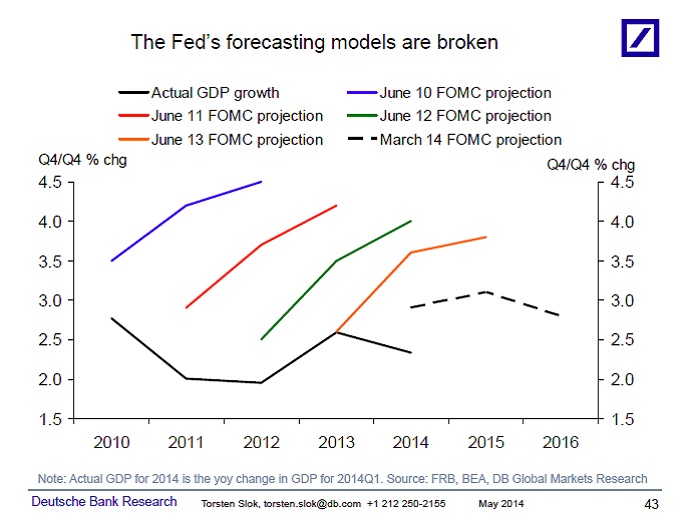
The Folly of Pacifism (III)

This is a reworking of two earlier posts (here and here). Follow the second link to see a long list of related posts.

Winston Churchill said, “An appeaser is one who feeds the crocodile, hoping that it will eat him last.” I say that a person who promotes pacifism as state policy is one who offers himself and his fellow citizens as crocodile food.

Bryan Caplan, an irritating twit who professes economics at George Mason University, is an outspoken pacifist. He is also an outspoken advocate of open borders.

Caplan, like Linus of Peanuts, loves mankind; it’s people he can’t stand. In fact, his love of mankind isn’t love at all, but rather a kind of utilitarianism in which the “good of all” somehow outweighs the specific (though by no means limited) harms caused by lying down at an enemy’s feet or enabling illegal immigrants to feed at the public trough.

As Gregory Cochran puts it in the first installment of his review of Caplan’s The Case Against Education,

I don’t like Caplan. I think he doesn’t understand – can’t understand – human nature, and although that sometimes confers a different and interesting perspective, it’s not a royal road to truth. Nor would I want to share a foxhole with him: I don’t trust him.

That’s it, in a nutshell. Caplan’s pacifism reflects his untrustworthiness. He is a selective anti-tribalist:

I identify with my nuclear family, with my friends, and with a bunch of ideas.  I neither need nor want any broader identity.  I was born in America to a Democratic Catholic mother and a Republican Jewish father, but none of these facts define me.  When Americans, Democrats, Republicans, Catholics, and Jews commit misdeeds – as they regularly do – I feel no shame and offer no excuses.  Why?  Because I’m not with them.

Hollow words from man who, in large part, owes his freedom and comfortable life to the armed forces and police of the country that he disdains. And — more fundamentally — to the mostly peaceful and productive citizens in whose midst he lives, and whose taxes support the armed forces and police.

Caplan is a man out of place. His attitude toward his country would be justified if he lived in the Soviet Union, Communist China, North Korea, Cuba, or any number of other nation-states past and present. His family, friends, and “bunch of ideas” will be of little help to him when, say, Kim Jong-un (or his successor) lobs an ICBM in the vicinity of Washington, D.C., which is uncomfortably close to Caplan’s residence and workplace.

In his many writings on pacifism, Caplan has pooh-poohed the idea that “if you want peace, prepare for war”:

This claim is obviously overstated.  Is North Korea really pursuing the smart path to peace by keeping almost 5% of its population on active military duty?  How about Hitler’s rearmament?  Was the Soviet Union preparing for peace by spending 15-20% of its GDP on the Red Army?

Note the weasel-word, “overstated”, which gives Caplan room to backtrack in the face of evidence that preparedness for war can foster peace by deterring an enemy. (The defense buildup in the 1980s is arguably such a case, in which the Soviet Union was not only deterred but also brought to its knees.) Weasel-wording is typical of Caplan’s method of argumentation. He is harder to pin down than Jell-O.

In any event, Caplan’s pronouncement only attests to the fact that there are aggressive people and regimes out there, and that non-aggressors are naive to believe that those people and regimes will not attack you if you are not armed against them.

The wisdom of preparedness is nowhere better illustrated than in the world of the internet, where every innocent user is a target for the twisted and vicious purveyors of malware. Think of the millions of bystanders (myself included) whose sensitive personal information has been scooped by breaches of massive databases. Internet predators differ from armed ones only in their choice of targets and weapons, not in their essential disregard for the lives and property of others.

Interestingly, although Caplan foolishly decries preparedness, he isn’t against retaliation (which seems a strange position for a pacifist):

[D]oesn’t pacifism contradict the libertarian principle that people have a right to use retaliatory force?  No. I’m all for revenge against individual criminals.  My claim is that in practice, it is nearly impossible to wage war justly, i.e., without trampling on the rights of the innocent.

Why is it “nearly impossible to wage war justly”? Caplan puts it this way:

1. The immediate costs of war are clearly awful.  Most wars lead to massive loss of life and wealth on at least one side.  If you use a standard value of life of $5M, every 200,000 deaths is equivalent to a trillion dollars of damage.

2. The long-run benefits of war are highly uncertain.  Some wars – most obviously the Napoleonic Wars and World War II – at least arguably deserve credit for decades of subsequent peace.  But many other wars – like the French Revolution and World War I – just sowed the seeds for new and greater horrors.  You could say, “Fine, let’s only fight wars with big long-run benefits.”  In practice, however, it’s very difficult to predict a war’s long-run consequences.  One of the great lessons of Tetlock’s Expert Political Judgment is that foreign policy experts are much more certain of their predictions than they have any right to be.

3. For a war to be morally justified, its long-run benefits have to be substantially larger than its short-run costs.  I call this “the principle of mild deontology.”  Almost everyone thinks it’s wrong to murder a random person and use his organs to save the lives of five other people.  For a war to be morally justified, then, its (innocent lives saved/innocent lives lost) ratio would have to exceed 5:1.  (I personally think that a much higher ratio is morally required, but I don’t need that assumption to make my case).

It would seem that Caplan is not entirely opposed to war — as long as the ratio of lives saved to lives lost is acceptably high. But Caplan gets to choose the number of persons who may die for the sake of those who may thus live. He wears his God-like omniscience with such modesty.

Caplan’s soul-accountancy implies  a social-welfare function, wherein A’s death cancels B’s survival. I wonder if Caplan would feel the same way if A were Osama bin Laden (before 9/11) and B were Bryan Caplan or one of his family members or friends? He would feel the same way if he were a true pacifist. But he is evidently not one. His pacifism is selective, and his arguments for it are slippery.

What Caplan wants, I suspect, is the best of both worlds: freedom and prosperity for himself (and family members and friends) without the presence of police and armed forces, and the messy (but unavoidable) business of using them. Using them is an imperfect business; mistakes are sometimes made. It is the mistakes that Caplan (and his ilk) cringe against because they indulge in the nirvana fallacy. In this instance, it is a belief that there is a more-perfect world to be had if only “we” would forgo violence. Which gets us back to  Caplan’s unwitting admission that there are people out there who will do bad things even if they aren’t provoked.

National defense, like anything less than wide-open borders, violates another of Caplan’s pernicious principles. He seems to believe that the tendency of geographically proximate groups to band together in self-defense is a kind of psychological defect. He refers to it as “group-serving bias”.

That’s just a pejorative term which happens to encompass mutual self-defense. And who better to help you defend yourself than the people with whom you share space, be it a neighborhood, a city-state, a principality, or even a vast nation? As a member of one or the other, you may be targeted for harm by outsiders who wish to seize your land and control your wealth, or who simply dislike your way of life, even if it does them no harm.

Would it be “group-serving bias” if Caplan were to provide for the defense of his family members (and even some friends) by arming them if they happened to live in a high-crime neighborhood? If he didn’t provide for their defense, he would quickly learn the folly of pacifism, as family members and friends are robbed, maimed, and killed.

Pacifism is a sophomoric fantasy on a par with anarchism. It is sad to see Caplan’s intelligence wasted on the promulgation and defense of such a fantasy.

The Kennedy-Roberts Court in Retrospect

Despite Justice Kennedy’s return to the Court’s conservative wing in the term just concluded (details below), he was a central player in the Court’s war on federalism and long-standing social norms. Chief Justice Roberts has (nominally) presided over the Court for the past 13 terms. But Justice Kennedy — far more often than any justice of his era — has been the Court’s main (and inconsistent) “decider”.

Kennedy’s legacy has been dissected almost ad infiinitum in the several days since he announced his retirement. I will offer just two samples of the (rightly) negative commentary about Kennedy before turning to a statistical summary of the Kennedy-Roberts years.

Christopher Roach offers this in “Kennedy’s Departure Diminishes Supreme Court . . . And That’s a Good Thing” (American Greatness, June 29, 2018):

Since the Earl Warren era, the Supreme Court has assumed enormous power over our politics, and this has become a significant obstacle to the constitutional design of Americans living as a self-governing people….

[T]he Supreme Court routinely has interfered with American self-government, either undoing or forcing results at various levels of government in accordance with its idiosyncratic and elitist views….

The Court undid California’s referendum on gay marriage after having earlier reversed Colorado’s referendum preventing gays from being added to the long list of “protected classes” in employment laws. Using the broad and vague mandates of “substantive due process” and “equal protection,” the Court simply decided the people were wrong and “irrational,” and Justice Kennedy authored opinions that accorded with the views of his friends and neighbors in Washington, D.C. In the process, the Court forbade the people of California and Colorado from undertaking the most quintessentially self-governing act for which the Constitution was designed: passing laws on controversial matters through a referendum.

This is merely an example. The Supreme Court has also second-guessed how wars are conducted, how schools are run, … has created new rights while ignoring those enshrined in the Constitution itself, and generally assumed the role of “super legislature.”

In addressing salient social issues, the Supreme Court has functioned as something of a Delphic Oracle, divining hidden mysteries in the otherwise prosaic constitutional text that disallows historically permitted practices on immigration, the treatment of enemy prisoners, abortion, and much else where the Constitution’s text is either silent or agnostic.

While preempting legislative supremacy and the broad powers of the executive, the Court is, in fact, unrepresentative in all meaningful ways. It is not, of course, supposed to be a representative institution. It is supposed to be a technical and intellectual job, devoted to the analysis of laws in light of other laws and our general law in the form of the Constitution. But it hasn’t been that since the 1930s.

So, in that milieu, it should be, if not representative, at least faithful to and sympathetic with the American people. But far from being sympathetic, its progressivism has been hostile to the mass of people and their views, labeling them irrational and bigoted when they deviate from the very narrow consensus formed among the almost exclusively Ivy League pedigreed justices. The retiring Justice Kennedy mostly embraced this snobbish and busy-body ethos….

[H]e was central to the developing “gay marriage” jurisprudence, which short-circuited the development of such rules (and limits) through legislatures. The left is probably right that this (and other anti-majoritarian rulings) shaped public opinion and pulled it beyond what might have happened using legislative means by themselves. But, at the same time, this approach generated significant backlash and resentment. These types of decisions have also made presidential elections, which should be about governance, instead into potential proxy fights on every social issue under the sun, when such issues otherwise could be resolved organically and diversely through political processes among the various states.

Here is Elizabeth Slattery, writing in “The Legacy of Justice Kennedy” (The Daily Signal, June 27, 2018):

It’s not always been easy for Supreme Court watchers to pigeonhole Kennedy’s jurisprudence. In fact, one mainstay of his jurisprudence and view of the Constitution was its inconsistency.

He authored the majority opinion in Gonzales v. Carhart and co-authored the plurality in Planned Parenthood of Southeastern Pennsylvania v. Casey, where abortion regulations were upheld under the most deferential standard of review (rational basis).

But then he joined the liberals in Whole Women’s Health v. Hellerstedt, requiring Texas to meet a higher standard of review for its commonsense regulation of abortion providers.

In Schuette v. BAMN, a case about a state’s ability to prohibit racial preferences in college admissions, Kennedy wrote:“It is demeaning to the democratic process to presume that voters are not capable of deciding an issue of this sensitivity on decent and rational grounds. … Freedom embraces the right, indeed the duty, to engage in a rational, civic discourse in order to determine how best to form a consensus to shape the destiny of the Nation and its people.”

Yet the following year, in Obergefell v. Hodges, Kennedy was unwilling to extend the same goodwill to voters to decide through the democratic process whether their states should recognize same-sex marriages, cutting short a vibrant public debate over the issue.

Writing for the majority in Fisher v. University of Texas at Austin in 2013, Kennedy held that the university must prove that its use of race in admissions met the requirements of the 14th Amendment’s Equal Protection Clause and sent the case back to the lower court. When the case returned in 2016, Kennedy wrote for the majority again, gutting his 2013 decision and allowing the university to continue sorting students by race without defining its diversity goals or proving that race was necessary to meet its goals.

Do the numbers bear out the impression of Kennedy as an unreliable “conservative”? Yes.

In “U.S. Supreme Court: Lines of Succession and Ideological Alignment“, I have drawn on statistics provided by SCOTUSsblog to summarize the degree of disagreement among the various justices in non-unanimous cases during each of the Court’s past 13 terms. (The use of non-unanimous cases highlights the degree of disagreement among justices, which would be blurred if all cases were included in the analysis.) The statistics yield an index of defection (D) for each justice, by term:

D = percentage disagreement with members of own wing/percentage disagreement with members of opposite wing.

The wings are the “conservative” wing (Gorsuch, Alito, Thomas, Scalia, Roberts, and Kennedy) and the “liberal” wing (Breyer, Ginsburg, Kagan, Sotomayor, Souter, and Stevens).

The lower the index, the more prone is a justice to vote with the other members of his or her wing; the higher the index, the more prone is a justice to vote with members of the opposing wing. Here’s a graph of the indices, by term:

Kennedy’s long-standing proneness to defect more often than his colleagues grew markedly in the 2014-2015 terms and receded a bit in the 2016 term. His turnaround in the 2017 term restored him to the Court’s “conservative” wing.

Roberts slipped a bit in the 2017 term but is more in step with the “conservative” wing than he had been in the 2014-2015 terms.

Gorsuch started out strongly in his abbreviated 2016 term (he joined the Court in April 2017). His slippage in the 2017 term may have been due to the mix of cases at stake.

Perhaps that’s the reason for Roberts’s slippage in the 2017 term — or perhaps Roberts is “growing in office”, as leftists like to say about apostate conservatives. Time will tell.

What’s most striking about the preceding graphs, other than Kennedy’s marked departure from the “conservative” wing after the 2010 term, is the increasing coherence (ideological, not logical) of the “liberal” wing. This graph captures the difference between the wings:

The record of the past 6 terms is clear. The “liberals” stick together much more often than the “conservatives”. Perhaps that will change with the replacement of Kennedy by (one hopes) a real conservative.


See also the page “Constitution: Myths and Realities“, and these posts:
Substantive Due Process, Liberty of Contract, and the States’ Police Power
Substantive Due Process and the Limits of Privacy
Rethinking the Constitution: “Freedom of Speech, and of the Press”
Abortion and the Fourteenth Amendment
Obamacare: Neither Necessary nor Proper
Privacy Is Not Sacred
Our Perfect, Perfect Constitution
Constitutional Confusion
Obamacare, Slopes, Ratchets, and the Death-Spiral of Liberty
Another Thought or Two about the Obamacare Decision
The Court in Retrospect and Prospect (II)
Abortion Rights and Gun Rights
Getting “Equal Protection” Right
Does the Power to Tax Give Congress Unlimited Power? (II)
The Beginning of the End of Liberty in America
Substantive Due Process, Liberty of Contract, and States’ “Police Power”
Why Liberty of Contract Matters
Equal Protection in Principle and Practice
Freedom of Speech and the Long War for Constitutional Governance
Restoring the Contract Clause
The Kennedy Retirement: Hope Springs Eternal
Freedom of Speech: Getting It Right
Justice Thomas on Masterpiece Cakeshop